The USDA's monthly supply and demand report for April brought little news and/or impacts for commodity prices in general. The release of the next report in May might be more of a market driver with the first estimates for the 2023/24 season.
Soybeans
For soybean, the USDA did not change the US supply and demand balance, even after the quarterly stocks position report on March 01 indicated a lower available volume, which should result in a cut of 2022/23 production in the future.
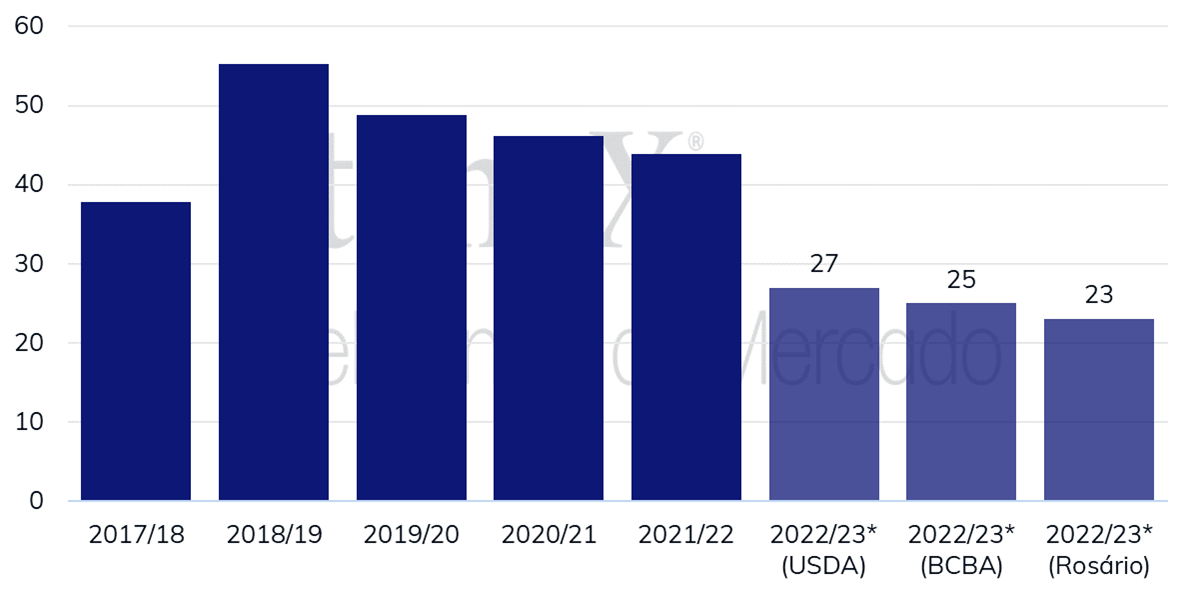
As for the South American crop, the Department increased Brazilian production to 154 million tonnes, 1 million more than announced in March. For Argentina, the USDA brought a significant cut in 2022/23 production, which went from 33 to 27 million tonnes, a volume still above the 25 million estimated by the Buenos Aires Cereal Exchange (BCBA) and the Rosario Exchange, which released on Wednesday (12) another reduction in the country's soybean production, remaining at just 23 million tonnes.
Given this scenario, even with record production in Brazil offsetting losses in Argentina, the global supply and demand balance for soybean is not exactly loose, with production exceeding consumption by less than 4 million tonnes, according to the USDA. However, concerns on the demand side end up limiting the support factors for soybean prices (with emphasis on the Argentine crop failure).
There are concerns about economic performance around the world and especially with China. The Asian country is the largest consumer and importer of soybean and, in addition to a weaker economy as a whole, soybean crushing margins have been constantly in the red, there are prospects of reduced pork production due to recent outbreaks of African swine fever that resulted in animal slaughter (including sows), in addition to the government's effort to reduce the share of soybean meal in feed. In any case, China will continue to be totally dependent on imported soybeans, with doubts as to the impacts of all these issues on demand.
Argentine soybean production (million tonnes)
Sources: USDA, BCBA and Rosario exchange. Design: StoneX. *Estimated.
Corn
In the case of corn, the Department practically did not change the balance of the 2022/23 US crop. On the supply side, the only change was the slight decrease of 250,000 tonnes in imports, to 1.02 million, which was offset by the contraction of the same volume in the use of corn for Food, Seeds and Industry.
As a result, ending stocks for the 2022/23 crop in the US remained at 34 million tonnes, 500,000 tonnes above average market expectations, which had little impact on corn futures in Chicago.
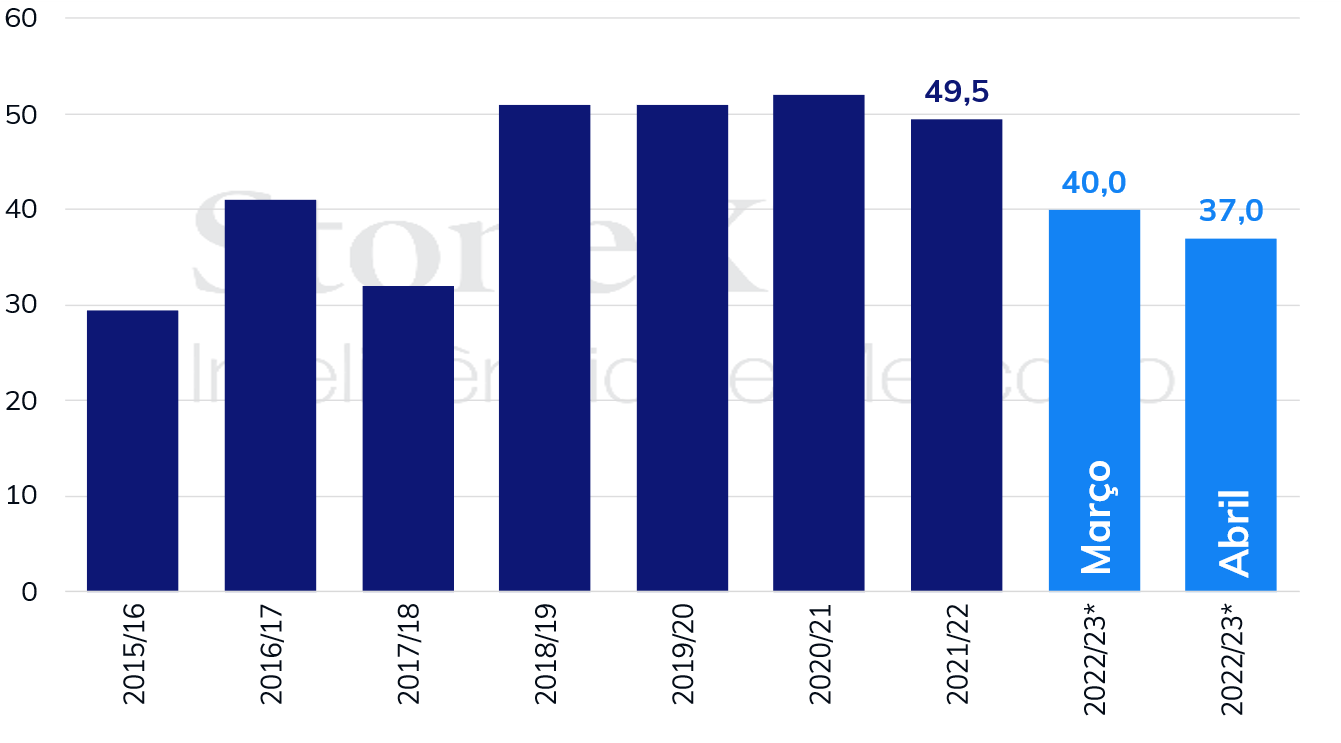
For the other players, it is worth highlighting the cut of 3 million tonnes in Argentine production, to 37 million, a variation in line with what was expected by the market. Due to the lower corn availability cereal in the South American country, exports were also reduced by 3 million tonnes, to 25 million.
The Department stated that the reduction in the Argentine crop was motivated by the high temperatures seen in March, which jeopardized the development of corn planted late, despite the rains received recently, and that new cuts are not ruled out. The USDA number is above the estimate by Bolsa de Cereales (36 million tonnes) and Bolsa de Rosario, which last April 12 reduced its forecast from 35 to 32 million tonnes.
Regarding the other players, it is worth highlighting the increase in Ukrainian exports by 2 million tonnes, to 25.5 million, and Russian exports by 800,000 tonnes, to 4.1 million, partially offsetting the reduction in Argentine shipments. Although the market expected the USDA to increase Brazilian production to 126 million tonnes, its number was maintained at 125 million.
On the side of importers, European Union production was reduced by 1.2 million tonnes, to 53 million, stimulating imports from the bloc, which increased by 1 million tonnes to 24.5 million. Amid these changes, world ending stocks dropped from 296.5 to 295.4 million tonnes, not far from average market estimates (295 million tonnes).
Argentine corn production (million tonnes)
Source: USDA. Design: StoneX. *Estimate.
Wheat
In the case of wheat, the USDA reduced US domestic consumption, adjusting for feed, with a drop of 680,000 tonnes in the 2022/23 cycle. Ending stocks increased from 15.47 to 16.28 million tonnes, while the level of imports also changed, with a slight increase of 13,000 tonnes, totaling around 3.4 million expected for 2022/23.
For the other players, changes were seen mainly for China, Russia and Ukraine. In the global supply and demand balance, the increase in production was accompanied by an even more significant increase in consumption, keeping the balance tight, with ending stocks for 2022/23 estimated at 265 million tonnes, below the 272 million tonnes of 2021/22.
Russia and Ukraine added 2.5 million tonnes (+4%) to global exportable supplies for the 2022/23 crop- year, which further eased supply pressures in the global wheat market. Of this total, 1.5 million tonnes are from Russia, which reaches the prospect of 45 million tonnes to be exported, while Ukraine could be responsible for 14.5 million tonnes shipped in 2022/23. An optimistic highlight is the predictions of wheat imports from China, which increased from 10 to 12 million tons, with a proportional increase in the country's consumption, estimated at 146 million tonnes.
Wheat exports (million tonnes)
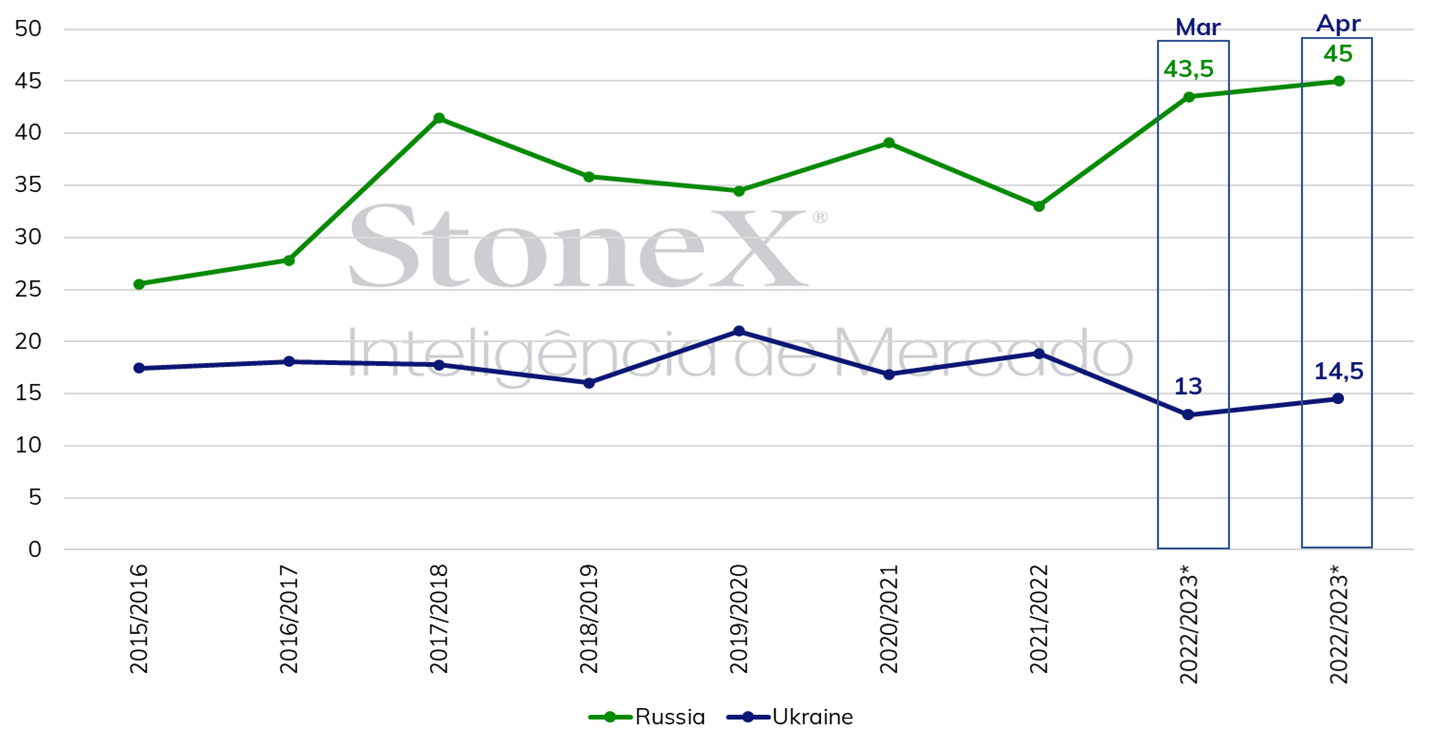
Source: USDA. Design: StoneX. *Estimate.