Sentiment continues to defy concerns of war, inflation, deficits and economic potential to push fresh record highs from the likes of the Dow and S&P 500. What does an added seasonality curb on liquidity add to the mix ahead?
Talking Points:
The Dow finally managed to notch a fresh record high - catching up to the S&P 500 and Nasdaq 100 - but confidence and risk asset performance remains uneven
Constant oscillation in US-Iran headlines has focused the market’s attention elsewhere and seasonal expectations will try to override tangible worries
Event risk will hit headline yet may struggle to control market trends, but top listings to watch include the RBNZ, US PCE deflator and EM GDP releases
Watch the Full Video
Risk On Momentum Ebbs but Doesn’t Break
After weeks of post-ceasefire rally by some of the most popular (over-exposed) ‘risk’ benchmarks, we have finally started to see some moderation in pace. This may have less to do with an earnest reflection on our collective exposure relative to the fundamental backdrop than a typical seasonal transition around this time of the year. The ambivalence to serious economic and financial concerns that may not be realized until some point in the future (eg rate hikes, economic slowdowns, deficient repercussions) is not new in the is market phase. However, when gauging the potential for fear to creep into our collective conscious, fundamental rumination is more likely to occur against a tepid or stationary backdrop than a wave of irrational enthusiasm.
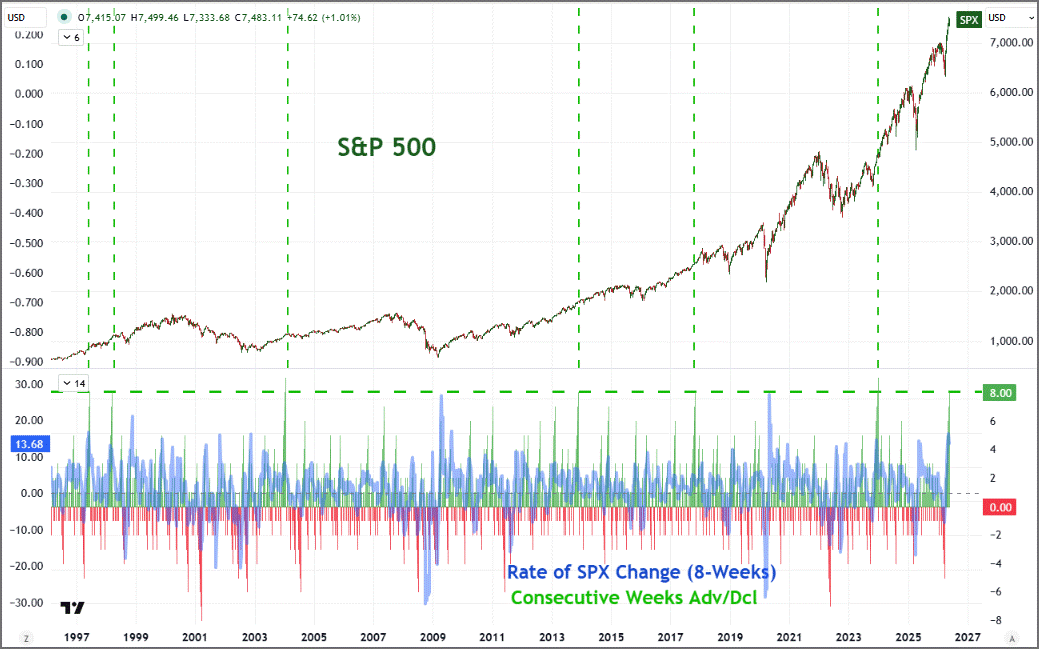
As an earnest assessment of sentiment’s tone and tenor, there was some moderation of pace for the likes of the S&P 500 and Nasdaq 100 – favored pace cars for the past two months’ rise. A further 0.9 and 1.2 percent advance respectively would earn fresh record closes on a weekly basis, but not the daily. The Dow, which has lagged the concentrated charge in mega cap tech stock demand, finally managed to overtake its February high and cross back above the 50,000 threshold. Looking more broadly, major rest of world indices like the German DAX 40, UK FTSE 100 and Chinese Shanghai Composite were tracking little actual progress. Further, risk assets such as emerging markets, junk bonds and crypto were drawing limited capital infusion of their own.
Chart of the S&P 500 with Consecutive Weekly Moves and 8-Week Rate of Change (Weekly) Source: TradingView.com; John Kicklighter
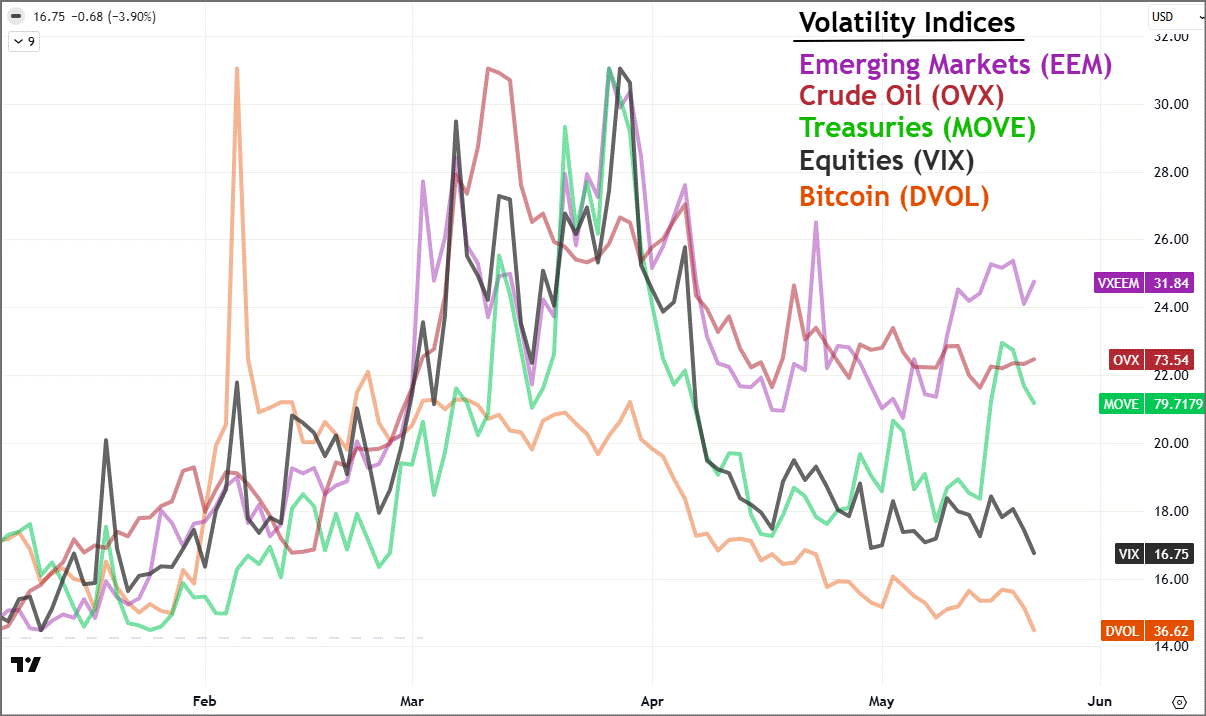
The slower and inconsistent climb is a noteworthy flag for those that would be happy to simply abide charts or ride a wave of exuberance that defies fundamental baggage. Then again, hesitance is not an indication that the markets are ‘on the verge of collapse’ as the perma-bears will be prone to suggest. While it may be true that valuations may be stretched and exposure concentrated, there is limited evidence of preparation for the rug to be swept from under the bulls. Implied volatility indices – derived from derivatives used to hedge underlying exposure – are low across the board with the VIX closing at a 4-month low itself this past Friday. It is worth noting that longer-term trends in measures like put-call ratios, capital flows through popular ETFs and other systemic measures are trending towards troubling long-term extremes, but that does not indicate an imminence. As always, be mindful of sparks the headlines and calendar may throw, but assess the quality of sentiment first to see how combustible confidence may actually be.
Chart of Various Benchmark Implied Volatility Indices (Daily) Source: TradingView.com; John Kicklighter
Liquidity Raises the Threshold for a Serious Market Reaction
Even if the markets are satisfied to keep to a risk-on compass setting, it is important to monitor the key fundamentals risks that could eventually take the controls when conditions – or should there be a flair up (bullish or bearish) capable of overcoming the inertia. Regionally, there remain intense regional uncertainties such as fresh intervention risks by Japanese authorities on behalf of the Yen or the convergence of political and financial uncertainties in the United Kingdom. A sphere of influence wider, there are still uncertainties over open US-based trade deals with a July 4th deadline and the White House seems to be verbally readying the world for some sort of action over Cuba. Then there are truly systemic matters such as globally rising inflation pressures and eroding fiscal backdrop that seems to be driving long-end sovereign debt yields to decades highs.
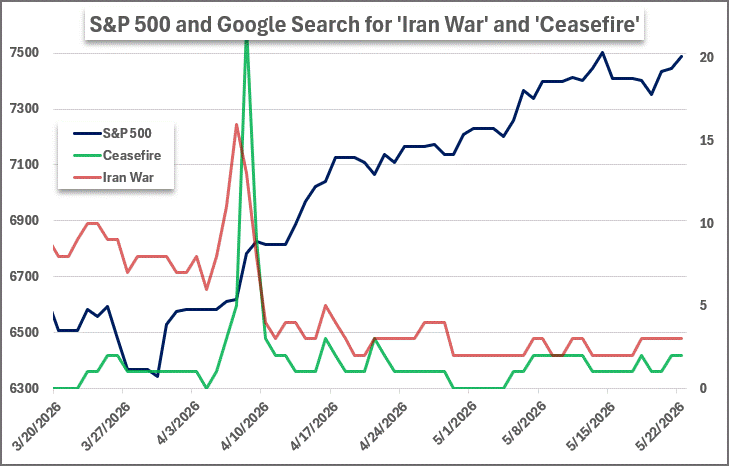
All of that considered, the most potent threat remains updates on the US-Iran war. The back and forth in headlines that a deal is close at hand only to be disputed hours later continues to slacken our attention to this threat. That said, there is the possibility of a definitive outcome: either a peace deal or renewed military actions. Between the disputes around requirements on both sides, a middle ground of freer movement of goods through Hormuz during a period of further negotiation via a Memorandum of Understanding, is the most probable course. That said, of the various definitive scenarios to contemplate and monitor for – whether imminent or eventual – my concern for the most productive bearish course would be a peace deal that is met with a retreat in capital markets, indicating we have priced in all the ‘relief’ possible from the violent affair and leaving deep questions over what could take up the sentiment baton beyond.
Chart of S&P 500 Overlaid with Google News Search Density of ‘Ceasefire’ and ‘Iran War’ Source: Google Trends; John Kicklighter
From latent themes to more immediate consideration of underlying conditions for the global markets, a comprehensive evaluation for what is ahead must also account for seasonal conditions potentially compounding the conditional reticence that we have seen in curbed pacing, deviation in correlations and a slow moderation of turnover (volume). The trading week will start with a significant curb global participation with the major London and New York financial centers offline for holidays. While there are many other countries open and providing global liquidity, history shows there is significant deference on what to expect in a curb on activity when these two are offline.
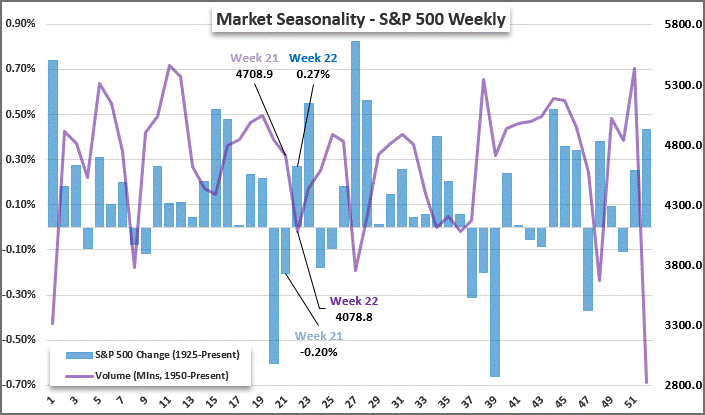
Looking at the S&P 500 from a statistical perspective, the 22nd week of the year averages a clear drop in historical volume that aligns to holiday conditions. Performance on the other hand tends to skew higher – though the range of annual performances deviates considerably. More broadly, the US Labor Day holiday marks an interim period of curbed activity that persists into the vaunted ‘summer doldrums’. The ‘sell in may and go away’ saying is a familiar enough term that reflects these norms. This seasonal norm further conflicts to the unresolved and threatening fundamental backdrop which should keep market participants observant of potential volatile upheavals.
S&P 500 Averaged Performance and Volume by Calendar Week Source: Standard & Poor’s; John Kicklighter
Notable Scheduled Themes But Enough Clout to Draw Our Attention?
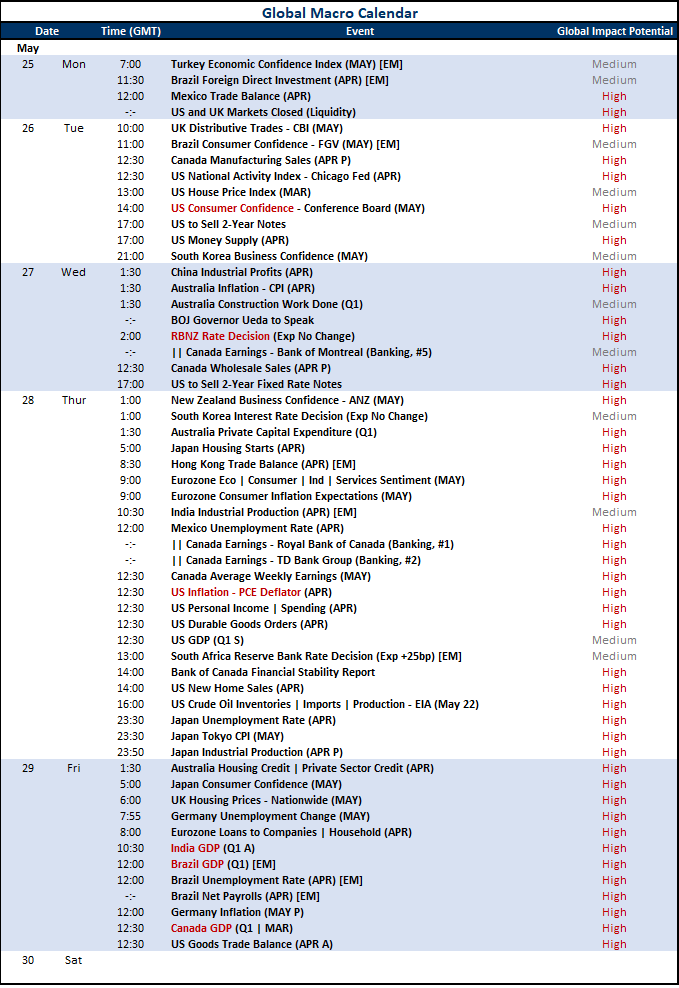
All things considered, the global macro calendar is fairly robust as far as major scheduled event risk is concerned. There are a handful of high profile events that can tap stronger fundamental themes, but it will still be difficult to draw the market’s focus away from the potent unknowns still hanging over the market. Monetary policy will be a common point of discussion between actual rate decisions like the Reserve Bank of New Zealand’s (RBNZ) scheduled update and through indirect speculation via key economic events such as the US PCE deflator – the Fed’s favorite inflation gauge. Growth will also be a torrent theme with some official emerging market Q1 GDP releases and readings that come close to the underlying concern like the US consumer confidence survey from the Conference Board. Canada will also have a uniquely dense update between key events like Canadian GDP (March and 1Q) and manufacturing sales; top Canadian bank earnings reports; and the Bank of Canada’s Financial Stability report.
Calendar of Top Global Macro Event Risk Source: John Kicklighter
An RBNZ Decision that Reinforces a Carry and Market Hierarchy
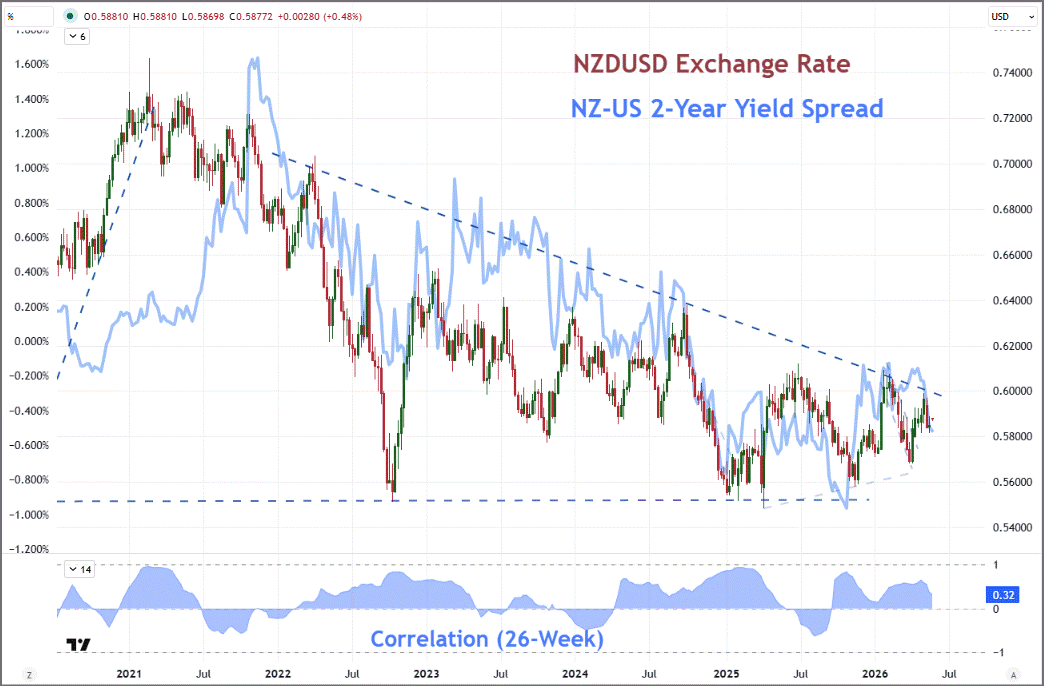
As far as official – much less significant – central bank updates go, this week is particularly light. We have a few of the majors due to announce decisions in the first week of June but the bulk will be doing so in the third week of the month. For the week ahead, the South Korean and South African banks will not likely register outside of their respective countries. However, the RBNZ’s update has sway well beyond its island borders. Historically, the New Zealand Dollar has stood as a favored ‘carry currency’ among the majors given its credit quality and typical premium to larger counterparts, like the Euro or Japanese Yen. We seem to be in the very start of a possible tightening cycle – with Australia’s RBA already tightening the reins three times and plenty of others lamenting the influences of higher inflation. If the RBNZ were to hike, it would add materially to the expectation of a global shift in in monetary policy. As it stands, the consensus among economists is for a hold by the group, but that would make a hike even more potent locally (to the Kiwi and its markets) and consequential globally.
Chart of NZDUSD Overlaid with New Zealand – US 2-Year Yield Spread (Weekly) Source: TradingView.com; John Kicklighter
A Focus on Fed Intent May Even Top the US Macro Focus
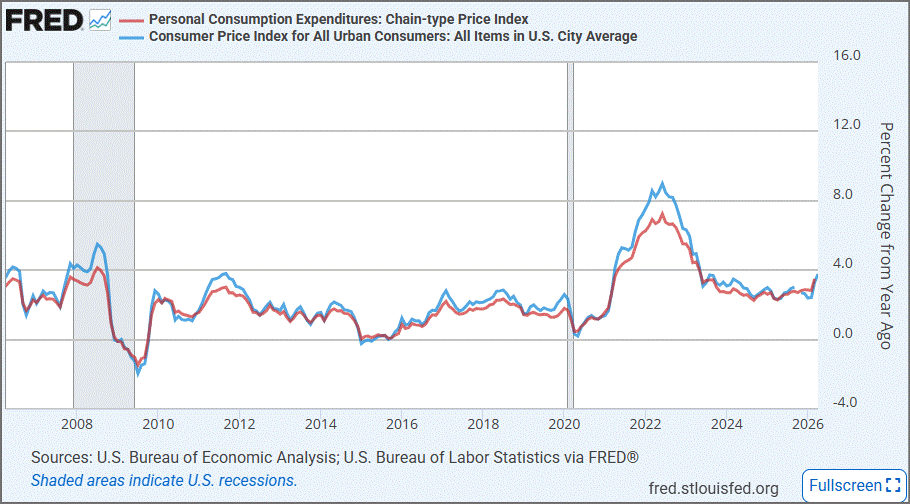
There is no lack of meaningful, US-based event risk to draw from the docket over the coming week. The Conference Board’s consumer sentiment survey will add critical context to assessing the engine of US growth following Friday’s downgraded UofM measure to fresh record lows. American crude inventory figures will be eyed with intense scrutiny following the record-breaking collective draws on regular inventories and the SPR over recent weeks. Housing data, durable goods orders and the latest trade balance figures will add to the mix. Through all this event risk, top listing will be the April PCE deflator on Thursday. As the Fed’s preferred measure of inflation, the PCE is lagging the market’s favored CPI read, but the backdrop is already complicated between pressures from elevated energy prices and the expectations placed upon new Fed Chairman Kevin Warsh. The correlation between the two prominent inflation readings remains very strong, and the CPI continued its acceleration through its reading this past month. The higher the inflation readings stretch, the greater pressure on the Fed to hike in the near future.
Chart of US Inflation Readings – Year-Over-Year Readings of CPI and PCE Deflator (Monthly) Source: Federal Reserve Economic Database; US BEA; US BLS
An Update on Global Growth Through the More Exposed
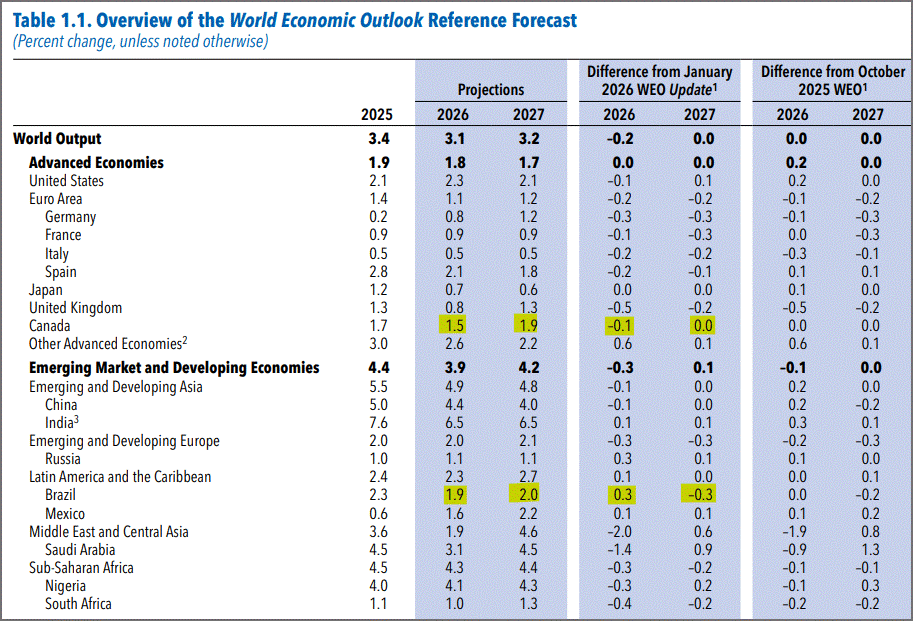
While we can focus on the largest absolute players to set our expectations for the global backdrop, it is important to evaluate economic potential through some of largest but more fragile players as well. Against the backdrop of sustained optimism by the IMF – despite their own worries about the impact of the ongoing US-Iran conflict – there is a growing concern that the global economy will inevitably succumb to the myriad troubles that confront the world. From the emerging markets, we have already registered disappointments from both the Chinese (2nd largest economy) and Russian (9th) Q1 GDP updates. This week, we will continue the check in with Brazil (10th) with an expected modest quarter-over-quarter expansion of 0.2 percent. India (6th) and South Africa (39th) will report the following week. It is also worth highlighting that Canada (11th) is also on tap for a March/1Q with renewed US trade tensions reminding us of the previous quarter’s quarterly annualized contraction.
Table of IMF World Economic Outlook Update for April 2026 Source: IMF World Economic Outlook; John Kicklighter
Access More Global Macro Insights, Forecasts and Tools
Stay connected to timely global macro analysis designed to help market participants navigate shifting economic conditions and evolving risk. Gain access to regular market commentary, updated quarterly forecasts, a comprehensive two-week forward economic event calendar, and specialized tools built to support informed trading and risk management decisions.
The subsidiaries of StoneX Group Inc. provide financial products and services, including, but not limited to, physical commodities, securities, clearing, global payments, risk management, asset management, foreign exchange, and exchange-traded and over-the-counter derivatives. These financial products and services are offered in accordance with the applicable laws in the jurisdictions in which they are provided and are subject to specific terms, conditions, and restrictions contained in the terms of business applicable to each such offering. Not all products and services are available in all countries. The products and services offered by the StoneX Group of companies involve risk of loss and may not be suitable for all investors. Full Disclaimer. This content is not intended for residents of any particular country, and the information herein is not advice nor a recommendation to trade nor does it constitute an offer or solicitation to buy or sell any financial product or service, by any person or entity in any jurisdiction or country where such distribution or use would be contrary to local law or regulation. Please refer to the Regulatory Disclosure section for entity-specific disclosures. No part of this material may be copied, photocopied or duplicated in any form by any means or redistributed without the prior written consent of StoneX Group Inc. The information herein is provided for informational purposes only. This information is provided on an ‘as-is’ basis and may contain statements and opinions of the StoneX Group of companies as well as excerpts and/or information from public sources and third parties and no warranty, whether express or implied, is given as to its completeness or accuracy. Each company within the StoneX Group of companies (on its own behalf and on behalf of its directors, employees and agents) disclaims any and all liability as well as any third-party claim that may arise from the accuracy and/or completeness of the information detailed herein, as well as the use of or reliance on this information by the recipient, any member of its group or any third party.
Our market expertise, advanced platforms, global reach, culture of full transparency and commitment to our clients’ success all set us apart in the financial marketplace.
Reach
With access to 40+ derivatives exchanges, 180+ foreign exchange markets, nearly every global securities marketplace and numerous bi-lateral liquidity venues, StoneX’s digital network and deep relationships can take clients anywhere they want to go.
Transparency
As a publicly traded company meeting the highest standards of regulatory compliance in the markets we serve, our financials and record of accomplishment are matters of public record. StoneX’s commitment to “doing the right thing over the easy thing” sets us apart in the industry and helps us build respect, client trust and new partnerships.
Expertise
From our proprietary Market Intelligence platform, to “boots on the ground” expertise from award-winning traders and professionals, we connect our clients directly to actionable insights they can use to make more informed decisions and achieve their goals in the global markets.