The US and Israel launched another attack on Iran ahead of the deadline for unproductive nuclear negotiations. Will this event change the global profile of risk trends to more align to the US tech retreat? What will happen to oil and the US Dollar?
Talking Points:
The US Supreme Court ruled that President Trump did not have the authority to apply tariffs at his discretion under IEEPA
A 10-day deadline was given by Trump for Iran to reach a satisfactory state with negotiations, and crude prices are rising as the countdown ticks away
Top traditional event risk in the week ahead includes: an important US consumer confidence update; Nvidia earnings and a run of global GDP readings
Watch the Full Video (Pre-Iran Attack)
Risk Trends Find a Fresh Sponsor in Iran Attack
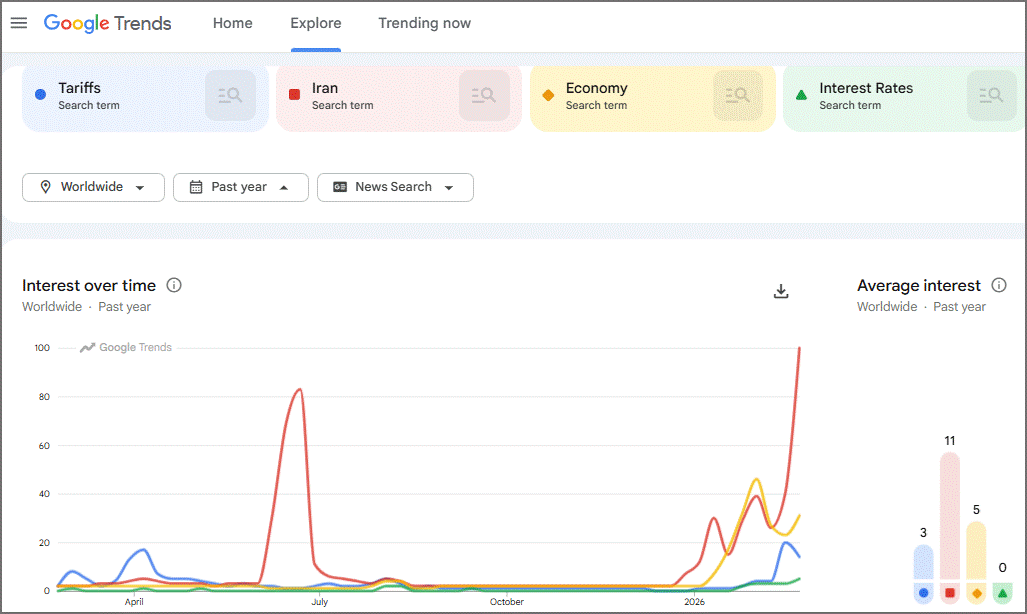
The fundamental picture playing out for global markets this past week was more nuanced. There wasn’t a prevailing drive behind risk appetite or risk aversion across the spectrum. Rather, we were monitoring the ongoing descent of the once-vaunted US equity markets as a sentiment leader relative to rest-of-world and rest-of-market peers – particularly in the wake of a disappointing response to Nvidia’s earnings beat. That measured and relative perspective will at least be temporarily disrupted by the market’s need to process the implications of the United States’ and Israel’s targeted attacks on Iran following failed negotiations on the latter’s nuclear program. As this geopolitical event overrides other key fundamental themes – at least temporarily – volatility and risk-distribution will likely revolve around this particular matter.
Google Global Search Trends of Major Themes (Daily) Source: Google Trends; John Kicklighter
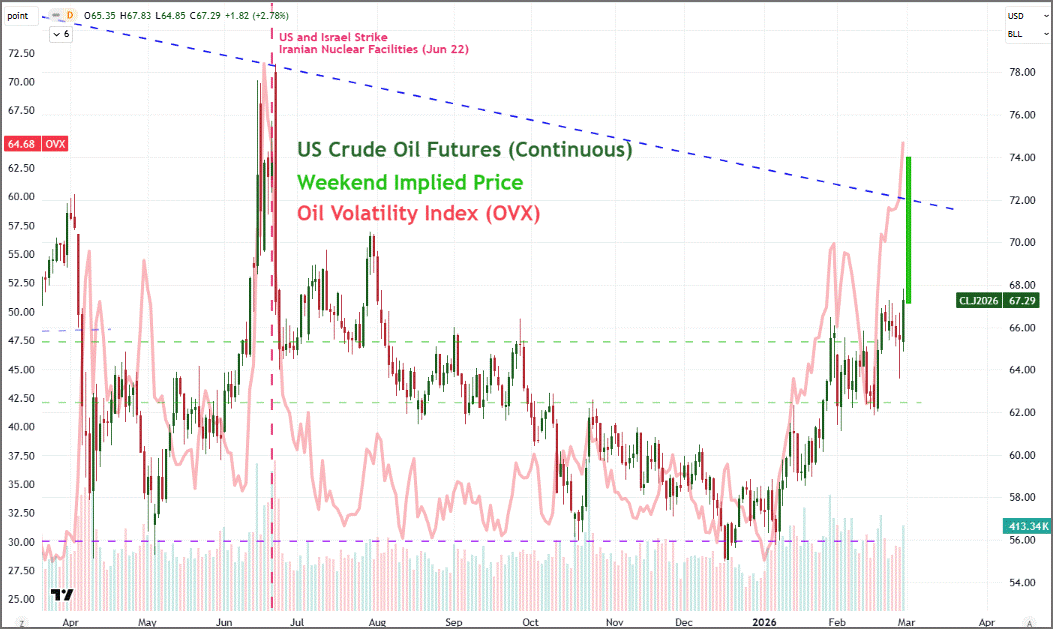
There are many expectations for how the military action will impact the complex global financial and capital markets, but the cascading implications are likely too complex to play out in short order. That doesn’t meant that we won’t see significant volatility in certain key markets in the interim however. As is often the case when Middle Eastern events are involved, crude oil and energy markets will feel a direct impact from the headlines. Implied volatility behind the US crude oil market was already tracking for its highest levels since the June 2025 missile strikes against Iranian nuclear facilities, in anticipation of American actions. Similarly the Brent-WTI spread had hit its highest level in three years while the CFTC’s Commitment of Traders report showed last week speculators were the heaviest net-long in seven months. Weekend indicative pricing suggested an approximate 10 percent increase to start the new week, but follow through is the bigger uncertainty – as was the case last June.
Chart of US Crude Oil Prices Overlaid with Oil Volatility Index (Daily) Source: TradingView.com; NYMEX; John Kicklighter
How Will Iran Effect Wider Markets and What Themes Does it Compete With?
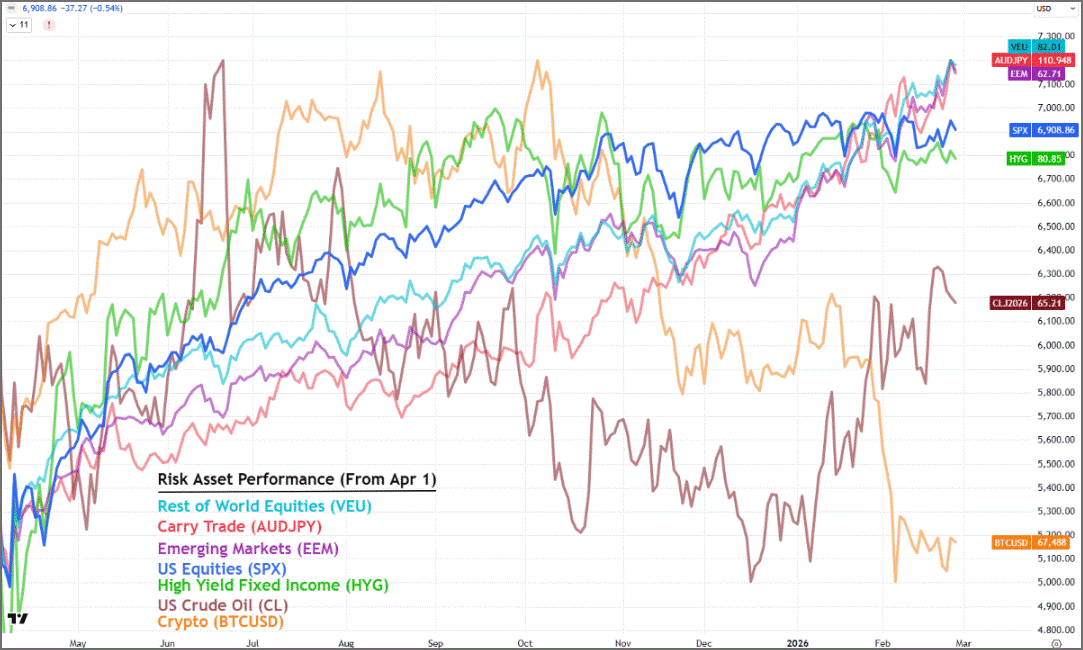
Where the implications of the weekend military actions carry more direct implications for energy markets with historical corollaries upon which to base scenarios, the wider implication to speculative markets is not as clear. Notably over the weekend, crypto markets (with an increasingly ambiguous risk standing), proxies for the US dollar and gold (crypto derived) showed limited reaction with a more mixed response. The backdrop for speculative sentiment over the past months has been noticeably uneven. Where the Nasdaq 100, S&P 500 and Dow have traversed broad ranges, there has been a notable tumble in large market cap tech stocks that have undercut the once-leading ‘Magnificent Seven’. That was only exacerbated this past week after Nvidia’s earnings beat failed to lift NVDA, much less the broader sector. In contrast, risk appetite has been rising in rest of world indices (eg VEU), emerging markets (eg EEM) and proxies for carry trade (eg AUDJPY).
A straight disruption to the world’s geopolitical status quo and military engagement in the Middle East can have a broader impact in sentiment through a direct implication for economic activity. Oil and other vital energy products are considered the ‘life blood’ of growth, which means a throttling of its shipment and higher costs can strain economic output down the line. As a fundamental influence, however, the tangible implications of this relationship take considerable time to play out. Capital allocation based on optimization and an assumption of general stability (complacency) may be less straightforward in terms of cause-and-effect but likely proves far more impactful in the coming days and weeks.
Relative Performance of ‘Risk Assets’ (Daily) Source: TradingView.com; John Kicklighter
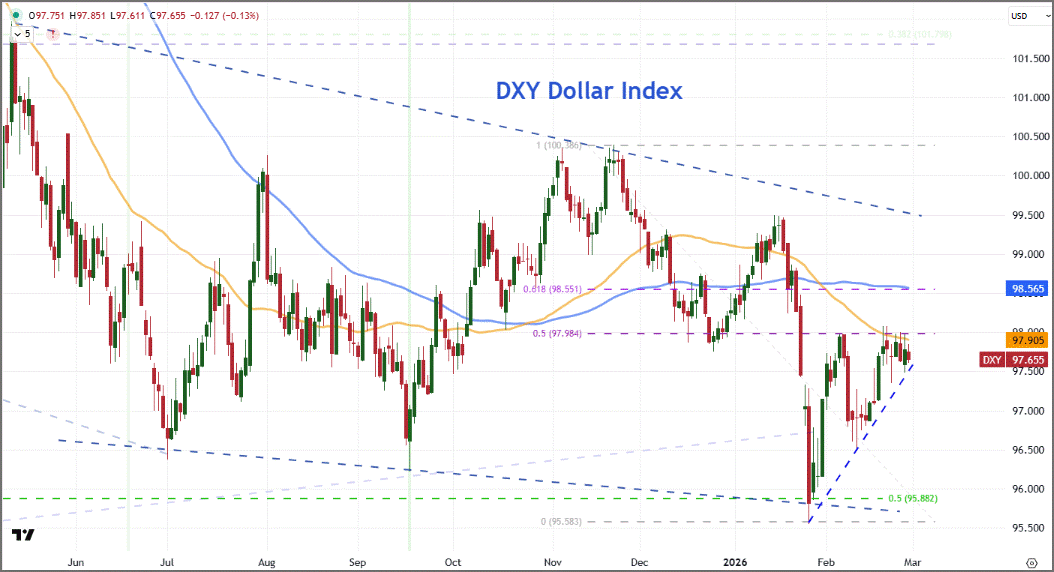
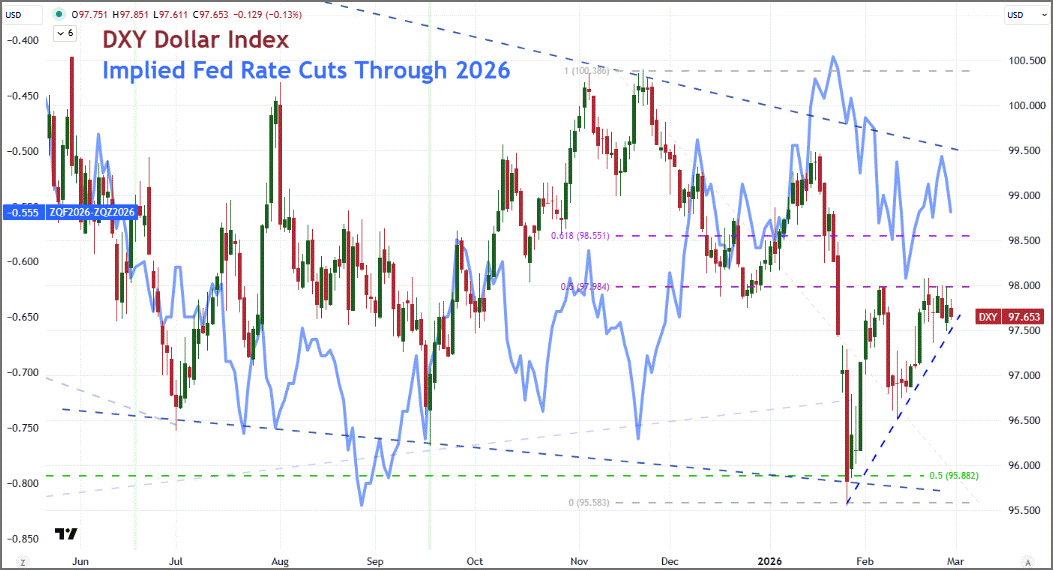
Another, more targeted consideration amid the ongoing disparity in regional risk appetite, the tariff uncertainties following the Supreme Court ruling (feels so long ago in this news cycle) and now the Iran strikes is the influence on the ‘sell America’ pressure we have seen ebb and flow this past year. The military actions by the United States (and Israel) may have loose support by key global partners like the European Union, United Kingdom and Canada; but they add to the perception of unpredictability many global investors have increasingly ascribed to the country under the Trump administration. The US dollar will stand as a good barometer for this systemically-important assessment. If general risk trends hold steady or rise and the Greenback slides, it is probable that divestment pressure from US exposure is gaining.
In the event the Dollar rallies (a technical assessment can be made readily on the DXY’s daily chart), then it can offer an important lens through which we can evaluate the fundamental backdrop. Should the currency rally as risk aversion kicks in, it like reflects a more severe and sentiment-destructive unwind to the capital markets. If the dollar is advancing while wider speculative benchmarks remain firm (or committed to advance), it may speak to an outlier scenario where risk appetite is actually bolstered by the belief that a lingering risk factor like Iran has been removed.
Chart of DXY Dollar Index (Daily) Source: TradingView.com; ICE
Schedule Event Risk Will Compete for the Market’s Attention
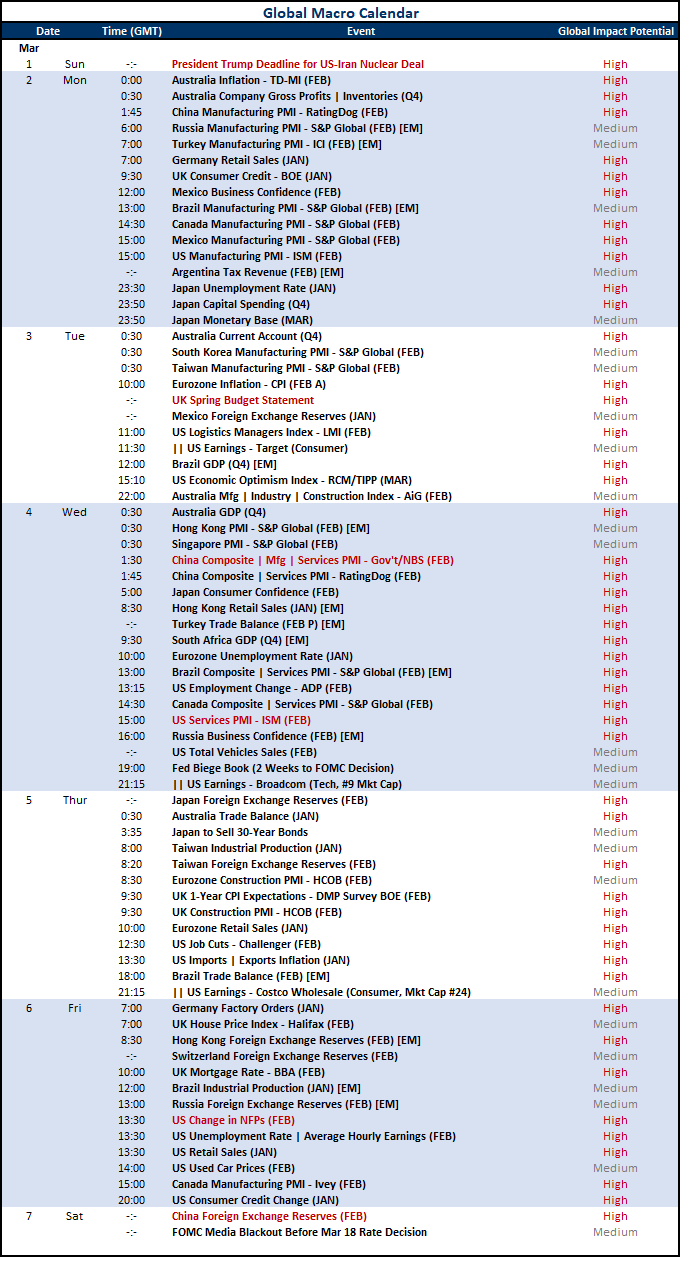
If the economic docket for the week ahead were light, we would likely see the market fully invested in sorting out the primary and secondary effects of the Iran situation on a market-by-market basis. Instead, we will see an active competition for our attention and collective compass setting from the global macro-economic calendar. There are a range of events that can stir different fundamental pools of concern back to life – particularly if they can be impacted by recent headlines or were in an ill-fitting temporary equilibrium. Trade conditions and diplomacy, monetary policy scenarios and underlying economic trends all look as if they are on tap through event risk. From a purely market’s perspective, when the backdrop is more volatile, catalysts tend to generate more reaction from the markets; so it is best to remain alert.
Calendar of Top Global Macro Event Risk Source: John Kicklighter
Manufacturing As a Measure of Growth Potential and Trade Health
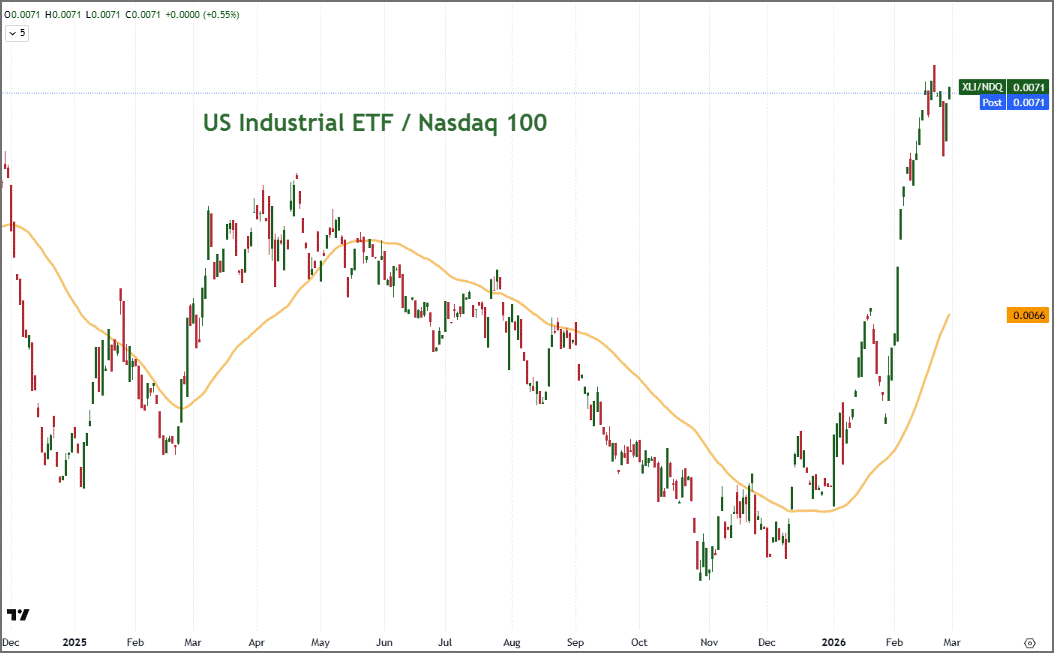
One broader theme that arises from a range of scheduled event risk is the health of the manufacturing sector with implications for trade and a critical pillar of global economic strength. There is a run of February manufacturing activity reports sprinkled through the week. Most prominent is the ISM manufacturing activity report for the past month from the United States; China’s government-derived PMI (including services and composite); key US trade partners’ surveys from Canada and Mexico; and emerging market Standard & Poor’s numbers from the likes of Brazil, Russia, Turkey and Hong Kong among others. Further, various business sentiment reports, trade updates and foreign reserve figures will shape the picture of international trade amid persistent uncertainty in relationships.
Chart of XLI US Select Industrial ETF to Nasdaq 100 Ratio (Daily) Source: TradingView.com; State Street
A Particular Look at the US Economies Course
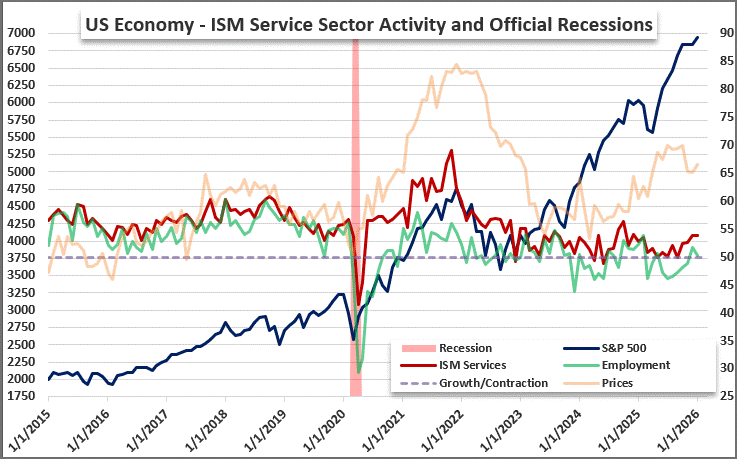
Looking for discrete event risk that can reasonably concentrate our focus on market impact, there are just a few highlights that can distract from the thematic. The ISM’s service sector activity report is unlikely to be a lightning rod for volatility given recent market activity following its release – though if markets are reactive, it would be either indicative of a severe surprise and/or a shift in focus to the United States’ economic health. Immediate market impact aside, this remains one of the best timely proxies for monitoring the strength of the world’s largest economy. The service sector accounts for more than three-quarters of economic output and hiring; so, where goes this measure, goes the US. Employment trends, consumer sentiment surveys, inflation concerns and more will heavily draw from this update either imminently or shortly down the line.
Chart of ISM Service Sector Activity Report and Key Components (Monthly) Source: ISM; Standard & Poor’s; John Kicklighter
A Nonfarm Payrolls Update Two Weeks Before the Next FOMC Decision
Another theme that will be provoked by scheduled event risk this week is the outlook for US monetary policy. While it seems that Fed rate speculation is generating less day-to-day volatility as of late, I believe that is more due to the uncertainty paired with the lack of pressing event risk and competing fundamental themes crowding out the financial headlines. The ingredients to the equation of a monetary policy path will receive a critical update in the form of the February employment report. Nonfarm payrolls will draw most of the immediate market focus given its long-standing recognition and the appeal of a clear number with performance assessed against both to a growth/contraction outcome and economists’ expectations.
However, the real weight of this broader report falls with the trajectory of the jobless rate and upstream factors like the trend in job openings. A weaker figure will boost the importance of this leg of the dual mandate – given inflation risks have slowly ebbed. However, the ‘equation’ of evaluating tipping points for hike/cut/hold remains significantly up in the air as the transition of Fed Chairmanship from Jerome Powell to Kevin Warsh looms two months out – especially with President Trump making clear his expectation for sharp rate cuts going forward.
Chart of DXY Dollar Index Overlaid with Implied FOMC Cuts Through 2026 (Daily) Source: TradingView.com; CME; ICE; John Kicklighter
Access More Global Macro Insights, Forecasts and Tools
Stay connected to timely global macro analysis designed to help market participants navigate shifting economic conditions and evolving risk. Gain access to regular market commentary, updated quarterly forecasts, a comprehensive two-week forward economic event calendar, and specialized tools built to support informed trading and risk management decisions.
The subsidiaries of StoneX Group Inc. provide financial products and services, including, but not limited to, physical commodities, securities, clearing, global payments, risk management, asset management, foreign exchange, and exchange-traded and over-the-counter derivatives. These financial products and services are offered in accordance with the applicable laws in the jurisdictions in which they are provided and are subject to specific terms, conditions, and restrictions contained in the terms of business applicable to each such offering. Not all products and services are available in all countries. The products and services offered by the StoneX
Group of companies involve risk of loss and may not be suitable for all investors. Full Disclaimer.
This content is not intended for residents of any particular country, and the information herein is not advice nor a recommendation to trade nor does it constitute an offer or solicitation to buy or sell any financial product or service, by any person or entity in any jurisdiction or country where such distribution or use would be contrary to local law or regulation. Please refer to the Regulatory Disclosure section for entity-specific disclosures.
No part of this material may be copied, photocopied or duplicated in any form by any means or redistributed without the prior written consent of StoneX Group Inc. The information herein is provided for informational purposes only. This information is provided on an ‘as-is’ basis and may contain statements and opinions of the StoneX Group of companies as well as excerpts and/or information from public sources and third parties and no warranty, whether express or implied, is given as to its completeness or accuracy. Each company within the StoneX Group of companies (on its own behalf and on behalf of its directors, employees and agents) disclaims any and all liability as well as any third-party claim that may arise from the accuracy and/or completeness of the information detailed herein, as well as the use of or reliance on this information by the recipient, any member of its group or any third party.
Currencies
The subsidiaries of StoneX Group Inc. provide financial products and services, including, but not limited to, physical commodities, securities, clearing, global payments, risk management, asset management, foreign exchange, and exchange-traded and over-the-counter derivatives. These financial products and services are offered in accordance with the applicable laws in the jurisdictions in which they are provided and are subject to specific terms, conditions, and restrictions contained in the terms of business applicable to each such offering. Not all products and services are available in all countries. The products and services offered by the StoneX Group of companies involve risk of loss and may not be suitable for all investors. Full Disclaimer. This content is not intended for residents of any particular country, and the information herein is not advice nor a recommendation to trade nor does it constitute an offer or solicitation to buy or sell any financial product or service, by any person or entity in any jurisdiction or country where such distribution or use would be contrary to local law or regulation. Please refer to the Regulatory Disclosure section for entity-specific disclosures. No part of this material may be copied, photocopied or duplicated in any form by any means or redistributed without the prior written consent of StoneX Group Inc. The information herein is provided for informational purposes only. This information is provided on an ‘as-is’ basis and may contain statements and opinions of the StoneX Group of companies as well as excerpts and/or information from public sources and third parties and no warranty, whether express or implied, is given as to its completeness or accuracy. Each company within the StoneX Group of companies (on its own behalf and on behalf of its directors, employees and agents) disclaims any and all liability as well as any third-party claim that may arise from the accuracy and/or completeness of the information detailed herein, as well as the use of or reliance on this information by the recipient, any member of its group or any third party.
Our market expertise, advanced platforms, global reach, culture of full transparency and commitment to our clients’ success all set us apart in the financial marketplace.
Reach
With access to 40+ derivatives exchanges, 180+ foreign exchange markets, nearly every global securities marketplace and numerous bi-lateral liquidity venues, StoneX’s digital network and deep relationships can take clients anywhere they want to go.
Transparency
As a publicly traded company meeting the highest standards of regulatory compliance in the markets we serve, our financials and record of accomplishment are matters of public record. StoneX’s commitment to “doing the right thing over the easy thing” sets us apart in the industry and helps us build respect, client trust and new partnerships.
Expertise
From our proprietary Market Intelligence platform, to “boots on the ground” expertise from award-winning traders and professionals, we connect our clients directly to actionable insights they can use to make more informed decisions and achieve their goals in the global markets.