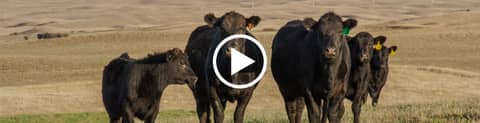
The last time El Niño met a large Australian cattle herd, in 2015, slaughter climbed to 37-year highs and beef production hit a record. El Niño puts the Australian cattle herd at risk because below average rainfall cuts grass on farm, pushing producers to sell more cattle, including the breeding females that drive future supply. The herd now sits at a similar stage of its cycle after four to five years of growth, with El Niño conditions forecast to take hold through 2027. That combination puts Australian slaughter, beef output and export capacity for the years beyond firmly in focus.
Ripley Atkinson, StoneX Australia Meats & Livestock Manager in Sydney, authors the firm's Australian Cattle and Beef Market Report and contributes weekly commentary on the Australian beef and lamb sectors. He tracks live cattle and beef supply, demand and price fundamentals, along with the export demand and trade flows that carry Australian beef into overseas markets.
Key Themes
El Niño in 2015 brought 37-year highs in Australian cattle slaughter and record beef production.
Australia's cattle herd has grown for four to five years and sits at a similar cycle stage to 2015.
Heavier female cattle sales during dry seasons reduce Australian beef supply and exports in later years.
Watch the Full Video
Australian Cattle Herd Cycle Echoes the 2015 Record Beef Year
Australia's cattle herd sits at a similar stage of its cycle to 2015, after four to five years of growth that have left it large. The 2015 cycle followed a rebuild that began in 2011, and when El Niño came into focus that year, Australian cattle slaughter climbed to 37-year highs and beef production set a record. Looking back at that period, Atkinson says "we saw the herd cycle at a very similar stage to where it is now." Notably, a large herd gives producers more cattle to sell once seasons dry out, which is the mechanism behind the 2015 surge in turnoff. Turning to 2027, Atkinson points to "the potential for the same dynamics to occur" as El Niño conditions establish themselves across the beef supply chain. For feedlots, processors and exporters, the 2015 precedent offers a reference point for how quickly Australian slaughter and beef output can climb once grass runs short.
Grass Shortages Push Australian Producers to Sell More Cattle
"When you have below average rainfall, resulting in below average grass availability, farmers sell more cattle." That chain, Atkinson explains, is how El Niño reaches the Australian cattle market. El Niño is traditionally associated with warmer than average temperatures and below average rainfall in Australia, a pattern linked to cool sea surface temperatures pooling off the east coast. Producers without enough feed on farm have little choice but to sell stock, lifting the number of Australian cattle sent to slaughter. The same weather pattern traditionally brings favorable rainfall to the Americas, where U.S. ranchers and Brazilian beef producers would be expected to retain more cattle than normal. As a result, Australian beef supply can rise just as the other two major beef exporters hold animals back, a split that shapes competition across global beef markets.
Female Cattle Sales Put Australia's 2028 Beef Exports at Risk
Female cattle sales are the link between a dry 2027 and tighter Australian beef supply in 2028 and 2029. When grass runs short, producers sell more stock, and that turnoff includes more of the breeding females that underpin the Australian beef herd. The effect on the Australian cattle herd is delayed, with a liquidation in 2027 leaving fewer cattle available for processing in the following two years. For Australian beef exporters, fewer cattle translate into lower export volumes and weaker competitiveness in global markets. Rainfall timing remains the key uncertainty for Australian producers, since El Niño reduces rain without stopping it altogether. According to Atkinson, "when you sell more females in time, that means the availability of future supply will shrink."
--- Written by Frédéric Guétin, StoneX Media Producer
--- Expert: Ripley Atkinson, StoneX Australia Meats & Livestock Manager
Meats & Livestock
StoneX TV content is created, produced, and distributed solely by StoneX Media Ltd (“StoneX TV”) and is provided for informational and educational purposes only. StoneX TV does not provide investment, financial, legal, or tax advice and does not make any recommendation or endorsement of any investment strategy, transaction, or financial instrument. Nothing in this content constitutes, or should be construed as, investment advice or a recommendation to buy, sell, or hold any financial instrument, including securities, futures, derivatives, digital assets, foreign exchange products, or CFDs. This content does not constitute an offer, invitation, or solicitation to engage in any investment activity. The information presented is general in nature and is not tailored to the financial situation, investment objectives, or risk tolerance of any specific person. You should not rely on this content as a substitute for independent professional advice. Investing and trading in financial instruments involves significant risk of loss and is not suitable for all investors. Past performance is not indicative of future results. Any views or opinions expressed are those of the presenter at the time of publication and are subject to change without notice. Such views may not necessarily reflect those of StoneX Media Ltd or its affiliates. StoneX Media Ltd and its affiliates, including StoneX Group Inc., may from time to time have positions in, or engage in transactions involving, the financial instruments referenced. This content may include general market commentary and opinion. It does not constitute independent investment research and has not been prepared in accordance with legal requirements designed to promote the independence of investment research. StoneX Media Ltd is not authorised or regulated to provide investment services and does not act in a fiduciary capacity. StoneX Media Ltd is incorporated in Ireland and operates in accordance with applicable Irish law. It is a wholly owned subsidiary of StoneX Group Inc. and is a separate legal entity from other subsidiaries within the StoneX Group, which may be regulated in various jurisdictions. StoneX Media Ltd does not act on behalf of, or provide services for, any regulated affiliate. This content is not directed at, and may not be distributed to, any person in any jurisdiction where such distribution would be contrary to local laws or regulations. Supporting documentation for any claims, comparisons, statistics, or technical data may be made available upon reasonable request, where applicable.
Discover more insights
Our subscribers have access to comprehensive market analysis from StoneX spanning commodities, equities, currencies and more.
Our market expertise, advanced platforms, global reach, culture of full transparency and commitment to our clients’ success all set us apart in the financial marketplace.
Reach
With access to 40+ derivatives exchanges, 180+ foreign exchange markets, nearly every global securities marketplace and numerous bilateral liquidity venues, StoneX’s digital network and deep relationships can take clients anywhere they want to go.
Transparency
As a publicly traded company meeting the highest standards of regulatory compliance in the markets we serve, our financials and track record are matters of public record. StoneX’s commitment to “doing the right thing over the easy thing” sets us apart in the industry and helps us build respect, client trust and new partnerships.
Expertise
From our proprietary Market Intelligence platform to “boots-on-the-ground” expertise from award-winning traders and professionals, we connect our clients directly to actionable insights they can use to make more informed decisions and achieve their goals in the global markets.