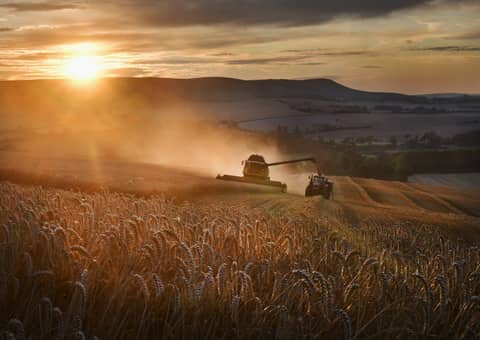
Europe's crop yield gap has a specific and traceable cause, namely that European farmers were locked out of gene editing technology for more than a decade while growers in the U.S., Brazil and elsewhere planted seed developed with it. The consequence of that lockout runs in two directions at once, because farmers without access to improved seed have leaned harder on chemical inputs while still harvesting less per hectare than their competitors. The European Parliament has now backed rules permitting crops developed through gene editing to be grown across the European Union, which removes the barrier but does not immediately remove the gap. What sits between the vote and the field is an implementation window, and what sits behind the gap is an economics story about which crops the seed industry could ever afford to improve.
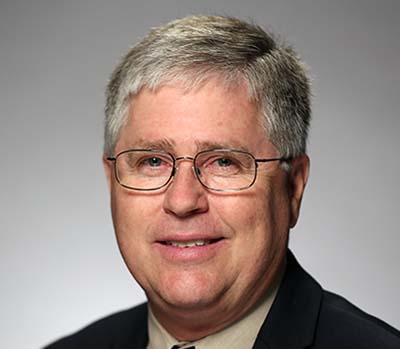
Ben Klieve, CFA, is a Senior Research Analyst at StoneX Financial Inc., where he covers agriculture and food sector equities spanning animal protein, farm inputs and the broader food and agribusiness supply chain from field to consumer. His coverage of farm inputs and agricultural technology runs directly across the cost structures and seed economics that determine how much chemistry a grower applies and what that grower harvests.
Key Themes from the Discussion
European growers without access to gene edited seed have used more herbicides and pesticides while running lower yields than peers
Gene editing works inside a crop genome rather than introducing foreign DNA, the distinction the European Parliament rules turn on
A two year implementation window means the EU yield gap only starts narrowing from 2028, not the day rules passed
Watch the Full Conversation
European Farmers Absorb a Heavier Chemical Input Bill
European farmers have carried higher herbicide and pesticide costs specifically because the seed available to them could not do the work that gene edited seed does elsewhere. Growers on the wrong side of that divide, Klieve says, have paid for it twice, since "these farmers that haven't had access to technologies have subsequently been forced to use more herbicides, more pesticides, and have lower yields than their farming peers in other countries". The mechanism behind it is straightforward, because gene editing lets breeders address pest and environmental stress in the seed itself rather than leaving the grower to solve it in the sprayer. As a result, the same pressure gets priced into a European farm as a recurring chemistry purchase and into a competing farm as a one-time seed decision. For buyers and processors sourcing out of the European Union, that shows up as a cost base built on inputs rather than genetics.
EU Laboratories Ran Research Their Own Growers Could Not Plant
The European Union's yield gap did not open because European science fell behind, since gene editing research was running inside the European Union throughout the period its farmers were shut out of the field. Klieve draws the line between the laboratory and the furrow plainly, because the work was underway and "they just haven't been able to actually apply it to the field", Klieve says. CRISPR, the most common form of the technology, has existed for roughly 10 to 15 years and is the same tool that reshaped drug development in pharmaceuticals before it reached the seed industry. Conversely, in the U.S. and Brazil that research moved into commercial varieties, while the European Union held it at the laboratory stage. The practical effect is that European growers hosted the research without gaining the seed it produced.
Europe's Yield Gap Begins Narrowing Only From 2028
The European Parliament's decision does not reach European fields immediately, because the European Union has set an implementation period of roughly two years before gene edited seed can be planted commercially. That timing matters for anyone modeling European crop supply or input demand, since the input bill and the yield shortfall both persist through the window rather than resolving at the vote. Klieve treats the delay as unremarkable for regulation of this scale, given that nothing in seed approval moves overnight, which places the first realistic planting around the summer of 2028. Farmers can then begin using the same seed technologies their competitors already have and start working the difference down. According to Klieve, "starting in 2028, that gap is going to start to be closed".
--- Written by Gus Farrow, Senior Manager, StoneX Media
--- Expert: Ben Klieve, Benchmark Senior Research Analyst
Grains & Oilseeds
StoneX TV content is created, produced, and distributed solely by StoneX Media Ltd (“StoneX TV”) and is provided for informational and educational purposes only. StoneX TV does not provide investment, financial, legal, or tax advice and does not make any recommendation or endorsement of any investment strategy, transaction, or financial instrument. Nothing in this content constitutes, or should be construed as, investment advice or a recommendation to buy, sell, or hold any financial instrument, including securities, futures, derivatives, digital assets, foreign exchange products, or CFDs. This content does not constitute an offer, invitation, or solicitation to engage in any investment activity. The information presented is general in nature and is not tailored to the financial situation, investment objectives, or risk tolerance of any specific person. You should not rely on this content as a substitute for independent professional advice. Investing and trading in financial instruments involves significant risk of loss and is not suitable for all investors. Past performance is not indicative of future results. Any views or opinions expressed are those of the presenter at the time of publication and are subject to change without notice. Such views may not necessarily reflect those of StoneX Media Ltd or its affiliates. StoneX Media Ltd and its affiliates, including StoneX Group Inc., may from time to time have positions in, or engage in transactions involving, the financial instruments referenced. This content may include general market commentary and opinion. It does not constitute independent investment research and has not been prepared in accordance with legal requirements designed to promote the independence of investment research. StoneX Media Ltd is not authorised or regulated to provide investment services and does not act in a fiduciary capacity. StoneX Media Ltd is incorporated in Ireland and operates in accordance with applicable Irish law. It is a wholly owned subsidiary of StoneX Group Inc. and is a separate legal entity from other subsidiaries within the StoneX Group, which may be regulated in various jurisdictions. StoneX Media Ltd does not act on behalf of, or provide services for, any regulated affiliate. This content is not directed at, and may not be distributed to, any person in any jurisdiction where such distribution would be contrary to local laws or regulations. Supporting documentation for any claims, comparisons, statistics, or technical data may be made available upon reasonable request, where applicable.
Discover more insights
Our subscribers have access to comprehensive market analysis from StoneX spanning commodities, equities, currencies and more.
Our market expertise, advanced platforms, global reach, culture of full transparency and commitment to our clients’ success all set us apart in the financial marketplace.
Reach
With access to 40+ derivatives exchanges, 180+ foreign exchange markets, nearly every global securities marketplace and numerous bilateral liquidity venues, StoneX’s digital network and deep relationships can take clients anywhere they want to go.
Transparency
As a publicly traded company meeting the highest standards of regulatory compliance in the markets we serve, our financials and track record are matters of public record. StoneX’s commitment to “doing the right thing over the easy thing” sets us apart in the industry and helps us build respect, client trust and new partnerships.
Expertise
From our proprietary Market Intelligence platform to “boots-on-the-ground” expertise from award-winning traders and professionals, we connect our clients directly to actionable insights they can use to make more informed decisions and achieve their goals in the global markets.