UPDATE: Colombia’s Leftist Candidate Gustavo Petro Wins Presidency,
(Adds land reform and import tariff details)
Coffee Network (Bogota) –Colombia’s leftist candidate Gustavo Petro won run-off presidential elections on June 19, promising to protect the agricultural sector, although aiming to impose high property taxes on idle land, heightening fears among coffee growers.
Petro, a former member of the M-19 guerrilla movement, has promised to impose higher tariffs to protect the agricultural and industrial sectors; set a very high property tax on idle lands in the rural areas, including coffee areas; increase the role of the state in the healthcare sector, and halt licensing for new oil and coal contracts as part of a plan for energy transition.
The country’s coffee growers federation FNC congratulated the elected president claiming “the elected president today knows Colombia, and we know that he will know work hand in hand with the coffee sector - a sector with history, results, an example of union and democracy,” FNC said.
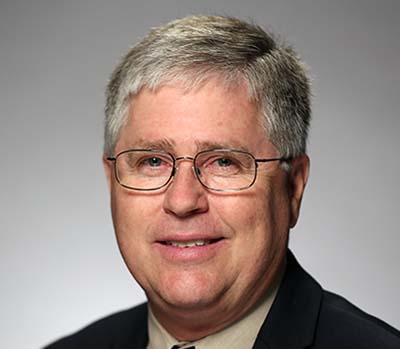
Senator and coffee grower Alejandro Corrales was less polite than the coffee growers federation. Corrales said he has experienced the atrocities that the guerrillas caused on his family with cousins killed and his father kidnapped. He also said the guerrillas in Colombia forced him many times to displaced him, preventing him to visit his coffee farm.
“I have had to leave this coffee farm because I have not been able to work many times. I have seen what the war does to the rural areas of the country,” Senator Corrales said yesterday prior to the elections.
In his victory speech, Petro stated that his government will seek the unity and the peace of the country through a great national agreement, and reaffirmed that he will develop the capitalism model. Petro said that his government will represent the real change aimed at achieving unity through the politics of dialogue and mutual understanding. He mentioned that there will not be political or legal persecution against opponents. Overall, his main goal is to create a great national agreement with dialogues in regions playing the core role aimed at carrying out the needed reforms to achieve peace and generate the best conditions and social justice for all Colombians. He reaffirmed the respect for private property and, said that he will develop the capitalism model with economic pluralism, which means efforts to move away from the old “slaver and feudalism” structures and from extraction industries, putting the rural sector, the popular economy and the industry in the middle of the economy through education, cheap credit and new technologies.
Petro plans to carry out a land reform. The land reform aims to guarantee the right to land for rural families, the formalization of property and avoid the indiscriminate expansion of the agricultural frontier. As a strategic tool, a multipurpose land registry will be carried out aimed at discouraging the unproductive estates through taxes while promoting a fair distribution of land. It will be proposed that the owner of unproductive estates should activate the production in the land, pay the applicable taxes or, ultimately, sell the land to the State to be given to rural communities.
Petro also plans to slap import tariffs on good products, and renegotiate free trade agreements. Colombia will stop importing million tons of food and inputs that should and can be produced by the country. Current import tariffs on goods, services and inputs that do not allow to achieve these goals will be gradually removed or increased, Petro has said. 2A policy of ‘smart import tariffs’ will be created for inputs and goods in the agricultural and agroindustry sectors aimed at promoting the generation of value added, competitiveness and the domestic industry,” local brokerage Credicorp Capital said.
His government will renegotiate free trade agreements to improve the position of Colombia in global supply chains and world trade. The intellectual property rights and conditions for foreign investment will be revised.
Juan Alvaro Arboleda, a large coffee grower in the Antioquia province—Colombia’s second-largest coffee producing province, said coffee farmers are awaiting to see what actions Petro would likely impose on the coffee sector.
“If people could sell the farms, I'm sure we would all sell them and leave. But there we must wait until they take them away from us (the farms). People are worried, sad and unmotivated,” he told Coffee Network.
Colombia,the world’s third-largest coffee producer, produced 12.6 million bags of 60-kg last year, and it is expected to produce 12-12.5 million bags this year.
President Ivan Duque and other opponents say Petro would move Colombia in the direction of neighboring Venezuela, which faces economic collapse and political repression. Petro is looking to raise taxes on the wealthy, implement the 2017 peace deal with Colombia's main rebel group, and increase public sector participation in the economy and replace oil profits with tourism.
Government budgets also depend highly upon both oil extraction and foreign investment — changing that overnight is highly unlikely, analysts have repeatedly said.
Colombia is now the latest nation in Latin America that has shifted to the left in a region ravaged by the coronavirus pandemic’s economic crisis. Colombia has had the oldest democracy in Latin America, and was until now a conservative nation. Petro becomes the country’s first left-wing president.
But Colombia’s congress will be a key counterweight to his administration’s plans, after lawmakers representing the far left won fewer seats than expected in March elections. A fragmented congress will limit the ambition and feasibility of reforms, Control Risks, a global risk consultancy specializing in political, integrity and security risk said,
“The possible use of “state of emergencies” to evade legislative control will lead to clashes and uncertainty,” Control Risks added. In addition, strong institutions such as the Constitutional Court, the Prosecutor's office, the attorney general's office and comptroller's office, will act as a counterweight to radical proposals.
By Diana Delgado
(This story was published on Monday)