On February 07, 2023, the People's Bank of China (PBoC) and the Central Bank of Brazil (BCB) signed a memorandum of understanding establishing an agreement for the use of the yuan (renminbi) for economic transactions between the countries. With the conclusion of the agreement, it becomes possible to carry out exchanges between the Brazilian real and yuan directly, without the need to use an intermediate currency, such as the dollar, reducing transaction costs and time required for payment settlement.
China has actively pursued these cooperation agreements with other countries, such as Russia, France, Saudi Arabia, Argentina, and Chile. More than 25 countries are already part of this arrangement for clearing payments in yuan, with direct access to the Chinese international payment system (Cross-Border Interbank Payment System, CIPS). Among other features, this system allows 24-hour remittance in yuan. A Sino-Brazilian bank already participates in CIPS in São Paulo, allowing Brazilians to pay foreigners with yuan.
This does not mean anyone doing business with Chinese companies must accept the yuan as payment or any other currency. However, this possibility has become easier and less costly with the agreement.
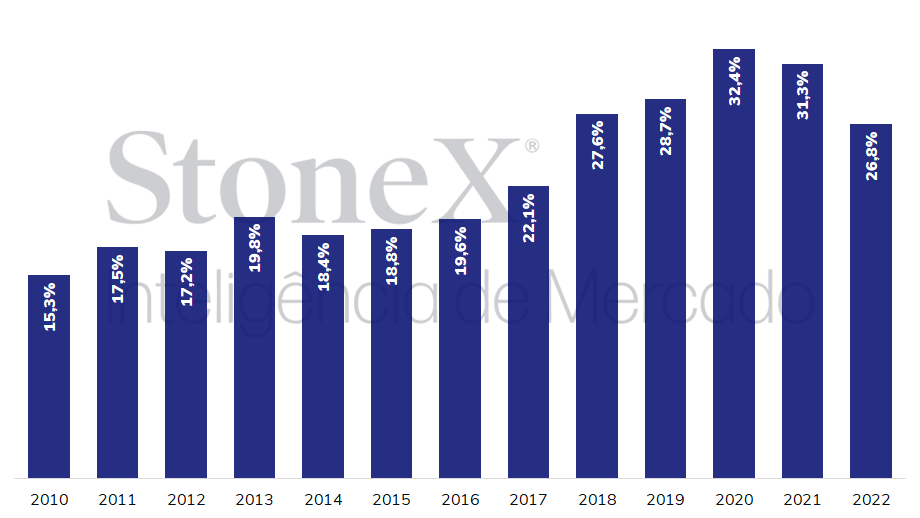
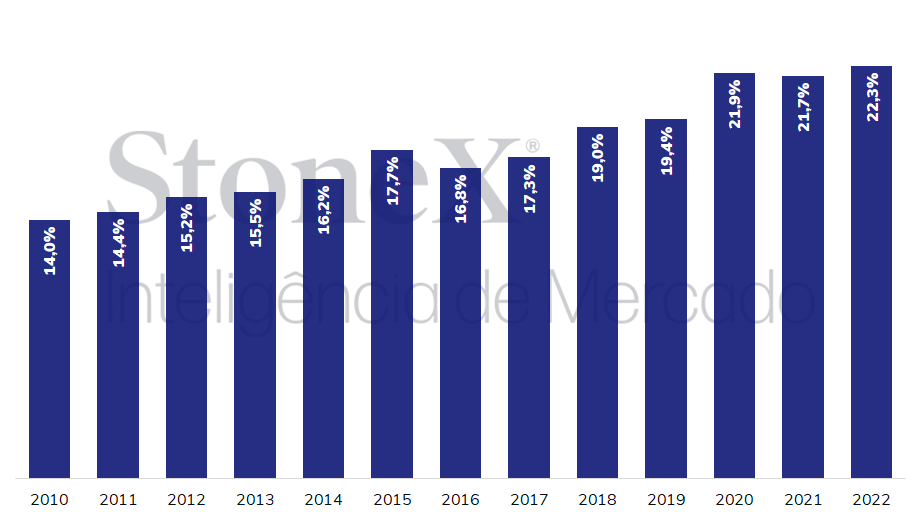
China is Brazil's largest trading partner, being, in 2022, the destination of 26.8% of exports and the origin of 22.3% of imports. Last year, exports totaled USD 89.4 billion and imports USD 60.7 billion, with a surplus balance of USD 28.7 billion. The main products exported to the Asian country were iron ore, soybean, meat, sugar and cellulose, while the main imported products were basic and processed industrial inputs.
In addition, in a policy of risk diversification by the Central Bank, the yuan already represents the second currency with the largest share in the monetary authority’s international reserves, with 5.4% of the total, surpassing the euro, which has 4.7% participation.

USD = US dollar; EUR = European euro; JPY = Japanese yen; GBP = British pound; CAD = Canadian dollar; AUD = Australian dollar; and CNY = Chinese yuan.
Although the dollar is still in a hegemonic position in the world financial system, Chinese officials understand that reducing dependence on American systems and currency for economic transactions is vital in its strategy of establishing itself as a global geopolitical and economic leader, as well as allowing greater autonomy and reducing possible volatilities by not relying on foreign currencies. One of the main attractions offered by China is its volume in global trade, as in 2022, the country was the largest exporter (USD 3.594 trillion, or 20.1% of global exports) and the second largest importer (USD 3.373 trillion, or 16.7% of global imports) in the world economy. In addition, by using its currency, China finds it easier to offer credit lines to promote foreign trade and bilateral investments, deepening the use of the yuan in trade and financial flows. As of April 2023, the Chinese currency was already the fifth most used in international payment systems, above such major pairs as the Japanese yen and the Swiss franc.
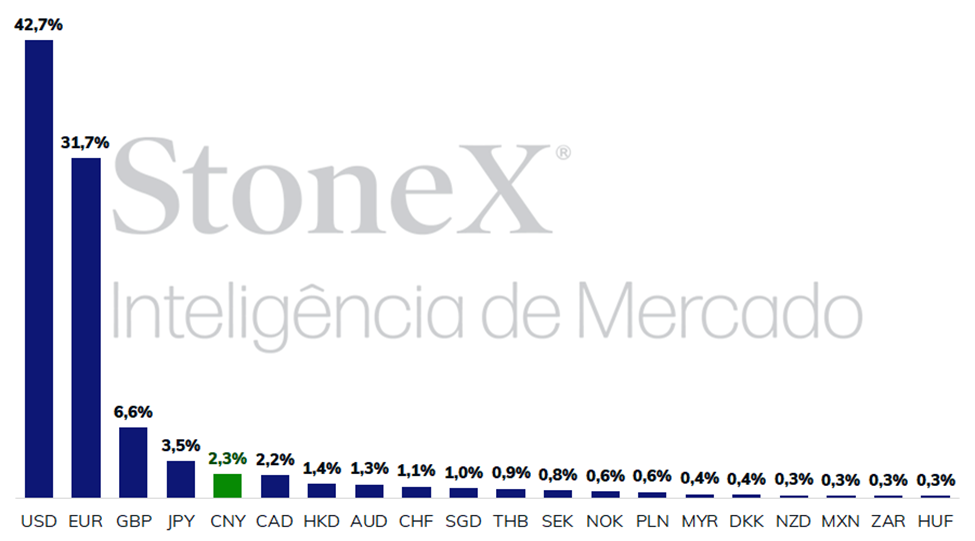
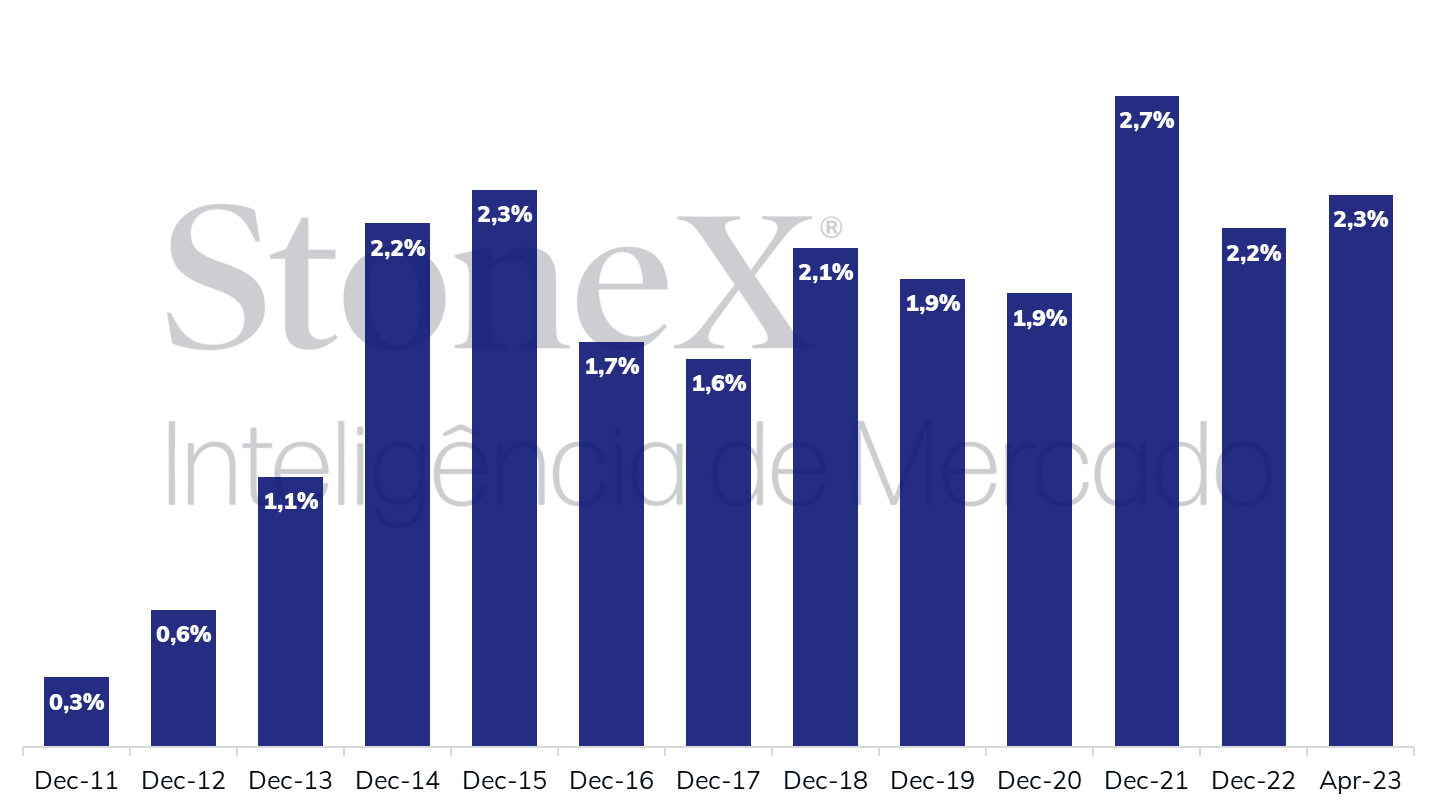
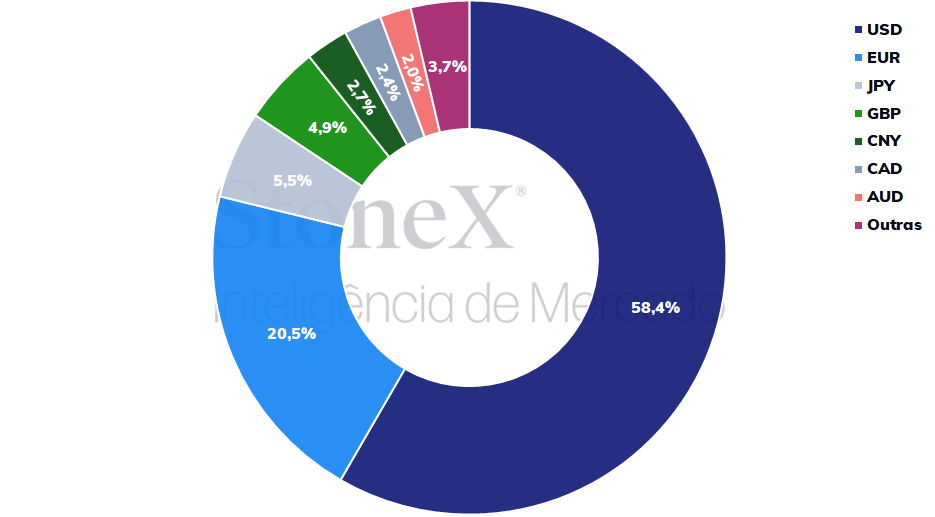
USD = US dollar; EUR = European euro; JPY = Japanese yen; GBP = British pound; CNY = Chinese yuan; CAD = Canadian dollar; and AUD = Australian dollar.
Another factor spurring Beijing to boost the use of the yuan as an international currency is the growing antagonism with Washington on various topics, from the relationship with Taiwan to human rights to the use of microchip technologies. In recent times, the United States, together with key allies in the Group of Seven (G7), imposed economic sanctions that removed access to financial institutions from Iran (2012), North Korea (2017), and Russia and Belarus (2022) to the international payment system SWIFT.
Additionally, individuals and organizations from these nations have frozen their international reserves abroad. By developing its international payment systems and striking deals in its currency, China would mitigate the potential impacts of economic sanctions in a case of diplomatic friction with the West.
The biggest obstacle to internationalizing the yuan at this time is that the use of the yuan is fundamentally limited to transactions between China and other countries, which reduces its liquidity. Additionally, the Chinese government is known to implement capital controls and other measures to affect the external value of its currency by its economic priorities, which brings some risks for nations that accumulate international yuan reserves.