With the sharp losses, especially in Brazil, estimates indicate that the world consumption of the oilseed will be above production in the 2021/22 cycle, even with the prospects of a lower Chinese demand, reinforced by the very restrictive measures adopted by the country to contain the coronavirus outbreaks. In its most recent estimate, the USDA reduced the country's import number to 91 million tonnes – the lowest level since the height of the trade war and the 2018/19 African swine fever outbreak, which shrunk the country's hog herd.
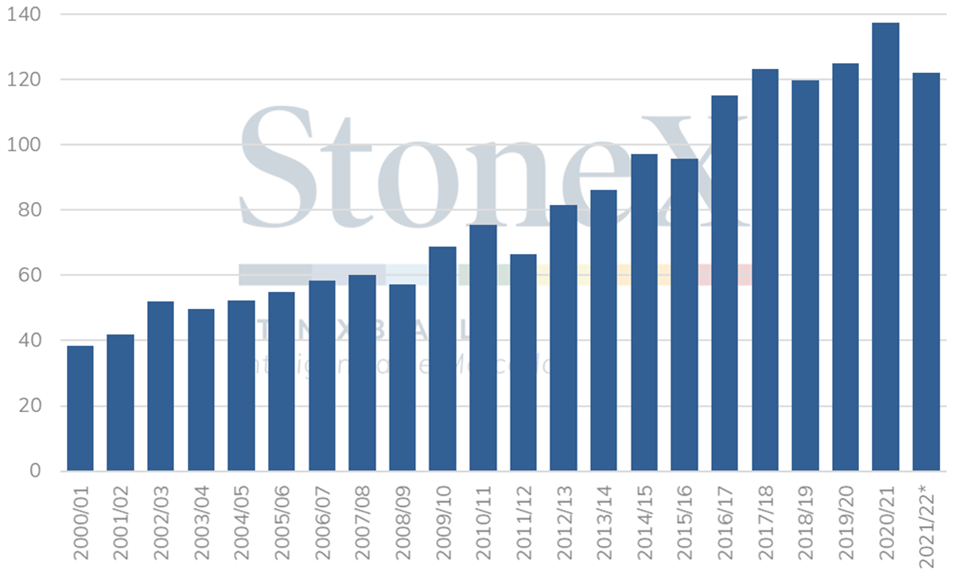
Brazil soybean production (MMT)
Sources: Conab and StoneX. *Estimate.
Meanwhile, the war in Ukraine adds to supply-side concerns indirectly, reinforcing an uneasy global balance sheet for vegetable oils. The country is the main producer and exporter of sunflower oil, the origin of about one-third of the world production of the input before the conflict.
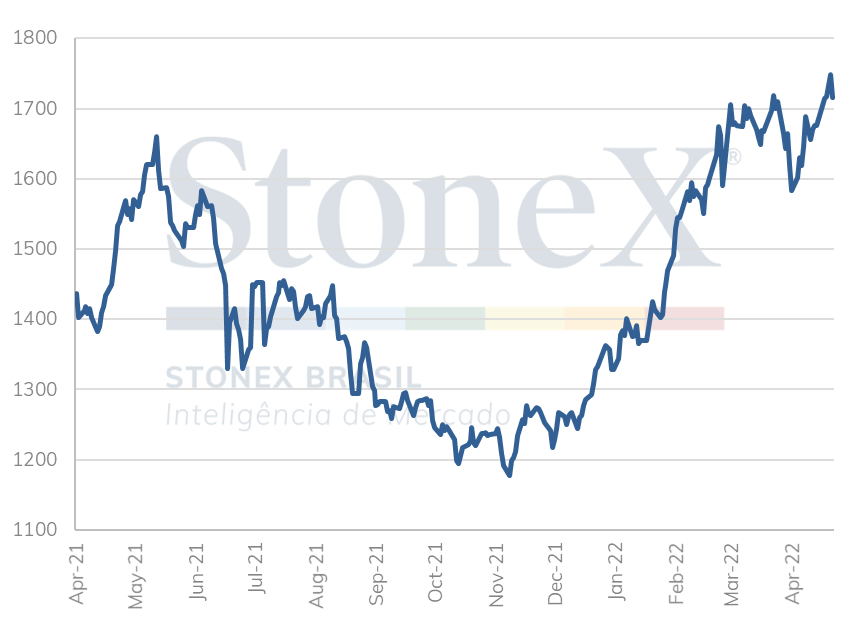
Thus, soybean prices in Chicago have been maintained at more sustained levels, despite the high volatility that has been recorded, with wide oscillations from one day to the next, both up and down.
Given this scenario, the US 2022/23 crop is at the center of attention. It is worth remembering that soybean production is very concentrated in Brazil, Argentina and the US. With higher prices and crop failure in South America, there were already prospects of increasing US acreage. Amid a scenario of high fertilizers prices, and the characteristics of corn cultivation, which is more dependent on nutrient supplementation, soybean has advantages in the dispute for space in the country's plantations.
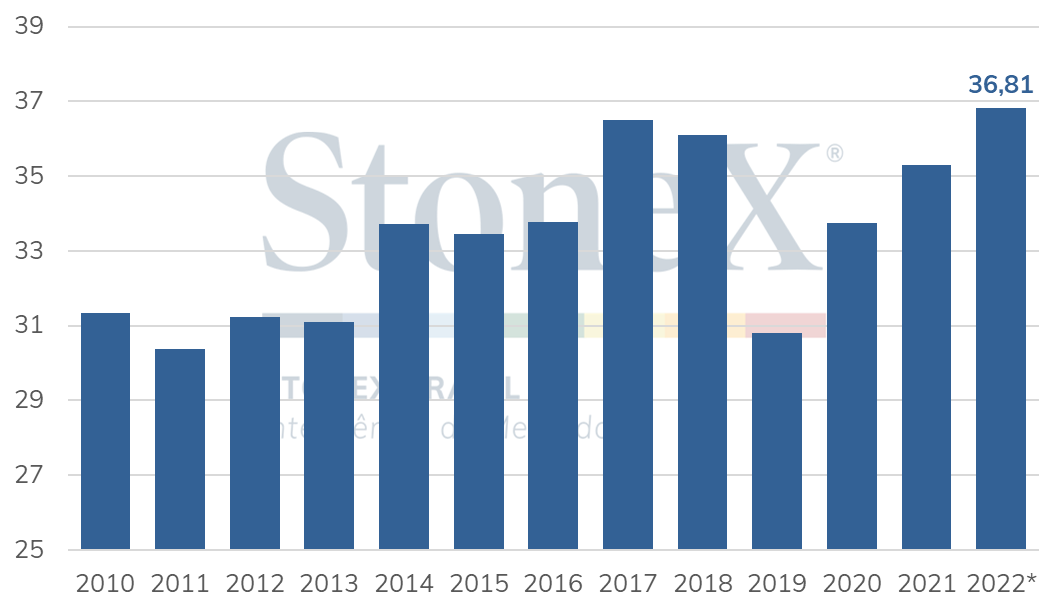
Even with the expectations of an increase in the US soybean acreage, the number of planting intentions released at the end of march and much awaited by the market was surprised, by being higher than expected, at 36.8 million hectares (91 million acres), even higher than the area planted with corn. It is a very rare fact such a demonstration by American producers, who are traditionally inclined to grow more cereals than soybeans, a situation recorded very rarely in USDA surveys.