

FX Weekly Overview (Brazil Issue)
Dollar to reflect US economic data, Central Bank minutes, inflation in Brazil, and the Middle East

Leonel Mattos
- Currencies
By: John Kicklighter, Head of Market Research
Risk aversion gained serious traction this past week with a notable shift in ‘good news’ losing traction, volatility making a serious headline and meaningful technical levels giving way. It would seem a ‘well placed’ spark could turn hesitation into bear but there is a problem…liquidity.
Talking Points:
We had seen a general erosion in risk appetite across the financial system over the past three weeks, but the swoon took a more serious tone through this past week in particular. The cautious retreat seen more broadly and distinct progress from the benchmarks on the extreme end of the speculative spectrum (eg Bitcoin and tech stocks) seemed to broaden. There was a notable mix of breadth, depth and intensity that should raise concern from market observers and participants alike – the connection between the financial system and economy seems to be more overt of late. In terms of breadth, it wasn’t just the Magnificent 7 that suffered this past week. Broader US indices like the S&P 500 and the blue-chip Dow Jones Industrial Average were sharing in the caving sentiment, while other sentiment-aligned markets registered more substantial losses such as global equities (eg VEU), emerging markets (eg EEM) and commodities (eg DBC) amongst others.
Risk Spectrum Standing and Intensity 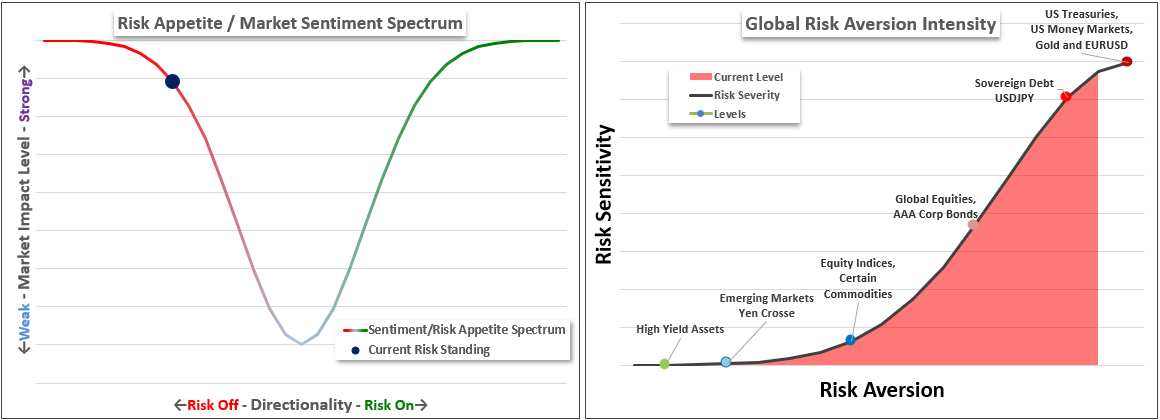
Source: John Kicklighter
As far as intensity, the jolt of volatility that shot through the market on Thursday stands as a reminder to the comfortably passive that there is always danger amidst the crowd. While there was a more expansive staging to trigger that bout of drama, the financial media landed on a few more prominent headlines making their rounds. A delayed nonfarm payrolls release posted a larger net increase in jobs for the month of September than expected, but relief that may have offered in beating back concerns over the economy was eventually offset by the cooler probability of a December 10th rate cut by the Federal Reserve. As the market capsized, it further drew unflattering scrutiny to the lack of positive influence from Nvidia’s topline earnings beat – though this was not far off the normal NVDA reaction pattern we have seen the past five quarters of supposed outperformance. And, then there is depth to the shift in market sentiment. This comes more in the form of milestones seen on technical charts. The S&P 500 clearing the floor of a multi-month rising trend channel and its 50-day simple moving average, the latter of which concluded the longest climb above the average in 14 years. Perhaps it is the shift in sentiment that in turn highlights the charts; but when fear sets in, justification is more easily satisfied.
S&P 500 with 100-Day Moving Average Overlaid with Nasdaq 100 – Dow Ratio (Daily) 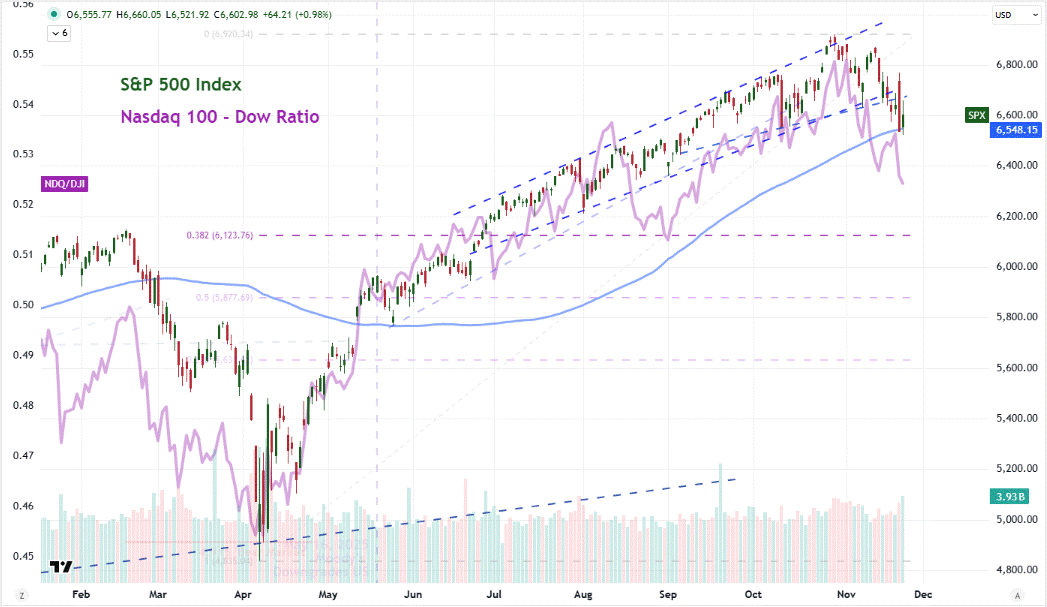
Source: TradingView.com, Standard & Poor’s
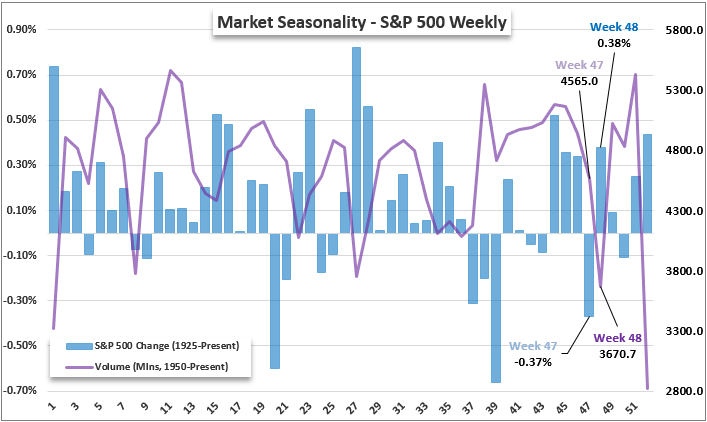
If this mix of ingredients were coming together say in mid-September, it would portend a more ominous horizon. That is because we would seasonally be coming out of ‘summer doldrums’ and into a more active period of market development. Instead, circumstances are reversed as we are entering a phase in which volatility and participation (volume and open interest) as expected to retreat. The 48th week of the calendar year typically aligns to the US Thanksgiving holiday period. That takes the US markets offline on Thursday and volume very rarely rebounds for the subsequent Friday. For the S&P 500, this translates into an averaged modest gain over the past century; but it is the influence this has on volume and volatility that is more statistically consistent. And, while this is principally a US absence, it represents a critical ‘fire break’ to building momentum. That is not to say it is impossible for risk aversion to gain further traction. It is just less conducive. Should ‘risk off’ indeed flare later into the week, selling in thinned markets tends to take more of a dramatic tenor – intense but shorter lived, at least until liquidity returns.
Historical Average S&P 500 Change and Volume by Calendar Week
Source: John Kicklighter, Standard & Poor’s
Market conditions and scheduled event Risk once again find themselves out of step heading into the new trading week - it just so happens that now the backdrop seems more primed for provocation, but the calendar is light on updated that can reasonably be expected to trigger global volatility. It isn't that the docket is completely barren, but we just don't find many listings have a reasonable history of catalyzing the wider markets and the top themes are not in the middle of a developing phase of momentum.
Interest rate speculation has delayed data. The AI charge has deemed better than expected earnings 'disappointing' and the season closed. Growth trends will see little critical steer for system insight before year's end. Pair that with the liquidity expectations this week, and the bar is set high for event risk setting off a cascade. Perhaps though a word to the outlier risks. An example is the financial strain in Japan. Political turnover, trade tensions and a stimulus program have seen the Yen tumble and JGB yields soar. This is not yet a situation that looks contagious - despite conspiracy theories to the opposite - but fear and herd mentality can be unpredictable, particularly when liquidity is distorted.
Calendar of Top Global Macro Event Risk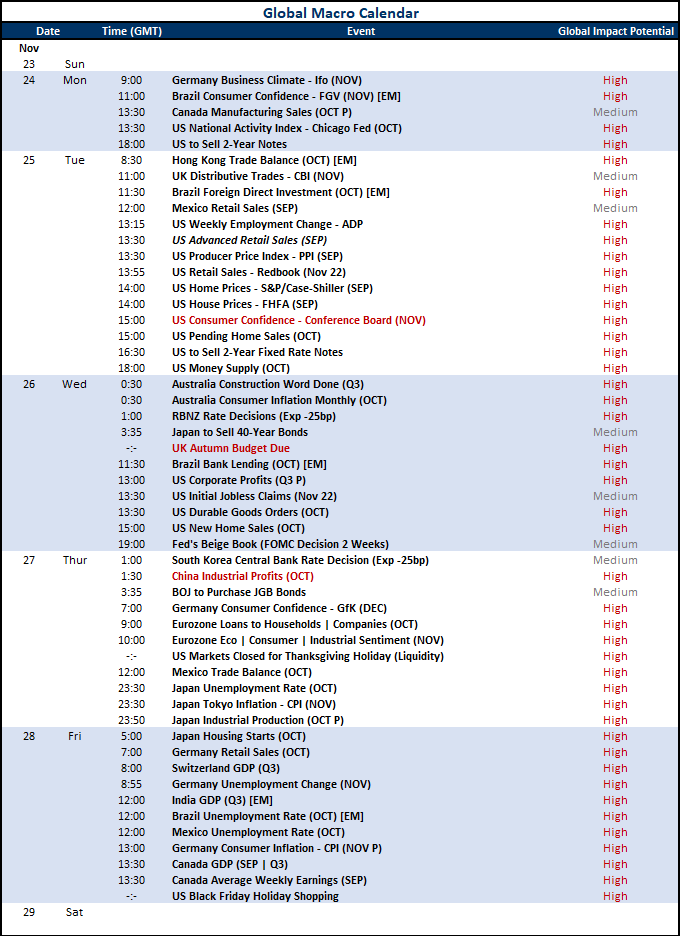
Source: John Kicklighter
For top scheduled event risk, the listing on the coming weeks docket that is closest to reaching the core of the most prominent and market moving themes may be the US produce price index (PPI). This is the Bureau of Labor Statistics upstream inflation reading, and is at the moment the only 'official' price gauge scheduled for release before the December FOMC rate decision. Typically, the PPI is an afterthought, an echo of interest that contextualizes the analysis around the CPI. However, as the only insight available on the dual mandate of the central bank, it may be taken a little more seriously - by the market, if not the Fed. A Tuesday release offers a little breathing room before Wednesday evening's liquidity drain, but it will still be difficult for this data to take control of the market - dollar and US indices, much less more broadly - in a meaningful way.
Chart of US CPI and PPI Year-Over-Year (Monthly)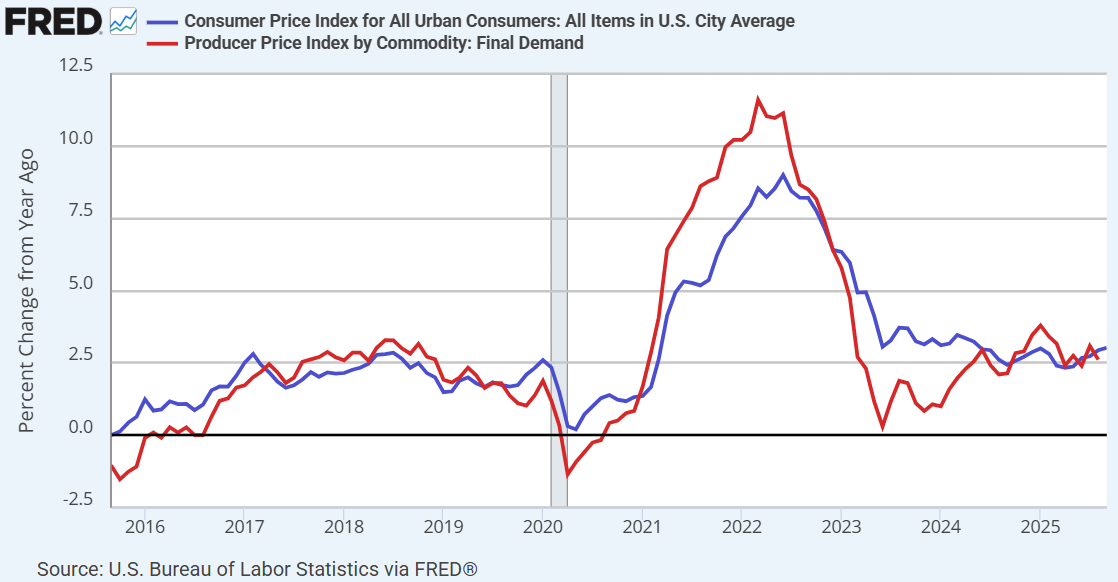
Source: Federal Reserve Economic Database, US Bureau of Labor Statistics
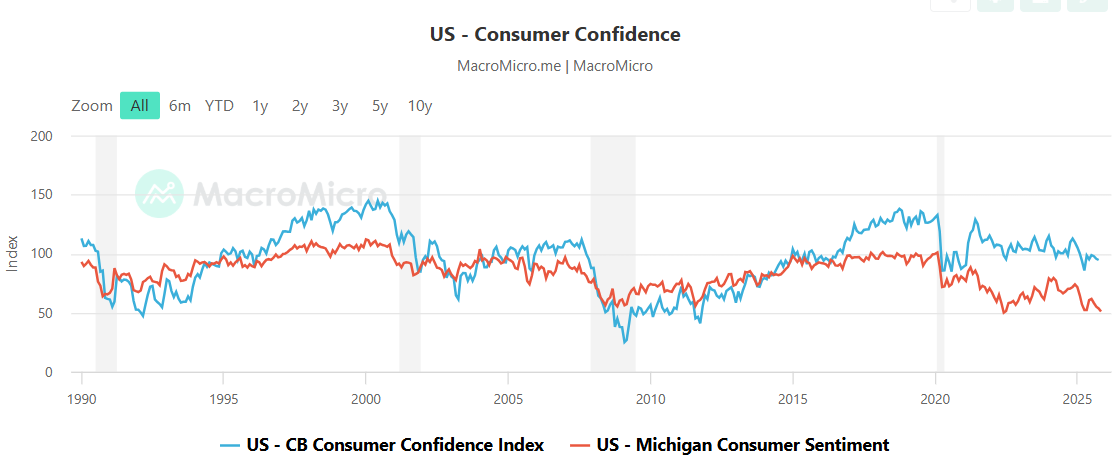
Another US release set for Tuesday is the Conference Board's consumer confidence update for the past month. If you didn't see the first reading of the UofM report on sentiment or this past week's updated final reading, you missed a worrying sign for the US consumer - the engine of economic activity for the world’s largest. According to the leading sentiment index, the headline figure edged up slightly from the preliminary figure but was nevertheless in close proximity to the series' record low. And, while there was a slight uptick in the expectations component and pullback in the elevated inflation forecast, the current conditions measure dropped to a record low. On a comparative basis, the Conference Board's readings have maintained a historical premium to the University of Michigan's series. That said, its own historical context has reflected the same struggle on the back of concern founded around labor conditions, growth forecasts and market potential. From a practical perspective, this data run has not proven itself to be independently market moving, but surrounding conditions may punch up its potential.
US Consumer Confidence UofM and Conference Board (Monthly)
Source: MacroMicro, University of Michigan, Conference Board
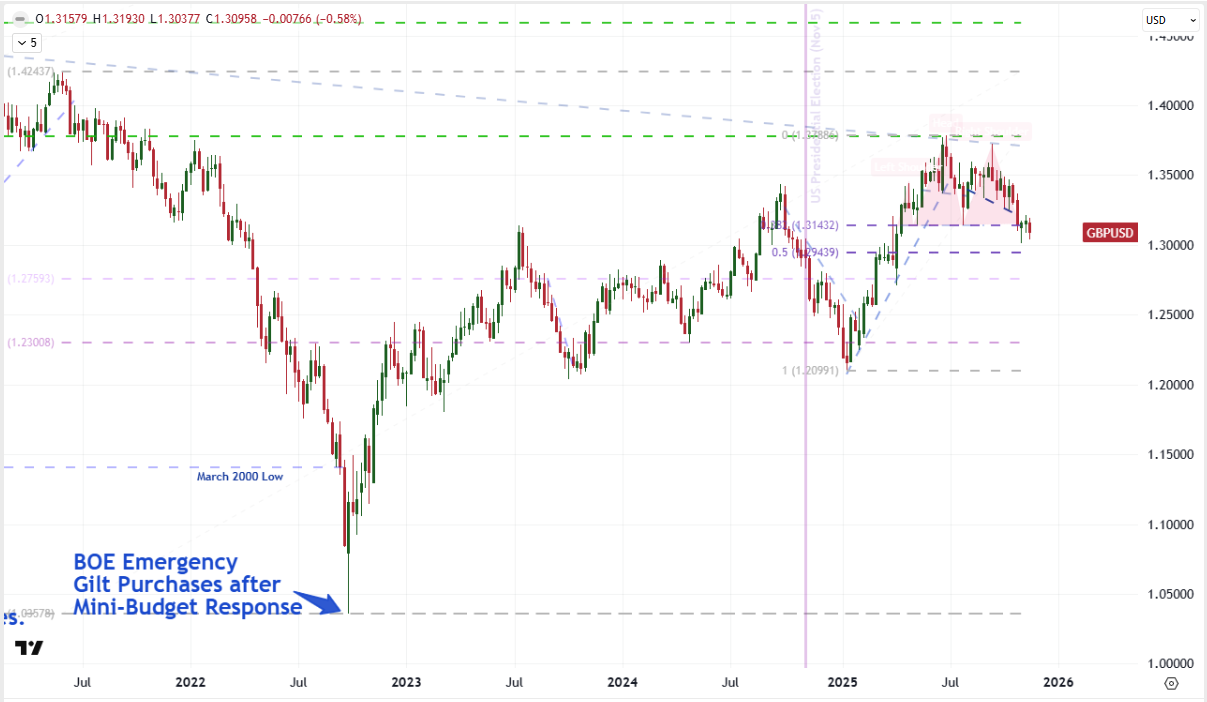
Designating a third top listing for the week requires consideration. There are readings like the RBNZ rate decision that is expected to deliver a 25 basis point rate cut, which is a meaningful outcome; but New Zealand is a small economy with its monetary policy representing a limitation on its weight. There are highly relevant economic readings like the Chinese corporate profit update which represents a significant reading to a top economy, but it is due when the global liquidity tide is already rolled out. At the convergence of pointed relevancy, coming during active conditions and carrying a potential of spillover risk, the UK's Autumn budget is being closely watched. Skepticism runs deep on the efficacy of the updated plan as the country’s deficit grows and reports that pressure to oust the Prime Minister is building. The past few budgets generated limited fanfare in the form of volatility for the likes of the British Pound and FTSE100, but the expectations look significantly different this go around. There seems a concern of lost market confidence and market volatility that is akin to the mini-budget that created extreme volatility and a demand for emergency liquidity back in 2022. At the very least, caution is warranted during the London session Wednesday.
Chart of GBPUSD (Weekly)
Source: TradingView
-- Written by John Kicklighter, Global Head of Content
© 2025 StoneX Group Inc. all rights reserved.
The subsidiaries of StoneX Group Inc. provide financial products and services, including, but not limited to, physical commodities, securities, clearing, global payments, risk management, asset management, foreign exchange, and exchange-traded and over-the-counter derivatives. These financial products and services are offered in accordance with the applicable laws in the jurisdictions in which they are provided and are subject to specific terms, conditions, and restrictions contained in the terms of business applicable to each such offering. Not all products and services are available in all countries. The products and services offered by the StoneX
Group of companies involve risk of loss and may not be suitable for all investors. Full Disclaimer.
This content is not intended for residents of any particular country, and the information herein is not advice nor a recommendation to trade nor does it constitute an offer or solicitation to buy or sell any financial product or service, by any person or entity in any jurisdiction or country where such distribution or use would be contrary to local law or regulation. Please refer to the Regulatory Disclosure section for entity-specific disclosures.
No part of this material may be copied, photocopied or duplicated in any form by any means or redistributed without the prior written consent of StoneX Group Inc. The information herein is provided for informational purposes only. This information is provided on an ‘as-is’ basis and may contain statements and opinions of the StoneX Group of companies as well as excerpts and/or information from public sources and third parties and no warranty, whether express or implied, is given as to its completeness or accuracy. Each company within the StoneX Group of companies (on its own behalf and on behalf of its directors, employees and agents) disclaims any and all liability as well as any third-party claim that may arise from the accuracy and/or completeness of the information detailed herein, as well as the use of or reliance on this information by the recipient, any member of its group or any third party.
The subsidiaries of StoneX Group Inc. provide financial products and services, including, but not limited to, physical commodities, securities, clearing, global payments, risk management, asset management, foreign exchange, and exchange-traded and over-the-counter derivatives. These financial products and services are offered in accordance with the applicable laws in the jurisdictions in which they are provided and are subject to specific terms, conditions, and restrictions contained in the terms of business applicable to each such offering. Not all products and services are available in all countries. The products and services offered by the StoneX Group of companies involve risk of loss and may not be suitable for all investors. Full Disclaimer. This content is not intended for residents of any particular country, and the information herein is not advice nor a recommendation to trade nor does it constitute an offer or solicitation to buy or sell any financial product or service, by any person or entity in any jurisdiction or country where such distribution or use would be contrary to local law or regulation. Please refer to the Regulatory Disclosure section for entity-specific disclosures. No part of this material may be copied, photocopied or duplicated in any form by any means or redistributed without the prior written consent of StoneX Group Inc. The information herein is provided for informational purposes only. This information is provided on an ‘as-is’ basis and may contain statements and opinions of the StoneX Group of companies as well as excerpts and/or information from public sources and third parties and no warranty, whether express or implied, is given as to its completeness or accuracy. Each company within the StoneX Group of companies (on its own behalf and on behalf of its directors, employees and agents) disclaims any and all liability as well as any third-party claim that may arise from the accuracy and/or completeness of the information detailed herein, as well as the use of or reliance on this information by the recipient, any member of its group or any third party.
© 2026 StoneX Group Inc. all rights reserved.
Our subscribers have access to comprehensive market analysis from StoneX spanning commodities, equities, currencies and more.
Dollar to reflect US economic data, Central Bank minutes, inflation in Brazil, and the Middle East

US indices have led sentiment to fresh highs this past week even as the fundamental backdrop struggles to present a solid foothold. Will thin liquidity aid or hamper the swell and what does the event risk ahead propose?


A softer run of U.S. data is doing more to move the U.S. dollar than any chart, with a jobs report and an inflation print set to land back to back. A cooler U.S. CPI report would hand the Federal Reserve room to ease, and that prospect is already loosening the dollar's grip.

Our market expertise, advanced platforms, global reach, culture of full transparency and commitment to our clients’ success all set us apart in the financial marketplace.
Reach
With access to 40+ derivatives exchanges, 180+ foreign exchange markets, nearly every global securities marketplace and numerous bi-lateral liquidity venues, StoneX’s digital network and deep relationships can take clients anywhere they want to go.
Transparency
As a publicly traded company meeting the highest standards of regulatory compliance in the markets we serve, our financials and record of accomplishment are matters of public record. StoneX’s commitment to “doing the right thing over the easy thing” sets us apart in the industry and helps us build respect, client trust and new partnerships.
Expertise
From our proprietary Market Intelligence platform, to “boots on the ground” expertise from award-winning traders and professionals, we connect our clients directly to actionable insights they can use to make more informed decisions and achieve their goals in the global markets.