New World Screwworm has returned to the United States for the first time in decades, and it has arrived at one of the worst possible moments for cattle producers. Movement restrictions are already in effect, with Georgia banning Texas cattle from crossing its border and Canada suspending imports of live animals from Texas, the country's largest cattle-producing state. Biosecurity costs are rising across the supply chain, from cow-calf operations to feedlots, as producers increase monitoring, labor and treatment spending on every animal in their herd. A wider outbreak is not yet priced into the market, and the cattle complex was already running tight on supply before the pest reappeared.
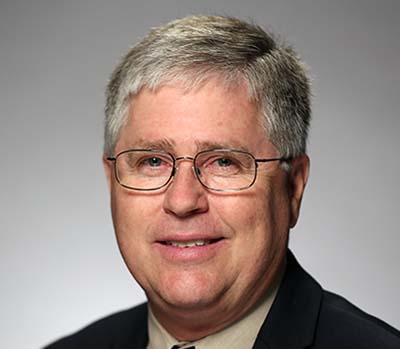
Ben Klieve, CFA, is a Senior Research Analyst at Benchmark, where his coverage spans animal protein, farm inputs and the full food and agribusiness supply chain from field to consumer. He tracks the cost structure and supply dynamics that move through the cattle complex, which positions him to assess what screwworm actually adds to a market already under pressure from multiple directions.
Key Themes from the Discussion
Screwworm was eradicated from the U.S. in the early 1960s and its return brings higher monitoring, labor, and treatment costs for cow-calf operators and feedlots that were not previously budgeting for this risk.
Georgia and Canada have already imposed movement restrictions on Texas cattle, signaling that supply chain fragmentation is underway even before a major outbreak materializes.
Dairy faces a structurally harder disruption than beef in any quarantine scenario because milk production cannot be paused, forcing producers to dump supply they cannot move to market.
Beef Producers Absorb Rising Costs as Monitoring Requirements Grow
The immediate economic consequence of the screwworm's return is a rise in direct input costs at every stage of the beef supply chain. The risk is sharpest at the cow-calf level, where animals graze across large areas and individual monitoring is labor-intensive and expensive. Feedlots, where cattle are more concentrated ahead of slaughter, face a lower but still real exposure, and treatment costs are now a line item that producers across the chain are having to plan around. "The value of cattle is just so high that even a minor outbreak can be really devastating for any individual producer," Klieve notes, framing the financial stakes even before a widespread event occurs. Among the treatments in circulation is ivermectin, an anti-parasitic drug whose actual veterinary purpose, Kleive points out, was largely misunderstood by the public during the pandemic years.
Movement Restrictions Fragment the U.S. Cattle Supply Chain
"The locations that have had outbreaks have very small radius where the animals are quarantined," but the downstream effects of those quarantine zones extend well beyond their borders. Georgia has banned Texas cattle from entering the state, and Canada has suspended live animal imports from Texas, a state that sits at the center of the U.S. cattle supply chain. He draws a direct line to the US-Mexico border closure that followed the first screwworm detection in Mexico around 18 months prior, when cross-border cattle movements that are a normal part of the animal's life cycle were halted entirely. In Klieve's view, movement restrictions are likely to tighten further before they ease, and the geographic fragmentation of supply creates pricing distortions that run downstream to feedlots and processing facilities across the country.
Dairy Markets Face a Harder Reset Than Beef Under Any Quarantine
While the beef supply chain has some flexibility to absorb disruption, with producers able to extend time on feed or pasture when movement is restricted, the dairy sector has no equivalent buffer. "You can't stop a dairy cow from producing milk," Klieve says, and in a quarantine scenario that milk must be dumped rather than enter the supply chain. He adds that the dairy supply chain is shockingly efficient, meaning even a small disruption carries significant residual effects that ripple through the wider market. The geographic exposure is also less obvious than many assume: Texas ranks among the top 10 dairy-producing states in the U.S., with Arizona and New Mexico also notable producers along the Mexican border. Dairy prices were already moving higher this year before screwworm reached U.S. soil, leaving the sector with less cushion to absorb any additional shock.
Make Agricultural Insights Your Competitive Advantage
Access live prices, supply and demand data, and actionable market commentary focused on the Agriculture sector. Sign up for StoneX Market Intelligence today and see how our Agriculture insights can elevate your strategy.
--- Written by Gus Farrow, Senior Manager, StoneX TV
--- Expert: Ben Klieve, CFA, Senior Market Research Analyst, Benchmark
Meats & Livestock
The subsidiaries of StoneX Group Inc. provide financial products and services, including, but not limited to, physical commodities, securities, clearing, global payments, risk management, asset management, foreign exchange, and exchange-traded and over-the-counter derivatives. These financial products and services are offered in accordance with the applicable laws in the jurisdictions in which they are provided and are subject to specific terms, conditions, and restrictions contained in the terms of business applicable to each such offering. Not all products and services are available in all countries. The products and services offered by the StoneX Group of companies involve risk of loss and may not be suitable for all investors. Full Disclaimer. This content is not intended for residents of any particular country, and the information herein is not advice nor a recommendation to trade nor does it constitute an offer or solicitation to buy or sell any financial product or service, by any person or entity in any jurisdiction or country where such distribution or use would be contrary to local law or regulation. Please refer to the Regulatory Disclosure section for entity-specific disclosures. No part of this material may be copied, photocopied or duplicated in any form by any means or redistributed without the prior written consent of StoneX Group Inc. The information herein is provided for informational purposes only. This information is provided on an ‘as-is’ basis and may contain statements and opinions of the StoneX Group of companies as well as excerpts and/or information from public sources and third parties and no warranty, whether express or implied, is given as to its completeness or accuracy. Each company within the StoneX Group of companies (on its own behalf and on behalf of its directors, employees and agents) disclaims any and all liability as well as any third-party claim that may arise from the accuracy and/or completeness of the information detailed herein, as well as the use of or reliance on this information by the recipient, any member of its group or any third party.
Our market expertise, advanced platforms, global reach, culture of full transparency and commitment to our clients’ success all set us apart in the financial marketplace.
Reach
With access to 40+ derivatives exchanges, 180+ foreign exchange markets, nearly every global securities marketplace and numerous bi-lateral liquidity venues, StoneX’s digital network and deep relationships can take clients anywhere they want to go.
Transparency
As a publicly traded company meeting the highest standards of regulatory compliance in the markets we serve, our financials and record of accomplishment are matters of public record. StoneX’s commitment to “doing the right thing over the easy thing” sets us apart in the industry and helps us build respect, client trust and new partnerships.
Expertise
From our proprietary Market Intelligence platform, to “boots on the ground” expertise from award-winning traders and professionals, we connect our clients directly to actionable insights they can use to make more informed decisions and achieve their goals in the global markets.