StoneX logo

U.S. Energy Exports to Asia Are Colliding With a Narrowing Canal Route

By: Editorial Team, StoneX Media

The Panama Canal is reducing the number of daily transit slots it offers at the same time as U.S. energy exports to Asia are expanding, and the two trends are pulling in opposite directions. U.S. crude oil, refined petroleum products, and natural gas increasingly rely on the canal to reach Asian buyers, so a narrower waterway turns an export growth story into a freight cost problem. The Panama Canal Authority has tied the pace of further reductions to rainfall levels at Gatun Lake, the freshwater reservoir that feeds the lock system. For exporters, that makes water availability a direct input into voyage planning rather than a distant environmental concern.

Tom Beney is Senior Vice President of Ocean Freight at StoneX, where he oversees global freight strategy across tanker, dry bulk, and container markets. He works directly with shipowners, charterers, and bunker suppliers, and follows how rerouting decisions and fuel constraints move shipping costs across global commodity trade flows.

Key Themes from the Discussion

  • The Panama Canal Authority is cutting transit slots unless rainfall refills Gatun Lake.
  • U.S. crude oil, refined products, and natural gas sales to Asia are increasing demand for passage.
  • Gas, petroleum products, containers, and vehicle carriers outbid dry bulk for priority transit.

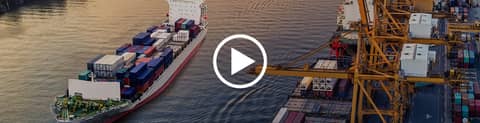
Watch the Full Conversation

U.S. Energy Exports Are Growing Into a Canal That Is Cutting Capacity

The squeeze on the Panama Canal is a double impact rather than a single shock, because supply of transit slots and demand for them are moving in opposite directions at once. As Beney puts it, "we are going to slowly reduce the slots available in the Panama Canal. The authority there has been very clear and open that that's what they're going to do over the next couple of months", with the reduction tied to whether rainfall refills Gatun Lake. On the other side of the equation sit U.S. energy cargoes, and demand is increasing with additional sales of American energy products, whether refined products, crude oil, or natural gas heading from the United States out to Asia. Consequently, exporters are competing for a smaller pool of transits against container lines and vehicle carriers that can spread a high transit cost across thousands of individual units. Gas and petroleum products remain among the cargo types that pay the highest auction bids, whereas dry bulk has been moved into a separate category and competes on different terms.

U.S. Energy Cargoes Reroute Around Panama and Reward Larger Vessels

Diversion is already happening, and the two alternatives both add substantial distance to a U.S. to Asia voyage. Ships are being diverted away from the Panama Canal and sent either via the southern tip of Africa and the Cape of Good Hope, or through the Strait of Magellan at the southern tip of South America and out into the Pacific. That extra distance changes the economics of vessel selection, because "the longer the distance, you want a bigger ship to carry more cargo, to spread out the cost". As a result, larger tonnage benefits, specifically Panamax and Ultramax vessels in dry bulk and the bigger ships in the tanker markets, while smaller vessels lose ground on the long-haul routes. The wider consequence lands on the trade lane itself, and according to Beney, "there is no doubt that the biggest impact for the Panama Canal problems is U.S. exports out to Asia. Plus the container flows from Asia back into the U.S.".


--- Written by Frédéric Guétin, StoneX Media Producer

--- Expert: Tom Beney, StoneX SVP of Ocean Freight

  • Energy

StoneX TV content is created, produced, and distributed solely by StoneX Media Ltd (“StoneX TV”) and is provided for informational and educational purposes only.


StoneX TV does not provide investment, financial, legal, or tax advice and does not make any recommendation or endorsement of any investment strategy, transaction, or financial instrument. Nothing in this content constitutes, or should be construed as, investment advice or a recommendation to buy, sell, or hold any financial instrument, including securities, futures, derivatives, digital assets, foreign exchange products, or CFDs.


This content does not constitute an offer, invitation, or solicitation to engage in any investment activity.


The information presented is general in nature and is not tailored to the financial situation, investment objectives, or risk tolerance of any specific person. You should not rely on this content as a substitute for independent professional advice.


Investing and trading in financial instruments involves significant risk of loss and is not suitable for all investors. Past performance is not indicative of future results.


Any views or opinions expressed are those of the presenter at the time of publication and are subject to change without notice. Such views may not necessarily reflect those of StoneX Media Ltd or its affiliates. StoneX Media Ltd and its affiliates, including StoneX Group Inc., may from time to time have positions in, or engage in transactions involving, the financial instruments referenced.


This content may include general market commentary and opinion. It does not constitute independent investment research and has not been prepared in accordance with legal requirements designed to promote the independence of investment research.


StoneX Media Ltd is not authorised or regulated to provide investment services and does not act in a fiduciary capacity.


StoneX Media Ltd is incorporated in Ireland and operates in accordance with applicable Irish law. It is a wholly owned subsidiary of StoneX Group Inc. and is a separate legal entity from other subsidiaries within the StoneX Group, which may be regulated in various jurisdictions. StoneX Media Ltd does not act on behalf of, or provide services for, any regulated affiliate.


This content is not directed at, and may not be distributed to, any person in any jurisdiction where such distribution would be contrary to local laws or regulations.


Supporting documentation for any claims, comparisons, statistics, or technical data may be made available upon reasonable request, where applicable.

Satellite view of Earth at night showing illuminated cities across Asia and the Middle East

Discover more insights

Our subscribers have access to comprehensive market analysis from StoneX spanning commodities, equities, currencies and more.

Related articles for Energy

U.S. Energy Exports to Asia Are Colliding With a Narrowing Canal Route

American crude oil, refined products, and natural gas are moving toward Asia in growing volume at exactly the moment the Panama Canal is cutting the number of ships it lets through each day. Tom Beney explains how that collision is reshaping which cargoes get priority passage and which ones take the long way round.

Editorial Team
Editorial Team
  • Energy

Perspective: Morning Commentary for September 2

September 2 – Stock futures rallied into positive territory this morning, while many of the food and energy commodities gave way to profit taking following recent gains. Russia and Ukraine continue to trade strikes on commodity logistics while tensions with Iran remain high after a series of U.S. strikes yesterday. The VIX is trading near 16 this morning, while the dollar index trades near 99.8. Yields on 10-year Treasuries are trading near 4.78%, after hitting a nearly three-year high earlier in the session just below 4.82%, while yields on 2-year Treasuries trade near 4.38%. WTI crude oil pulled back a bit to trade near $90 per barrel, while Brent trades near $95 per barrel. The grain and oilseed sector saw notable losses across the board overnight as producers and speculators both cash in on recent gains to multi-year highs, although little has changed in the fundamentals this morning.

Arlan Suderman
Arlan Suderman
  • Grains & Oilseeds
  • Energy
  • Dairy
  • Renewable Fuels
  • Cocoa
  • Coffee
  • Cotton
  • Sugar
  • Meats & Livestock
  • Forest Products

U.S. Oil Reserves Hit 44-Year Lows and Crude Buyers Take Notice

Depleted U.S. strategic oil reserves have quietly become a source of demand sitting underneath the crude market. Fawad Razaqzada explains why refilling them matters more for prices right now than any long-dated supply agreement.

Fawad Razaqzada
Fawad Razaqzada
  • Energy
StoneX: We open markets

Our market expertise, advanced platforms, global reach, culture of full transparency and commitment to our clients’ success all set us apart in the financial marketplace.

Reach

With access to 40+ derivatives exchanges, 180+ foreign exchange markets, nearly every global securities marketplace and numerous bi-lateral liquidity venues, StoneX’s digital network and deep relationships can take clients anywhere they want to go.

Transparency

As a publicly traded company meeting the highest standards of regulatory compliance in the markets we serve, our financials and record of accomplishment are matters of public record. StoneX’s commitment to “doing the right thing over the easy thing” sets us apart in the industry and helps us build respect, client trust and new partnerships.

Expertise

From our proprietary Market Intelligence platform, to “boots on the ground” expertise from award-winning traders and professionals, we connect our clients directly to actionable insights they can use to make more informed decisions and achieve their goals in the global markets.