Amid Liquidity Distortion, Data Like US Consumer Confidence Will Need to Draw on Themes
Talking Points:
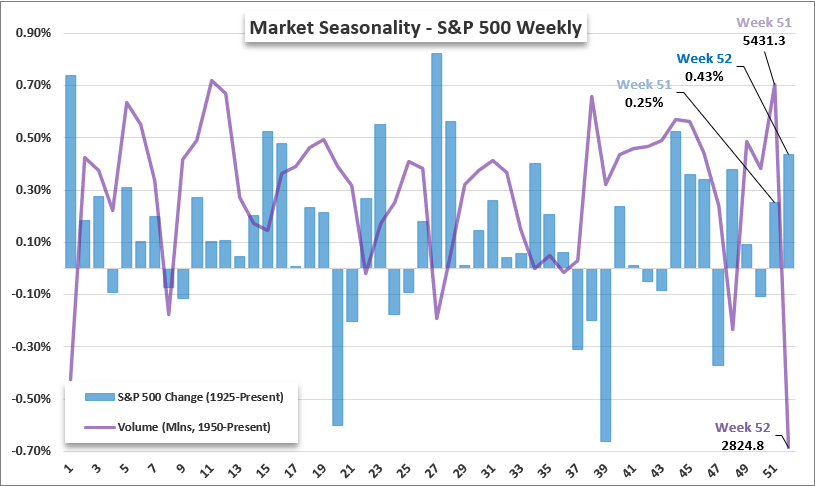
- Historically, the S&P 500 – as a benchmark for risk appetite – typically experiences a sharp drain in liquidity, but will last week’s volatility abide that normalization?
- Top global macro event risk over this week and next is notably thin of singular market-movers, so themes will be in play
- US consumer confidence, a run of Japanese economic data and China’s industrial profits update will represent top listings
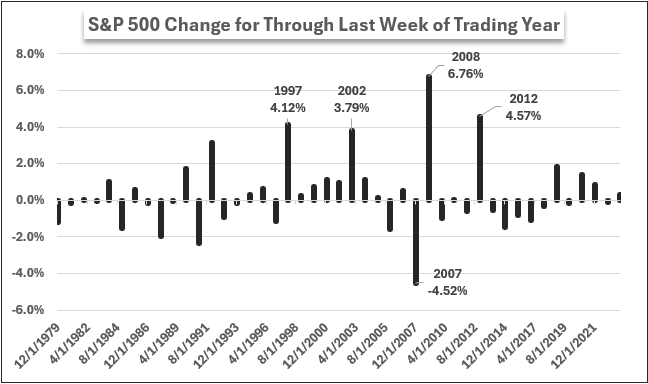
When you pair significant market surprise with thin liquidity, what do you get? You only need to look to speculative outlets like pink sheet stocks to see what happens. The result more often than not is amplified volatility – though follow through is still very much dependent on the development of any underlying themes that carry out into the deeper waters of regular market conditions. Looking back over the past half century, there have been a few outliers of volatility – though there has been a skew towards ‘risk on’ volatility. In 1997, 2002, 2008 and 2012; there were rallies through the final week of the year of approximately 4 percent or greater.
S&P 500 Performance on Final Week of the Year Over Past 45 Years
Source: John Kicklighter, Bloomberg
Generally, this rally follows a general wash out and prolific risk aversion (in three of the four cases aligning to recessions). As for the 2007, the -4.5% drop was an opening stage of what would become the Great Financial Crisis. Given our backdrop now, I wouldn’t say the markets are heavily discounted and rife for speculative opportunism. On the other hand, the scope of complacency and proximity to record highs could foster an outlier retreat with the right (or ‘wrong’) spark.
S&P 500 Average Performance and Volume By Calendar Week
Source: John Kicklighter, Bloomberg
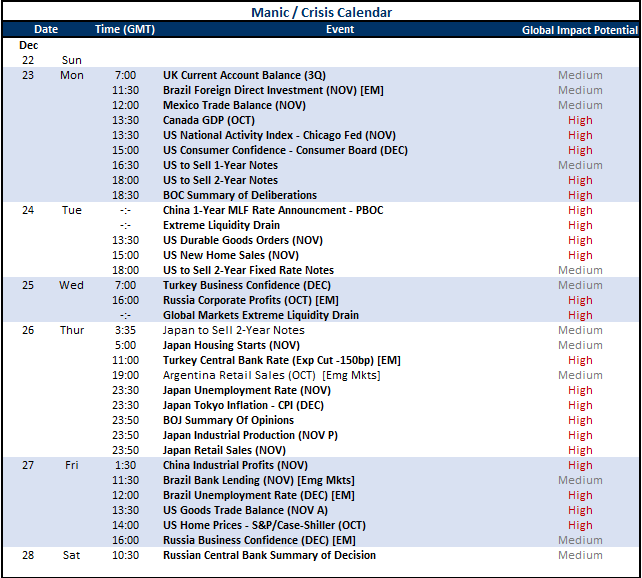
We throttle back sharply on scheduled event risk through the end of the calendar year. Following the fireworks of the FOMC rate decision and other major central banks this past week (multiple weeks if we extend to include the likes of the ECB, RBA and others), there is a notable downshift in the weight behind what is on tap ahead. I will not be overlooking the sensitivity of the market to the ‘unknown’ as thin liquidity can leverage the reactionary response of the market. That said, anticipating the unlikely – much less the unknown – is not really a viable strategy. Therefore, I will be monitoring what is known on the docket ahead.
Calendar of Major Global Macro Events Scheduled for Week
Source: John Kicklighter, StoneX
Systemically, there isn’t much of a ‘theme’ to the top event risk on tap through the coming week. Nonetheless, we could very well draw upon underlying currents from some of the top listings on tap. At the top of my list is the Conference Board’s US Consumer Confidence survey for the month of December. There are at least a few critical factors for the largest aggregate consumer in the global economy. Among the questions Americans will be weighing in on with their sentiment is: should they continue to spend with the Fed pulling out of its rate cut cycle so early? The group will be evaluated for its insight on the potential for a serious economic downturn – which can turn into a self-fulfilling prophecy given their influence over overall growth. And, very interesting for those that monitor headlines is the level of confidence with the transition of government forthcoming as Trump is set to come in for his second term with significant policy changes already being signaled (trade, budget, etc).
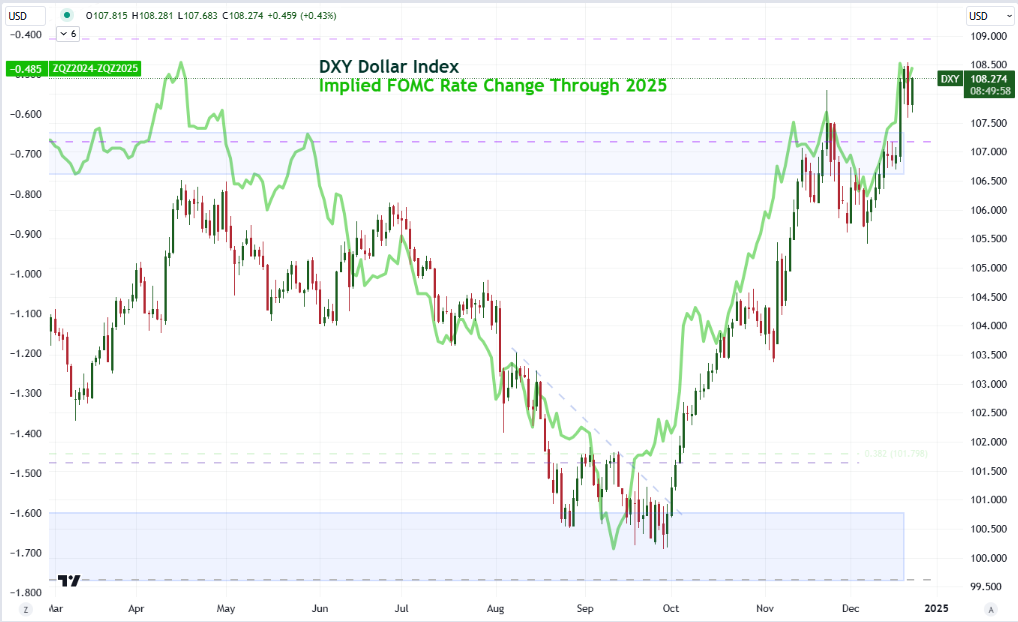
DXY Dollar Index Overlaid with Implied FOMC Change Through 2025
Source: John Kicklighter, TradingView
Overall, there isn’t much on the global macro calendar that can stand on its own as a potential drive of market activity – for a direct asset much less the markets broadly. However, having some buffer between the release and the periods of absolutely drain is likely important. That said, the run of Japanese November data on early Friday morning Tokyo time will likely play off of the Bank of Japan’s dovish hold at its last update this past week. On tap are industrial production, retail sales, unemployment and Tokyo-area inflation. To not at least post some signage around general bearing around Japanese markets relative to global counterparts would require a fully innocuous outcome, which is highly improbable.
Finally this week, a highlight worth monitoring is the Friday morning release of China’s industrial profits for the month of November. It would be nice to have the update be a true reflection of the country’s corporate financial health, but there remains some well-deserved skepticism around the veracity of the series’ updates. That said, we have still seen some remarkable trends in important government figures where it seems to suggest the Chinese government must at least register some form of the pressure at hand. Should concern around China Corp continue to build via this data serious, it is likely to find a market already actively weighing in on the recovery of the second largest economy in the world amid broader struggles.
Chart of the USDCNH Overlaid with US-China 2-Year Yield Differential and 20-Day Correlation (Daily)

Source: TradingView, John Kicklighter
-- Written by John Kicklighter, Global Head of Content