Summer demand lull is coming. Appears that Chinese exports are set to return early May. Global grain prices should not have buyers in a rush to step forward.
Lot of signs are pointing to phosphate prices starting/continuing to fall.
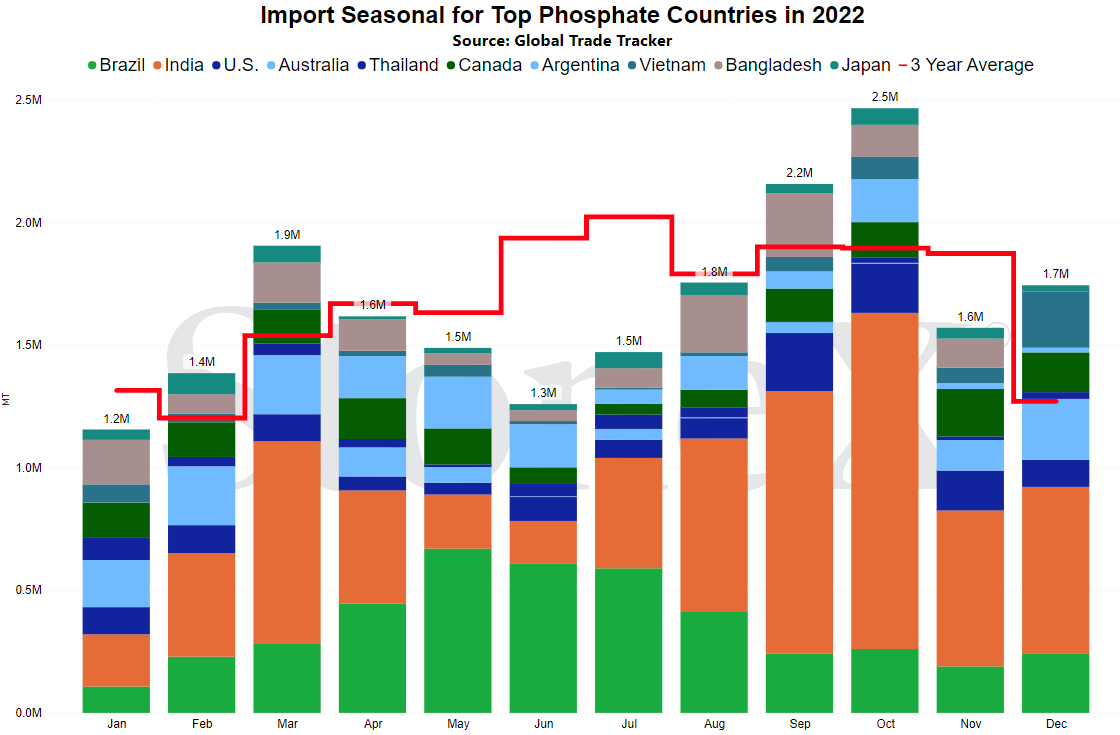

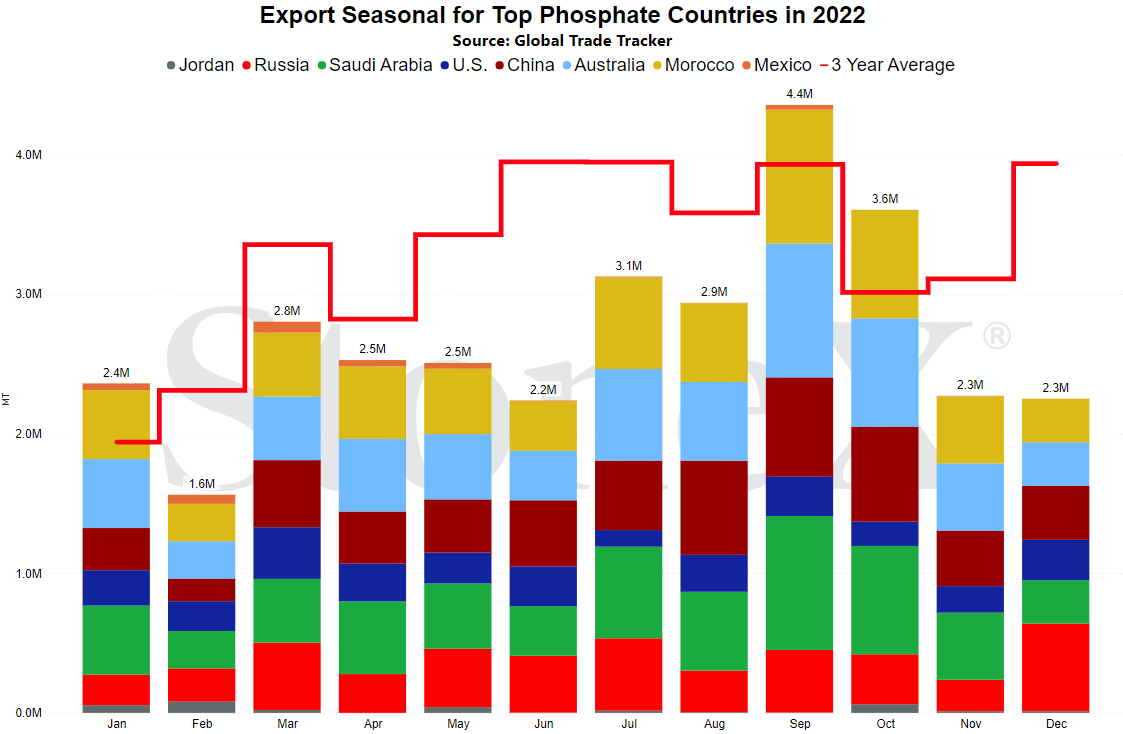
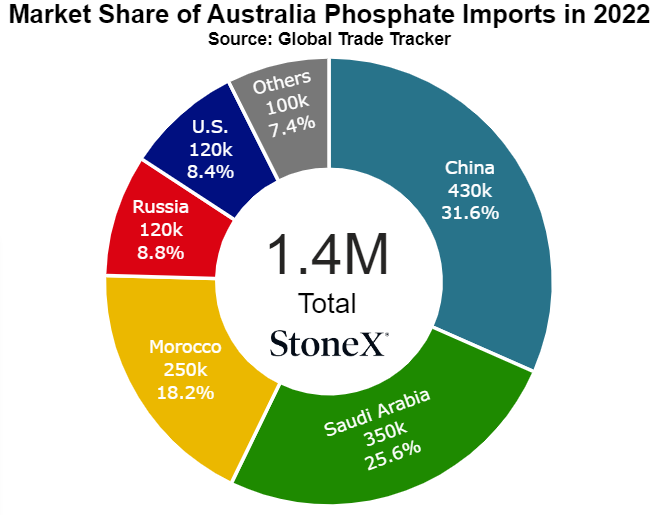
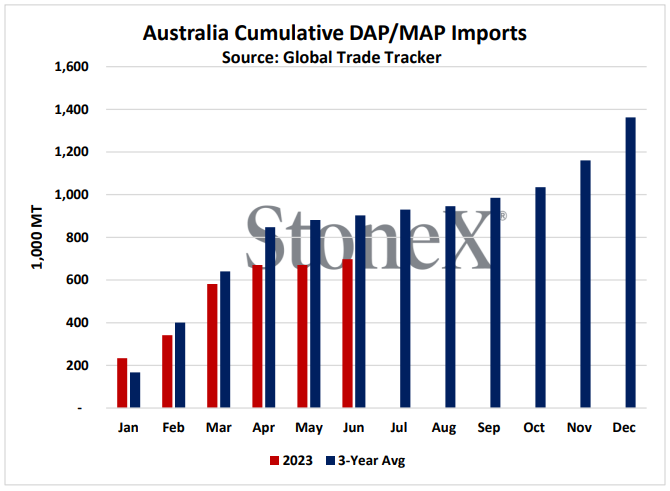
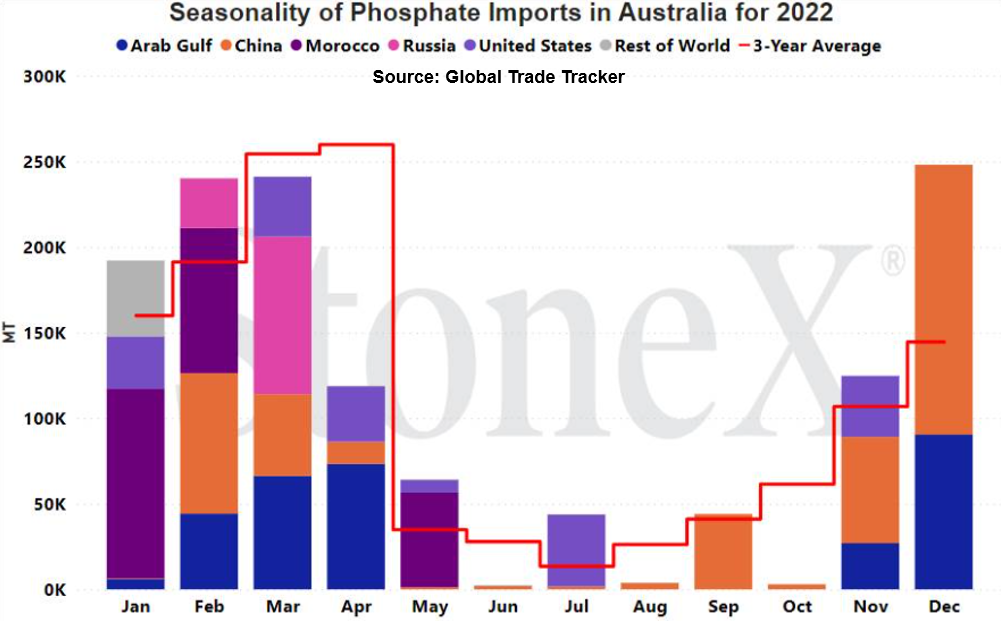
Continues to look like Chinese exports are returning
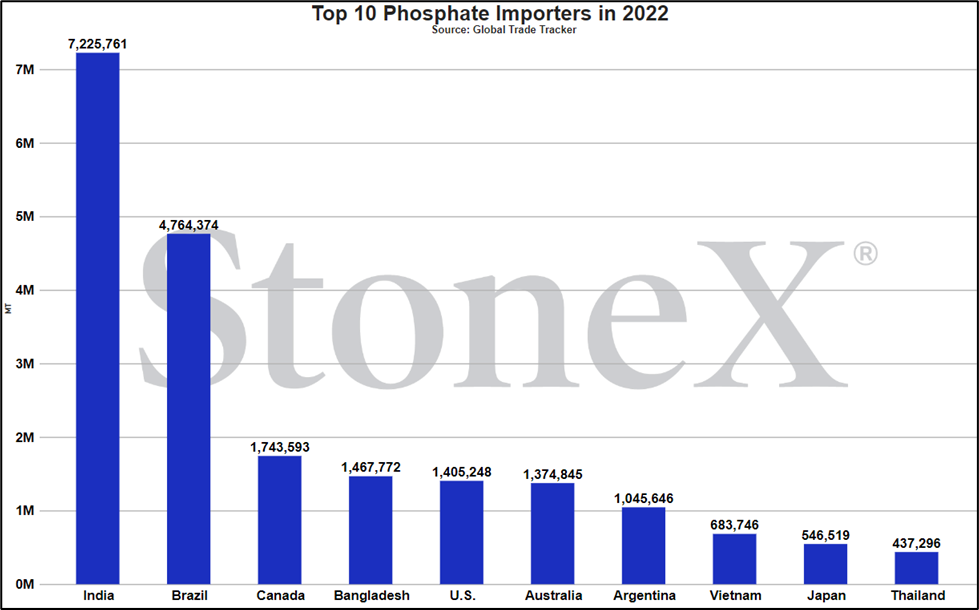
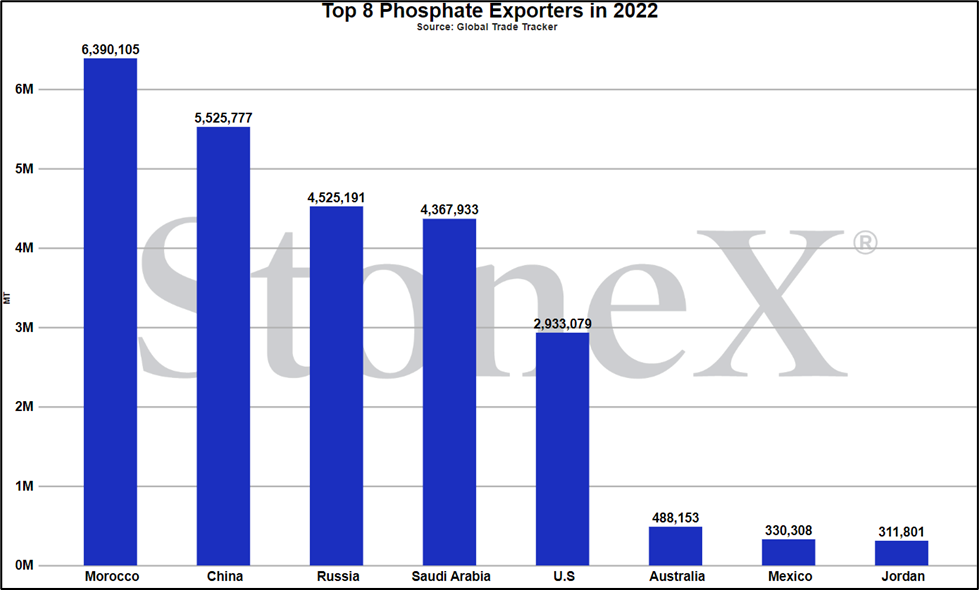
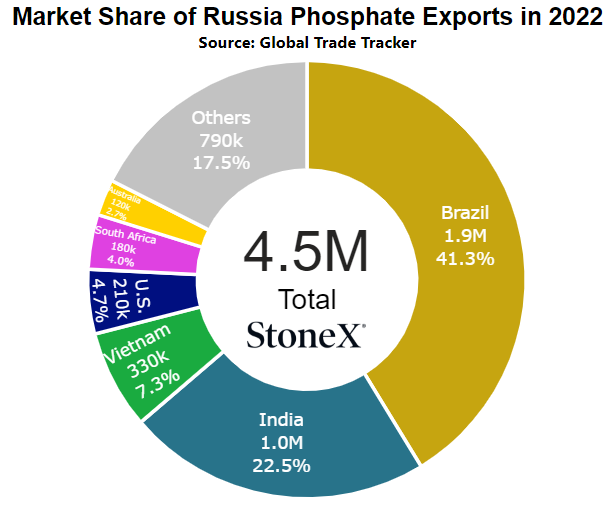
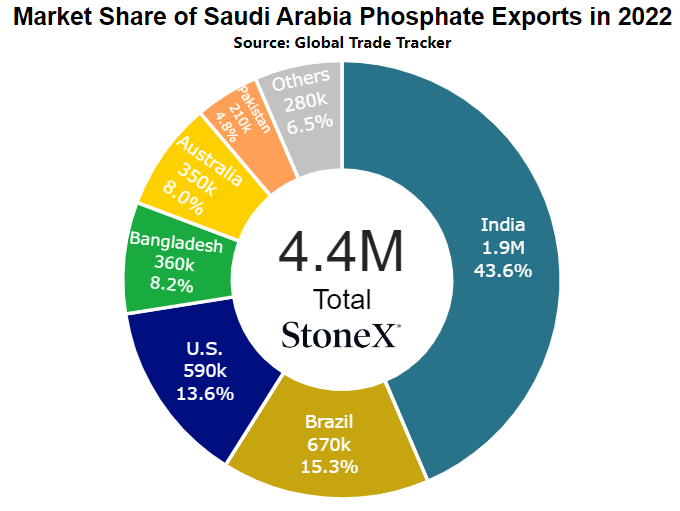
In case anyone is wondering why this is worth talking about, take a look at the above list of top global DAP/MAP exporters. China sits at number 2 on global rankings for 2022, and that was with export restrictions. Historically, they are the largest and one of the most important exporters for the world.
A large reason, from our POV, as to why global phosphate values have remained high is due to China's "absence". For those that are new to this newsletter, when the world got into a bad way with global values extremely high and inventories extremely tight, the Chinese government stepped in to reduce the number of tons that could be exported. The thought process was that this step would keep adequate inventories in place and lower values for Chinese farmers.
Today, with many of the world Black Swan events in the rear view mirror, the Chinese government is starting to loosen those restrictions.
If their absence helped global values to rise, their return should help global values to fall...at leas that is the hope.
As with everything China, we need to watch closely for any sign of change. They have done a 180 before and it would be irrational to think it will not happen again. That said, hopefully they adhere to this new approach which will hopefully help values to fall in farmers favor.
Why does this matter for Australian farmers?
The simple return of the world's historic largest phosphate exporter is a major bearish event in itself as it could add a tremendous amount of supply that has been lacking in recent years. Add in the fact that China is relatively close to Australia, which helps on logistical costs, and it is a great one/two punch on high prices.
India reduces phosphate subsidies
If China is important to watch from a supply POV, India is equally important to watch from a demand POV. As the world's largest buyer, what they do makes a difference.
We have recently seen where India is taking steps to lower the subsidy rate on phosphates.
For those unaware, the Indian government subsidizes the price of fertilizer to its farmers thru various programs. When the subsidy rate is high, it makes it much easier for importers to bring in product. However, the flip side is also true.
With the government reducing the rate, we now need to watch their demand patterns. This rate change could be due to their catching up on imports and building inventories. It also might be a reflection of their expectation that values will fall, so a higher rate is no longer needed.
If this rate change causes Indian demand to dry up at the same time that Chinese exports are resuming, that would be a pretty bearish one-two punch.
Why does this matter for Australian farmers?
India is the world's largest phosphate buyer/importer. If we suddenly start to see them slow their purchase patterns, it will send ripples and/or waves thru the global market.
So we could have a scenario where the world's largest supplier returns and the world's largest buyer fades away. That is bearish on both sides of the S&D!
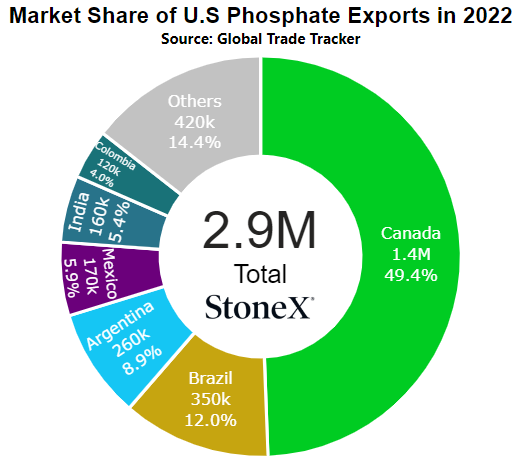
Price comparisons
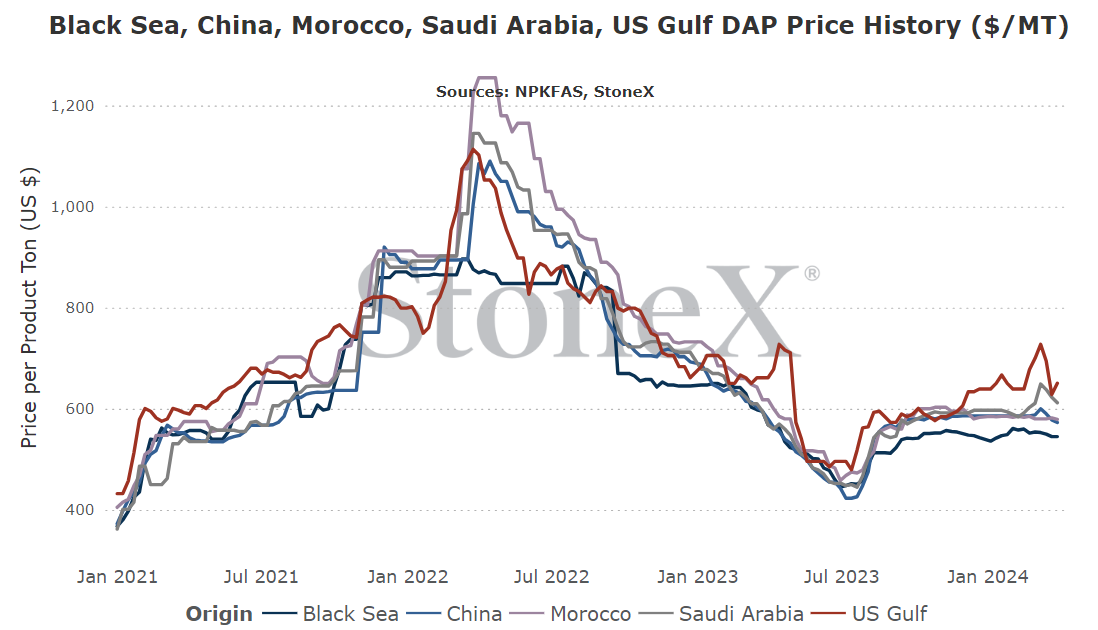
Vs 30 days ago - -7% or approximately $45 lower
Vs 90 days ago - +2% or approximately $10 higher
Vs 6 months ago - +11% or approximately $60 higher
Vs 1 year ago - -2% or approximately $10 lower
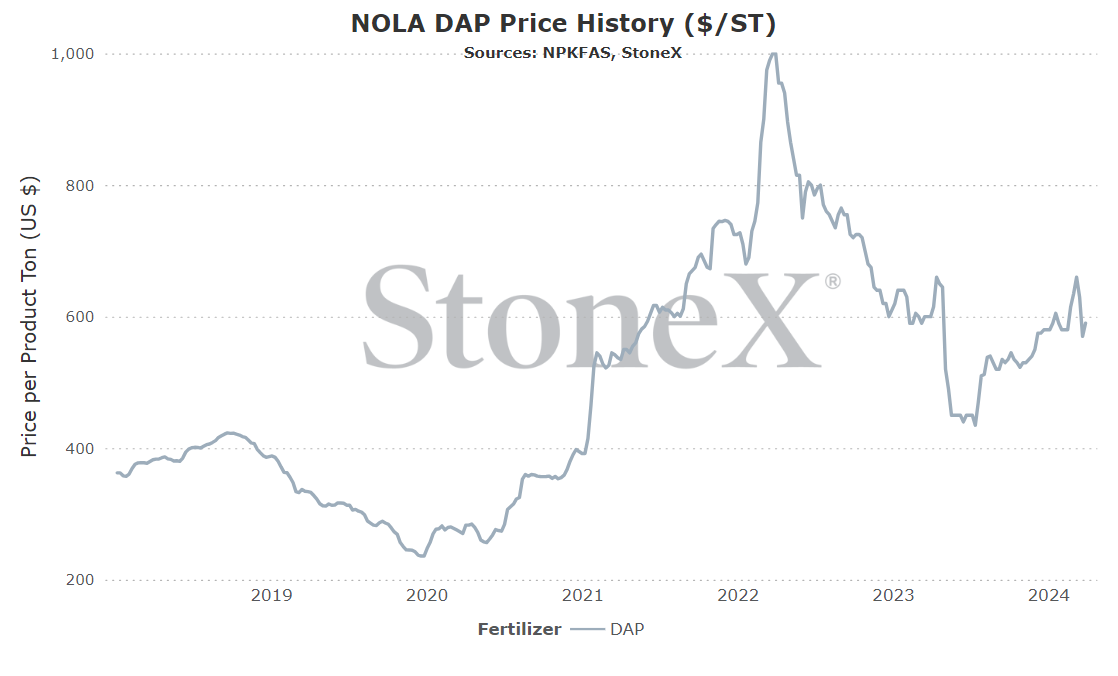
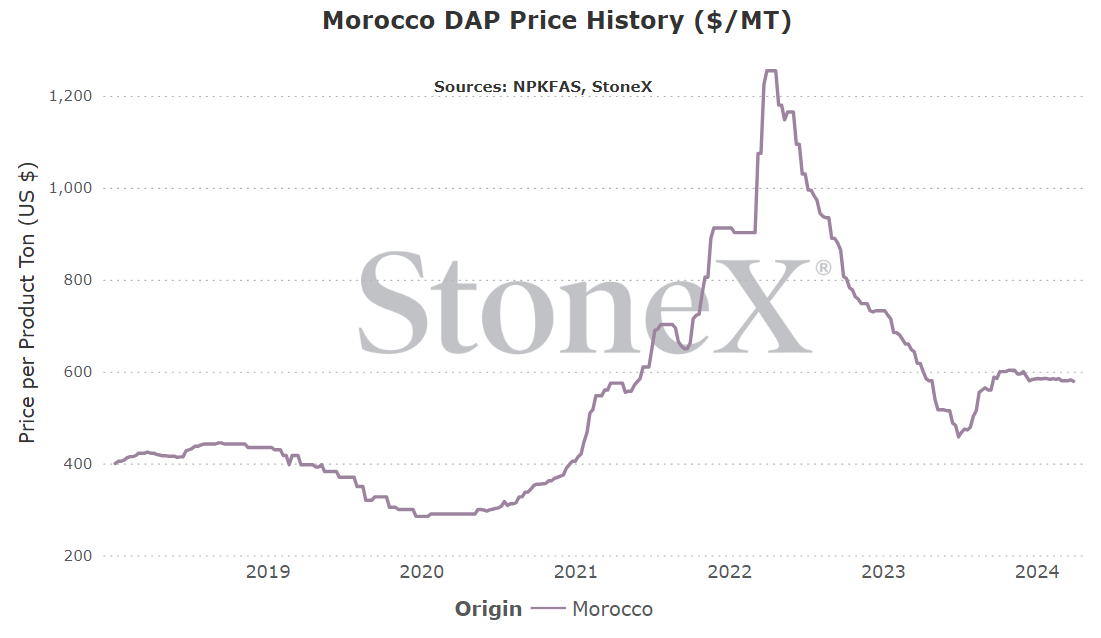
Morocco DAP price comparison
Number 1 global exporter in 2022
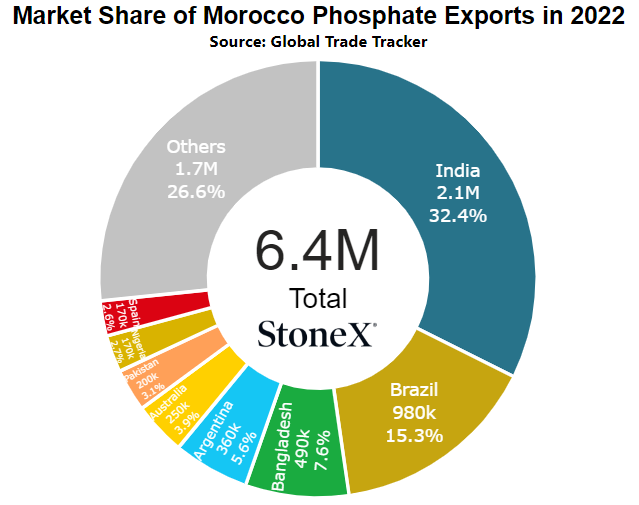
Price comparisons:
Vs 30 days ago - unchanged vs last month
Vs 90 days ago - -1% or approximately $4 lower
Vs 6 months ago - -1% or approximately $9 lower
Vs 1 year ago - -6% or approximately $39 lower
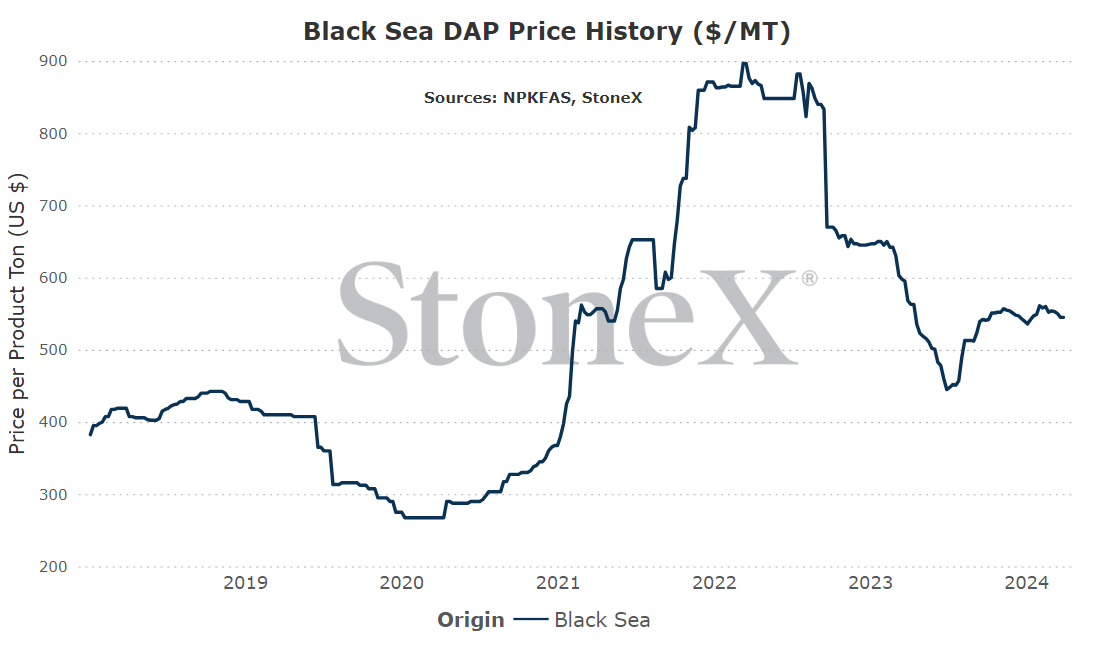
Black Sea DAP price comparison
Number 3 exporter of DAP/MAP in 2022
Price comparisons
Vs 30 days ago - -2% or approximately $10 lower
Vs 90 days ago - unchanged vs 3 months earlier
Vs 6 months ago - unchanged vs 6 months earlier
Vs 1 year ago - -4% or approximately $23 lower
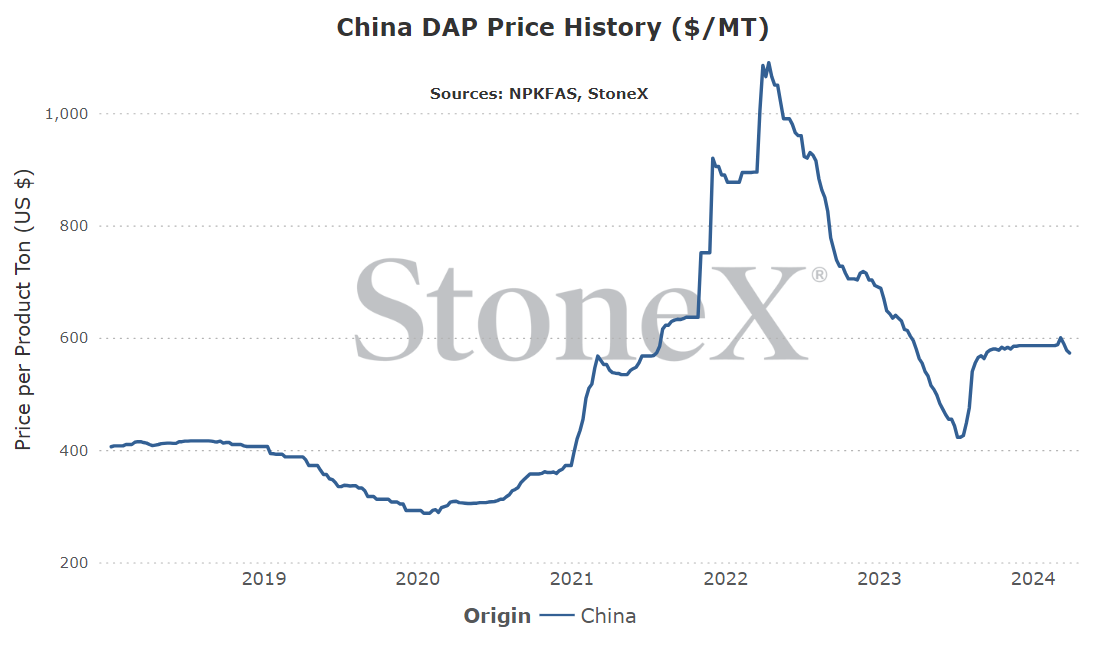
China DAP price comparison
Number 2 global exporter in 2022
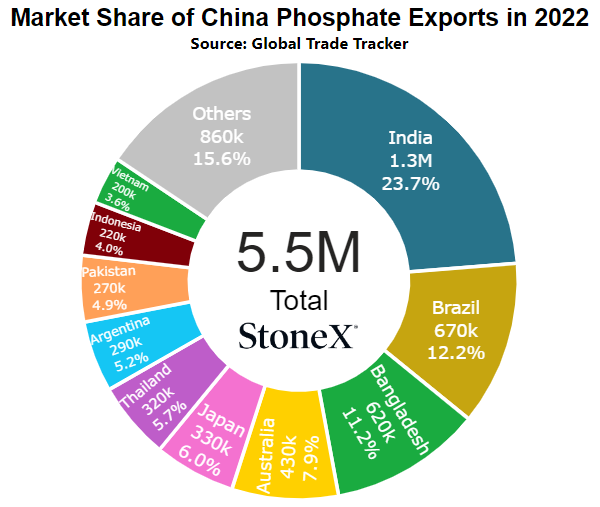
Price comparisons
Vs 30 days ago - -3% or approximately $15 lower
Vs 90 days ago - -2% or approximately $14 lower
Vs 6 months ago - -1% or approximately $5 lower
Vs 1 year ago - -1% or approximately $8 lower
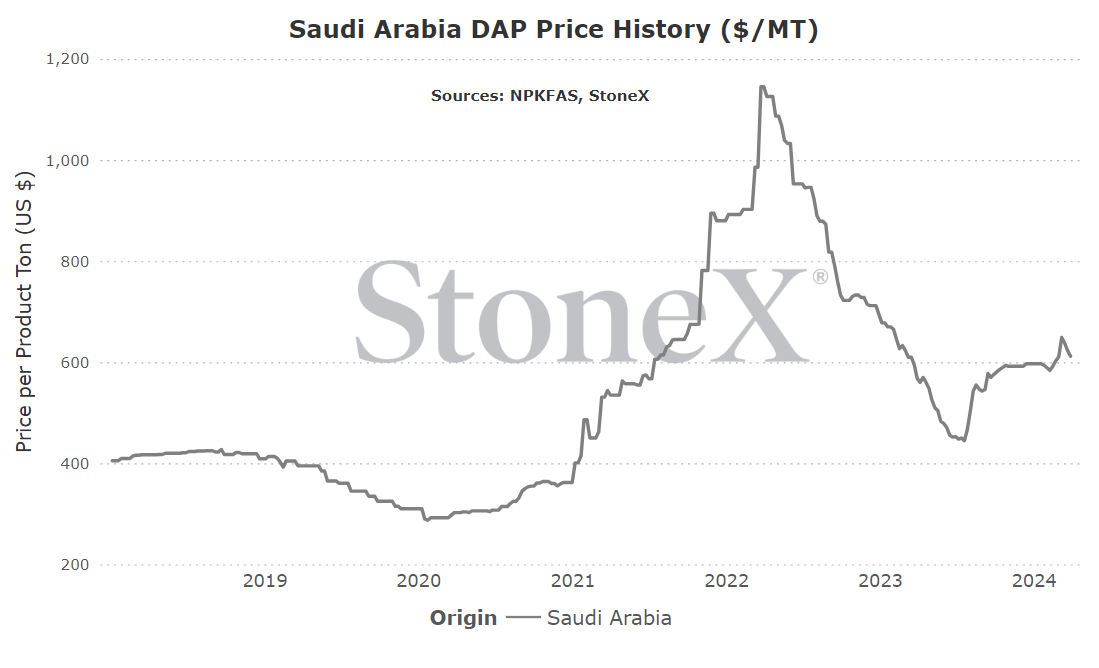
Saudi Arabia DAP price comparison
Number 4 global exporter in 2022
Price comparisons
Vs 30 days ago - unchanged vs last month
Vs 90 days ago - +3% or approximately $15 higher
Vs 6 months ago - +7% or approximately $42 higher
Vs 1 year ago - +8% or approximately $45 higher
- China could reverse course at a whim – today, a lot of the signs point to Chinese export returns. However, it would be irresponsible to just assume they continue as stated. We have seen them reverse course quickly and unexpectedly before. While it is hard to see that playing out today, nothing is impossible. If we see the government make another change that reduces export flows, global manufacturers/suppliers will be more bold moving forward.
- Still need to watch Russian/Chinese tensions with the west – Russia doesn't like western countries due to their support of Ukraine. China doesn't like western countries due to their support of Taiwan. The loss of either supplier would be painful. The loss of both is hard to describe on what it would mean. This isn't expected, but the impact large enough that it needs to be watched.
- Late season demand could see tight inventories as importers shy away from final purchases – there is decent writing on the wall that global phosphate values are starting to fall. Put yourself into the shoes of an importer. Would you want to lock up a vessel of priced product, sit on that price as it sails to Australia and hope that values hold? Not likely. I sure wouldn't. If all importers take that approach, we could see a supply crunch as season wraps up.
- Buyers will be in no rush – current grain/phosphate ratio values are still some of the highest ever seen. Interest rates are high meaning monthly carry cost is huge. There is a long time between spring and fall. The list goes on but they all add to the same type of buyer that will not be in a rush to step forward until they see something they like. Today does not appear to be that day.
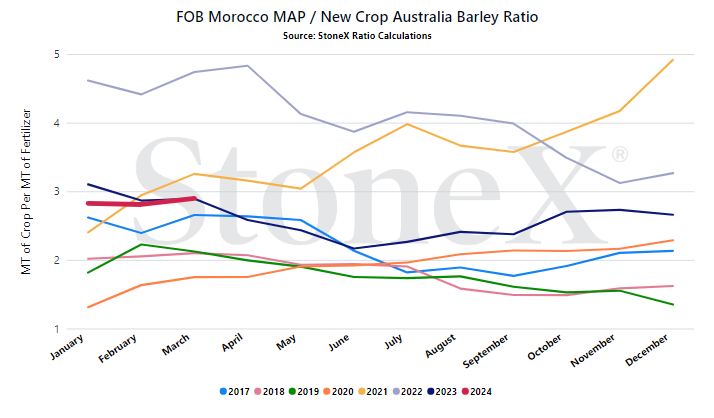
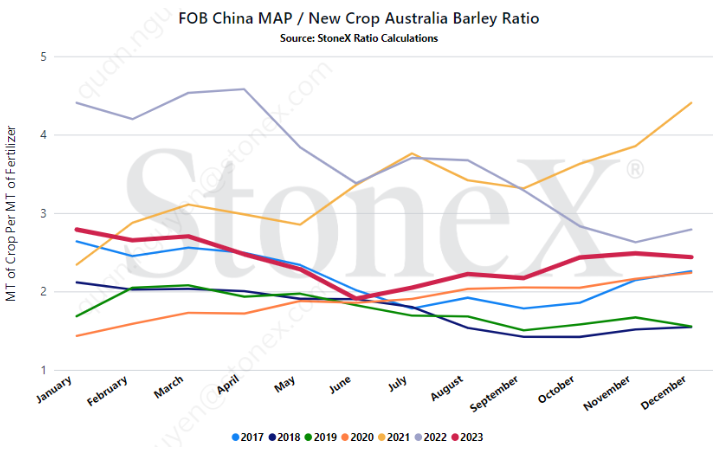
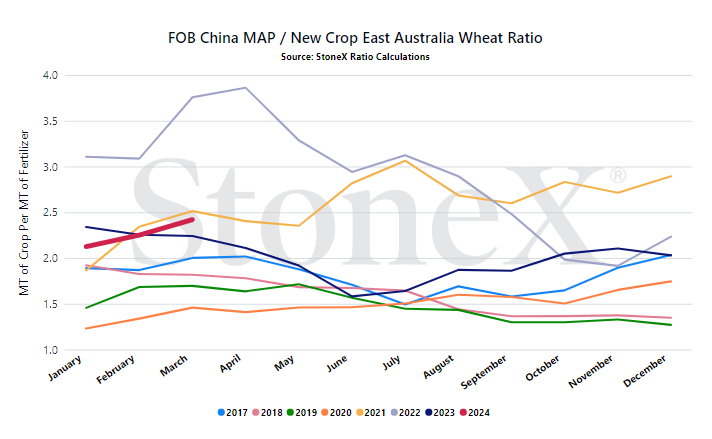
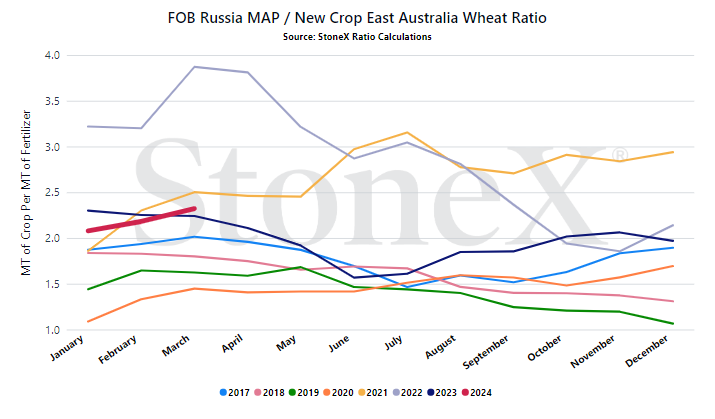
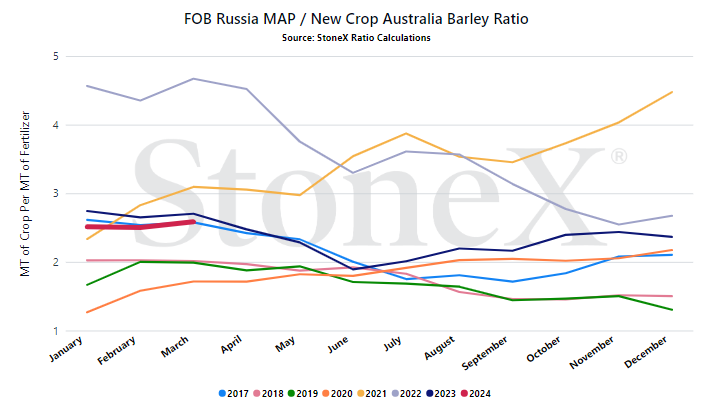
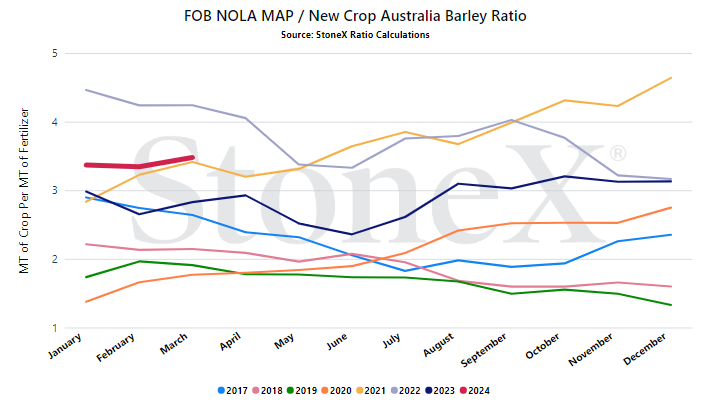
- Current values make little sense vs grain values/historical ratios – today, there are exceedingly few times that the grain/phosphate ratios have been worse. That means farmers are spending more bushels of grain to pay for each ton of DAP/MAP they use. For the short term, these high ratio values have held because spring came early and inventories remained low. However, there is a long summer ahead of us and a lot of folks we talk to say there is little to no reason to get excited to step forward until it makes sense.
- Almost all signs point to China returning – while this can change, it doesn't look likely today. Assuming China proceeds as planned, it will mean a close to full return from the global phosphate export leader. That adds a lot of supply that hasn't normally been there. Like Martha Stewart says "it's a good thing"!
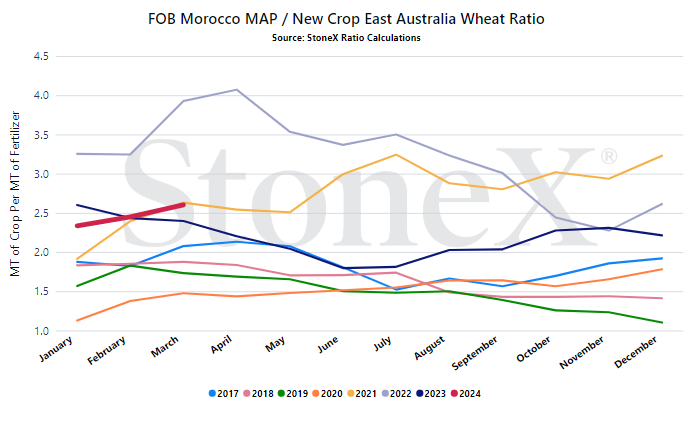
We believe that only looking at the flat price of either grains or fertilizer can be misleading:
-
Only selling grain can hurt you if fertilizer prices rise substantially
-
Only buying fertilizer can hurt you if grain prices fall
We look at the ratio "value" to get a better indication of where we are or how many bushels of X does it take to pay for 1 ton of fertilizer.
Would you rather:
-
Spend 4 ton of grain to pay for 1 ton of MAP
-
Spend 1.5 ton of grain to pay for 1 ton of MAP
When we compare the current ratio value against recent years, we start to see if we are high or low.
YOUR VALUES MAY LOOK DIFFERENT
- China/Russia tensions with the west - while it seems like both stories have moved on in the media cycle, make not mistake, tensions are still very high between the west and China/Russia. So far, additional steps have not been made so we have not seen anything detrimental in terms of phosphate supplies. However, do not lose sight of how important either one is...or how insanely important they are when paired together. If we suddenly start seeing increased sanctions on either/both that include phosphates, watch out.
- Current values vs grain pricing - the biggest thing that stands out to me is how high phosphate prices are vs grain values. With global S&D's starting to improve and spring season nearly behind us, it sure feels like the ratio needs to improve. Right now, it is hard to see a bullish future in most grains (I hope I'm wrong). If that is the case, I hope we can see it improve with phosphate values dropping.
StoneX Ratio Calculation
The ratio calculation is derived from Bloomberg historical grains values as well as fertilizer values from StoneX, NPKFAS, and Argus.
The calculation is simply dividing the fertilizer price by each grain price.
All data was sourced from StoneX unless otherwise noted.