Global
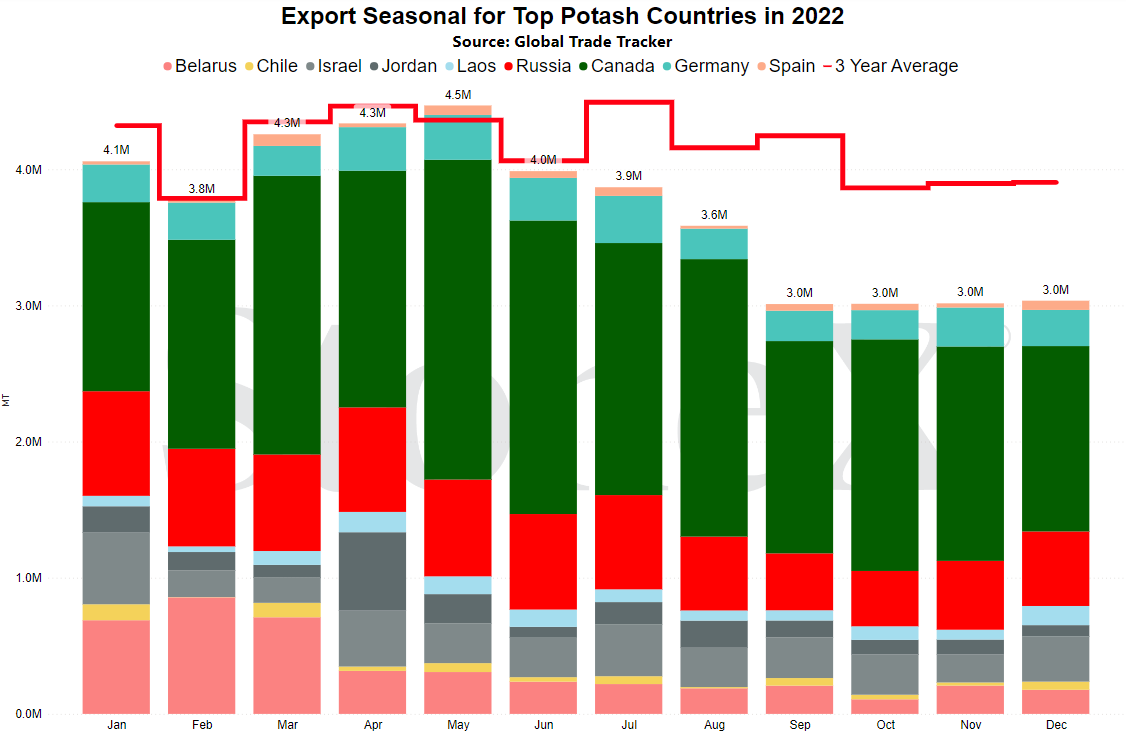
The world is quickly moving into the summer months for potash which means that demand largely goes away with the exception of some big annual contract swingers like India and China who test the downside of th marketplace. Supplies continue to appear plentiful which makes it hard to see a lot of upside.
Barring any sort of major change, global values should remain flat to bearish in the coming weeks/couple months.
North America
It's April which means most N.A. farmers are moving away from the application of potash, phosphate and NH3. Instead, they are opting to hook up to planters and start that process. Not to say that demand for potash is completely done, but we are over the hump. That means the market is now chasing any last remaining pockets of demand in an attempt to offload product before the summer begins. Grain prices have done a decent job of holding since their fall off, but they are still not high enough to get buyers excited.
Some remaining inland pockets may see prices stay more flat based on logistical just in time costs, it appears the market in general should continue to slide as it starts to bring summer resets into focus.
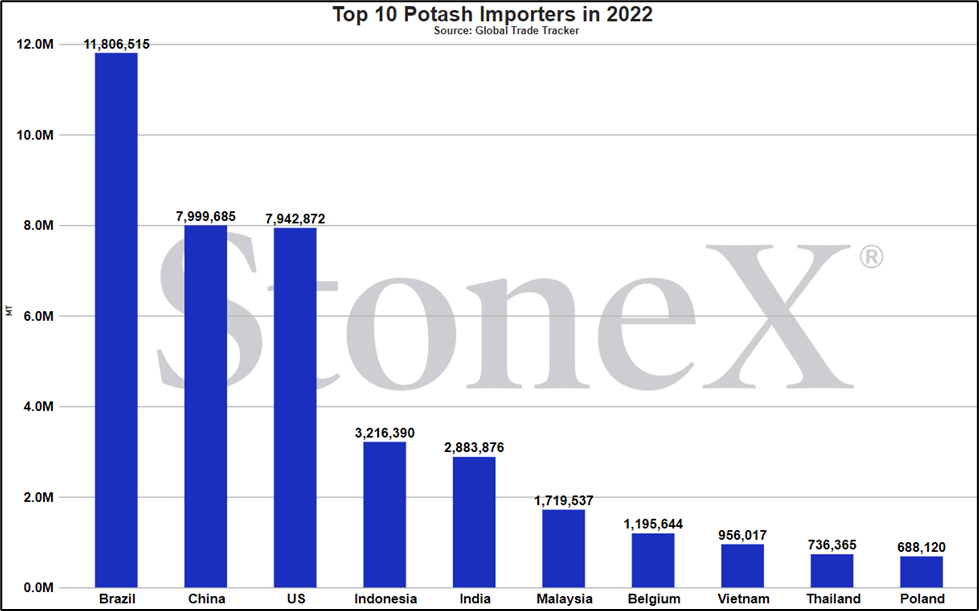
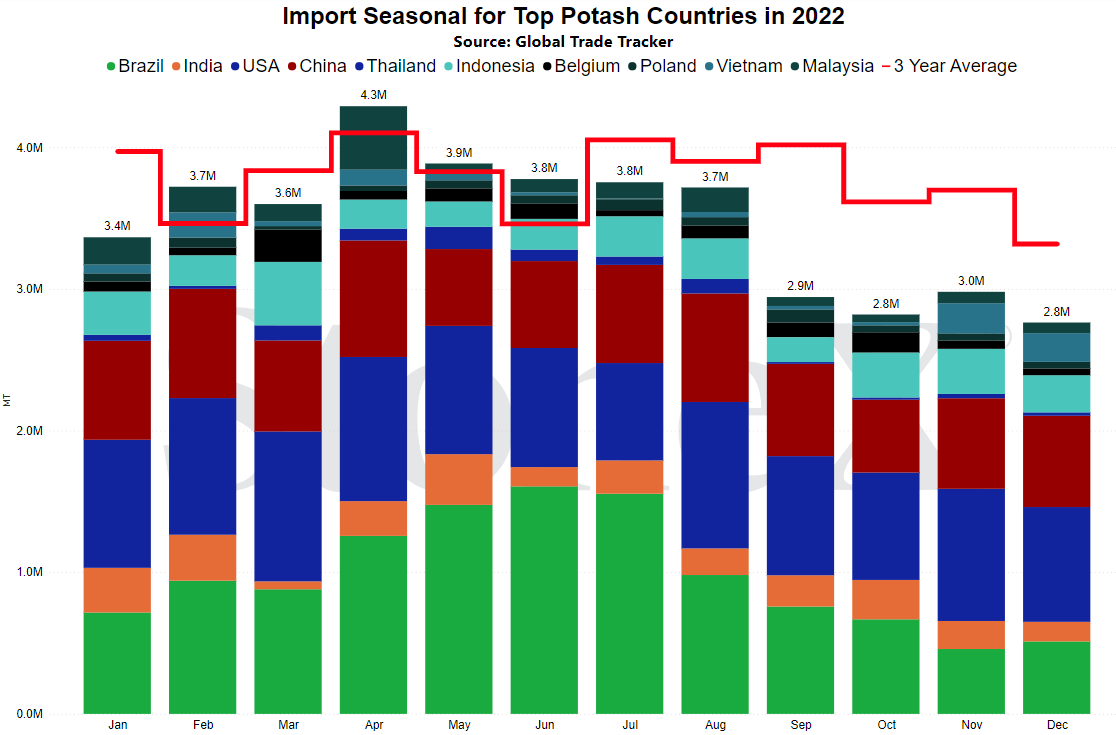
Global markets have remained relatively flat priced
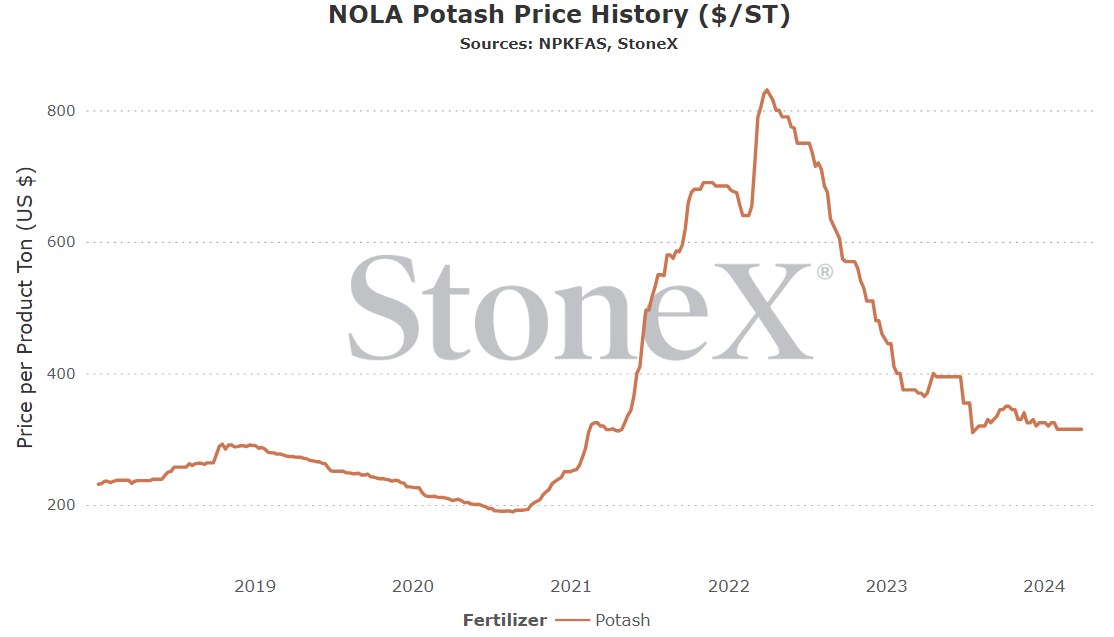
It is weird how strange a fertilizer market feels when it is now flat priced. After the last few years of volatility, not seeing any price movement is what feels odd!!! That said, this should become more of a norm for at least the potash marketplace!
That said, there are going to be a couple things that need to be watched.
First is how global farmers approach the coming late spring/summer period.
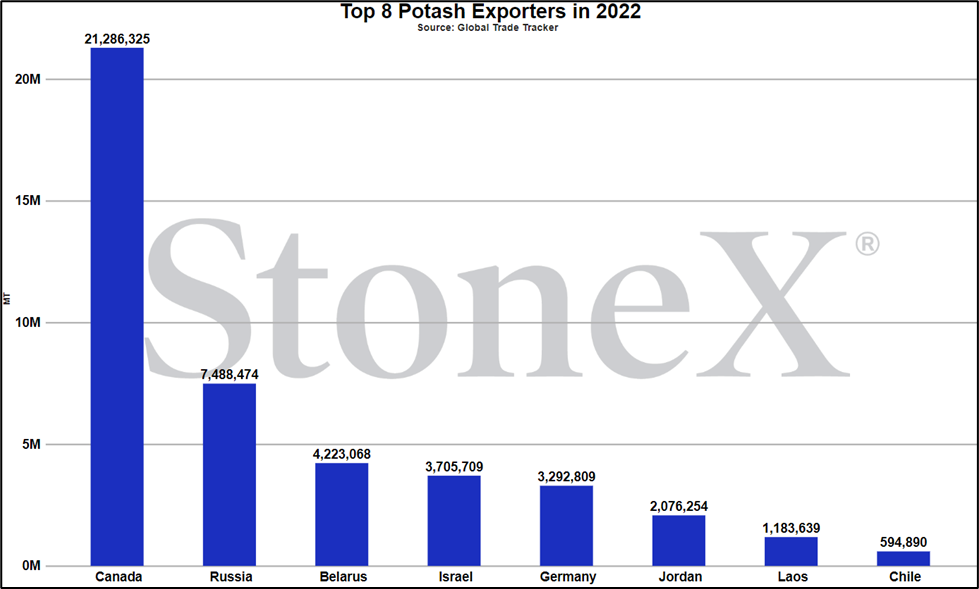
I'll start by saying that things can change rapidly. With conflicts continuing between Russia/Ukraine and Israel/Hamas (both Russia and Israel being top 4 global exporters), things can change quickly. However, assuming nothing does change, the global potash market feels well supplied. That typically means that the onus will be on the supplier/manufacturer to find a price that buyers are willing to step forward or run the risk of filling storage. Grain prices are better but not as good as they were. Interest rates are still high. For the first time in years, it feels like the demand side of the equation is in control and they have been waiting for this moment.
Second is how will manufacturers approach India/China for their annual contracts
We should get a very good sense of manufacturer feel of the market when these contracts start getting discussed. With global potash supplies continuing to feel adequate, buyers should have more control at the negotiation tables.
Third is how manufacturers will approach an expected quiet marketplace
There will be more on this just below on the next section (i.e. Mosaic curtailing production) but ultimately, it comes down to how manufacturers approach the quiet period. Will they continue to run at full rates, expecting buyers to eventually come forward? Will more manufacturers curtail production while "waiting for improved markets" which is an earnings call way of saying "we are trying to reduce the number of tons produced to lower the supply side of the S&D". This doesn't work well if it is only one player doing it but if the bulk of manufacturers do it, it can have an effect on pricing.
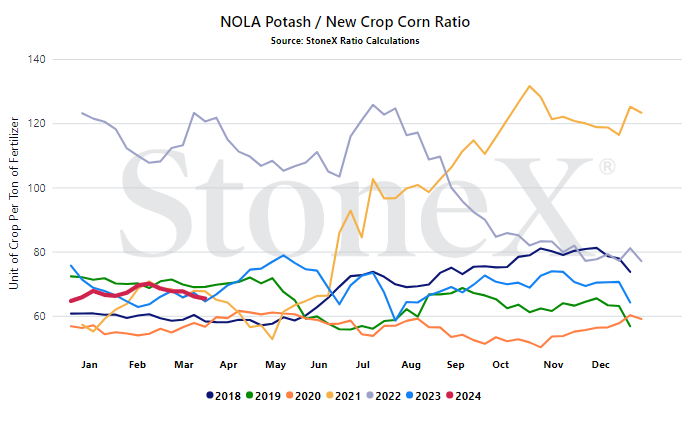
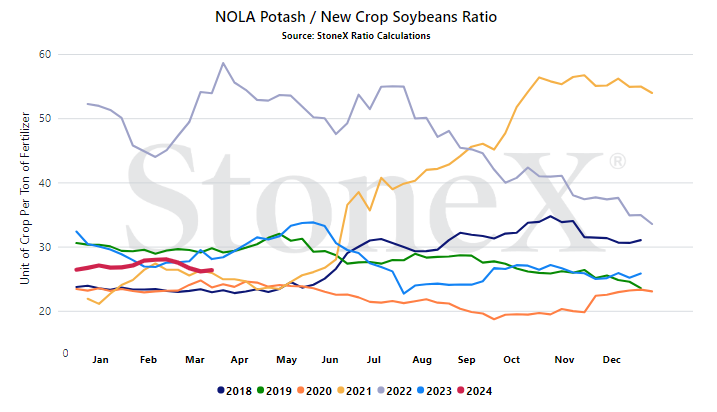
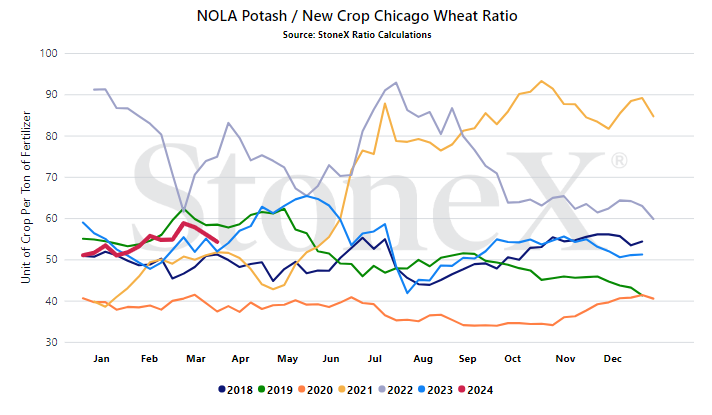
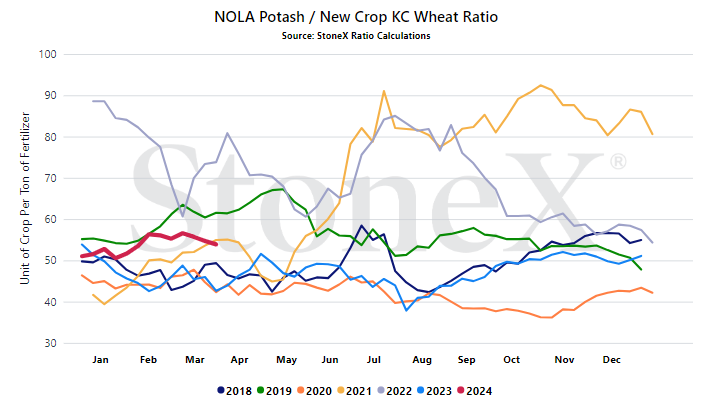
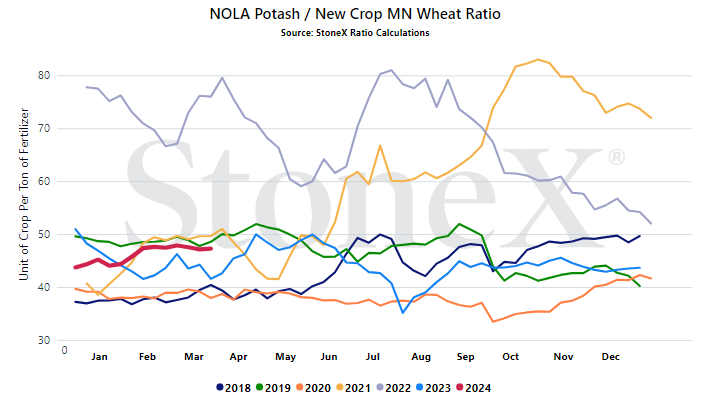
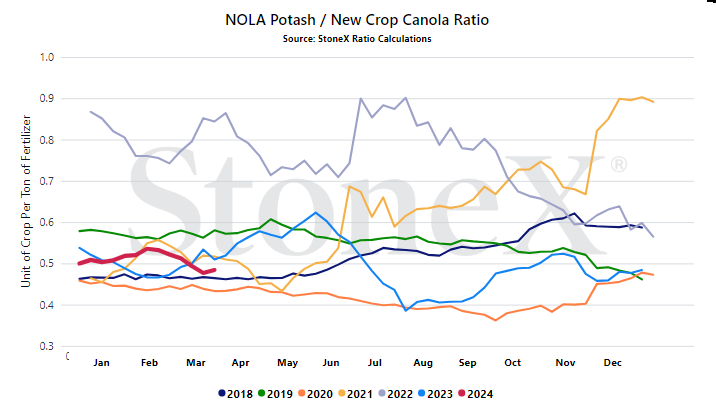
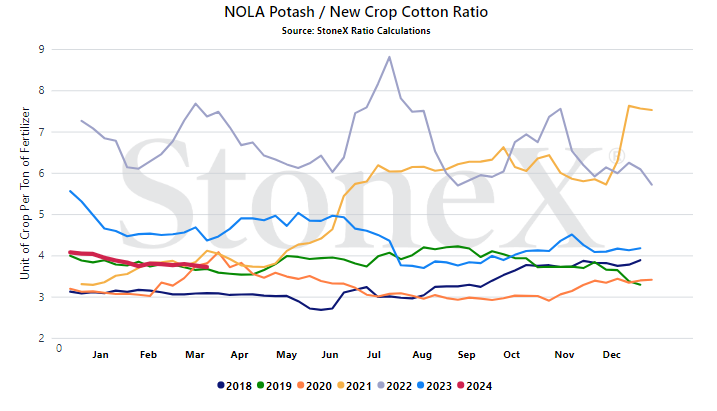
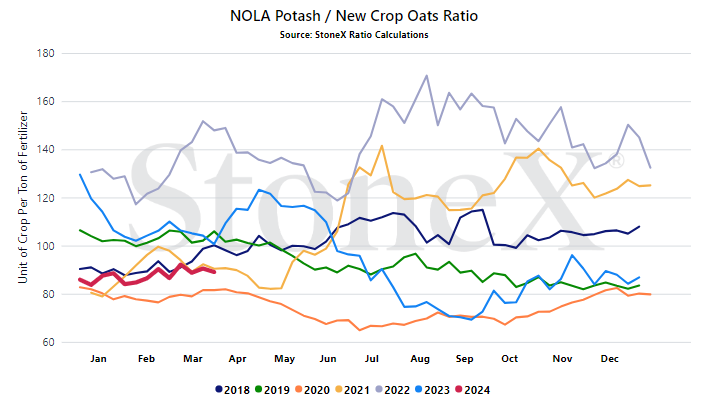
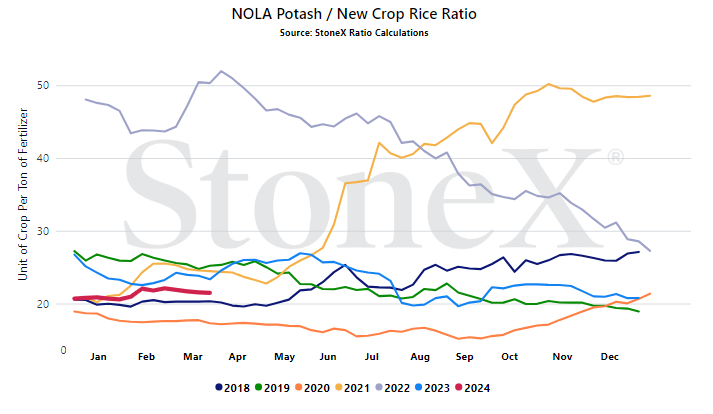
Ultimately, I am not expecting potash prices to fall out of bed from their current values. Potash has remained very well valued compared to what other inputs have done. Most of the ratio changes seen below have been due to grain prices changing rather than potash values moving. Still, it feels like the market needs to reset a little to bring a reluctant buyer side of the market forward or run the risk of this quiet extending...
Mosaic discusses curtailing Colonsay production until market improves
During the recent earnings calls, Mosaic mentioned that they would be curtailing production at their Colonsay mine facility.
To a certain extent, this was a surprise. Last fall, N.A. had a tremendous application run which saw a lot of sheds emptied. In fact, there were plenty of photos shared of mine facility warehouses, which can store insane amounts of potash, nearly empty. Then, we had a very short winter which meant that demand stepped forward sooner than expected. All the cards for a tightly inventoried system (i.e. price supported) were in place.
Then, with the exception of some inland locations that struggled with logistics, the market never really moved. I'll be straight up with you, that was a miss on my part. I expected prices to rally as a result...but that didn't happen.
We are expecting potash inventories to be rather low coming out of this spring season. Even so, Mosaic is taking steps to curtail production which can be taken as a sign that they believe inventories are adequate and prices set to fall.
Now, I will admit that I think we will see prices fall. We are not expecting anything huge, but a small reset to get in line with current Dec '25 corn values is not out of line. So to see this announcement took us off guard.
Then again, as we look at our future S&D, potash is the one product that looks/feels very well supplied. If a couple mines actually get developed, one could argue it moves into the oversupplied category.
Ultimately, Mosaic's move will need to be mimicked by multiple others to have a large impact based on our current view. That said, this needs to be a watch point...
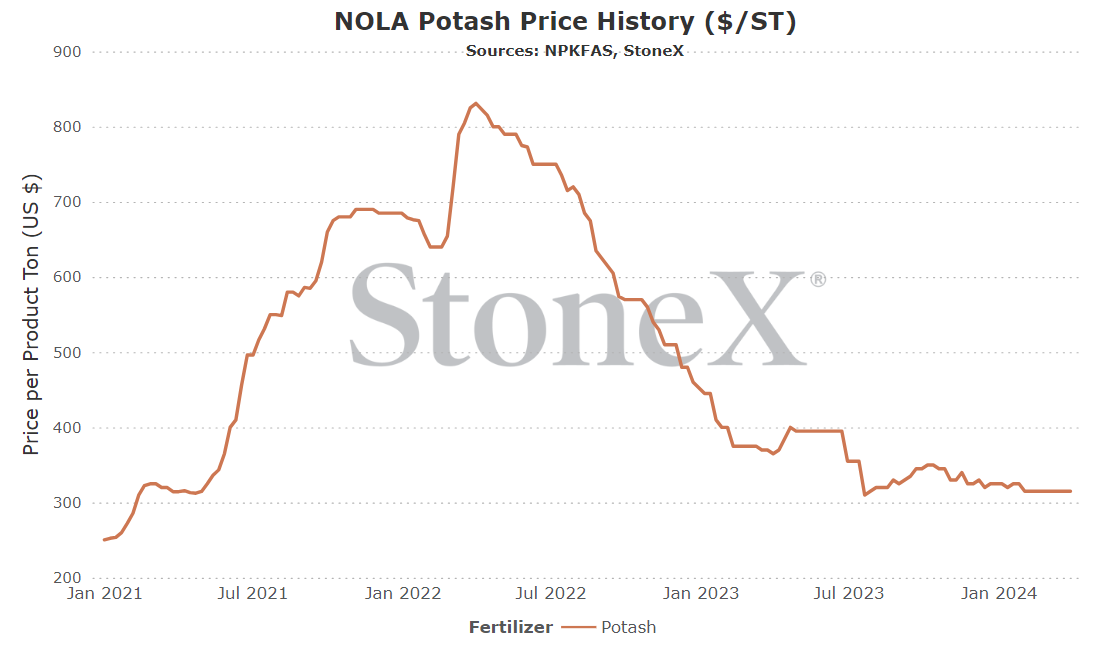
NOLA/New Orleans Louisiana
Vs 30 days ago - unchanged vs last month
Vs 90 days ago - -3% or approximately $10 lower
Vs 6 months ago - -9% or approximately $30 lower
Vs 1 year ago - -14% or approximately $50 lower
U.S. Midwest Average (average of several points across the Midwest)
Vs 30 days ago - +24% or approximately $94 higher
Vs 90 days ago - +21% or approximately $84 higher
Vs 6 months ago - +18% or approximately $71 higher
Vs 1 year ago - +9% or approximately $41 higher
- Other potash manufacturers mirror Mosaic's curtailment approach – it will be tough for a single manufacturer to support global potash values by curtailing one mine complex. However, if other manufacturers follow suite, it is a different story.
- Low ending spring inventories - it continues to feel as though we will end the spring/enter summer relatively low on inventories. If this continues to hold true, that means there will be a lot of open sheds to fill late spring/summer. The more sales opportunities that manufacturers have, the easier it is for them to keep prices stagnant...or higher.
- Long summer ahead – it has been pretty hard to find farmers that are excited going forward. Profitability is a struggle. Inputs are still "high priced" in relation to grain values. Interest rates remain high. Basically, we are set up today with the buyer side of the equation in no mood to step in early. Sellers/manufacturers will need to do some work to convince them to step forward and today, a lot of that conversation will revolve around pricing.
- Large annual contract buyers about to step up and challenge sellers - India and China are about to start up their negotiations for annual contracts of potash...and it has been a bit since they have had this much negotiation power. I fully expect them to use that leverage.
We believe that only looking at the flat price of either grains or fertilizer can be misleading:
-
Only selling grain can hurt you if fertilizer prices rise substantially
-
Only buying fertilizer can hurt you if grain prices fall
We look at the ratio "value" to get a better indication of where we are or how many bushels of X does it take to pay for 1 ton of fertilizer.
Would you rather:
-
Spend 120 bushels to pay for 1 ton of potash
-
Spend 60 bushels to pay for 1 ton of potash
When we compare the current ratio value against recent years, we start to see if we are high or low.
YOUR VALUES MAY LOOK DIFFERENT
This graph looks at the NOLA potash price vs the flat grain price. There are no logistics on either product. Your location will look different due to fertilizer logistical costs, grain basis, etc.
- Just in time logistics - there are still pockets of demand yet to come forward. Even if N.A./global prices start to decline, that does not mean that your values are guaranteed to. Logistics are still struggling to keep ahead of demand and we have already seen plenty of examples of inland prices spiking.
- Manufacturers approach - will the Colonsay mine curtailment approach be a one off event or will we see others mirror it? If it goes solo, the impact should be relatively negligible. If others join the chorus, we could see the supply side of the S&D get much tighter, much quicker than expected/
- How summer fill programs get released / buyers step forward- it is too early to say how this plays out. Spring is still in swing so manufacturers are not likely to roll out summer fill programs. However, once they do, it will depend on how sellers frame the market and how buyers step into it. If manufacturers drop the price to something that makes sense and buyers step forward, we will see a healthy marketplace. If they remain firm on their price and buyers say no thank you, be prepared for a long and volatile/uncertain market.
StoneX Ratio Calculation
The ratio calculation is derived from Bloomberg historical grains values as well as fertilizer values from StoneX, NPKFAS, and Argus.
The calculation is simply dividing the fertilizer price by each grain price.
All data was sourced from StoneX unless otherwise noted.