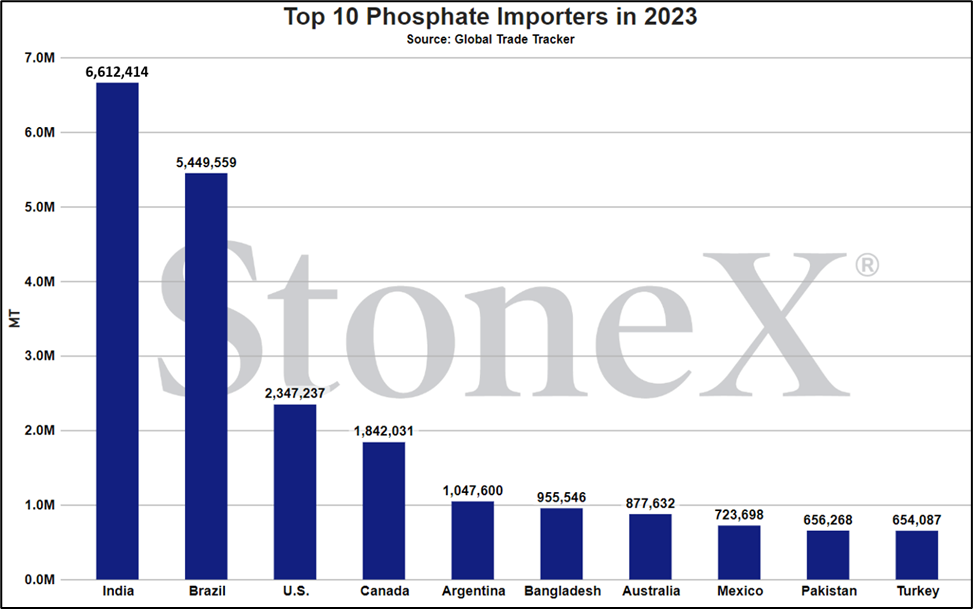
There are some global phosphate issues, and most of them lie with India.
India is the world's largest buyer of phosphate, and their government subsidy program has not allowed imports to occur as they are needed. As a result, the import pace has slowed and stockpiles are getting very low. The last time they got tight, farmers stood up and took to the streets. No doubt the government will not want this again so "should" change the program which will allow India to play catch up.
Let me say that again, the world's largest buyer will be in "catch up mode". With only 5 major exporters around the world, they will see this and likely take advantage.
From our perspective, once India fixes the subsidy program for phosphate, they will likely go on a buying binge of sorts to catch up stockpiles. The influx of demand should be met with eager manufacturers who should take advantage by stair stepping prices higher.
Hopefully we will not see the Chinese government restrict exports again as that would only make a bad situation worse.
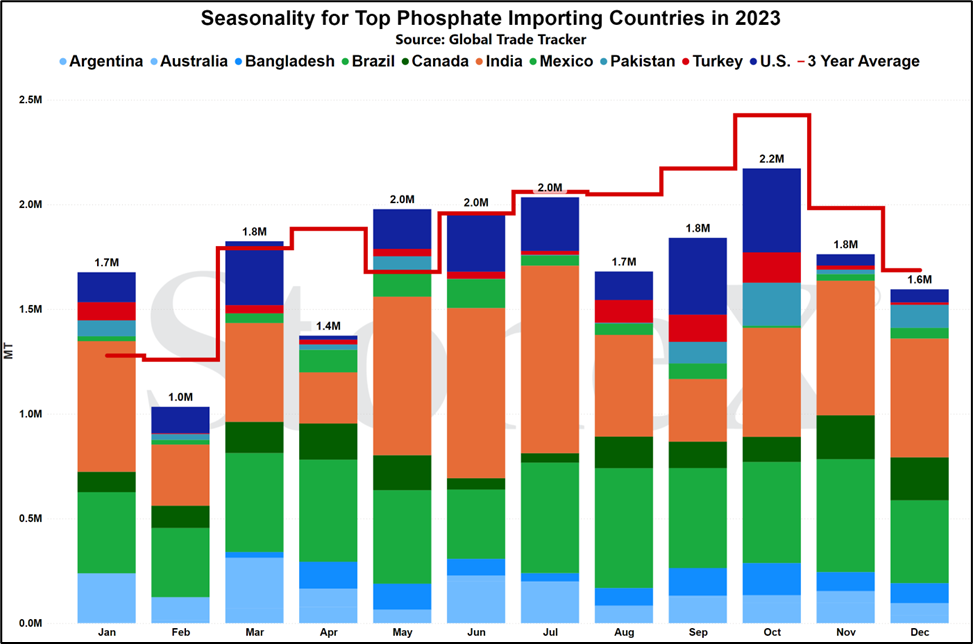

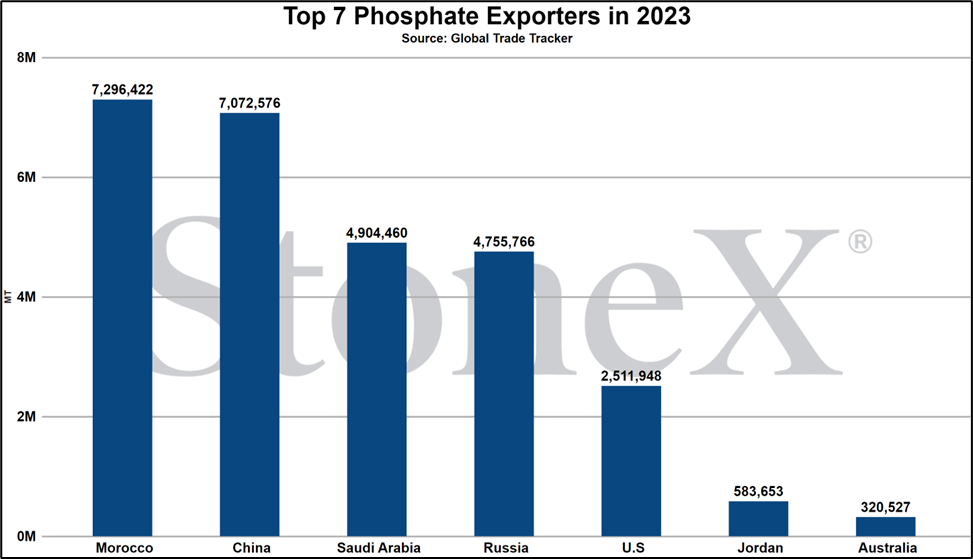
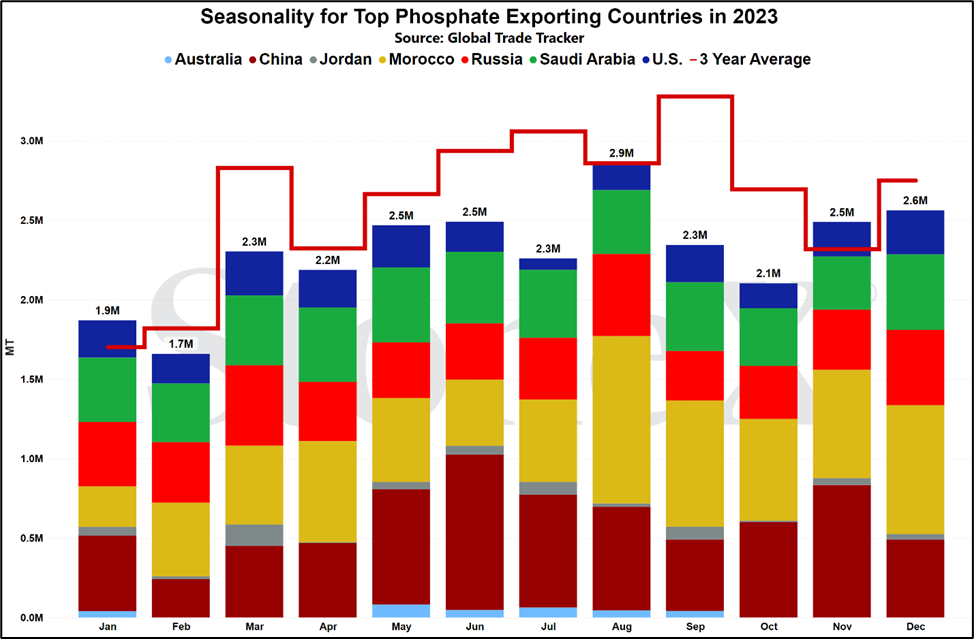
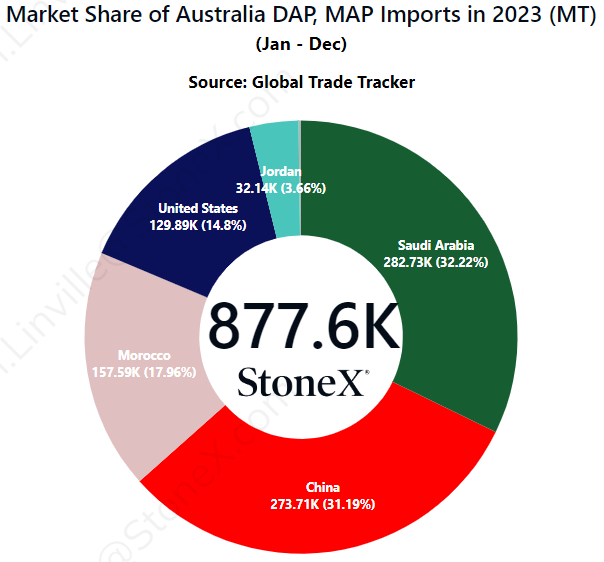
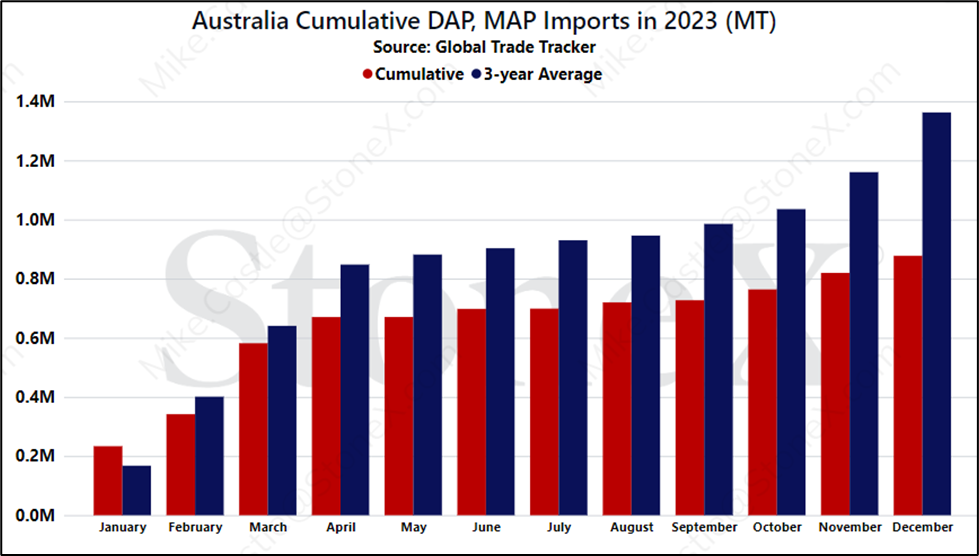
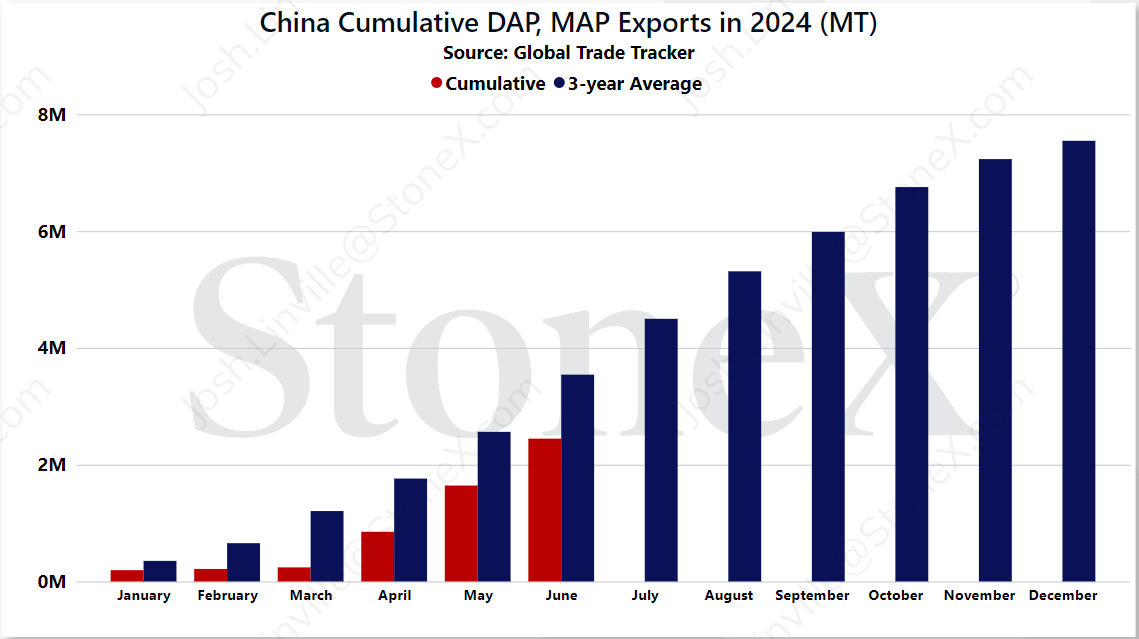
Chinese exports continue slow June/July, further tightening global S&D
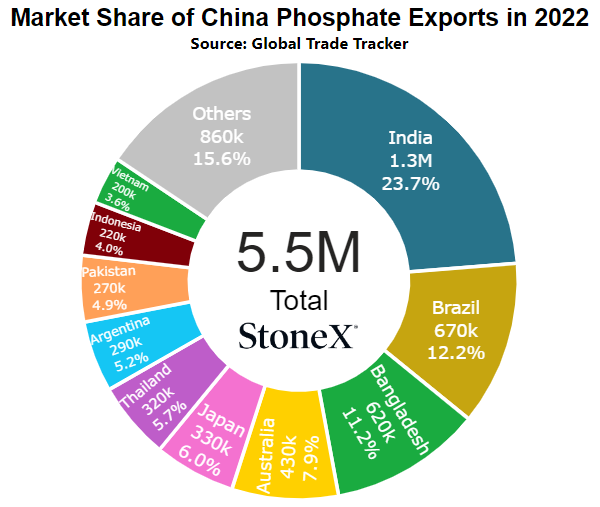
With only 5 major phosphate exporting countries in the world, when one slows down, it impacts the world market. When it is China, who has historically been the largest of the 5, its impact is that much bigger.
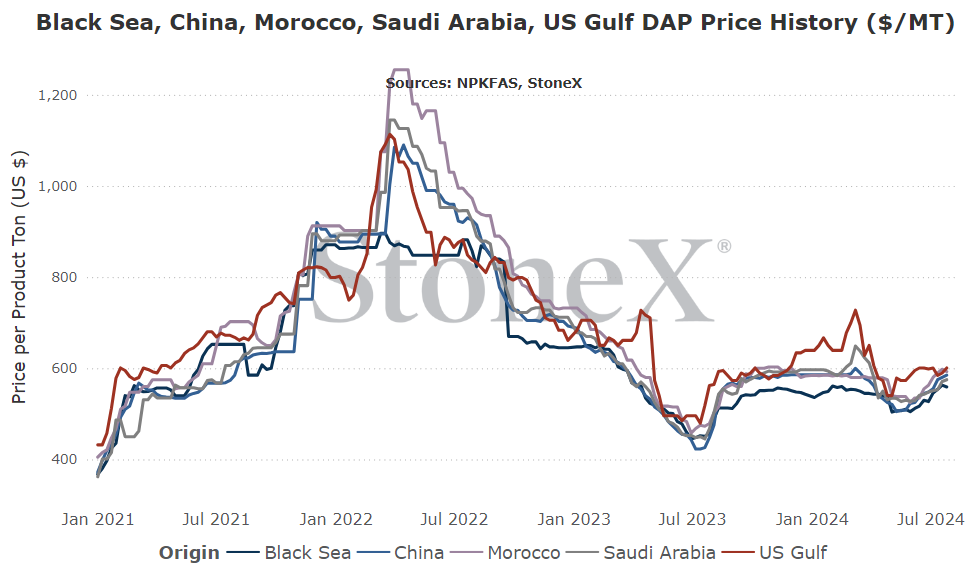
One of the bigger 2024 phosphate storylines has continued to be Chinese exports being slow vs their 3-year average which is ALREADY lower than normal due to recent year restrictions. We had hoped that 2024 would be a return to normal for them. Global values, which are still high, have come off tremendously from their early 2022 high's. Global supplies have vastly improved from the same period outlook. Essentially, all the pieces had fallen into place for the Chinese government to no longer play a role in export programs.
Unfortunately, that does not seem to be the case.
The government has seen where restricting exports of things like fertilizer helps to reduce the domestic price to their farmers. Even when every single fundamental is saying export, from their perspective, it is better to keep restrictions in place. Doing so keeps their domestic pricing lower than the rest of the world and helps put their farmers on more firm footing than the global competition.
We always have to remember that China can turn on a dime. Today, we are discussing how far behind their exports are and how the remaining 2024 outlook does not look great...but by September we could be discussing how China is flooding the world market with product and frankly I wouldn't be surprised in the slightest.
So the world phosphate market continues to churn along as one of its biggest suppliers continues to remain an enigma.
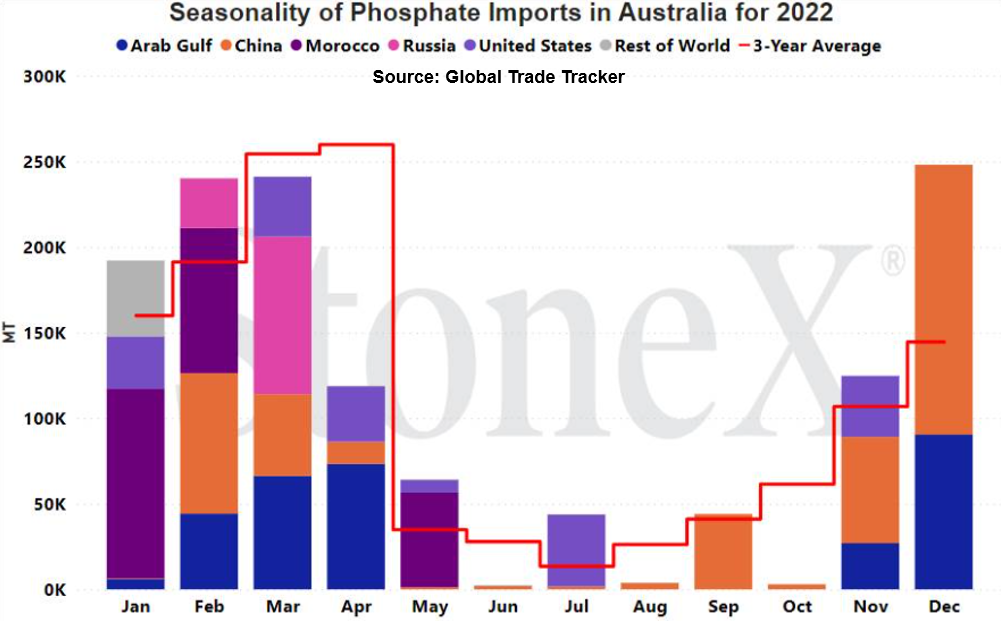
Why does this matter for Australian farmers?
China has historically been the largest global producer/exporter of phosphate so when they are reduced or absent, there isn't a corner of earth that doesn't feel that. As long as China is running at lower export rates, the global S&D remains tight which supports values. That includes Australian values.
India, world's largest buyer, needs to catch up in a big way
If China is the biggest story on the supply side of the global phosphate market, India is currently the biggest story from the demand side.
India is the world's largest buyer (not consumer, but buyer) of DAP/MAP in the world...and they are getting low on stockpiles due to a government subsidy program that is not allowing importers to purchase product.
A bit of insight on how India works.
Indian farmers do not operate with global fertilizer pricing. The government subsidizes their fertilizer to keep their value steady. That subsidy goes to importers who have to purchase high priced global values and then sell at a government mandated farmer value. The subsidy fill in the gap and allows them to proceed with imports without taking a huge loss.
The issue in recent months has been that the government subsidy has not been large enough to cover that gap. Importers will lose money with each vessel that they purchase. That is not a very good strategy if you want to stay in business. The government dropped the subsidy rate as they saw global values declining and had hoped that lowering the rate would cause global prices to fall which would save them money.
Then China started to restrict exports even further and the tide changed. Rather than forcing values lower, prices started to rise and India was left in the cold.
During this same time, domestic Indian production levels have fallen unexpectedly.
The result is that Indian DAP stockpiles have fallen to 2M tons in June. That is certainly a lot of tons but in comparison, June 2023 levels were 4 million and the 5-year average sits at 4 million. To make matters worse, most believe that July and August imports will be poor (again, due to a subsidy program that does not work) and could see stockpiles falling into the mid 1 million ton range.
So what does this mean for the world?
This means that the largest phosphate buyer in the world needs to play catch up. Rumors/reports are that the government are working to change the phosphate subsidy to allow imports to resume. When that happens, they will need literally millions of tons to catch back up to "normal" stockpile levels. At the same time, we are still operating in a market that has Chinese export levels lower.
So one of the largest exporters in the world is slowing flows while the largest buyer in the world appears to just be starting a game of catch up...dangerous equation.
I doubt that we will see markets pushing back to the high's seen in early 2022, but it certainly would certainly provide a lot of price support to long positions/manufacturers...
Why does this matter for Australian farmers?
So if China, the worlds largest exporter, is running at lower rates and India, the worlds largest buyer, is needing to buy more to catch up, that is a brutal one-two punch to the phosphate industry. There is still a lot of time before Australia starts putting a lot of phosphate on the ground. Hopefully this situation gets resolved before that but we need to know that this story is out there.
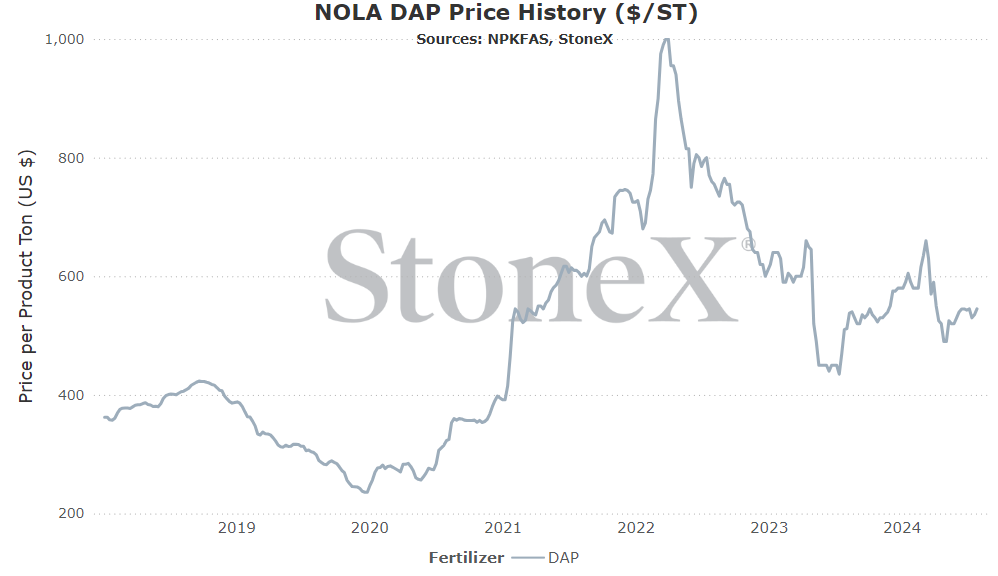
Price comparisons
Vs 30 days ago - 0% or approximately 2% higher
Vs 90 days ago - 11% or approximately $55 higher
Vs 6 months ago - -6% or approximately $35 lower
Vs 1 year ago - 7% or approximately $35 higher
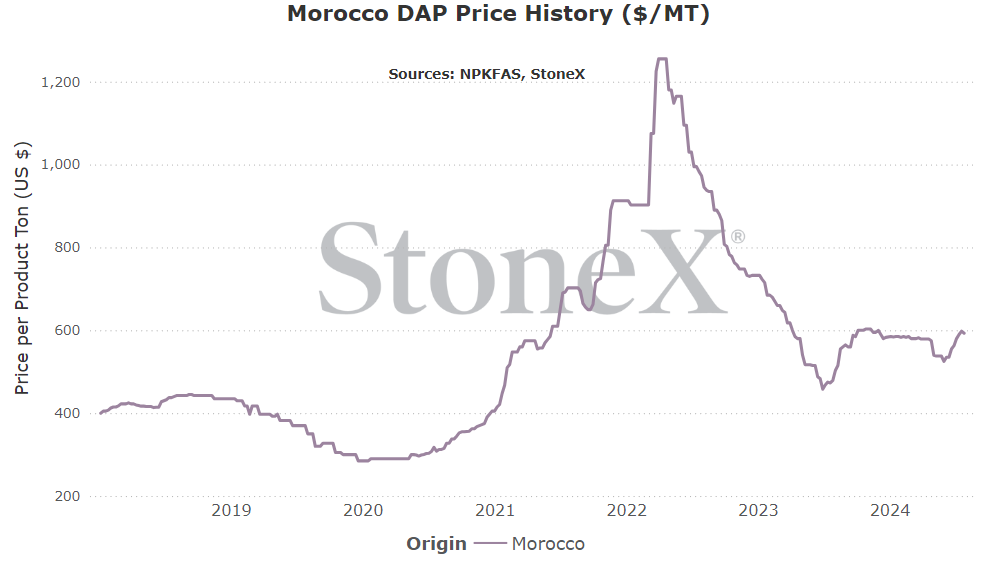
Morocco DAP price comparison
Number 1 global exporter in 2022
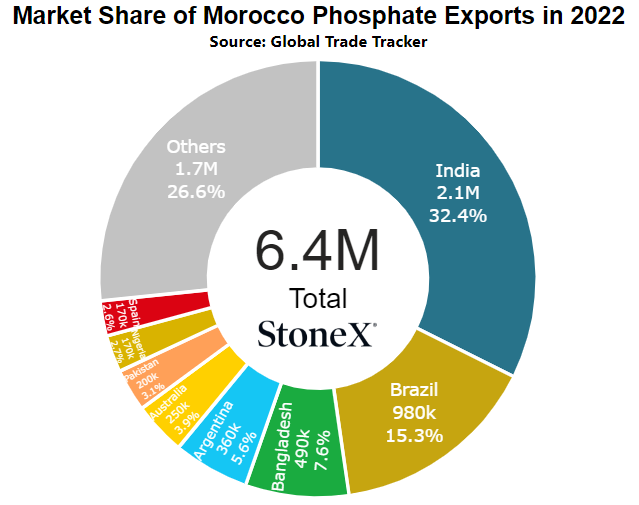
Price comparisons:
Vs 30 days ago - 5% or approximately $30 higher
Vs 90 days ago - 3% or approximately $18 higher
Vs 6 months ago - 2% or approximately $10 higher
Vs 1 year ago - 24% or approximately $114 higher
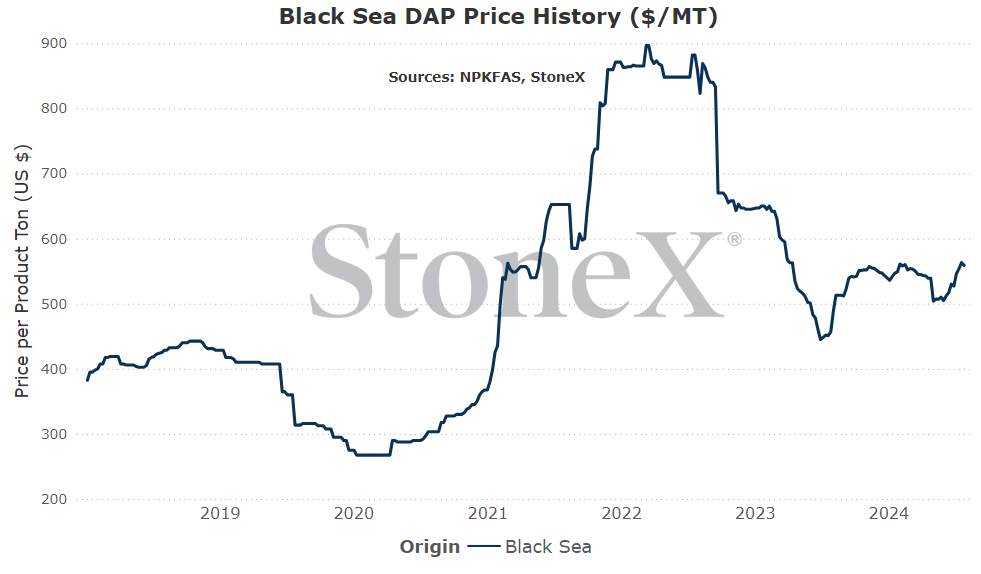
Black Sea DAP price comparison
Number 3 exporter of DAP/MAP in 2022
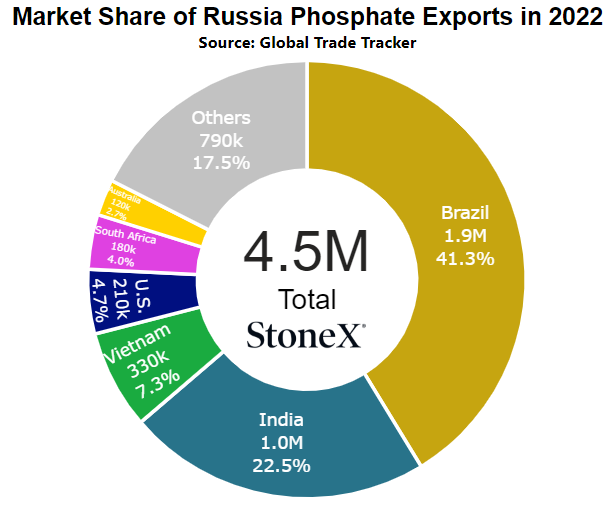
Price comparisons
Vs 30 days ago - 6% or approximately $33 higher
Vs 90 days ago - 4% or approximately $20 higher
Vs 6 months ago - 0% or approximately $2 lower
Vs 1 year ago - 22% or approximately $102 higher
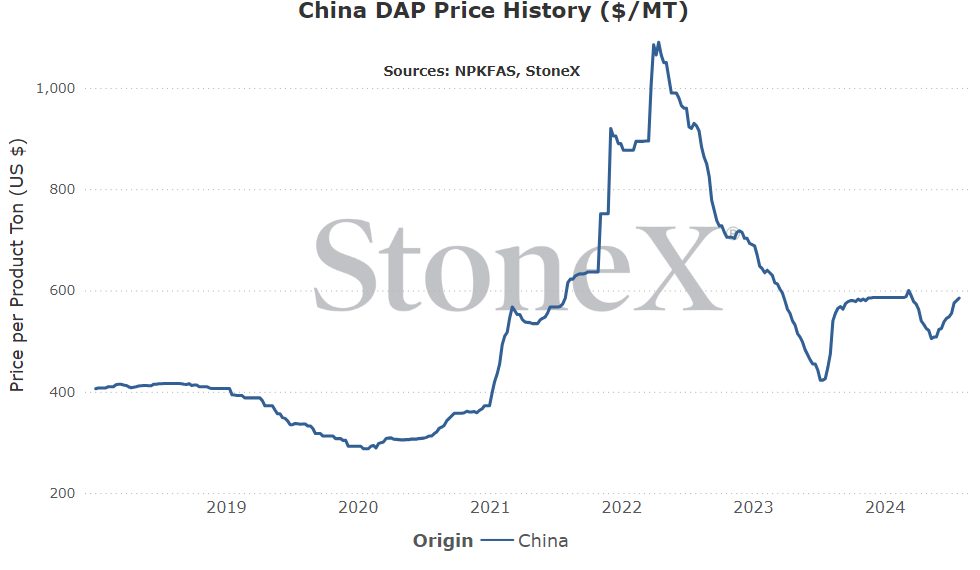
China DAP price comparison
Number 2 global exporter in 2022
Price comparisons
Vs 30 days ago - 7% or approximately $38 higher
Vs 90 days ago - 11% or approximately $60 higher
Vs 6 months ago - 0% or approximately $1 lower
Vs 1 year ago - 31% or approximately $138 higher
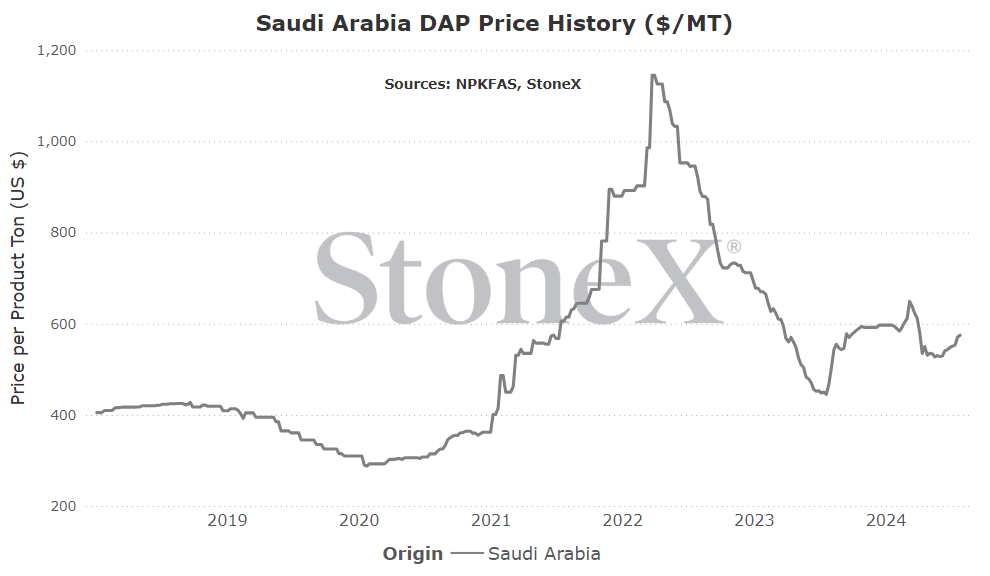
Saudi Arabia DAP price comparison
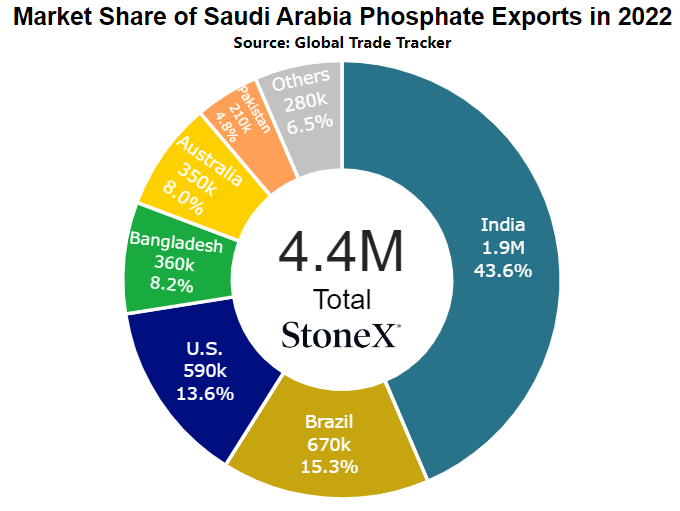
Number 4 global exporter in 2022
Price comparisons
Vs 30 days ago - 5% or approximately $27 higher
Vs 90 days ago - 8% or approximately $44 higher
Vs 6 months ago - -2% or approximately $15 lower
Vs 1 year ago - 23% or approximately $108 higher
- India plays catch up – India is the world's largest buyer of phosphate, and their stockpiles are getting low. When the government fixes their subsidy program, thereby allowing imports to resume, then that largest global buyer is going to be a force. Big competition for everyone else. This is the single biggest reason I think prices get higher before anything corrects lower.
- China backs out of the export market...again – the Chinese government has played a much bigger role in what happens in the their fertilizer market...and what doesn't happen. If India starts driving prices higher, it is not out of line to expect the Chinese to slow/stop exports to ensure adequate supplies and lower values for their domestic marketplace.
- China starts to export more with global values high – this is pretty low on my probability list. The government seems to care more about keeping domestic values low than on taking advantage of solid profitability. However, if the government felt that supplies were adequate and allowed manufacturers to do as they wish, we could see exports rise as they take advantage of solid returns on exports.
- All global demand delays due to high prices/big interest costs/etc. – this isn't to say that demand is going to be lower as stated above for North America. This is more that global values just dig in and wait. They cannot wait forever but sometimes, when enough of the market disappears, manufacturers are forced to lower their price to move inventories. Doesn't look likely today but worth watching.
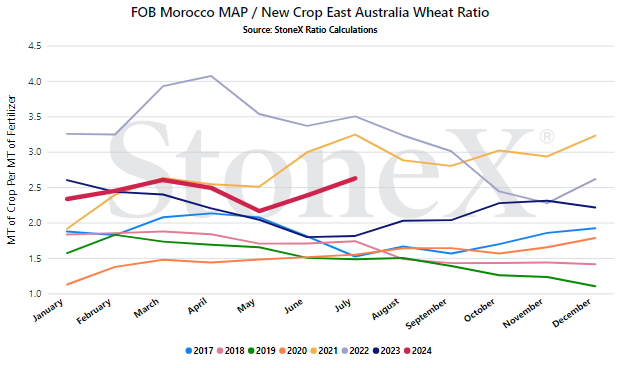
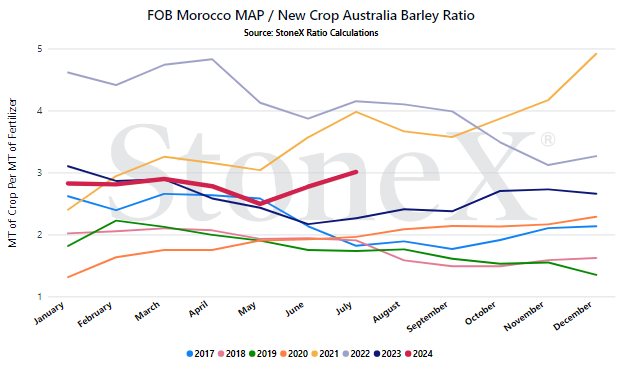
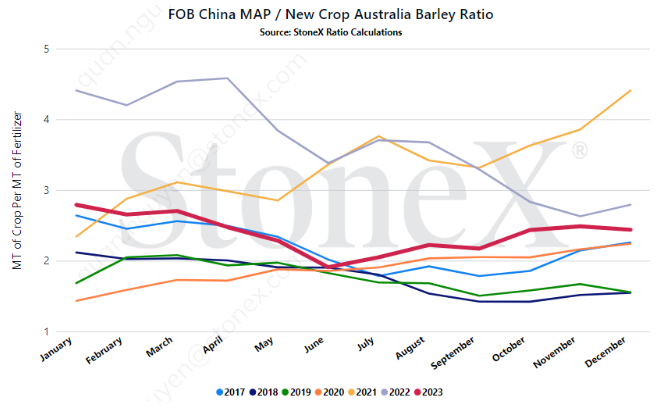
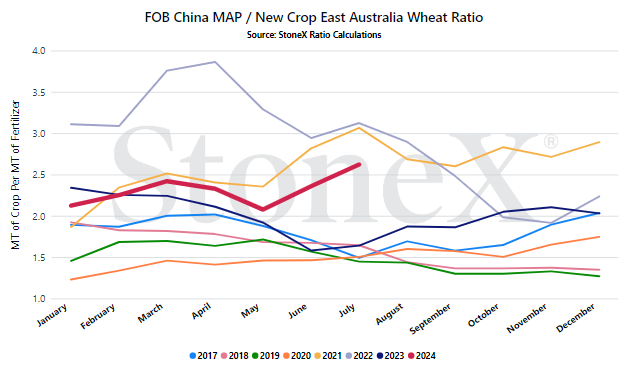
We believe that only looking at the flat price of either grains or fertilizer can be misleading:
-
Only selling grain can hurt you if fertilizer prices rise substantially
-
Only buying fertilizer can hurt you if grain prices fall
We look at the ratio "value" to get a better indication of where we are or how many bushels of X does it take to pay for 1 ton of fertilizer.
Would you rather:
-
Spend 4 ton of grain to pay for 1 ton of MAP
-
Spend 1.5 ton of grain to pay for 1 ton of MAP
When we compare the current ratio value against recent years, we start to see if we are high or low.
YOUR VALUES MAY LOOK DIFFERENT
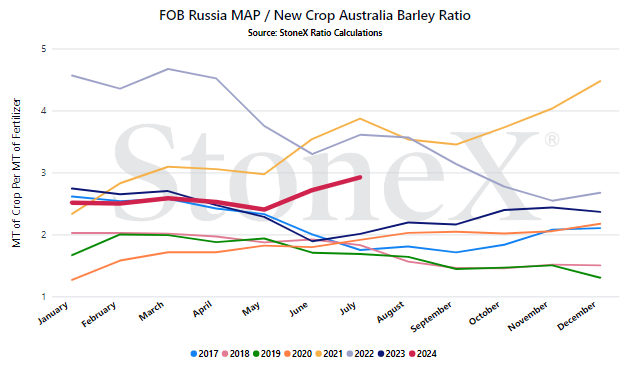
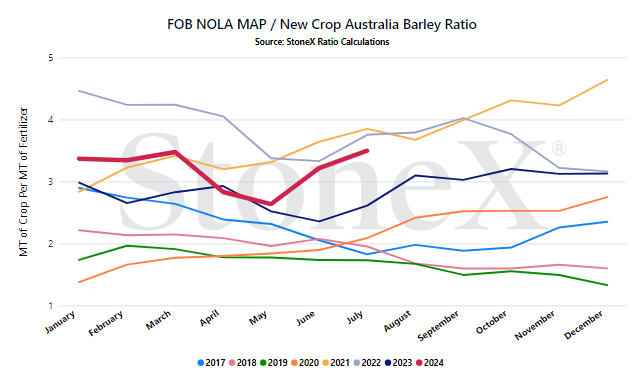
- India, plain and simple - this is easily my biggest focal point for global phosphate. Stockpiles in India are low vs recent years and the current subsidy rate is only going to make that bad situation worse. Eventually, I think the government will need to cave to higher global values. If/when they do, the world's largest buyer will be in catch up mode...and that should spook the market.
- Chinese exports (i.e. what will the government allow?) - global phosphate prices had been sliding...until Chinese exports were slowed. Then things turned around quickly. That is the power a country like China holds over the world phosphate market. If India fixes their subsidy program and starts buying heavily at the same time that global fall markets start stepping in, we could see demand jump substantially. If the Chinese government sees this and interprets it as world inventories are getting very tight, it is not insane to think that they could close their borders...again.
- Fall demand destruction - so my global outlook is one of higher prices and tighter supplies. No, I do not like that outlook but for right now, it is reality. However, we also need to look closer to home. Here in N.A., I think we will see demand destruction in the fall. Some farmers will delay fall application to spring in hopes of lower prices. Some farmers will cut back their application rate, hoping it does not impact overall yield potential. Some may have adequate soil levels and skip totally. We may have a situation where here, demand is down and supplies get much better...but do not lose sight of the world. We could finish fall season on poor demand but still see prices higher.
StoneX Ratio Calculation
The ratio calculation is derived from Bloomberg historical grains values as well as fertilizer values from StoneX, NPKFAS, and Argus.
The calculation is simply dividing the fertilizer price by each grain price.
All data was sourced from StoneX unless otherwise noted.