This one is interesting.
Short term, I am concerned about the lack of real demand that is around. Typically, when that happens, values tend to slide. There is A LOT of urea produced every day around the world. That product needs to find homes. If the market even sees a few weeks of inactivity, you can start to see/feel the pressure.
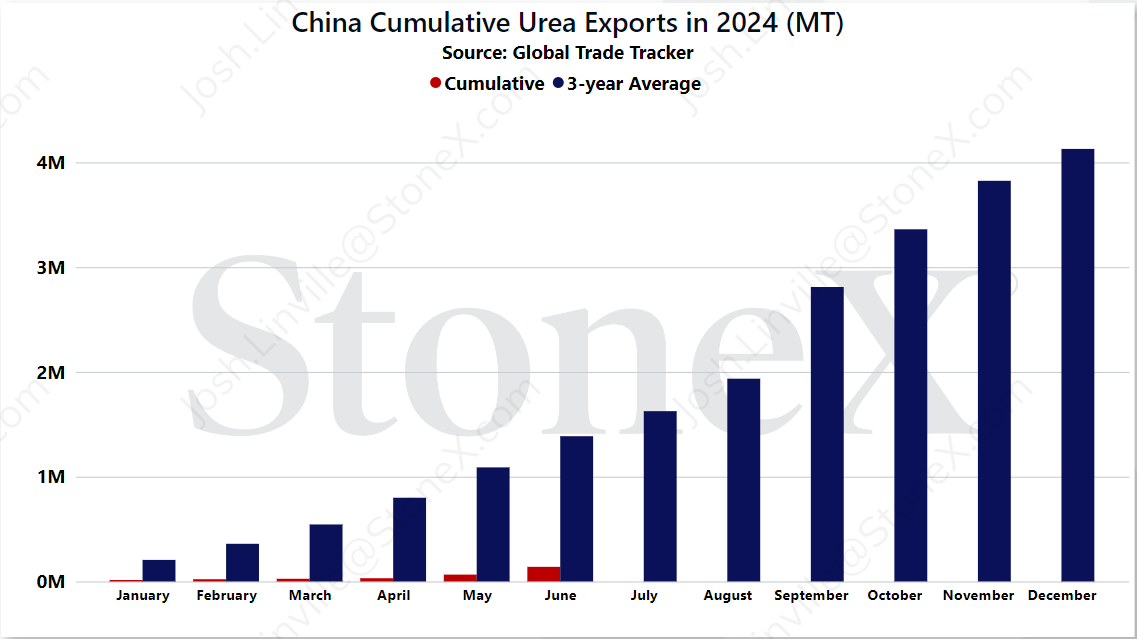
However, there are a lot of longer term production issues that could build into real issues. Europe is still at around 75% of normal production capacity and I've lost hope that we will see the remaining 25% come back near term. Brazilian production remains offline with no real hope of returning in 2024. Chinese exports for the 1st half of 2024 are almost zero (only 140K). Egyptian issues have gotten much better, but can we expect that to continue?
All in all, short term values should be relatively stagnant and poor demand could see prices slide. However, longer term (going into Q4 2024), supply issues could/should build enough that values start to be supported in the face of rising demand preparing for 2025.
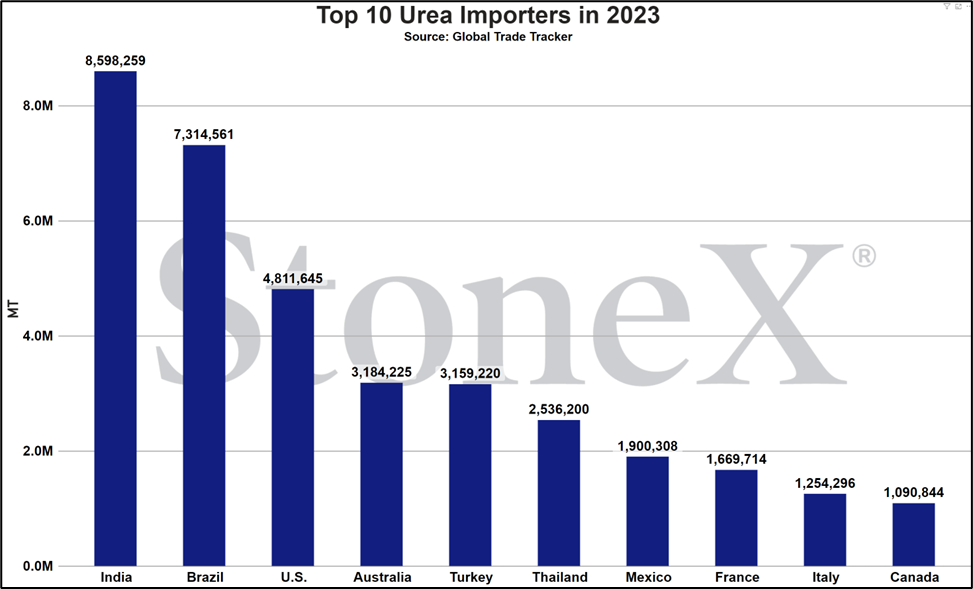
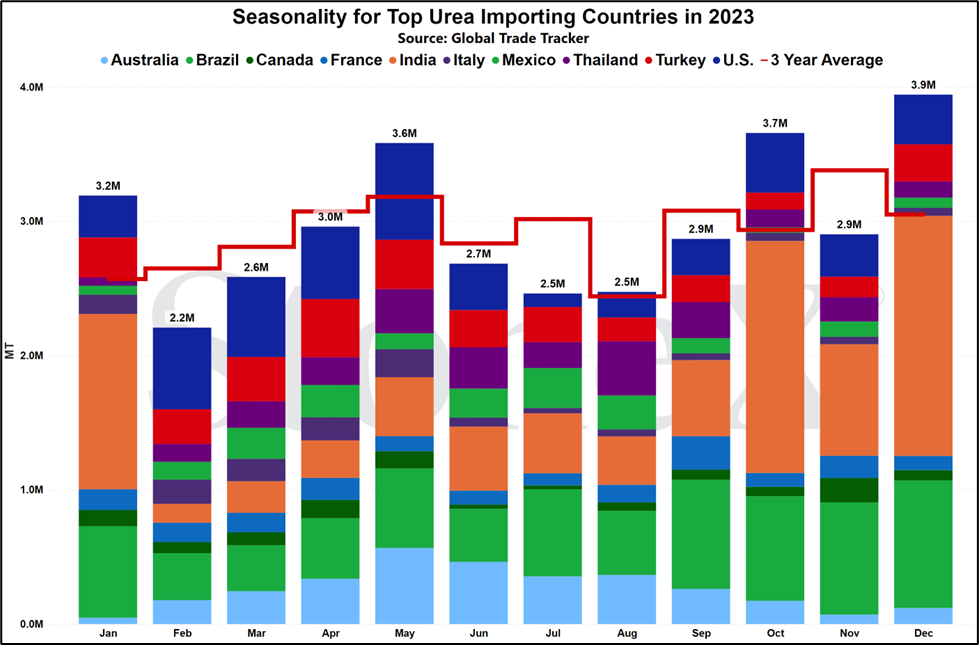
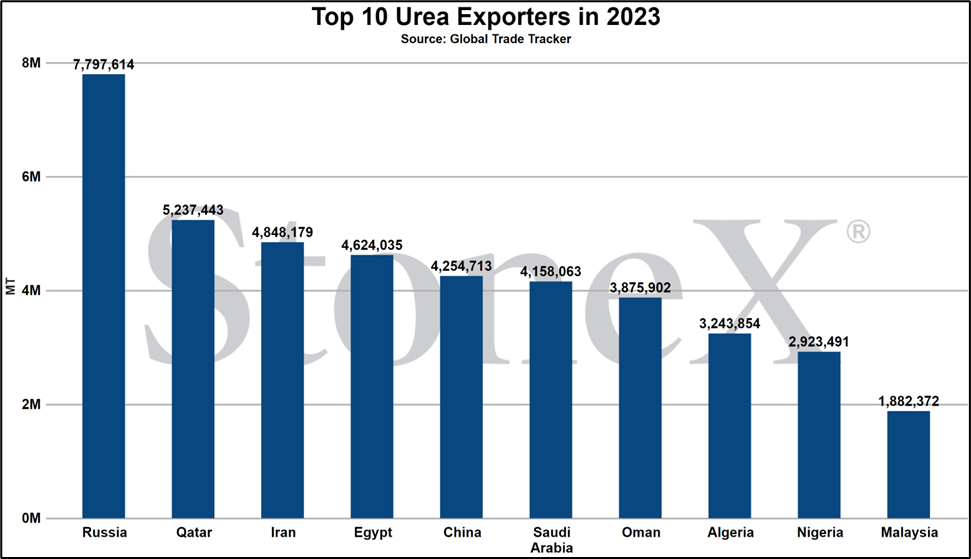
India purchase concludes lower tonnage, leaves bullishness in wake
There are not many certainty's in life.
Death
Taxes
India urea purchase tender will not follow the script!
So to the surprise of absolutely no one in the industry, last month India stepped forward to purchase a block of urea. For those that are new, India has a unique way of purchasing urea. Rather than multiple parties constantly trying to lock up imports, mostly two companies will issue "purchase tenders". After they announce their intention to purchase, complete with the dates that include submission/offer validity/shipment window, and then wait for the offers to roll in. Once the submission date is reached and all offers opened, they publish all the values that were received. For the rest of the world, this is typically a great event as it forces the market to show their cards on pricing/tonnage/etc. No games. No gimmicks. Best price and tonnage.
Once the offers are opened, the lowest price (L1) for the west coast and east coast are established. That is when negotiations begin. Offers, in order to sell/participate, are required to drop their price to the L1. India will go back to the offers and give them a chance. If they say yes, the contract is written up. If they say no, they go to the next party. This goes on until either India secures the number of tons they are looking for or they run out of offers. The final tonnage awarded is announced and the process is complete.
This is why I always look forward to these tenders. It is such a great tool that wipes away all the stories, all the positioning, all the blustering commentary and strips the market to the bone. Here are the values. Here are the tonnages. Here is the market in a nice, neat package.
So, back to this last tender.
It came as no surprise that India stepped in to purchase, but the question was how the market was going to respond. When India announced, several were surprised at how long the shipment window was. Offers could ship product until August 27th which historically is a longer window.
Wider the window = More time for offers to find tons = More time for tons to be produced and offered
When all offers were opened, approximately 2.7MMT were offered and the offered values were relatively tight. Of the 2.7MMT offered, almost 1MMT was within $5 of the L1's which is a lot in a narrow price range. It wasn't long after that India announced that they were only look to secure 600KMT. This is absolutely a large number of tons but when compared to the industry expectation that they could be in the 1 - 1.5MMT range, it was "disappointing". That many tons offered in a very narrow price range and a small amount of tons being secured should have been a slam dunk for India.
Except that we always say "wait for the end" because these always have an M. Night Shyamalan twist!
As India started going back and negotiating with the higher offers, they were told no more often than not. In the end, they "only" secured 434KMT and of course the story always comes down to interpretation. In this case, the ending story was a more bullish marketplace. India was not able to buy the tons they wanted to buy. Offers largely told them no. While I struggled with why offers would say no when they were so close to the L1 values, my struggle doesn't matter. Those offers saw a better opportunity in the future than selling India today.
So that is where we sit today. The expectation is that we will see another tender announced in the next week or two where this market game will play out once again and lay it bare.
What does this mean for Aussie farmers?
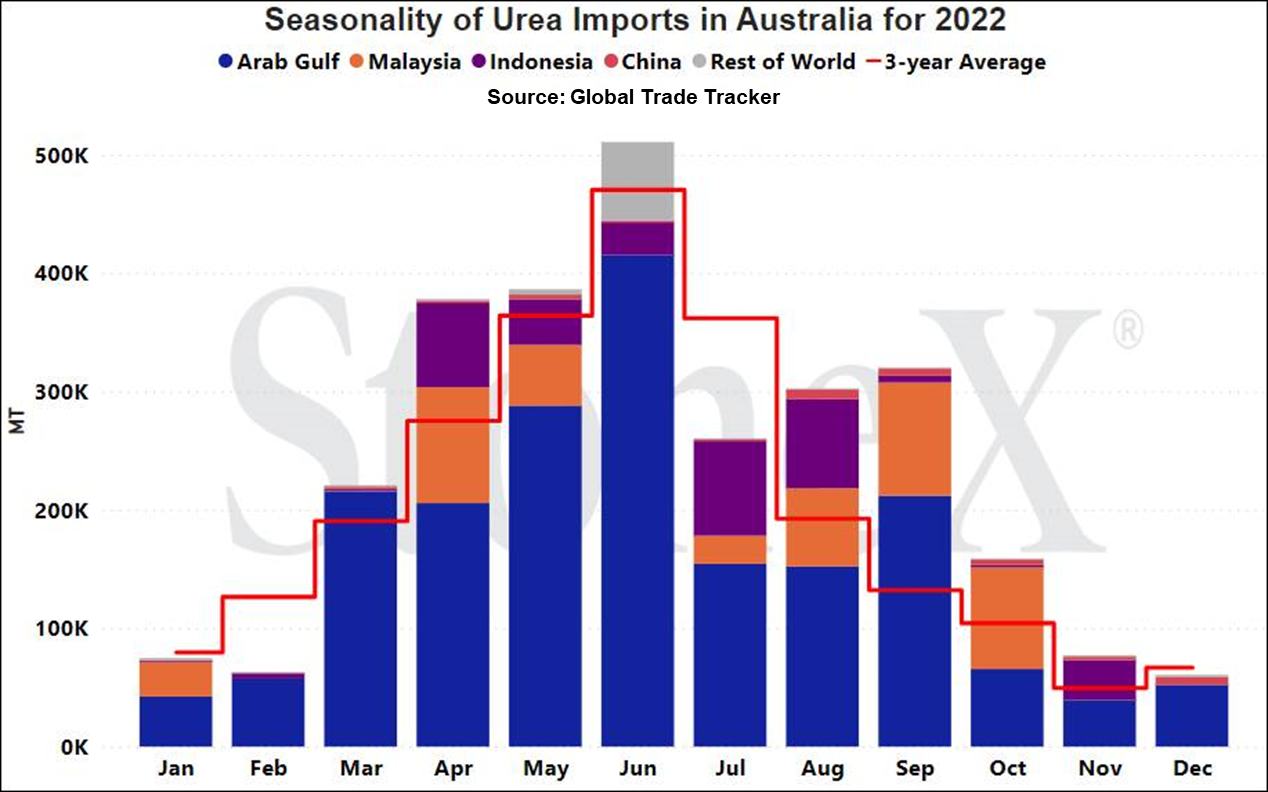
The global market has been quiet since the conclusion of the last India urea purchase tender and only really has this next purchase tender to look forward to. However, not likely that this next tender concludes on awards totals until after the Aussie season is complete.
Now, we have seen where the mere announcement of a tender from India has caused global values to jump. If that happens, it does raise the risk of Aussie values jumping in kind. This is especially true if inventories are snug, which is being heard in a couple spots.
All in all, I am hopeful that there is enough secured that this market will ignore any global price movements but we need to remain weary...just in case.
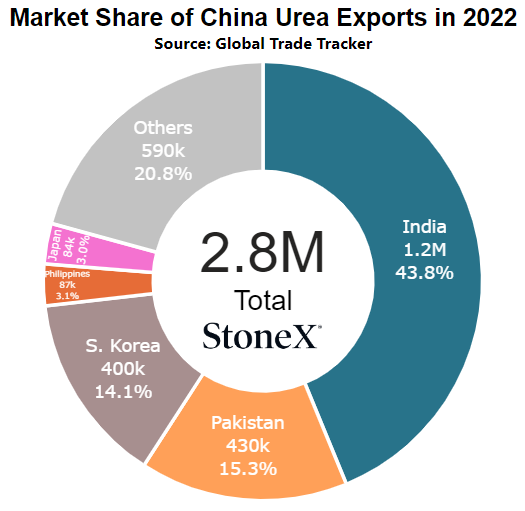
Chinese exports remain near non-existent for 1H 2024
Not trying to start this piece off by scaring folks, but this is becoming my biggest fear point of 2024.
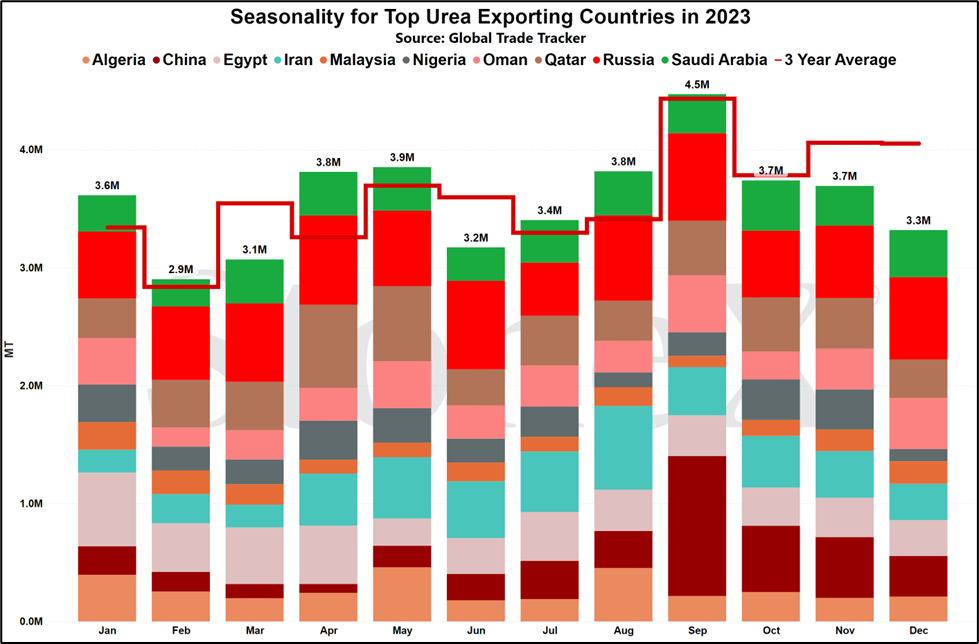
In recent history, China has been a large piece of the global urea export market, accounting for approximately 5 - 5.5MMT per year. With the global export market being 50 - 55MMT/year, they were 10% of that total. Certainly a large enough percentage that when they scale back exports, it is felt.
And have they ever scaled back exports this year...
We currently have Chinese export data thru June, which means we have a solid look at their halfway point progress. If we look at the last 3 years, which have seen their volumes lower due to government export restrictions, their cumulative export total sits at around 1.4MMT. This year, they are at 140KMT. Worse, during recent discussions, most estimate that China will improve for the 2nd half of the year and close out at 1.5MMT. If we go off the 3-year average, that is a shortfall of 2.5 - 3MMT for 2024. If we go off of normal, that is 3.5 - 4MMT less than we should expect.
So what gives?
In the early months of 2022, global inventories were feared very tight and as a result, global values were skyrocketing higher. The Chinese government, sensing a risk that all Chinese produced urea might get exported leaving Chinese farmers in a bad way, stepped in and started to place restrictions on exports. Their hope was likely that the restrictions would not only ensure adequate product for their farmers but because they were closed to the world, domestic values would fall.
Fortunately for them, they were right.
Unfortunately for the rest of the world, they were right.
Today, global values are much lower than those 2022 high's. Global inventories are significantly improved from what everyone feared as well. With both of those improvements, the hope was that export restrictions would be lifted and normal global trade flow would resume. However, the Chinese government has seen it differently. Every time that they start to insinuate that export restrictions will be lifted, domestic Chinese urea values start to rise and that is noticed. When that is seen, their POV changes and they decide that they will keep them in place.
And that is where we are today. We continue to see reports that Chinese production rates are running at high rates. One recent estimate had their daily production rate at 176,500 tons per day. No, that is not a typo (I checked three times). They are producing more in a day than they have exported all year which does raise the question of where that product is going. Some believe that the operating rates are being inflated and they are nowhere near those values. Others estimate that China is stockpiling huge quantities. It would take a heck of a lot of effort to make that much storage but they were seen building a hospital in 10 days. Others see those production numbers and assume that their 2nd half exports will be huge as they start to purge product.
There is still a lot of story that needs to be told for China that will go a long way in determining the global outlook. For now, we watch and react.
What does this mean for Aussie farmers?
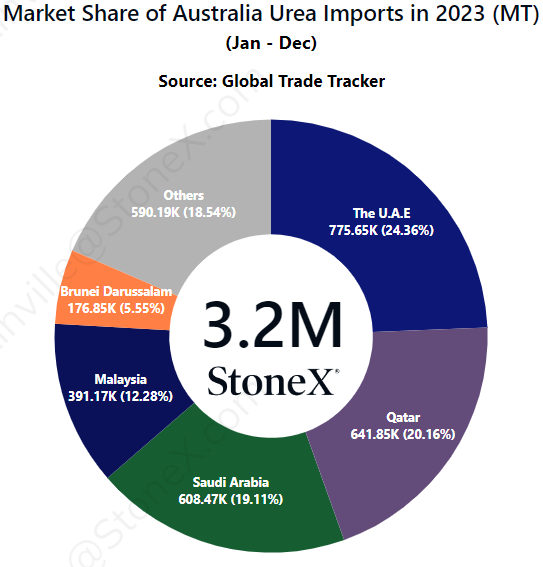
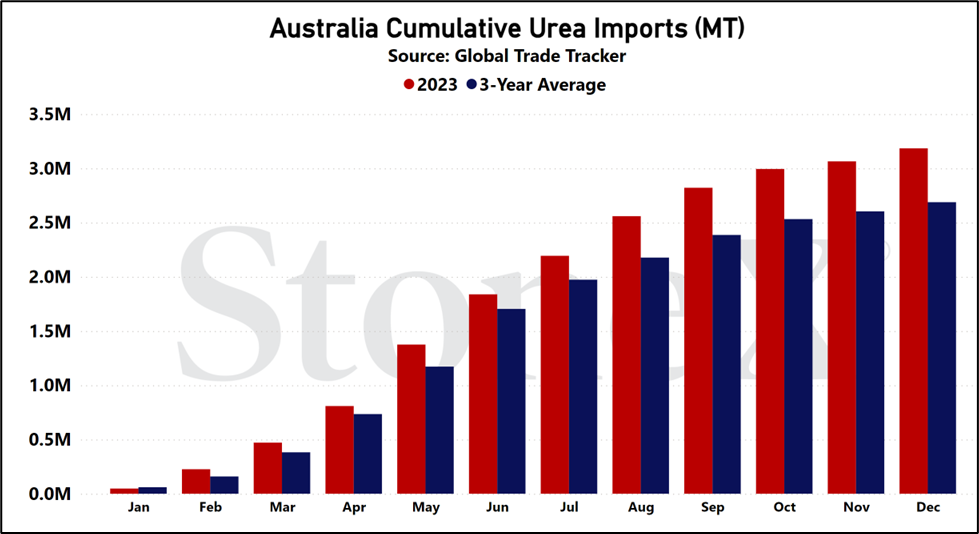
China being out of the export market means tighter supplies for the world. This is especially true and painful for those East of the Suez. Worst for those in Asia/Australia. Buyers are left scrambling to find alternative supply sources which typically means higher pricing. This has been a burden for importers all season long.
Unfortunately, this does put more risk on the end of this season. Importers would typically be able to rely on closer supply points for last minute purchases. With China out of the picture, those tonnages are not nearly as available as they would normally be. That is why we heard a urea vessel was purchased in the Middle East and was destined for Australia a couple days earlier. That sail time takes long to reach our ports.
Hopefully we will get thru the end of season with no hiccups but:
No Chinese exports = tighter nearby inventories = more vessel freight = more sail time
Dangerous late season combo...
Global supply outlook appearing tighter
I sure wish I could have ended the bad supply news story with China...so here goes.
Obviously, the China piece above points to a large supplier that may leave the world with less supply than it expected. Unfortunately, the list goes on.
China
No need to repeat the above section. If they reach 1.5MMT exported this year, it is a shortfall of as little as 2.5MMT and as high as 4MMT.
EU
The EU region continues to grapple with high natural gas values. Fortunately, the Dutch TTF has dropped from its high of $103MMbtu. Since that point, we saw those same values fall into the $7MMbtu range and they currently sit $10 - $11. This has helped the nitrogen production rate in the region grow to 75% of normal...but it has stalled there with fading hopes that the last 25% will resume. For one, global nitrogen values appear much more subdued than in recent years meaning the manufacturer hope that prices will shoot to $800 and make them profitable is hard to see. Second, it is hard to see their natural gas values falling further. Even if relations between Russia and the rest of the world improved, the Nordstream pipeline was blown up in an attack that ruptures the lines. To the best of my knowledge, repairs were not made so the inside of those pipes have been subjected to conditions that have likely rendered them useless. Essentially, new pipe needs to be laid.
For urea, the European regions accounts normally for 15.5MMT per year. If they are operating at 75% of normal, that means a production shortfall upwards of 3.5 - 4MMT.
Brazil
Another country that is struggling with high natural gas values.
Brazil has seen its nitrogen production plants go idle as high nat gas inputs created a money losing environment. Rather than take a loss for every ton produced, they have opted to shut down until conditions improved...and conditions have still not improved.
With annual production rates around 1.5MMT per year, this not only removes that supply, but it also builds the global demand by the same number as they now have to replace the tonnage.
Another hit to the global S&D.
Egypt
Fortunately, this is the one with a bit of a happier ending. Last year, Egypt was the 4th largest urea exporter in the world and in recent months, it was their sales/action that helped the world to move out of the bearish cycle and start seeing prices rise. They can have that kind of impact on the global stage.
Unfortunately, they have been having natural gas issues for the last couple months. Temperatures have been higher earlier than most expected. When this happens, the government typically steps in to ensure enough natural gas is available to the public to meet their demand. When that demand is high enough, as it has been, the industrial sector suffers.
That has been the case where Egyptian based nitrogen production facilities have had to lower or completely stop their production of nitrogen fertilizer. Fortunately, the government has been proactive and has put plans in place to bring in gas so facilities can run. The outlook is solid, but damage has been done. All of the production hiccups are now in the past and cannot be made up. Based on our estimates, they have lost approximately 10% of their export capacity for the year.
So supplies are tight
And this is not good for buyers if this story continues to build. The tighter the supplies, Econ 101 says the higher the price. Today, the market is more concerned about the lack of demand because of poor farm economics. It is stalling the market...but that can only last so long. If the 2025 crop acreage mix remains unchanged, nitrogen demand will be there. Eventually, that buying pattern has to begin and will need to confront the supply situation.
That may not happen for a couple months. There is a lot of time between now and spring...but the outlook is getting rougher.
What does this mean for Aussie farmers?
This depends on how long this story plays out. If all of these worries remain true, this is a situation that could continue well into 2025 and could be something we are talking about for next season. However, we could see Chinese exports surge if domestic storage is fill, if Brazil comes back, etc.
There is a long time until next years run. This isn't something to stress about. Merely a watch point.
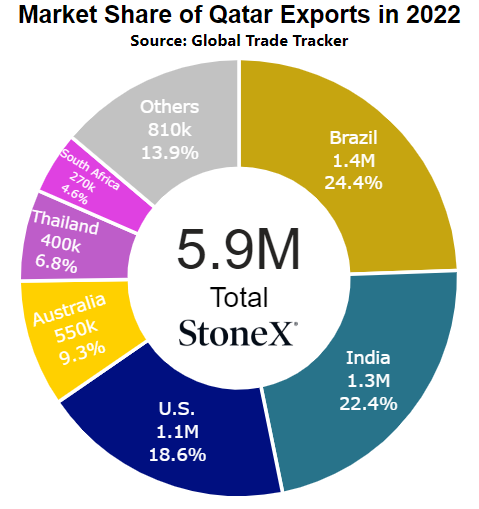
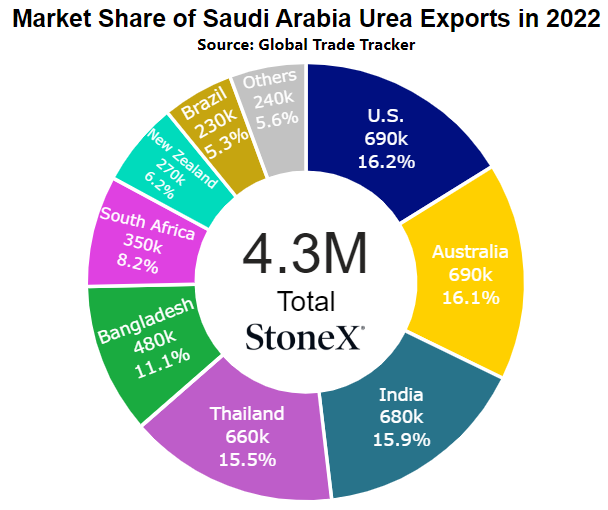
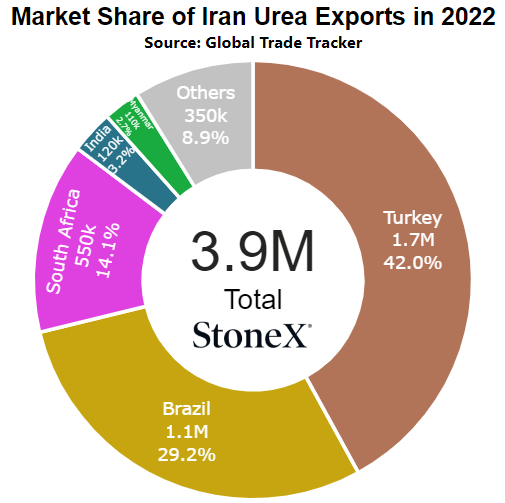
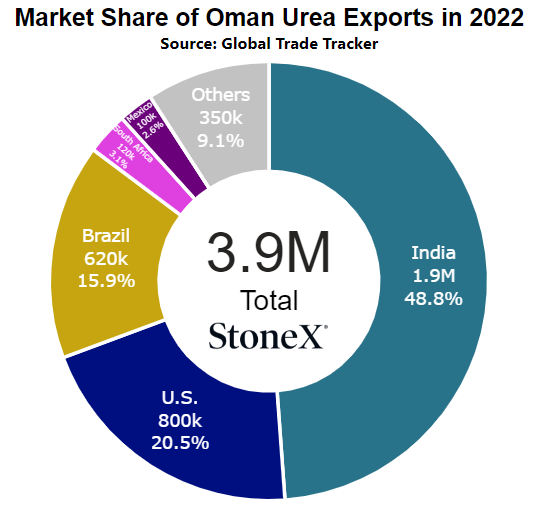
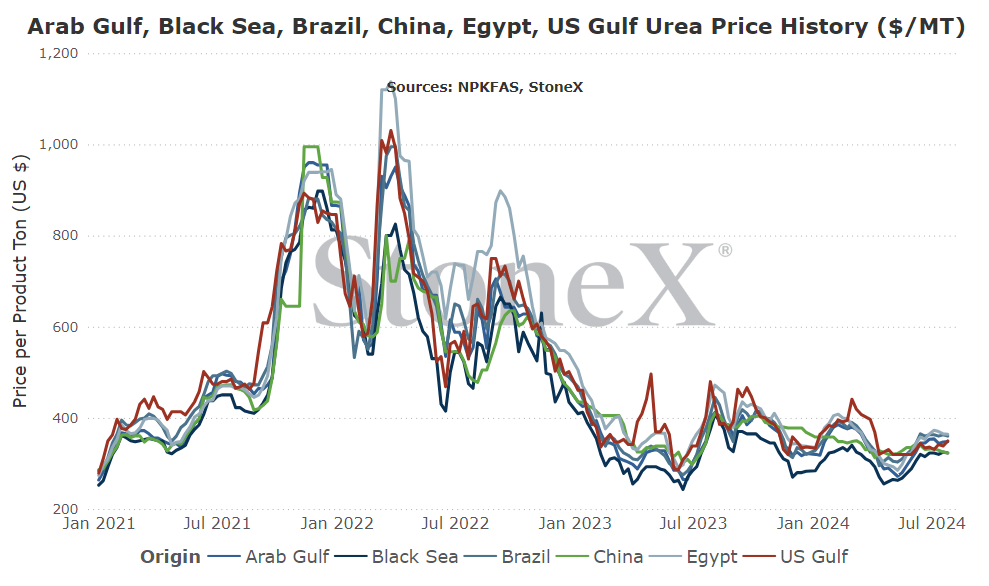
Price comparisons
Vs 30 days ago - -1% or approximately $5 lower
Vs 90 days ago - 20% or approximately $58 higher
Vs 6 months ago - -9% or approximately $33 lower
Vs 1 year ago - -13% or approximately $53 lower
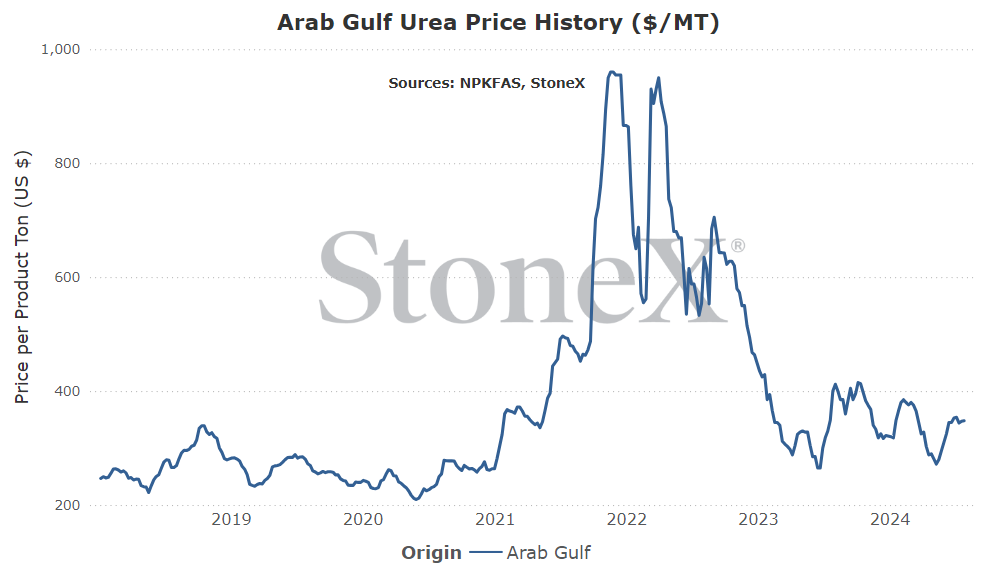
Egypt
Number 4 global exporter in 2022
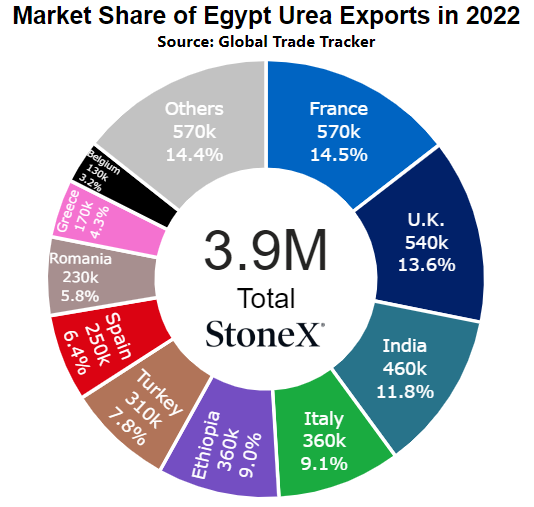
Price comparisons
Vs 30 days ago - 0% or approximately $2 lower
Vs 90 days ago - 23% or approximately $68 higher
Vs 6 months ago - -10% or approximately $42 lower
Vs 1 year ago - -18% or approximately $80 lower
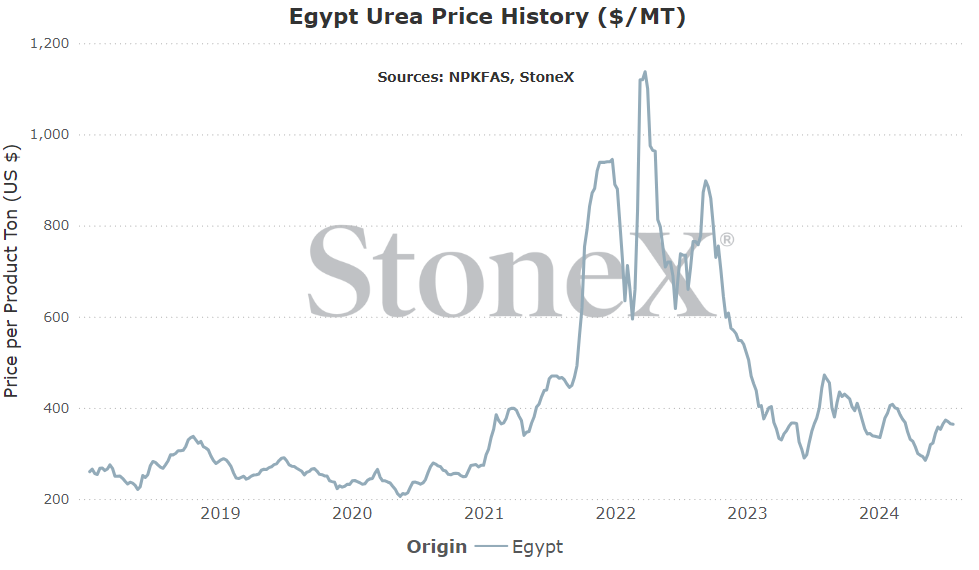
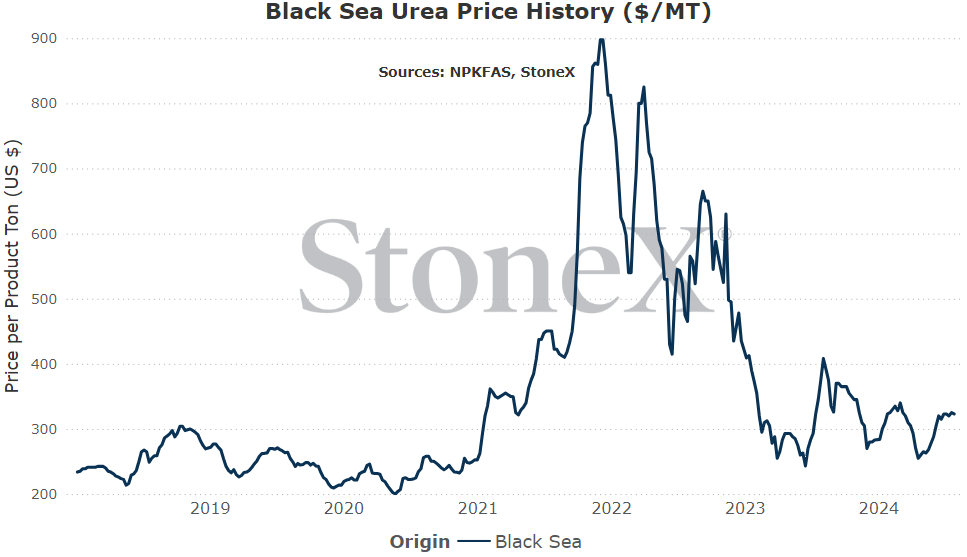
Black Sea
Number 1 global exporter in 2022
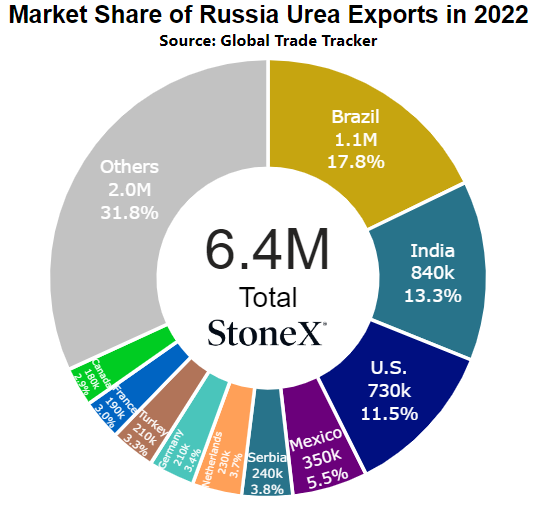
Price comparisons
Vs 30 days ago - unchanged vs 30 days earlier
Vs 90 days ago - 24% or approximately $63 higher
Vs 6 months ago - -1% or approximately $3 lower
Vs 1 year ago - -14% or approximately $52 lower
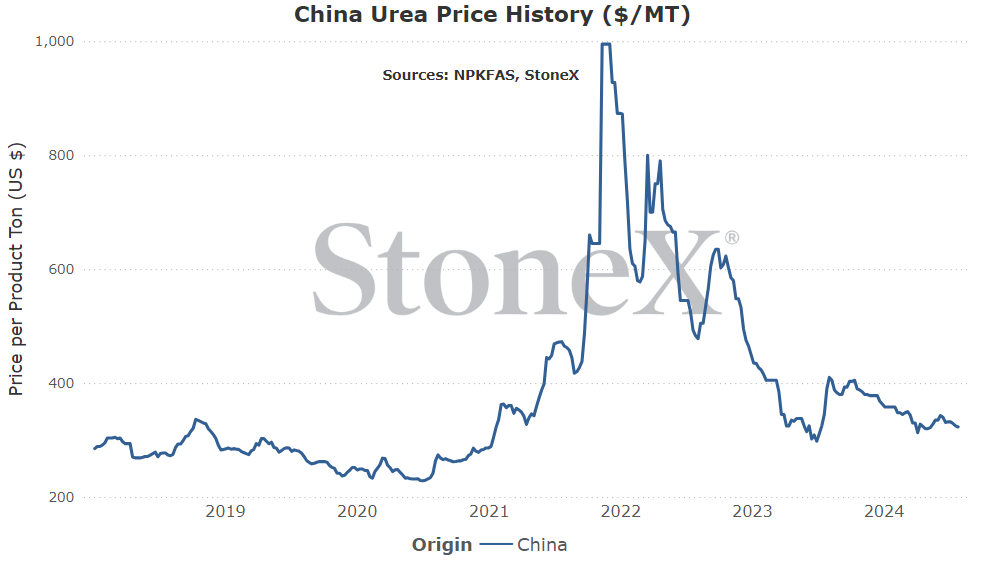
China
Number 9 global exporter in 2022
Price comparisons
Vs 30 days ago - -3% or approximately $10 lower
Vs 90 days ago - 1% or approximately $3 higher
Vs 6 months ago - -10% or approximately $35 lower
Vs 1 year ago - -17% or approximately $68 lower
- Global production issues build into a story - Chinese exports. Brazilian production. Egyptian hiccups. Europe as a whole. There are a lot of production issues that are not really a problem...yet. If they all persist, eventually I think the market is going to take notice with higher pricing.
- Sellers basically said no to India...what are they seeing? - India stated that they were going to secure around 600K tons on this last purchase tender. There were A LOT of tons that were offered at very close pricing to the lowest west/east coast offers. However, almost all said no thank you during one of the slowest demand periods of the year. What are they seeing that justified saying no?
- Late season inventory pinch - with a lot of fear surrounding the market outlook, importers should be taking a more cautious approach to their last purchases. From their POV, better to skip a vessel and end empty rather than run the risk of carryover. If that happens enough, we could see the last bits of demand struggle to find supply.
- Chinese production rates have remained high which could mean huge 2H 2024 exports - January thru June 2024 has seen China only export 140K tons. On normal years, they export 5 - 5.5M tons annually...so they are way behind. However, we continue to see reports that production rates remain very high. Are stockpiles choking warehouses and the remainder of 2024 could see China puking product? Possible.
- India delays their next purchase tender, or dramatically lowers their tonnage again - seems like the market has forgotten that Indian urea production has improved markedly. Stockpiles are healthy which means the tonnages needing to be purchased shouldn't be as high as expected. Will the market miss the mark again on the next round?
- Long time till next season, best end empty - that is always my POV. I do not want to end a season with much product left. Better to sell at an aggressive price and get that stuff gone than sit on it. Everything left over has to pay interest, runs the risk of lower prices, etc. If there is enough product left toward the end, you could see a battle as everyone tries to puke what they have left.
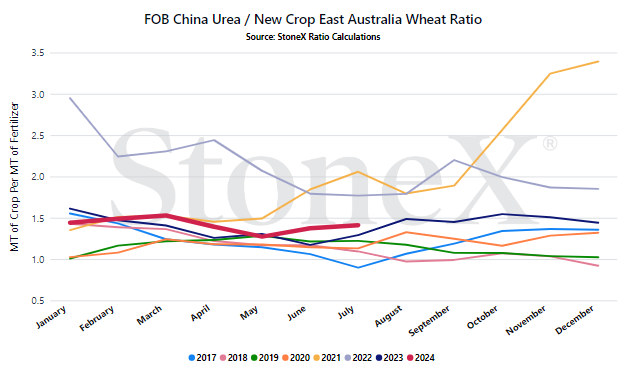
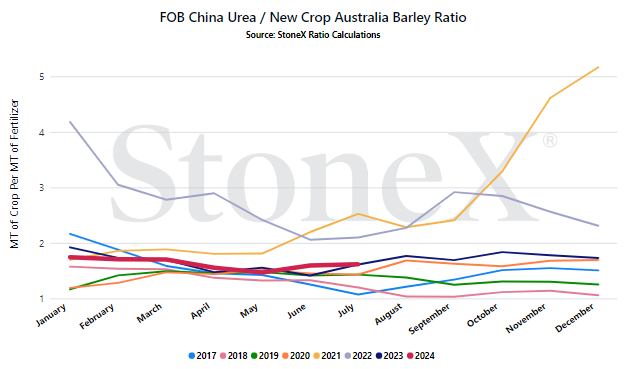
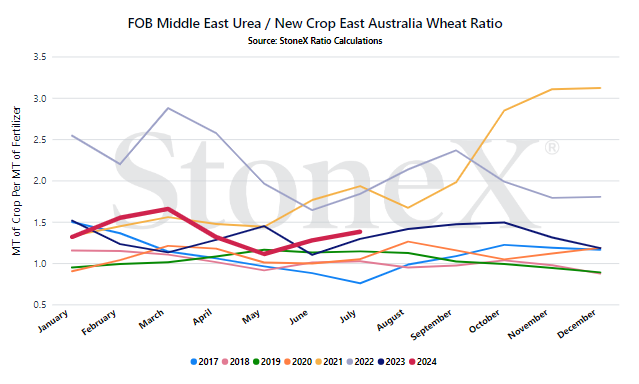
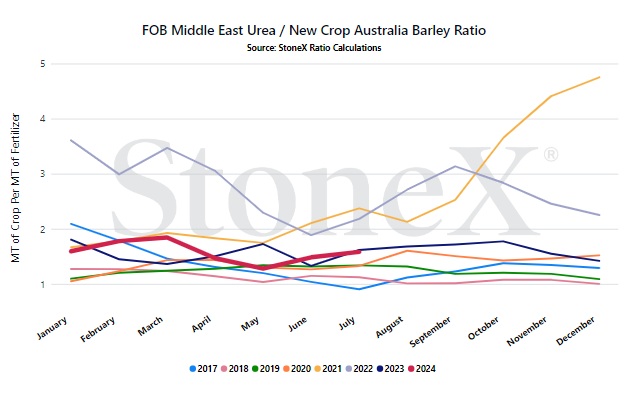
We believe that only looking at the flat price of either grains or fertilizer can be misleading:
-
Only selling grain can hurt you if fertilizer prices rise substantially
-
Only buying fertilizer can hurt you if grain prices fall
We look at the ratio "value" to get a better indication of where we are or how many bushels of X does it take to pay for 1 ton of fertilizer.
Would you rather:
-
Spend 135 bushels to pay for 1 ton of urea
-
Spend 55 bushels to pay for 1 ton of urea
When we compare the current ratio value against recent years, we start to see if we are high or low.
YOUR VALUES MAY LOOK DIFFERENT
This is a work in progress section! We plan on looking at the relationship between Aussie grains and global price points (and hopefully Aussie specific locations, though that data is hard to secure, very protected). Big reason why we are still in the "trial" stage of this newsletter!!!!
- Chinese exports - with their 1st half 2024 exports being so far below normal, it raises a lot of questions of what to expect for the remainder of 2024. Domestic Chinese urea values are falling which means fundamentally exports should pick up drastically. Especially when considering that production rates have remained high (should be jammed full of product and NEEDING to export). However, decisions are being driven by the government now. It is anyone's guess...
- Brazil/Europe urea production economics - both locations are grappling with high natural gas values that make it impossible to produce urea and make money. Very likely that Europe remains at 75% capacity and Brazil offline. That removes A LOT of tons from the global S&D...and the global S&D doesn't have that many excess tons around.
- End of season inventories - if there is a bunch lying around, late season buyers may get a deal. If things are tight/out, you might pay a premium. Just the way of the market.
StoneX Ratio Calculation
The ratio calculation is derived from Bloomberg historical grains values as well as fertilizer values from StoneX, NPKFAS, and Argus.
The calculation is simply dividing the fertilizer price by each grain price.
All data was sourced from StoneX unless otherwise noted.