Global
Given how well the supply side of the potash global market had been set up, it was hard to see why prices would decline anytime soon. Major sales had been penned with China and India. Canada's export entity was able to boast being "fully committed through Q3". A VERY powerful statement for one of the biggest global potash suppliers. It seemed like everything was going their way.
Then China changed things a bit in my mind.
Their government has obviously been heavy handed in their approach to controlling both urea and phosphate markets. With China being a massive exporter of both products, it made it very easy to pull the levers to help drop domestic price ideas.
Potash is different as they are a major importer/buyer. If the global market is tightly supplied, they do not have the same type of power that they may have for the other products.
But it looks like they are going to give it a shot.
If the government continues to do their best to lower domestic Chinese potash values, part of their strategy could be slowing/stopping any further purchases. They have been ahead of average on imports for a while. Possible they could use this to their advantage.
However, this would still take time if it happens at all. I'm not holding my breath for any major dips in price ideas anytime soon.
North America
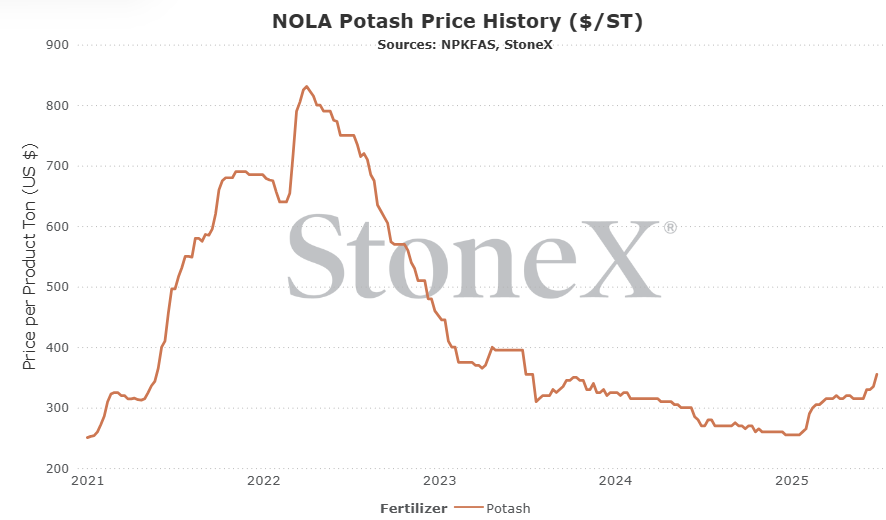
Spring '25 ended with very low potash inventories after a really good application run on a massive acre forecast. While people are still fighting about what the 2025 crop is going to yield, I think most agree it is still going to be a solid number. Big yields equals big nutrient removal. Current potash prices are not cheap when we look at it through the lens of history, but it is still within the "normal" range...just on the absolute high side of the range.
All of the above plus the fact that manufacturers/distributors appear very well sold makes it very hard to believe prices will dip anytime soon.
For what it is worth, I've told friends and family to bite the bullet for fall needs...
BHP delays Jansen potash mine, cites cost overages and well supplied medium term
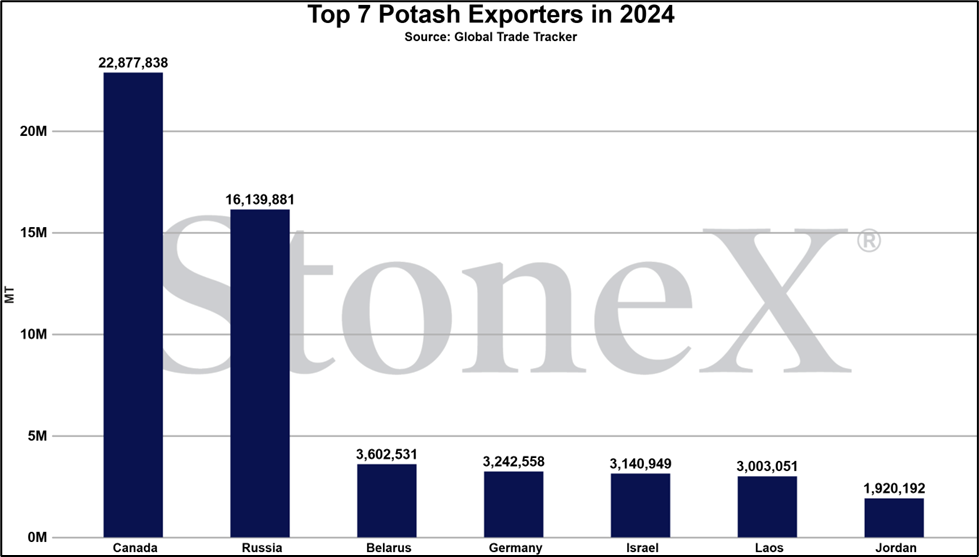
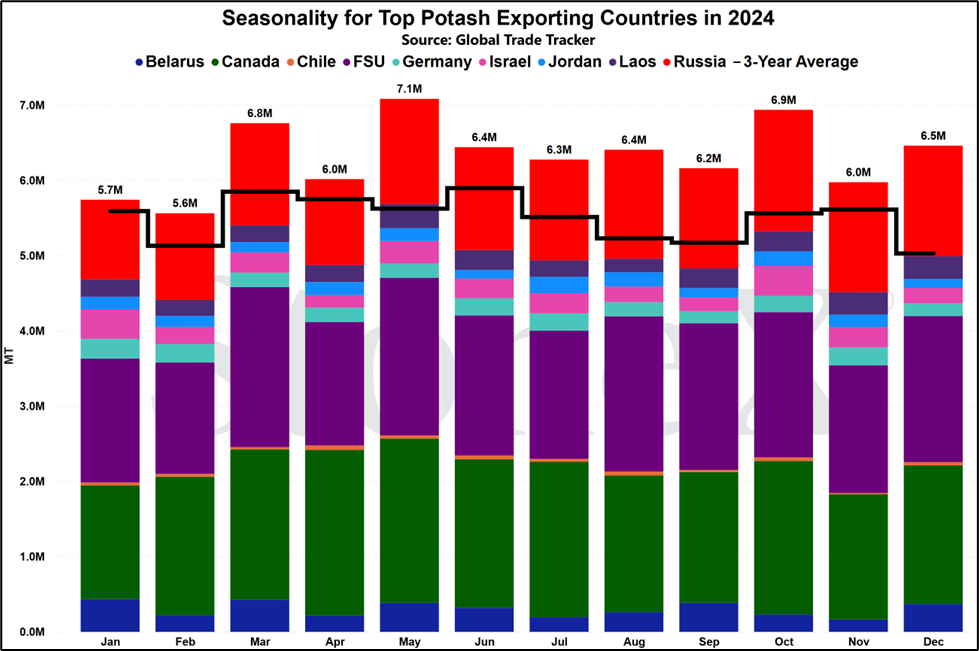
On many of our potash market outlooks, we have discussed a lot of current and new production that we believe is coming online. These have included expansions in countries like Laos (China investing heavily so that they can get product from closer to home, less dependent on nations like Canada), Russia (expansion projects planned but delayed due to the war), and an already sizeable amount of product produced today.
However, the crown jewel of the coming potash market was the entrance of the BHP Jansen, Saskatchewan mine. This mine was not only expected to bring a lot of new production to the global market, but would also usher in a new entrant that acted more like a miner and less like a commodity trading firm.
This mine is still in the plans, just a little later than previously expected.
BHP came out and announced delays to the construction of the mine. One of the largest reasons for the delay were ballooning costs. Original estimates for phase 1 were to cost just under $6B but those have inflated to over $7B. That isn't a small overrun and no doubt the company needs to get a handle on the situation.
However, there was also another point that was made that I found very interesting:
"Given potential for additional potash supply coming to the market in the medium term..."
My read on that statement is that they share our own POV. There is a lot of potash being produced already. There is a lot more production coming. That is good for buyers. Very good. A very well supplied market struggles to push price ideas higher and have them stick. Sure, there can be cases where prices can jump, but with plenty of supply out there, those should not stick for long.
The original estimates had their facility producing product in 2026. Now that has been backed to mid-2027. The next phase is now expected in 2031.
Fortunately, the outlook is largely unchanged. It would have been nice to have these new tons and new participant in the market, but when do we ever get what we want?!
For more details on the story, below is a link to Reuters that did a pretty good job of covering the story.
https://www.reuters.com/business/bhp-delays-jansen-potash-project-costs…
What does this mean for farmers?
It is good and bad for farmers.
On the bad side, it means we will not get more competition and new available supply until 2027.
On the good side, a new entrant and new tons are still coming and a chunk of why they are delaying is they see a very well supplied market.
It isn't perfect news, but when do we ever get that?
Chinese government working to lower domestic potash values, change in demand coming?
In recent years, the Chinese government has taken a much more "hands on" approach to its fertilizer. Seeing that it was a net exporting urea and phosphate country and global values and supplies having gone haywire since 2022, it made sense. Slow the export of both products. Maintain more than sufficient supplies for your domestic market. Lower your domestic pricing for your farmers. It was a win all around.
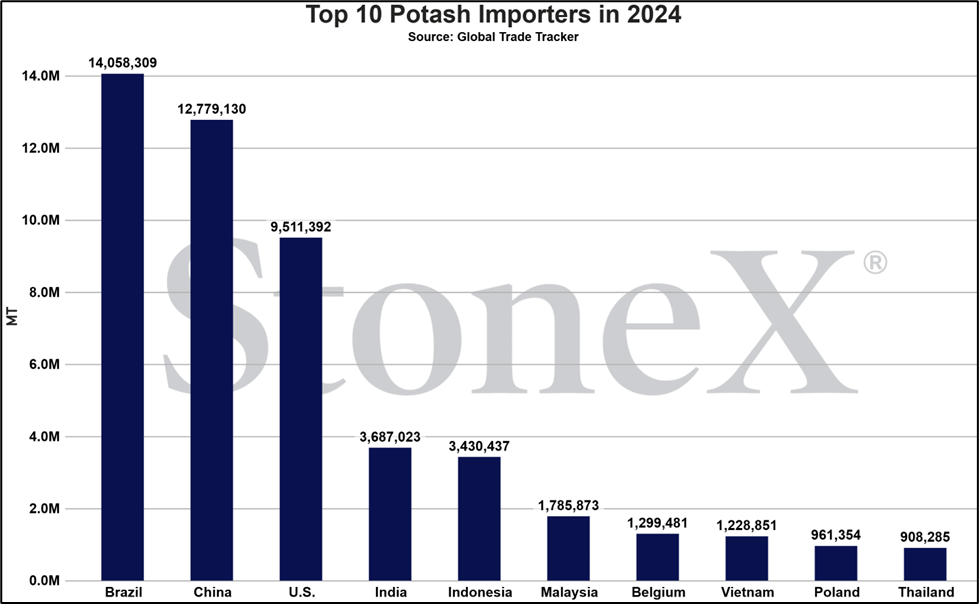
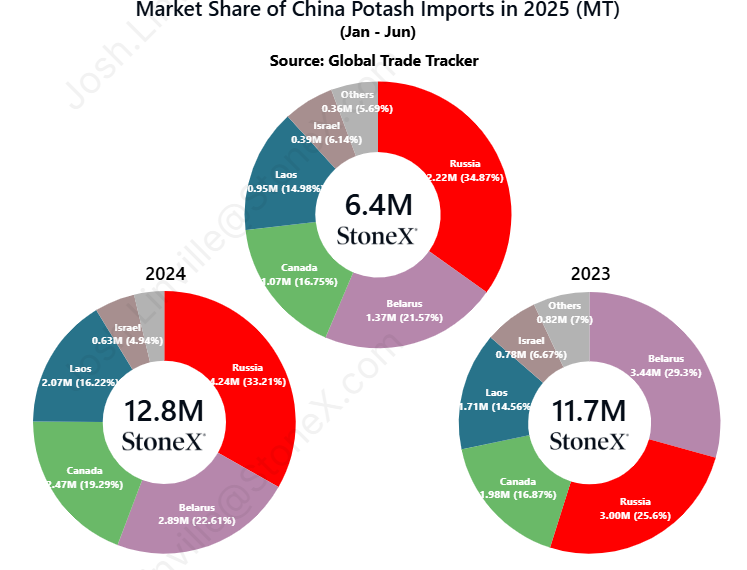
However, potash remains one major fertilizer input where they remain reliant on the rest of the world. The last couple years has seen China importing around 12M tons each year. A solid chunk of that import flow still comes from Canada, a country that the communist country likely doesn't view from a friendly eye given Canada's western stature. Hence more investment in places like Laos.
Still, after having successfully lowered domestic values for urea and phosphate, now potash is on the table. As a net importer, they do not have the same power as the other products...but they are not without power. As one of the largest buyers in the world, their demand...or lack of...could have a major effect on global values.
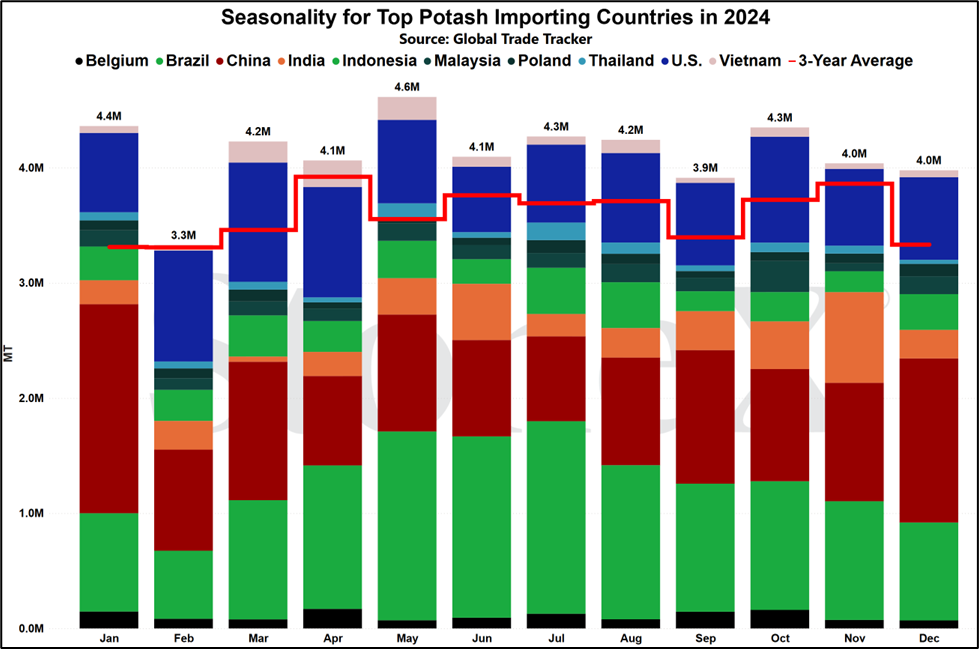
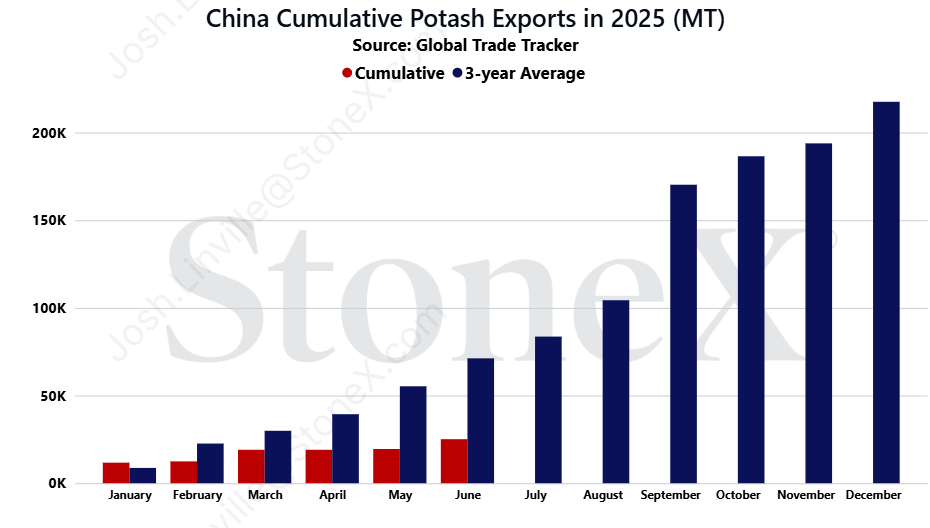
The world is watching with a close eye to see just how they will approach this goal but so far importing companies are towing the line as best they can. Cumulative imports for 2025 are well behind their recent averages. If they continue this pattern, how long before global values start to reflect the change?
What does this mean for farmers?
If China can successfully influence global values lower with its actions, it should have a wide ranged effect that sees other world buyers prices falling.
Jury is still out, but it is a good sign for buyers.
North American outlook remains steady
There isn't much to point to in regards to the North American marketplace. The outlook remains price steady. Even though farmers are struggling with poor grain prices and excessively high fertilizer inputs, potash is still one of the few that look "ok". It isn't to say that it is great. Not by any means. However, when compared against products like urea, UAN, and phosphate, potash starts to look downright impressive.
While some manufacturers have attempted price increases, it seems those attempts have been abandoned and are fine to maintain values where they are...for now. The fall outlook is still solid from a demand POV. Not only are big corn acres expected in 2026 (93M our current estimate), but a big 2025 crop is likely to remove a lot of nutrients from the soil. Nutrients that need replacing if farmers want to maximize yields next year.
North American manufacturers were also widely successful in their summer fill programs. That solid sales book gives them their most valuable asset: time. They have time to sit back and wait for demands next move. They have time to sit back and wait for the next bump higher in grain prices (stop laughing, it is possible!!).
So we are in this weird period where it doesn't look likely that prices will go higher short term, but they are not likely to dip much either.
We are in a rut and given how other markets are moving, there is nothing wrong with this rut.
NOLA/New Orleans Louisiana
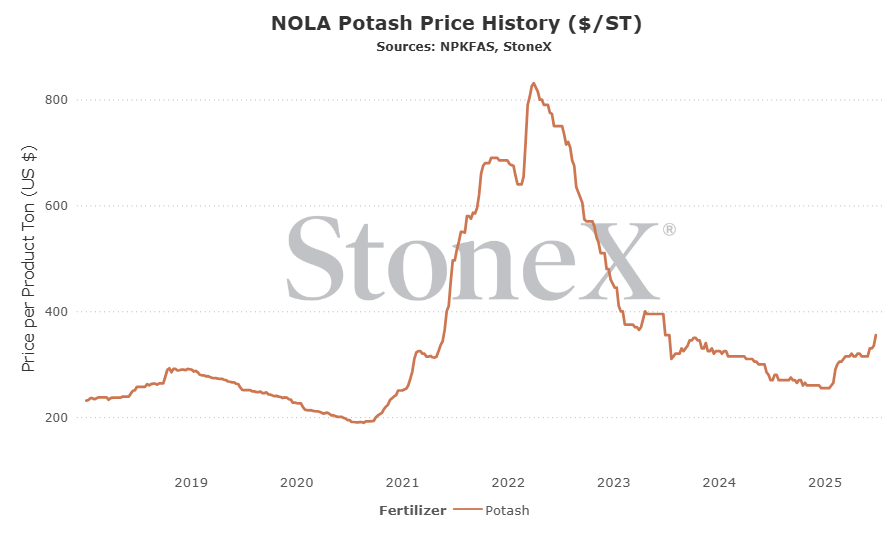
Vs 30 days ago -0% or approximately $0
Vs 90 days ago - 11% or approximately $35 higher
Vs 6 months ago - 34% or approximately $90 higher
Vs 1 year ago - 31% or approximately $85 higher
U.S. Midwest Average (average of several points across the Midwest)
Vs 30 days ago - -2% or approximately $6 lower
Vs 90 days ago - 4% or approximately $15 higher
Vs 6 months ago - 21% or approximately $66 higher
Vs 1 year ago - 8% or approximately $28 higher
- Manufacturers remain well sold – if a manufacturer is very well sold with their production spoken for over the next several weeks/months, they do not have to react to the market. Farmers are struggling? Doesn't matter, product is already sold. Grain prices are lower? I'm already committed. A well sold book gives manufacturers one of their most valuable assets: time. They have that today.
- Unexpected production downtime, especially in Canada - if manufacturers are already very well sold, having production go down for some reason or another would only extend that sold out date which would make them that much more comfortable. That is in addition to the global S&D getting tighter...
- Jump in grain values which boosts demand – I do not think that a higher grain value is going to actually increase overall demand. I think potash demand stays steady. However, if there is a jump in grain prices, I think it could change the time in which that demand steps forward. Right now, buyers are reluctant. If grain starts to jump, farmers are going to start to jump because they have been taught that fertilizer reacts instantly. It becomes a self fulfilling profecy.
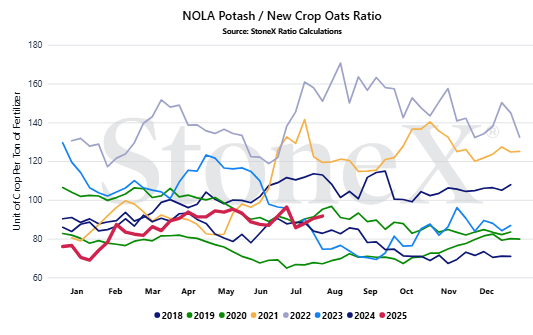
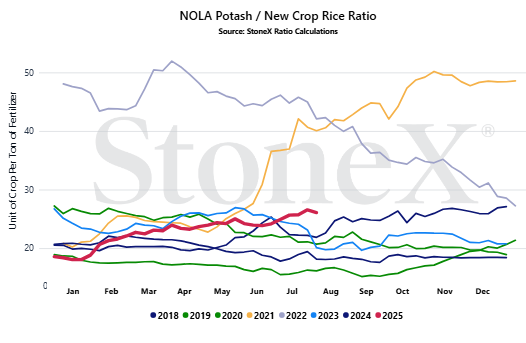
- High priced potash/phosphate delays or destroys fall demand – potash on its own isn't insanely high as the ratio charts below will show. However, phosphate is. A lot of farmers look at potash and phosphate as one application and so at least part of them makes a decision on their purchase based on the combined price. Today, that value is high. It is possible that we are disappointed in the fall run which could lead to higher ending inventories that could put pressure on sellers.
- China starts to slow import needs to help lower domestic values - China was successful in controlling their urea and phosphate values to their farmers. Now, they are targeting potash prices. There is domestic pressure to push prices down, but they could also slow their import pace to try and force global prices lower.
- Russia/Ukraine peace – Russia is expected to expand their already sizeable production rate. However, some of those expansions have been delayed due to their invasion of Ukraine. If peace can be found, perhaps these expansion programs can be started and finished quick enough to start influencing values lower.
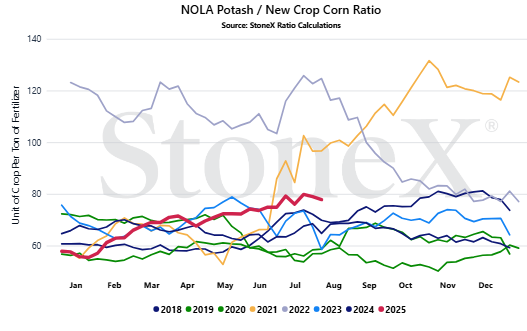
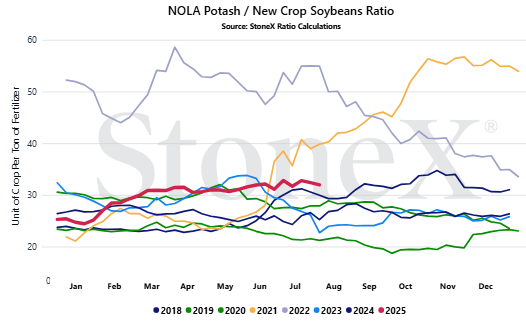
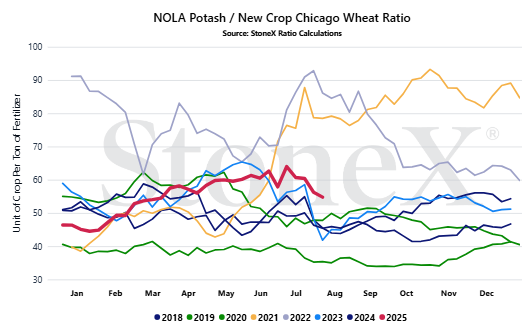
Where are the current potash/grain ratio values today
We believe that only looking at the flat price of either grains or fertilizer can be misleading:
-
Only selling grain can hurt you if fertilizer prices rise substantially
-
Only buying fertilizer can hurt you if grain prices fall
We look at the ratio "value" to get a better indication of where we are or how many bushels of X does it take to pay for 1 ton of fertilizer.
Would you rather:
-
Spend 120 bushels to pay for 1 ton of potash
-
Spend 60 bushels to pay for 1 ton of potash
When we compare the current ratio value against recent years, we start to see if we are high or low.
YOUR VALUES MAY LOOK DIFFERENT
This graph looks at the NOLA potash price vs the flat grain price. There are no logistics on either product. Your location will look different due to fertilizer logistical costs, grain basis, etc.
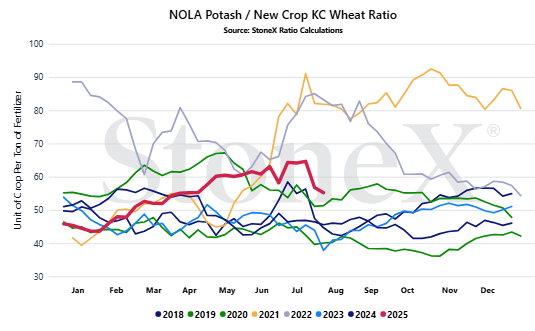
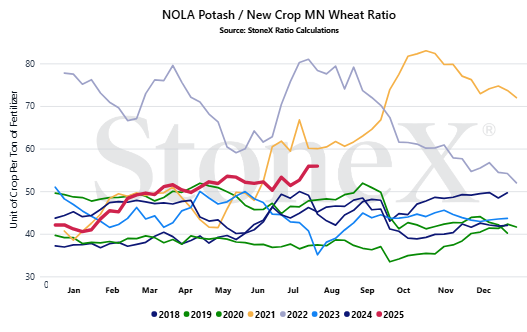
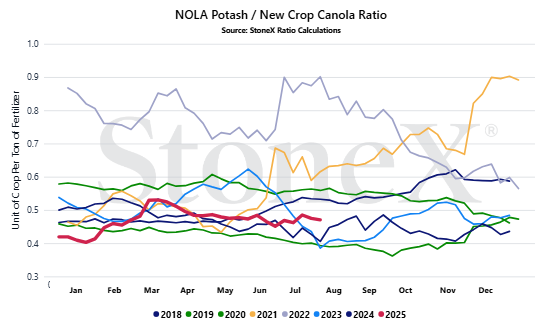
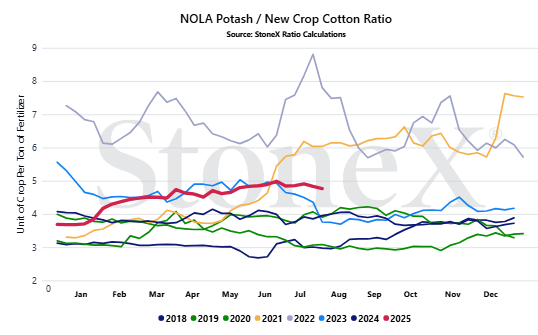
- When will new/expanded production come online? - BHP's announcement of production delays shook me a little. I was not expecting to see that announcement. For buyers, I'm looking forward to that mine as it ushers in a lot of new tons and a new player. Competition is a good thing. However, for as disappointed as I was, it did help reading that part of their announcement pointed to medium term supplies as part of the delay. I read that as in line with our current view that supplies are solid.
- How will fall demand react with extreme high phosphate values and high potash values? - potash in its own right is not terrible. I was surprised at the lower price but when we compare it against grains, it is not out of line like some other inputs are. However, too many farmers look at potash and phosphate as one. Potash is on the higher side and phosphate is horrible high. Their combo is a very high input cost that could have some farmers scaling back or delaying their application.
- Are Chinese import flows about to slow down as the government tries to force prices lower? - the Chinese government has played a heavy hand in its urea and phosphate markets in recent years. Now, it appears they are going to start doing the same for potash. They have been making comments about putting in effort to lower domestic values to their farmers. This has suppliers dropping price, but will further steps be coming? If they think they can lower their imports and influence global values, that also helps.
StoneX Ratio Calculation
The ratio calculation is derived from Bloomberg historical grains values as well as fertilizer values from StoneX, NPKFAS, and Argus.
The calculation is simply dividing the fertilizer price by each grain price.
All data was sourced from StoneX unless otherwise noted.