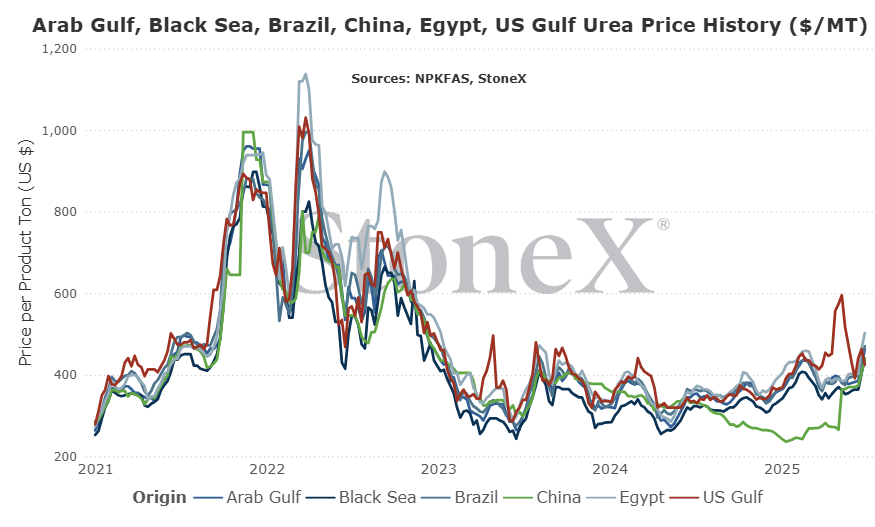
Major global urea export location price graphs
The intention of the below graphs are not to use to say "my price should be X based on this graph". These prices are derived from an FOB price point average. The intent is to show major global price movement trends. Your values will likely have significant basis difference (similar to your local grain price being different than the traded market price).
This graph is labeled as MT in USD currency.
What everyone wants to know first, what do we think will happen going forward
GLOBAL
I do not know what to tell you here.
Why I think urea prices will go higher globally:
- India tenders keep fueling the fire
- European production is still 75% of normal
- Iran/Egyptian production has struggled
- Chinese exports will still be well below normal
Why I think urea prices could fall globally:
- Sudden Russia/Ukraine peace could send the market spiraling
- China's export quota was increased from 2M to 3M tons
- China hasn't exported much so far, could mean a slug of product looking for homes
- The current price is extremely high vs grain values
So every market has a fundamental and emotional aspect of it. Even that seems split:
- Emotionally - the market seems to be ignorning any bearish news and is jumping at any bullish news
- Fundamentally - it feels like prices should be lower. Global values jumped huge on losing Iran/Egypt production. That only accounted for 600K tons. However, we then got 1M tons back from China. Not to mention demand will be dodgy.
I do not know what to tell you here. If I absolutely HAVE to make a guess, I think prices stay stable to higher at least until the India tender is complete. However, I cannot help but have a gut feel that there is a dip coming...I do not know when...I do not know how...
AUSTRALIA
Global urea markets have continued to strongly priced and with India continuing to return to the purchase portal. It just gives the global market more reasons to hold prices/push higher than where we are today.
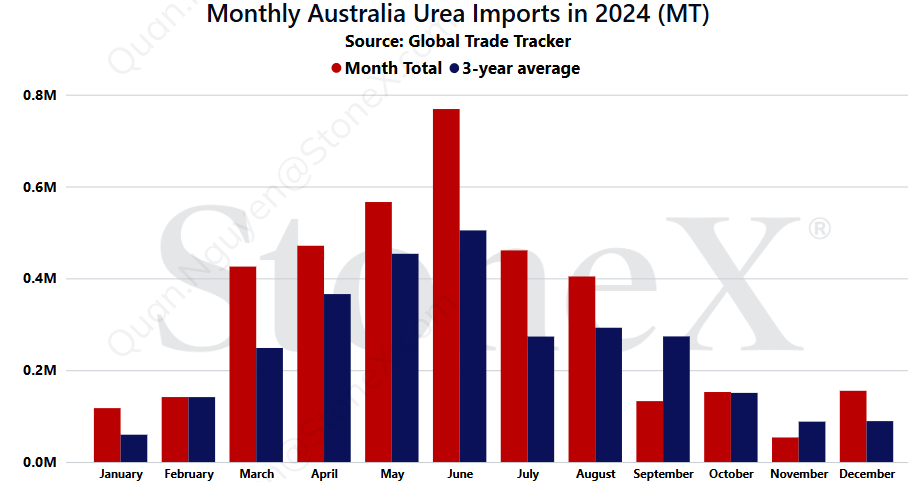
However, Australia's urea demand is on the downside of the curve. There are likely still a few tons here and there that are set to arrive but for the most part, applications are relatively done. Unless certain storage locations start getting very low on product and are forced to pay for spot tons at a higher level, prices are probably going to struggle to move significantly higher. Doesn't mean it cannot happen, it is just this time of year makes it more difficult as suppliers want to be empty when the demand music stops.
Then, it is a pretty good amount of time before Australian buyers/imports have to step in for the next season.
For those still needs to buy/apply urea tons, stay connected to your local supplier. Need to see how well stocked they are/are not. If they are good on supplies, there isn't as big a push to jump immediately as prices are likely to stay stable. However, if your supplier reports back that inventories are getting low, it might be worth stepping forward. Global price strength and the possibility of needing to buy high priced replacement product may have your local value jumping quickly.
Past that, it is anyones guess as the next demand round is a very long way away. All I can say is that today's urea values are high vs grain values. Nothing today has me excited about considering next year needs this far out.
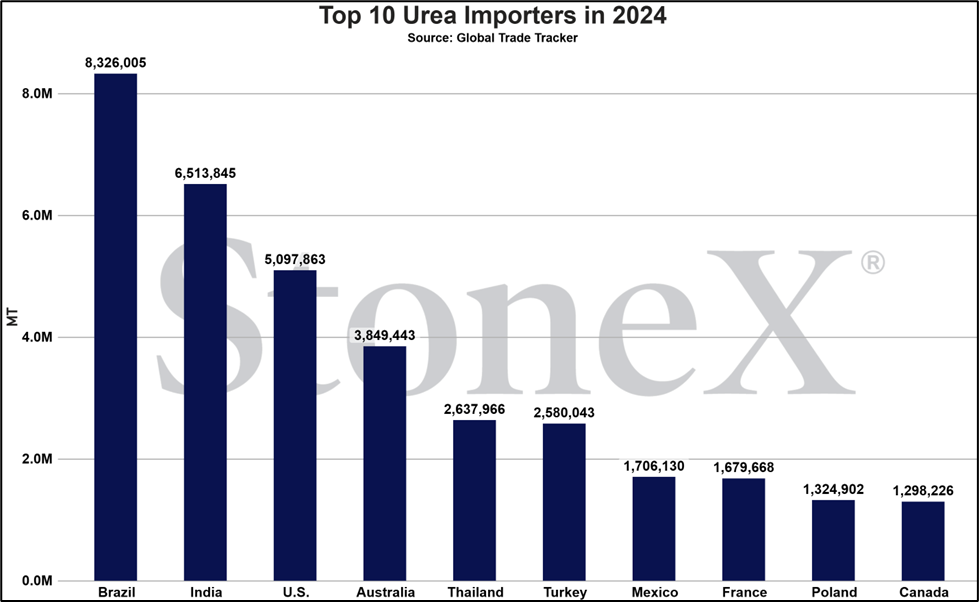
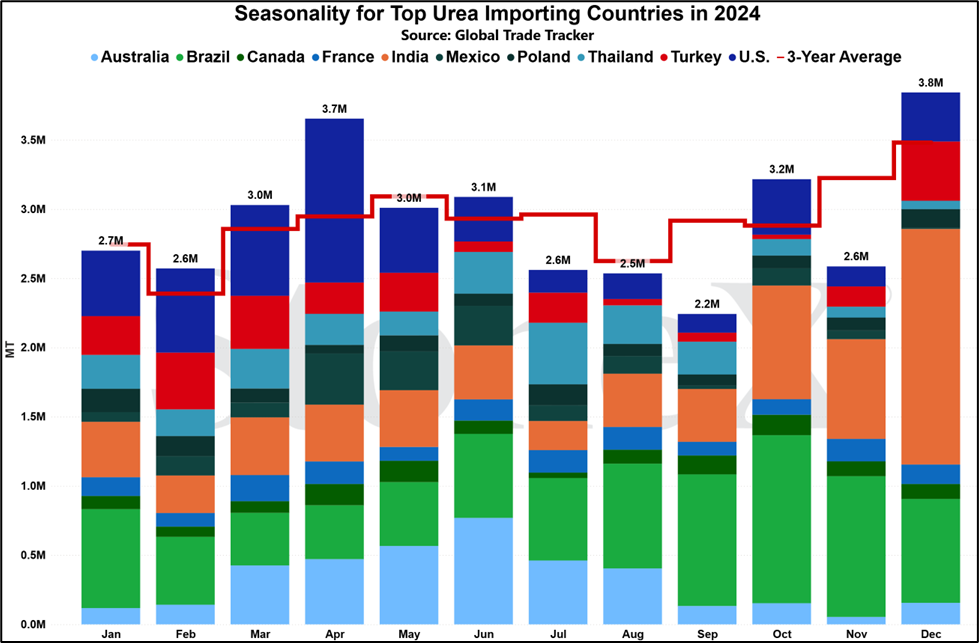
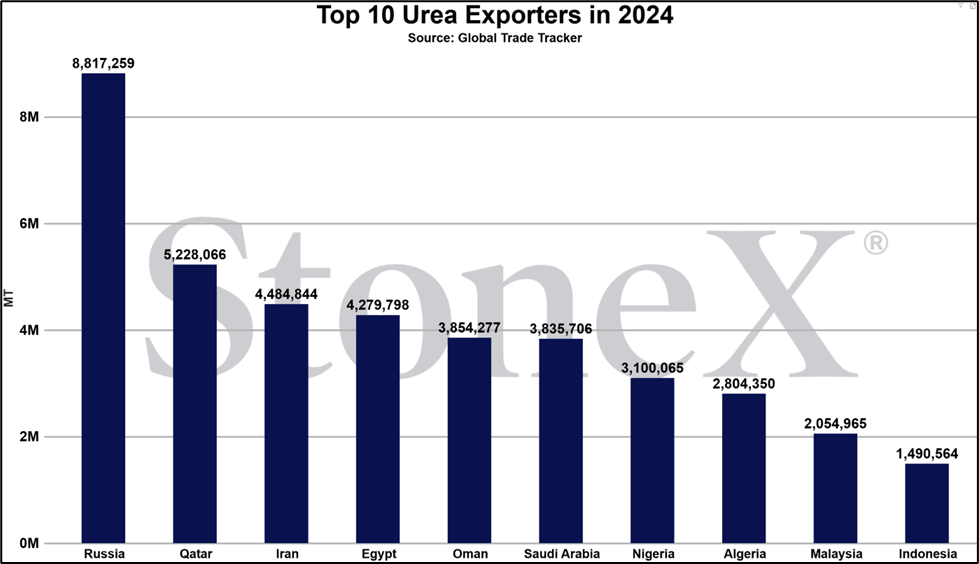
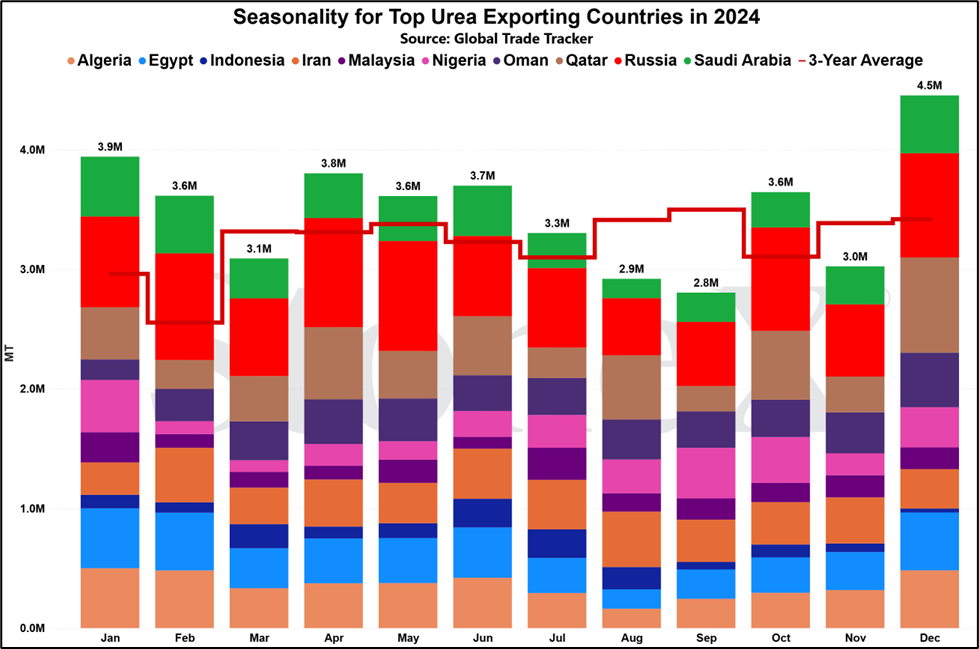
General global urea information
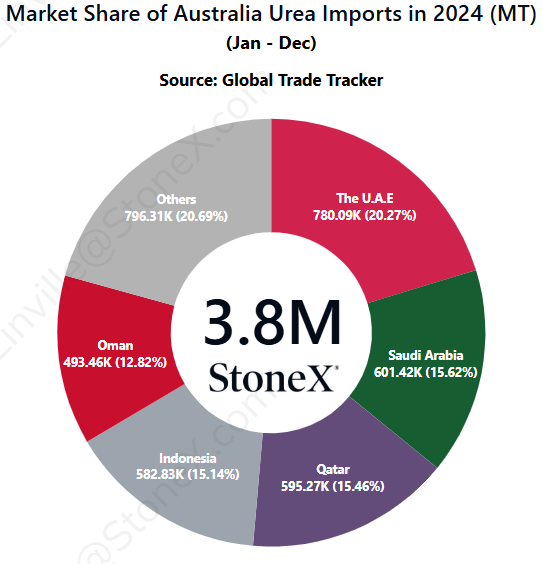
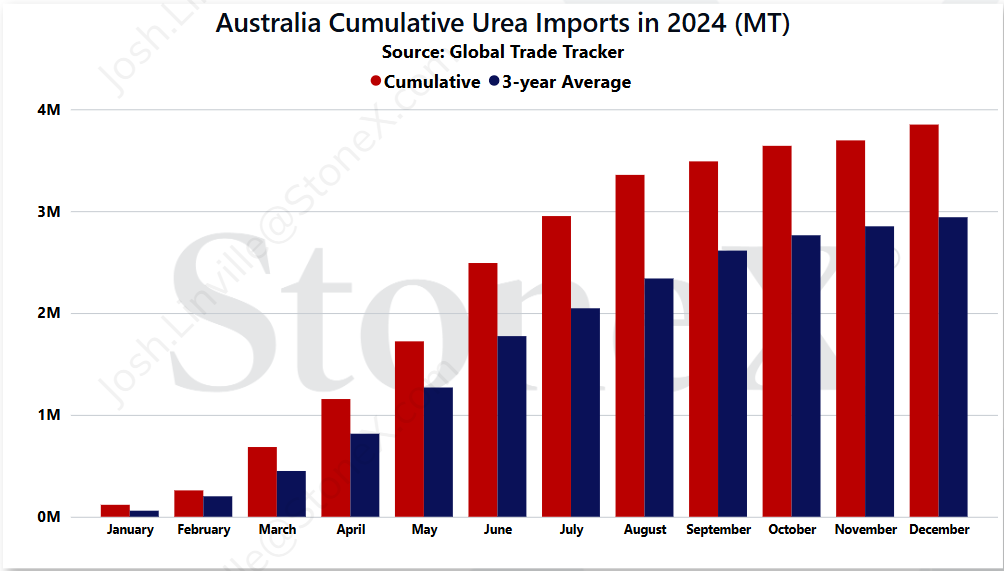
General Australian urea information
What has happened in the last 30 days?
One India tender ends, another India tender begins
Did you think this month might conclude the coverage of India and their purchase tenders?!! Oh no, not at all!!
For those that might be new to the newsletter, India has a unique way of purchasing their fertilizer. Rather than free flowing products like most other countries around the world, India "controls" it to a certain extent. Their farmers do not see all the global price movements that most of the rest around the world see. The government sets a low and steady price that all retailers must adhere to. However, that price doesn't make sense vs global values so importers cannot bring in anything without taking massive losses. To offset that, the government sets subsidy programs designed to pay the difference between global values and farmer values. This gives the importing companies the confidence that they will get paid.
However, it doesn't stop there. Rather than just letting a lot of different companies do whatever they want which may result in too much or too little product, the government controls the inflow. When they decide imports are needed, they will tap a company to handle a purchase tender. That company will announce to the world their buying intentions. They will provide the date the offers are due, the date the product must ship, and sometime will even given the tonnage purchase goal.
Once the offer period ends, everyone that wants to participate and has been preapproved to participate will submit their bids. There can be a massively wide range of values offered. In order to make sure there is no funny business where friends get special/higher priced agreements, the government controls how the awards are handled. The lowest price provided to each coast is set and called the "L1". The importing company will then go up the line of the higher priced offers. For those higher priced offers to participate, they have to drop their price to the L1. If they agree, they sign a contract. If they refuse, the importing company goes to the next highest offer and will continue doing this until they run out of offers or they hit their ton goal.
What the world enjoys about this process is that it lays the market wide open. There is nowhere to hide. You have to submit your best value and those values are shared with the world. At the end of the tender process, the world knows what that actual price ideas are and how willing sellers were. It generally helps to define the market in real time.
Now, since December 2024, India has been struggling with their tenders. They have been falling far short of their tonnage goals:
- December 19, 2024
- 1.5M ton goal
- 185K tons secured
- January 23, 2025
- 1.5M ton goal
- 559K tons secured
- March 26, 2025
- 1.5M ton goal
- 885K tons secured
- May 28, 2025
- 1.5M ton goal
- 229K tons secured
- June 24, 2025
- 2M ton goal
- 1.46M tons secured
Other than this most recent tender, India has been striking out as world suppliers saw better opportunities. However, this most recent tender was a sign of hope. Few believed they would be able to reach the 1M ton mark given the global market at that time. When everything wrapped up, they nearly reached 1.5M tons. Well short of their 2M ton goal, but significantly better than expectations. There was hope that the bigger tons meant that global supplies were better than thought and that India could wait on their next tender that could make the market quiet and as a result bearish.
Values did start to show signs of easing. It was never anything huge, but little bits of information here and there. Then India announced...
Many in the market, myself included, thought India could go several weeks before returning to buy another layer. That was not the case. On July 24th, IPL (company handling this purchase tender) announced a fresh buy attempt:
- 2M ton goal
- Offers due August 4th
- Vessels to load by September 22
Any hope of prices sliding were shot down. Quickly, international values moved higher.
The market has been acting odd recently. Normally, there is a lot of bullish talk in the market as the India tender offer date comes. The market gets "excited" with everyone inquiring everywhere about what they can buy and offer. This round has been very subdued. Other than the initial price surge, it has been very quiet.
For now, we are having to sit back and see what happens. Either way, this will help set the tone for the next month or two for global urea markets.
Coming global urea market could be long/short at same time
This is going to be a weird story that is going to be hard to explain!!
Right now, a lot of folks that I talk to are pointing to the current India urea purchase tender and saying that it will help mop up a lot of excess tonnages around the world and leave the global S&D relatively tight afterwards. They could absolutely be right. India is targeting upwards of 2M tons. Now, we have to wait and see how it plays out. Offers may refuse to negotiate their price lower and India may fall far short of their tonnage goal. It will mean more tons available in the market, but it will also mean suppliers are more bold in the following weeks in regard to price.
So on one hand, the looming global urea market could be very tightly supplied.
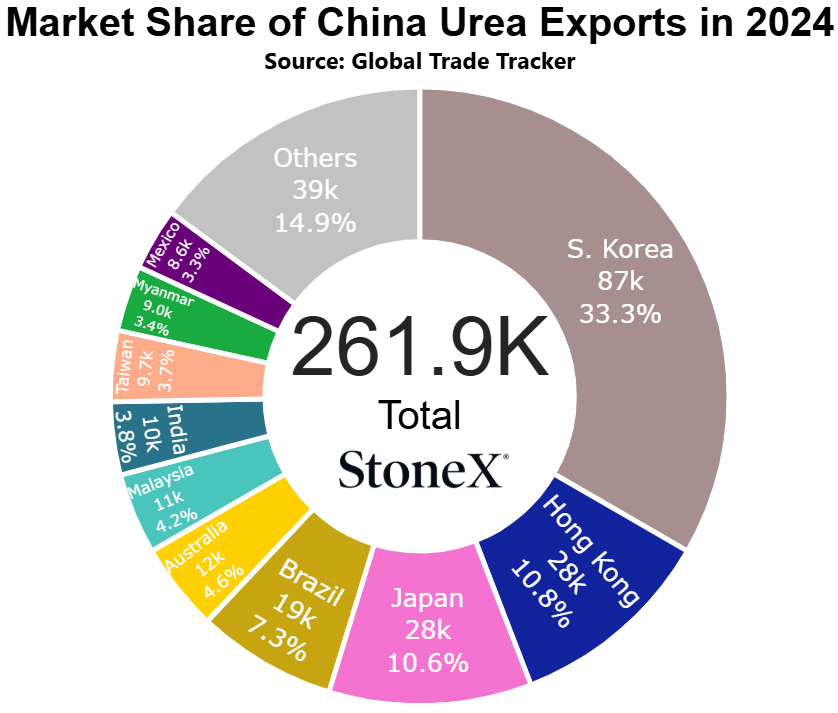
Then there is China. In 2024, China shocked the world by only exporting 262K tons. This was significantly short of their "normal" 5 to 5.5M tons. That left a gaping hole in global supplies. For 2025, the Chinese government appears to be loosening their export restrictions and had planned to allow upwards of 2M tons. While still far short of normal, it was a great increase from 2024. Then, in recent months, the government reviewed the market and improved the export quota to 2025...with a twist. The tons were going to be allowed to be exported to everywhere...except India. There is a lot of historical bad blood between China and India. Then there is the Chinese fear that their exporters could blow through the quota if they start participating in the massive Indian purchase tenders. In order to keep a better handle on things, it was decided to not allow India as a destination.
That is where things could get weird.
The "best" thing for the market would be for one of the larger exporters to participate with one of the larger importers. It is a natural flow.
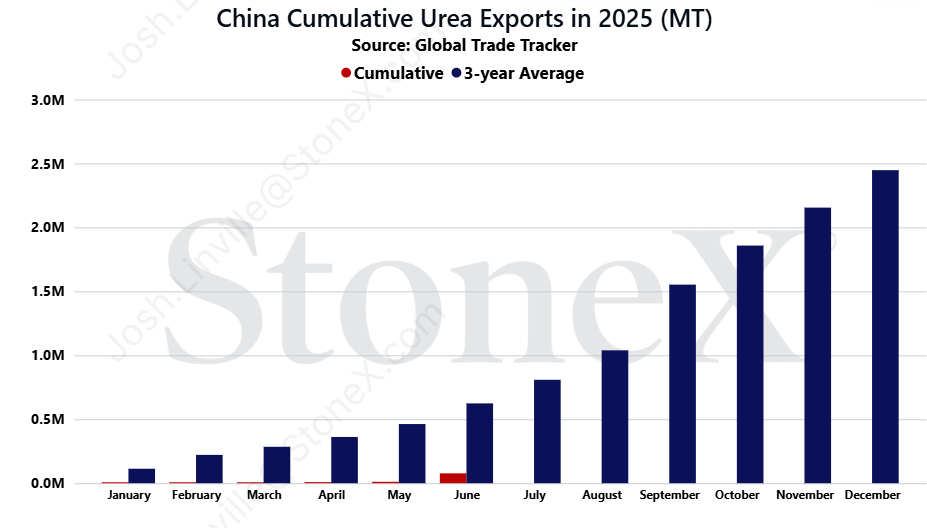
Today, we could see a world being set up where most suppliers are relatively empty on supplies, but Chinese tons are still looking for homes. In fact, the Chinese tons could be flooding the market in the coming months. When looking at their export data for 2025, the January through June cumulative total is only 77K tons. That leaves nearly 3M tons to be exported from July until December. Another challenge is how China will approach exports as it nears the end of 2025. No doubt the government will want to slow/stop exports in order to rebuild domestic supplies and force domestic values lower as they have done in recent years. If that is the case, then we could have a situation where nearly 3M tons try to get exported and look for homes outside of India from July until October.
Again, this could be a very weird market. Most suppliers could report being very low on available inventories. On the other side, we could see extremely motivated Chinese tons trying to find homes around the world.
Given how this year has gone so far, why would we expect anything less?
What does this mean for farmers?
This could be positive for Australia.
In the past, Australia has been a normal supply chain for Chinese fertilizers.
If we see this situation play out and Chinese exporters start getting desperate for places to go with ships, Australia could become that destination by saying "we can take product but it needs to be a sizeable discount for this time of year".
Not saying it happens, but it is something to watch.
Ukraine attacks same Russian nitrogen production facility
To add to the world chaos that is the urea market, the Ukraine/Russia war once again stepped in for another piece of news.
If you remember a couple months back, Ukraine launched a drone strike on a Russian nitrogen production facility. This facility was linked to a large percentage of Russia's ammonium nitrate production. For those unaware, ammonium nitrate is an excellent explosive product. Rather than allow Russia to control and produce such an explosive, the drone attack successfully took the plant offline.
However, repairs were obviously going to be made. A plant like that could not be allowed to stay offline. Not only was it a major ammonium nitrate facility, but it also produced several other nitrogen products.
Needless to say, Ukraine did not take kindly to the repairs...and in recent weeks, they struck it again.
It appears Ukraine was serious about wanting this plant offline and was not going to allow repairs to go untouched. A quick overnight attack likely undid all the repair progress that had been made, though at this time no official reports of damage have been shared.
This hurts the world. Russia is one of the largest nitrogen fertilizer exporters in the world and this facility was a big part of their production. Not all of it. Not anywhere close to all of it. However, it was a bigger cog and having it offline reduces global supplies...and you know what happens when supplies get tighter.
The below link did an excellent job of detailing the story:
https://kyivindependent.com/drones-attack-chemical-plant-in-russias-sta…
What does this mean for farmers?
The global S&D is already far too tight. Production has failed to keep pace with demand. The difference between production capacity and global demand is far too narrow. In these types of markets, any loss of production is felt around the world.
Having this plant attacked again reduces Russia's export capabilities (less supply to export) and likely means the plant owner refusing to make repairs until the war with Ukraine is over.
Lower supplies are not a farmers friend.
Where are current values in relation to the past
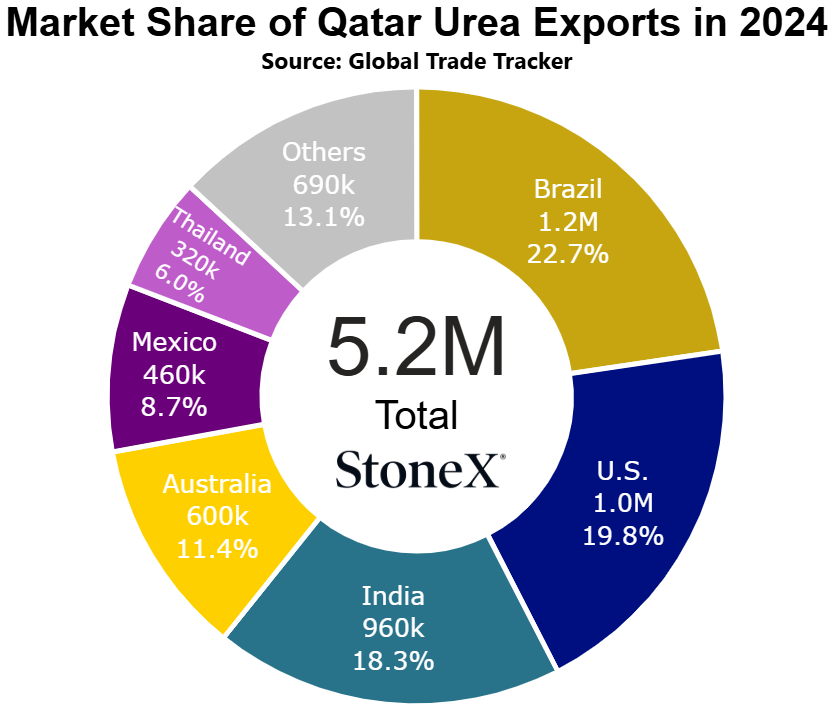
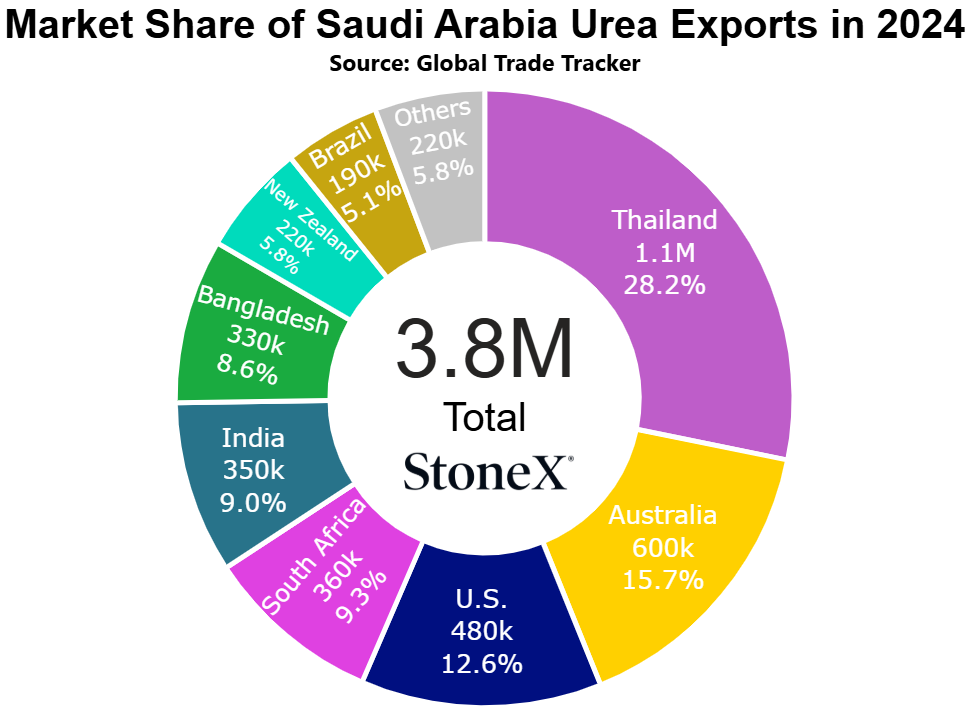
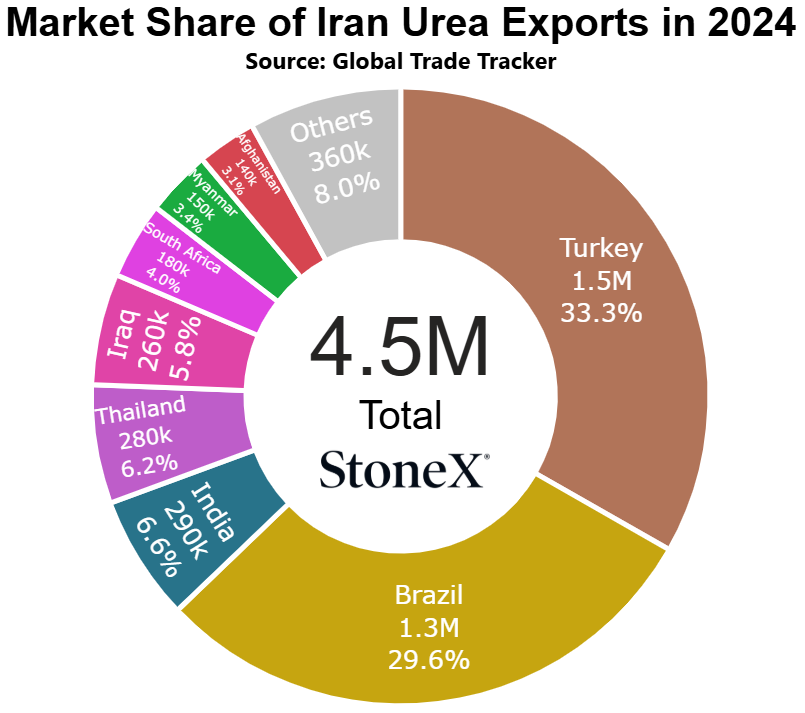
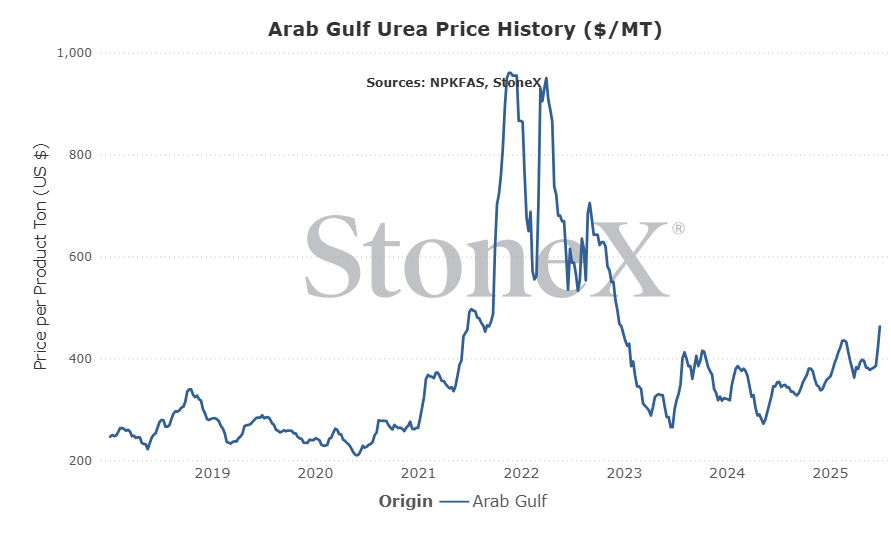
Middle East
Number 1 exporter (as a region, not as individual nations)
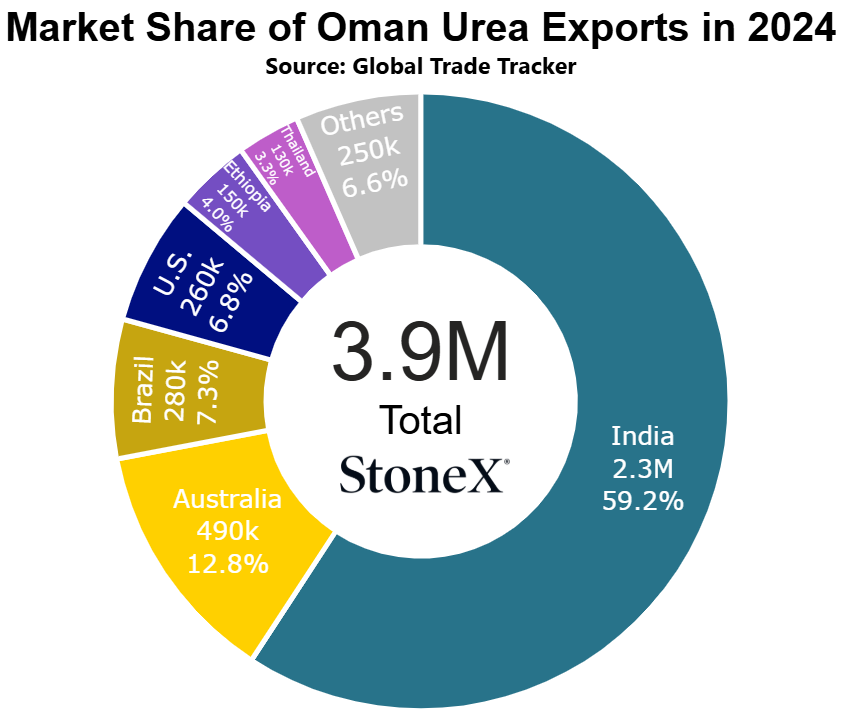
Vs 30 days ago - 3% or approximately $15 higher
Vs 90 days ago - 21% or approximately $83 higher
Vs 6 months ago - 16% or approximately $65 higher
Vs 1 year ago - 37% or approximately $130 higher
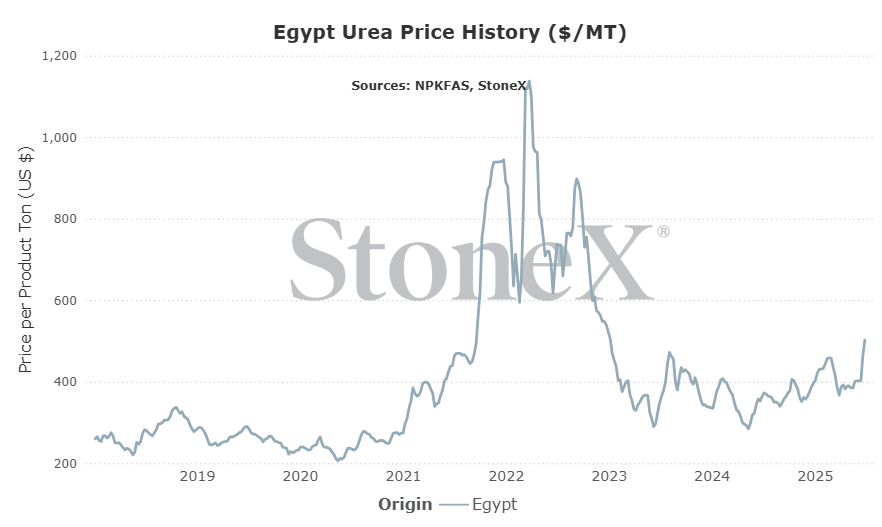
Egypt
Number 4 global exporter in 2024
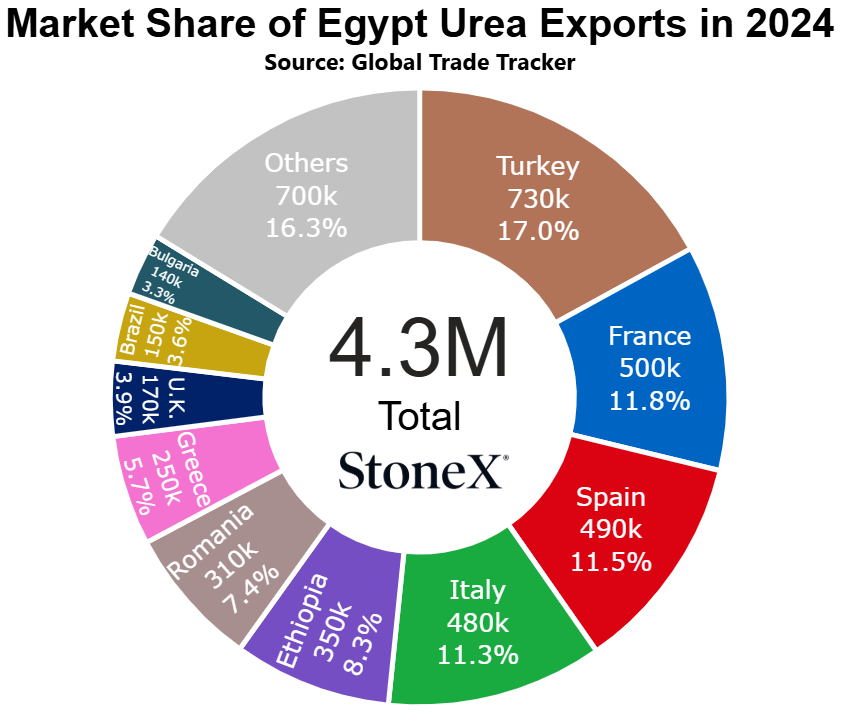
Price comparisons
Vs 30 days ago - -2% or approximately $13 lower
Vs 90 days ago - 26% or approximately $100 higher
Vs 6 months ago - 13% or approximately $57 higher
Vs 1 year ago - 35% approximately $127 higher
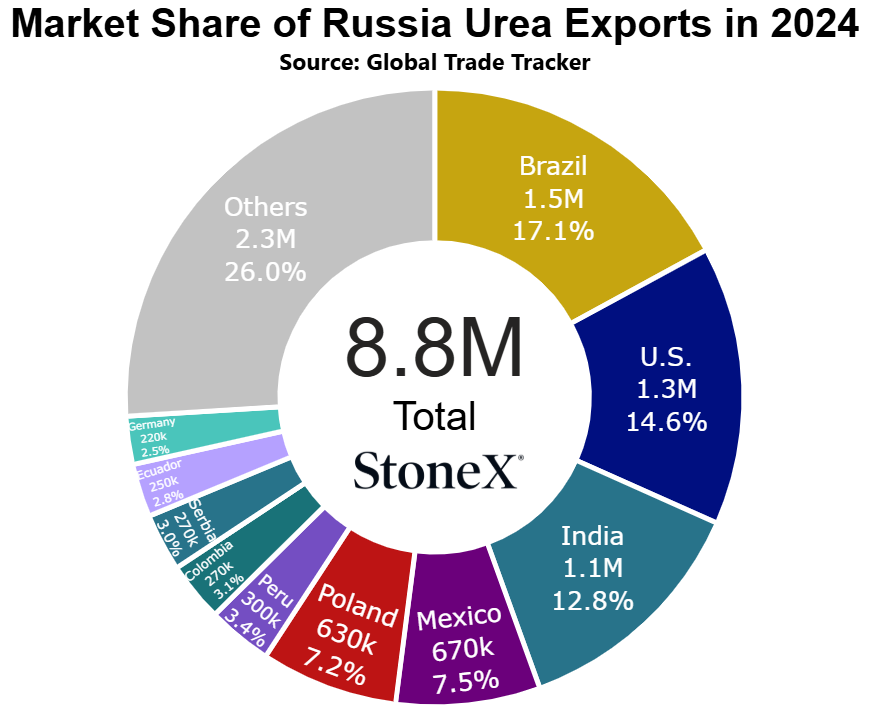
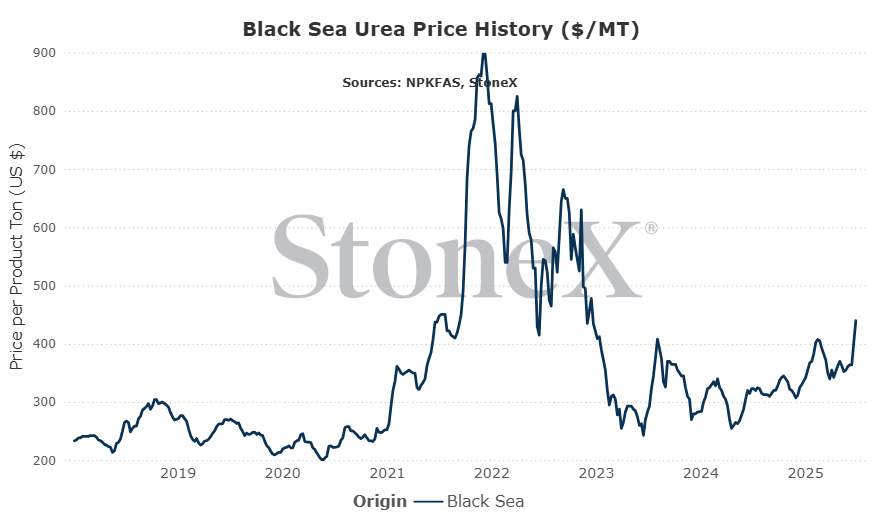
Black Sea
Number 1 global exporter in 2024
Price comparisons
Vs 30 days ago - -2% or approximately $10 lower
Vs 90 days ago - 16% or approximately $60 higher
Vs 6 months ago - 12% or approximately $48 higher
Vs 1 year ago - 33% or approximately $108 higher
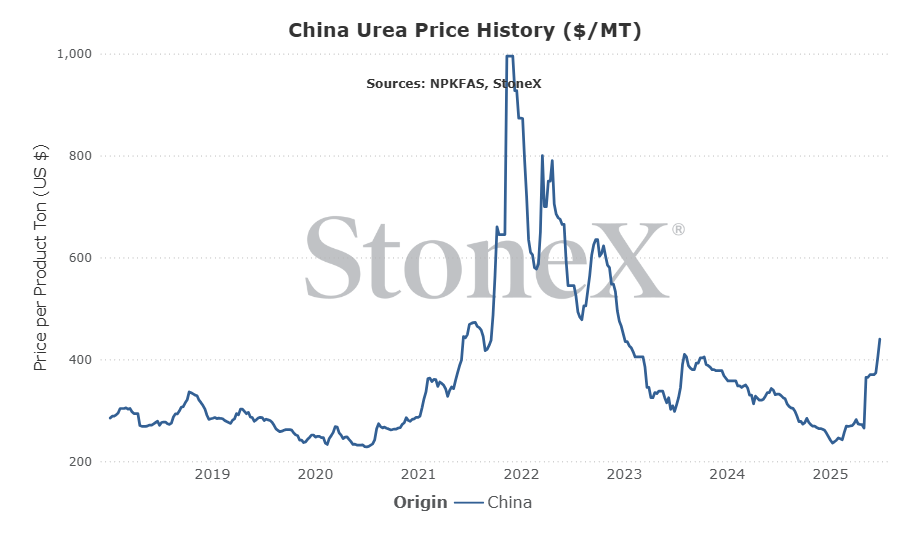
China
Number 5 global exporter in 2023, did not make the top 10 in 2024
Price comparisons
Price comparisons
Vs 30 days ago - 1% or approximately $3 higher
Vs 90 days ago - 67% or approximately $177 higher
Vs 6 months ago - 80% or approximately $197 higher
Vs 1 year ago - 37% or approximately $120 higher
Bull/Bear Factors
Because no market is ever guaranteed to go higher/lower, we try to consider the factors that can sway values so that we are able to act when they occur rather than react.
Bullish Factors
- India tenders keep excess inventories low until demand picks up - India locked up nearly 1.5M tons on their last purchase tender. The current tender is targeting 2M tons. Even if they hit their goal, there will still be more purchases ahead. India's buying pace today is helping to remove excess product from the market. Excess product helps put pressure on manufacturers. Lack of it allows them to move prices higher.
- Chinese exports get scaled back from current 3M ton goal - the current export quota for China was last heard to be 3M tons. While still well short of their normal 5 to 5.5M ton average, 3M tons would still be a massive boost from 2024's meager 262K tons. However, today's expectation is 3M tons. If that number suddenly falls back to 2M or lower, watch out.
- Further supply issues - there are a lot of supply issues that have happened in 2025. Europe is still producing at 75% of normal. Iran and Egypt have had on again/off again produciton rates. Chinese exports are down vs normal. If more additions to the list continue, global supplies get worse and prices get higher.
Bearish Factors
- Chinese flows pepper the market July through October - January through June, China has only exported 77K tons. Their 2025 quota is still believed at 3M tons. There is a strong case to be made that they will start to slow/stop exports in November/December to focus on their domestic lead up to spring. That could mean nearly 3M tons being exported between July and October. That would be a lot in a little bit of time.
- Buyers refuse higher prices - a lot of buyers around the world are going to refuse to step in for next needs at these values. Not until they absolutely have to. If that happens on a large enough scale, it can influence values lower. It would be very hard in today's setup, but not impossible.
- Russia/Ukraine ceasefire leads to peace - this is a low probability situation. There is no indication that war is ending anytime soon. But the chances are not zero. If we were to wake up to the news that a peace has been found, we could see a big correction on nitrogen prices. Russian exports could resume normal flows/destinations. European natural gas prices could drop and allow nitrogen production to resume. War time premiums could be removed. China could resume normal exports with the world normalizing. Again, low probability but a person has to have hope.
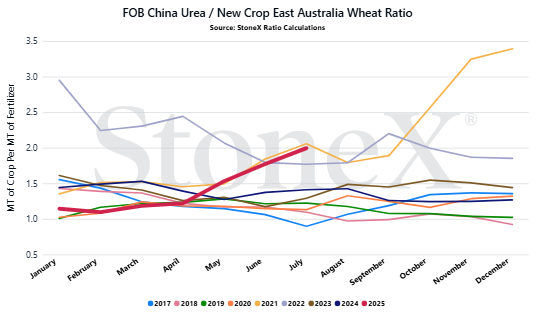
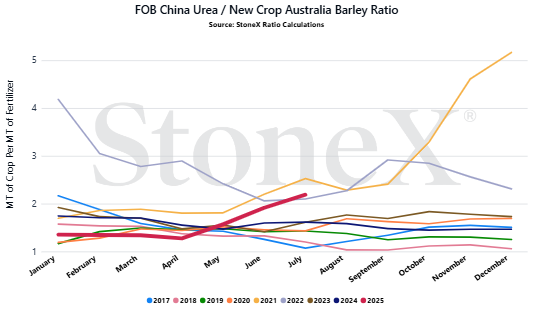
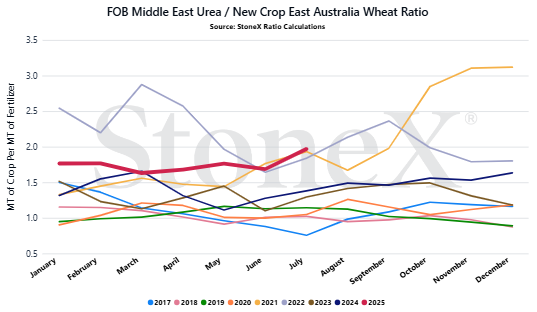
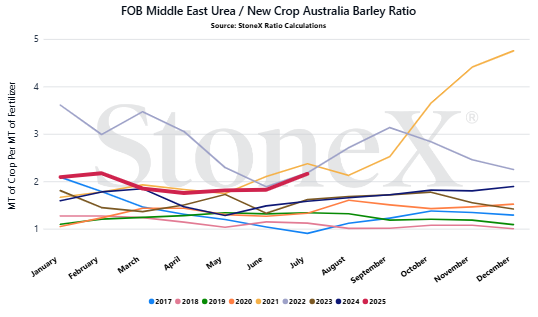
Where are the current urea/grain ratio values today
We believe that only looking at the flat price of either grains or fertilizer can be misleading:
We look at the ratio "value" to get a better indication of where we are or how many bushels of X does it take to pay for 1 ton of fertilizer.
Would you rather:
When we compare the current ratio value against recent years, we start to see if we are high or low.
YOUR VALUES MAY LOOK DIFFERENT
This is a work in progress section! We plan on looking at the relationship between Aussie grains and global price points (and hopefully Aussie specific locations, though that data is hard to secure, very protected). Big reason why we are still in the "trial" stage of this newsletter!!!!
Josh Linville’s Focal Points
- Global reaction to India's "surprise" purchase tender - to start, India announcing their purchase tender was not a reaction. Everyone knew that another one was coming, even after locking up near 1.5M tons last round. However, it is how quickly they announced it that took everyone off guard. They are looking for another 2M tons. The shipment window covers most of September. Will offers stay bold and push the price ideas higher? Will this be the one that sees the market cut price to ensure sales? With India looking for 2M tons, do offers need to lowball to guarantee a chance to sell? Couple weeks will tell the story.
- How Chinese exports act in the market - China could make for a very unique market. On the one hand, we could see the global urea market "tight" with India continuing to soak up excess product. On the other hand, there is still 3M tons to be exported from China that is not allowed to flow to India. We could see the world tight "normal" supplies but loose Chinese supplies. Could make for some interesting conversations.
- Russia/Ukraine war conflict - as long as the war between Russia and Ukraine rages, the world will be on edge and markets will factor in fear from war time premiums. However, a ceasefire between these countries could be the lynchpin that allows prices to correct lower. It seems pretty low probability today, but the war cannot last forever. If peace is found, it could return normal global trade flows, return Russian gas flows to Europe, lower European gas markets, return European nitrogen production, and could end with Chinese exports resuming normal as they see the world market "fixed". That is a lot of dominos to fall, but watch for the first one.
-
StoneX Ratio Calculation
The ratio calculation is derived from Bloomberg historical grains values as well as fertilizer values from StoneX, NPKFAS, and Argus.
The calculation is simply dividing the fertilizer price by each grain price.
All data was sourced from StoneX unless otherwise noted.