

Widespread, historic rainfall to deliver exceptional seasonal outcomes for 2025.
ACCC investigation into Supermarkets
- This is pure speculation, but in the list of 20 recommendations produced by the ACCC report in its investigation over the Supermarkets last week, one of them involved greater wholesale price transparency.
- Whether this goes ahead in any shape or form, time will tell, but if this recommendation were to be implemented, it would provide the beef industry with another point of data to analyse and understand how wholesale prices track over time for red meat.
- Hypothesising that it were implemented, what kind of “wholesale” price data that is published is yet to be determined, but it would be another helpful tool for the beef industry to understand trends in the market and further connect the dots across an extremely complex and costly supply chain within the domestic market. Of which accounts for 30% of total red meat production, or thereabouts.
Key Points
- NT/QLD rains are setting the northern season up for a very solid 2025, in some places exceptional. This rain has been extremely timely and will further aid improved fertility and calving rates + lower mortality rates to drive herd growth this year.
- These markets might bounce around for another week or two following this large scale widespread rain event, but we need to look through this, on the other side, fundamental supply and demand drivers place downward pressure on cattle prices April into May.
- Based on my estimates, national slaughter numbers for WE 21st March are ahead of December 2019 weekly kill figures and only 14,000 head behind March 2015 volumes à last week we processed an estimated 188,000 head.
- With the rains over the past fortnight assuring an oats crop across northern NSW / QLD, we’re going to see good volumes of heavy feeders and grassfed kill cattle turned off in H2 2025 from these areas.
Supply
- Whether it be accessibility issues, genuine reductions in offerings or both, saleyard supply continued their volatile Q1 2025 with numbers retracting sharply following a strong supply week last week.
- Producers would have in mind we’ll hold this week in the hope that next week is better – the rains have been a massive relief valve, allowing cattle to kept and country to avoid destocking.
- Paddock cattle movements have been disrupted, particularly in QLD due to accessibility and that’s set to continue for the next couple of weeks, meaning some further reshuffling for feedlots and processors.
- Last weeks national kill volumes on the NLRS was 149,000 head, the highest throughput since Dec-19.
- Based on my calculations when accounting for ABS / NLRS reporting difference of 26.4%, slaughter last week hit 188,000 head, only 14,000 head behind weekly March 2015 volumes.
- This tells you how significant processor throughput is at present and reinforces my forecast for 9 million head to be processed in 2025.
- Another 110,000 t plus month for beef exports on the cards for March despite the Brisbane port being closed for around a week – sensational effort by the port and exporters to get back on the horse post Alfred rains and get volumes moving.
- Q1 2025 beef exports on track to be higher than Q1 2024 by 12% or 32,000 tonnes plus and would represent the highest first quarter volumes on record, a feat in itself considering Alfreds disruption to the countries largest beef export port in early March.
Demand
- The widespread nature of the falls across the eastern seaboard have been nothing short of historic and coupling that with an oats crop in the ground or being planted on the back of rain, short term restocker interest will firm up in a little, in turn supporting prices.
- A week is a long time in the beef industry - multiple conversations this week have indicated many were on the precipice of destocking either imminently or in the next 4 weeks due to lack of rains, fast forwards 7 days and many will be comfortably set up, particularly QLD.
- Feedlots are comfortable on supply and a number of grids are unchanged this week as they go hand to mouth, with some reshuffling done to get numbers.
- Its for this reason that once the country dries out, I continue to see downside pressure on pricing as supplies flow again, feeders need to compete away cattle is lacking due to full feedlots and the volumes many booked as recently as last week before the rain.
Price
- Its telling when the feeder and finished markets in the saleyards lift in price stronger than the restocker markets after a rain event that covers most if not all of Australia’s major cattle regions.
- It reinforces my belief of how the cattle cycle has moved from a sellers to buyers market and demand from the producer end continues to be average at best, numbers on farm and a lack of convidence from 2023 markets are why there’s limitations in that part of the market.
- Most feedlot grids this week were unchanged with little need or impetus for the feeders to be in the market chasing cattle, most well covered with numbers booked prior to the rains.
- Current forward contracts from processors for grass kill cattle for certified programs are exceptionally strong at the minute and bids well forwards into winter – it’s a clear sign some of these operations are worried about access to kill cattle supply #1 and #2 prices pushed higher so are looking to get in front of the curve and lock down numbers today.
Weather
- Next major wet system is June 2025 – where the south will see its Autumn break – if its genuine rain that can help those regions recover – we could see markets down there catch fire very quickly. NT, QLD, NSW also in for rain which will give these areas a bit of a boost through the dry / winter.
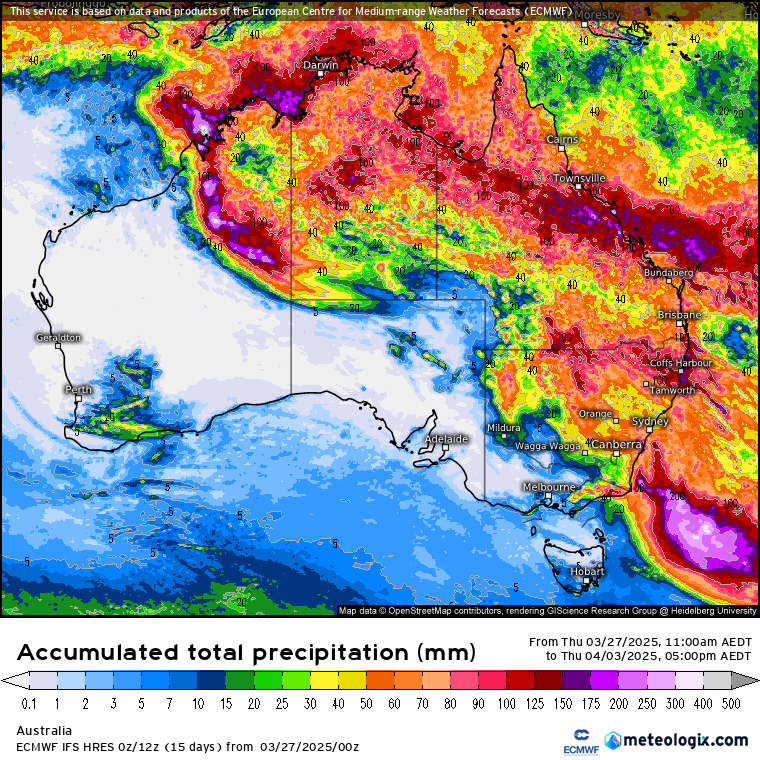
- ECMWF 7 day forecast below – with falls forecast to extend right down into central NSW.
- Meats & Livestock Team - Sydney
- Ripley Atkinson | +61 427 417 803


