Brazil Coffee Crop Survey | 1st estimate for 2026/27
Translation generated by AI
The 2025/26 Brazilian coffee crop was marked by another year of climatic challenges that significantly affected national production. Arabica coffee output fell by 18.4%, totaling 36.5 million bags. This result reflects the negative impact of adverse weather conditions, especially the hot and dry climate recorded at the end of 2024 during the flowering period and the early stages of crop development.
On the other hand, robusta (conilon) coffee production reached a historic record in 2025, with an increase of nearly 22%, reaching 25.8 million bags. As a result, total coffee production for the 2025/26 season amounted to 62.3 million bags, representing a 5.4% decline compared to the previous season.
In recent years, between 2021 and 2024, the global coffee balance recorded consecutive deficits, leading to a reduction of more than 22 million bags in global stocks. The 2025/26 crop, despite Brazil’s contribution, was not enough to rebuild these stocks, keeping the market in a scenario of tight supply.
Thus, the 2026/27 crop takes on a crucial role, as it may mark the beginning of the rebuilding of global stocks. However, any potential shortfall in this production would place the coffee market in yet another season of challenging supply conditions. In addition, climate change and the increasing frequency of extreme weather events heighten uncertainty regarding the development and productive potential of the next season.
Regarding weather conditions, the first half of 2025 showed somewhat more favorable conditions for crop development, particularly in terms of vegetative growth, a key stage in determining, after flowering, the productive potential of the 2026/27 crop. However, at the beginning of the second half of the year, there was a delay in the return of rainfall, which, when it did occur, came in volumes below average and with irregular distribution, partially affecting plant development.
Source: StoneX.
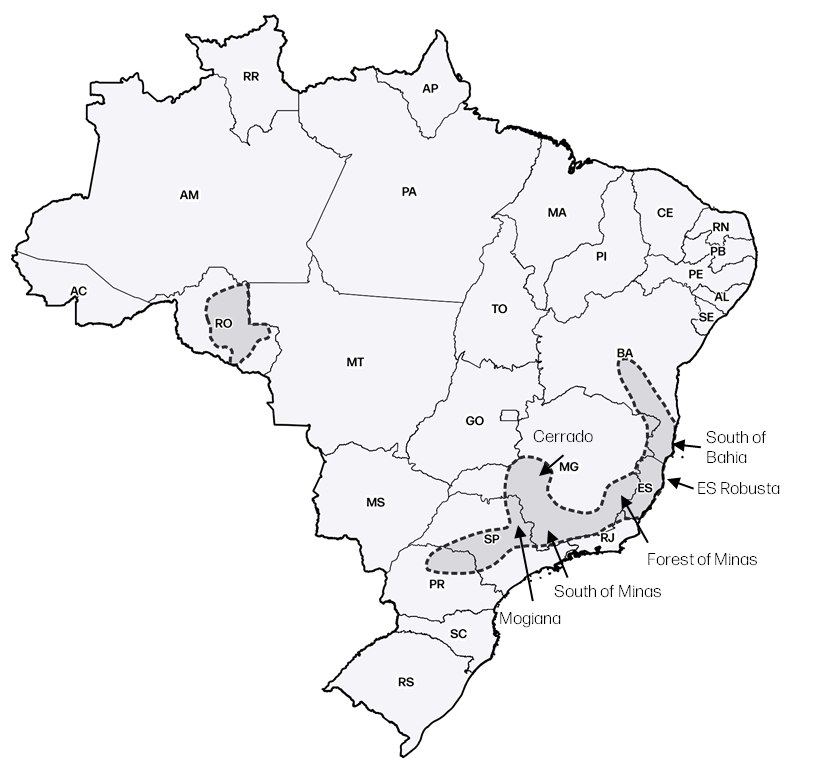
As it has done in recent years, StoneX carried out fieldwork to collect primary data, visiting the main coffee-producing regions of Brazil in the post-flowering period with the aim of assessing this stage of crop development and preparing the first estimate for the 2026/27 crop.
Irregular rainfall characterized the weather in 2025
The year 2025 was characterized by irregular rainfall patterns across much of Brazil, especially in the coffee belt regions. According to data from INPE (the National Institute for Space Research), obtained from weather stations distributed throughout the country, there was considerable variation in both the spatial and temporal distribution of precipitation over the year.
In March and April, rainfall occurred irregularly, with some regions recording significant volumes while others faced prolonged dry spells. During the harvest period (May to August), a drier climate prevailed, which is typical for that time of year.
September and October, crucial months for coffee flowering, also showed unfavorable weather conditions. September was mostly dry, while October brought the return of rains, though irregular and poorly distributed. In some areas of Minas Gerais, accumulated rainfall was below expectations, affecting the initial development of the coffee plants.
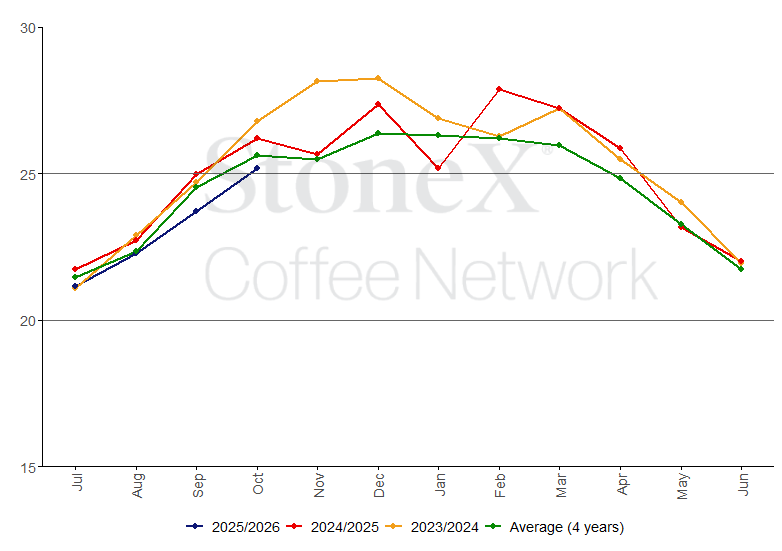
On the other hand, milder temperatures compared to 2024 contributed to a more favorable climatic environment. In several locations, temperatures were below the historical average, which reduced thermal stress on the plants and helped preserve the crop’s productive potential.
Monthly rainfall and the coffee cycle

Sources: StoneX and INPE. Prepared by: StoneX.
Robusta/conilon coffee
Northern Espírito Santo
The northern region of Espírito Santo, a conilon-producing area, has just come from a record crop for the state.
In general, the crops showed high productivity in the 2025/26 season, and there was an expectation that the 2026/27 crop would be close to the previous one.
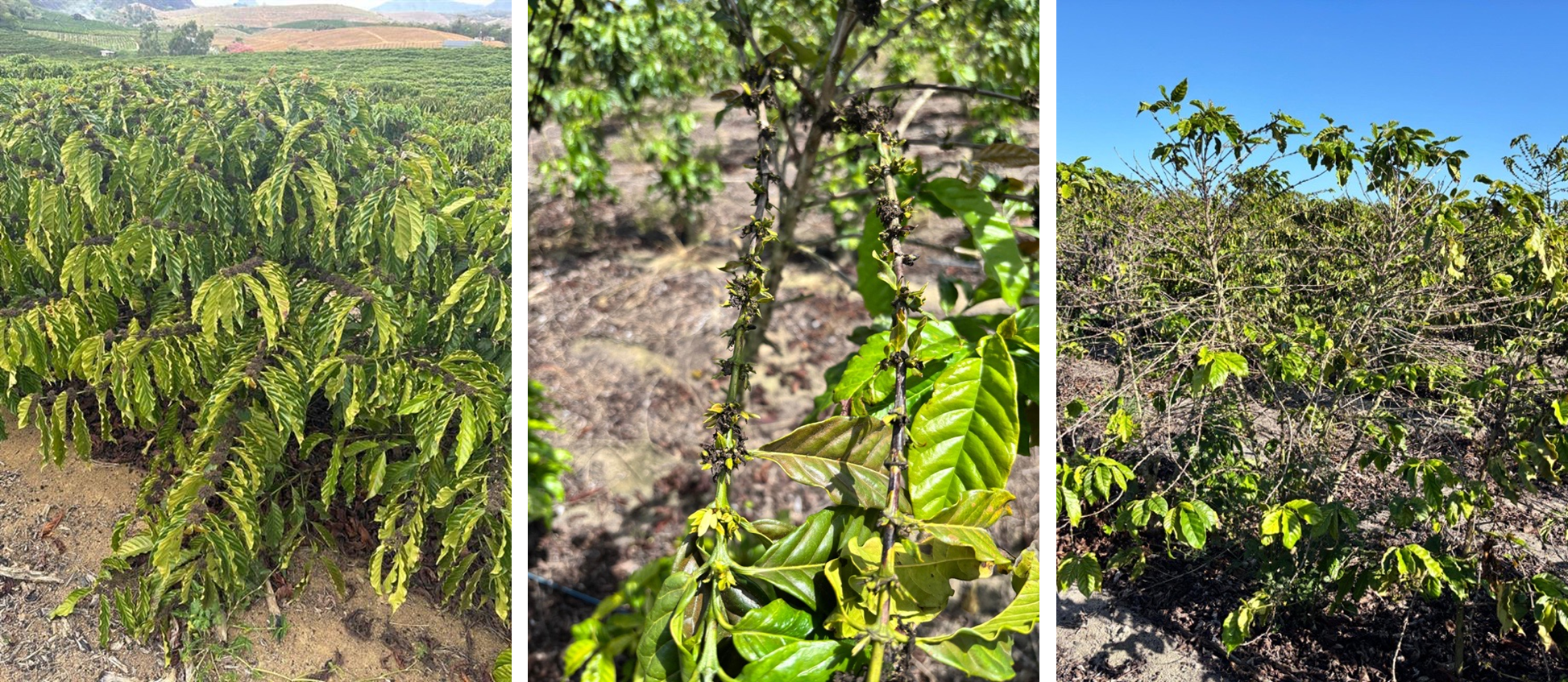
However, the plantations are not expected to repeat the same performance. After structural management, the remaining branches left by producers did not show good productive performance, especially in municipalities that recorded very high yields in the last crop.
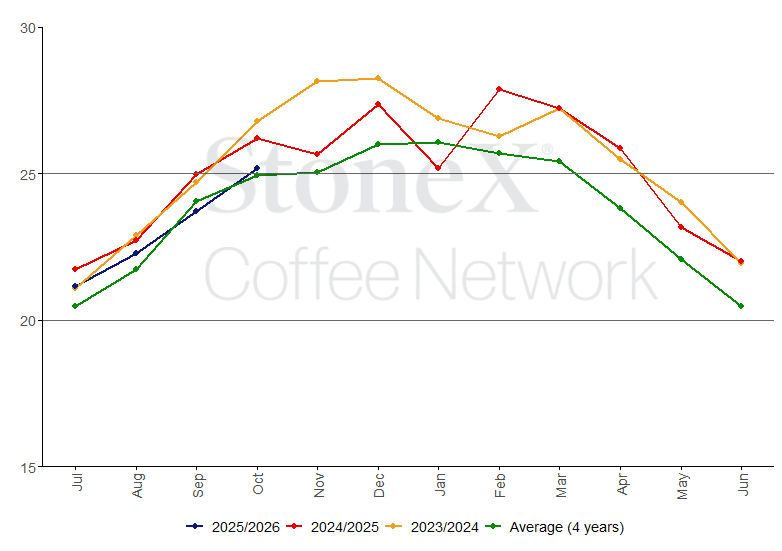
A certain level of flower abortion has been observed. Although the region experienced mostly favorable weather conditions throughout much of the plants’ development, during the flowering period there were days with cold winds and rain shortly after flowering, factors that may have affected fruit set.
Monthly average temperature °C
Source: StoneX, with data from NOAA.
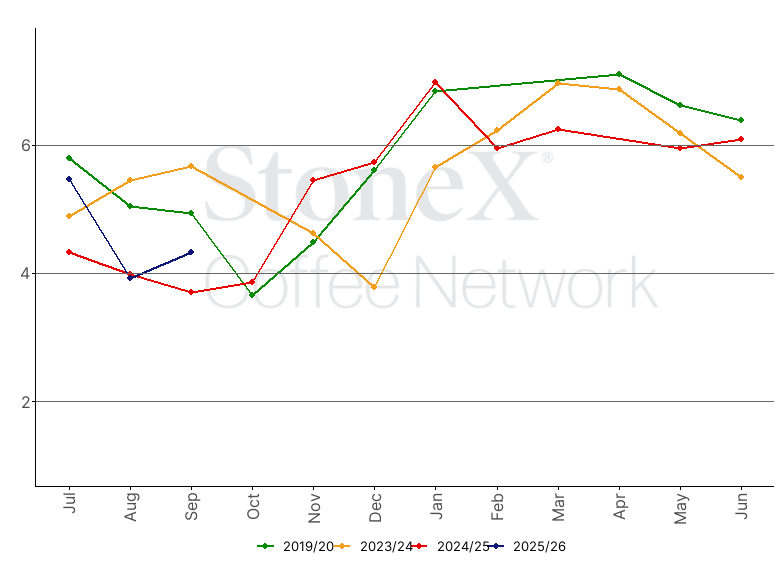
This scenario, combined with the physiological stress of plants that produced at very high levels in the previous crop, contributed to lower fruit set in these older areas. In these same plantations, the shoots managed alongside the old stems still lack the structure needed to support high production, which further limits the productive potential of these areas.
Production in the northern region of Espírito Santo was estimated at 16.3 million bags, representing a 15.1% decrease compared to the previous season.
Vegetation Index (NDVI)
Source: StoneX, with data from Copernicus.
Source: StoneX.
Southern Bahia
The southern region of Bahia, also a conilon-producing area, presents a scenario similar to that observed in northern Espírito Santo. After a very strong 2025/26 crop, especially in older areas, the plantations that recorded high yields in the previous cycle have not shown the same productive performance for the 2026/27 season.
The stress on plants that produced above average in the last crop has limited the productive potential of these older areas.
On the other hand, the region has undergone a significant increase in cultivated area in recent years, along with the renewal of plantations using more productive genetic material.
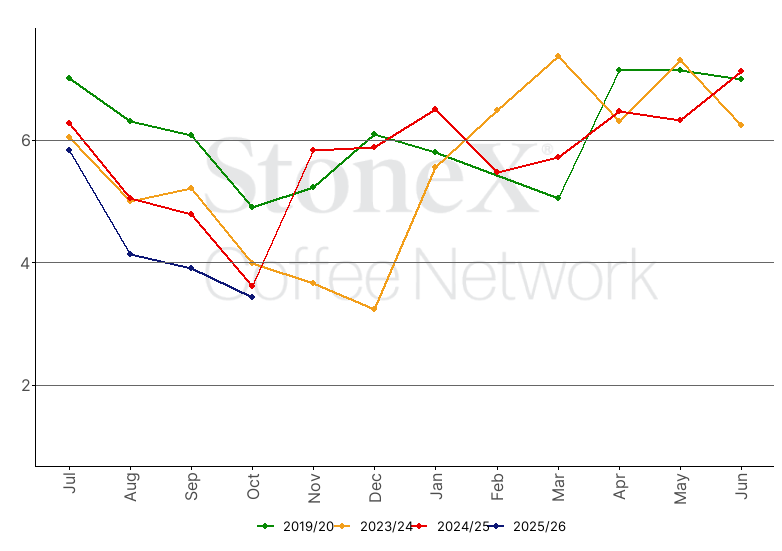
Monthly average temperature °C
Source: StoneX, with data from NOAA.
These new areas, which are entering their first year of production or moving into their second, show good flower set and favorable development, indicating strong productive potential for the 2026/27 crop.
Bahia, like Espírito Santo, came from a strong 2025/26 crop. For the 2026/27 cycle, a reduction in the state’s total production is expected; however, the expansion of newly planted and recently renovated areas tends to balance the state’s overall volume, preventing a sharper decline in the harvest.
In southern Bahia, production is expected to fall by 18.8%, totaling 2.6 million bags.
Vegetation Index (NDVI)
Source: StoneX, with data from Copernicus.

Source: StoneX.
Rondônia
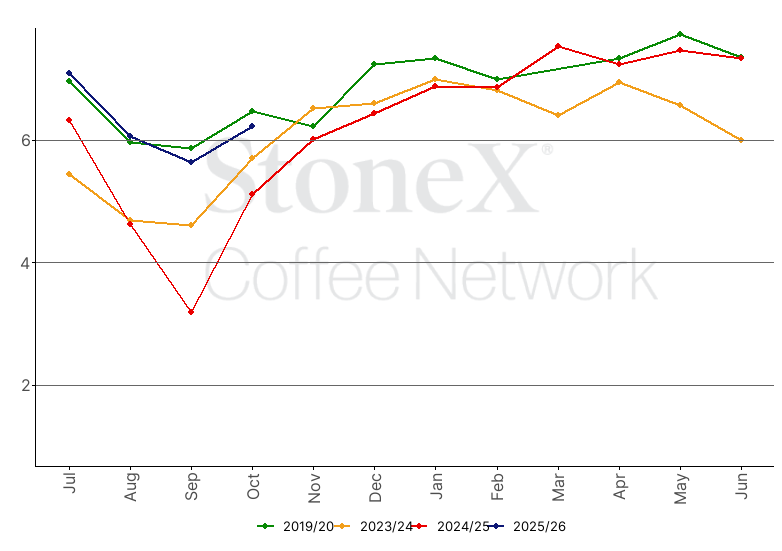
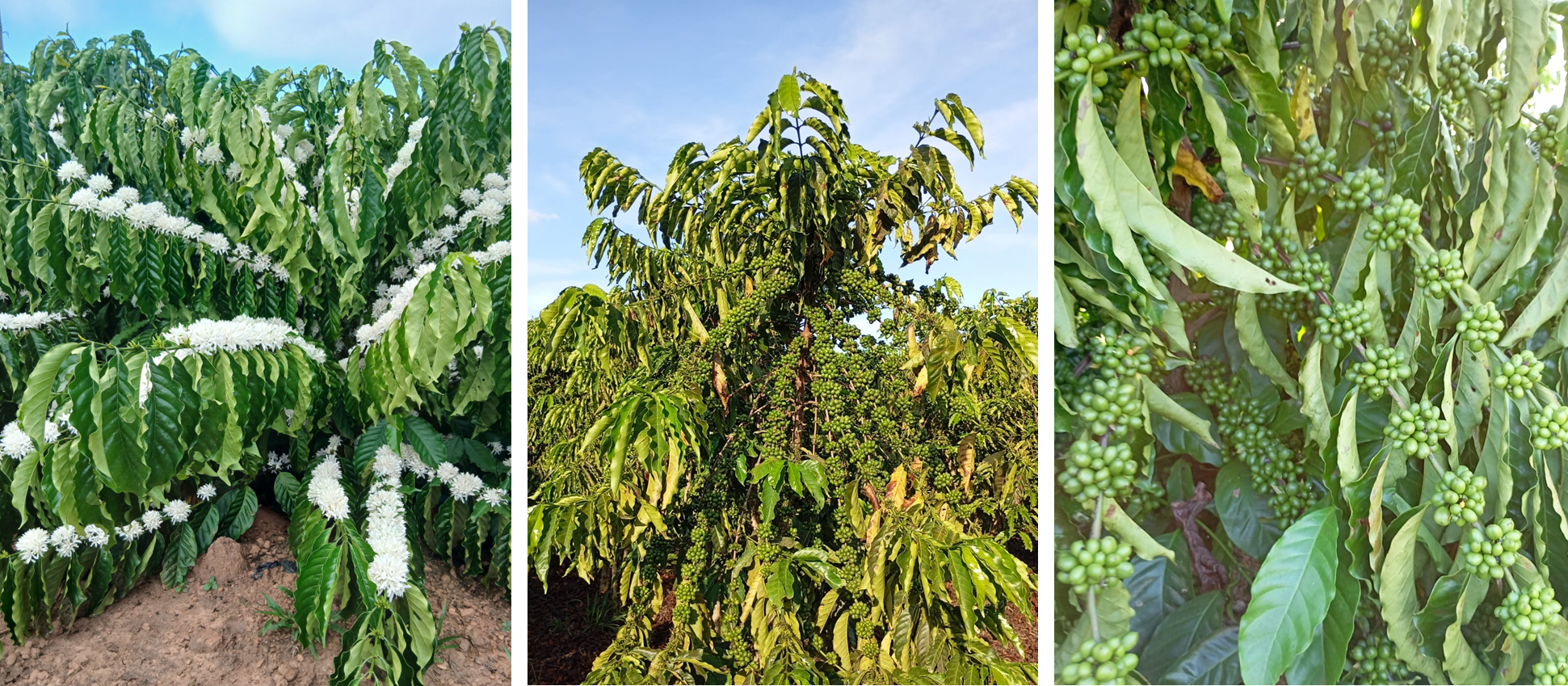
Robusta coffee production in Rondônia for the 2026/27 crop will be higher than in 2025/26. The state’s 2025/26 crop was affected by a period of drought and high temperatures in September 2024, conditions that impacted flower set and caused some plant weakening. Due to these adverse weather effects, the 2025/26 crop was compromised.
However, the plantations experienced favorable weather conditions for recovery and suitable climate during flowering, which allowed for good fruit set.
Thus, in addition to plant recovery, an increase in production is expected for the 2026/27 crop in Rondônia.
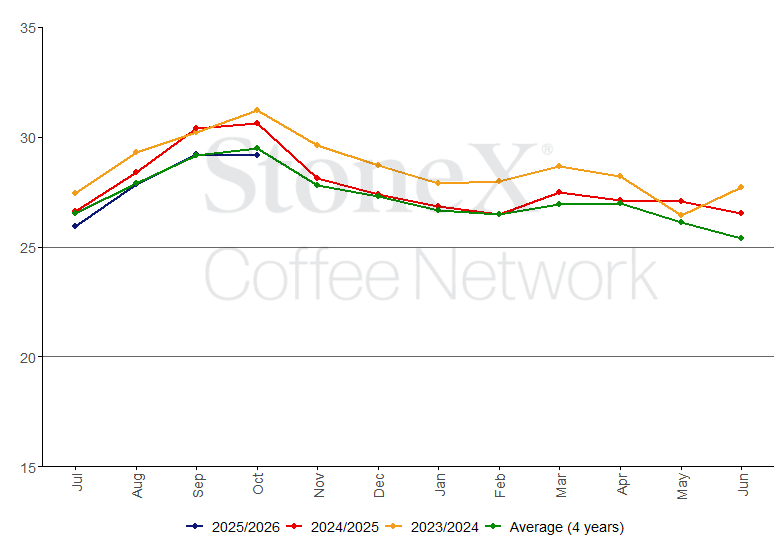
Monthly average temperature °C
Source: StoneX, with data from NOAA.
Another factor contributing to the growth of production in the state is the expansion of cultivated areas and the renewal of old plantations or those with reduced stands, which are being replaced by more productive genetic materials and more uniform plantings.
Despite this progress, Rondônia still faces some obstacles that limit a more significant or sustained increase in area, with labor availability being one of the main constraints. Gradually, the state has been expanding its coffee-growing areas and improving its overall production base.
Part of these new plantations is already entering production, while others are nearing that stage, which will contribute to an increase in the state’s output. Production in Rondônia was estimated at 3.3 million bags, representing a 32% year-on-year increase.
Vegetation Index (NDVI)
Source: StoneX, with data from Copernicus.
Source: Sítio Itabira/Cacoal.
Arabica coffee
Forest of Minas
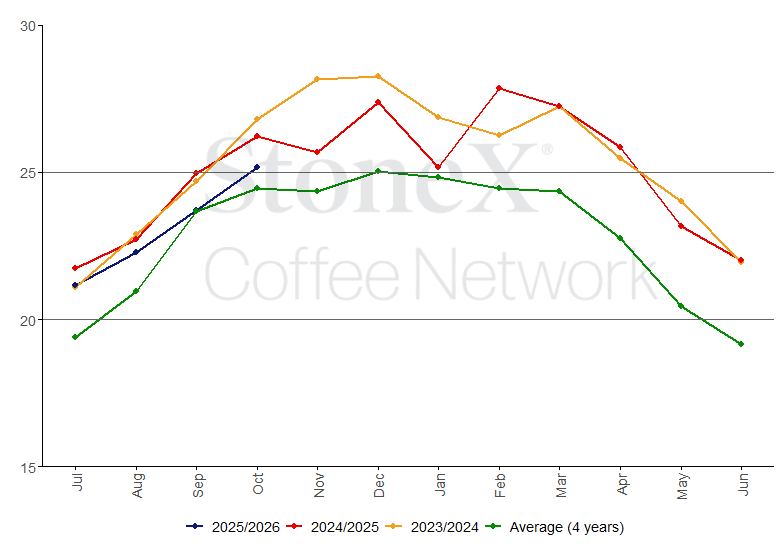
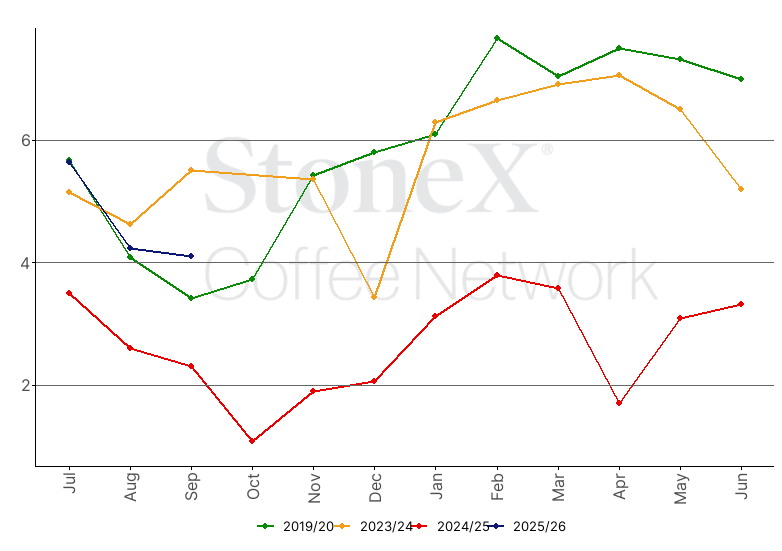
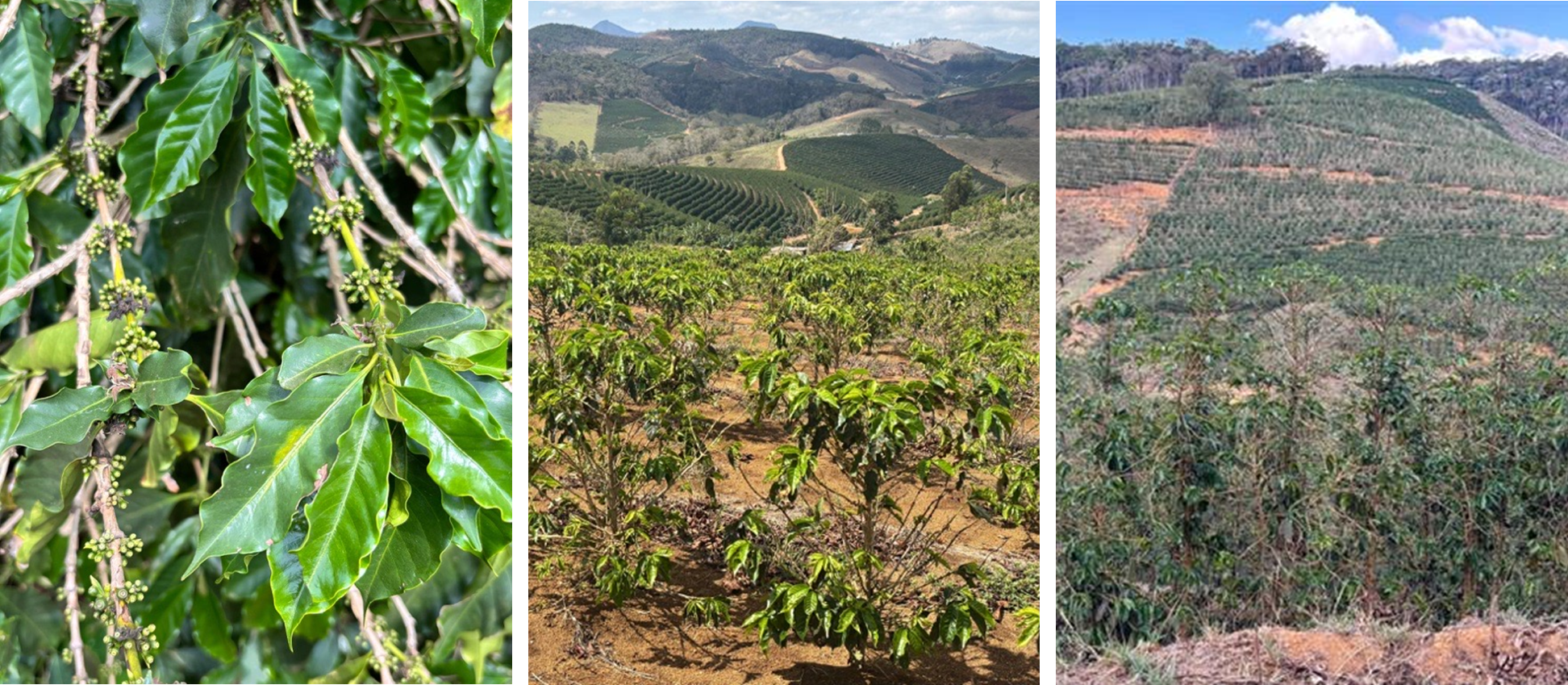
The Matas de Minas region comes from a low-production year in the 2025/26 crop. Expectations for the 2026/27 crop were for a strong recovery, considering the biennial nature of coffee production. Naturally, after a low-yield year, a significant increase in production was expected.
However, once again, unfavorable weather conditions limited this potential. The irregular climate affected crop development, resulting in varying levels of leaf loss. In areas where defoliation was more severe, flower set was also below expectations, further compromising yield formation for the 2026/27 crop.
Many plantations in the region have been producing for more than one cycle without any pruning or management, as producers sought to take advantage of high coffee prices. This continued production over several years, combined with the last two years of adverse weather, has led to a more pronounced process of plant exhaustion and physiological decline.
Monthly average temperature °C
Source: StoneX, with data from NOAA.
Thus, although regional production is expected to be higher than in the previous crop, it will remain below the region’s productive potential this season.
Another relevant point is the profile of the Matas de Minas coffee park, which is largely composed of older plantations, many of which already showed reduced plant density and loss of vigor. As a result, recent years have seen a high percentage of pruning in the region, above the historical average.
In many cases, the decision to prune was made when it became clear that certain areas would not reach the desired productivity due to unfavorable weather conditions.
Vegetation Index (NDVI)
Source: StoneX, with data from Copernicus.
At the same time, the region has been undergoing a consistent process of renewal and modernization of its coffee park, with the replacement of old areas by newer genetic materials and adjustments in planting density. In addition, there has also been an expansion of new areas. This progress has been made possible by the strong coffee prices in recent years, which have provided producers with greater capitalization and allowed for more substantial investments, even considering the high costs involved in such decisions.
Thus, the 2026/27 crop in the Matas de Minas region is expected to show higher production than the previous season, though still below its potential, as a combined result of climatic, physiological, and structural factors in the region. Coffee production in the Matas de Minas region for 2026/27 was estimated at 8.9 million bags, representing an increase of 36.9% compared to the previous season.
Source: StoneX.
Southern Espírito Santo
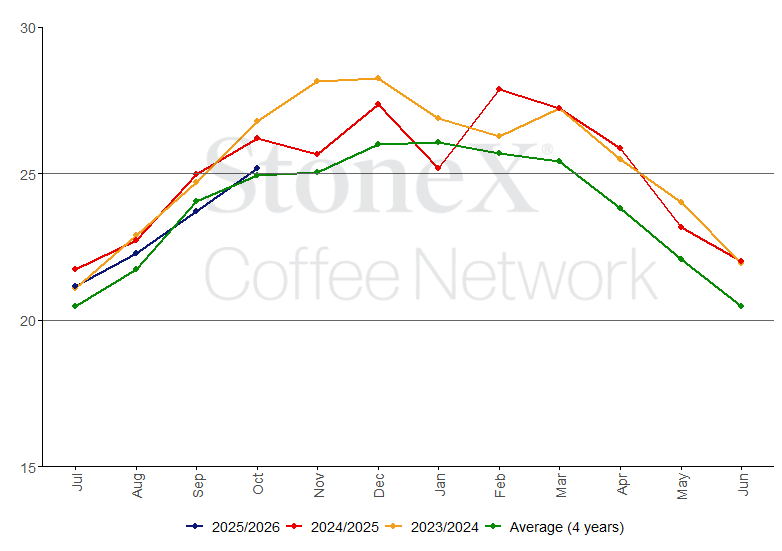
The southern region of Espírito Santo shows great similarity with the Matas de Minas, both in terms of the weather conditions observed in recent years and the profile of producers and plantations. As in the Matas de Minas, southern Espírito Santo is coming off a low-production year, which initially created positive expectations for the 2026/27 crop, considering the biennial effect and the potential for recovery.
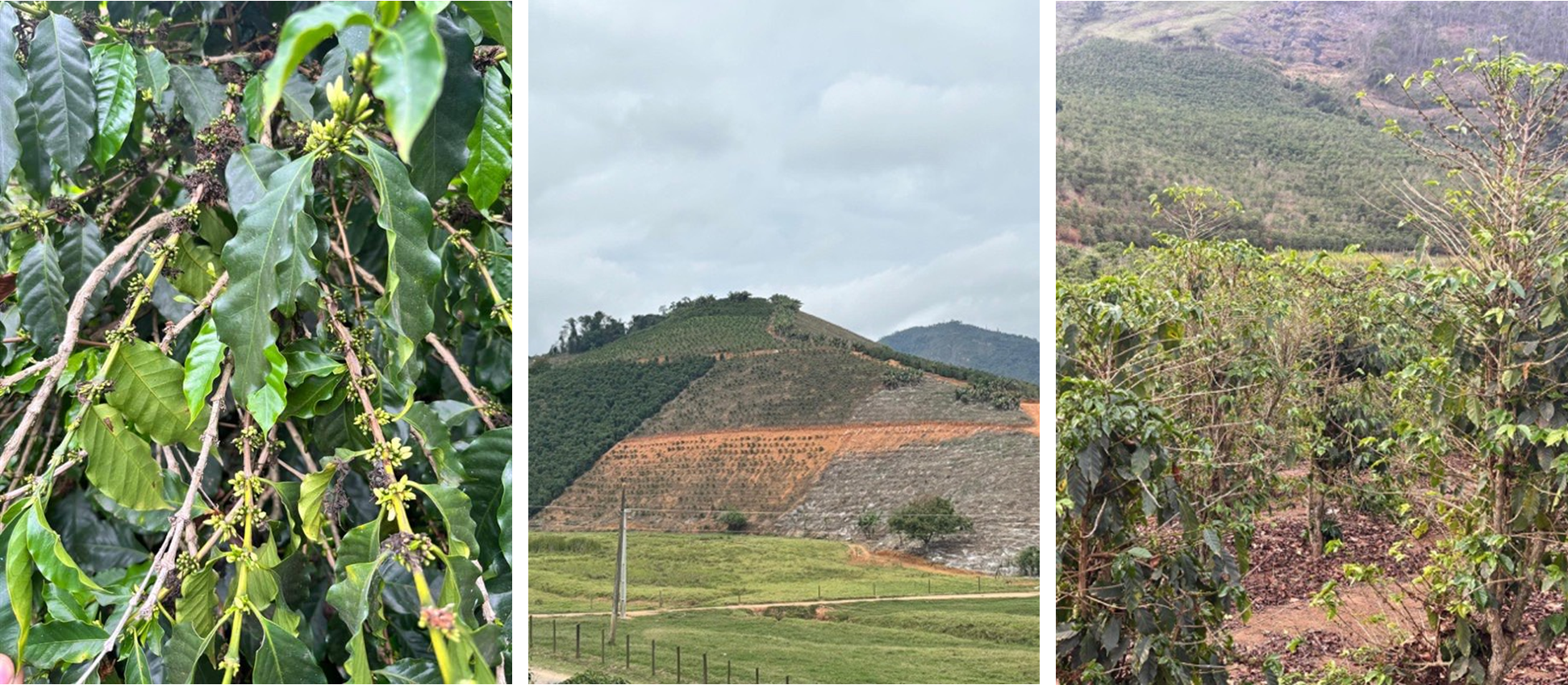
However, the region faces an even more challenging scenario. The plantations in southern Espírito Santo have a higher percentage of pruned or renovated areas compared to those in the Matas de Minas.
For an expected high-yield year, this factor becomes particularly significant, since although a strong production increase was anticipated, the combination of recent pruning, area renewal, and adverse weather conditions has significantly limited productive potential.
Thus, the 2026/27 crop is expected to mark one of the weakest high-cycle years in the region and one of the poorest in terms of the vegetative condition of the plantations.
Monthly average temperature °C
Source: StoneX, with data from NOAA.
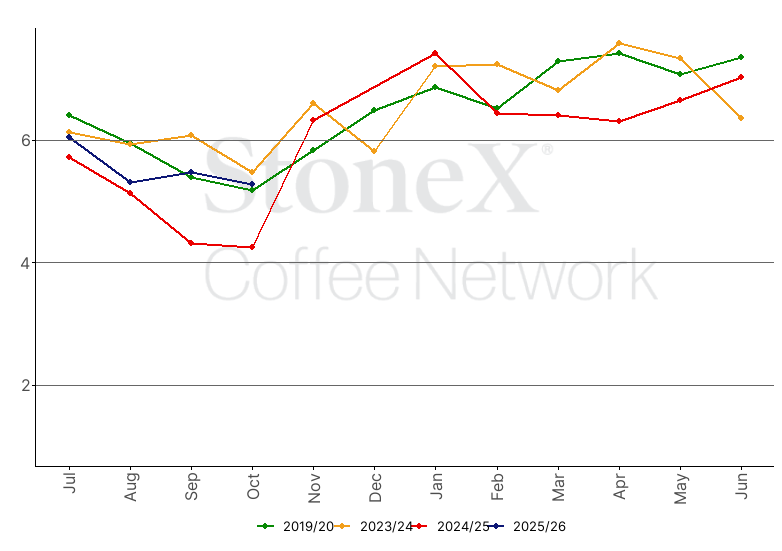
Another determining factor was the severe defoliation observed in the plantations, resulting from the same weather conditions that affected the Matas de Minas.
Many areas have gone through consecutive production cycles and, although not always with heavy yields, this repetition of productive seasons, combined with the aging of the coffee park, has accelerated the process of physiological decline in the plants.
This wear, together with climatic stress, has led to a significantly weakened vegetative condition, compromising productivity potential for 2026/27. Although the region shares similarities with the Matas de Minas, southern Espírito Santo is in a somewhat more delicate situation.
Vegetation Index (NDVI)
Source: StoneX, with data from Copernicus.
The larger volume of renovated and pruned plantations means that the proportion of non-productive areas for the upcoming crop is higher. As a result, even though it is a high-yield year due to the biennial cycle, production will remain below potential.
Even so, output is expected to surpass that of the previous crop. However, the result will fall short of the productive capacity the region could achieve if weather and plant physiological conditions were favorable. For the region, production is expected to increase by 16.7%, reaching a total of 3.5 million bags.
Source: StoneX.
State of São Paulo
In the 2025/26 crop, the state of São Paulo showed the poorest vegetative and productive conditions among the arabica-producing areas.
The plantations were heavily affected by the prolonged drought period in 2024, resulting in a high percentage of pruning, especially in the Alta Mogiana and western São Paulo regions.
Thus, for the 2026/27 crop, the state stands among the regions with the best vegetative and productive conditions, precisely due to the large number of areas returning from zero-production cycles. These plantations show strong productive potential.
In addition, there are new areas entering their first production cycle, also displaying good vigor and positive prospects. Part of the plantations that recorded very low yields in 2025/26 has already recovered and now shows good development for the next season.
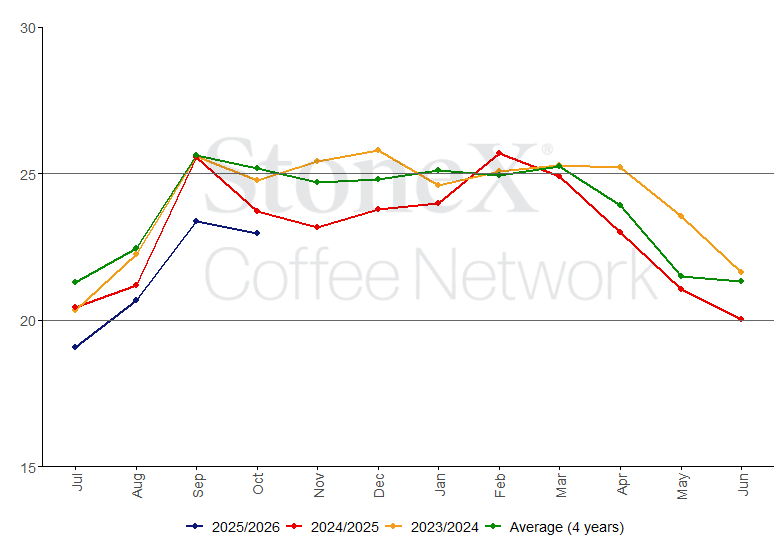
Monthly average temperature °C
Source: StoneX, with data from NOAA.
However, weather factors still pose challenges. In some areas, flower abortion and sunburned blossoms have been observed as a result of the prolonged dry period combined with the developmental stage of the flower buds.
This damage is seen at a low percentage in areas with good vegetative conditions; however, in areas still showing poor conditions, the effect is more evident and occurs at higher levels.
Plantations with unfavorable vegetative conditions for the next crop, due to consecutive adverse weather, lack of rainfall, or insufficient precipitation, have been more affected, showing greater damage in floral development.
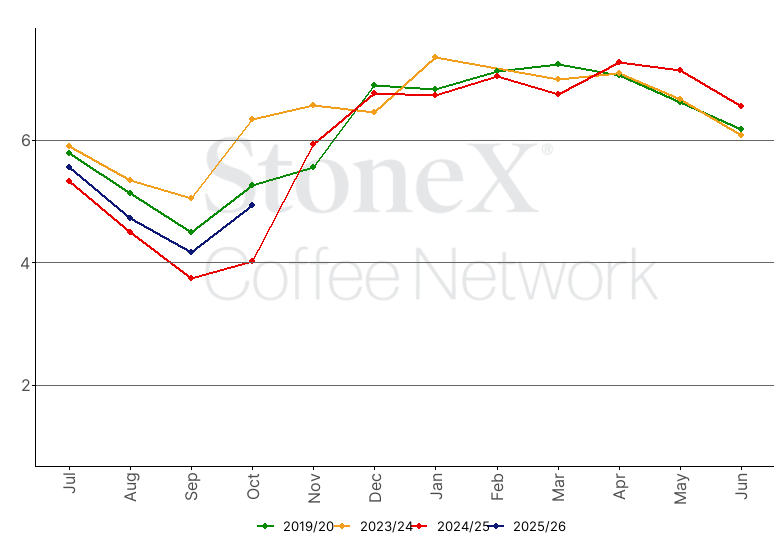
Vegetation Index (NDVI)
Source: StoneX, with data from Copernicus.
Even so, São Paulo is expected to record a significant increase in production compared to the previous crop, driven mainly by the recovery of pruned areas and the progress of new plantations. This positive outlook, however, depends on the continuation of favorable weather conditions from now on, to ensure fruit retention and healthy plant development until harvest. Production in the state is projected to show a substantial increase of 75.6%, totaling 7.2 million bags.
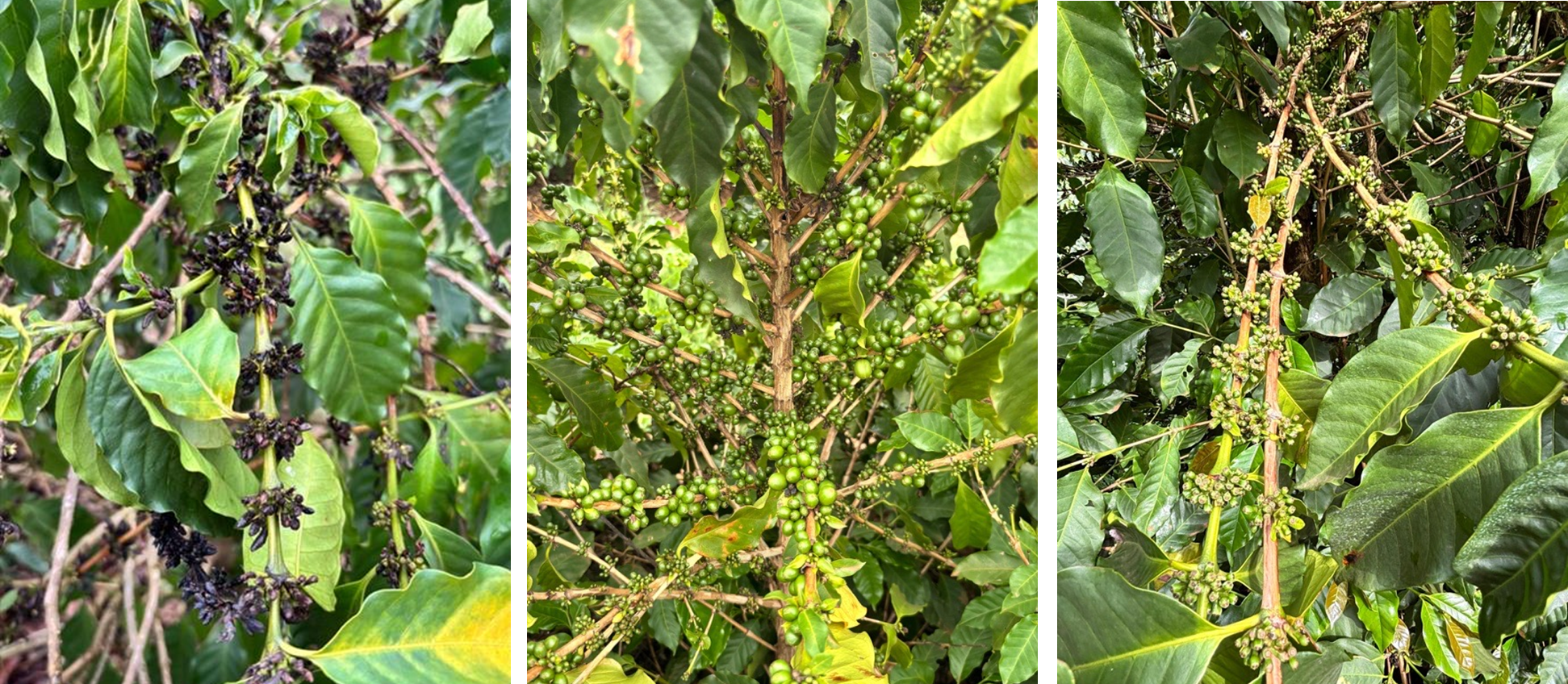
Source: StoneX.
Southern Minas Gerais
Southern Minas Gerais, the largest arabica coffee-producing region in Brazil, did not perform well in the 2025/26 crop.
However, field visits indicate a positive outlook for the 2026/27 crop.
The region covers a vast area with diverse topographies, microclimates, and management practices, resulting in varied scenarios.
Some microregions or municipalities, with inverted biennial cycles, are expected to see a reduction in production for the 2026/27 crop, while other areas show signs of increase and are entering a high-production year.
Even with this heterogeneity, a strong production volume is expected for the upcoming crop. Nevertheless, output is likely to fall short of initial expectations.
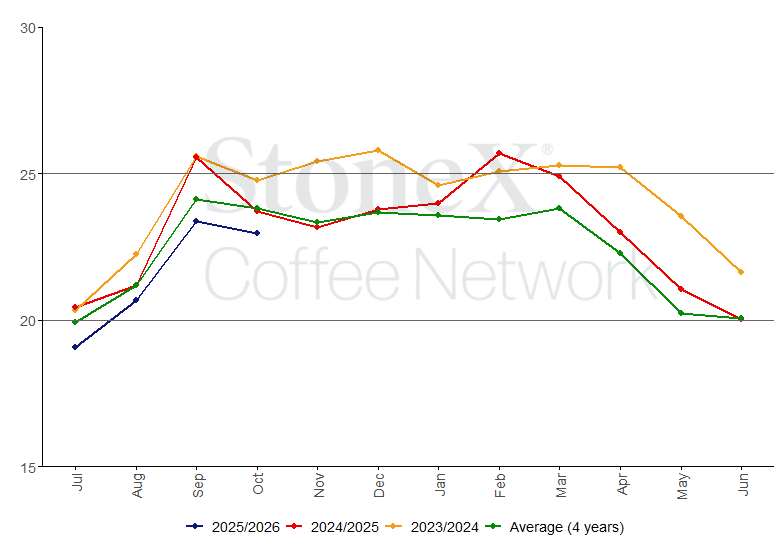
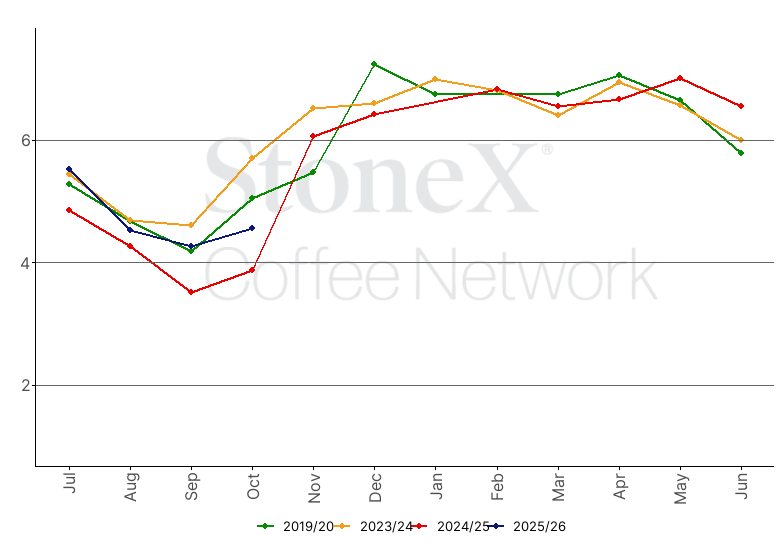
Monthly average temperature °C
Source: StoneX, with data from NOAA.
The delayed onset of rainfall during flowering, followed by irregular precipitation, with localized and uneven rains of varying intensity between municipalities, resulted in significant differences in flower set as well as uneven impacts on the vegetative condition of the plantations.
As a result, there are areas showing excellent vigor and good fruit set, while others experienced limited vegetative development, reducing productive potential and increasing the percentage of pruning in the region. The country’s largest arabica-producing region is expected to record a 21.1% increase, totaling 17.2 million bags.
Vegetation Index (NDVI)
Source: StoneX, with data from Copernicus.
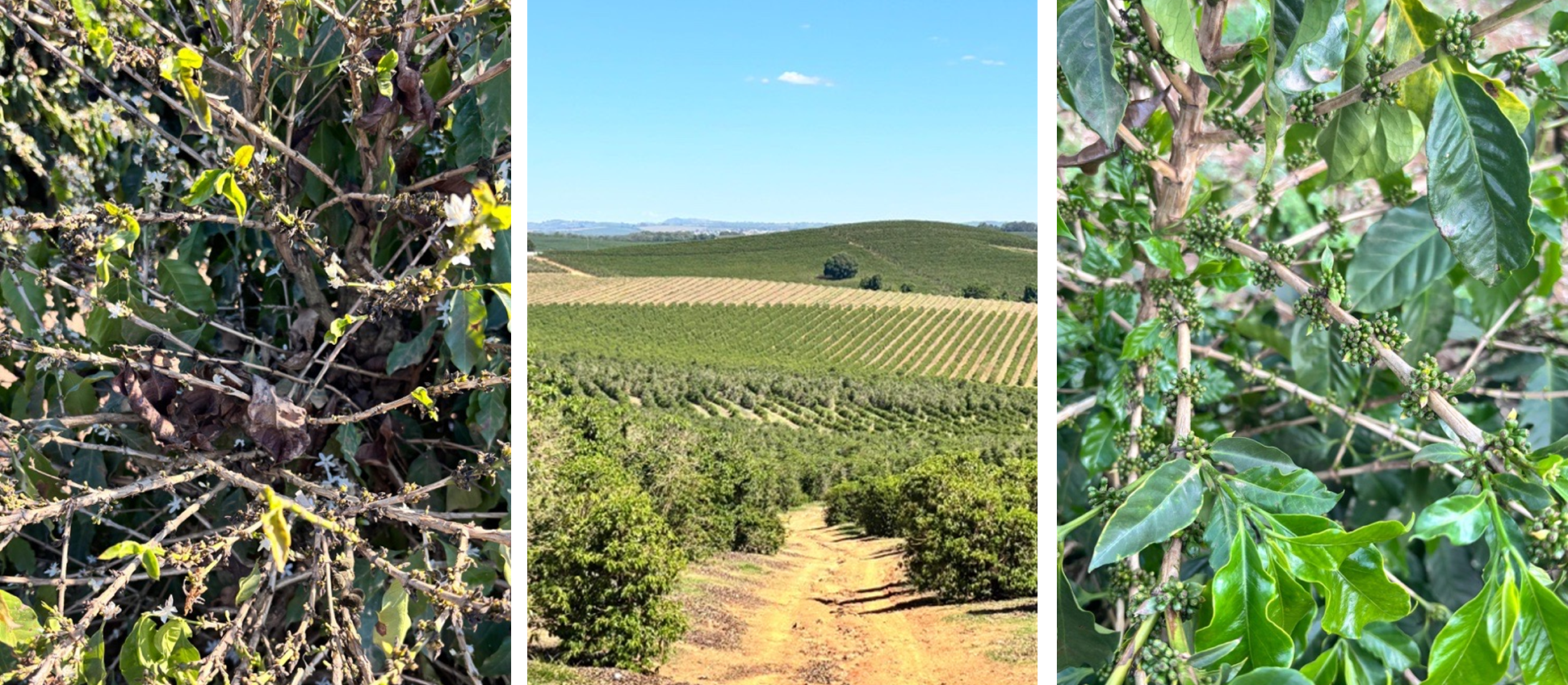
Source: StoneX.
Cerrado
The Cerrado Mineiro region is recognized both nationally and internationally for the quality of its coffees and the large number of certified farms, making it one of the country’s main production hubs.
However, year after year, the region has been penalized by adverse weather conditions. Since 2021, the Cerrado has been among the areas most affected by extreme weather events. In the 2025/26 crop, after facing a prolonged dry period combined with high temperatures in 2024, the Cerrado experienced a disappointing harvest and one of the poorest yields in bean processing.
For the 2026/27 crop, once again rainfall was insufficient and irregular, and at times high temperatures were recorded.
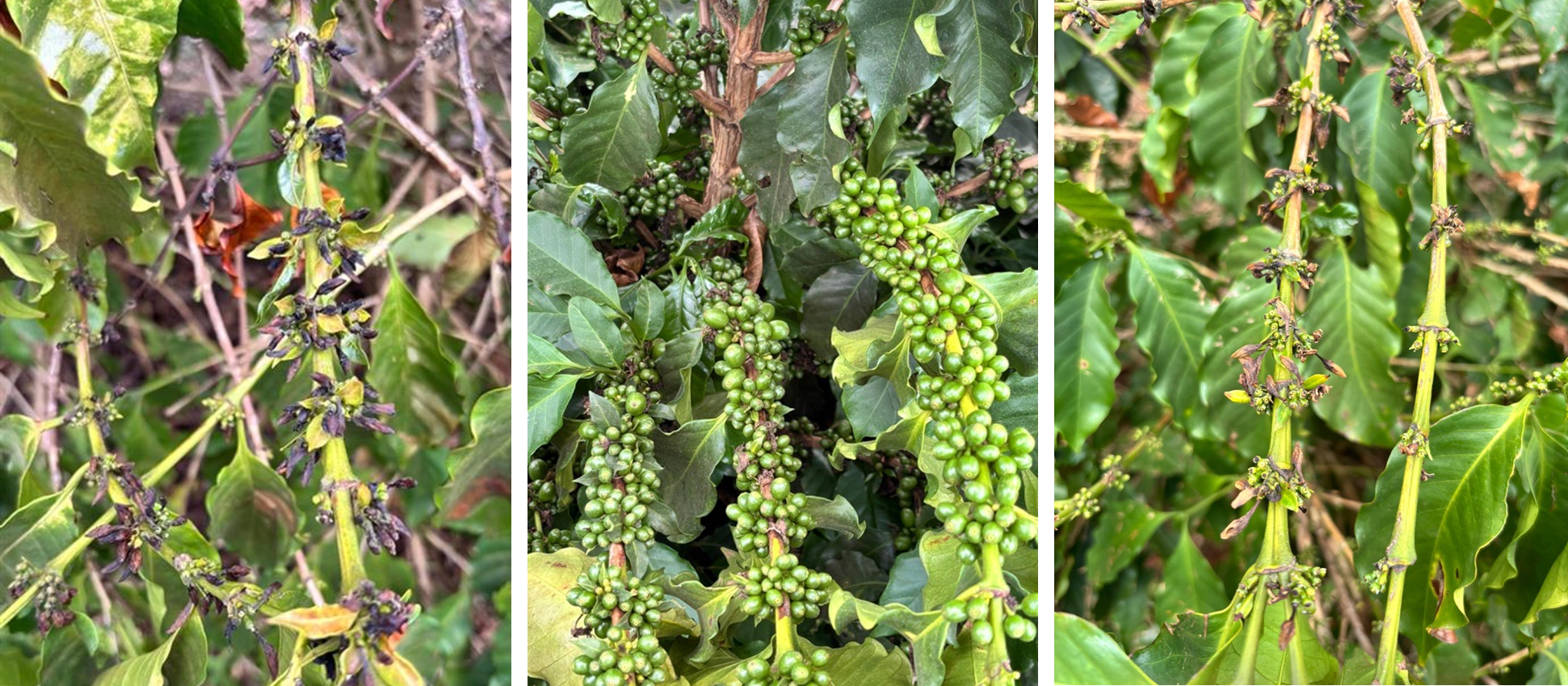
In the field, it is possible to observe flower bud burn, poor flower set, and rosettes with few fruits, indicating deficient fruit set in certain areas. These damages are more evident in plantations that are in repetitive production cycles or have poor vegetative conditions.
On the other hand, areas recovering from pruning or younger plantations, especially those under irrigation, show good vigor and fruiting, with only minor localized damage.
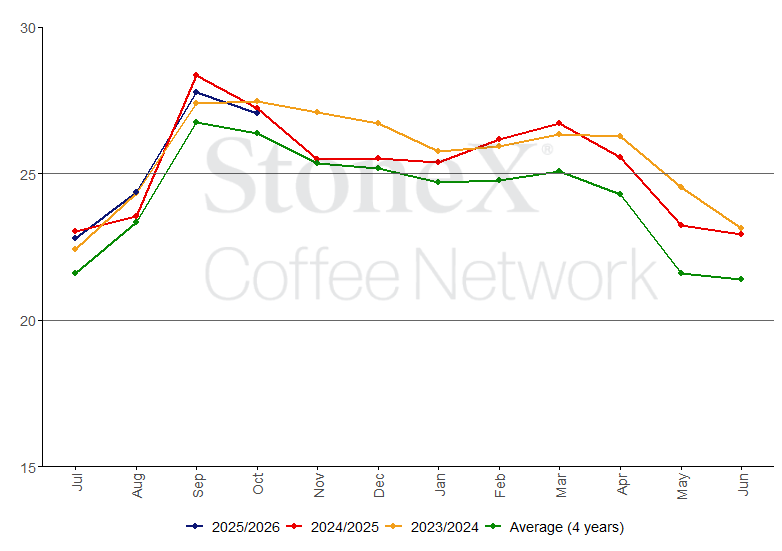
Monthly average temperature °C
Source: StoneX, with data from NOAA.
Although the Cerrado still shows potential for a good crop, performance could have been much stronger if weather conditions had been favorable.
In 2025, frost once again caused localized losses, with the Cerrado being the only region to experience significant damage. In addition to that, the prolonged dry period and rising temperatures led many more stressed plantations to experience flower abortion and flowering failures, reducing the region’s productive potential.
In summary, the 2026/27 crop in the Cerrado Mineiro is expected to be good but below what it could have been if the weather had cooperated. Production in the region was estimated at 7.4 million bags, representing a 32.1% increase.
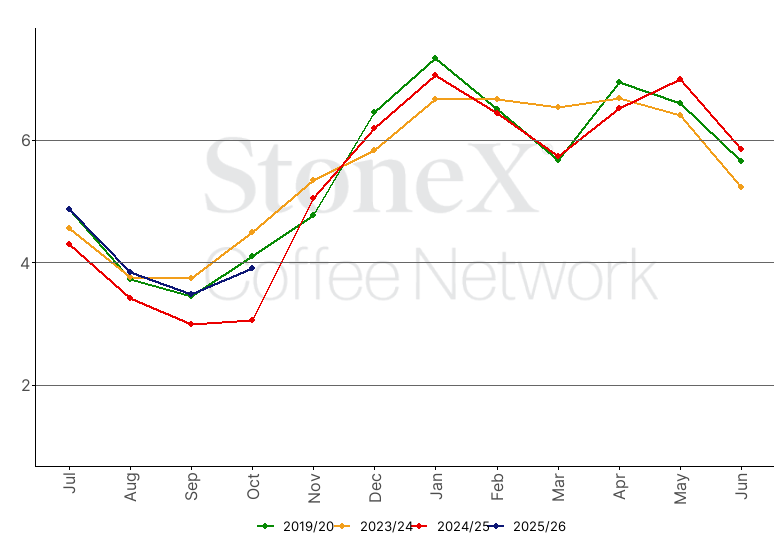
Vegetation Index (NDVI)
Source: StoneX, with data from Copernicus.
Source: StoneX.
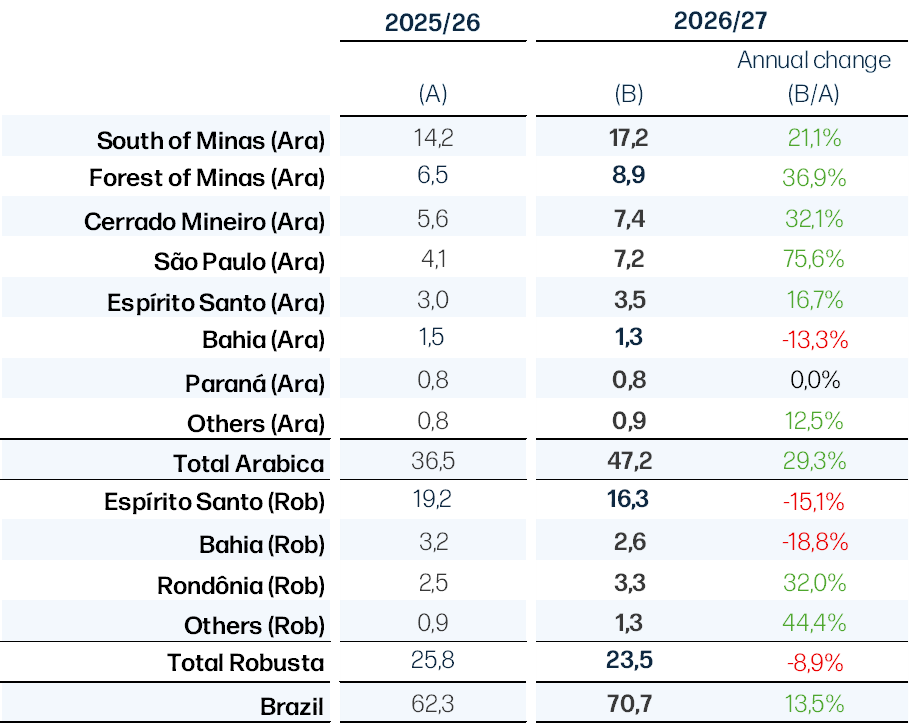
The Brazilian crop could reach 70.7 million bags in 2026/27
The 2025/26 crop was strongly affected by adverse weather conditions, which caused loss of vegetative vigor, flower abortion, and yield decline. Despite the dry and hot period recorded in September and October 2024, the return of rainfall from late October onward, with satisfactory volumes and good distribution across the main producing regions, favored crop recovery.
Even with a short dry spell during the grain-filling stage in the first quarter of 2025, the rainfall pattern up to harvest ensured excellent vegetative recovery. This recovery, combined with the light crop load and the ongoing renewal of Brazil’s coffee park with more productive genetic materials, raised expectations for the 2026/27 crop’s productive potential.
However, once again, weather conditions proved decisive and limited this potential. In arabica regions, rains arrived late in 2025, irregularly and in low volumes. In the Cerrado Mineiro, this water deficit was even more pronounced, with scattered and poorly distributed rainfall.
Regions such as Zona da Mata and southern Espírito Santo, which were coming from a low-yield biennial phase and could have seen strong productive recovery in 2026/27, were also affected by the weather, reducing their recovery potential.
Overall, all arabica-producing regions suffered some level of loss, whether due to a decline in vegetative condition, partial flower abortion, or low fruit set on rosettes. The impact varied according to crop vigor and the structural profile of the coffee park, but in many cases, the damage was enough to prevent the crop from reaching its full potential.
In recent years, the arabica coffee park has shown heterogeneity in production cycles, a result of high prices that led many producers to maintain production for more than one cycle without pruning or proper management, seeking to capitalize on profitability.
This practice, combined with unfavorable weather events and the natural aging of plants, has resulted in weaker and less responsive plantations for the 2026/27 crop. Consequently, several regions have reported an increase in the percentage of pruned and renovated areas.
In the conilon regions, the situation is different. Northern Espírito Santo and southern Bahia, which achieved very high productivity in the 2025/26 crop, recorded a decline in 2026/27.
In these areas, producers carried out structural pruning and branch management, which naturally reduces productive potential. Even so, new and renovated areas with good vegetative vigor help balance regional production.
Conversely, Rondônia is moving in the opposite direction of the other conilon regions. After a low-production cycle in 2025/26 due to climatic constraints, the state shows excellent recovery and strong productive potential for 2026/27, supported by favorable weather conditions and revitalized plantations following a low-yield year.
Source: StoneX.
Therefore, the overall outcome of the 2026/27 crop will result from the balance between the production decline in some arabica and conilon regions, offset by the expansion of planted area, strong yields in new plantations, and the expected increase in Rondônia.
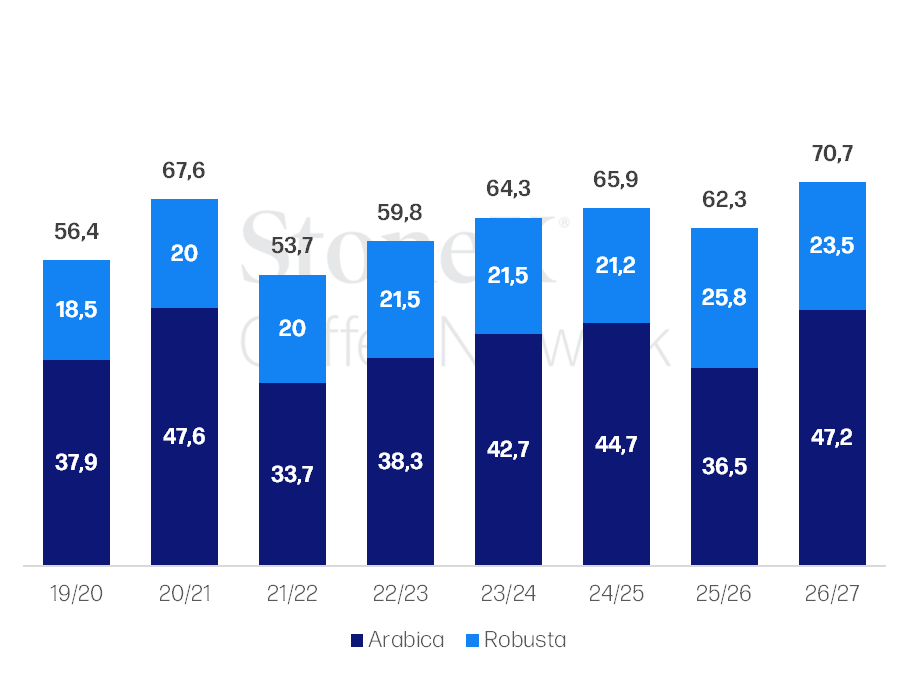
In summary, Brazil had the potential for an even larger crop, but climatic adversities and the wear of the coffee park limited this outcome. Even so, production is expected to increase in 2026/27. Brazilian coffee output is estimated at 70.7 million bags, representing a 13.5% increase, although still below the potential that could be achieved under ideal weather conditions.
Source: StoneX.
This material should be construed as market commentary and represents the opinions and viewpoints of the author, and does not reflect tailored advice associated with any specific account.
The views are current only through the date stated and are subject to change at any time based upon market or other conditions, and StoneX Group Inc. (“SGI”) disclaims any responsibility to update such views. Actual results, performance, or achievements may differ materially from those expressed or implied. Information is based on data gathered from what we believe are reliable sources. Past performance does not guarantee future results.
The StoneX Group Inc. group of companies provides financial services worldwide through its subsidiaries, including physical commodities, securities, exchange-traded and over-the-counter derivatives, risk management, global payments and foreign exchange products in accordance with applicable law in the jurisdictions where services are provided.
References to certain OTC products or swaps are made on behalf of StoneX Markets, LLC (SXM), a member of the National Futures Association (NFA) and provisionally registered with the U.S. Commodity Futures Trading Commission (CFTC) as a swap dealer. SXM’s products are designed only for individuals or firms who qualify under CFTC rules as an ‘Eligible Contract Participant’ and who have been accepted as customers of SXM.
StoneX Financial Inc. (SFI) is a member of FINRA/NFA/SIPC and registered with the MSRB. SFI is registered with the U.S. Securities and Exchange Commission (SEC) as a Broker-Dealer and with the CFTC as a Futures Commission Merchant and Commodity Trading Advisor. StoneX Financial (Canada) Inc. (SFCI) is registered in Canada and is a member of CIRO and CIPF. References to certain securities trading are made on behalf of the BD Division of SFI and are intended only for an audience of institutional clients as defined by FINRA Rule 4512(c). References to certain exchange-traded futures and options are made on behalf of the FCM Division of SFI. Wealth Management is offered through SA Stone Wealth Management Inc., member FINRA/SIPC, and SA Stone Investment Advisors Inc., an SEC-registered investment advisor, both wholly owned subsidiaries of SGI.
R.J. O’Brien & Associates, LLC (RJO) is registered with the CFTC as a Futures Commission Merchant and is a member of NFA.
StoneX Financial Ltd (SFL) is registered in England and Wales, company no. 5616586. SFL is authorized and regulated by the Financial Conduct Authority (FCA) (registration number FRN:446717) to provide services to professional and eligible customers including: arrangement, execution and, where required, clearing derivative transactions in exchange traded futures and options. SFL is also authorized to engage in the arrangement and execution of transactions in certain OTC products, certain securities trading, precious metals trading and payment services to eligible customers. SFL is authorized and regulated by the FCA under the Payment Services Regulations 2017 for the provision of payment services. SFL is a category 1 ring-dealing member of the London Metal Exchange. In addition SFL also engages in other physically delivered commodities business and other general business activities which are unregulated and not required to be authorized by the FCA.
This communication is issued in the European Economic Area by StoneX Financial Europe GmbH (SFEG). StoneX is the trade name used by STONEX GROUP INC. and all its associated entities and subsidiaries. StoneX Financial Europe GmbH (“SFEG”) is a securities trading firm registered in Germany under Company No. HRB 80844.
StoneX APAC Pte. Ltd. (“SAP”) (Co. Reg. No 200616676W) is regulated as a Dealer (PS20190001002) under the Precious Stones and Precious Metals (Prevention of Money Laundering and Terrorism Financing) Act 2019 for purposes of anti-money laundering and countering the financing of terrorism. SAP is an “Approved International Trading Company” authorized to act as a “Spot Commodity Broker” under the Commodity Trading Act.
StoneX Financial Pte Ltd (Co. Reg. No 201130598R) (“SFP”) is regulated by the Monetary Authority of Singapore and is a Capital Markets Service Licence holder (for dealing in capital market products), an Exempt Financial Adviser (for advising on investment products and issuing or promulgating analyses/ reports on investment products) and a Major Payment Institution (for domestic and cross-border money transfer services).
SFP may distribute analysis/report produced by its respective foreign affiliates within the StoneX Group of companies pursuant to an arrangement under Regulation 32C of the Financial Advisers Regulations Recipients should contact SFP at (65) 6309 1000 for any matters arising from, or in connection with, this webinar.
StoneX APAC Pte. Ltd. (“SAP”) (Co. Reg. No 200616676W) is regulated as a Dealer (PS20190001002) under the Precious Stones and Precious Metals (Prevention of Money Laundering and Terrorism Financing) Act 2019 for purposes of anti-money laundering and countering the financing of terrorism.
StoneX Financial (HK) Limited (CE No.: BCQ152) (“SHK”) is regulated by the Hong Kong Securities and Futures Commission for Dealing in Securities and Dealing in Futures Contracts.
StoneX Financial Pty Ltd (ACN 141 774 727) holds an Australian Financial Service License (AFSL: 345646) for Dealing in Securities, Exchange-Traded Derivatives Contracts, OTC Derivatives Contracts and Foreign Exchange Contracts, and is regulated by the Australian Securities and Investments Commission.
StoneX Securities Co., Ltd. (“SSJ”) (Co. Reg. No 010401047199) is regulated by the Japanese Financial Services Agency as a Type-I Financial Instruments Business Operator (Kanto Local Finance Bureau (FIBO)No.291’), is a member of the Financial Futures Association of Japan for dealing and broking FX and FX Option transactions, and is a member of the Japan Securities Dealers Association for dealing and broking stock indices and option transactions.
Trading swaps and over-the-counter derivatives, exchange-traded derivatives and options and securities involves substantial risk and is not suitable for all investors. Past performance of any futures or option is not indicative of future success. Indicators are not a trading system and are not published as a specific trade recommendation. The information herein is not a recommendation to trade nor investment research or an offer to buy or sell any derivative or security. It does not take into account your particular investment objectives, financial situation or needs and does not create a binding obligation on any of the StoneX group of companies to enter into any transaction with you. You are advised to perform an independent investigation of any transaction to determine whether any transaction is suitable for you. No part of this material may be copied, photocopied or duplicated in any form by any means or redistributed without the prior written consent of StoneX Group Inc.
The report/analysis herein is not directed to, or intended for distribution to or use by, any person or entity who is a citizen or resident of or located in any locality, state, country or other jurisdiction where such distribution, publication, availability or use would be contrary to law or regulation.
© 2026 StoneX Group Inc. All Rights Reserved.