June jobs number this morning.
Grain markets are closed tonight and tomorrow.
USDA’s May soybean crush report leaned bearish for the soy complex, especially soybean oil, as crush came in below expectations at 213.1 million bushels and April was revised lower, while soybean oil stocks were a major surprise at 2.315 billion pounds, above both expectations and the full range of trade estimates. That combination is negative because stocks built more than expected even with lower crush and lower oil production, suggesting the oil balance is not as tight as the market had been pricing. Meal was less negative, with production still above last year, but May implied domestic usage slipped below year-ago levels. Overall, the report weakens the bull case for board crush and soybean oil, while leaving the complex dependent on stronger biofuel demand, exports, or improved domestic usage to keep margins supported.
May corn-for-ethanol data continue to suggest USDA’s 2025/26 corn demand estimate is too high. USDA reported 471.8 million bushels of corn used for ethanol in May, up from April and last year, but marketing-year-to-date usage is only 4.121 billion bushels, up just 1.2% from a year ago. To reach USDA’s current 5.575-billion-bushel annual estimate, June-August usage would need to run 6.6% above last year, which looks unlikely given recent ethanol production has only been running modestly above year-ago levels and sorghum use for ethanol remains elevated, displacing some corn demand. As a result, the report points to a likely USDA reduction in old-crop corn-for-ethanol demand, potentially around 50 million bushels, which would be mildly bearish for corn balance sheets.
The White House is increasing pressure on fuel retailers to pass lower crude oil prices through to consumers more quickly, with President Trump pointing to the Freedom Fuel Network’s planned price cuts at 25 stations in the Greater Philadelphia area as an example for others to follow. The market takeaway is that falling crude prices are beginning to work their way into pump prices, but gasoline often lags crude because of refining margins, inventories, taxes, transportation costs, and retailer pricing cycles. For consumers, this could mean some relief ahead of the holiday travel period, but for energy markets it also shows the administration is focused on keeping fuel costs lower and may continue to pressure retailers and oil companies if the drop at the pump does not match the move in crude.
The USMCA risk is moving from a distant policy issue to an active trade negotiation. The U.S. did not agree to renew the agreement in its current form, but importantly, USMCA remains in force while the three countries continue talks or until any future termination process plays out. (United States Trade Representative) The market read is not an immediate trade break, but a longer period of uncertainty as the U.S. pushes to address trade deficits, rules-of-origin issues, and perceived shortcomings in the current deal, while Mexico and Canada try to preserve market access and reduce sector tariffs. For agriculture, this matters because Mexico and Canada are two of the most important outlets for U.S. corn, feed grains, meat, dairy, and processed products; keeping the agreement in force is supportive near term, but annual reviews or separate bilateral deals would keep headline risk in the market. The key takeaway is that North American trade is not collapsing today, but the path forward looks more uncertain, and that uncertainty could affect investment, livestock supply chains, grain demand, and cross-border pricing over time.
USMCA uncertainty remains in focus, but the latest comments from Mexican Economy Minister Ebrard suggest talks are still constructive rather than confrontational. USTR Greer reportedly proposed annual reviews of the agreement over the next 10 years, while Mexico is pushing to reduce U.S. Section 232 tariffs on steel and aluminum and coordinate more closely at the regional level. This headline does not point to an immediate disruption, but it does reinforce that USMCA review risk will remain a recurring market theme, particularly if future talks begin touching market access, biotech rules, sanitary standards, or retaliatory tariffs. For agriculture, the key takeaway is that the U.S.-Mexico trade relationship remains critical, especially for corn, soymeal, pork, beef, dairy, and poultry.
Fed Chair Warsh is signaling a major shift in how the Fed communicates, not necessarily an immediate change in rates. The key takeaway is that markets should expect less forward guidance, fewer hints about the next meeting, and more emphasis on incoming data, which likely means more volatility around inflation, jobs, and Fed speakers. Warsh also wants more debate inside the FOMC and is launching task forces to review Fed communications, the balance sheet, economic data interpretation, productivity, employment, and the inflation framework, with former Bank of England Governor Mervyn King expected to lead the communications review. The dot plot is staying for now, but Warsh’s broader message is that the Fed wants to move away from giving markets a roadmap. For commodities, this matters because less Fed guidance can make the dollar, Treasury yields, and risk appetite more reactive to each data point, which can spill into grains, livestock, energy, and metals through currency moves, financing costs, and broader fund positioning.
The latest U.S. data points to an economy that is still expanding, but with some cooling under the surface. Manufacturing remains in growth territory, with both S&P Global and ISM PMIs above 50, but both came in below expectations and slowed from the prior month. New orders are still healthy, which supports the idea that demand has not rolled over, while the big drop in ISM prices suggests inflation pressure in the factory sector is easing, though prices remain elevated. Employment remains the softer spot, with ISM manufacturing employment still below 50 and ADP private payrolls missing expectations at +98K. Construction spending also slowed, while Challenger job cuts fell sharply from May but remain concentrated in technology as AI continues to reshape hiring. For markets, this is a mixed macro read: growth is not breaking, inflation pressure is easing, but the labor market is soft enough to keep rate-cut expectations alive and make Friday’s payroll report more important.
OPEC+ appears set to keep adding barrels back to the market, with Reuters reporting the group is likely to raise August production targets by about 188,000 barrels per day, matching the increases already planned for June and July. This is bearish at the margin for crude because it adds supply while prices have already been easing, but the real market impact may be smaller than the headline because several producers have struggled to actually meet their quotas. For energy and agriculture, the signal is that OPEC+ is not trying to aggressively defend prices right now; if crude stays under pressure, that can ease fuel and freight costs, but it can also weigh on inflation expectations, biofuel margins, and broader commodity sentiment. The Sunday meeting still matters because confirmation of the hike could keep pressure on WTI, while any smaller increase or pause would likely be read as supportive.
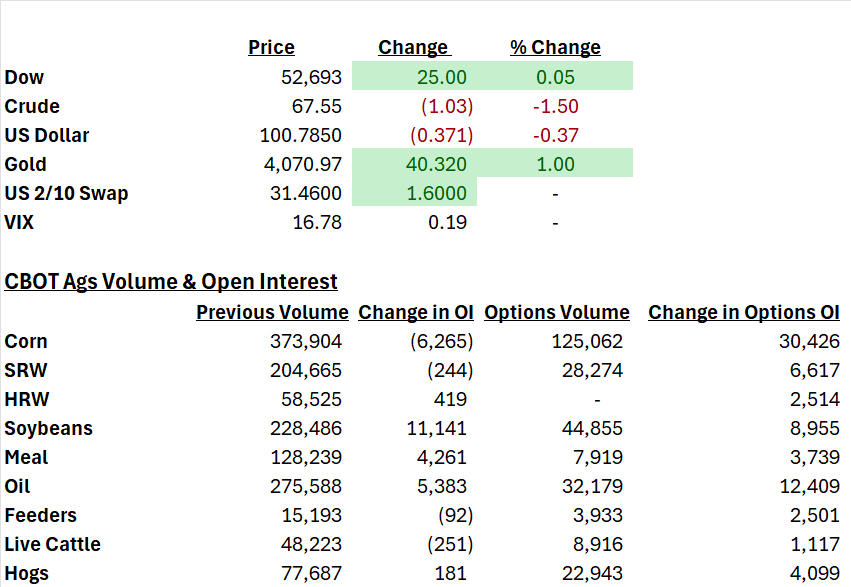
Overnight option activity
Corn
B 300 z 465 c vs s 425 p 1 ¼ db
B 300 u 455/425 ps 21 1/8 to 21 1/4
B 250 u 470/500 cs 6 1/8
Beans
B 100 x 1200 c 25 1/8
Soymeal
B 100 q 305 p 4.25 vs 307.4
Bean oil
S 750 u 70 c 1.015
Wheat
B 1100 q 650 c 4 to 4 1/8
Open interest changes
Corn
Sept 455 straddle sale and aug 405 put buys were closing. March 475/550 call spread buy, oct 475/500 call spread buy, short aug 460 call sale, sept 400 put buy, dec 425/350 put spread sale, dec 450/550 call spread sale and oct 450/500 call spread buys were new.
Beans
Nov 1300 call buy was closing. Sept 1100 put buy, aug 1100 put sale and aug 1150/1190 call spread buy was new.
Bean oil
Sept 70 call buy, march 6350/50 put spread sale, march 68/90 call spread sale and sept 65p/67c strangle sales were new. Aug 65 put sale and aug 7250 call sales were closing.
Wheat
Aug 650 call buy was closing.
Kc wheat
Sept 650/700 call spread buy was new
Lean hogs
Aug 88 put sale and feb 76p/82c strangle sales were closing. Aug 96/90 put spread sale and aug 99/105 call spread sales were new.
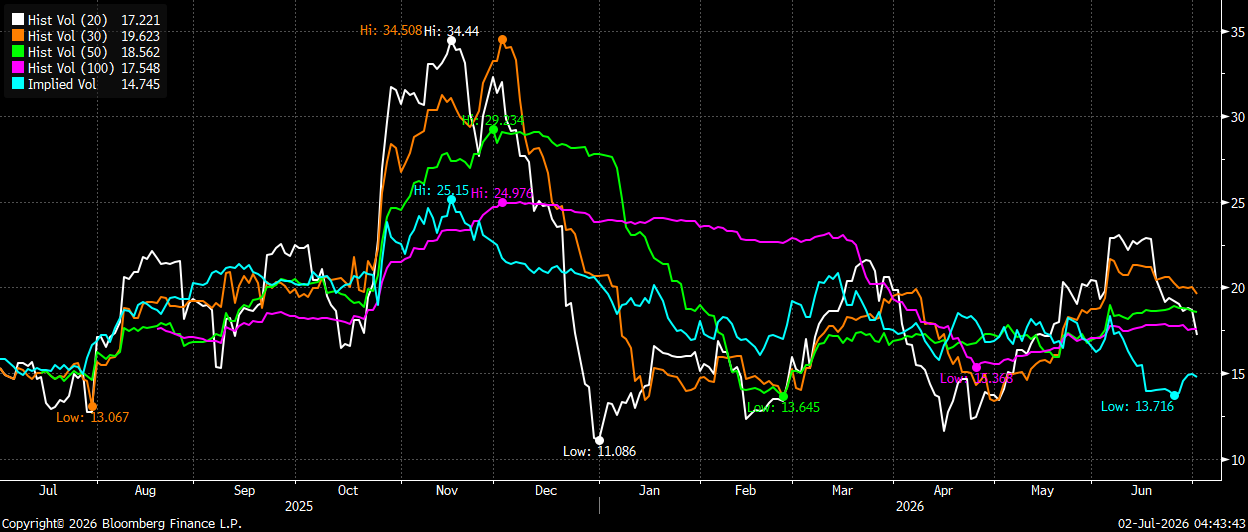
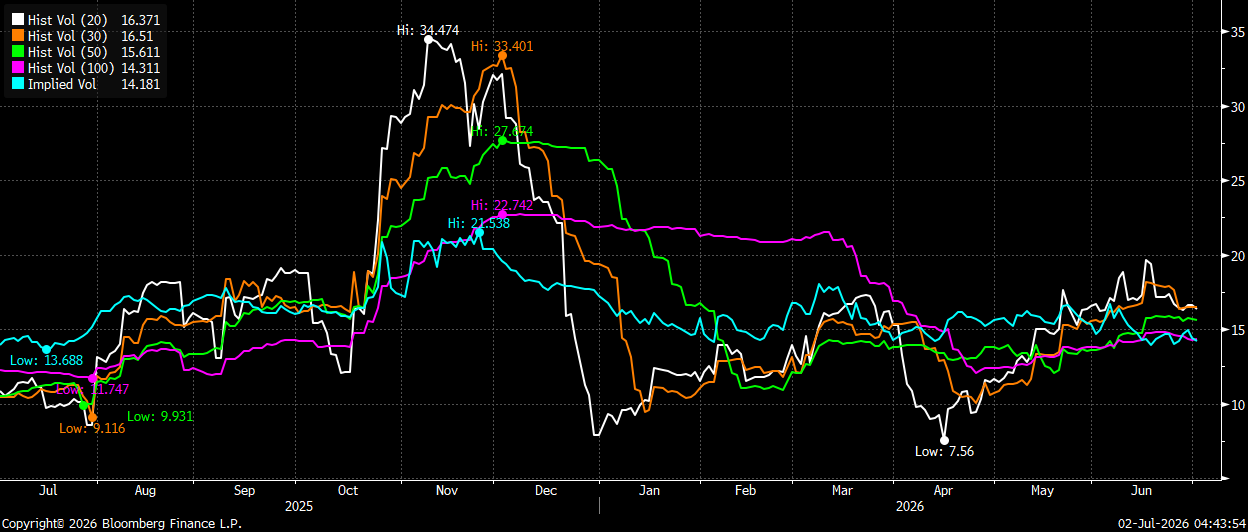
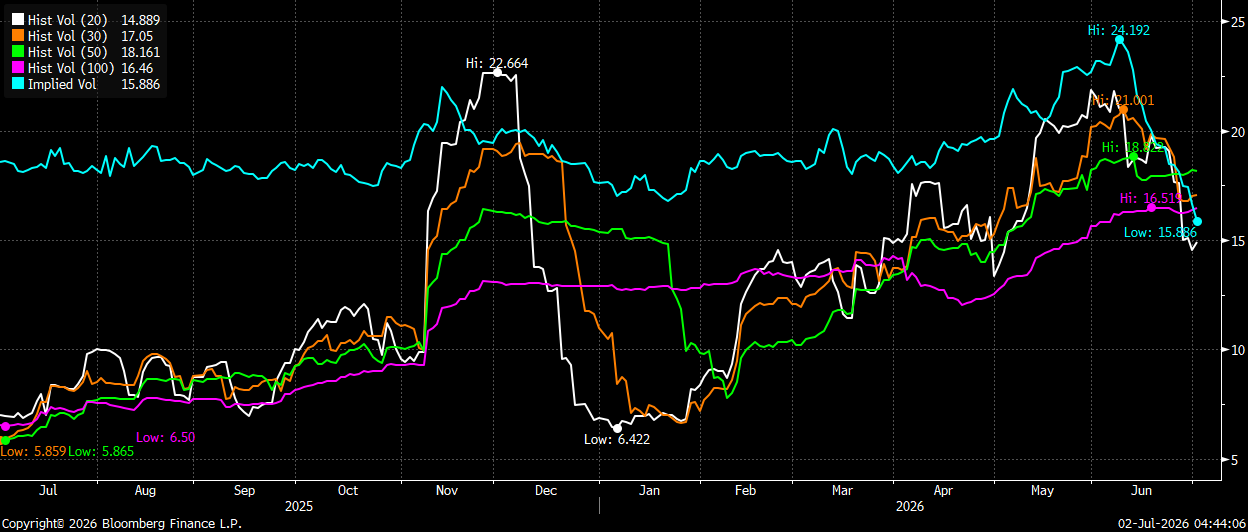
Cvol
Ags 20.85% down .20%
Corn 28.05% down .10%
Beans 16.58% down .43%
Soymeal 19.56% down .04%
Bean oil 25.69% down .34%
Wheat 28.17% up 1.19%
Feeder cattle 15.64% down .21%
Live cattle 15.58% down .25%
Lean hogs 21.11% down .23%
Class 3 milk 20.52% up .16%
Corn
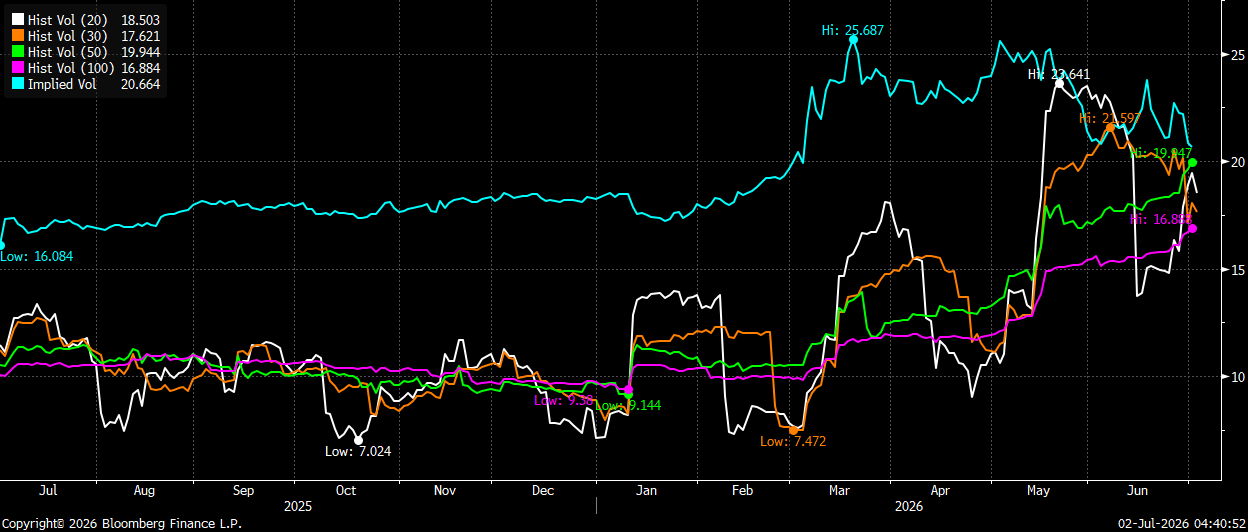
Beans
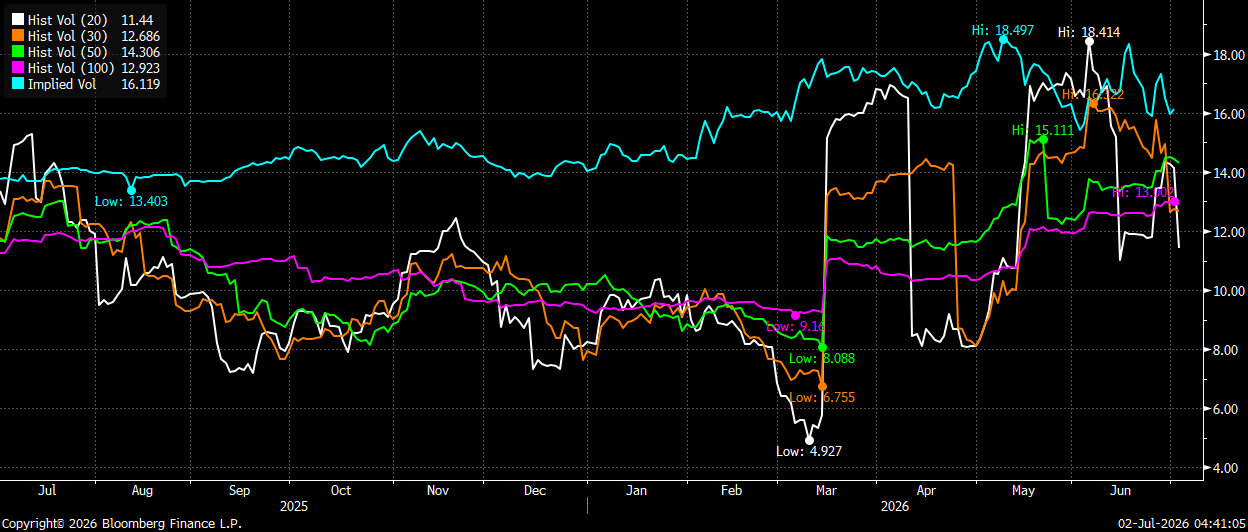
Soymeal
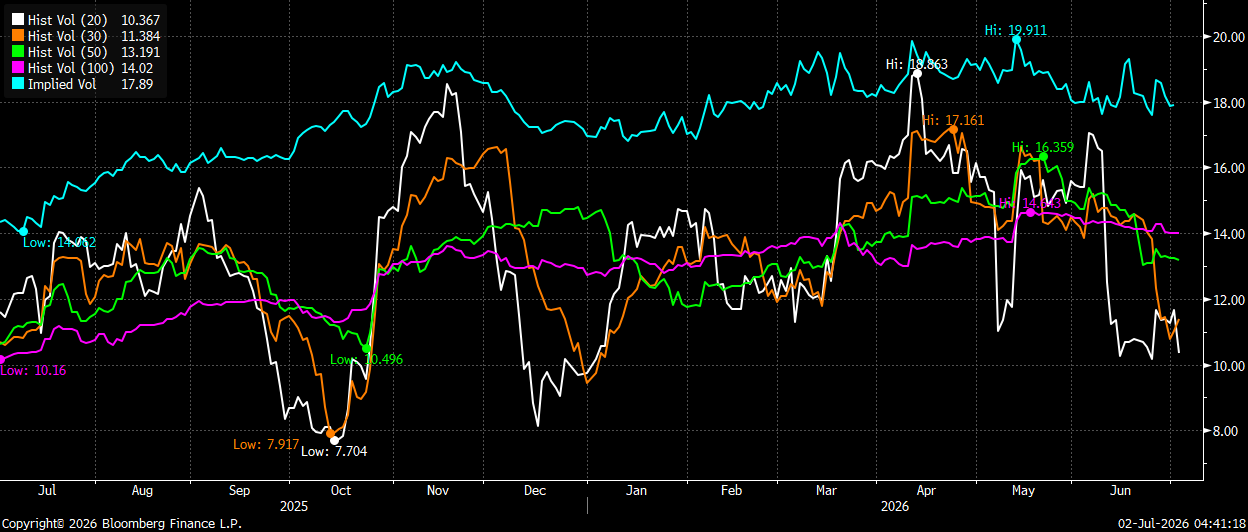
Bean oil
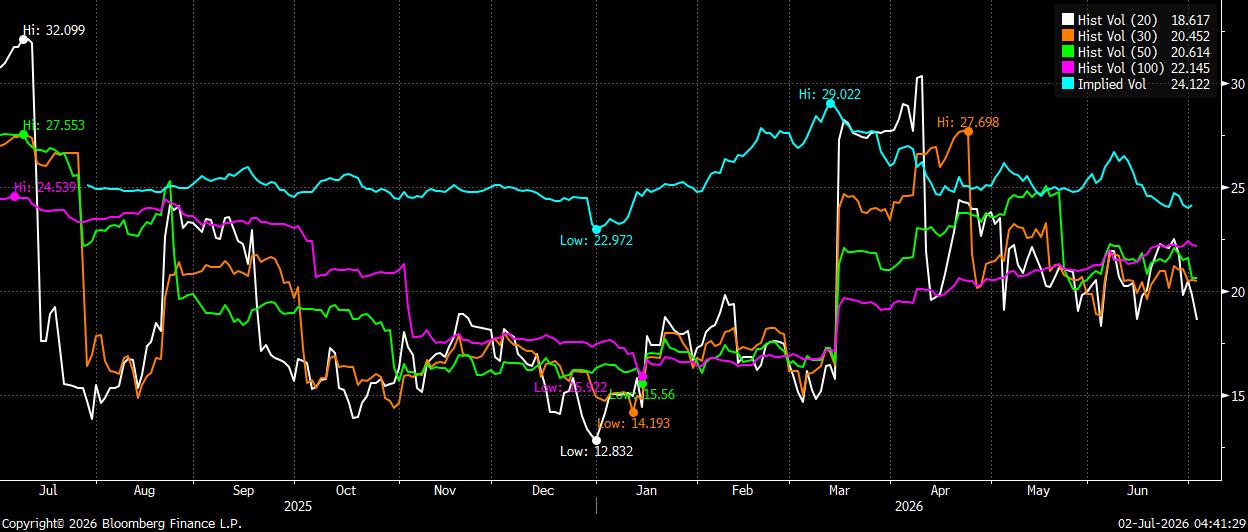
Wheat
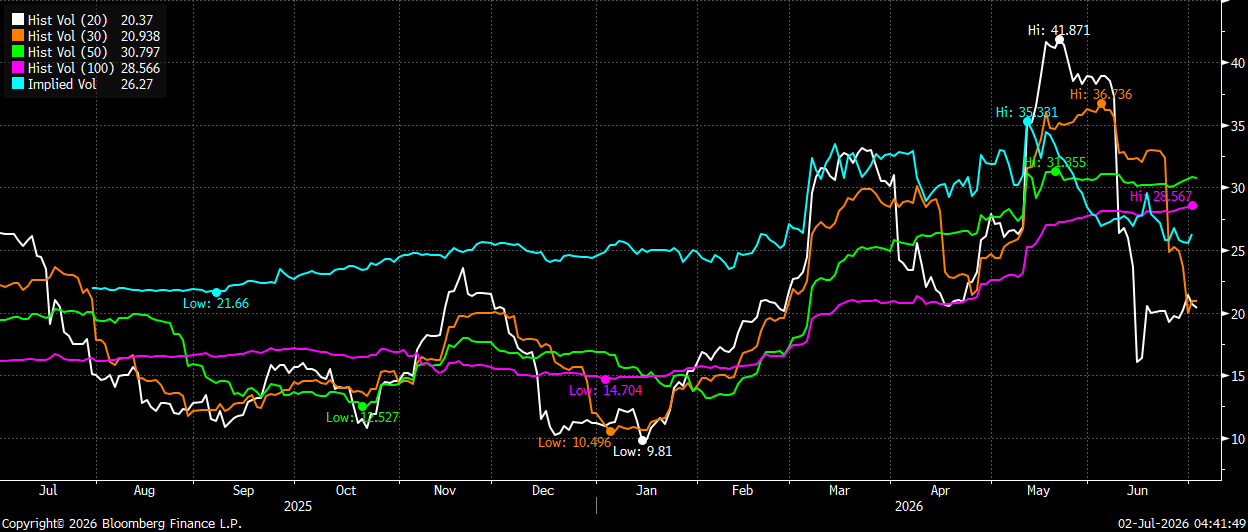
Kc wheat
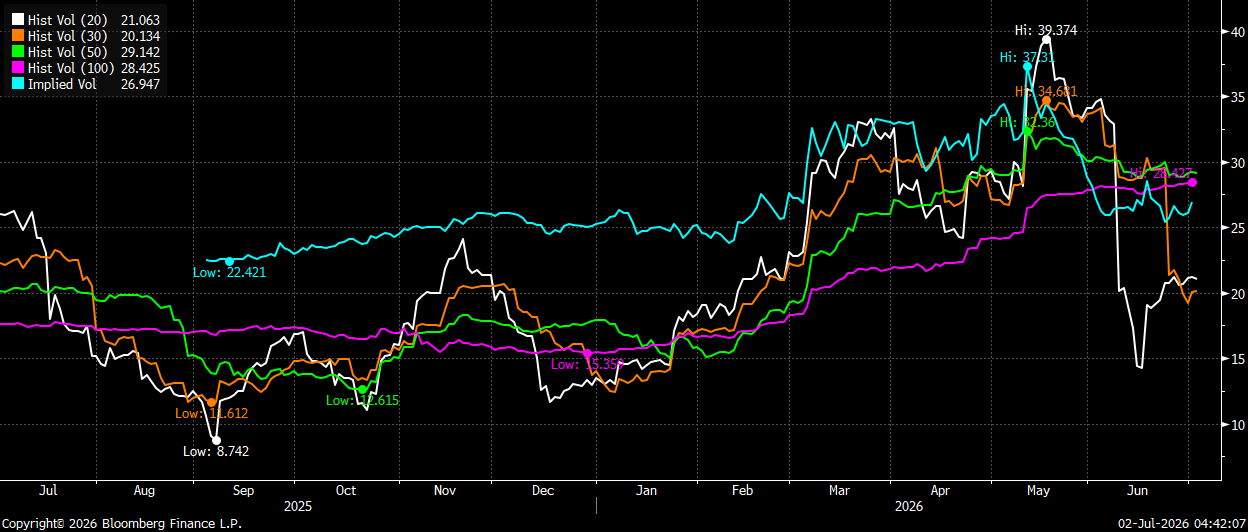
Miax wheat
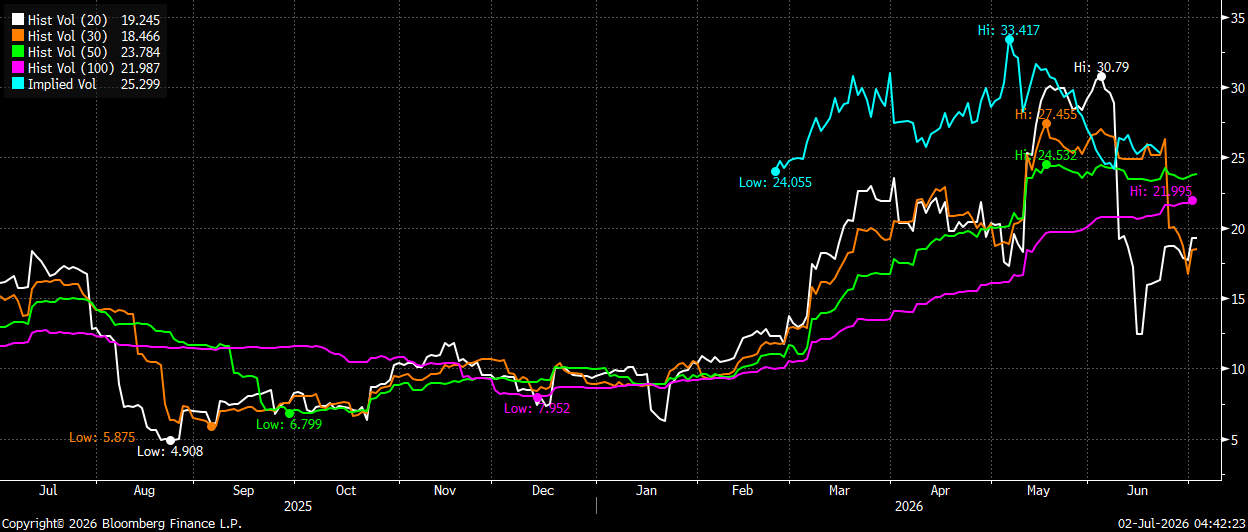
Oats
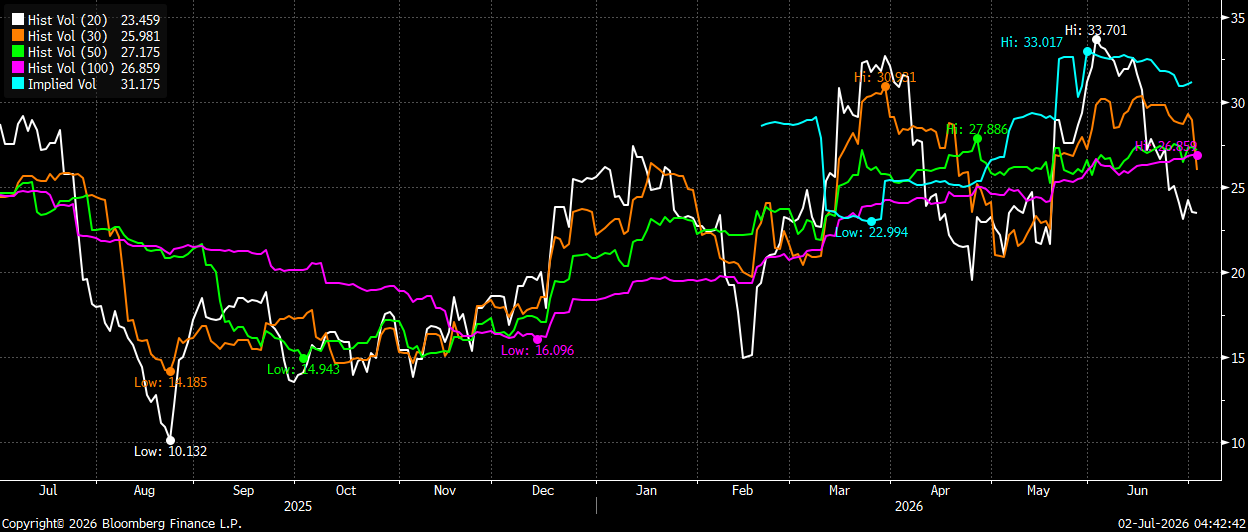
Rough rice
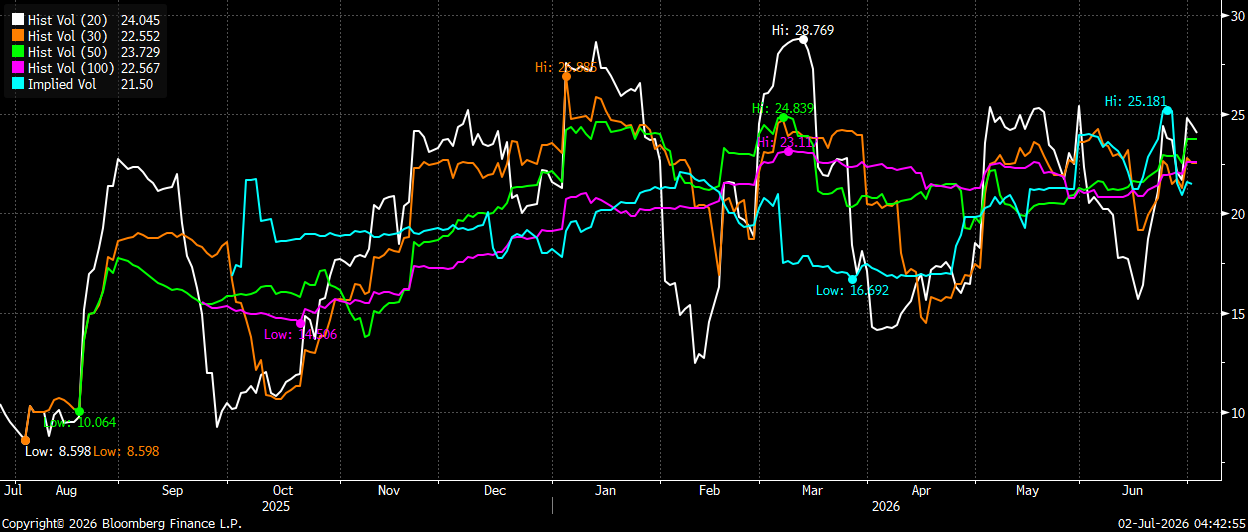
Cotton
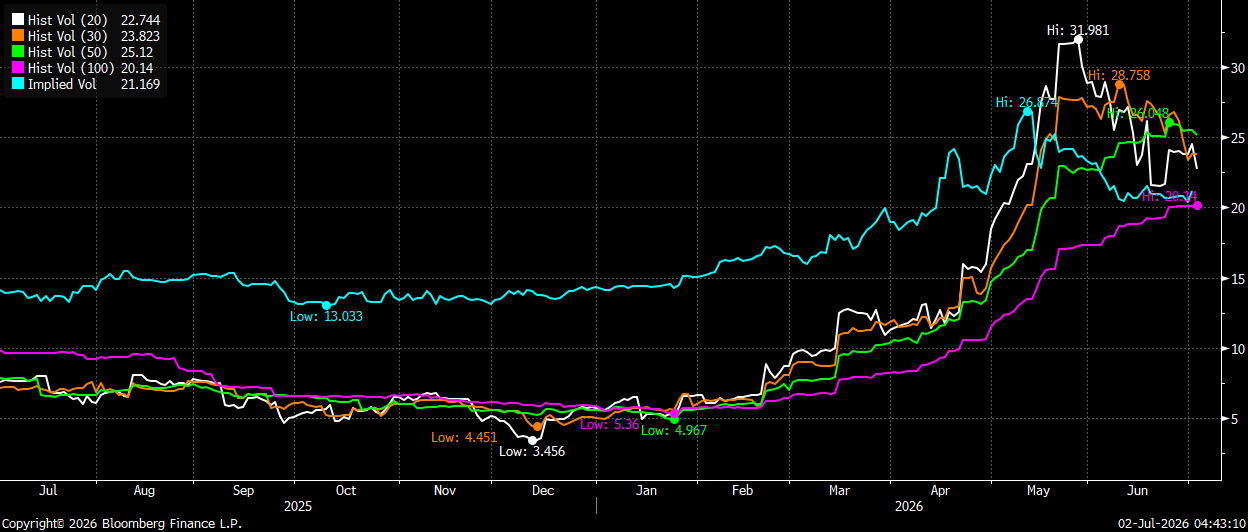
Canola
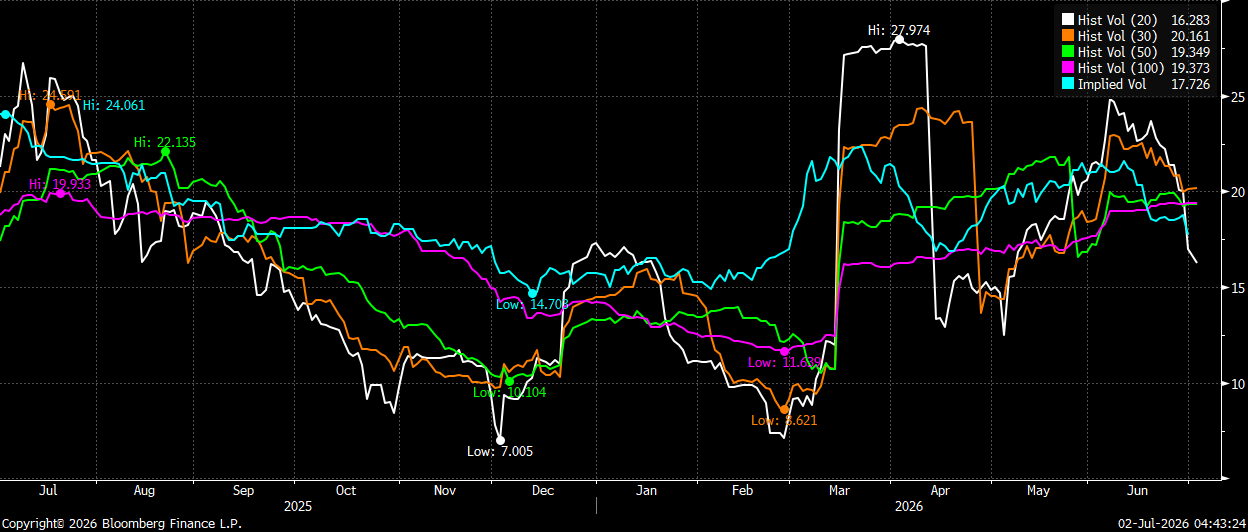
Feeder cattle
Live cattle
Lean hogs
This material should be construed as the solicitation of an account, order, and/or services and represents the opinions and viewpoints of the individual authors or presenters. It does not constitute an individualized recommendation or take into account the particular trading objectives, financial situations, or needs of individual customers.
The views are current only through the date stated and are subject to change at any time based upon market or other conditions, and StoneX Group Inc. (“SGI”) disclaims any responsibility to update such views. Actual results, performance, or achievements may differ materially from those expressed or implied. Information is based on data gathered from what we believe are reliable sources. Past performance does not guarantee future results.
The StoneX Group Inc. group of companies provides financial services worldwide through its subsidiaries, including physical commodities, securities, exchange-traded and over-the-counter derivatives, risk management, global payments and foreign exchange products in accordance with applicable law in the jurisdictions where services are provided.
References to certain OTC products or swaps are made on behalf of StoneX Markets, LLC (SXM), a member of the National Futures Association (NFA) and provisionally registered with the U.S. Commodity Futures Trading Commission (CFTC) as a swap dealer. SXM’s products are designed only for individuals or firms who qualify under CFTC rules as an ‘Eligible Contract Participant’ and who have been accepted as customers of SXM.
StoneX Financial Inc. (SFI) is a member of FINRA/NFA/SIPC and registered with the MSRB. SFI is registered with the U.S. Securities and Exchange Commission (SEC) as a Broker-Dealer and with the CFTC as a Futures Commission Merchant and Commodity Trading Advisor. StoneX Financial (Canada) Inc. (SFCI) is registered in Canada and is a member of CIRO and CIPF. References to certain securities trading are made on behalf of the BD Division of SFI and are intended only for an audience of institutional clients as defined by FINRA Rule 4512(c). References to certain exchange-traded futures and options are made on behalf of the FCM Division of SFI. Wealth Management is offered through SA Stone Wealth Management Inc., member FINRA/SIPC, and SA Stone Investment Advisors Inc., an SEC-registered investment advisor, both wholly owned subsidiaries of SGI.
R.J. O’Brien & Associates, LLC (RJO) is registered with the CFTC as a Futures Commission Merchant and is a member of NFA.
StoneX Financial Ltd (SFL) is registered in England and Wales, company no. 5616586. SFL is authorized and regulated by the Financial Conduct Authority (FCA) (registration number FRN:446717) to provide services to professional and eligible customers including: arrangement, execution and, where required, clearing derivative transactions in exchange traded futures and options. SFL is also authorized to engage in the arrangement and execution of transactions in certain OTC products, certain securities trading, precious metals trading and payment services to eligible customers. SFL is authorized and regulated by the FCA under the Payment Services Regulations 2017 for the provision of payment services. SFL is a category 1 ring-dealing member of the London Metal Exchange. In addition SFL also engages in other physically delivered commodities business and other general business activities which are unregulated and not required to be authorized by the FCA.
This communication is issued in the European Economic Area by StoneX Financial Europe GmbH (SFEG). StoneX is the trade name used by STONEX GROUP INC. and all its associated entities and subsidiaries. StoneX Financial Europe GmbH (“SFEG”) is a securities trading firm registered in Germany under Company No. HRB 80844.
StoneX Financial Pte Ltd (Co. Reg. No 201130598R) (“SFP”) is regulated by the Monetary Authority of Singapore and is a Capital Markets Service Licence holder (for dealing in capital market products), an Exempt Financial Adviser (for advising on investment products and issuing or promulgating analyses/ reports on investment products) and a Major Payment Institution (for domestic and cross-border money transfer services).
SFP may distribute analysis/report produced by its respective foreign affiliates within the StoneX Group of companies pursuant to an arrangement under Regulation 32C of the Financial Advisers Regulations Recipients should contact SFP at (65) 6309 1000 for any matters arising from, or in connection with, this webinar.
StoneX APAC Pte. Ltd. (“SAP”) (Co. Reg. No 200616676W) is regulated as a Dealer (PS20190001002) under the Precious Stones and Precious Metals (Prevention of Money Laundering and Terrorism Financing) Act 2019 for purposes of anti-money laundering and countering the financing of terrorism.
StoneX Financial (HK) Limited (CE No.: BCQ152) (“SHK”) is regulated by the Hong Kong Securities and Futures Commission for Dealing in Securities and Dealing in Futures Contracts.
StoneX Financial Pty Ltd (ACN 141 774 727) holds an Australian Financial Service License (AFSL: 345646) for Dealing in Securities, Exchange-Traded Derivatives Contracts, OTC Derivatives Contracts and Foreign Exchange Contracts, and is regulated by the Australian Securities and Investments Commission.
StoneX Securities Co., Ltd. (“SSJ”) (Co. Reg. No 010401047199) is regulated by the Japanese Financial Services Agency as a Type-I Financial Instruments Business Operator (Kanto Local Finance Bureau (FIBO)No.291’), is a member of the Financial Futures Association of Japan for dealing and broking FX and FX Option transactions, and is a member of the Japan Securities Dealers Association for dealing and broking stock indices and option transactions.
Trading swaps and over-the-counter derivatives, exchange-traded derivatives and options and securities involves substantial risk and is not suitable for all investors. Past performance of any futures or option is not indicative of future success. Indicators are not a trading system and are not published as a specific trade recommendation. The information herein is not a recommendation to trade nor investment research or an offer to buy or sell any derivative or security. It does not take into account your particular investment objectives, financial situation or needs and does not create a binding obligation on any of the StoneX group of companies to enter into any transaction with you. You are advised to perform an independent investigation of any transaction to determine whether any transaction is suitable for you. No part of this material may be copied, photocopied or duplicated in any form by any means or redistributed without the prior written consent of StoneX Group Inc.
The report/analysis herein is not directed to, or intended for distribution to or use by, any person or entity who is a citizen or resident of or located in any locality, state, country or other jurisdiction where such distribution, publication, availability or use would be contrary to law or regulation.
© 2026 StoneX Group Inc. All Rights Reserved.