
Daily Coffee Report 8/11/26
Daily coffee report

StoneX Coffee Team
- Coffee
Quarterly Commodities Outlook is available for free now. Download your report →
By: Fernando Maximiliano, Market Intelligence Specialist


A sequence of adverse weather events in Brazil beginning in the second half of 2020 was key to support one of the most intense movements in coffee prices over the last decade. Early in the second half of 2020, a La Niña event caused rains to arrive late to the coffee belt, which negatively affected flowering at the time.
Even with a later return of rainfall at the end of 2020, conditions did not remain favorable in the first half of 2021, when the dry weather was critical for 2021/22 production and for the potential in 2022/23. Adding to this scenario were frost events, which introduced further damage and put in check the potential for production in the next season. In the second half of the year, due to La Niña, rains were delayed again, with impacts on Brazilian flowering. Faced with this scenario, it became key to understand how these events will impact potential for 2022/23.
As already mentioned in other studies, coffee market data lack transparency, which raises much uncertainty and, consequently, generates a good deal of volatility. A clear example are Brazilian production estimates published so far: from the lowest available to date from Conab to the largest from companies in the industry, there is a difference of over 11 million bags, showing how these numbers are uncertain.
StoneX has conducted impartial studies on Brazilian coffee production. In order to be more transparent in terms of production expectations in the country, we held another Crop Tour in producing regions of Brazil. In December and January, our team visited coffee producers in more than 100 cities spread out over the states of Minas Gerais, São Paulo, Espírito Santo, Bahia and Rondônia.
In this study, we present the expectations for Brazilian coffee production in these regions and estimates for the 2022/23 crop. This work is the result of StoneX’s local and global coffee team efforts with the Brazilian Market Intelligence team.
Enjoy your read.
Best regards,
Fernando Maximiliano
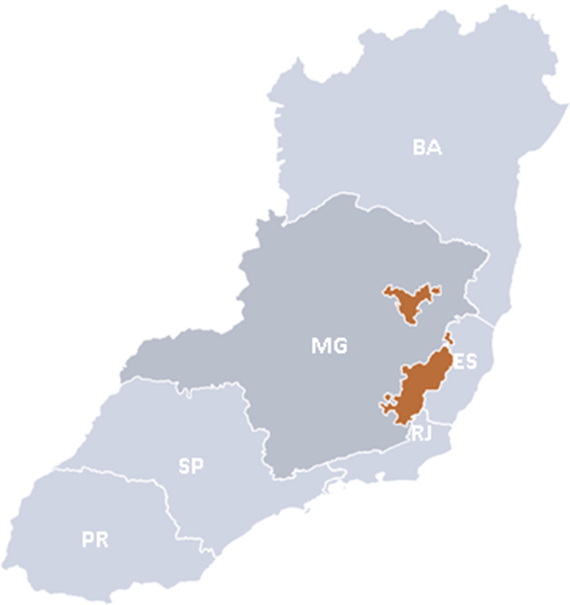
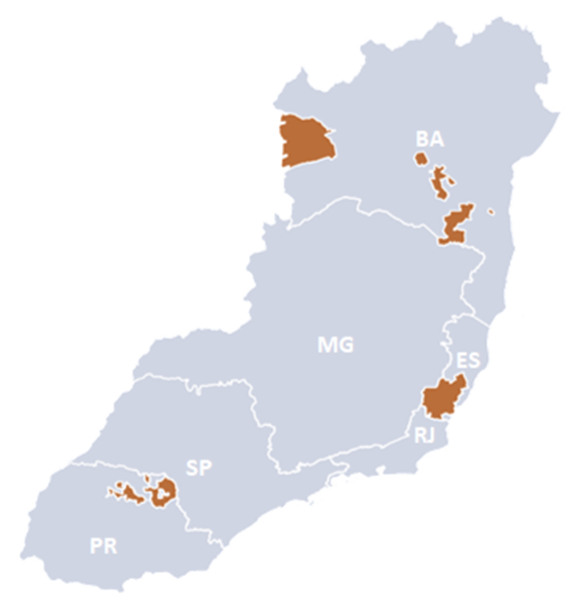
To conduct the studies presented in this report, in November 2021, the team visited regions producing Robusta, going over coffee crops in Rondônia, south of Bahia and Espírito Santo. In the second half of the trip, in January 2022, we visited Arabica coffee areas in the Cerrado, southern Minas Gerais, Mogiana and Matas de Minas.
The farms, or samples, were randomly selected in the regions. In terms of geolocation, the roads traveled were collected and stored by a GPS device, as well as the coordinates of each visited sample. These samples will be visited after harvest to maintain historical data and study consistency.
From the agronomic point of view, data were collected regarding growing conditions, such as water stress level, soil moisture, pest and disease attack, spacing between plants and rows, average estimated fruit volume per coffee tree and estimated yield after processing, in order to calculate productivity.
In addition to the data collected in the field, StoneX partner companies and cooperatives from the producing regions were also consulted. StoneX partners were instrumental in determining production in regions that were not visited.
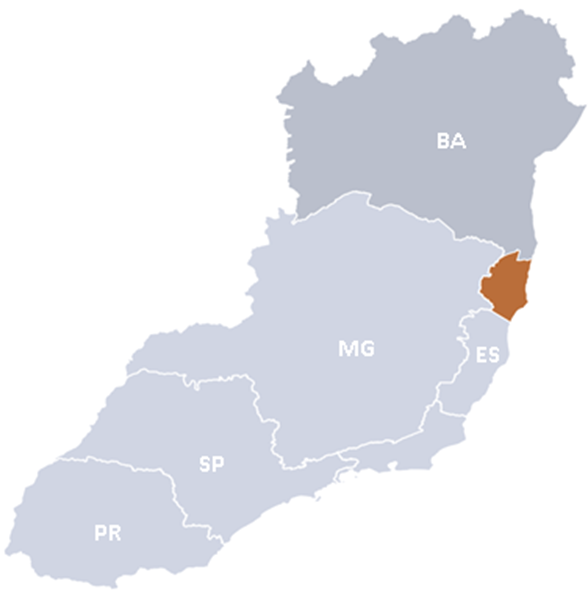
Similarly to what was observed in 2021, Robusta coffee areas in this region presented good phytosanitary conditions, an indication that the weather favored development. In addition to the favorable weather, an adequate level of plant management was noted. In terms of pests and diseases, the team did not find areas with elevated levels of infestation. The southern region of Bahia faced adverse situations with excessive rainfall, however, there was no widespread impact.
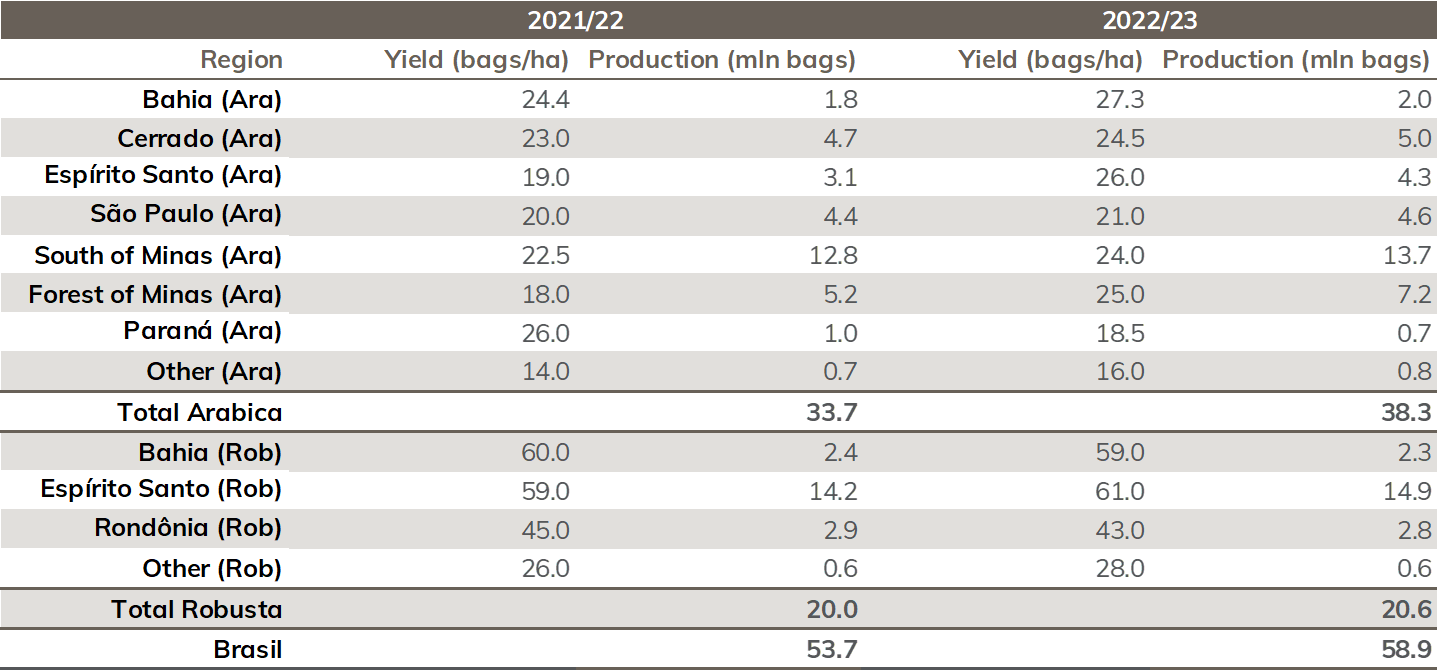
For 2022/23, yields are estimated to reach an average of 59 bags per hectare in the region, with total production of 2.3 million bags, 1.7% below production in 2021/22 (2.35 million bags).
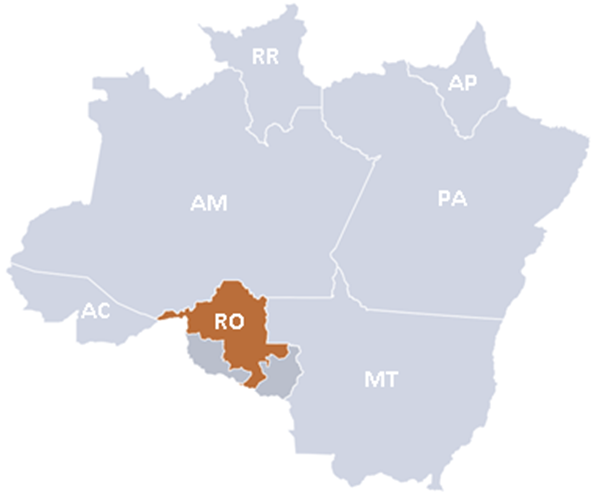
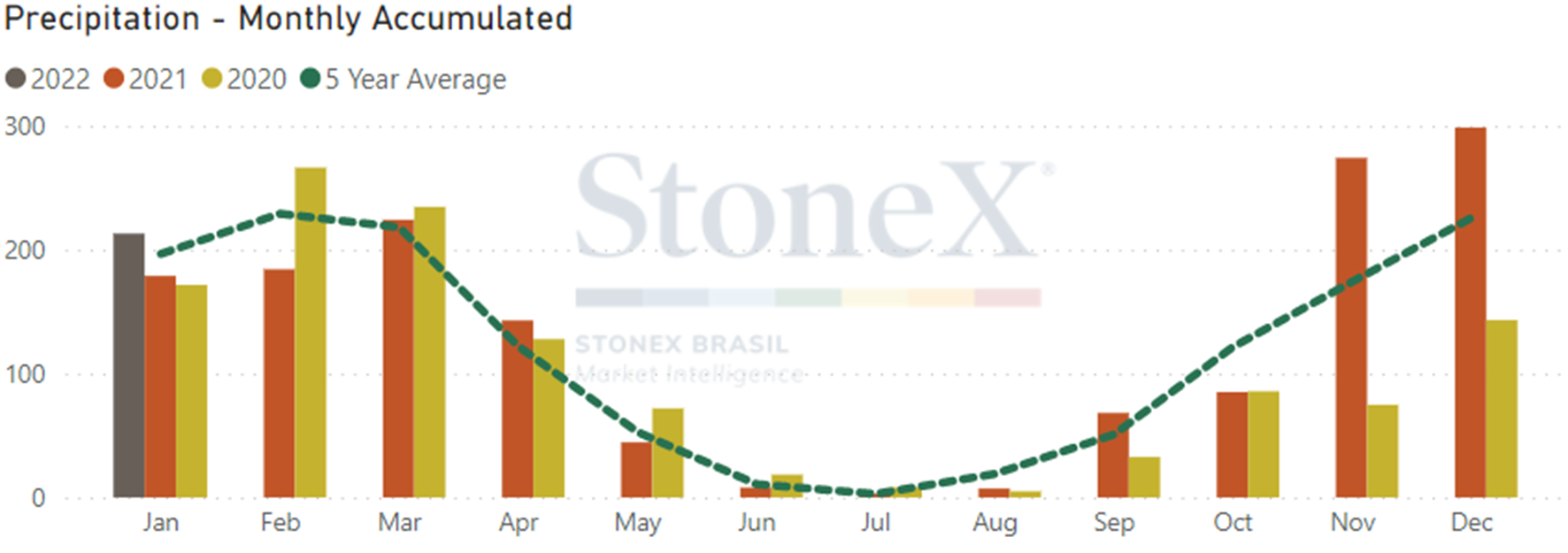
Robusta coffee crops in this state faced similar conditions to those observed in the previous season. Most of the coffee areas visited in this region presented good technical conditions and a low level of pest and disease infestation.
Production in the state is expected to reach 2.8 million bags, 4.4% below the previous year, with an estimated yield of 43 bags/ha.
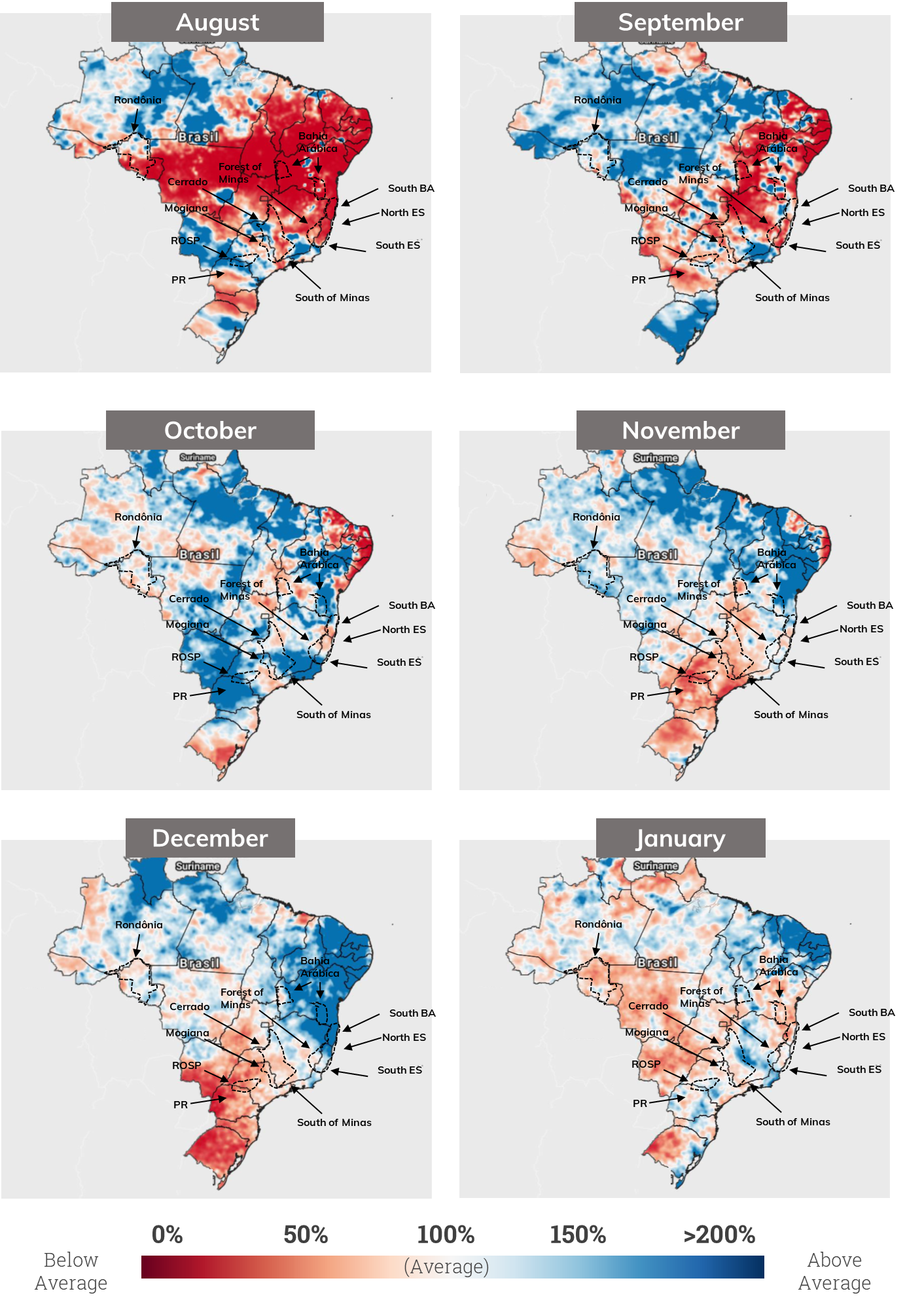
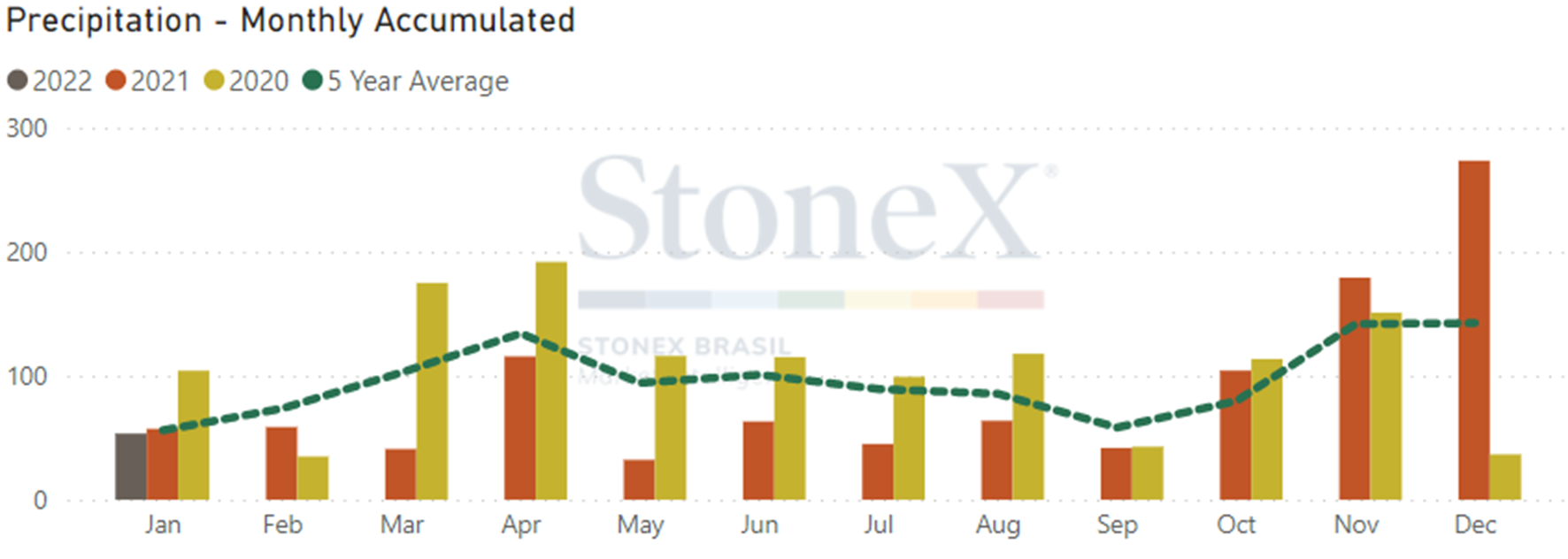
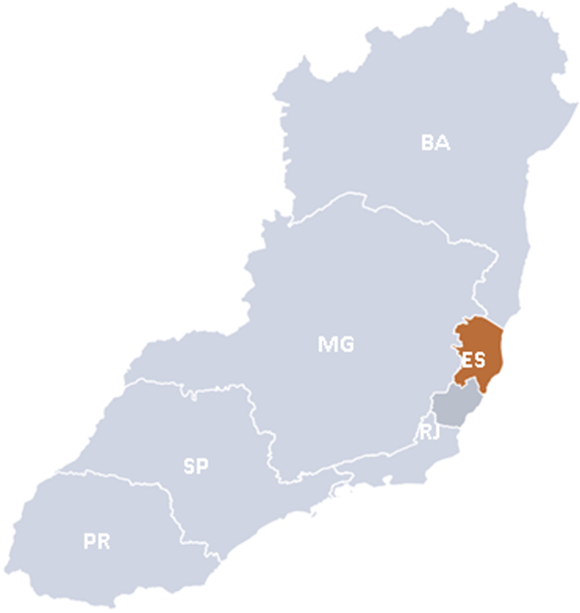
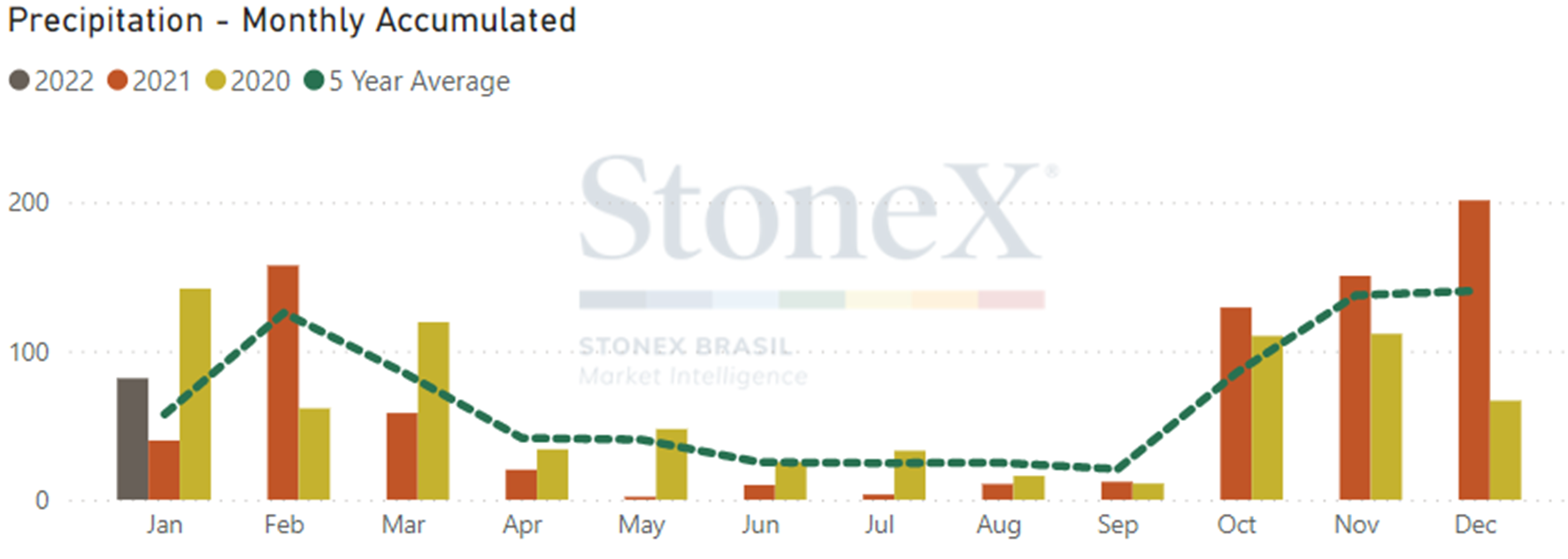
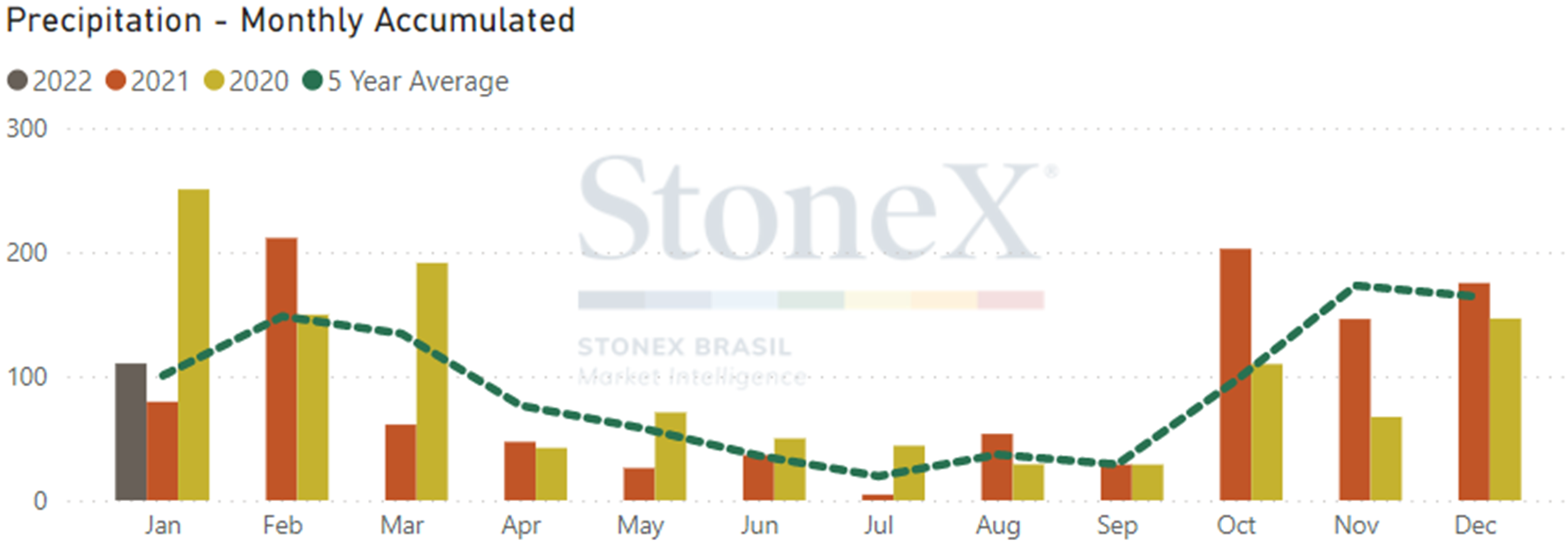
Due to the favorable weather, crops in Espírito Santo presented adequate agronomic conditions. As observed in rain anomaly maps, the region received above-average volumes for several months in 2021, which contributed to an expectation of increased production in the state. In terms of water availability, levels in dams and reservoirs were normal, which would allow irrigation in the case of a brief period of drought.
StoneX estimates point to production of 14.9 million bags in the state, 730,000 bags (+5.2%) above the previous year, with an estimated yield of 61 bags/ha.
Different from other regions in the state of Minas Gerais, Matas de Minas benefited more from the weather in early 2021, especially in February, when volumes were significantly above the historical average. Although still not ideal, a milder weather in relation to other areas of the state ensured a more satisfactory condition for crops. However, it is important to point out that, in some areas, production was below the expected level and there were signs of damage from dry conditions, which also led to some reduction in the region’s productive potential.
Production here was estimated at 7.2 million bags, 38.9% more than in the previous crop, with yields at approximately 25 bags per hectare. Considering that in a year of favorable weather and high productivity, production in Matas de Minas could reach a little less than 8 million bags, the estimated volume this year is 8.6% below the productive potential.
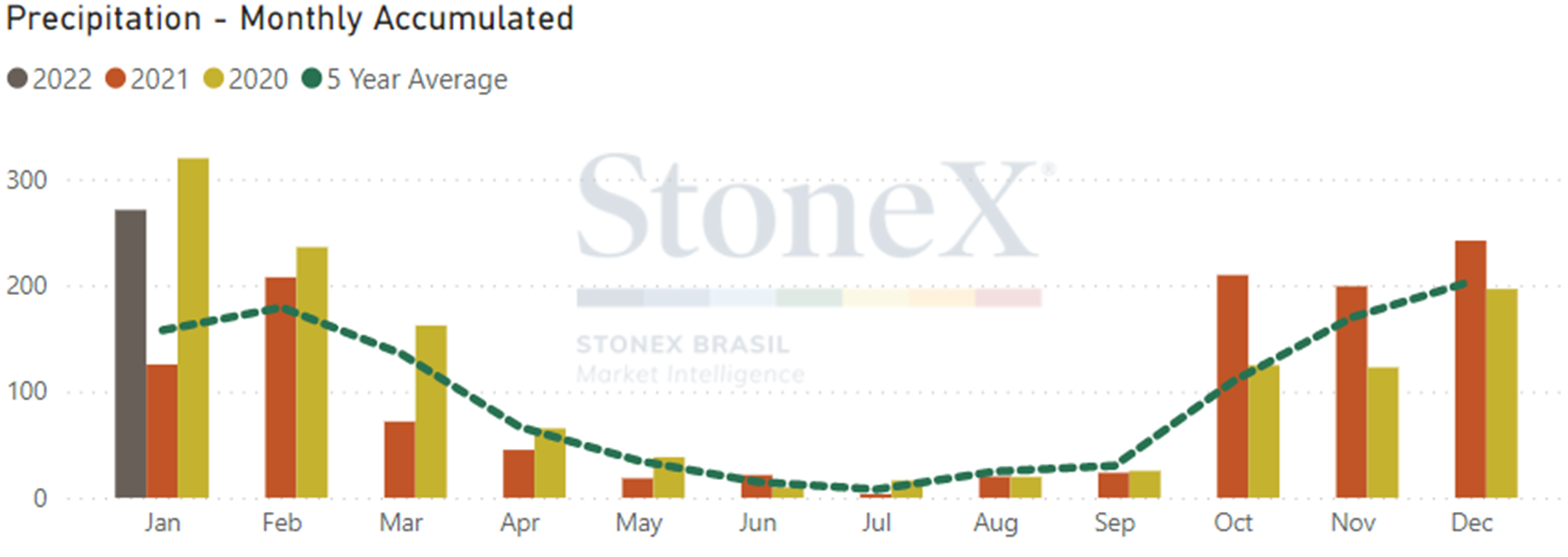
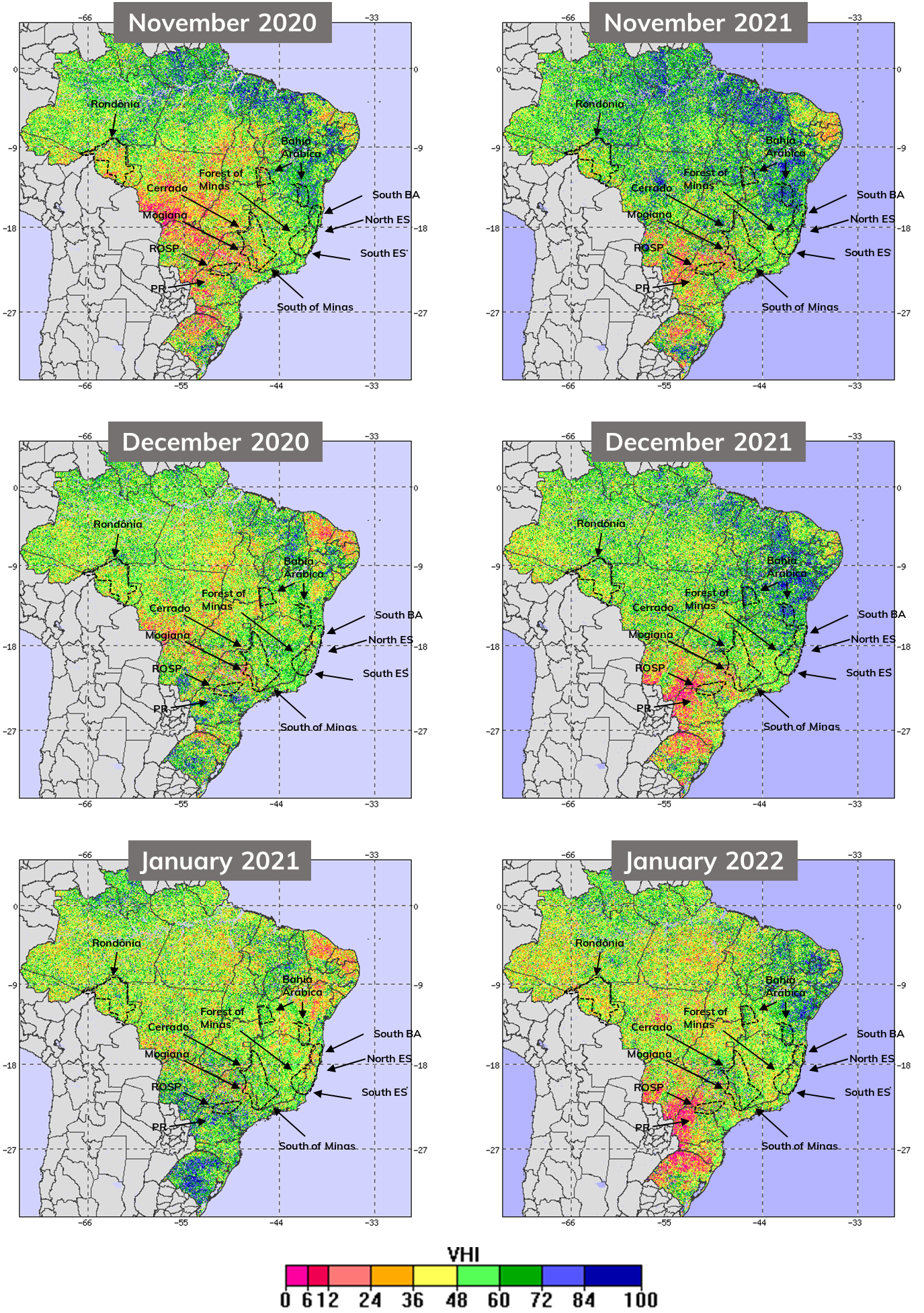
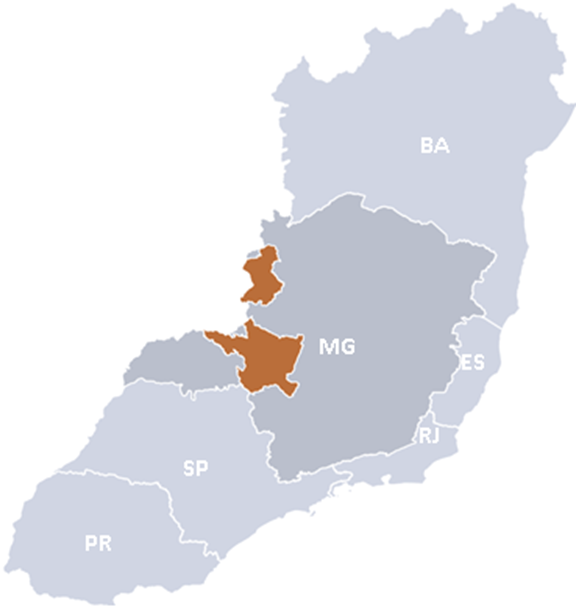
Like Mogiana and south of Minas Gerais, the Cerrado was one of the regions that struggled the most in 2021. Analyzing rain anomaly maps, we can observe that rainfall was below average through most of the year, mainly during the first half.
Although moisture returned in October, with above-average levels being recorded, the pace was not kept, and volumes dropped below average in November and December 2021.
Delayed rains in the second half of last year affected flowering, which was noticed by the reduced number of fruits. Irrigated crops were the ones that presented the best phyto-technical conditions, while dryland crops showed remarkable signs of the impact of the dry weather and, in some regions, of the frost that hit in July 2021.
We also observed that a large number of crops were submitted to esqueletamento (cutting off all plagiotropic branches at 20-30 cm from the orthotropic branch) or stumping. In most cases, these two forms of pruning were used in crops that suffered from drought or partially from frost. As a reflection of the frost, some crops were completely eliminated and replaced by soybean at the time of visits.
Given the aspects above, even in a year of positive bienniality, production in the Cerrado was estimated at 5 million bags, 7% higher than last season, with average productivity of 24.5 bags per hectare. It is important to emphasize that the productive potential could exceed 8 million bags in a favorable weather scenario. As such, it was estimated that production in the Cerrado region should be 37.5% lower than its potential due to adverse weather.
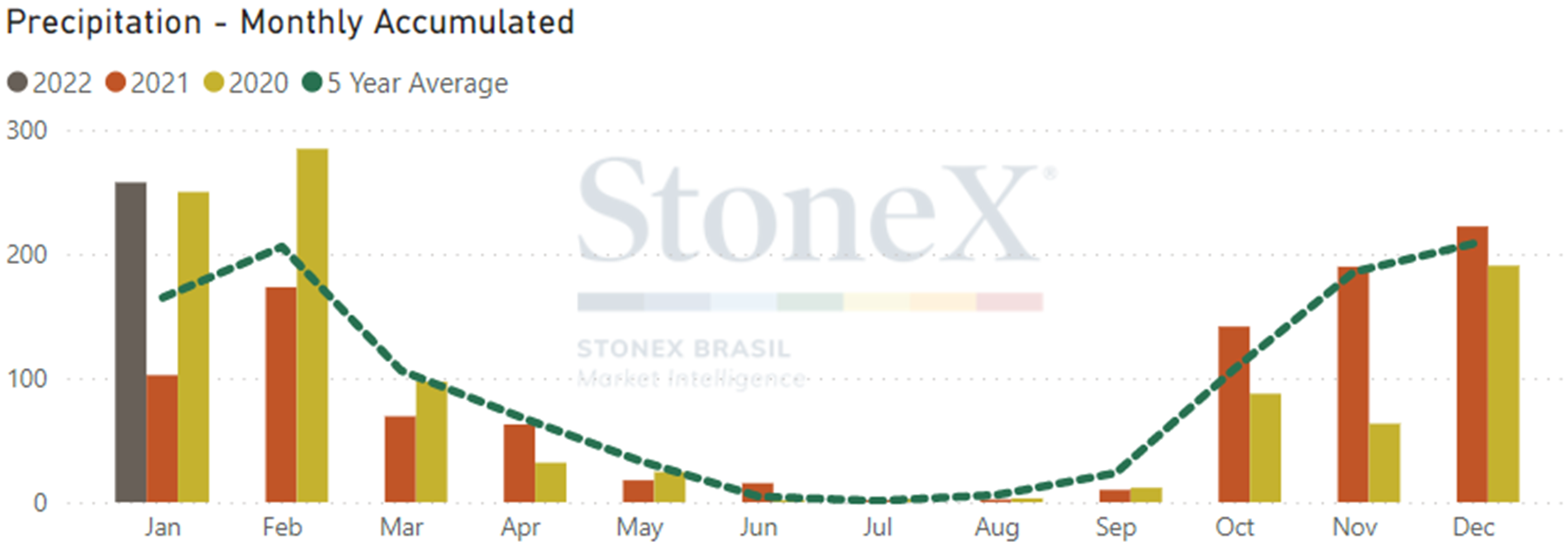
The South region of Minas Gerais was most affected by the hot weather and rainfall shortage in 2021. By looking at the rainfall anomaly maps, we can see that the main producing region of the state received rainfall volumes significantly below the historical average during the entire first half of the year, except for June.
During this period, the far from ideal weather contributed to hampering vegetative growth, which was observed in some crops. Despite an improvement in rainfall from mid-September, which extended into October, part of the crops failed to recover in time and promote adequate flowering.
During our visit to the region, taking into account the "on-year," we observed an atypical number of crops with low productive potential, notable for plants with a reduced number of fruits per branch or without any.
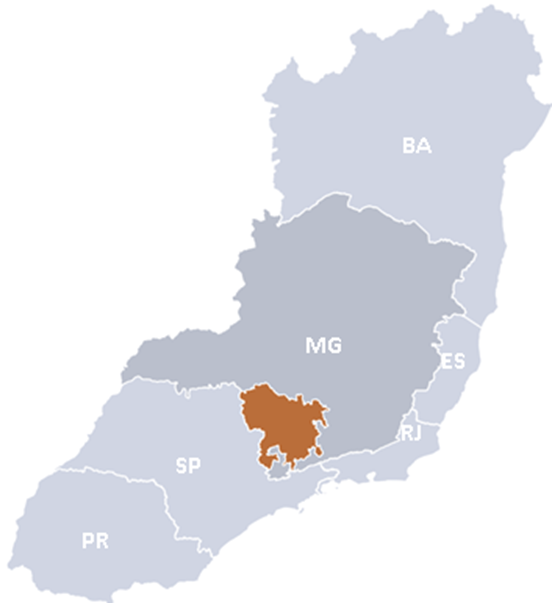
However, the region, characterized by the great variability in crop conditions, presented fundamental differences in what we can roughly divide into southern and northern regions of the South of Minas Gerais. The southernmost areas showed more crops in poorer conditions and with lower productivity. In contrast, the areas further north, which received better rainfall at certain times during the year, showed a better productive condition, with more crops showing yields within what is normally expected from an "on-year."
In this context, we estimate production at around 13.7 million bags in South of Minas Gerais, which represents a 7% increase over last season and a 28% decrease compared to the potential for the current season. The region is expected to account for 35.4% of Brazil’s Arabica production. The estimated productivity was 24 bags per hectare.
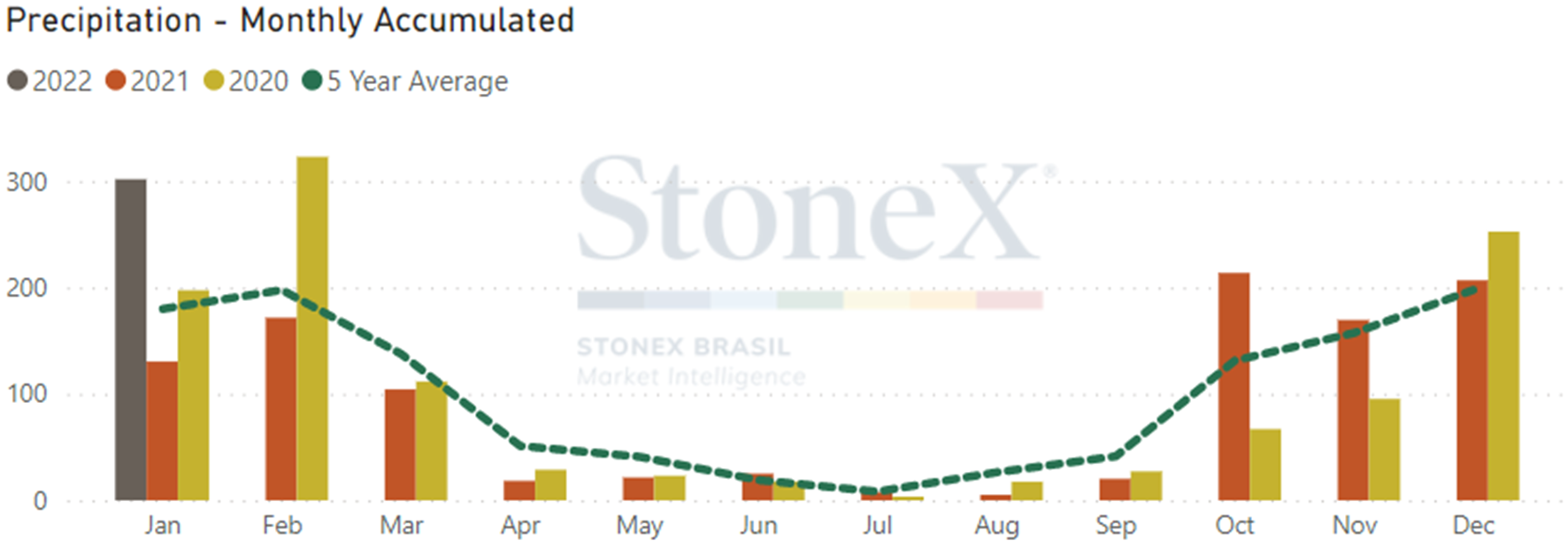
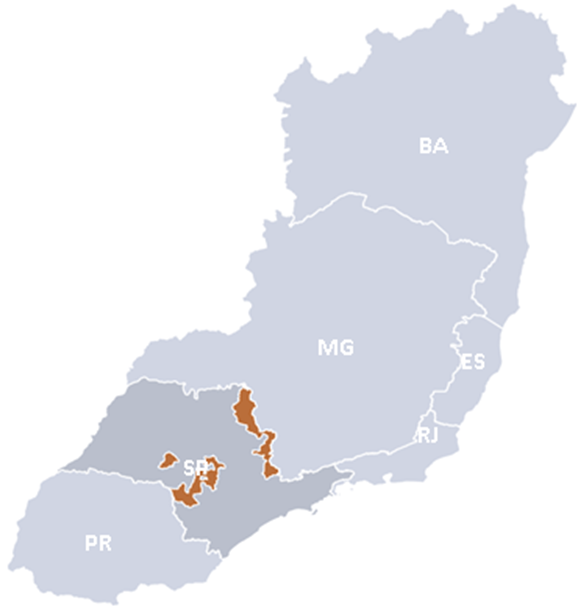
Visits in the state of São Paulo were concentrated in the northern region, also known as the Mogiana region. Like what happened in the Cerrado and part of the South of Minas Gerais, the dry weather affected the region’s production. In addition, this region also suffered from losses caused by frost. From an agronomic perspective, a situation similar to what was seen in the Cerrado was observed, with crops with reduced fruit volume and a limited number of fruits per branch. Only irrigated crops showed satisfactory production conditions.
Thus, the 2022/23 production in São Paulo was estimated at 4.6 million bags, high by 5% from the 4.4 million bags produced in 2021/22, with an estimated average yield of 21 bags per hectare. It is worth remembering that in an “on-year” without adversity, the state of São Paulo would have the potential to produce more than 6 million bags. Considering the mentioned volume, production in 2022/23 should be around 23% below the potential.
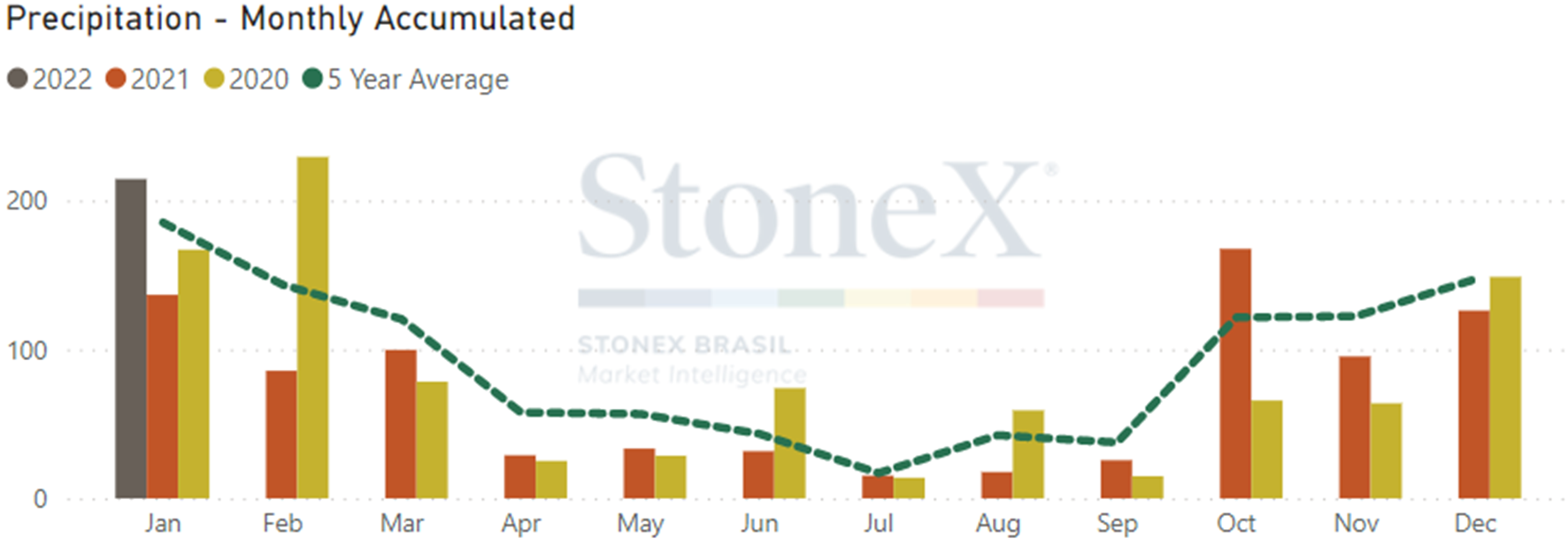
The estimates for Paraná, the Arabica producing regions of Bahia and the South of Espírito Santo were based on data from StoneX partners in these regions.
The average yield was estimated at 18 bags/hectare in Paraná, with production estimated at 0.7 million bags. In Bahia, Arabica production was estimated at 2.5 million bags, yielding 34 bags/hectare.
Finally, production in the South of Espírito Santo was estimated at 4.3 million bags, 37% higher than the previous crop year, with yields at 26 bags/hectare.
North of Paraná
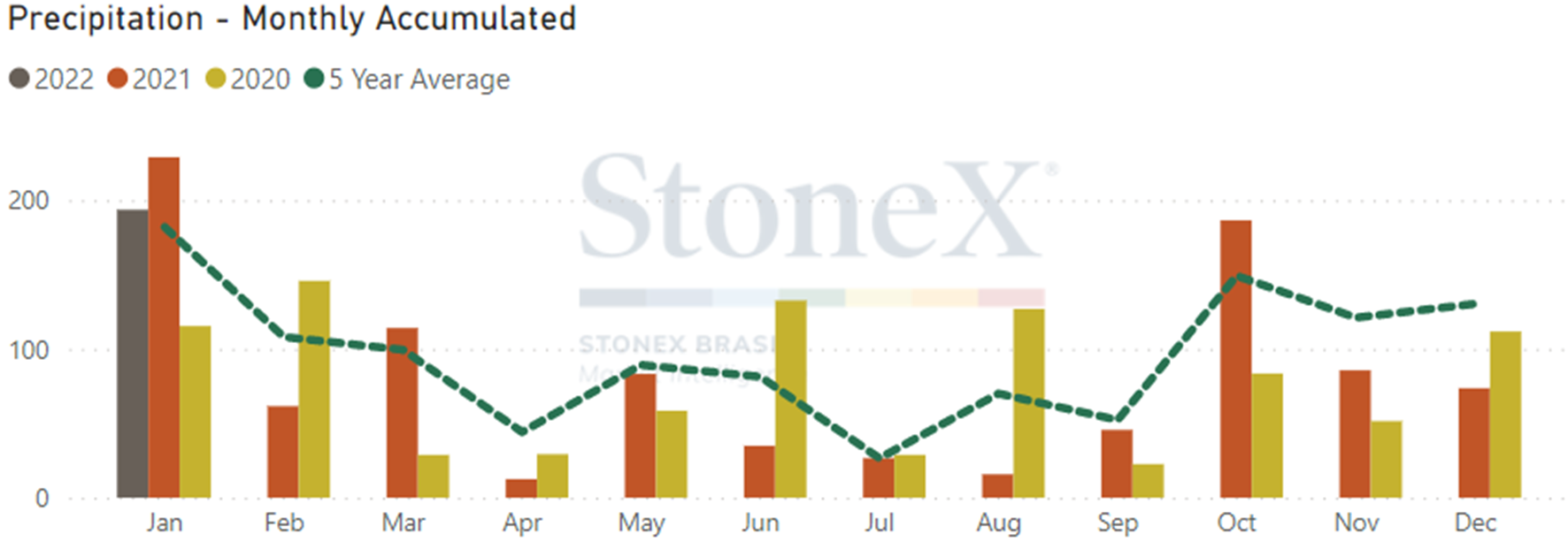
Center-South Bahia
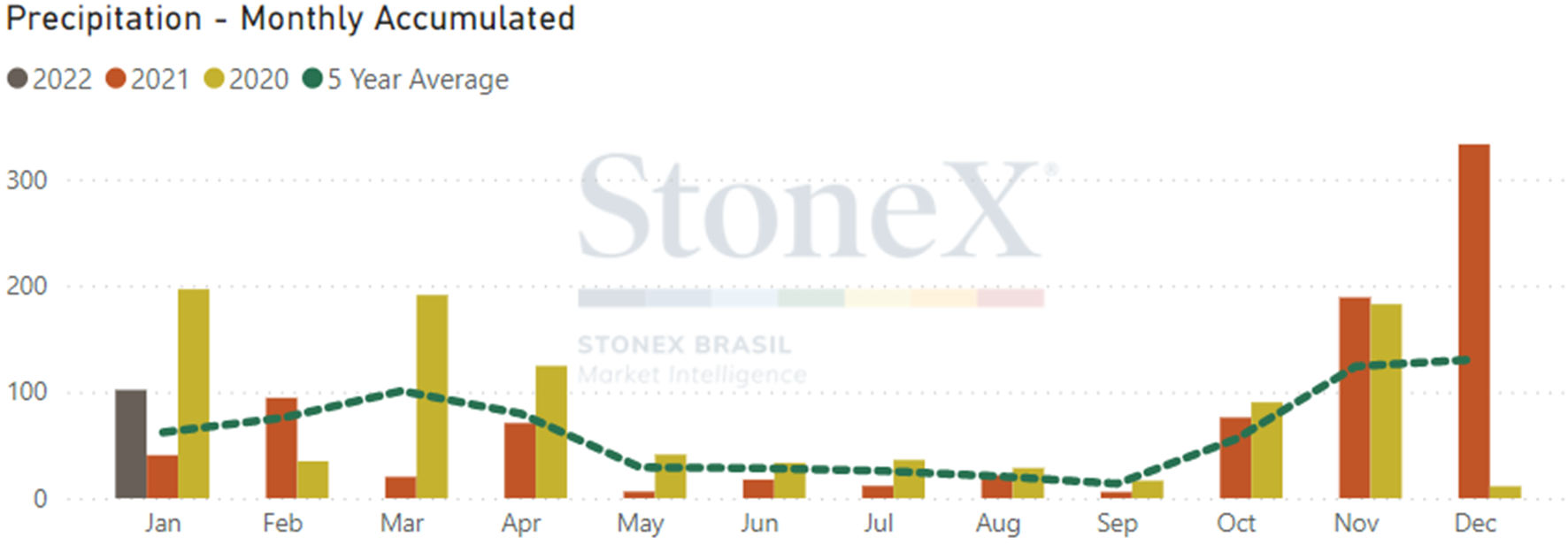
South of Espírito Santo
Regarding 2020/21 production, after considering the significant volume exported, which totaled 45.7 million bags, national consumption, and the increase in stocks, we have increased our estimate from 65.1 million to 67.6 million bags – despite the great uncertainty regarding stock data in Brazil, IBGE indicates that there was an increase of 1.96 million bags in Brazilian stocks in 2020/21. The largest increase occurred in Robusta coffee’s estimates, which went from 18 million to 20 million bags. On the other hand, the estimate for Arabica coffee production increased by only 500 thousand bags to 47.6 million. Therefore, for the 2021/22 season, the estimate was maintained at 53.7 million bags, with Arabica production at 33.7 million and Robusta at 20 million.
After the study was conducted, Brazilian coffee production in 2022/23 was estimated at 58.9 million bags, with Arabica production totaling 38.3 million bags and Robusta producing 20.6 million bags. In 2022/23, production is expected to be 9.46% or 5.2 million bags higher than the previous season. However, production is expected to be 13.4% lower than that observed in 2020/21, an "on-year" as well as 2022/23. While production remained relatively stable for the Robusta coffee, which increased by only 3%, Arabica production increased by 14% compared to the last crop year, mainly driven by production in the region of Matas de Minas and South of Espírito Santo. Due to dry weather, these regions were not impacted by frost or severe problems.
It is worth highlighting that if Brazil had not faced the weather challenges of the last two years, the country would have the potential to produce close to 70 million bags in the next season. Therefore, the estimate at 58.9 million bags is 15,8% lower than Brazil’s potential for 2022/23.
Production and productivity estimates
In the 2020/21 season, Cecafé’s consolidated data showed that Brazil reached an export record, totaling 45.7 million bags of coffee, 35.9 million Arabica, and 4.7 million Robusta. In 2021/22, exports should be much lower due to the sharp reduction in the country’s production and due to the logistical problems that the world has been facing.
Cecafé’s data show that in the first semester of the 2021/22 season, which covers the period between July and December 2021, Brazil exported 19.4 million bags, a volume 21% lower than in the same period of the previous year. Considering all the aspects mentioned above, total coffee exports in 2021/22 are expected to reach around 33 million bags, 27% lower than in 2020/21 – exports of Arabica coffee should be around 26 million bags and Robusta coffee around 3.2 million bags.
Even without production problems, exports of Robusta coffee fell sharply by 39% in the first half of the 2021/22 season, as a result of the strengthening of differentials between the domestic market and the London futures market, indicating that Brazilian Robusta coffee lost competitiveness to the detriment of other origins. The increase in differentials resulted from the significant appreciation of the Arabica coffee, which encouraged the Brazilian industry to increase the Robusta coffee in the blend and, consequently, increase the demand for this type in the domestic market.
For 2022/23, considering production estimated at 58.9 million bags and the scenario for logistics, we estimate that exports should reach around 38 million bags, representing an increase of 14.4% from 2021/22. Still, the volume should be 17% lower than 2020/21, the last "on-year." Therefore, we estimate Arabica exports in 2022/23 at around 30 million bags, and Robusta coffee at 4 million bags.
The StoneX Group Inc. group of companies provides financial services worldwide through its subsidiaries, including physical commodities, securities, exchange-traded and over-the-counter derivatives, risk management, global payments and foreign exchange products in accordance with applicable law in the jurisdictions where services are provided. References to over-the-counter (“OTC”) products or swaps are made on behalf of StoneX Markets LLC (“SXM”), a member of the National Futures Association (“NFA”) and provisionally registered with the U.S. Commodity Futures Trading Commission (“CFTC”) as a swap dealer. SXM’s products are designed only for individuals or firms who qualify under CFTC rules as an ‘Eligible Contract Participant’ (“ECP”) and who have been accepted as customers of SXM. StoneX Financial Inc. (“SFI”) is a member of FINRA/NFA/SIPC and registered with the MSRB. SFI is registered with the U.S. Securities and Exchange Commission (“SEC”) as a Broker-Dealer and with the CFTC as a Futures Commission Merchant and Commodity Trading Adviser. References to securities trading are made on behalf of the BD Division of SFI and are intended only for an audience of institutional clients as defined by FINRA Rule 4512(c). References to exchange-traded futures and options are made on behalf of the FCM Division of SFI . StoneX is a trading name of StoneX Financial Ltd (“SFL”). SFL is registered in England and Wales, Company No. 5616586. SFL is authorized and regulated by the Financial Conduct Authority [FRN 446717] to provide to professional and eligible customers including: arrangement, execution and, where required, clearing derivative transactions in exchange traded futures and options. SFL is also authorised to engage in the arrangement and execution of transactions in certain OTC products, certain securities trading, precious metals trading and payment services to eligible customers. SFL is authorised & regulated by the Financial Conduct Authority under the Payment Services Regulations 2017 for the provision of payment services. SFL is a category 1 ring-dealing member of the London Metal Exchange. In addition SFL also engages in other physically delivered commodities business and other general business activities which are unregulated and not required to be authorised by the Financial Conduct Authority. StoneX Group Inc. acts as agent for SFL in New York with respect to its payments services business. StoneX APAC Pte. Ltd. acts as agent for SFL in Singapore with respect to its payments services business. ‘StoneX’ is the trade name used by StoneX Group Inc. and all its associated entities and subsidiaries.
Trading swaps and over-the-counter derivatives, exchange-traded derivatives and options and securities involves substantial risk and is not suitable for all investors. Past performance of any futures or option is not indicative of future success. Indicators are not a trading system and are not published as a specific trade recommendation. The information herein is not a recommendation to trade nor investment research or an offer to buy or sell any derivative or security. It does not take into account your particular investment objectives, financial situation or needs and does not create a binding obligation on any of the StoneX group of companies to enter into any transaction with you. You are advised to perform an independent investigation of any transaction to determine whether any transaction is suitable for you. No part of this material may be copied, photocopied or duplicated in any form by any means or redistributed without the prior written consent of StoneX Group Inc.
© 2026 StoneX Group Inc. All Rights Reserved.
Our subscribers have access to comprehensive market analysis from StoneX spanning commodities, equities, currencies and more.
Daily coffee report

August 11 – It was generally a quiet night for the markets until early this morning when a headline hit that Iran and Oman were close to reaching a deal. Stock futures rallied, while the dollar index followed Treasury yields lower, along with active selling in the energy- and food-based commodities. The headline had limited impact though in a world that has become skeptical of promises of peace. Stock futures remain steady to firmer at this hour, while the VIX trades near 16 – just above 2026 lows. The dollar index is trading near 99.8 this morning, after recovering from its early morning selloff over the following hour of trade. Yields on 10-year Treasuries are trading near 4.69%, while yields on 2-year Treasuries trade near 4.22%. WTI crude oil is trading near $82 per barrel at this hour, while Brent trades near $88. The grain and oilseed markets are mostly weaker, after failing to recover from this morning’s early selloff that started in the crude oil market.

Daily coffee report
Our market expertise, advanced platforms, global reach, culture of full transparency and commitment to our clients’ success all set us apart in the financial marketplace.
Reach
With access to 40+ derivatives exchanges, 180+ foreign exchange markets, nearly every global securities marketplace and numerous bi-lateral liquidity venues, StoneX’s digital network and deep relationships can take clients anywhere they want to go.
Transparency
As a publicly traded company meeting the highest standards of regulatory compliance in the markets we serve; our financials and record of accomplishment are matters of public record. StoneX’s commitment to “doing the right thing over the easy thing” sets us apart in the industry and helps us build respect, client trust and new partnerships.
Expertise
From our proprietary Market Intelligence platform, to “boots on the ground” expertise from award-winning traders and professionals, we connect our clients directly to actionable insights they can use to make more informed decisions and achieve their goals in the global markets.