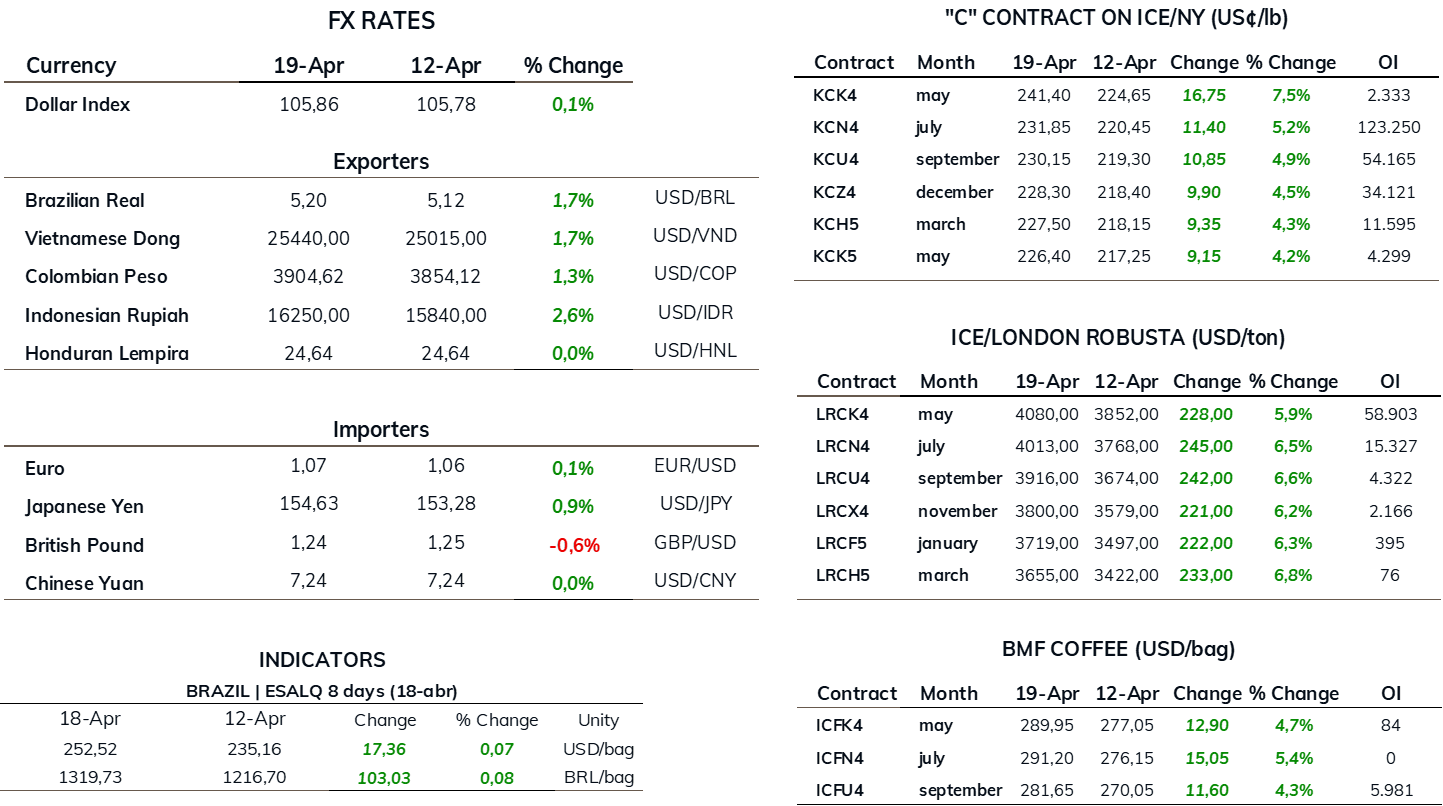
• Arabica coffee rose 5.2% on the week in New York, closing at US₵ 231.85/lb
• On the London exchange, Robusta coffee prices advanced 5.9% to USD 4,080/t
• Cepea indicator for Arabica coffee rises 7.4% to BRL 1,306.60/bag
• Cepea indicator for robusta coffee up 7.6% to BRL 1,155.43/bag
• Coffee price differentials in Vietnam continue to strengthen
• NOAA updates temperature forecast models in the Pacific Ocean
• Market reacts to hot, dry weather in Vietnam
• Vietnam continues to experience below-average rainfall
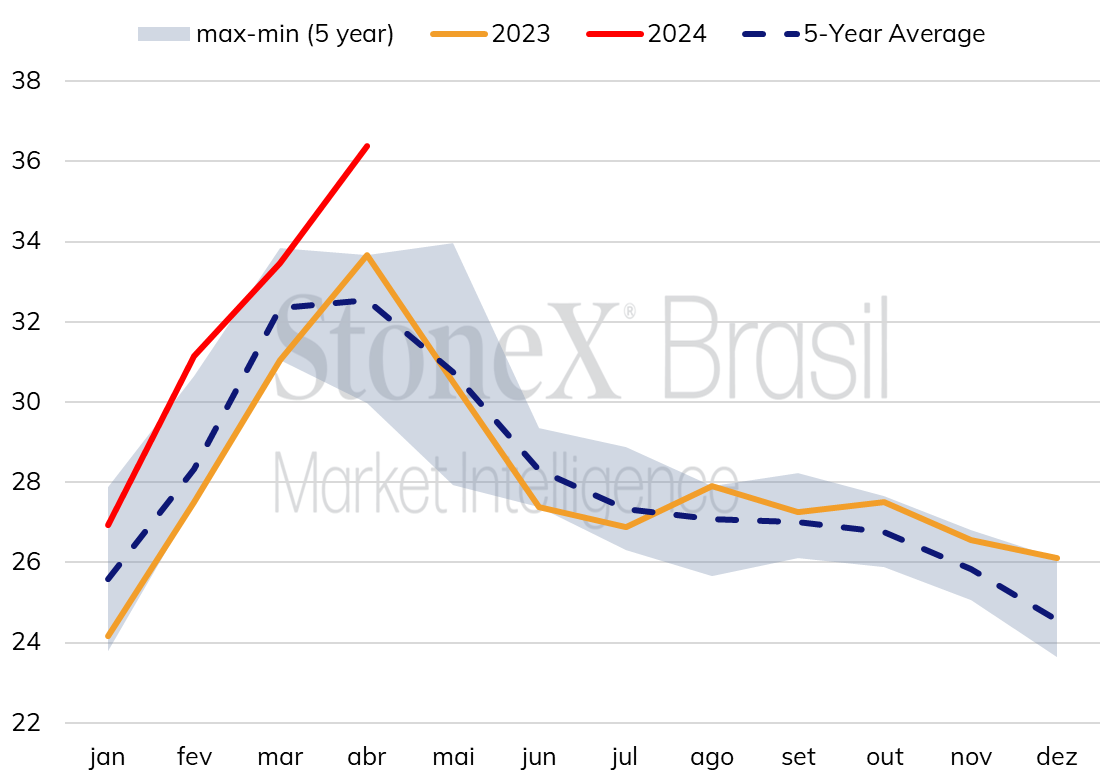
• Average monthly maximum temperatures exceed 36ºC in Vietnam
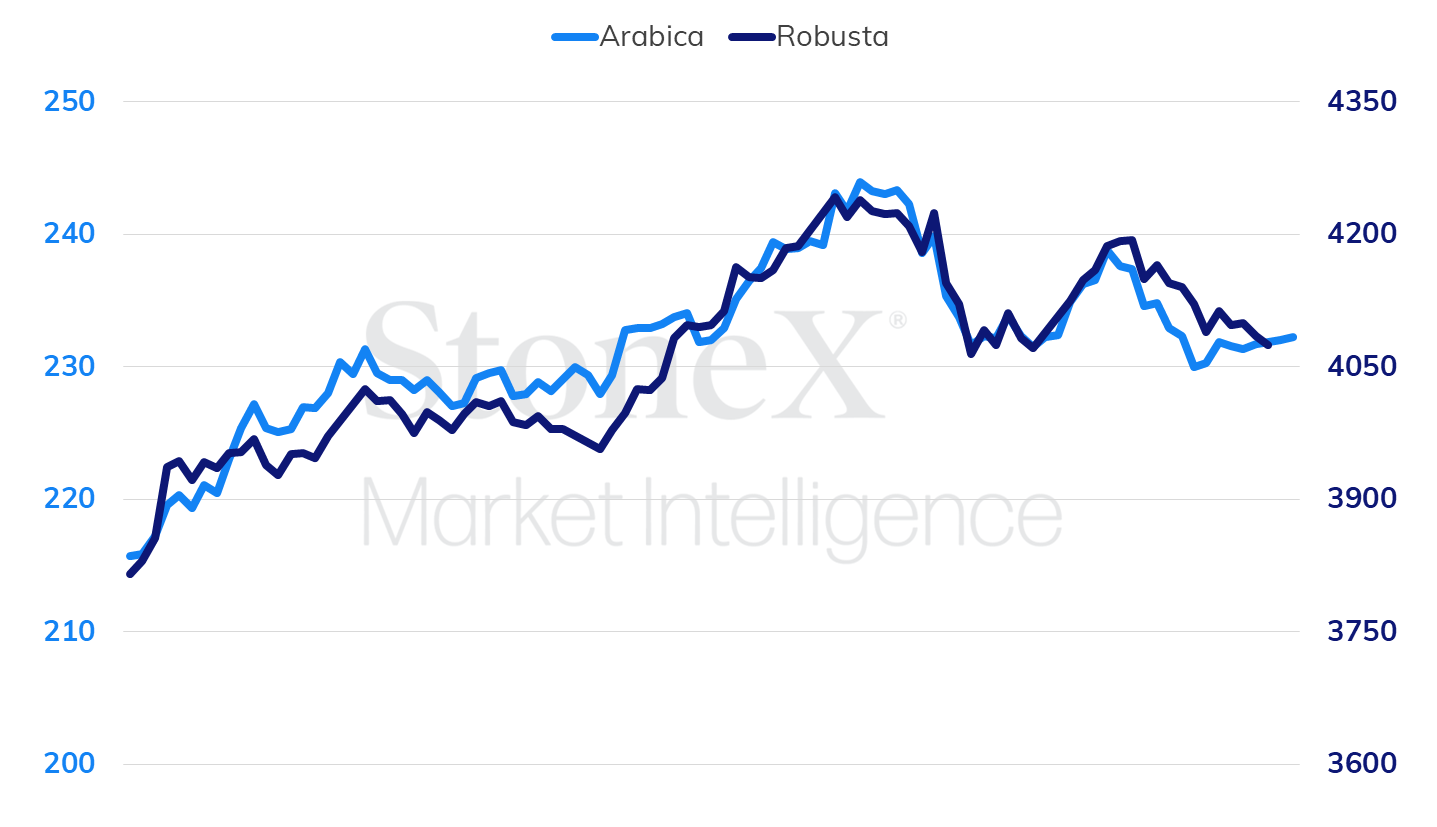
Despite profit-taking last Thursday (18), coffee futures prices ended another week higher, still reflecting the bullish factors in the Robusta coffee market amid limited supplies of the variety in Asia. In New York, Arabica coffee futures rose 1140 points (+5.2%) for the most active contract, which closed the week quoted at US₵ 231.85/lb. In London, Robusta coffee futures reached a new all-time high, closing Wednesday (17) at USD 4195/t and reaching a high of USD 4292/t on Thursday for the most liquid contract. For the week, Robusta coffee prices recorded gains of USD 245/t (+5.9%), closing Friday (19) at USD 4080/t.
From a fundamentals point of view, the scenario remains unchanged, with the bullish fundamentals of the Robusta coffee market being the main factors behind the strong advances in coffee futures prices. The low coffee supply scenario supported further advances in price differentials in Vietnam, which even exceeded USD 1080/t for the "Grade 1" standard last week. In addition, weather concerns in Vietnam also supported prices.
Weekly intraday (most active contract) - April 15 to April 19
On the Brazilian domestic market, prices followed the trend observed abroad, but rose with even greater intensity due to the rise in the dollar. While the greenback's rise over the week was 1.7% to USDBRL 5.20, the Cepea indicator showed that Arabica coffee prices advanced 7.4% to BRL 1,306.60/bag. According to the indicator, Robusta coffee prices closed the week at BRL 1,155.43/bag, representing an increase of 7.6% over the week.
Also last week, US agency NOAA updated the temperature forecast models in the Pacific Ocean, which indicate a Neutral condition until the JAS quarter (July, August and September), which will then transition into a La Niña condition, which should intensify until the OND quarter (October, November and December), but this intensity should only approach the moderate range, remaining within a weak intensity. A scenario of weak La Niña could be beneficial for Brazilian coffee production, given that the phenomenon would not be able to delay the return of the rains to the point of impacting development. However, a strong La Niña scenario could have a negative impact on production. Therefore, although the current model points to a phenomenon of weak intensity, it is important to monitor updates from weather agencies as the models may change.
Projected change in the Pacific Ocean surface temperature (in ºC)
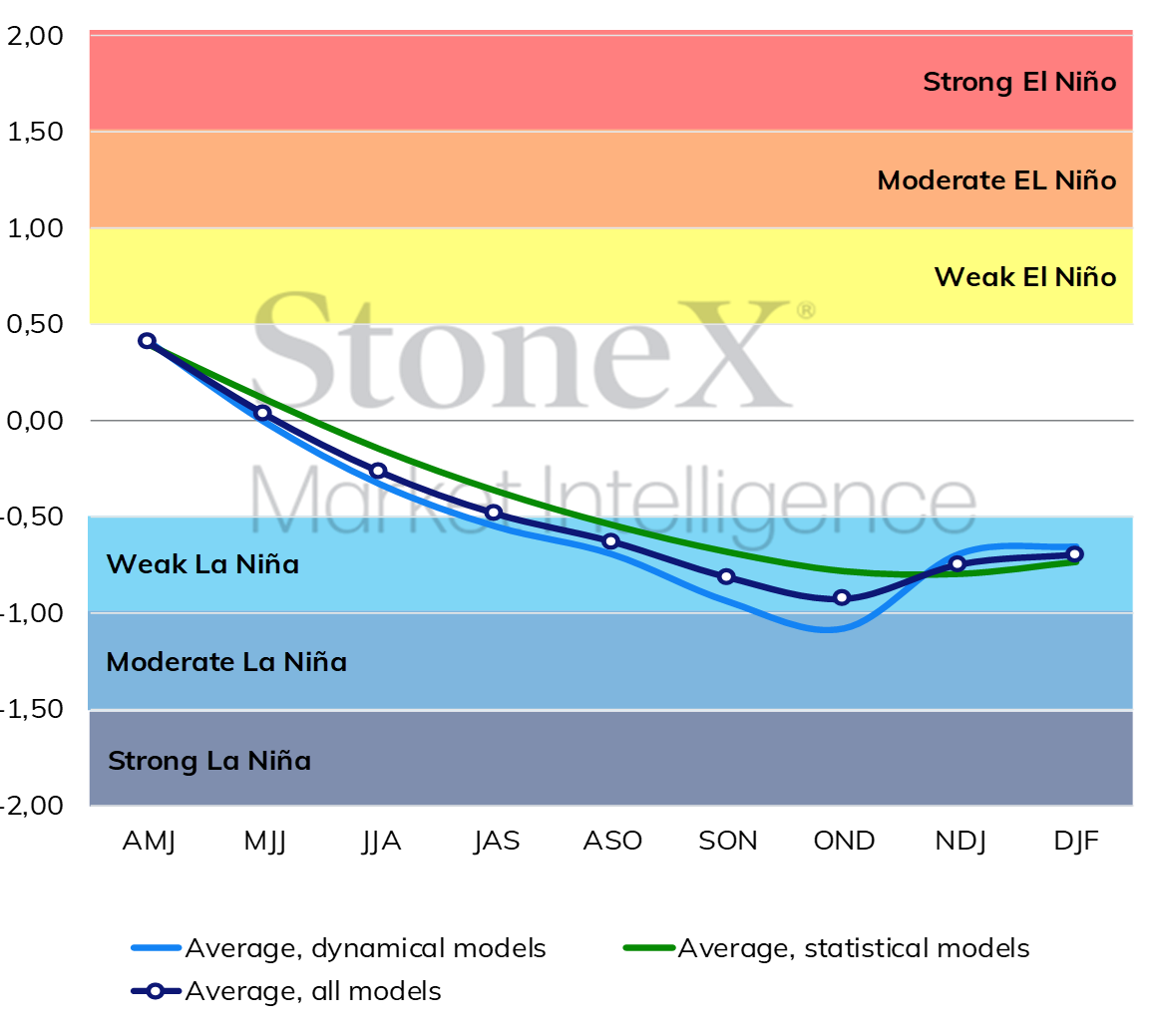
Source: IRI/CPC, NOAA. *Average of statistical models
Market reacts to hot, dry weather in Vietnam
One of the most talked about issues over the last week has been the current weather conditions in Vietnam and the possible impacts on the country's production potential next season. The Asian country has been receiving below-average rainfall since November 2023. In addition, temperatures are high, with average monthly highs exceeding 36ºC, which is also detrimental to the development of production. As has already been mentioned in other editions of this report, the country's crops are going through the flowering period and will move on to other critical stages, such as fruit set, fruit expansion and fruit filling.
Accumulated monthly rainfall in the central highlands - representing 88% of the planted area (mm)
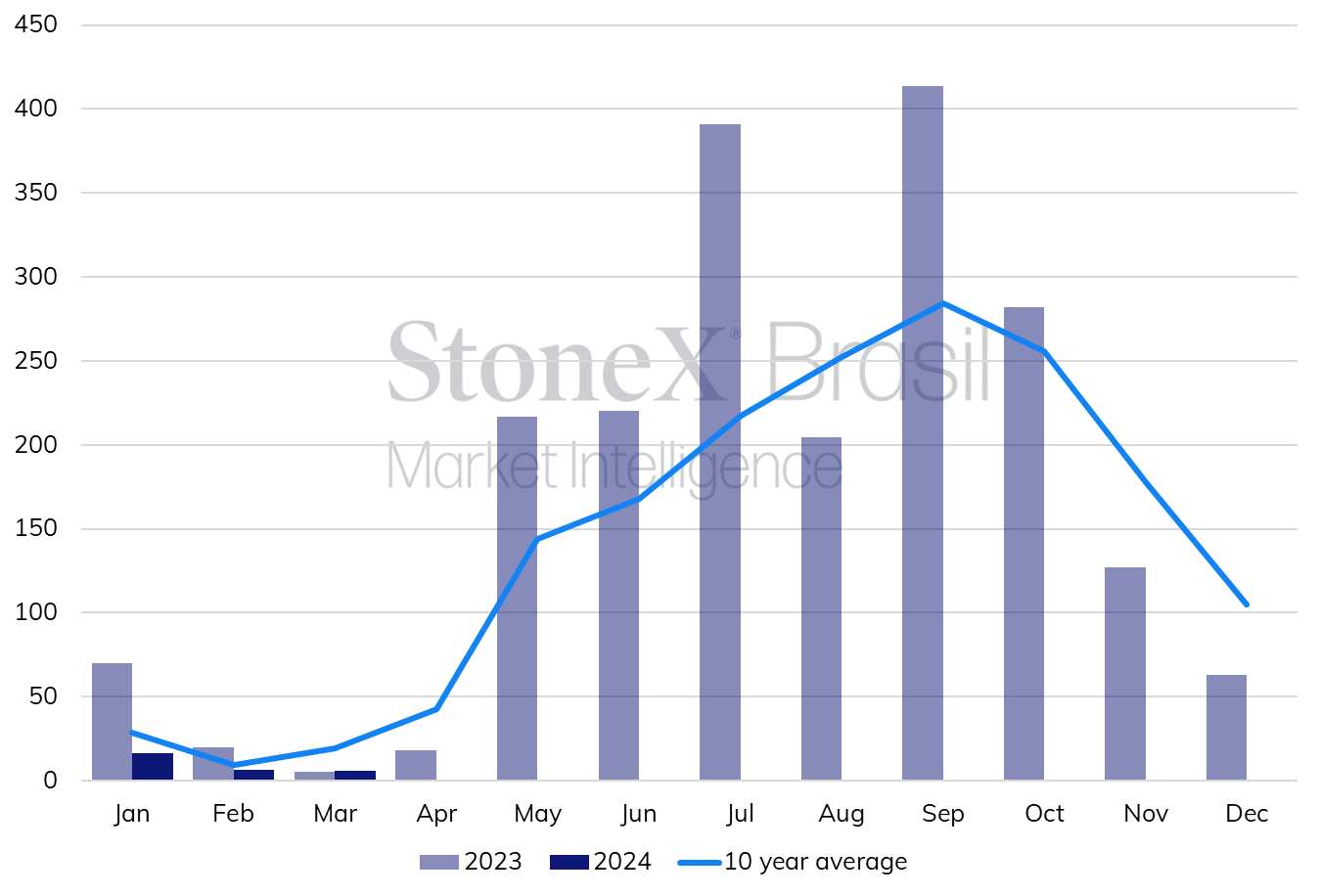
Source: Refinitiv. Design: StoneX.
Average monthly maximum temperatures in Vietnam (Cº)
Source: Refinitiv. Design: StoneX.
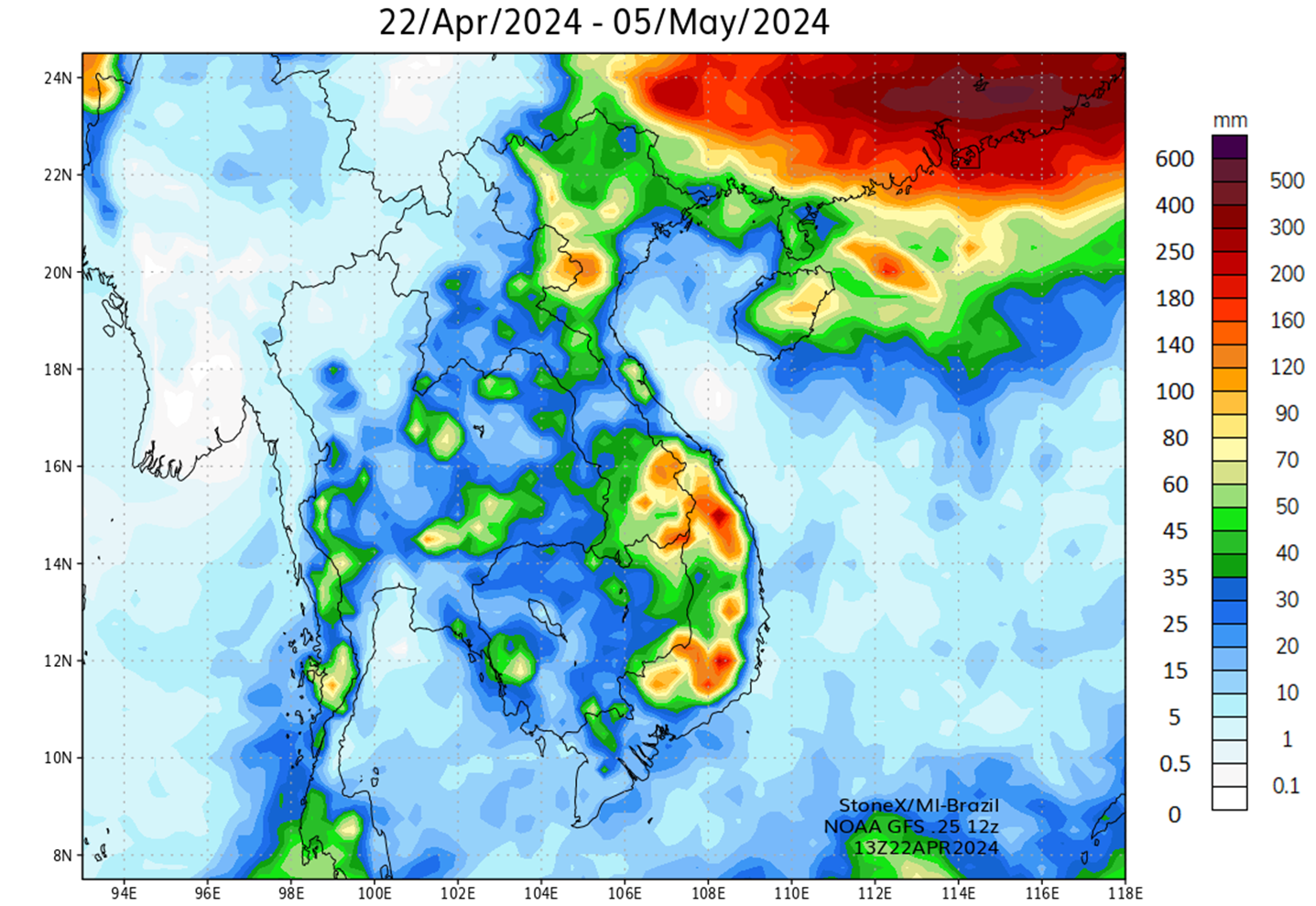
The transition from El Niño to a neutral condition could benefit weather conditions in Vietnam, given that the maintenance of El Niño is associated with dry and hot weather in the country. However, if the rains don't return from May onwards, crop conditions in the country could become even more critical. According to StoneX data, the country's production regions are expected to receive between 50 and 150 mm over the next two weeks.
Map of the cumulative rainfall forecast for the next two weeks in Vietnam (mm)
Source: StoneX.
INDICATORS