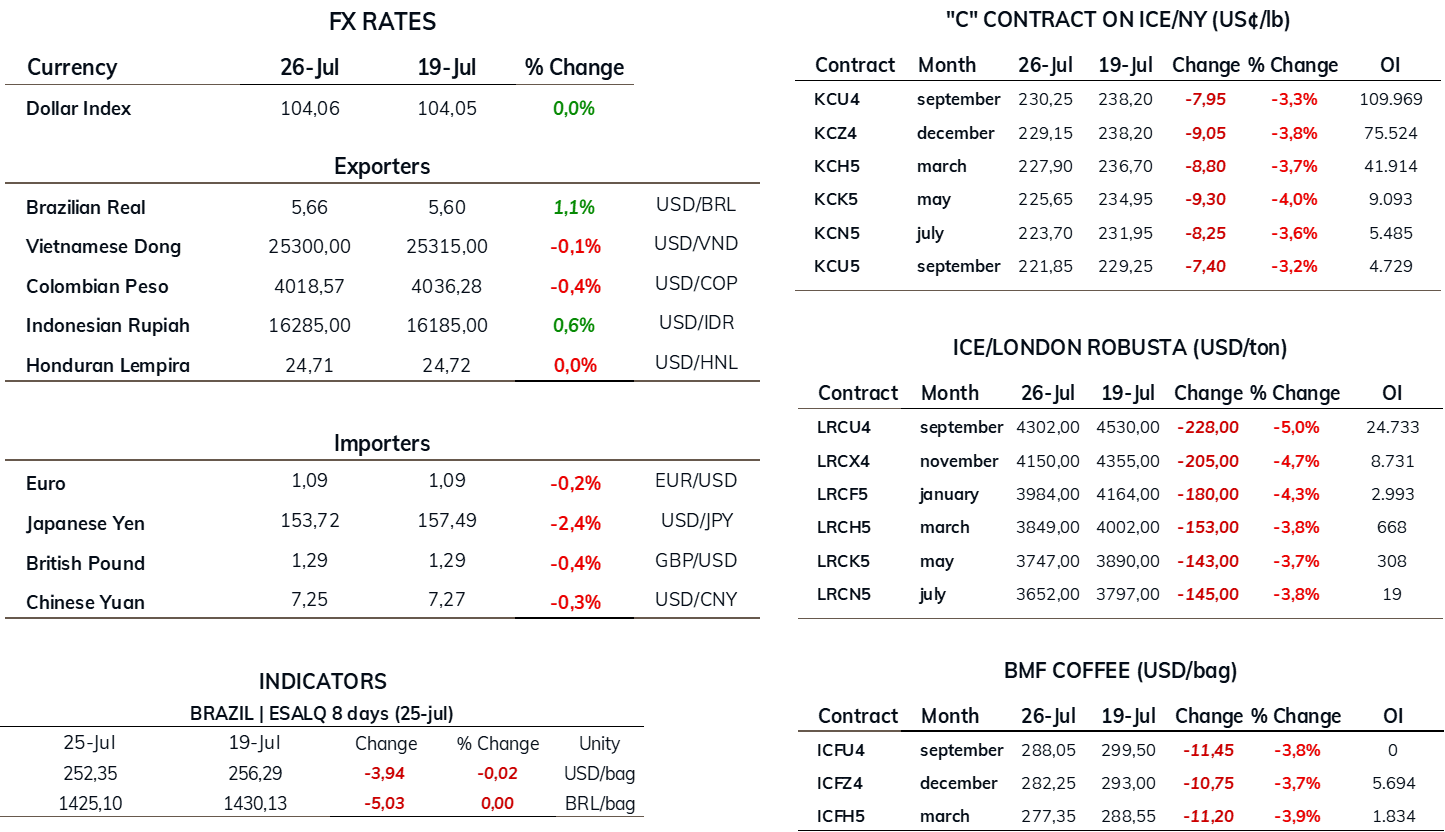
• Arabica coffee fell 3.3% on the week in New York, quoted at US₵ 230.25/lb
• On the London exchange, Robusta coffee prices fell 5% to USD 4302/t
• Dollar up 1.1% to USDBRL 5.66 on the week
• Cepea indicator for Arabica coffee down 1.1% at BRL 1,409.05/bag
• Cepea indicator for Robusta coffee down 0.1% to BRL 1,278.50/bag
• Companies in the sector release their financial results
• Harvest progress in Brazil and Indonesia puts pressure on prices
• Weather models point to dry weather in August in the regions
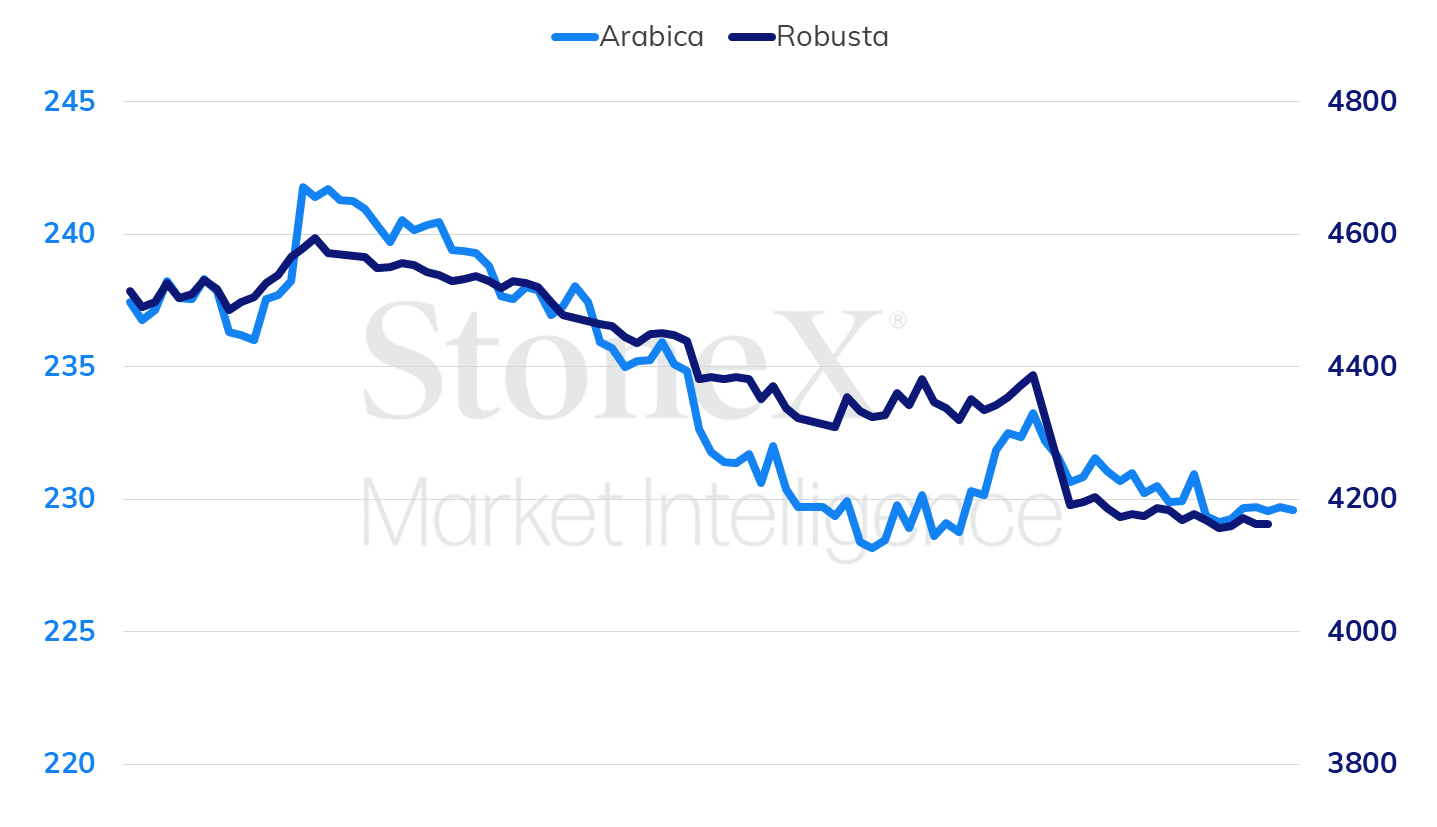
Arabica and Robusta coffee futures prices ended the last week down, reflecting the rise in the dollar during the period and the greater availability of coffee amid harvesting progress in Brazil and Indonesia. In New York, the most active contract fell by 795 points (-3.3%), closing Friday (26) at US₵ 230.25/lb. In London, the drop was even more intense, with prices falling USD 228/ton (-5%), closing the last session quoted at USD 4302/t. On the Brazilian domestic market, coffee prices experienced a less intense variation, with the Cepea indicator for Arabica coffee falling by 1.5% and the indicator for Robusta coffee by just 0.1%. This scenario reflected the 1.1% rise in the dollar during the week, which closed at USDBRL 5.66.
With regard to the macroeconomic scenario, the international environment last week was marked by a feeling of pessimism and risk aversion, reflecting investors' frustration with the quarterly results of publicly traded companies in the US, generating fears that the country's economy was slowing down. Some companies linked to the coffee sector also released their quarterly results.
Weekly intraday (most active contract) - July 22 to July 26
Among the companies that released their quarterly results, we can highlight data from Coca-Cola, Dr Pepper and Nestlé. According to Coca-Cola's report, the company's coffee sales in the second quarter of the year fell by 4%, mainly due to the results of Costa Coffee, a company belonging to the group, in the UK. Dr Pepper's financial results show a 2.1% drop in revenue in the second quarter, reflecting a 2.9% drop in prices and a 0.8% increase in sales volume. Nestlé reported that Nespresso had organic growth of 1.8%, with real internal growth rising from 1.1% in the first quarter to 2.4% in the second quarter of the year.
From the point of view of fundamentals, in addition to the pressure caused by the rise in the dollar on prices in London and New York, prices have fallen back amid the progress of the harvest in Brazil and Indonesia. The latest report released by StoneX showed that 85% of the Brazilian crop has already been harvested, with the pace of the robusta harvest at 98% and the arabica harvest at 78% as of Friday (26). The harvest in Indonesia, which began in mid-June, is also progressing and increasing the availability of coffee on the country's domestic market.
According to the models, the cold fronts expected to hit in August will not bring enough moisture to cause significant rainfall in the coffee belt, and dry weather will prevail with average temperatures above normal, especially in the Cerrado region and southern Minas Gerais. The models are increasingly indicating that it will only be at the beginning of spring, from September and October onwards, that the rains are expected to be regular, which will induce opening and concentrated flowering.
Cumulative rainfall forecast for the next two weeks (mm)
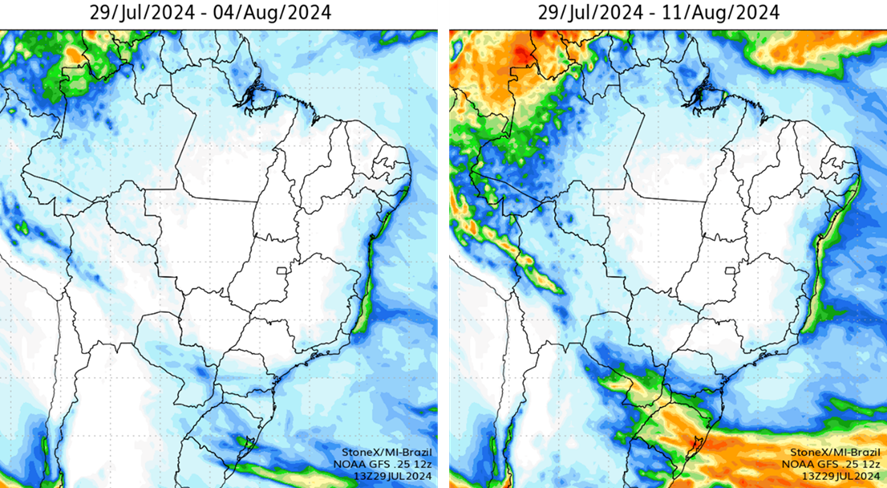
Source: StoneX.
If the window of dry weather lasts until the beginning of October, or if there are brief periods of rain in September followed by dry weather with above-normal temperatures, there could be premature flower drop, reducing flower and fruit set. This possible scenario should be monitored carefully. If forecasts of later rains continue over the next few days, concerns about the success of the flowering will tend to provide support for coffee prices.
INDICATORS