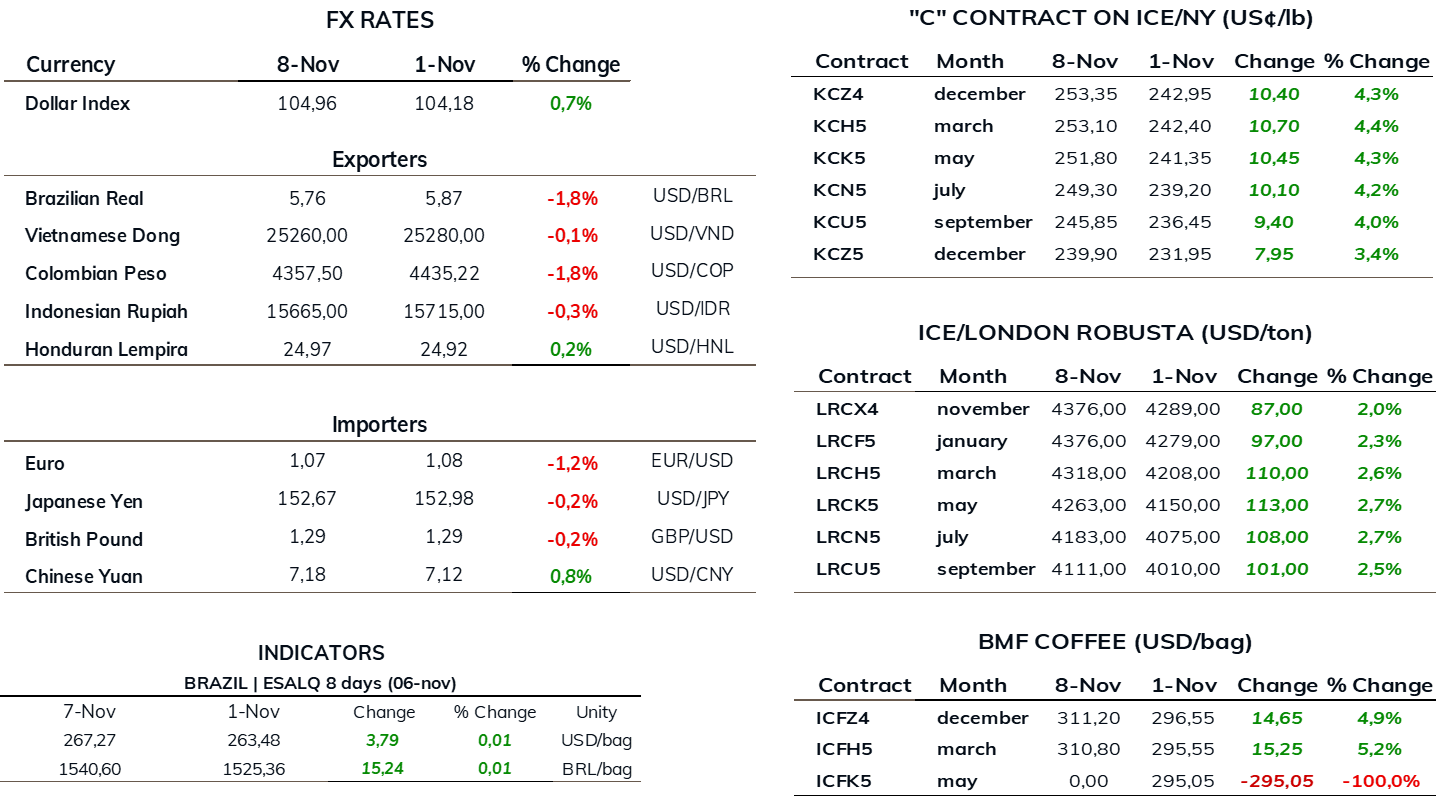
• Arabica coffee rose by 4.4% in New York, quoted at US¢ 253.10/lb
• Robusta coffee prices increased by 2.3% to USD 4376/ton London
• The USDBRL recorded a 1.8% drop this week as of Friday afternoon (08)
• In the domestic market, arabica and robusta coffee rose 5% by Thursday (07)
• A combination of technical factors contributed to the appreciation
• The market remains concerned about the flowering set of arabica coffee
• StoneX will release its first estimate for the 2025/26 crop next week
• A special report addresses climate risks from extreme events
• Cecafé will release Brazil's export data next Monday (11)
• Coffee price inflation in Brazil rose in October
• U.S. coffee imports increased but remain below average
Coffee futures prices ended the week on a high note, reacting to reports of issues with coffee flowering in Brazil, attributed to adverse weather in September. Additionally, the approach of the first notice day for December arabica contracts and options expiration also influenced coffee futures prices. From a macroeconomic perspective, the dollar’s strength, following Donald Trump’s election in the U.S., added pressure on prices, especially during Friday’s session (08).
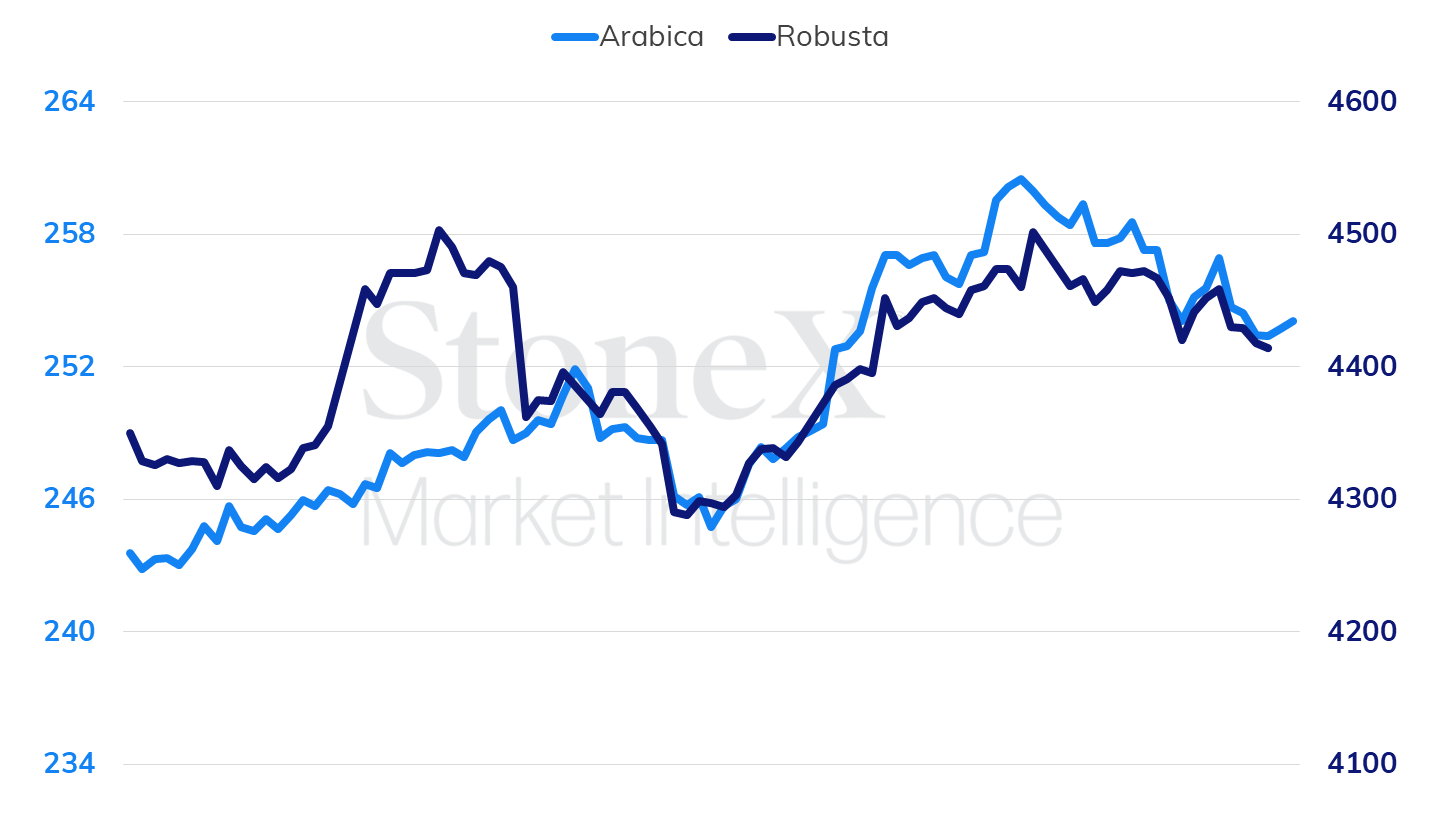
In New York, the most active contract for March delivery ended the week up 1070 points (4.4%), quoted at US¢ 253.10/lb. On the London exchange, the main contract rose by USD 97/ton (2.3%), closing at USD 4376/ton. The Dollar Index recorded a rise of 0.7% at the time of writing. However, the USDBRL pair posted a weekly decline of 1.8% at the time of writing.
In Brazil's domestic market, prices reflected international market movements and rose during the week. The arabica indicator rose by 5% by Thursday’s close (07), reaching R$1,592.18 per bag. For robusta, the Cepea indicator increased by 5.2% by Thursday’s close, reaching R$1,490.04 per bag.
Weekly Intraday (Most Active Contract) – 11/04 to 11/08
From a fundamental point of view, the market continues to monitor crop conditions in Brazil and the development of the 2025/26 harvest. There have been reports that arabica flowering and fruit set was below expectations, supporting prices. StoneX’s technical team is conducting field visits in affected areas in Minas Gerais and São Paulo. Next week, StoneX will release a report with its first estimate for Brazil’s 2025/26 harvest.
Weather in Brazil will remain on traders' radar, given potential climate risks. This week, StoneX published a special report titled “Extreme Events: Risk of Flooding, Flash Floods, and Inundations in Brazil” , highlighting that half of Brazil’s municipalities are highly vulnerable to floods and inundations. This is significant as, according to today’s (08) “StoneX Weather Update and Seasonal Forecast” , an incoming cold front is expected to bring high humidity, potentially leading to an extratropical cyclone.
Another key topic next week will be Cecafé’s release of October export data for Brazil, scheduled for Monday (11). Preliminary data from the Foreign Trade Secretariat (Secex) indicate that Brazil exported 4.6 million bags in October, a 12% increase compared to October 2023.
Additionally, coffee price inflation and potential impacts on consumption are also in focus. Today (08), the IBGE reported an inflation rate on coffee prices, reaching an accumulated 12-month rate of 29.2% in October, significantly higher than the 22.7% reported in September. U.S. data for October are yet to be released, but the September rate was already up by over 6% over 12 months.
12-Month Coffee Price Inflation in Brazil
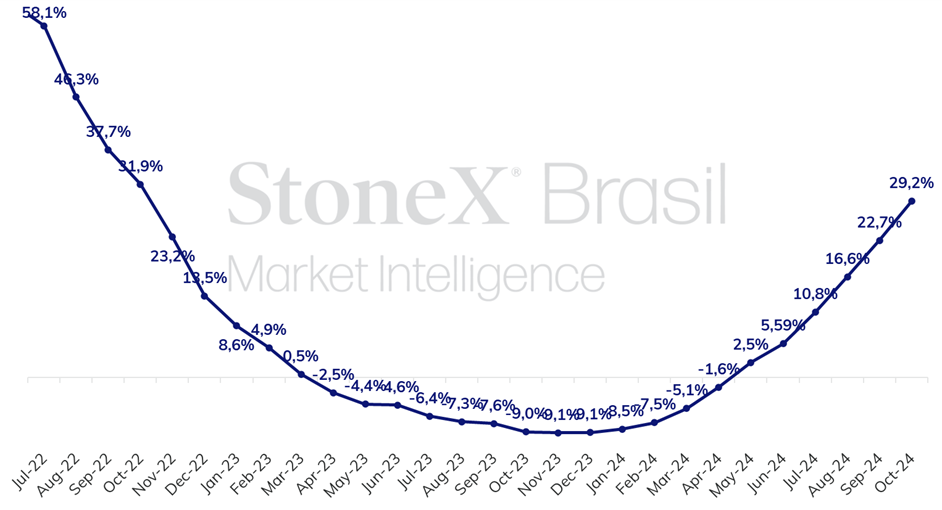
Source: IBGE. Design: StoneX.
In response to this scenario, some companies in the sector have already reported declines in sales, such as Starbucks, with a 7% drop last quarter, and Dr Pepper, with a 3.6% decline. On the other hand, Dutch Bros reported a 28% increase in revenue last quarter, reflecting growth in sales and store count, among other strategies. USDA data shows that as of September, accumulated coffee imports in the U.S. reached 16.2 million bags, 1.8% higher than in 2023 but 8.2% below the average of the last three years.
Accumulated Green Coffee Imports in the U.S. (Million Bags)
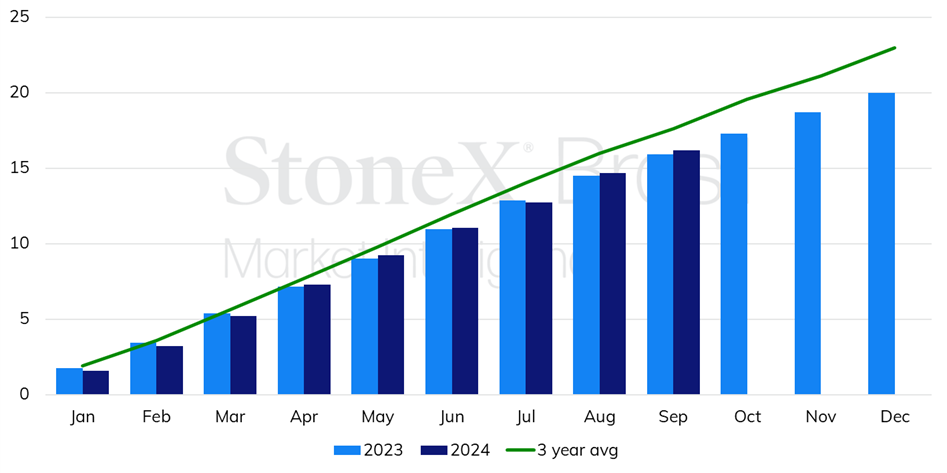
Source: USDA. Design: StoneX.
INDICATORS