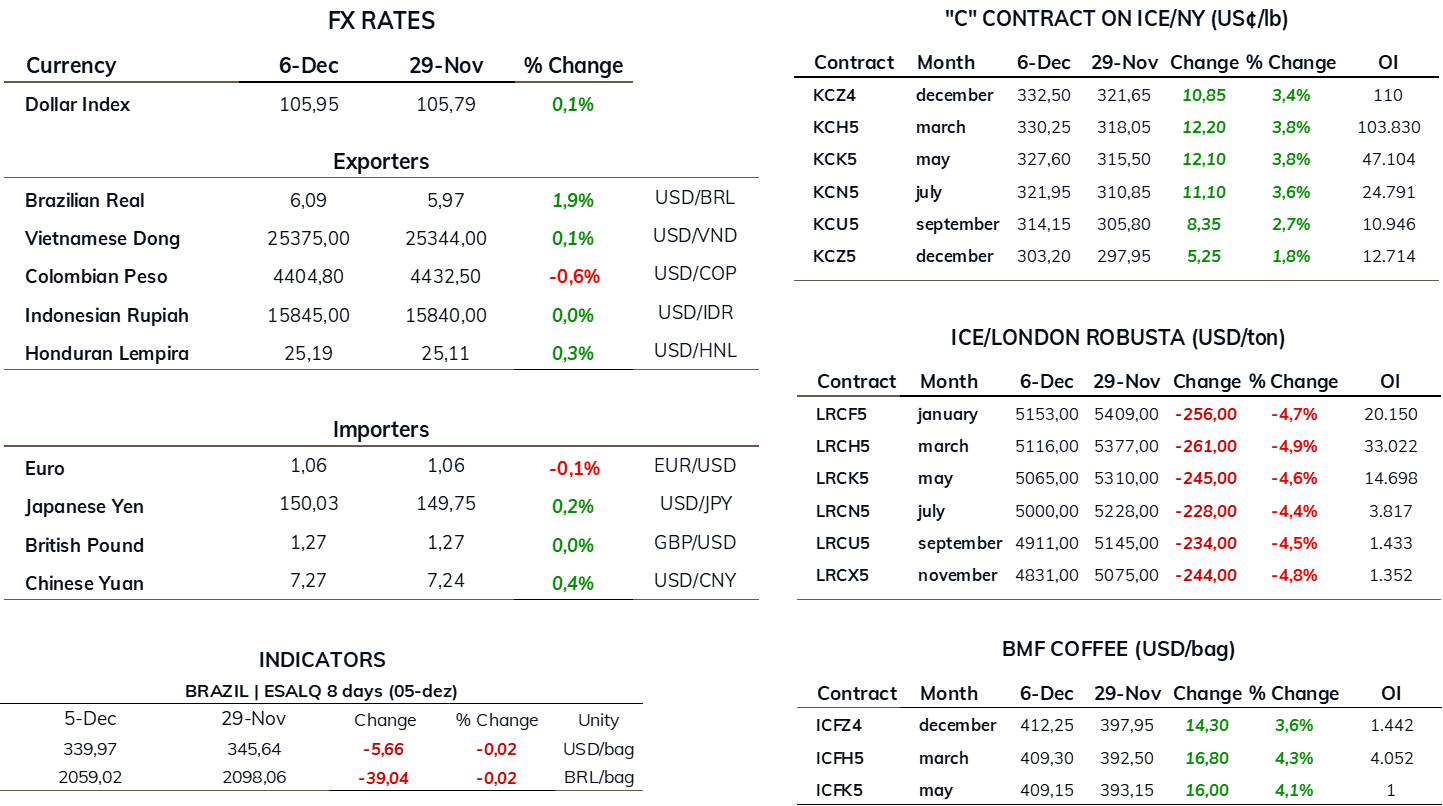
• Arabica coffee rose 3.8% during the week to US¢ 330.25/lb
• Robusta futures fell 4.9% during the week to USD 5116/ton
• The Cepea indicator for arabica coffee rose 0.8%; robusta fell 4.2%
• The dollar increased 2.0% during the week to USDBRL 6.09
• Excessive rainfall in Vietnam has caused delays in harvesting
• USDA updates its estimate for Vietnam’s 2024/25 production
• Secex: Brazil exported 4.76 million bags in November (+22%)
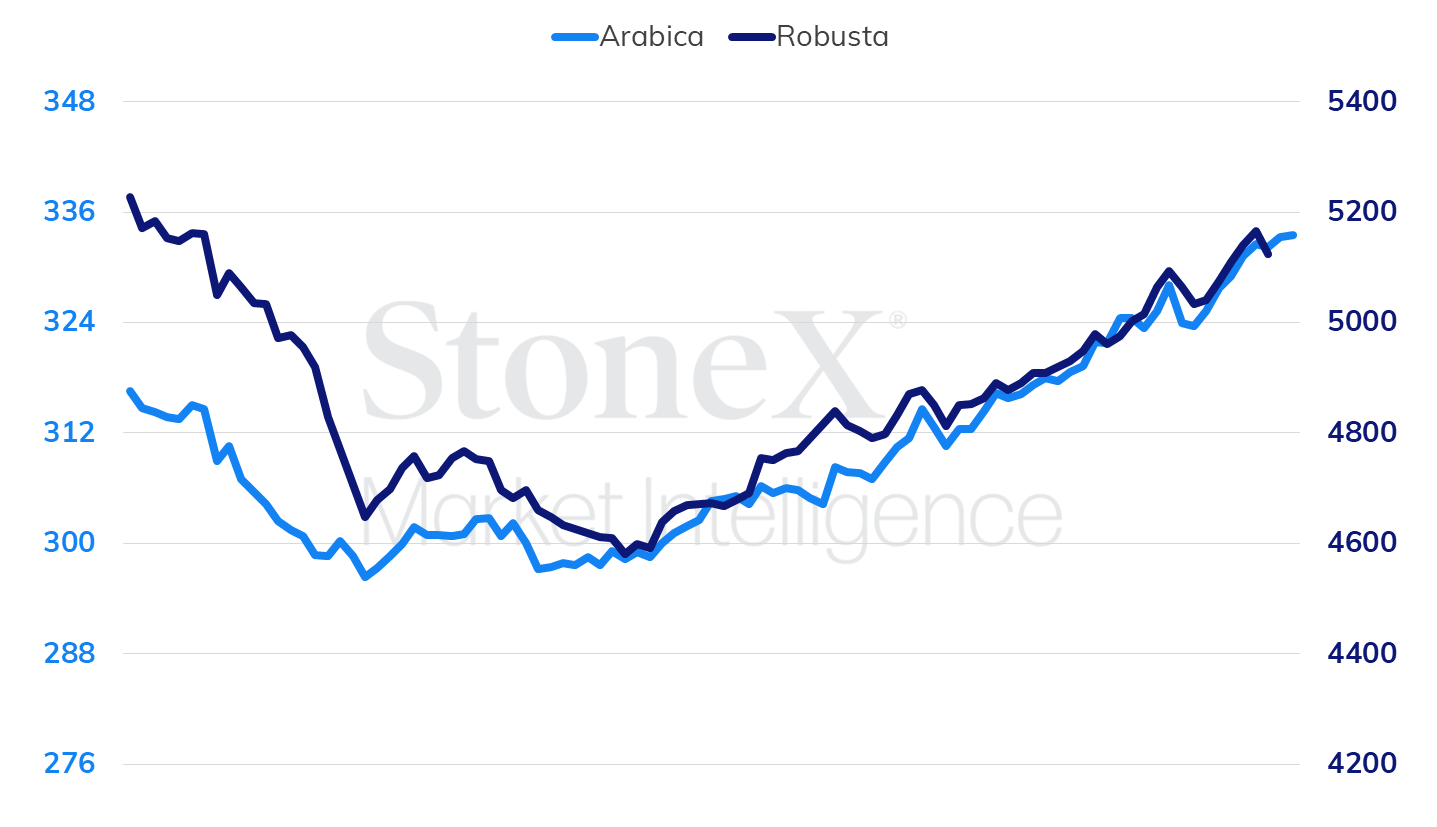
Coffee futures prices started the week with significant losses, both on the New York and London exchanges. In New York, a strong liquidation of contracts resulted in a drop of 2200 points (-6.9%) for the March contract. In London, the decline was even steeper at 10.6%. However, prices rebounded for the remainder of the week.
For the week, arabica coffee futures increased by 1220 points (3.8%) to US¢ 330.25/lb. In London, despite a recovery at the end of the week, prices closed down USD 261/ton (4.9%), finishing at USD 5116/ton. The week was marked by high price volatility, with the difference between the week’s high and low reaching US¢ 41.65/lb (14.4%) in New York and USD 802/ton (17.8%) in London.
On Monday’s session (09), arabica futures prices were virtually unchanged at the time of writing, with the most active contract showing a slight gain of just 0.20%. In London, however, prices showed a strong increase of USD 127/ton (+2.48%) amid concerns over robusta supply and harvesting delays in Vietnam.
Weekly Intraday (Most Active Contract) – 02/12 to 06/12
In the Brazilian domestic market, prices followed the trend observed abroad, with arabica coffee prices rising and robusta prices falling. The Cepea indicator for arabica coffee increased by 0.8% to R$ 2115.10/bag. Meanwhile, the robusta indicator fell by 4.2% to R$ 1709.47/bag. Another key factor was the 2% rise in the dollar for the week.
From a fundamentals perspective, there were no major changes in recent weeks. The coffee market continues to react to the reduced supply scenario, especially for robusta, delays in Vietnam's harvest caused by excessive rain, and the outlook for a smaller arabica crop in Brazil next season.
For Vietnam, last week, the USDA published its report from the country’s attaché, updating the current season’s production estimate. The USDA raised its production projection from 29 to 30.1 million bags. The main increase came from the robusta production estimate, which rose from 27.85 to 29 million bags.
Despite the department's update, the market does not unanimously agree with this production estimate, with expectations averaging around 27/28 million bags. Furthermore, excessive rainfall in the country has delayed the harvest, which has been ongoing since mid-November.
Regarding Brazil's production potential for 2025/26, StoneX's preliminary estimate already points to a decline of more than 10% in arabica production, due to poor flowering set caused by the weather. During December, January, and February, Brazilian coffee crops will go through critical development stages, requiring adequate weather conditions. Additionally, in the coming months, estimates from public and private organizations for Brazilian coffee production will be released, drawing the attention of market participants.
Throughout the week, the market will analyze Brazil’s export data for November, published by the Council of Brazilian Coffee Exporters. Data from the Foreign Trade Secretariat (Secex) indicated that Brazil exported 4.76 million bags in the month, representing an increase of 22% compared to November 2023. In the first 10 months of the year, Brazil has already exported 41.45 million bags of coffee, of which more than 38 million were green coffee.
TABLE OF INDICATORS