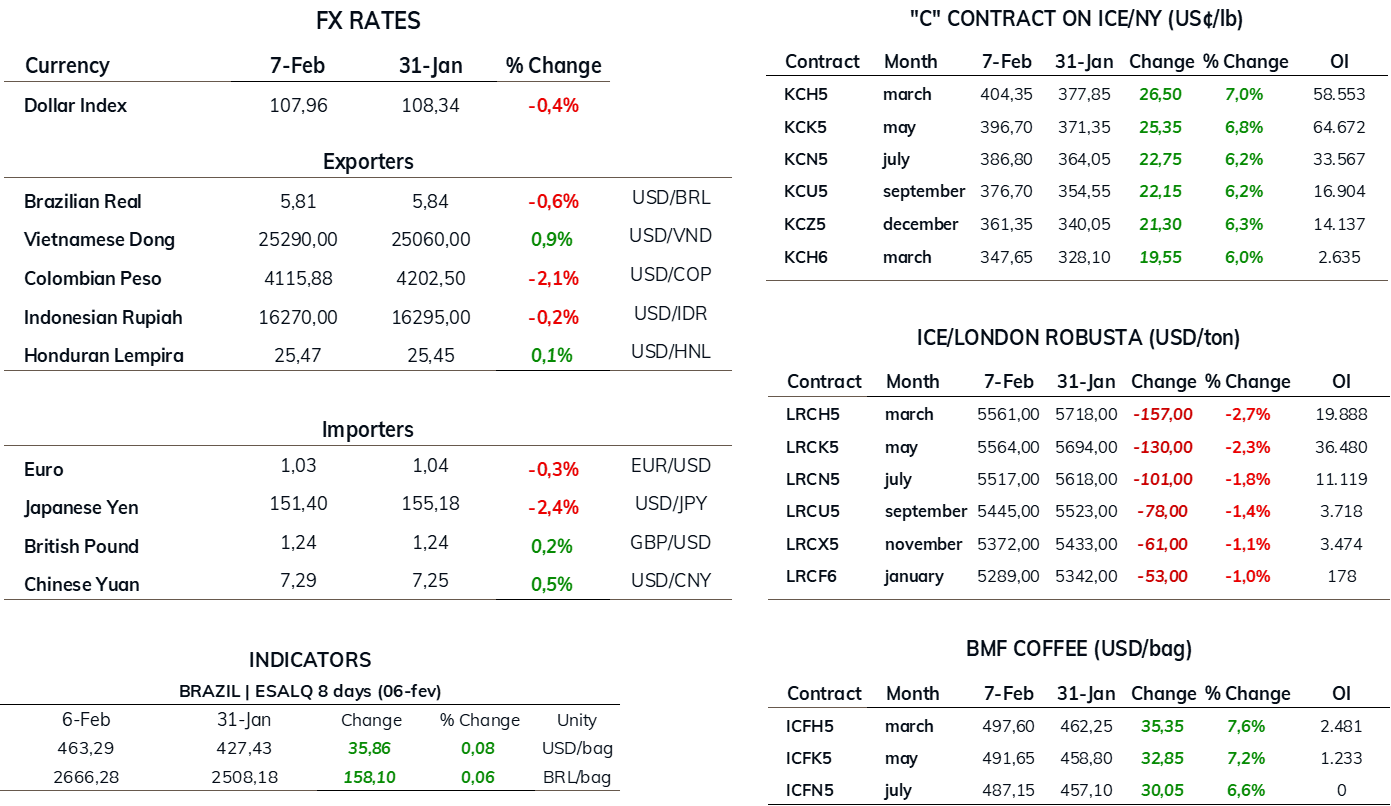
• Arabica coffee reached US¢ 404.35/lb on ICE, posting a 7.0% weekly increase and a 26.5% gain in 2025.
• Robusta coffee closed the week at USD 5,564/t, down 2.3%.
• The Cepea arabica indicator rose 5.8% during the week, reaching BRL 2,654/bag, with a 19% year-to-date gain.
• The Cepea robusta indicator declined 0.8% over the week but is still up 11.1% in 2025.
• ICE-certified stocks fell 12.2% since January 20, totaling 862,000 bags.
• Logistical issues persist, with delays, vessel rescheduling, and cargo rollovers.
• Seculative movements have fueled the price rally, with funds increasing bullish positions.
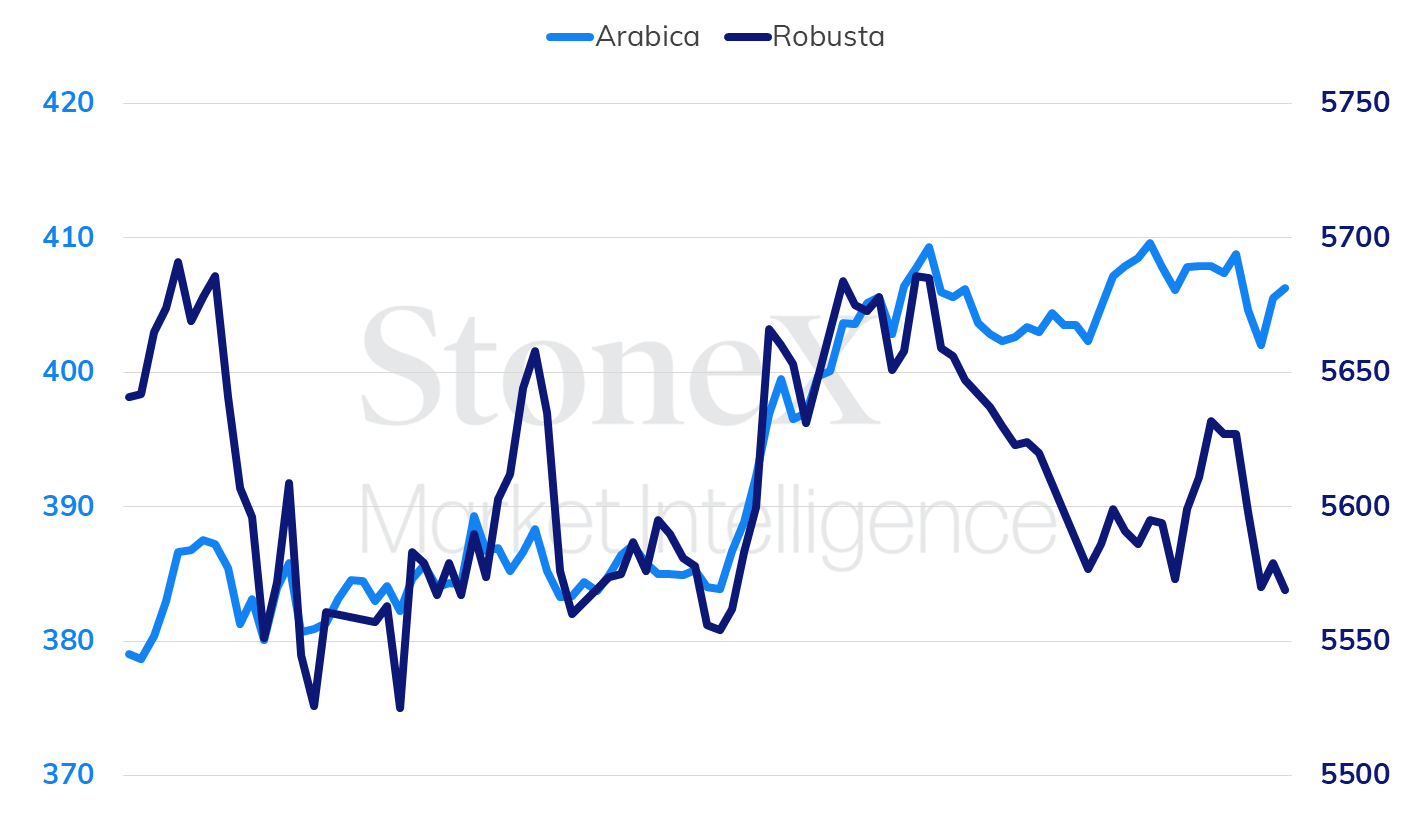
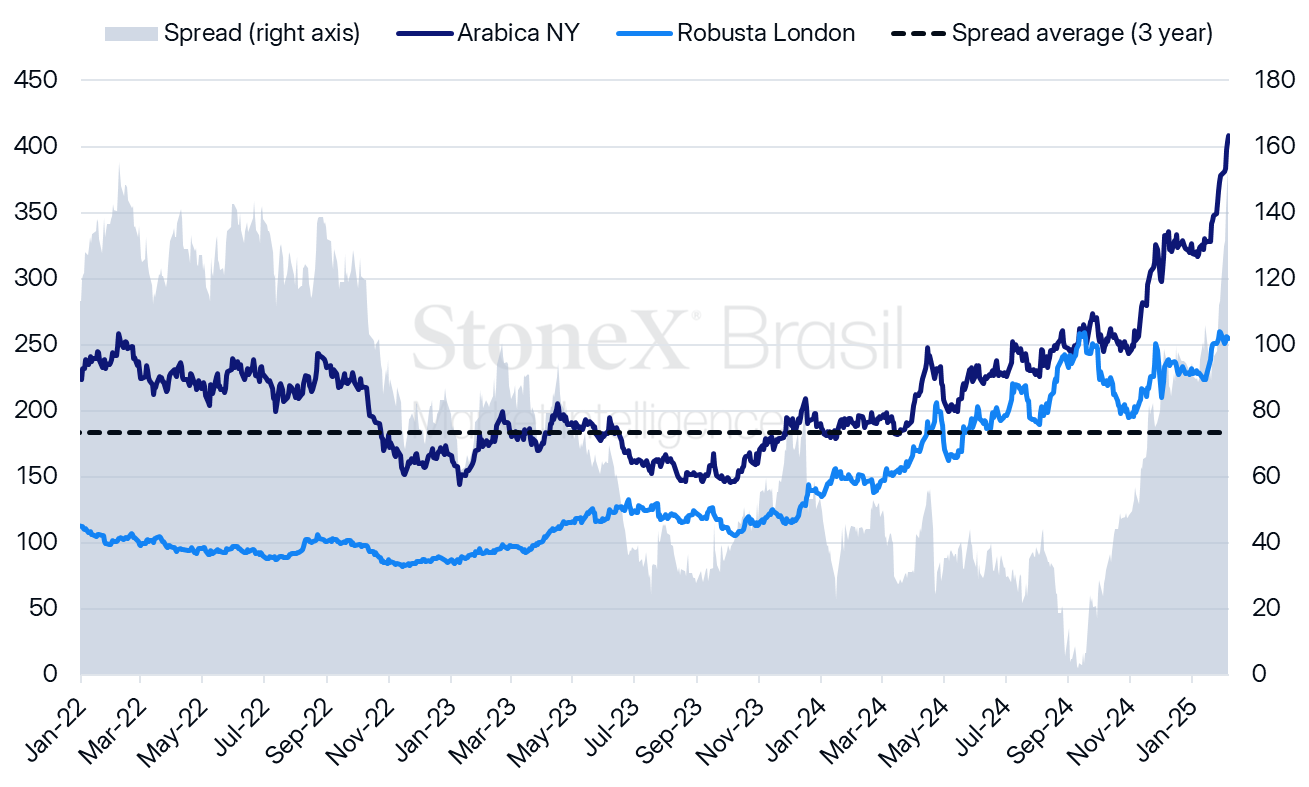
• The arabica-robusta spread between NY and London widened to US¢ 150/lb, well above the three-year average.
• Favorable weather in January supported grain filling, but February may bring irregular rainfall.
• The market remains focused on weather conditions and their impact on the 2025/26 crop.
For another consecutive week, coffee renewed its all-time highs on the New York exchange, surpassing the US¢ 400.0/lb mark for the first time in history. The peak occurred on Thursday (6), when prices hit an intraday high of US¢ 411.25/lb, closing the day at US¢ 403.95/lb. Prices have been supported by concerns over coffee availability and declining stocks, both in Brazil and particularly in consumer countries, while expectations of lower-than-expected yields for the 2025/26 Brazilian crop keep the market on edge. The March/25 contract closed the week at US¢ 404.35/lb, a 7.0% weekly increase and a 26.5% gain in 2025.
Robusta coffee also continues to trade near record levels reached the previous week. However, prices showed greater stability, ending the week down 2.3% at USD 5,564/t.
Domestic Market
In Brazil, despite the recent appreciation of the real against the dollar, coffee prices continued to rise. The Cepea arabica indicator climbed 5.8% during the week and is already up 19% for the year, closing last Friday at BRL 2,654/bag. Since the beginning of 2024, when arabica was priced at BRL 1,009/bag, prices have accumulated a 164% increase in just over a year. Robusta coffee follows the same trend. The Cepea robusta indicator ended last week at BRL 2,057/bag, a slight 0.8% decline over the week. However, this still represents an 11.1% increase for the year and a 171% gain since the start of last year.
Intraday weekly (most active contract) – 02/03 to 02/07
Supply Chain Bottlenecks and Speculative Movements
As mentioned, low stock levels—combined with the "just-in-time" purchasing model adopted by the industry, acquiring coffee as needed—and ongoing logistical challenges across Asia, Europe, and Brazil have created bottlenecks in the market. Cecafé continues to report shipment delays, vessel rescheduling, and repeated cargo rollovers. Additionally, speculative movements have driven price surges in recent days, with funds adding bullish positions and pushing prices even higher.
The stock situation is also reflected in the decline of ICE-certified inventories. Between late 2024 and early this year, exchange stocks have been decreasing over the past three weeks. On Friday (7), ICE reported certified coffee stocks at 862,000 bags, down 120,000 bags or 12.2% since January 20. During periods of tight supply, exchange stocks typically serve as a last-resort alternative for sourcing.
What Could Reverse the Trend?
Positive developments on the supply side would likely be the main factor that could trigger a significant price correction. However, as a major upside surprise in upcoming harvests seems unlikely, the market may continue to find support for sustained high price levels. That said, some key factors could drive short-term corrections:
- With the Relative Strength Index (RSI) indicating an overbought market, technical corrections and profit-taking by speculative funds—especially if they believe prices have peaked around the US¢ 400.00/lb range—could contribute to adjustments.
- Recent gains in New York have not been matched by London, causing the price spread between the front-month arabica contract in New York and robusta in London to widen significantly. Last week, the difference reached nearly US¢ 150/lb, well above the three-year average of US¢ 73.3/lb. A larger spread could accelerate a shift in buyer preference toward robusta coffee.
- In the medium term, high consumer-end inflation could impact demand to some extent, potentially easing upward pressure—especially as new Brazilian harvests enter the market.
Arabica and Robusta Coffee Prices on NY and London Exchanges (US¢/lb) and Spread
Source: ICE. Elaboração: StoneX.
Weather Update
Following the expansion of coffee cherries to their maximum size, one of the most critical phases of development begins—known as grain filling. For proper grain development, regular rainfall and mild temperatures are necessary.
In January, weather conditions were ideal for this process, with consistent rainfall. In some regions, particularly in Matas de Minas and Sul de Minas, precipitation levels exceeded historical averages. Additionally, high cloud cover helped keep maximum temperatures below climatological norms, benefiting not only grain filling but also branch growth—another simultaneous process influencing the 2026/27 harvest.
On the other hand, February forecasts suggest that coffee-producing areas may experience irregular rainfall and, in some locations, below-average precipitation, which could impact the grain-filling phase. Monitoring consecutive dry days and temperature trends, especially maximum temperatures, will be crucial in assessing whether climate conditions will continue to affect the 2025/26 crop.
It’s important to note that concerns over a below-potential harvest are already reflected in current New York exchange prices. Improved weather conditions could help stabilize prices, while unfavorable weather could further fuel pessimism about the crop, providing continued support for historically high price levels.
TABLE