

Daily Coffee Report 8/4/26
Daily coffee report

StoneX Coffee Team
- Coffee
Quarterly Commodities Outlook is available for free now. Download your report →
By: StoneX Intelligence Brazil, StoneX Intelligence Brazil


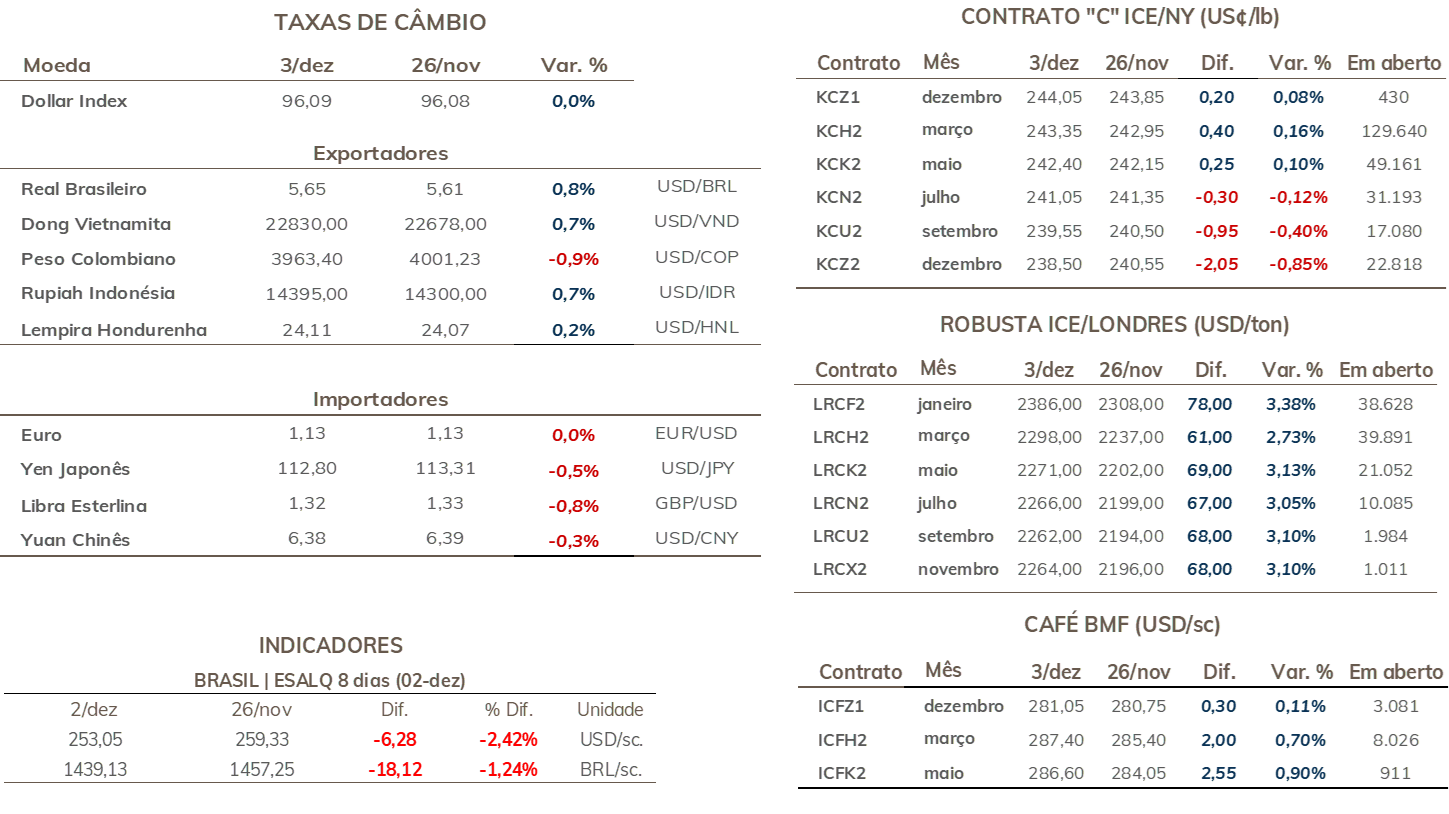
• Arabica coffee increases by 40 points (0.16%) in NY, closing quoted at US₵ 243.35/lb. Cepea indicator increases by USD 13.94 (0.95%) to USD 1471.19/bag, a historical high.
• Robusta increases by USD 78 (3.37%) to USD 2386/ton in London, with an appreciation of BRL 13.69/bag (1.66%) in Brazil to BRL 834.51/bag.
• Supply concerns should keep the market's bullish trend ▲
• Cooxupé has reduced its estimates for exports by almost 20% ▲
• Preliminary data show a 36.5% reduction in Brazilian exports ▲
• ICO: world exports 4.4% lower in October ▲
• La Niña and logistical problems keep supply concerns in the short term ▲
• Rabobank increases its estimate for Brazilian coffee production in 2022/23 ▼
• Coffee belt receives good rainfall levels ▼
• New variant and Covid-19 in Europe continue in the spotlight ▼
• La Niña: above-average rainfall in December may continue to hurt production in Vietnam, India, and Colombia ▲
• Amid caution abroad and GDP drop in Brazil, USDBRL ends week higher ▼
• Expectation of a more contractionary policy by the Fed favors the USDBRL ▼
• Copom and IPCA decision may support Brazilian currency ▲
• Strong IPCA and CPI releases may drive foreign currency flows out of the country ▼
▼ Bearish factors ▲ Bullish factors
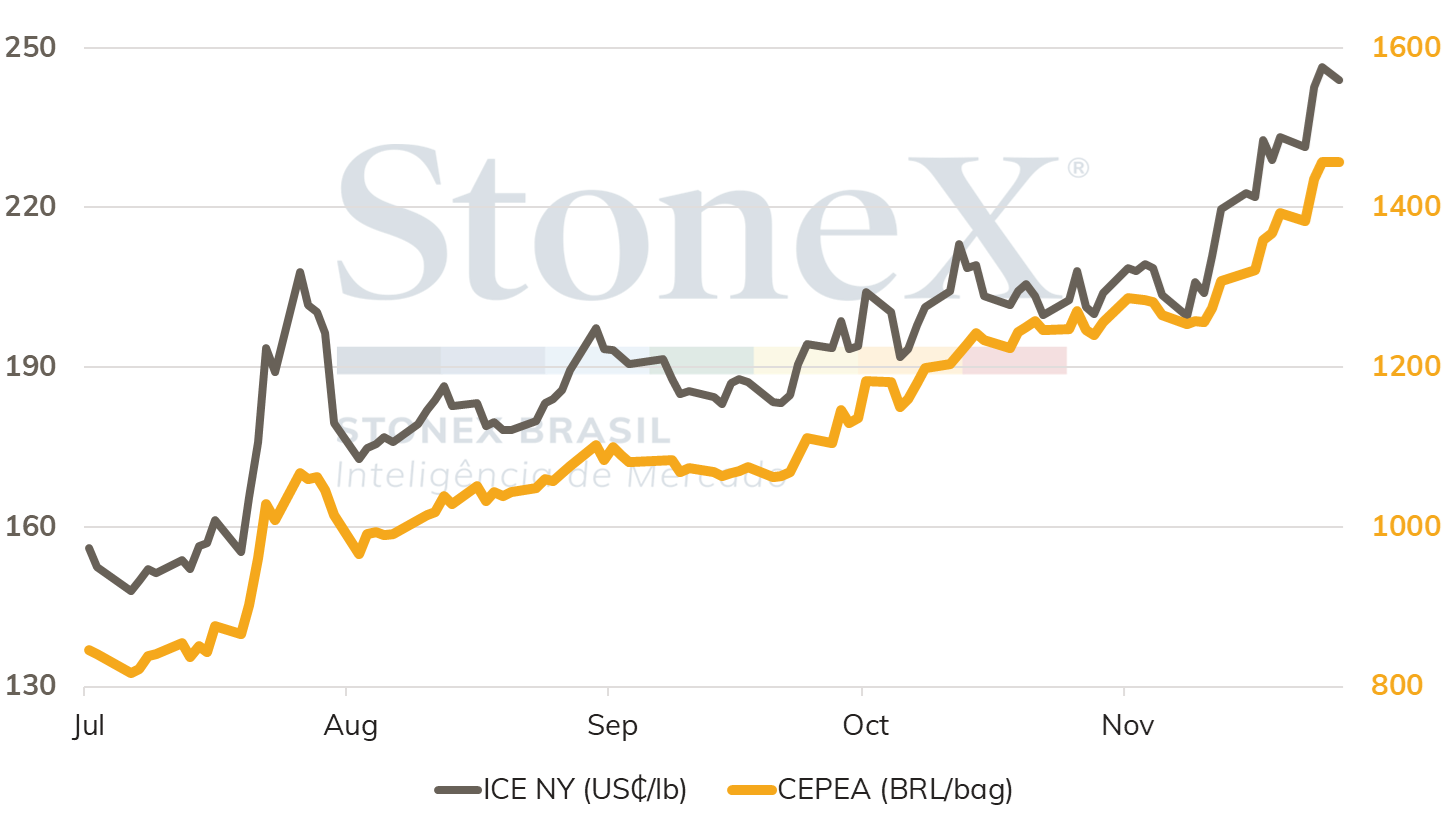
After a strong upward momentum in recent weeks, Arabica coffee prices appreciated, but in a less significant way last week on their main trading exchanges. The most active contract of Arabica coffee on the New York exchange (March/22) showed a weekly appreciation of 40 points (0.16%) to end Friday (03) quoted at US₵ 243.35/lb. In Brazil, the CEPEA indicator for Arabica coffee posted an increase of 0.95%, about BRL 13.94/bag to close Friday (26) quoted at BRL 1471.19/bag, a historical high for the index.
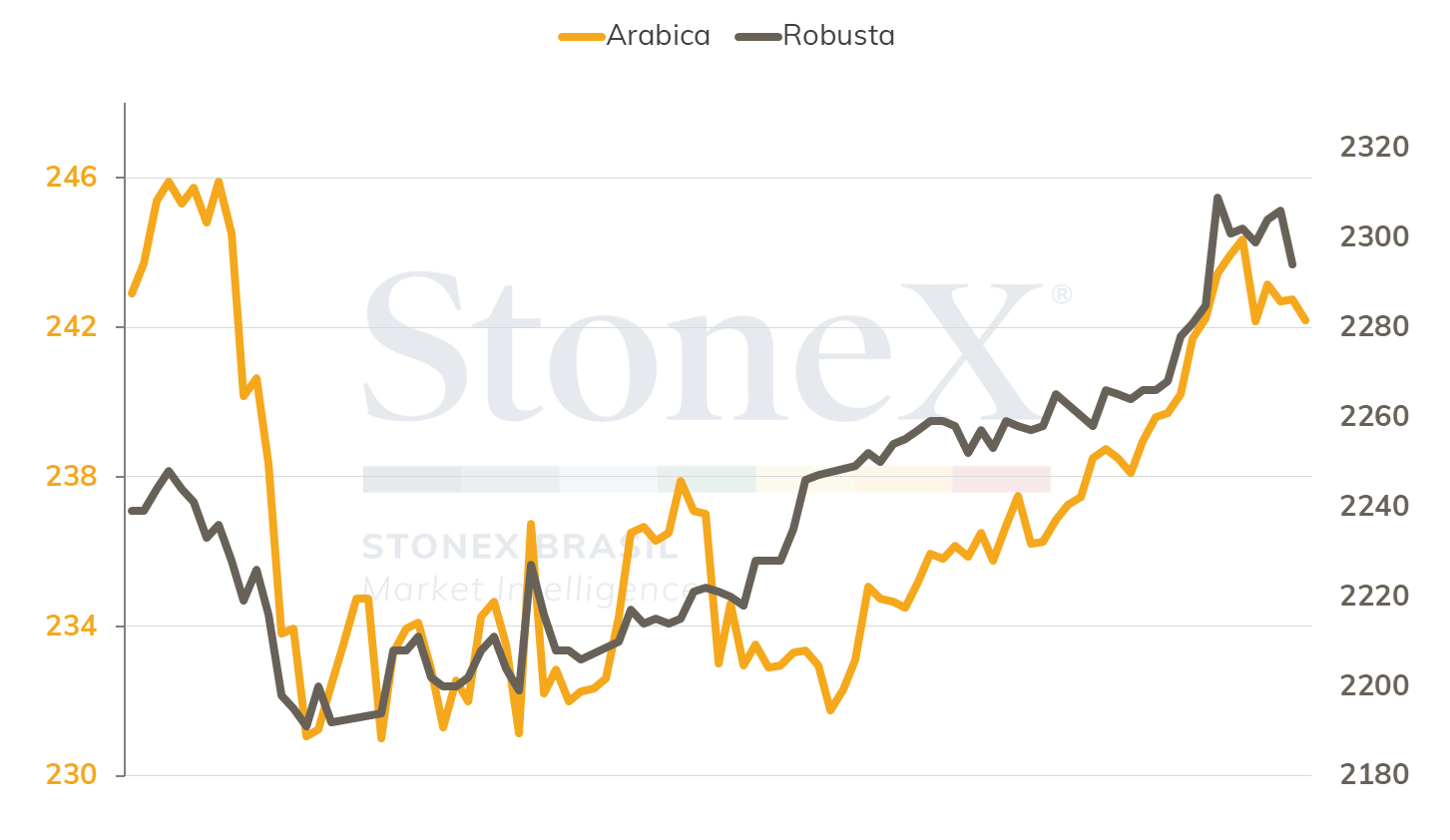
At the beginning of the week, the market showed a strong retreat, of more than a thousand points, between Friday (26) and Tuesday (30). After the discovery of the new Covid-19 variant, Omicron, there was a strong sell-off in coffee contracts, reflecting concerns about out-of-home consumption if social distancing measures were adopted again. However, some experts pointed out that the new variant may not be as severe throughout the week despite the uncertainties. Nevertheless, there are still many uncertainties regarding the new variant, so it should be monitored. After the cooling of concerns and the positive fundamental scenario, prices appreciated again in New York.
During the week, Cooxupé released its new estimates for exports in 2021, which were reduced by almost 20%. This scenario shows the seriousness of the logistical problems faced by coffee exporters. Furthermore, sources connected to the sector indicate no expectation of normalization of this condition in the short term. In line with what was presented, preliminary export data, released by the Ministry of Development, Industry and Foreign Trade (MDIC), showed that Brazilian coffee exports fell by 36.5% in November – the official Brazilian export data will be released on December 10 by the Coffee Exporters Council (Cecafé).
Brazil has suffered from the lack of containers and the sharp rise in costs. Other countries like Colombia, Vietnam, Indonesia and several others have also suffered the impacts of the pandemic in global logistics. Recently the International Coffee Organization (ICO) reported that the world exported 9.68 million bags in October, representing a reduction of 4.4% compared to exports in the same month last year. In the recently published USDA Attaché reports, the agency reduced its exports estimates to major coffee-producing countries, with a 5.7% reduction in Brazilian exports to 33.22 million bags, 10.6% in Vietnamese exports to 25.8 million bags, and 10.3% in Indonesian exports to 6.95 million bags.
During the week, Rabobank changed its estimate for Brazilian production in 2022/23 and released its estimate for the global supply and demand balance for the next crop cycle. At the beginning of November, the bank had estimated Brazilian production at 63.5 million bags. However, in November, the organization increased its estimate for the Brazilian crop in 2022/23 by 3 million bags to 66.5 million bags. Accordingly, the organization sees world production at 177.1 million bags and consumption at 173.8 million bags, resulting in a surplus of 3.3 million in 2022/23.
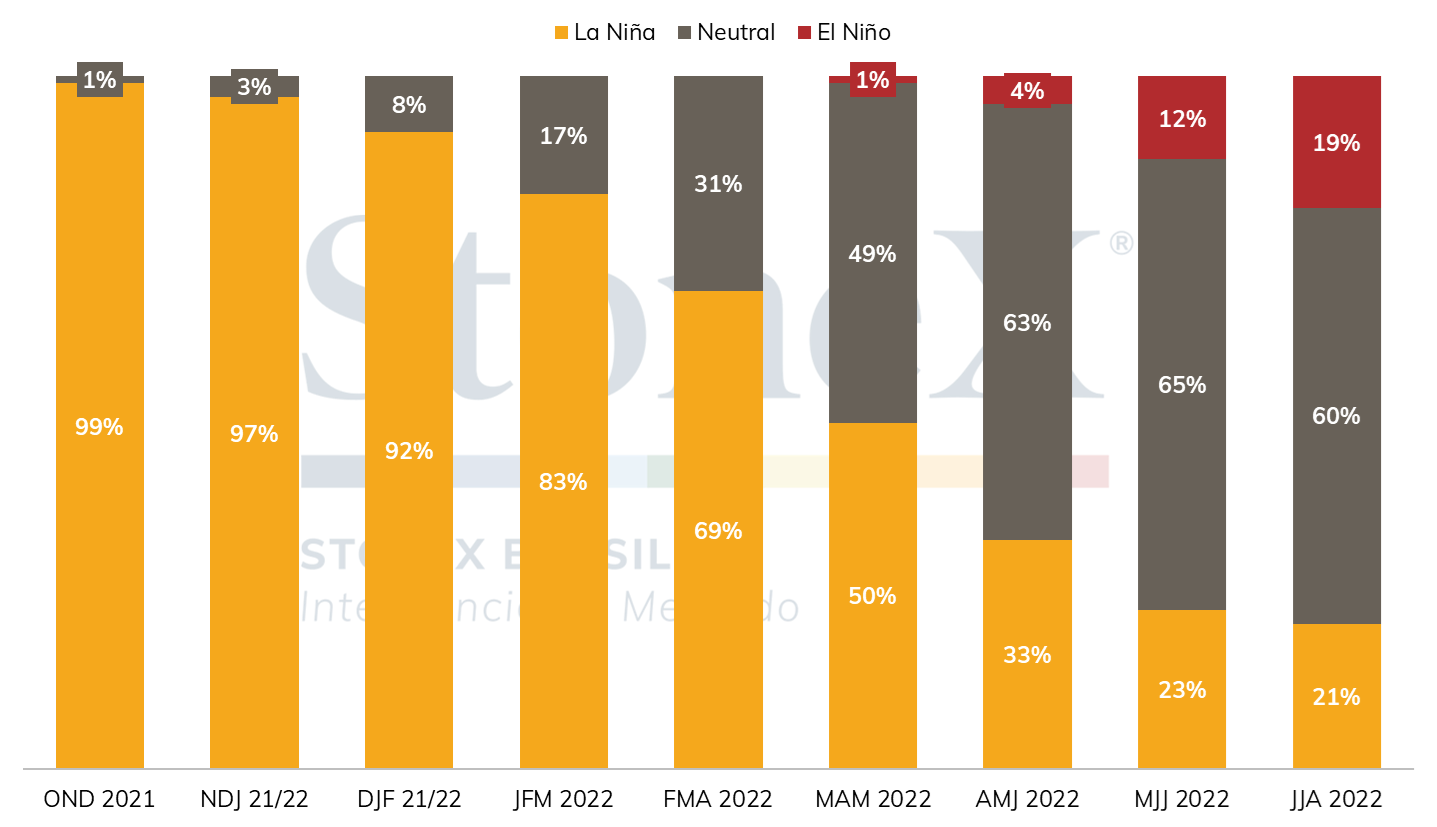
Regarding the weather, the latest available data indicate that the Pacific is expected to remain under the La Niña effect until March-April2022. This event has caused several problems linked to excess rainfall in Colombia, Central and Asia. In Brazil, the volume of rainfall observed in recent weeks has brought the accumulated rainfall for the last 60 days to within or above the historical average for the entire coffee belt, contributing to crops' development and recovery. For the next 15 days, accumulated volumes above 100 mm are expected for almost the entire production belt.
Last week, the Colombian Coffee Federation held the annual Colombia Coffee Growers Congress where they highlighted the struggle of the coffee farmer in today’s climate. The price of fertilizers in Colombia has increased 50% in 2021. Local prices of Colombian coffee (two bags of parchment coffee of 125kg) ended at COP2.136 million Colombian pesos ($551) on November 29. But production costs have risen from COP850,000 and COP900,000 last year to COP950,000-COP 1.050 million pesos.
The Colombian government is mulling launching a bailout to the most financially hurt coffee cooperatives hit by the default of delivery of coffee beans.
A working table has also been set up to understand the economic difficulties of coffee exporters, cooperatives. The working table will be comprised by the finance ministry, the Banco Agrario, The Agricultural Guarantee Fund, the cooperatives regulator SuperSolidaria, coffee exporters and the coffee growers federation. The government through the Legal Defense Agency will back up the cooperatives
that begin legal recovery against growers who unfulfilled with the delivery of beans in the futures market. In a lengthy process, the so-called “legal recovery” will allow cooperatives to take possession or liquidate the assets of the growers, who defaulted on coffee deliveries.
Many Colombian coffee cooperatives are on the risks of disappearing because Colombian coffee growers, who had committed to deliver beans in the futures’ market, have failed to deliver 50 million kilos of parchment coffee, or about 549,450 bags of 70-kg, according to Colombian economist Aurelio Suarez. In 2021-2022, more than 1 million bags of 60-kg will fail to be delivered, according to traders, analysts and market participants.
The growers committed to sell beans in the futures market at an average of 1 million and 1.2 million pesos per bag, but with coffee prices touching as high as COP2.1 million, many growers are unfulfilling with deliveries. The largest defaults are present in the provinces of Huila and Antioquia, Colombia’s first and second-largest coffee producing provinces respectively. They have failed to deliver 15 million kg of parchment coffee each.
The coffee growers´ federation has also launched a campaign that calls growers to meet with the delivery of beans. By 2021, domestic consumption of coffee in Colombia increased to 2.8 kg per capita & the incidence of coffee consumption increased from 86% in 2015 to 96% in 2021, that is, almost the population ceiling.
Fundamental focus remains dominated by the progress of Vietnam’s ongoing coffee harvesting season. Reports of delays on heavier than average rainfall have circulated the media.
The Vietnam National Center for Hydro-Meteorological Forecasting (NCHMF) has warned of moderate to heavy rain of 2-4 cm (5-10 inches) of rainfall across Khanh Hoa, Ninh Thuan, and Binh Thuan provinces and the South Central Highlands region. The NCHMF has issued a level 1 warning of natural disaster risk due to heavy rain, tornadoes, lightning, and hail. Authorities have warned of a very high risk of flash flooding and landslides in the mountainous areas from Quang Nam to Ninh Thuan provinces and the Central Highlands region. Forecast models indicate that the heavy rainfall and thunderstorms are likely to continue through at least Dec. 9. Sustained heavy rainfall could trigger flooding in low-lying communities near rivers, streams, and creeks. Landslides are possible in hilly or mountainous areas, especially where the soil has become saturated by heavy rainfall.
Between January and November, natural disasters in Vietnam, such as typhoons, flash floods, whirlwinds and landslides have ravaged the country, adding further challenges to the coffee sector.
Disruptions to the coffee harvest would exacerbate the ongoing logistical challenges of port congestion, shipping delays and container shortages during a time when demand is on the rise.
The Institute of Policy and Strategy for Agriculture and Rural Development, Vietnam, has forecasted the country’s coffee exports to increase in the coming months due to an increased global demand. According to the Vietnam Coffee and Cocoa Association, coffee exports in November and December 2021 is expected to reach approximately 130,000 tons each month. If the current price can be maintained, it is expected to bring in US$600mn before the year ends and reach the annual coffee turnover threshold of US$3bn.
As a result of the growing demand, the latest data showed Robusta ICE stocks 1.747 million bags, as of Dec. 5, down from 1.920 million bags about a month ago.
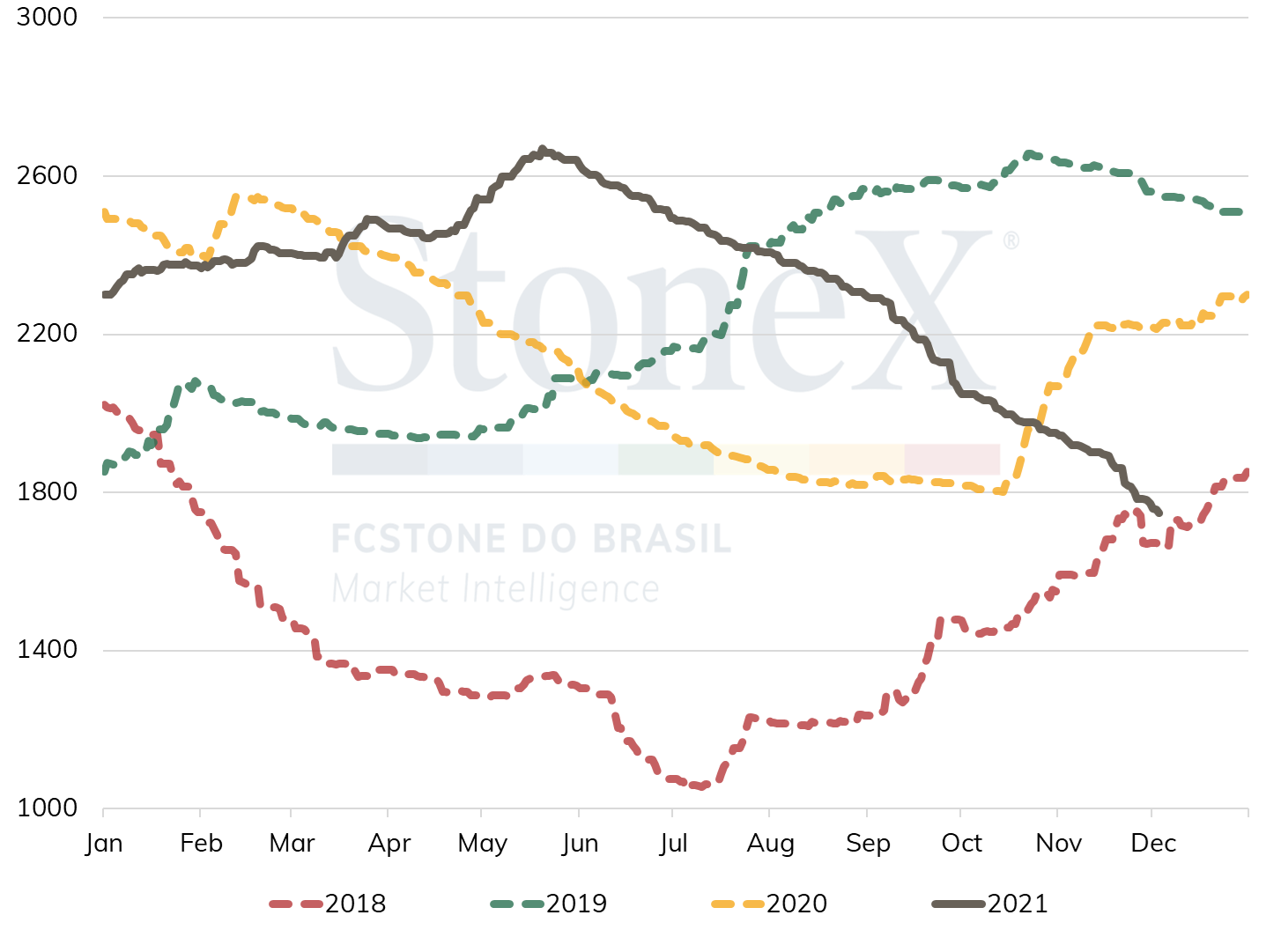
The USDBRL appreciated last week in the Brazilian foreign exchange market, with the real/dollar pair high by 1.5% to close Friday (3) quoted at BRL 5.679, the highest weekly close since the end of October. However, demand for safe-haven assets abroad, due to the new doubts imposed by the new Covid-19 variant and the statements made by the Federal Reserve Chair, and the indication of a technical recession in the Brazilian economy, contributed to the BRL depreciation.
The Omicron variant continues to provoke caution in global markets this past week. Although the information gathered so far suggests that the mutation symptoms are milder than the other variants, the growing number of countries with confirmed new cases and the mixed information about the possible lower effectiveness of vaccines should continue to inspire some caution among agents. There are also fears that logistical operations could again be hampered by possible lockdowns and social distancing measures, especially in countries that have adopted stricter measures against Covid-19 since the beginning of the pandemic, such as China, or, in the case of the coffee market, Vietnam.
Also contributing to the USDBRL's advance were statements by Fed Chairman Jerome Powell that it is time to put aside the word "transitory" for the country's inflationary increase and that it would be appropriate to accelerate the reduction of stimulus to the US economy. As one of the main figures to defend the transitory nature of inflation in recent months, Powell's change in posture raises expectations that the Federal Open Market Committee (FOMC) may already decide in its next meeting for a faster reduction of the Fed's asset purchase program.
Thus, a probable scenario of a faster than expected reduction of dollar liquidity in the short term is configured, with indications that the basic interest rate should also be raised at a closer moment in 2022. These factors are bullish for the dollar.
Last week, the Bureau of Labor Statistics (BLS) released the November employment situation report for the United States. Although the report pointed to a balance of 210,000 new jobs created, significantly below analysts' projections (545,000), a significant drop in the unemployment rate, which dropped from 4.6% in the previous month to 4.2%, continues to indicate an improvement in the labor market situation in the country.
Internally, the approval of the provisional measure that creates the Auxílio Brasil basic income transfer program by Congress and the approval of the PEC of judicial bonds by the Senate, after modifications requested by the senators, have moved the political scene. Check the analysis in the last FX Weekly Summary to follow the changes made to the proposal in more detail.
The approval, if on the one hand means a victory for the government in what has become one of its main goals for the year, on the other, despite reducing the fiscal uncertainties in the country, it also indicates an increase in public debt and the legal risks that the measure imposes. Due to the changes made in the Senate, the proposal will return for a new vote at the Chamber of Deputies. The theme that should stay on investors' radar in the political news this week, since the president of the Chamber of Deputies, Arthur Lira (PP-AL), signaled that he will try to seek a partial approval of the proposal to accelerate the release of the aid before Christmas, leaving the changes made by senators to be voted only in 2022. The Senate's resistance to the partial vote may generate political instability in Brasilia in the coming days.
A factor that contributed to the devaluation of the Brazilian currency was the release by the IBGE of Brazil's GDP for the third quarter, which indicated a retraction of the economy by 0.1%. Despite the positive performance for the services sector (1.1%), the result was influenced mainly by the drop in agricultural production (-8.0%), while the industry sector remained steady. Furthermore, due to the negative result also in the second quarter (-0.4%), the country is now in a technical recession – the technical term used when the GDP is reduced for two or more quarters.
On the week's calendar, it is worth noting the interest rate decision by the Monetary Policy Committee (Copom) of the Central Bank (BC) on Wednesday (8), with most agents betting that the year will end with the basic interest rate (Selic) at 9.25% p.a., which would represent an increase of 1.5 percentage points in this week's meeting. It will be important to check the statement to follow the discussion among the collegiate members about the Central Bank's performance in a scenario of high inflation and economic recession.
On Friday (10), investors are also likely to reflect the release of the November Broad Consumer Price Index (IPCA) by the Brazilian Institute of Geography and Statistics (IBGE) and the November US Consumer Price Index by the BLS, both of which expect inflation to remain at high levels, which may contribute to greater risk aversion this week.

The StoneX Group Inc. group of companies provides financial services worldwide through its subsidiaries, including physical commodities, securities, exchange-traded and over-the-counter derivatives, risk management, global payments and foreign exchange products in accordance with applicable law in the jurisdictions where services are provided. References to over-the-counter (“OTC”) products or swaps are made on behalf of StoneX Markets LLC (“SXM”), a member of the National Futures Association (“NFA”) and provisionally registered with the U.S. Commodity Futures Trading Commission (“CFTC”) as a swap dealer. SXM’s products are designed only for individuals or firms who qualify under CFTC rules as an ‘Eligible Contract Participant’ (“ECP”) and who have been accepted as customers of SXM. StoneX Financial Inc. (“SFI”) is a member of FINRA/NFA/SIPC and registered with the MSRB. SFI is registered with the U.S. Securities and Exchange Commission (“SEC”) as a Broker-Dealer and with the CFTC as a Futures Commission Merchant and Commodity Trading Adviser. References to securities trading are made on behalf of the BD Division of SFI and are intended only for an audience of institutional clients as defined by FINRA Rule 4512(c). References to exchange-traded futures and options are made on behalf of the FCM Division of SFI . StoneX is a trading name of StoneX Financial Ltd (“SFL”). SFL is registered in England and Wales, Company No. 5616586. SFL is authorized and regulated by the Financial Conduct Authority [FRN 446717] to provide to professional and eligible customers including: arrangement, execution and, where required, clearing derivative transactions in exchange traded futures and options. SFL is also authorised to engage in the arrangement and execution of transactions in certain OTC products, certain securities trading, precious metals trading and payment services to eligible customers. SFL is authorised & regulated by the Financial Conduct Authority under the Payment Services Regulations 2017 for the provision of payment services. SFL is a category 1 ring-dealing member of the London Metal Exchange. In addition SFL also engages in other physically delivered commodities business and other general business activities which are unregulated and not required to be authorised by the Financial Conduct Authority. StoneX Group Inc. acts as agent for SFL in New York with respect to its payments services business. StoneX APAC Pte. Ltd. acts as agent for SFL in Singapore with respect to its payments services business. ‘StoneX’ is the trade name used by StoneX Group Inc. and all its associated entities and subsidiaries.
Trading swaps and over-the-counter derivatives, exchange-traded derivatives and options and securities involves substantial risk and is not suitable for all investors. Past performance of any futures or option is not indicative of future success. Indicators are not a trading system and are not published as a specific trade recommendation. The information herein is not a recommendation to trade nor investment research or an offer to buy or sell any derivative or security. It does not take into account your particular investment objectives, financial situation or needs and does not create a binding obligation on any of the StoneX group of companies to enter into any transaction with you. You are advised to perform an independent investigation of any transaction to determine whether any transaction is suitable for you. No part of this material may be copied, photocopied or duplicated in any form by any means or redistributed without the prior written consent of StoneX Group Inc.
© 2026 StoneX Group Inc. All Rights Reserved.
Our subscribers have access to comprehensive market analysis from StoneX spanning commodities, equities, currencies and more.
Daily coffee report

August 4 – The benchmark Dow Jones Industrial Average surged into the close yesterday to finish almost 700 points higher, at a record close of 53,178 points – easily clearing the previous top from almost a month ago. The S&P 500 is on the brink of its own record as well, while the NASDAQ index is short of June highs but working on a strong three-session rally. All three are pointing to positive openings today. Palantir (a U.S. software company) reported better-than-expected earnings yesterday afternoon post-close to boost the tech sector, though a host of other firms reported strong earnings as well. The ten-year note continues to retreat from Friday’s high, now at 4.67%, with the dollar on the high side of level-par, while the VIX index now under 16 shows reduced volatility.

Daily coffee report
Our market expertise, advanced platforms, global reach, culture of full transparency and commitment to our clients’ success all set us apart in the financial marketplace.
Reach
With access to 40+ derivatives exchanges, 180+ foreign exchange markets, nearly every global securities marketplace and numerous bi-lateral liquidity venues, StoneX’s digital network and deep relationships can take clients anywhere they want to go.
Transparency
As a publicly traded company meeting the highest standards of regulatory compliance in the markets we serve; our financials and record of accomplishment are matters of public record. StoneX’s commitment to “doing the right thing over the easy thing” sets us apart in the industry and helps us build respect, client trust and new partnerships.
Expertise
From our proprietary Market Intelligence platform, to “boots on the ground” expertise from award-winning traders and professionals, we connect our clients directly to actionable insights they can use to make more informed decisions and achieve their goals in the global markets.