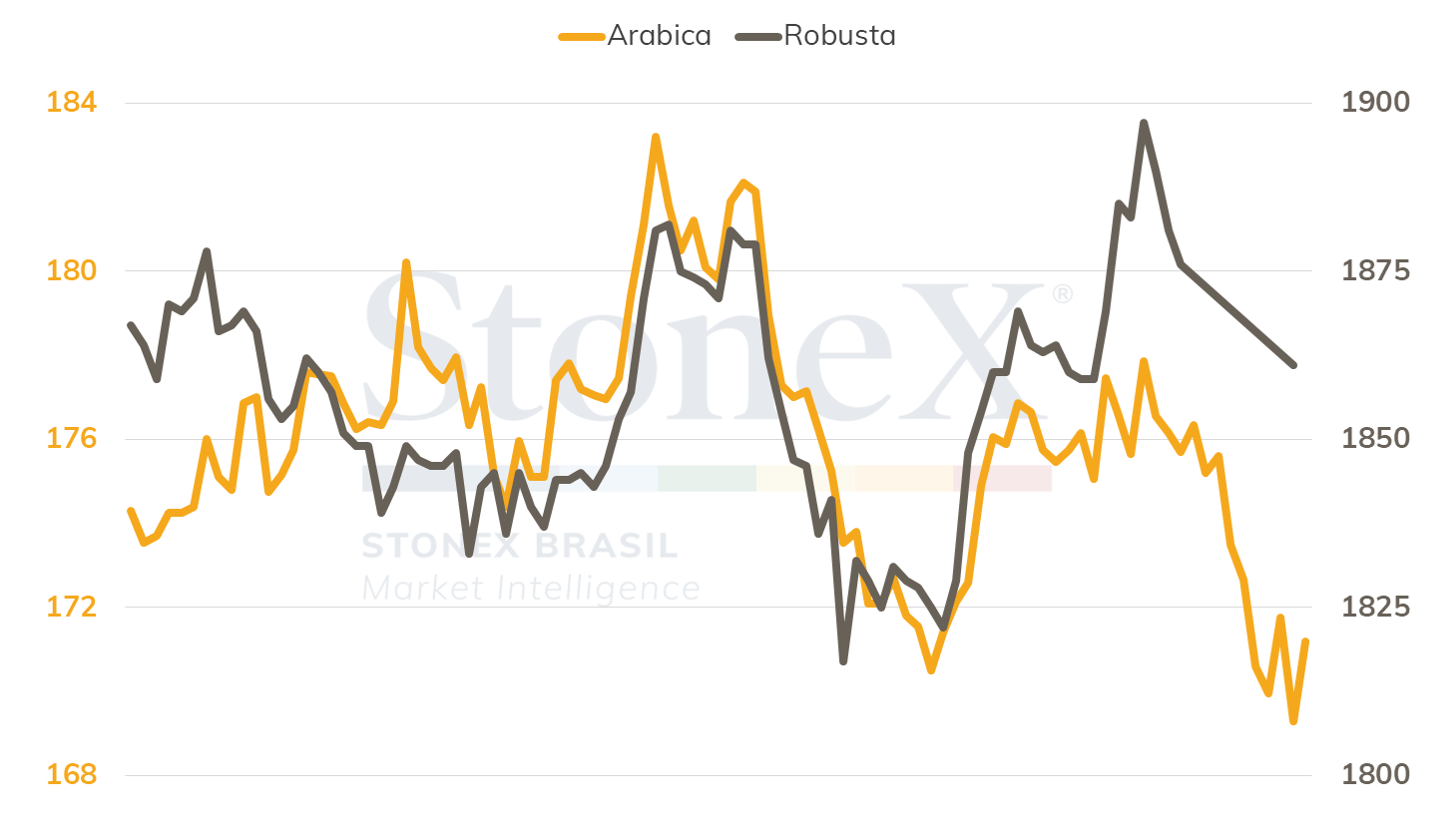
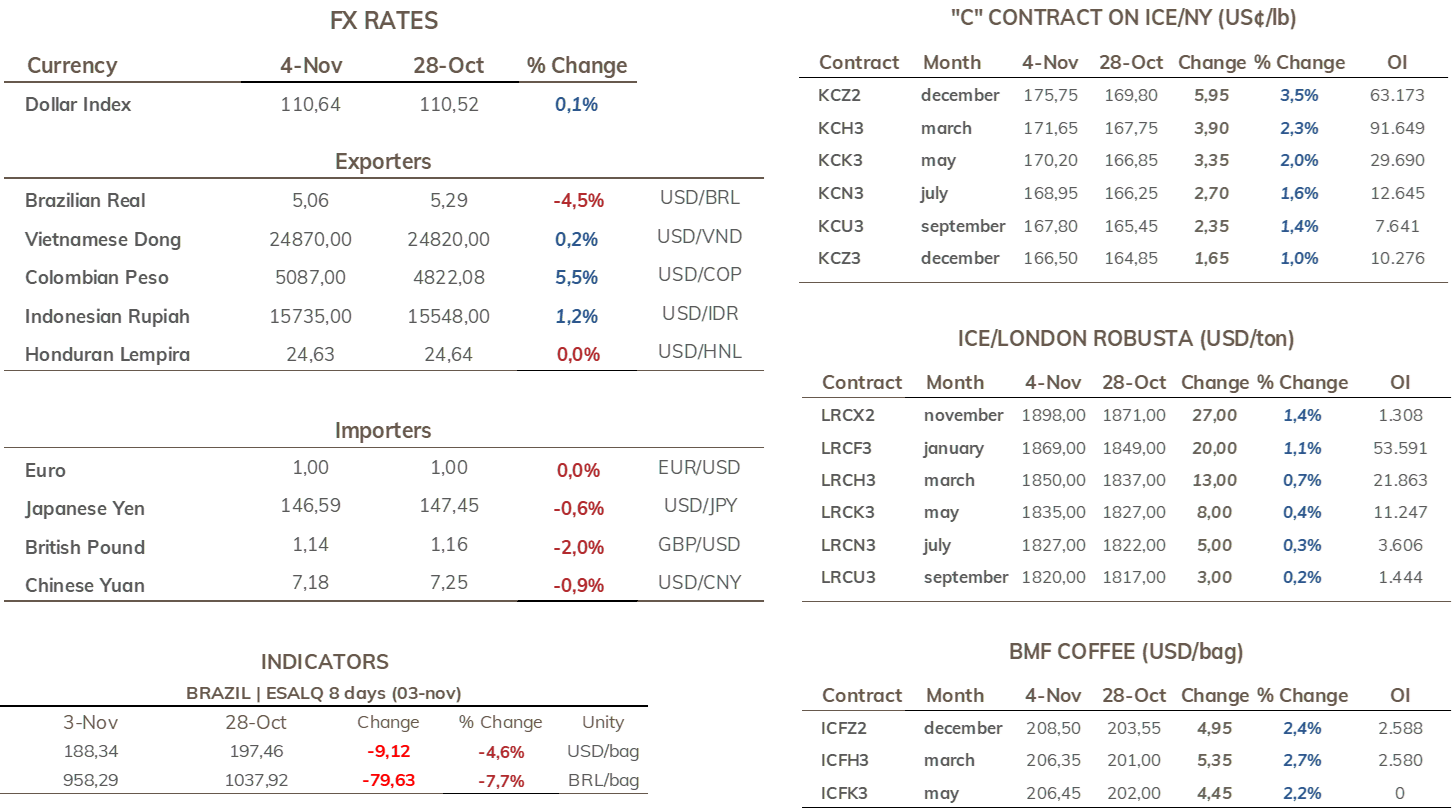
In Brazil, the USDBRL drop contributed to a new retraction in domestic prices. Cepea’s Arabica indicator fell by 2.6% and ended the week quoted at BRL 961.53/bag. The Robusta coffee, on the other hand, fell by 4.0%, closing Friday quoted at BRL 557.79/bag.
As previously mentioned, a "perfect storm" put heavy pressure on coffee prices in October. The return of rainfall in Brazil has the greatest weight in this movement. Still, the growth of inflation on consumer coffee in the United States and Europe also acted as bearish factors, creating fear with a possible drop in consumption, the progress in Brazilian exports, the increase in stocks at US ports and a strong technical movement promoted by spec funds.
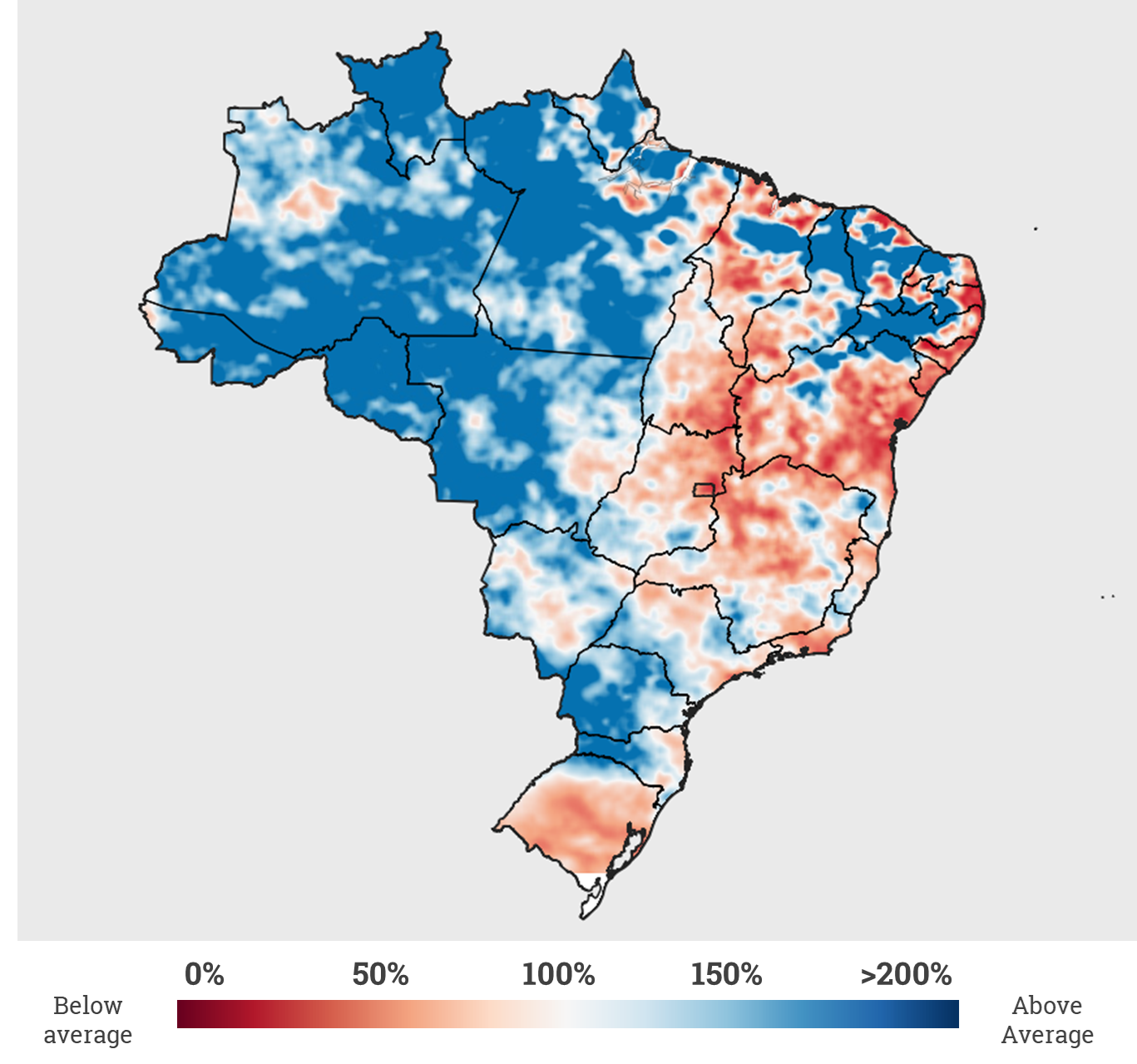
The rains should continue with some regularity in the coffee belt in the next two weeks, making it difficult for prices to regain the levels above US₵ 200.00/lb observed as of mid-October. However, it is worth noting that despite the return of the rains, the overall balance for the weather in October is mixed. In the precipitation anomaly map on average of the last 20 years, we can see that the producing regions of South of Minas, Matas de Minas and Mogiana intersperse areas had above and below-average rainfall in the last month. Despite receiving good volumes, the Cerrado region was mostly below the historical average for the month. That said, the continuity of regular rainfall in November is a key point for the 2023/24 crop to meet the expectations of high production that market participants have been creating for some weeks.
Rainfall anomaly in Brazil in October 2022 relative to the average of the last 20 years
Source: StoneX, with data provided by NOAA / NCEP / (GFS: Global Forecast System).
The increase in the volume of stocks pending grading and certification on the ICE NY exchange can add bearish pressure and should remain a point of attention for the coming weeks. Between October 25 and last Friday (4), the stocks pending classification increased from 646 bags to 171,000. Of these, 21 thousand bags were graded on Monday, bringing the certificates back above the 400 thousand-bag level. The trend is that some of these pending coffees continue to be approved and incorporated into stocks, easing the recent drops to 23-year lows.
On the other hand, the sharp drop in the dollar has added a bullish element to quotations. In the first week after the conclusion of the presidential elections in Brazil, the real/dollar pair saw a weekly drop of 4.7%, ending Friday quoted at BRL 5.052. As mentioned in Market Intelligence Brazil's FX Weekly report, the foreign exchange market posted a strong appetite for Brazilian assets, reassured by the reduction in uncertainty and the formal beginning of the transition between governments.
Falling exports from CENTRAL AMERICA countries support prices
While expectations for a bumper crop in Brazil pushed prices down, pessimistic records regarding other origins kept prices from falling further last week. According to the Honduran Coffee Institute (IHCafe), Honduras exported 42,800 bags of coffee in October, a significant 46.66% drop compared to the equivalent month last year for the world's 4th largest producer of Arabica coffee. The Costa Rican Coffee Institute (ICafe) showed that the country exported 9.6 thousand bags in October, a 22.1% retraction compared to the same month in 2021.
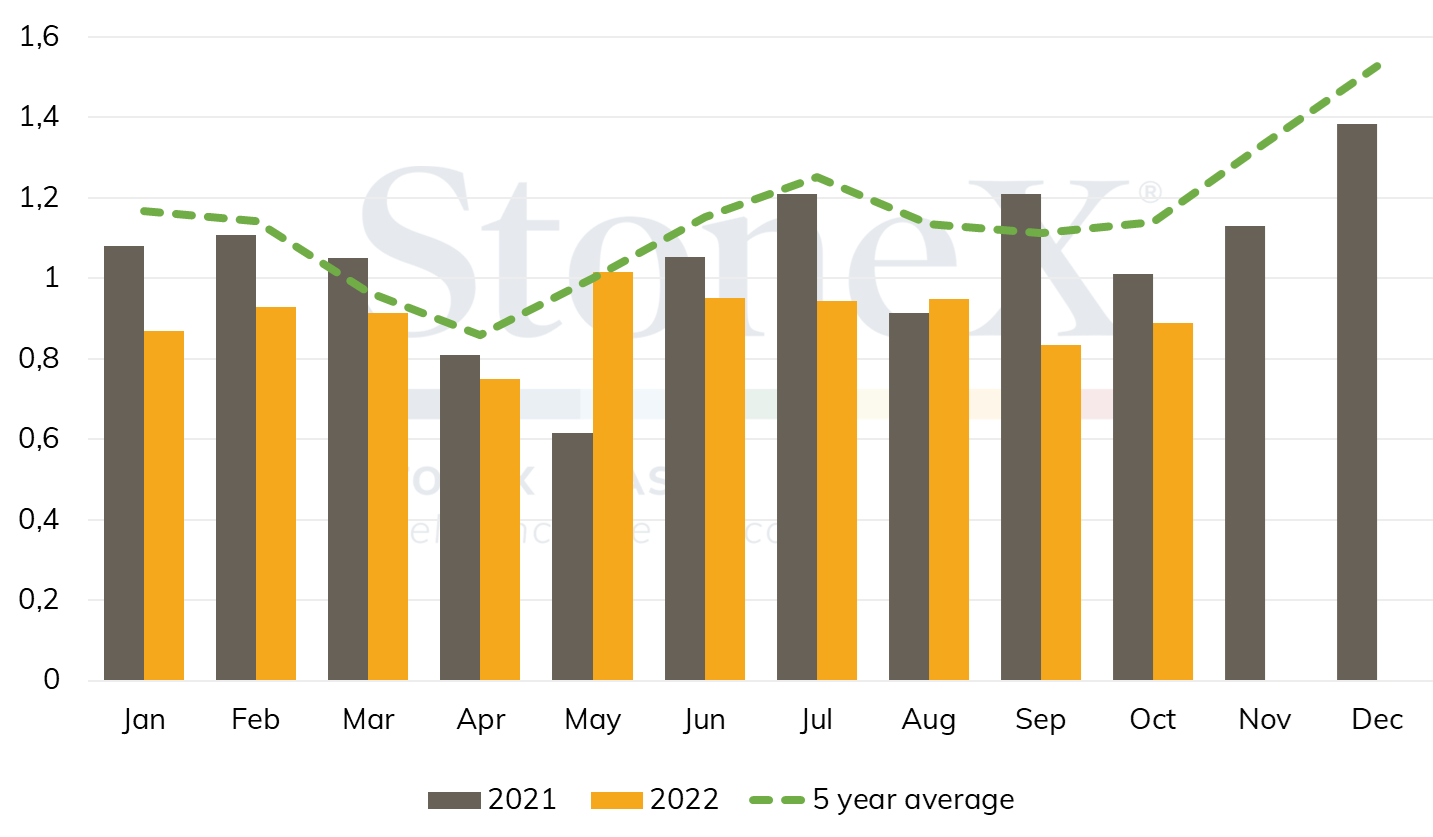
In Colombia, the 3rd largest coffee producer in the world and 2nd largest of Arabica coffee, the latest data released continues to reflect the difficulties the country has been facing with excessive rainfall caused by La Niña. According to the National Federation of Coffee Growers (FNC), Colombia's October production totaled 888,000 bags, 12.0% below the 1.012 million recorded in the same month in 2021. Colombia faces 28 months of excessive rainfall due to 3 consecutive years of La Niña, which should limit Colombian production to up to 12 million bags this season, below the average of around 14 million bags in normal years.
Monthly coffee exports by Colombia (million bags)
Source: FNC. Design: StoneX.
In addition to indications of reduced coffee availability from these origins, positive results from major coffee companies have helped to cool fears of a possible drop in consumption. Illycaffè, an important Italian premium coffee industry, reported that its revenues in the first nine months of the year grew by 15%, despite a 20% increase in its raw materials and logistics costs, with prospects of growth in its profits by the end of the year. According to the group, revenues were favored by a return to out-of-home consumption this year, emphasizing a 32% growth in the United States. Starbucks registered a revenue growth of 3.0% in the last quarter of its fiscal year (July-September/2022), with a 7% increase in its global sales and 11% in the United States. In its full fiscal year (Oct/21 - Sep/22), the company saw a 7% increase in sales.
Funds continue to add a strong bearish bias to the market
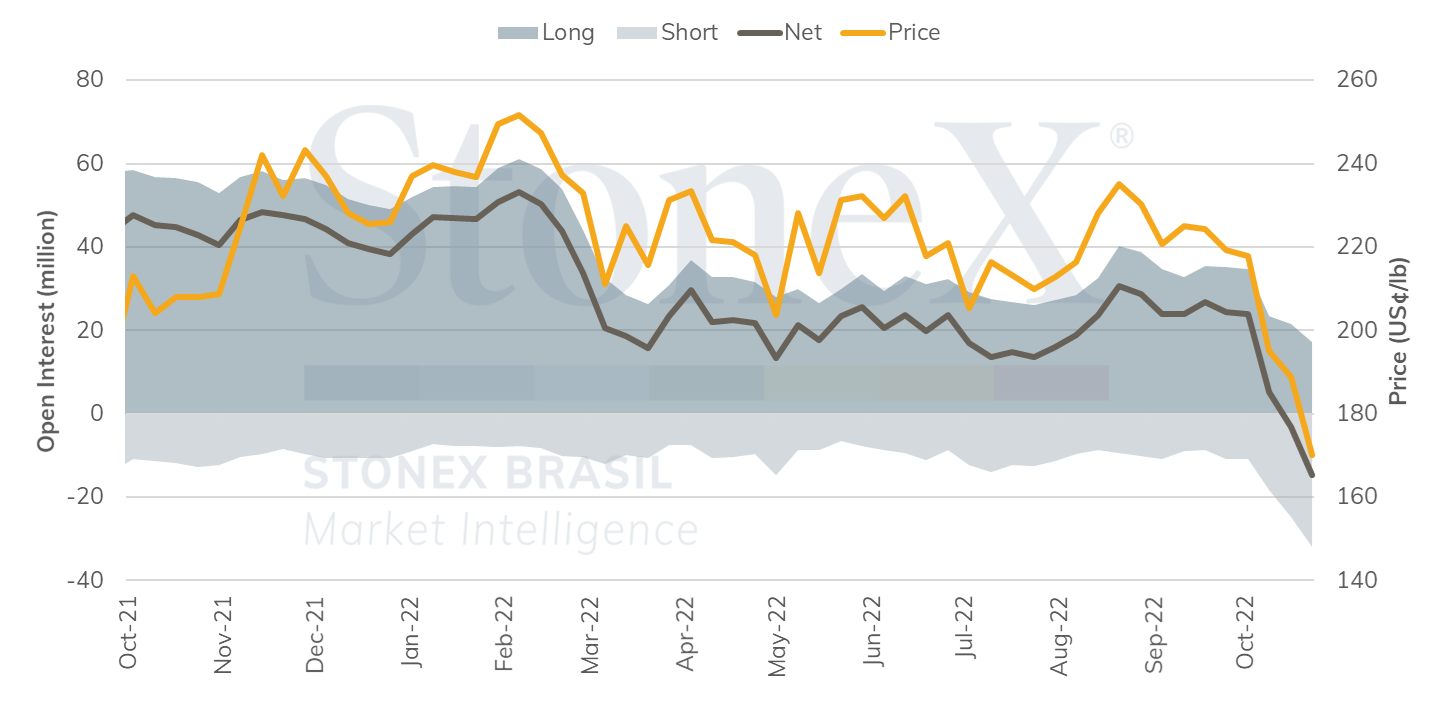
Spec funds continue to add significant downward pressure to the coffee market. According to the latest CFTC's Commitment of Traders (COT) report, speculative players reduced between October 25 and November 1, 4,321 long lots in New York coffee futures and options to 17,324 while adding 7,185 short positions to 24,729. Thus, the net specs balance, which in the previous week had entered short territory for the first time since July 2020, was extended by 11,506 lots to a total of 14,590 short positions. During the period, prices lost 1850 points, going from US₵ 188.7/lb to US₵ 170.20/lb. It is also worth noting the figure at 21,243 for open interest, which in this case, signals confirmation of a downward trend in the market.
Spec funds positions in coffee futures and options on the New York Stock Exchange
Source: CFTC, ICE. Design: StoneX.