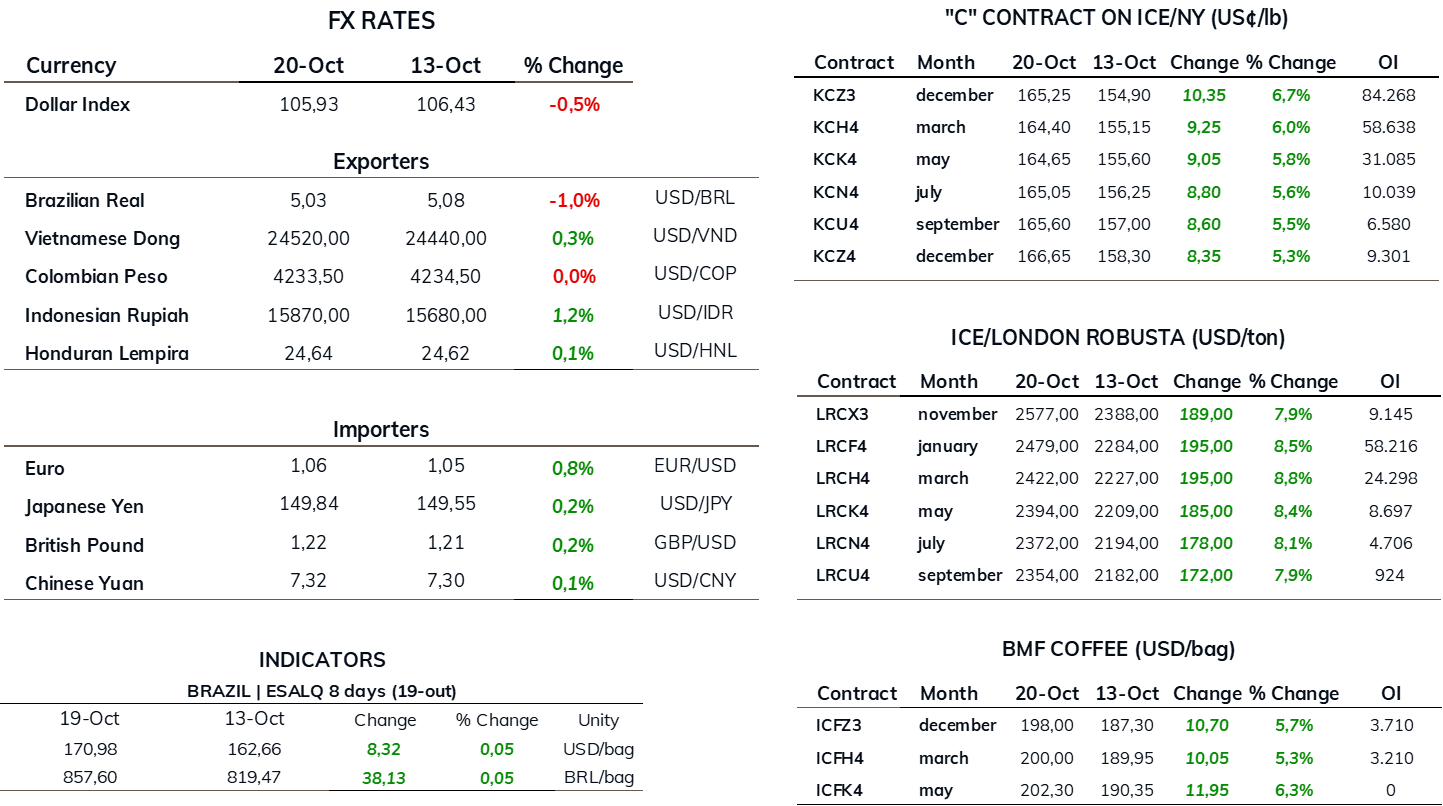
• Arabica coffee climbed 6.7% to close at 165.25 c/lb
• Robusta coffee prices rose 8.5% to USD 2479/t
• Cepea registered a rise of 5.0% for Arabica and 2.5% for Robusta
• Weather in Brazil remains the focus of market attention
• Reflecting El Niño, Indonesia experiences reduced rainfall
• Coffee movements remain in line with the commodities complex
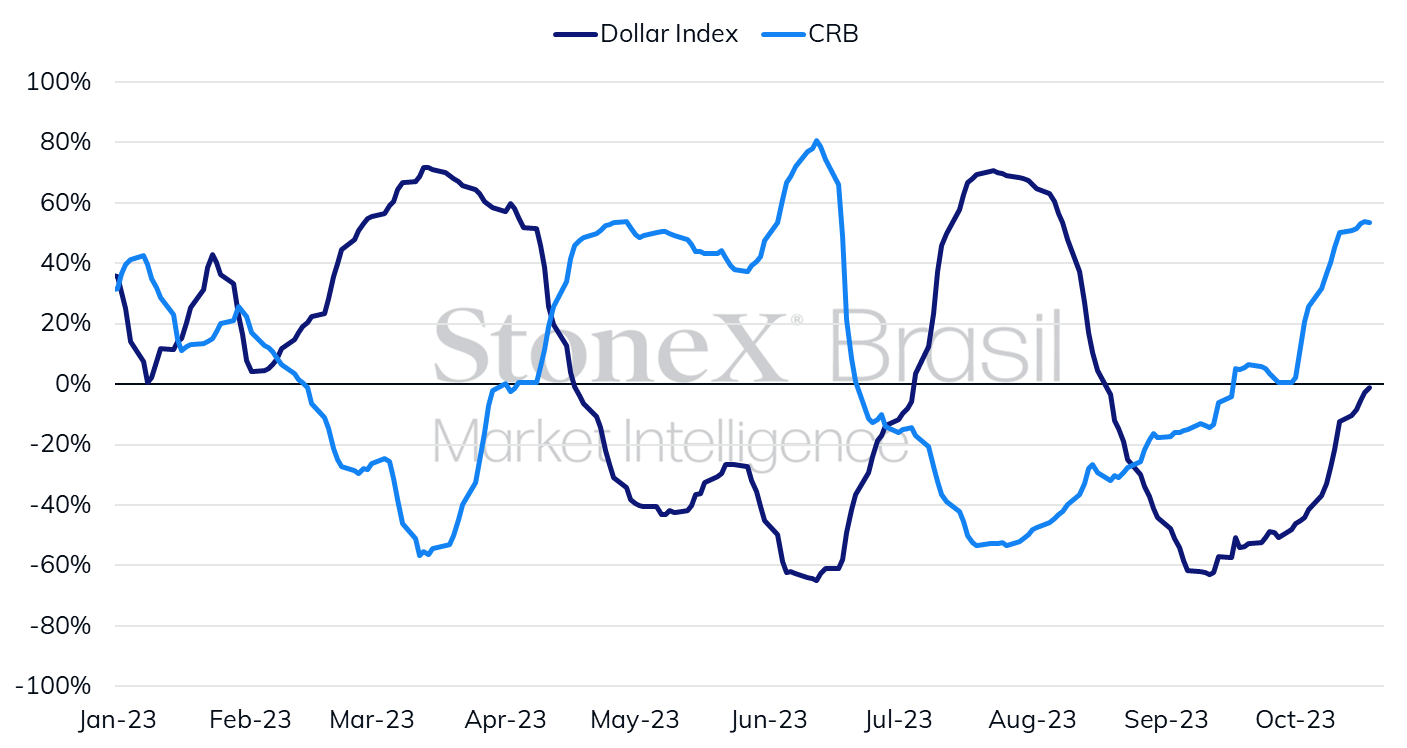
• Correlation between coffee prices in NY and the CRB index continues to increase
• Index funds increase their bullish bets, while specs reduce their short positions
• Macroeconomic scenario will remain on agents' radar this week
Last week, Arabica coffee futures extended their gains in New York, completing their second consecutive week up. A number of technical, macroeconomic and fundamental factors contributed to the week's advances.
The upcoming winter in the Northern Hemisphere, a period with a higher rate of consumption in the US and Europe, has supported price rises for the first contract (Dec/23), which has surpassed prices for the Mar/24 expiration date, placing these contracts on an inverse futures curve, or backwardation. However, the other contracts, with more distant expirations, remain on a carry futures curve, which indicates that agents' concerns are related to the availability of coffee in the short term.
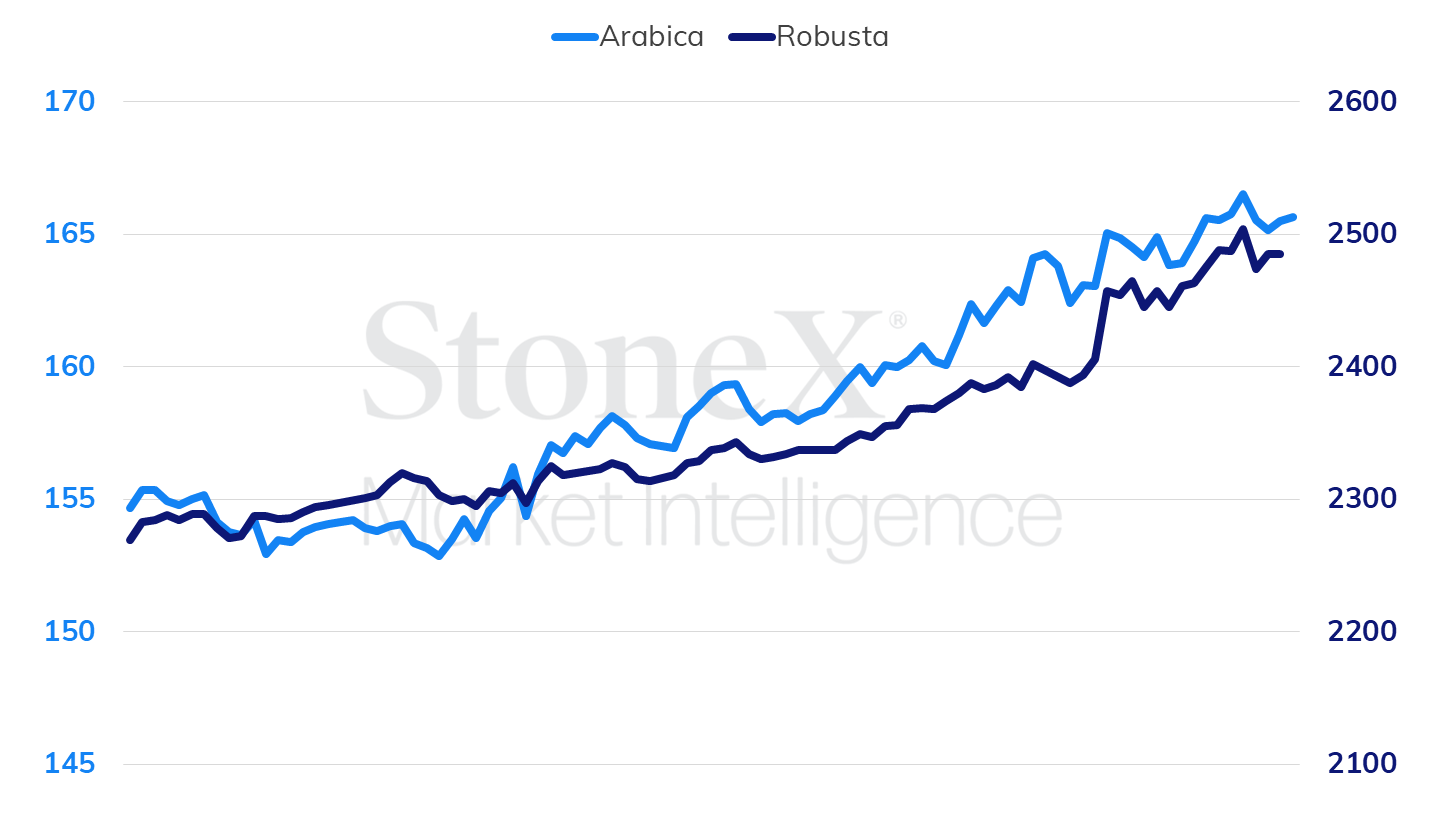
In New York, the most active contract, for December, ended the week up 1035 points (6.7%), closing the period quoted at 165.25 c/lb. For Robusta coffee, the most active contract in London, due in January, ended the week with gains of USD 195/t (8.5%), closing Friday (20) quoted at USD 2479/t.
Weekly intraday (most active contract) – October 16 to 20
In Brazil, coffee prices on the domestic market followed the movements abroad and ended the week higher. The Cepea indicator for Arabica rose 5.0% to close last Friday (20) at BRL 860.54/bag. For Robusta coffee, the indicator rose 2.5% to BRL 652.27/bag.
From a technical and macroeconomic point of view, funds were seen covering short positions, and the rise in prices was related to the 1% drop in the dollar during the week. In addition, prices rose in line with the CRB commodities index, which can be seen in the increased correlation between coffee futures prices and the index, indicating a macro trend component behind the price rises (read the macro session below for more details).
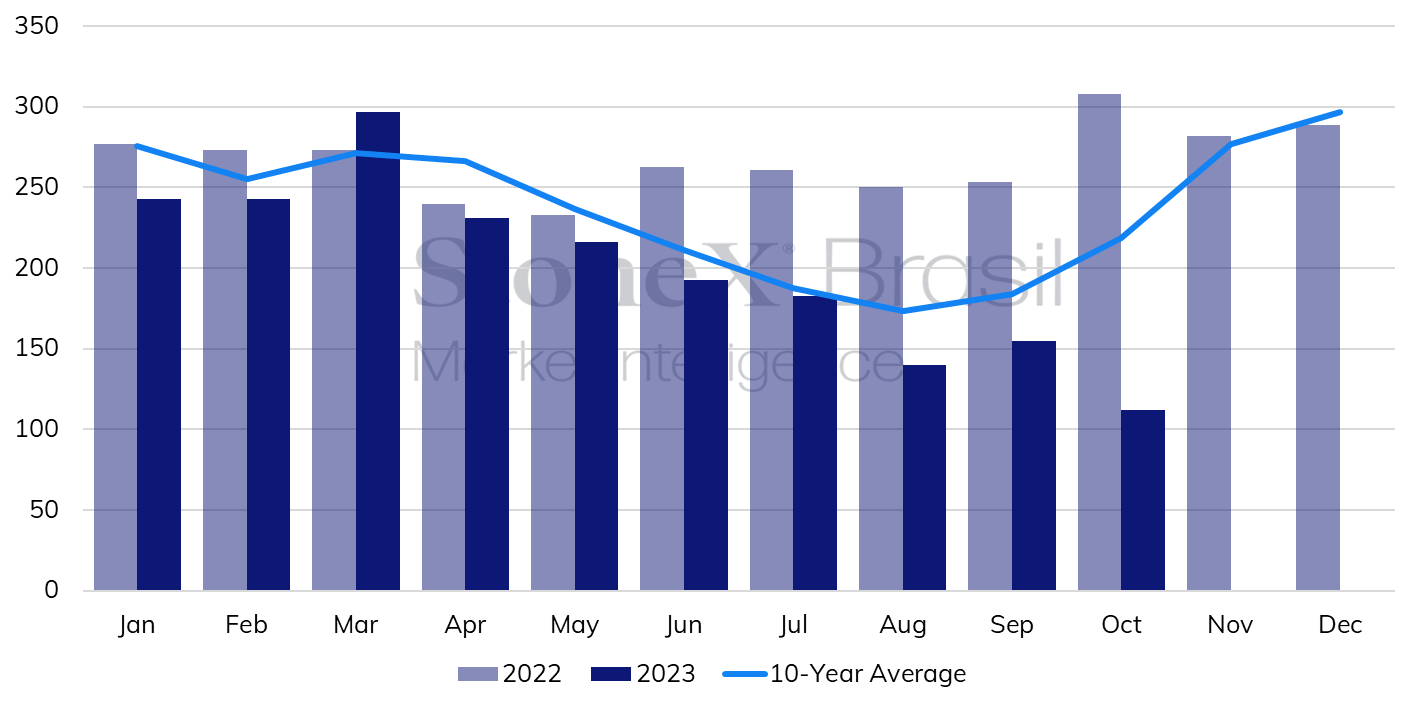
For Robusta coffee, in addition to the aforementioned factors, the commodity's futures have also reflected the lower volume of exports in Vietnam, which confirms the scenario of limited supply and concerns about the possible impact of the weather on Asian production. Indonesia's weather data shows that accumulated rainfall in recent months has been lower than last year and below the historical average for the period. The presence of El Niño is associated with dry and hot weather in Southeast Asia, which could have an impact on Robusta coffee production in the region. Partial data up to October 22 also indicates a volume below the historical standard and should end the third consecutive month significantly below the 10-year average.
Monthly rainfall in Indonesia (accumulated until October 22)
From the point of view of fundamentals, the weather continues to be one of the main points of attention, with the occurrence of El Niño adding to concerns about the impacts of the weather on production in both Brazil and other countries. In Brazil, continued favorable weather tends to contribute to optimism about the 2024 crop, however, any impact from El Niño has the potential to affect productive potential next season.
For Robusta, the dry weather in Indonesia has a bullish effect on prices, bearing in mind that, if it were to be affected, the country's production would be lower for two years due to problems with the weather, as Indonesia's crop has already lost more than 2 million bags due to the impacts of La Niña. On the other hand, the progress of the harvest in Vietnam, which is expected to begin in mid-November, could ease concerns about the product's supply.
Recently, coffee prices, especially Arabica, have been more closely aligned with the fluctuations seen in the commodities complex, leading the macroeconomic scenario, as well as the weather market, to be the main factors behind recent price movements. In this sense, by updating the same correlation chart that we presented in our coffee report two weeks ago, it becomes clear that the correlation with the CRB Commodity Index has not only remained the same, but actually intensified a little in recent weeks. As such, fluctuations in the price of raw materials due to global news, such as the conflict between Israel and Hamas, for example, may continue to have a significant influence on coffee as well.
Correlation of Arabica coffee in NY with the dollar index and the CRB commodity index
Another factor that supports this scenario is the movement shown by the latest CFTC report. According to the report released last Friday (20), in the period between October 10 and 17, index funds, which usually follow macroeconomic fundamentals, increased their net long position in coffee futures and options on the New York exchange from 42,949 lots to 46,677 lots, the highest level in about a month. In addition, speculative funds reduced their net short position by 8,625 lots, from 24,406 to 15,781 lots, showing a reduction in specs' bets on a bearish scenario for coffee.
As such, the macro scenario should be the focus of agents over the next few days, since, in addition to the conflict in the Middle East, investors will be following the release of the latest economic indicators for the US ahead of the Fed's next monetary policy decision on December 1st. Currently, after better-than-expected data for the labor market, inflation and industrial activity in September, almost all agents are betting on the prime rate remaining between 5.25% and 5.50% p.a., with projections of it being kept at least until May 2024, which has contributed to higher risk aversion in the global markets in general. This week, the highlights are the release on Thursday (26) of the first reading for the 3rd quarter US GDP, with expectations of more intense growth than in the 2nd quarter, and the September Personal Consumption Expenditure Price Index (PCE) on Friday (27), the most widely used indicator by the Fed to monitor consumer inflation in the country.