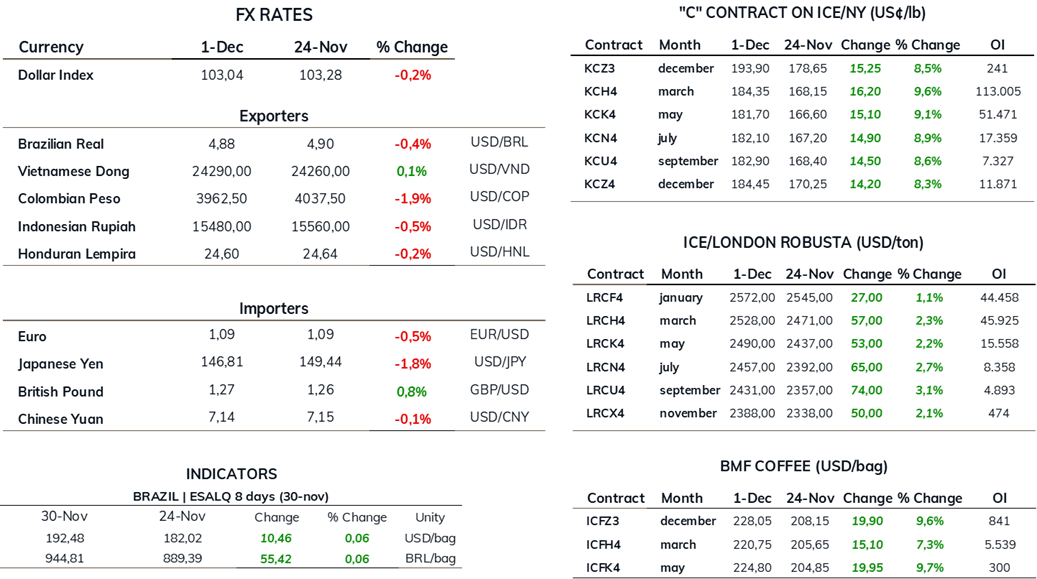
• Arabica coffee advanced 9.6% in the week to US₵ 184.35/lb;
• Arabica coffee reached its highest level in almost six months;
• Robusta coffee quotes ramped up 2.3% during the week, closing at USD 2528/t;
• CEPEA indicator for Arabica coffee recorded a 5.9% increase, quoted at BRL 942.08/bag;
• CEPEA's Robusta coffee indicator rose 1.8% to R$ 679.05 per bag;
• New coffee certification rule at the exchange, along with a drop in stocks, boosted prices;
• Despite estimates of high production, doubts about the weather continue to add price volatility;
• Pessimistic production outlook for 2024 supports Robusta coffee quotes;
• Impact of El Niño on Indonesia's weather remains concerning;
• New Vietnamese crop may pressure quotes in the short term;
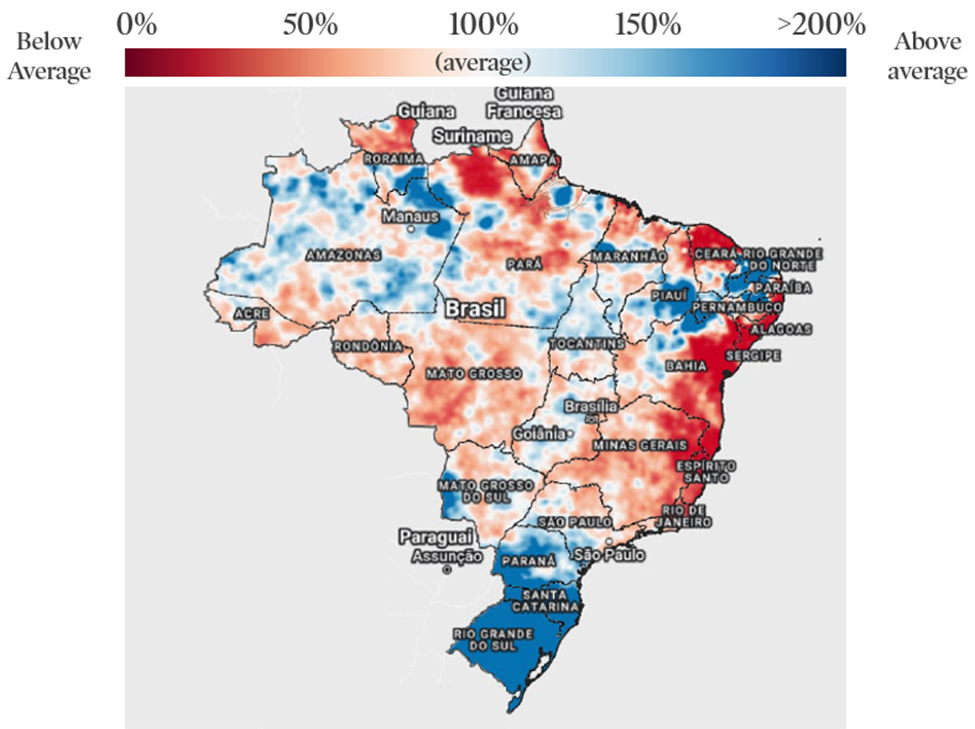
• Rainfall in Brazil was below average in the producing areas in November.
The last week was marked by high volatility for coffee prices on their main exchanges, where the continued drop in certified stocks drove the quotes, the start of the new rule for coffee certification, and reports of negative weather impacts after flowering in some Brazilian producing areas.
In New York, with a sharp increase on Thursday (30), when prices ramped up 1200 points (+6.9%) to US¢ 184.35/lb, with the most active contract reaching a six-month high, the Mar/24 contract ended the week at US¢ 184.35/lb, appreciating 9.6% compared to the previous Friday (24). In addition to being influenced by the rally observed in New York, Robusta coffee continues to receive support from the unfavorable prospects for Vietnamese and Indonesian supply in 2023/24, while the new crop from Vietnam has not yet arrived in large volumes at the country's ports. The Mar/23 contract on the London exchange ended the week at USD 2528/t, up 2.3%.
Weekly intraday (most active contract) - Nov. 27 to Dec. 01
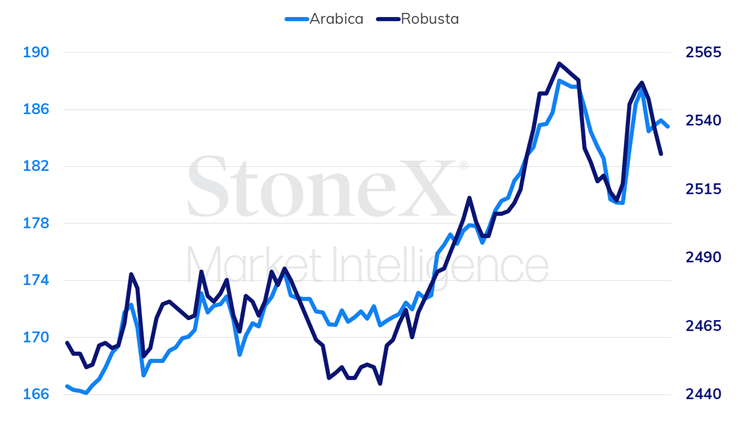
In Brazil, prices also showed a sharp increase for Arabica coffee, with the Cepea indicator ending at BRL 942.08/bag, a weekly gain of 5.9%. On the other hand, the indicator for Robusta coffee recorded a 1.8% increase, priced at BRL 679.05/bag.
As mentioned earlier, the new rule imposed by ICE, which prohibits the recertification of coffees starting from December 1, in an action that seeks to avoid market manipulations, contributed to increasing market concerns and supporting prices. While the new rule seeks to prevent manipulations, concerns about the difficulties of coffee certification, which are already at historically low levels, have grown. Last week, the withdrawal of 66.6 thousand bags of Arabica coffee to 224 thousand from ICE-certified warehouses was recorded, reaching its lowest level in about 24 years. It is worth remembering that, while the decision to certify or not coffee is mainly linked to financial conditions and differentials and not necessarily to supply and demand, ICE stocks are seen as a supply alternative in certain moments of lower supply in the short term.
Additionally, the irregular weather observed in November still raises doubts about the real conditions of the 2024/25 crop. A survey conducted by CEPEA indicated that heatwaves, hailstorms, and strong winds are causing the fall of some flowers and damage to the 2024/25 crop. Although the fall of fruits is expected to some extent, some reports indicate a performance below expectations, in addition to indications of cochineal occurrence in Robusta crops in Rondônia and leaf miner occurrence in Arabica areas in the Cerrado region of Minas Gerais.
It is interesting to highlight once again the contrast of market information. In contrast, the market received some support last week due to caution with the weather and possible impacts on production; the estimates released by some players have bet on a high Brazilian production, reaching 69 million and 74 million bags. So far, what is possible to indicate with greater assertiveness are the greater risks facing Robusta coffee production, mainly because the effects of El Niño on a hot and dry climate are proving to be more intense in the north of Espírito Santo and the south of Bahia, key regions for the type.
The participants in the Robusta market work with the expectation of the entry of the Vietnamese 2023/24 crop into the market. The significant revision in USDA's expectations on November 22 for Vietnam's current crop was adjusted from 31.3 million bags in June to 27.5 million bags due to adverse weather conditions, combined with the expectation of a crop failure in Indonesia, to support the market. Indonesia continues to suffer from the effects of El Niño, with accumulated precipitation data for November totaling 213.3 mm, about 63 mm below the average of the last ten years. Additionally, precipitation in key regions of Vietnam delayed the arrival of new coffees at the country's ports.
Monthly precipitation in Indonesia (mm)
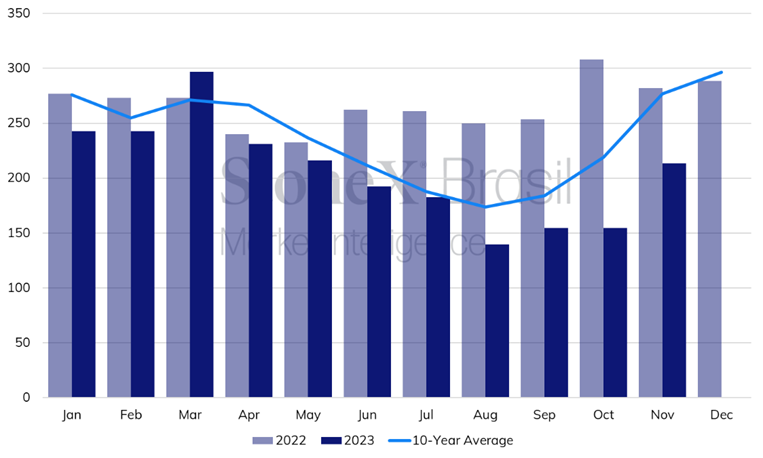
However, despite the positive fundamentals that production estimates provide for Robusta coffee, the entry of larger volumes of the Vietnamese supply into the market in the coming weeks is likely to contribute to reducing bullish pressure on the exchange. It may act to pressure differentials in the country.
This Monday (4), the market began correcting the highs recorded last week, with part of the movement likely caused by a liquidation movement by funds. The National Federation of Coffee Growers of Colombia (FNC) is expected to release the country's export data for November in the coming days. The key indicators for Brazil will be published next week, with the November export data by Cacafé and the 4th revision of CONAB's crop estimates.
The weather also remains in focus and is expected to influence the quotes. As shown on the map below, rainfall has been below the 20-year average in most of the country's main coffee-producing regions. The forecasts indicate that December tends to bring more regular rains, especially in producing areas of Arabica, which, if they materialize, can alleviate concerns about significant production losses.
Precipitation anomaly in Brazil in November