Mato Grosso
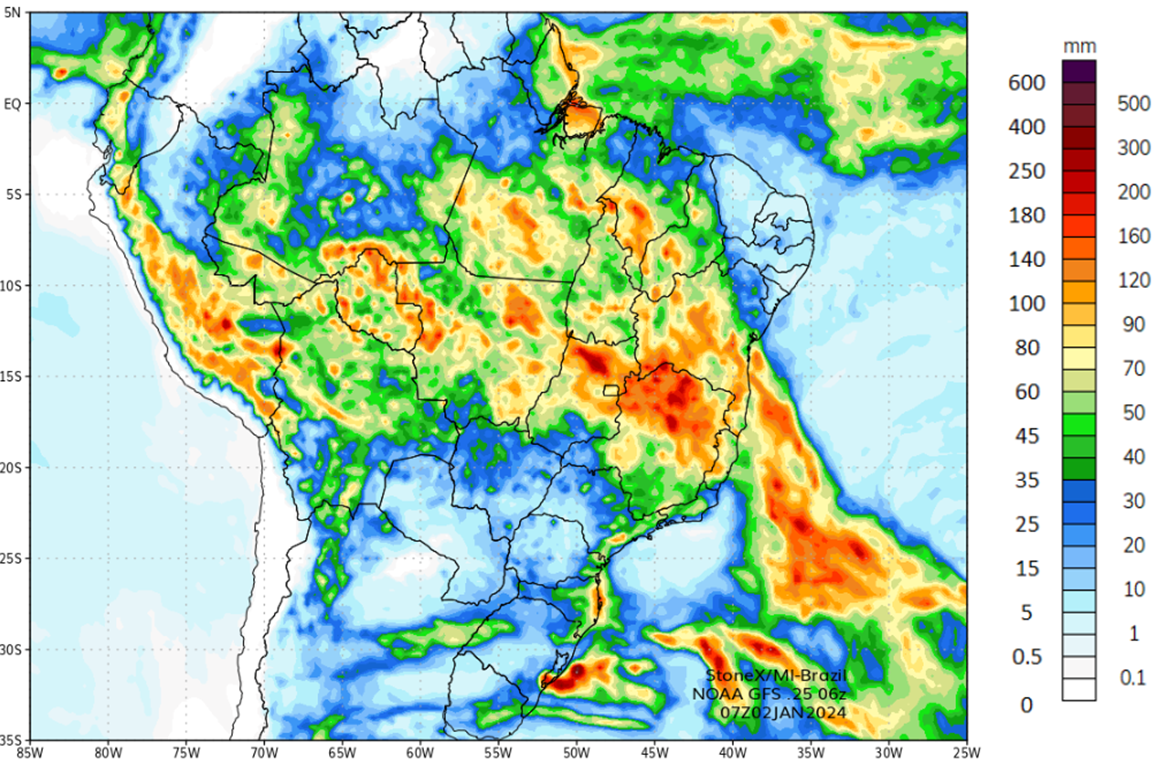
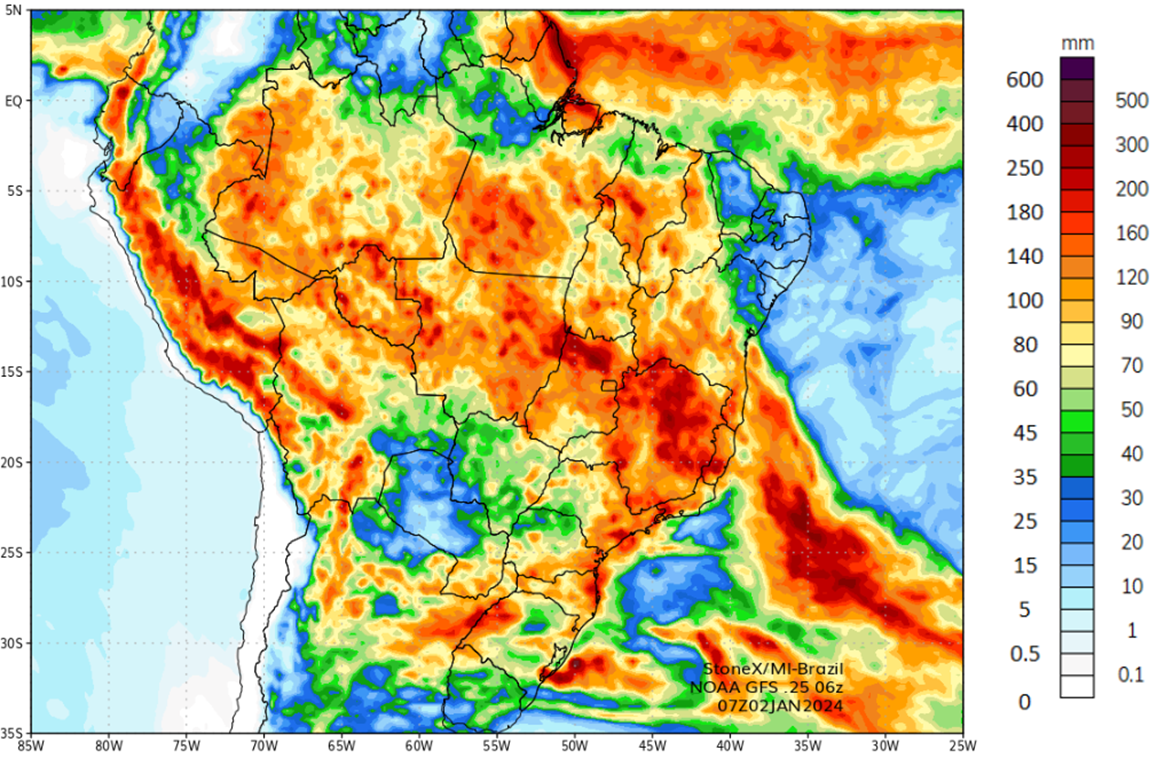
In the last 15 days, the weather conditions have been favorable, with slightly more widespread and frequent rains but with heterogeneous volumes.
Some areas are managing to recover part of their productive potential, but others that were already in their final stage did not show any improvement.
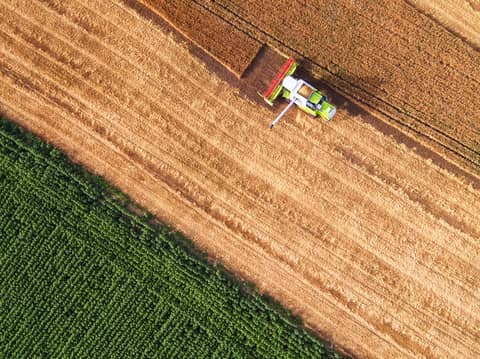
The harvest is already becoming a more common scene in the state. The first crops planted are already ending their cycle, and others anticipate the cycle, allowing for an earlier harvest than expected. Although it is still a small percentage, the areas being harvested are reporting productivity below what is usually the reality of the state for this period.
As the harvest progresses, we will better see how much will be produced in Mato Grosso.
Goiás
In southwestern Goiás, we saw the second half of December stand out compared to the first half of the month. The weather pattern of above-average heat remained constant, but rainfall volumes returned to reach positive accumulations for almost our entire soybean area. Unfortunately, rains came too late in some regions, significantly reducing our productive potential. Therefore, today, we consider an 8% decrease for the largest productive region in Goiás, with the final average estimated at 63.48 bags/ha (3.87 ton/ha) for now. This figure significantly contributes to the overall estimated average for Goiás, as other regions face a more delicate situation. Considering the state as a whole, we are currently talking about 59.55 bags/ha (3.57 ton/ha). In summary, our current number stands 8.38% below the initial estimated production for the 2023/24 Goiás crop and 11.33% below Goiás' production in 2022/23.
In the last 15 days, Mato Grosso do Sul has experienced below-average rainfall. In the northern part of the state, where the amount of rain approached closer to the average, the precipitation was sufficient to maintain a reduction between 5% and 10%. Meanwhile, concerns arise in the south with higher temperatures and lower water volume. The upcoming days' rain is crucial, especially because the southern part of the state holds most of the production. The estimated productivity for the state stands at 58 bags/ha (3.48 tons/ha).
The weather continued to benefit field activities in the last few weeks, such as the completion of soybean planting, which has already reached 98% of the planned area, and the beginning of the summer crop corn harvest.
For soybeans, the expectations for productivity and production remain optimistic. Overall, the fashion of the crops planted from early December is superior to that observed in November crops, resulting in less need for replanting. In the southern half of the state, despite reports of replanting, the dry weather of the past few weeks combined with ongoing rainfall has been favoring the development of the crop, as well as in other regions of the state.
The corn crop harvest has begun in some state regions but still represents approximately 4% of the cultivated area. Yield projections remain variable: some crops maintain their initial potential, and some have suffered reductions due to the incidence of illness or damage caused by adverse weather conditions throughout the cycle. The initial reports also indicate problems with the quality of the harvested grain.
In Paraná, we are observing a good development of the soybean and summer corn crops. So far, the soybean crop is 88% in good and excellent conditions, an improvement of 2% compared to last week, 11% in average conditions, and 1% in poor conditions. It is estimated that 34% of the crops are in the fruiting stage and 36% in the flowering stage. We had some reports of rust appearing in isolated areas and records of greater difficulty in plant establishment, all due to excessive rainfall and moisture, which will minimally reduce the productive potential of these isolated regions.
For summer corn, it is estimated that so far, 80% of the crops are in good/excellent conditions, 17% in fair conditions, and 3% in poor conditions. For the cereal, 4% of the crops are already in the maturation stage, 53% are in the fruiting stage, 30% are in flowering, and 13% are in vegetative development.
Week of irregular rains and mild temperatures will assist the regions already starting the harvest in the state.
The Paranapanema, Itaberá, and Itapetininga regions have been receiving rain despite the excessive heat recorded in the state as a whole. Therefore, significant impacts have not yet been observed, although the high temperatures may affect some crops at the current stage.
In the region of Cândido Mota and Assis, the rains continue to be quite irregular, with producers reporting the use of pivots in some areas with this alternative. The same movement was reported for the region of São João da Boa Vista, Vargem Grande do Sul, and Casa Branca. Reports of intense heat, scattered and quick rains, with the use of pivots in crops that have the technology.
Finally, the São José do Rio Preto, Jales, and Catanduva regions report intense heat and scattered rains, a reality similar to that of most of São Paulo. The weather pattern of the last few days should still affect the state's productivity, causing the production to be slightly reduced versus the expected potential at the beginning of the crop.
Total volume expected in the state (soybean): 5.34 million tonnes / Estimated productivity: 60.14 bags/ha | 3.6084 t/ha.
Total volume expected in the state (1st corn crop): 2.34 million tonnes / Estimated productivity: 150 bags/ha | 9.0 t/ha.
Minas Gerais
In Minas Gerais, due to the lack of rainfall identified at the beginning and middle of the 23/24 crop cycle in the Triângulo Mineiro, Alto Paranaíba, and Noroeste de Minas regions, one can estimate a reduction in productivity versus what was initially expected in the state. The regions, which together account for approximately 80% of the cultivated volume in Minas Gerais, suffered from intense heat and lack of rainfall, resulting in the replanting of some areas and the suffering of plants in the early stage of development.
However, when we observe the development of crops in the state's southern region, we notice a normal development despite the water stress in the first weeks of the cycle. Therefore, for the region that represents approximately 10% of the production in the state of Minas Gerais, we should not observe productivity problems.
Bahia
The planting work has already been completed in the region. The rains expected for the second two-week period of December did not come in a widespread manner; on the contrary, they continued to come irregularly and with little distribution. This water deficit, combined with the sharp heat, has caused the productive potential of the region to ratchet down. StoneX started with an average yield perspective of 66 bu/ac (3.94 ton/ha) for soybean crops and now considers an average yield of about 59 bu/ac (3.54 ton/ha). Good volumes of rain are expected for the beginning of next year, which can bring a certain reprieve to the crops.
BASIS: May/24: -268c/bu (SK4)
In Rondônia, water-related issues have been a concern for local producers. High temperatures and water stress have significantly compromised productivity and shortened the planting windows. The main sanitary agency, IDARON, has extended the soybean planting deadline and, through estimations, anticipates a total production reduction of both crops (soybean and corn) of up to 60% due to the weather challenges. It's worth noting that corn might see a reduction of up to 90% in planted area due to the lack of planting window for 2024.
Norte/Nordeste
North of Paraguay (Eastern Region: Canindeyú, San Pedro, and Alto Paraná above Route 2)
The northern region of Paraguay experienced a strong heatwave in the past weeks, leading to an earlier start of harvests in the area. Productivity in these initial areas has shown significant variability (1,500kg/ha to 3,000kg/ha, or 25 bags/ha to 50 bags/ha). Recently, most of the region received rainfall ranging between 40mm and 100mm, which is welcomed for a large part of the crops currently in the grain-filling stage. The commercialization remains stagnant basis around 285c/bu (SK24).
South of Paraguay (Eastern Region: Caaguazú, Itapúa, and Alto Paraná below Route 2)
Overall, the southern region of Paraguay continues to experience very favorable weather conditions, much like throughout almost the entire crop season. The harvest is expected to start in the coming weeks, with initial areas anticipated to yield around 3,000 kg/ha (50 bags/ha). Similar to the situation in the country's north, sales remained stagnant in recent weeks, with producers awaiting some improvement in basis.
Encarnacion Basis: -270c/bu (SK24)
Brazil | Vegetation Health Index (VHI)
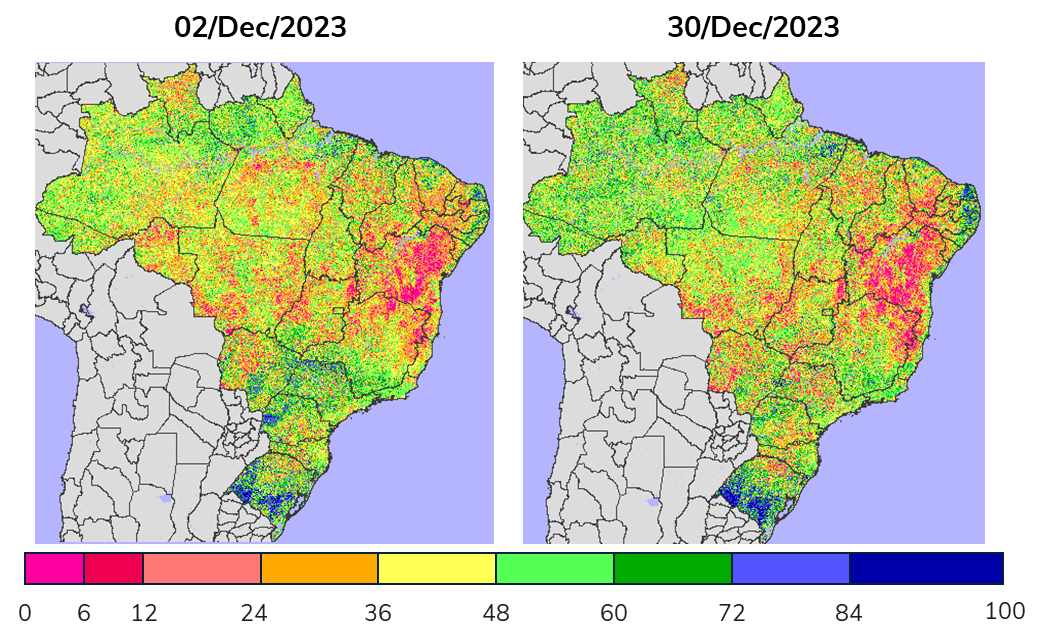
Source: NOAA. Design: StoneX.
Paraguay | Vegetation Health Index (VHI)
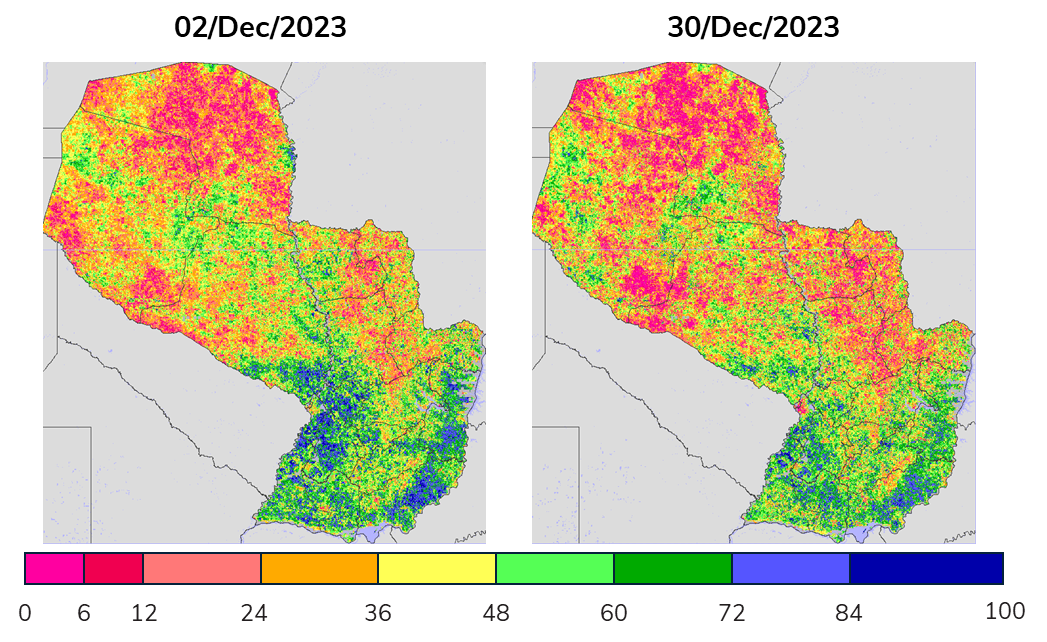
Source: NOAA. Design: StoneX.