The backdrop of risk appetite is holding on, but flares of volatility are popping up across the markets. Are conditions maturing such that a key event like NFPs or new financial headline can trigger an earnest move in risk appetite?
Talking Points:
Headlines remain a pressing uncertainty for markets with Greenland behind us, fresh tariffs in a lull and potential of a US attack on Iran in the air
While speculative benchmarks like the S&P 500 continues to track out an ever-tightening range, jolts of volatility from the likes of the Dollar, gold and silver raise awareness
Top event risk in the week ahead is less concentrated around a FOMC decision or Mag 7 earnings with a range of rate decisions; US activity figures and NFPs
Watch the Full Video
Should Volatility Remain Elevated, A Break Will Inevitably Follow
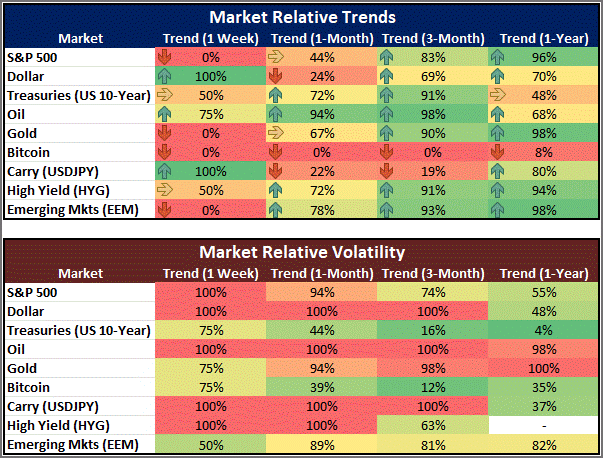
Volatility was a prominent feature of the markets through the latter half of the past week. Of course, the tempo of activity varied wildly depending on the market. For the benchmark US indices which often acts as the magnetic force for the market’s general compass, the charge was noticeable but limited. The VIX jumped as much as 24 percent Thursday intraday following the post-close run of tech earnings (Microsoft, Meta and Tesla) the evening before, but the measure ended the week only 1.4 points higher from the previous Friday. That said, the 20-day moving average for this benchmark ‘Fear Index’ is steadily climbing off of its lowest reading since December 2024. Perhaps any fire that does arise in global markets will not necessarily start in the traditional favorite capital market.
Relative Trends and Volatility of Major Markets Source: John Kicklighter
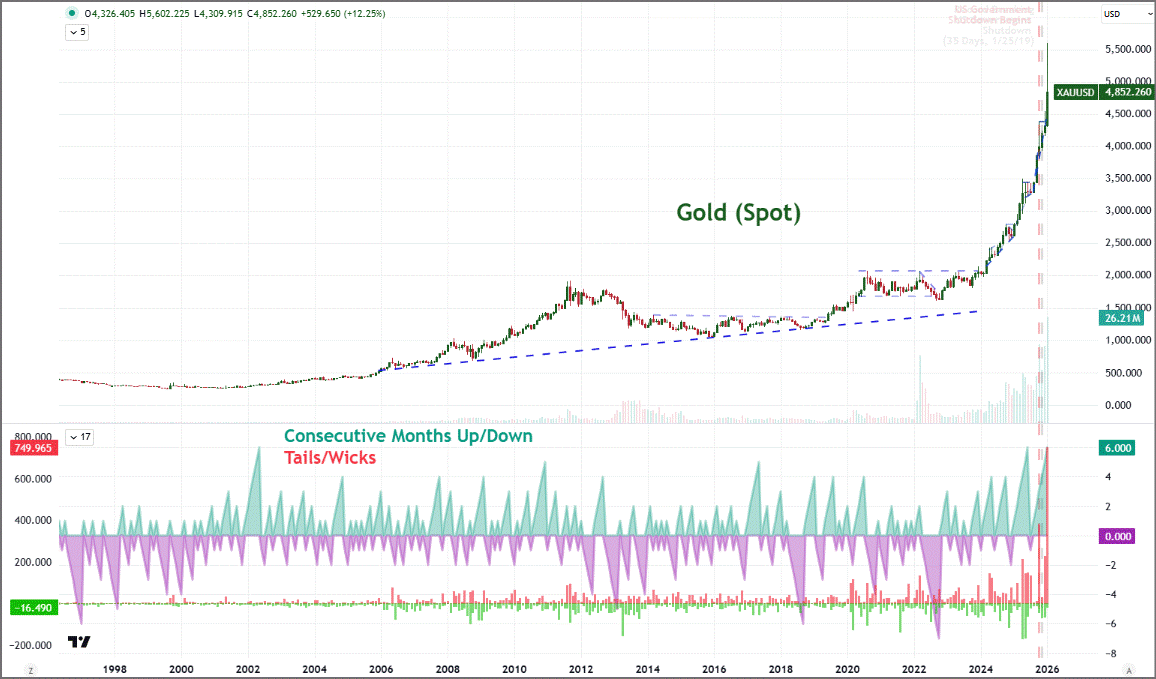
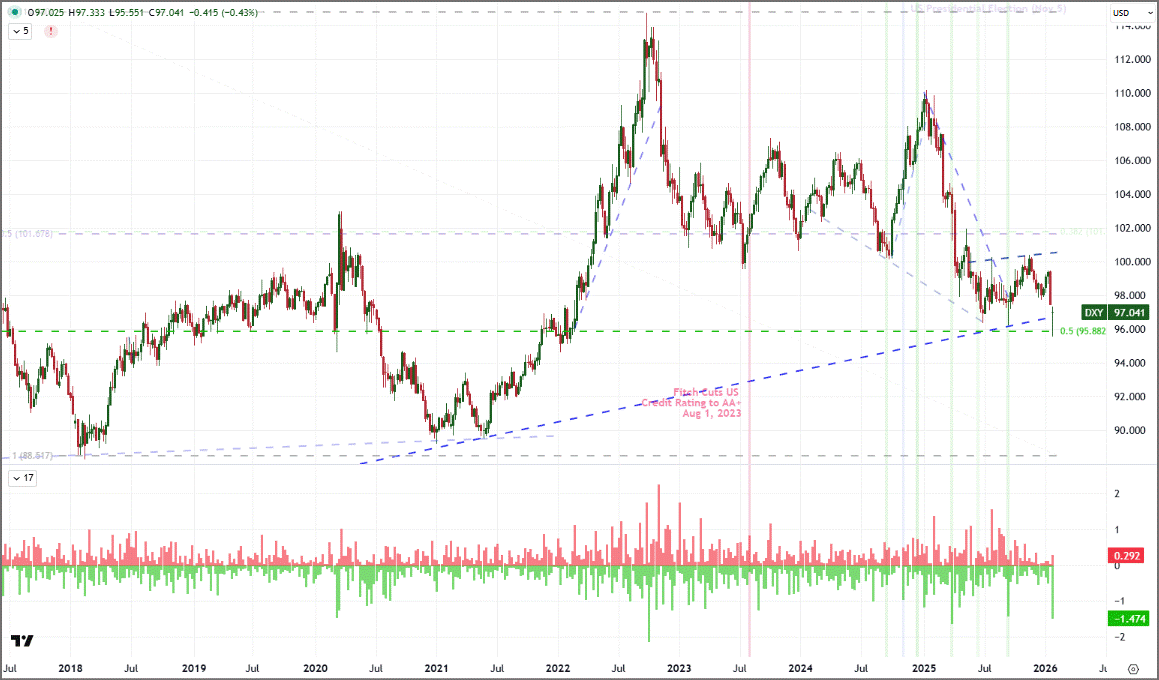
It seems, there may be more charge to be found in the FX market. The US dollar seems to be feeling more impact from the backlash to Washington’s unpredictable and controversial policy policies. The DXY Dollar Index has registered its highest 1-week (5-day) realized volatility in nine months – not surprising given the dip to four-year lows. Even more extreme has been the volatility in commodity markets. The WTI crude oil-based volatility index (OVX) hit a 7-month high, but it was silver and gold which were extraordinary. The metals forged incredible multi-week climbs incredibly outshone by a Friday intraday drop of as much as -37 percent and -13 percent, respectively. Even those that didn’t monitor – much less invest in – these markets looked as if driving by a car wreck.
Chart of Spot Gold with Consecutive Months and Size of ‘Wicks’ (Monthly) Source: TradingView.com
Volatility may not be universally distributed, but the underlying trend is rising and there are more than a few outburst that will draw scrutiny to the belief that the risk-on mentality that has pervaded post-Liberation Day tariffs rollback can prevail regardless of the fundamental landscape. There are more than a few systemic narratives that could readily turn into a handhold for fear from questions around US President Trump’s new Fed pick (Kevin Warsh), a resurgence in tariff threats from the United States, increasingly uneven traditional economic readings or even unrealized threats such as a possible US attack on Iran. Though they may not be leading, it is worth keeping a weathered eye on the benchmark US indices (S&P 500, Dow, Nasdaq 100) with increasingly narrow ranges as a confirmation of our next leg – whether a further complacent bid or outright risk aversion.
Dollar Weighs Safe Haven Status, ‘Sell America’ Divestment and Economic Trajectory
While much attention recently has gone towards gold and silver – and deservedly so – the exceptional degree of volatility following record highs reflects a shift from meaningful fundamental evaluation and more a reflection of market conditions driven by sheer speculative appetites, liquidity and margin. Seeking more of a grounded macro evaluation for future potential (instead of reactionary explanation), the Greenback represents a market with even more crowded fundamental backdrop. In fact, there is a meaningful percentage of the financial headlines and social op-eds that essentially argue the metals’ climb and reversal draws from the benchmark currency’s health trends. The range of influences on the US Dollar run an exceptionally wide spectrum. Working heavily against the currency’s appeal is the persistent chatter around the calls to diversify away from the dollar to circumvent the United States’ financial sphere of influence. That will take a long time and likely further extreme flare ups to meaningfully progress, but Trump’s resurgence of tariff threats (Canada, European Union) and ruminations of military action (Iran) are no longer seen as far-fetched following headlines around South Korea’s raised tariffs, the Greenland threat and the extradition of Venezuela’s president.
Seeming perhaps more prosaic, we also have to consider the more drawn out developments around monetary policy and economic activity. The Fed held rates last week and noted as balanced a forecast for future policy as was indicated in the December SEP’s (Summary of Economic Projection) suggestion that only one further cut was in the books for 2026. The nomination of Kevin Warsh to replace Jerome Powell as Chairman come May also has the market checking the former Board of Governors member’s relatively hawkish credentials. Meanwhile, there are cheers of economic strength from Washington, but consumer sentiment is near multi-decade lows and the trend in jobs activity seems on the cusp of definitely turning to contraction.
So, amid concerns about the ‘Sell America’, relative course of monetary policy and backdrop of domestic economic growth; where is the case for a meaningfully stronger dollar to come from? Paradoxically, the strongest case for the greenback is strong and broader risk aversion. While there are questions around the dollar’s (and Treasuries) suitability as an ideal haven, when panic prevails, there is no time to consider anything but liquidity and safety of funds. In that regard and scenario, there remains no peer to the dollar.
Chart of DXY Dollar Index and ‘Wicks’ (Weekly) Source: TradingView.com, ICE
Event Risk Less Concentrated and Greater Potential
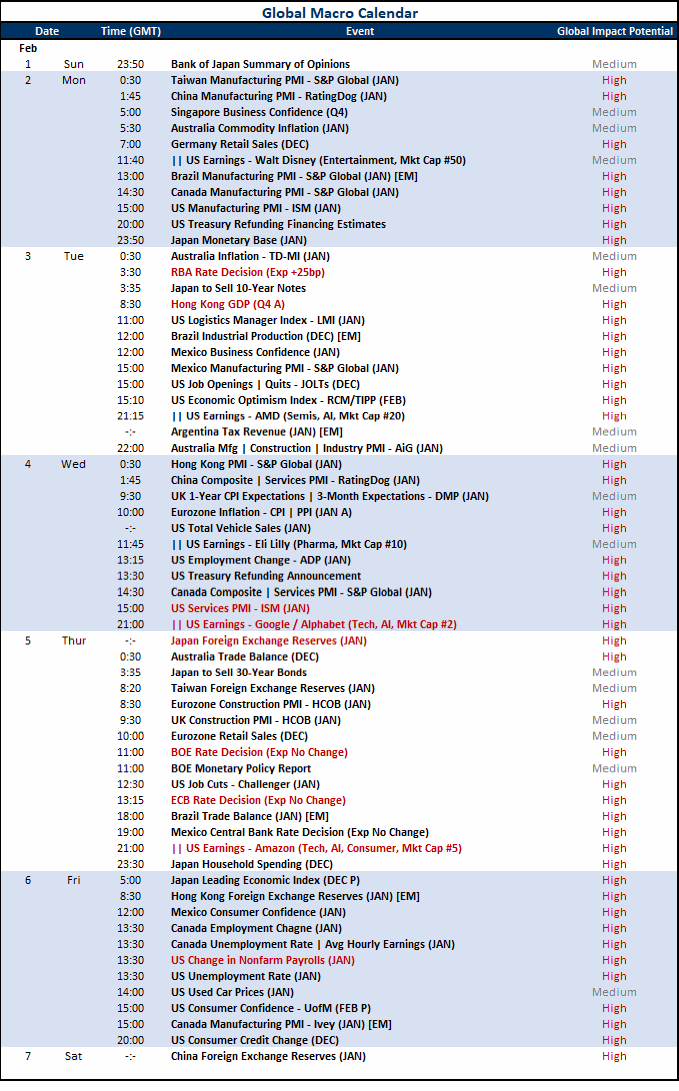
Compared to this previous week, the global macro calendar ahead carries notably less potential, market-moving energy. Last week, we were faced with concentrated event risk that is often considered singularly influential such as the FOMC rate decision or the run of Magnificent 7 mega cap earnings (Microsoft, Meta, Tesla and Apple). What’s ahead is more distributed in weight and less controversial in their respective trends. That is not to say that we won’t see volatility, however. If markets are already primed to volatility, they tend to be more responsive to meaningful event risk that falls into deeper fundamental currents. We will see if swells of activity in metals and the Dollar or steady rise for indices is enough to amplify what we have on tap ahead.
Calendar of Top Global Macro Event Risk Source: John Kicklighter
A Run of Rate Decision and Perhaps Even a Hike
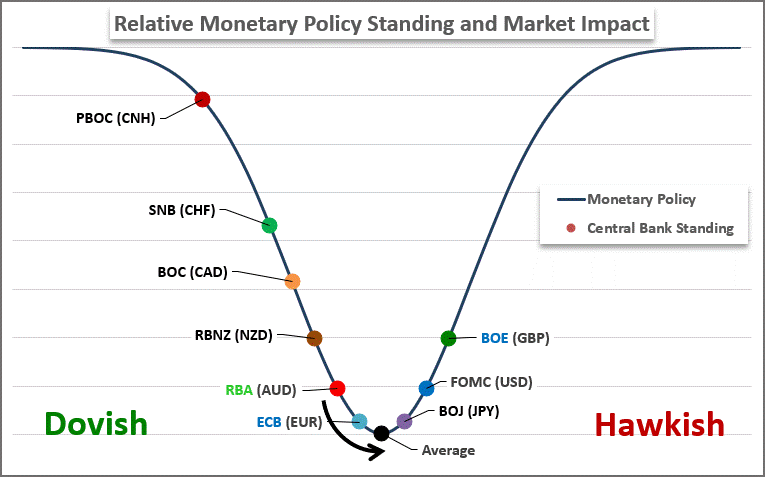
Interestingly, monetary policy may offer find more global insight from what’s ahead than what the Federal Reserve was able to deliver this past Wednesday. Certainly, the US central bank carries the greatest influence in its size and it is an infamous headline monopolizer with the threat to the institution’s independence with an extreme divergence in possible courses for short-term rates going forward; but the current leadership has refused to engage the public pressure. Ahead, we have groups that could actually add to a clear view as to the global trend of monetary policy. Generally, we are coming out of a dovish cycle among the major central banks from the past year to year-and-a-half. Where is the bottom?
The Bank of England on Thursday may have further cuts should its economic outlook continue to fade, but it is expected to hold. The European Central Bank on the same day is also expected to hold and made a clearer suggestion that it had found the end of its dovish cycle at its last meeting. And, then we have the Reserve Bank of Australia. The market and economist consensus is for the group to actually hike its benchmark 25 basis points. Aside from the Bank of Japan, which is wholly off its peers’ cycle, this would be the only major group to actually lift its rate. Could the Aussie dollar revive its carry status in 2026?
Relative Monetary Policy of Major Central Banks Source: John Kicklighter
Service Sector Activity and Consumer Confidence Key US Guidance
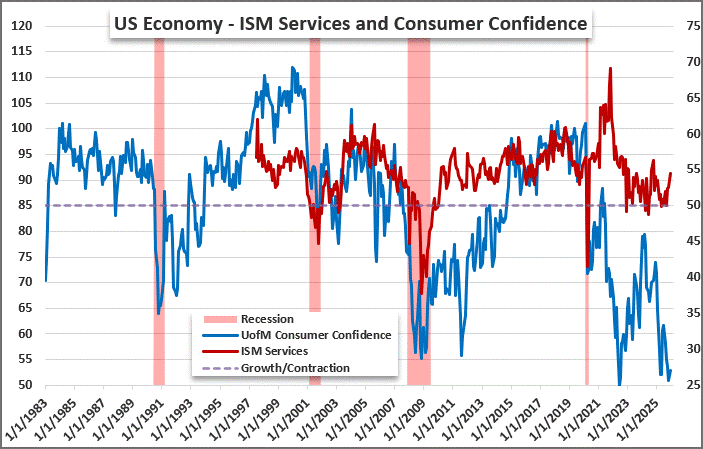
For the US markets and dollar, the battle at present is whether unexpected financial headlines or the scheduled docket will exact more weight. It is the unpredictability and the wide spectrum of possibilities of the former which will skew the potential. However, in the absence of knowing the unknown, we have to refer to the calendar of macro events. On the economic front, among the measures we have on tap, it is worth highlighting the ISM’s service sector activity report for January and the preliminary reading of the University of Michigan’s February consumer confidence report. In the case of the former, services account for more than three quarters of US GDP and total jobs. It is therefore a good timely proxy for GDP (with a good correlation to lagging official figures), but it is also not a renowned market mover of late. More weighty when it comes to charging stocks or the Greenback is the UofM report. The past few months have seen an upswing from the series, but that is from a near-series low going back seven decades. If this nascent recovery falls apart, it will not go unnoticed by market participants.
Chart of ISM Services and University of Michigan Consumer Confidence (Monthly) Source: TradingView.com; ISM; University of Michigan; NBER
Nonfarm Payrolls Returns to Its Normal Schedule…But What About Impact?
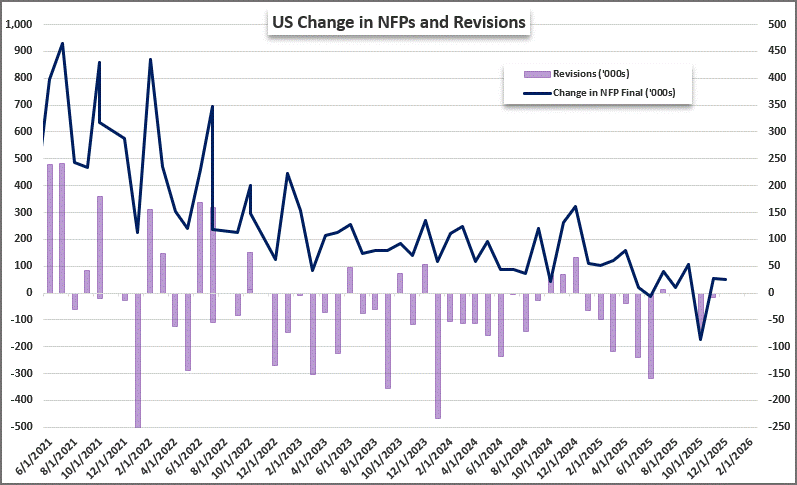
Finally, the most recognizable indicator over the coming week is likely to be the US change in nonfarm payrolls for January. The job report has finally returned to its standard first Friday after the first Thursday of the month release schedule. Current consensus is for a subsequent moderation of the previous to months’ tepid gains with a 40,000 net addition forecasted. The general trend here is towards a weakening labor condition, though monetary authorities believe it is leveling out. There are contrasting argument to be made here from a monetary policy perspective. If we level out at small net increases in job numbers moving forward, it will not exactly support a robust growth forecasts – and the President’s controversial policies aimed at spurring this expansion – but the jobless rate is also presently holding at a historically low level. If inflation remains stable or above target, there wouldn’t be a particularly strong case to be made for significant further easing – much less a cut to 1.00 percent as Trump has called for in his criticism of the group and Powell. We would need to see if that would change under Warsh’s leadership.
Chart of Change in NFPs and Revisions (Monthly) Source: Bureau of Labor Statistics
The subsidiaries of StoneX Group Inc. provide financial products and services, including, but not limited to, physical commodities, securities, clearing, global payments, risk management, asset management, foreign exchange, and exchange-traded and over-the-counter derivatives. These financial products and services are offered in accordance with the applicable laws in the jurisdictions in which they are provided and are subject to specific terms, conditions, and restrictions contained in the terms of business applicable to each such offering. Not all products and services are available in all countries. The products and services offered by the StoneX
Group of companies involve risk of loss and may not be suitable for all investors. Full Disclaimer.
This content is not intended for residents of any particular country, and the information herein is not advice nor a recommendation to trade nor does it constitute an offer or solicitation to buy or sell any financial product or service, by any person or entity in any jurisdiction or country where such distribution or use would be contrary to local law or regulation. Please refer to the Regulatory Disclosure section for entity-specific disclosures.
No part of this material may be copied, photocopied or duplicated in any form by any means or redistributed without the prior written consent of StoneX Group Inc. The information herein is provided for informational purposes only. This information is provided on an ‘as-is’ basis and may contain statements and opinions of the StoneX Group of companies as well as excerpts and/or information from public sources and third parties and no warranty, whether express or implied, is given as to its completeness or accuracy. Each company within the StoneX Group of companies (on its own behalf and on behalf of its directors, employees and agents) disclaims any and all liability as well as any third-party claim that may arise from the accuracy and/or completeness of the information detailed herein, as well as the use of or reliance on this information by the recipient, any member of its group or any third party.
Currencies
StoneX TV content is created, produced, and distributed solely by StoneX Media Ltd (“StoneX TV”) and is provided for informational and educational purposes only. StoneX TV does not provide investment, financial, legal, or tax advice and does not make any recommendation or endorsement of any investment strategy, transaction, or financial instrument. Nothing in this content constitutes, or should be construed as, investment advice or a recommendation to buy, sell, or hold any financial instrument, including securities, futures, derivatives, digital assets, foreign exchange products, or CFDs. This content does not constitute an offer, invitation, or solicitation to engage in any investment activity. The information presented is general in nature and is not tailored to the financial situation, investment objectives, or risk tolerance of any specific person. You should not rely on this content as a substitute for independent professional advice. Investing and trading in financial instruments involves significant risk of loss and is not suitable for all investors. Past performance is not indicative of future results. Any views or opinions expressed are those of the presenter at the time of publication and are subject to change without notice. Such views may not necessarily reflect those of StoneX Media Ltd or its affiliates. StoneX Media Ltd and its affiliates, including StoneX Group Inc., may from time to time have positions in, or engage in transactions involving, the financial instruments referenced. This content may include general market commentary and opinion. It does not constitute independent investment research and has not been prepared in accordance with legal requirements designed to promote the independence of investment research. StoneX Media Ltd is not authorised or regulated to provide investment services and does not act in a fiduciary capacity. StoneX Media Ltd is incorporated in Ireland and operates in accordance with applicable Irish law. It is a wholly owned subsidiary of StoneX Group Inc. and is a separate legal entity from other subsidiaries within the StoneX Group, which may be regulated in various jurisdictions. StoneX Media Ltd does not act on behalf of, or provide services for, any regulated affiliate. This content is not directed at, and may not be distributed to, any person in any jurisdiction where such distribution would be contrary to local laws or regulations. Supporting documentation for any claims, comparisons, statistics, or technical data may be made available upon reasonable request, where applicable.
Discover more insights
Our subscribers have access to comprehensive market analysis from StoneX spanning commodities, equities, currencies and more.
Our market expertise, advanced platforms, global reach, culture of full transparency and commitment to our clients’ success all set us apart in the financial marketplace.
Reach
With access to 40+ derivatives exchanges, 180+ foreign exchange markets, nearly every global securities marketplace and numerous bi-lateral liquidity venues, StoneX’s digital network and deep relationships can take clients anywhere they want to go.
Transparency
As a publicly traded company meeting the highest standards of regulatory compliance in the markets we serve; our financials and record of accomplishment are matters of public record. StoneX’s commitment to “doing the right thing over the easy thing” sets us apart in the industry and helps us build respect, client trust and new partnerships.
Expertise
From our proprietary Market Intelligence platform, to “boots on the ground” expertise from award-winning traders and professionals, we connect our clients directly to actionable insights they can use to make more informed decisions and achieve their goals in the global markets.