U.S. midwest/Tampa price graph
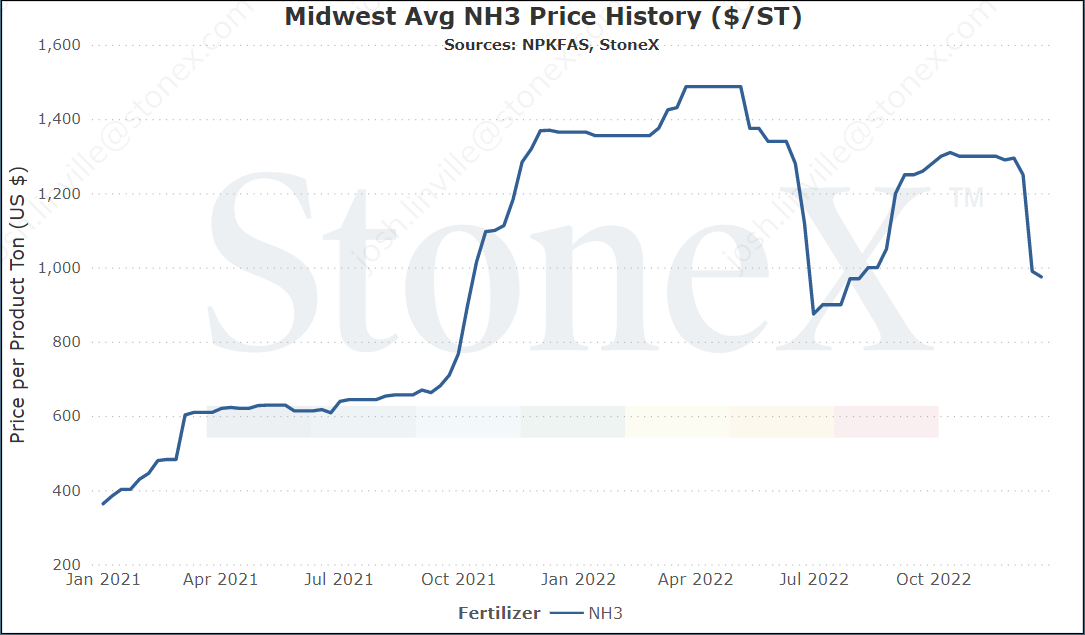
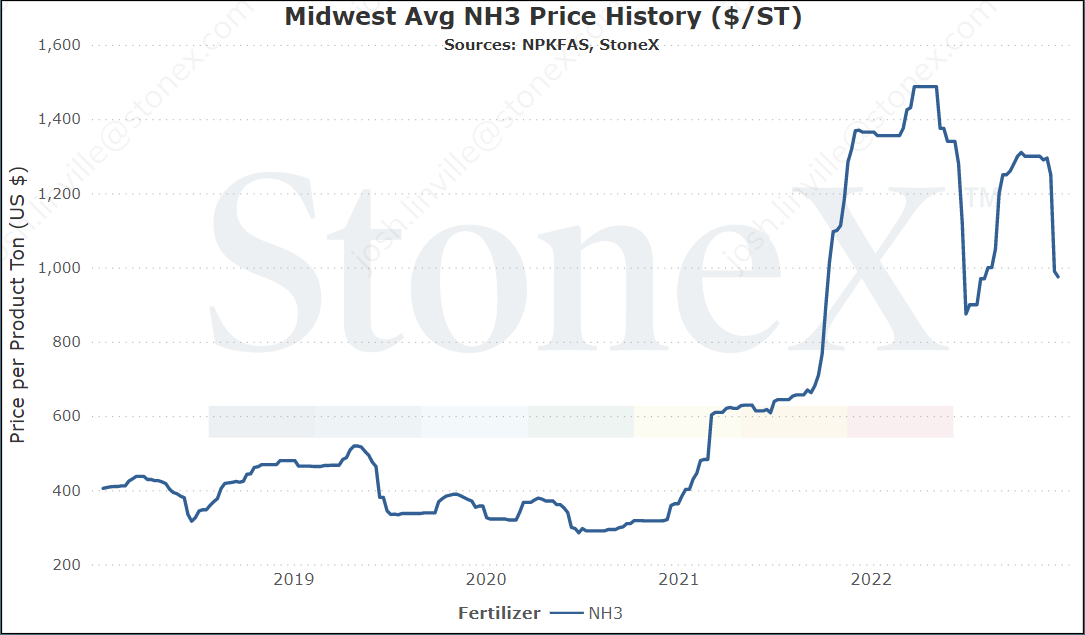
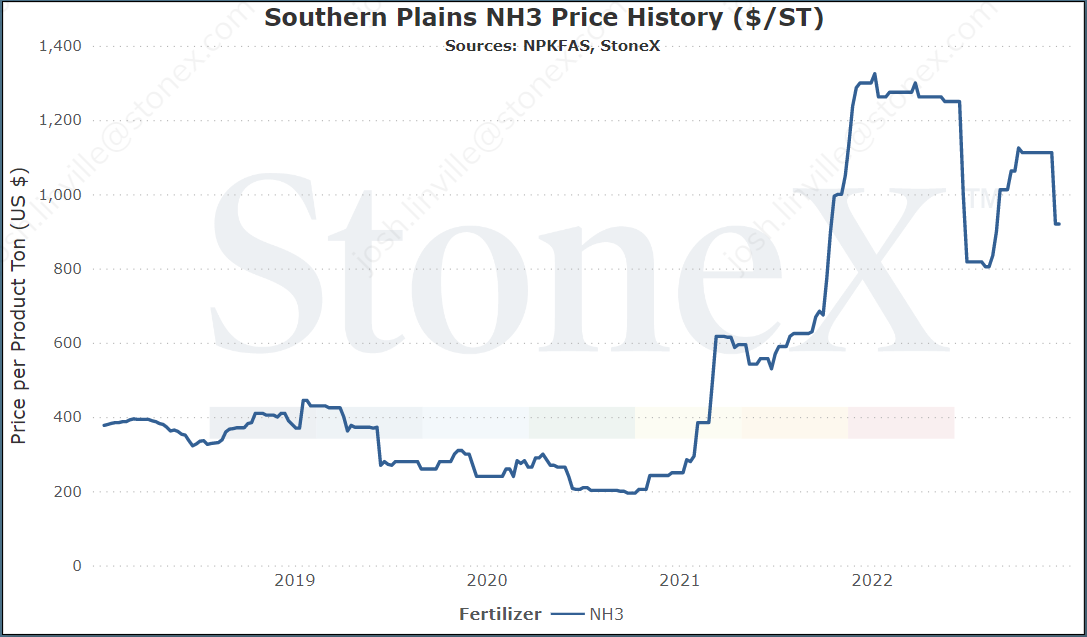
This is the AVERAGE of the entire Midwest which means that your values WILL be different than what the graph reflects. Please do not take this into your retailer and say "why isn't my price the same as here". That is comparing apples to oranges. You might be on the cheaper or more expensive side of this graph. This doesn't take into account logistics/storage/interest/insurance/shrink/etc.
The takeaway from this graph is that in the last month, prices have been jumping which comes as little surprise given European production issues.
JANUARY '23 NOTE: the current value is looking at the nearby shipment price for NH3. Today, that means winter fill, NOT spring prepay. NH3 is a system with very limited storage. If you have a place to store tons that are taken thru January, this represents the market pretty well. However, the vast majority rely on in season replacement tons. That average is approximately $1,075 - $1,100 today. Overall, the winter/spring programs are higher priced than summer '22.
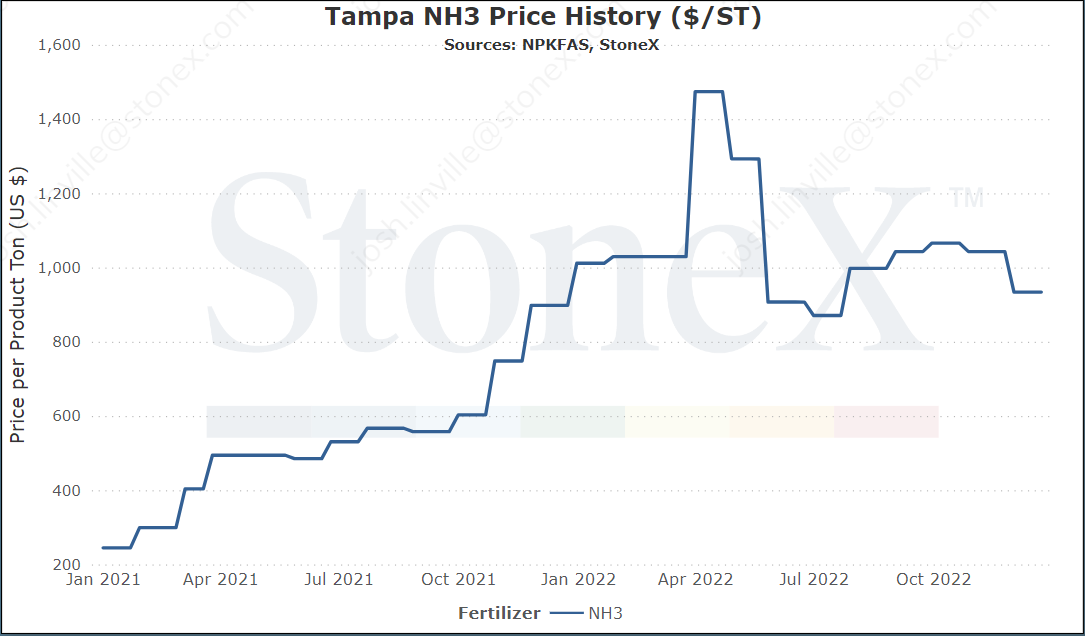
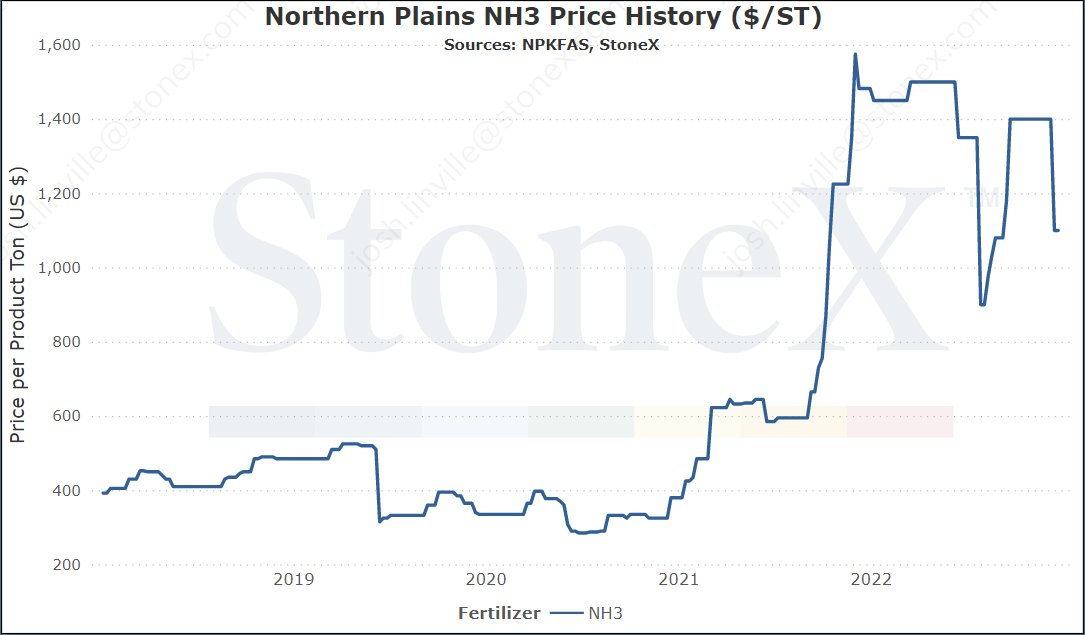
For more an international flavor, here is the monthly price graph for Tampa NH3. Again, this should be taken more from a price direction POV than an actual price. Tampa is one of the most visible prices that trend along international movements.
What everyone wants to know first, what do we think will happen going forward
Prices are likely to hold for spring prepay values...at least for preplant demand
The North American market finally has its winter and spring NH3 values. As expected, they are lower than where in season fall values were. Also, as expected, they were higher than the summer/fall programs. So how should one approach them?
We feel like we have a pretty good read on fall application demand and it was pretty darn close to expectations. Might fall just a bit short (1.9M vs forecasted 2.0M) but close enough. That means that a lot of inventory and storage has been emptied going into the winter months. This puts the manufacturer/supplier in control as they can say that they will struggle to get refilled before a normal spring...and don't start on the possibility of an early spring (first half March for most Midwest).
It isn't often that we see price ideas fall once programs are set. It does happen, but it isn't something to count on.
should you buy your fall '22 / spring '23 nh3 needs today?
Spring preplant needs, would strongly consider. Sidedress needs (Eastern Cornbelt), might be worth waiting and watching.
As mentioned above, it isn't often that we see NH3 price ideas fall once programs are set. With relative few players in the field, there isn't a tremendous amount of competition to be concerned with.
However, there are a couple things that have me a little more cautious than normal:
- Urea remains a sizeable discount in comparison and could steal demand.
- International price ideas continue to see pressure.
- European natural gas values remain under pressure, raising the possibility of plant restarts.
I'm not saying that I'm counting on any of these to happen, they just have my attention as they could upset my current POV.
general global nh3 information
What has happened in the last 30 days?
Russia makes the first step toward peace, but still a very long road with no definitive outcome
In a turn of events, Russia is making statements that they are open to negotiations. This is something that was not fathomable a short time ago and should give insight into just how poorly their invasion is going. However, there is a lot of work to be done before any sense of normal will ever be reached...if it is ever to be reached.
Regardless, this does put a limited amount of optimism in the European natural gas markets. For the first time in a very long time, Dutch TTF values are sub $30 MMbtu. A chunk of the price decline is due to a warmer than normal/expected winter so far. Warmer than anticipated means less demand for natural gas to heat homes. Could this change quickly? Of course, but that isn't the case today.
As has been the case for so long, we continue to watch natural gas values as they will signal a fresh round of nitrogen production plant restart announcements. We have not seen nor heard anything new, but if prices keep declining, the possibility could be very real. If we see production come back online from its current 50 - 60% range, that could result in almost 10M tons of production on an annual basis coming online once again. That would also mean no longer being a buyer on the global market to cover needs. That would be a huge swing in the global S&D.
I'm going to finish with a cautionary statement. Do not take this as "prices are going to plummet in the coming days/weeks". As stated before, Russia's statements leave the world a very long road from peace and normalcy on global trade flows. However, after the last 30 months, we will take whatever good news is available to us.
Deal may be coming to allow Russian NH3 exports to resume
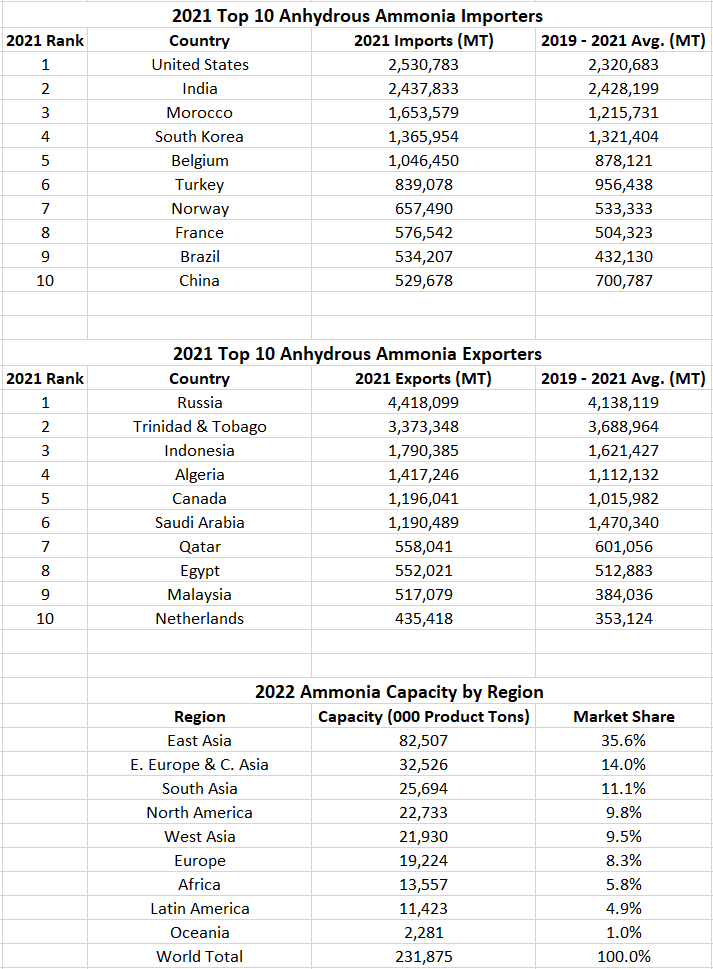
One of the bigger events in the global NH3 marketplace has been the loss of the largest NH3 exporter: Russia. However, steps are beginning to be taken that may allow them to resume.
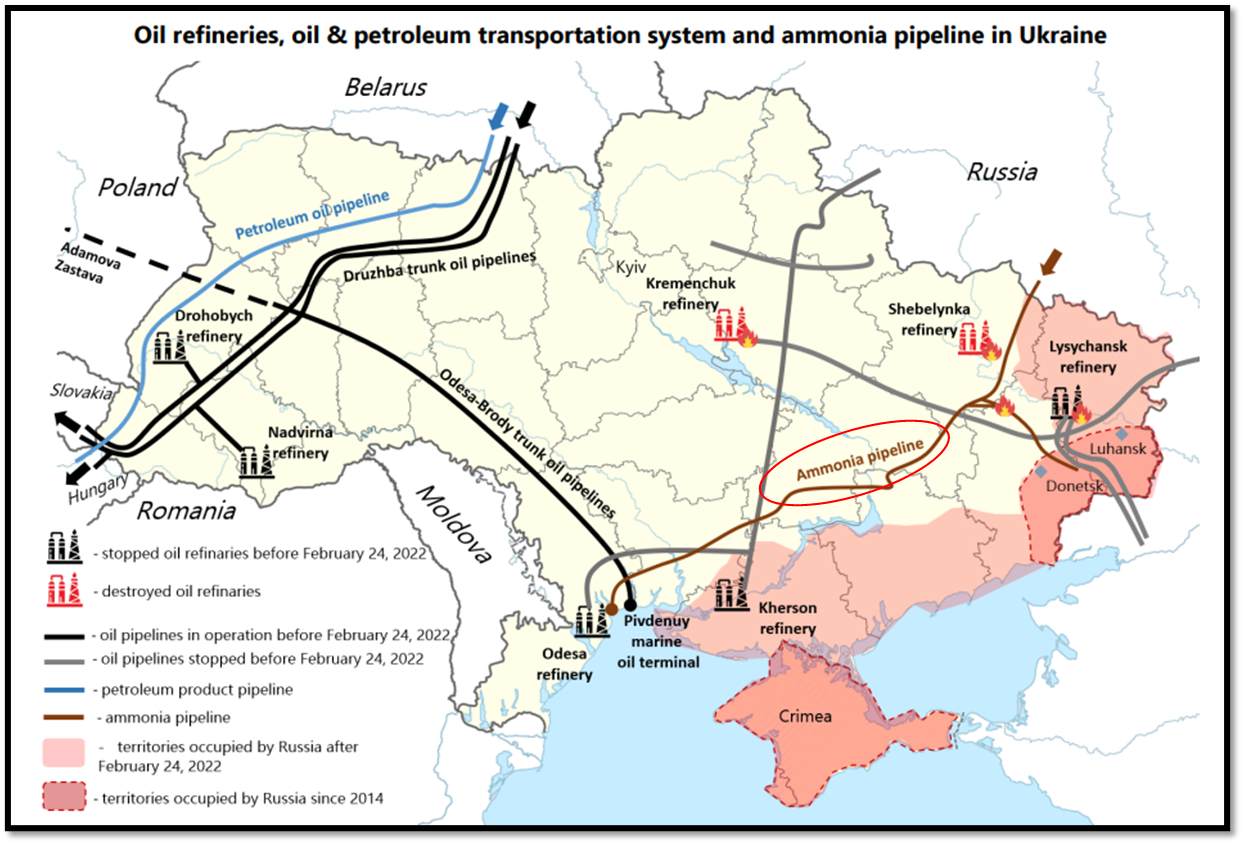
At the onset of Russia's invasion of Ukraine, their NH3 pipeline to export has been in the middle of fighting which put it at risk. Following months of success by the Ukrainian forces in pushing Russian troops back, this pipeline is no longer in the middle of the battlefield and has turned up conversations to allow shipments to resume.
While it is still early, it is in the best interest from the western world to allow these shipments. Global prices have been historically high since the shut off. While few want to help fund Russia's war effort, allowing shipments would likely cause price ideas to fall and in turn, help lower food costs.
Again, this is still in the early stages and it cannot be guaranteed that this will be successful. However, if further steps are taken forward, no doubt market participants will see the bearish writing on the wall.
North American winter/spring prepay programs announced
A couple weeks ago, North American NH3 manufacturers announced the winter fill and spring prepay programs. Likely you started getting calls from your local suppliers!!
While on the higher side, spring values came in relatively close to our expectations. The Midwest average came in at $1,075 - $1,100. Please keep in mind that this is not the farm price as it does not take into account storage, freight, interest, insurance, etc. The price also can vary widely based on which part of the Midwest you reside.
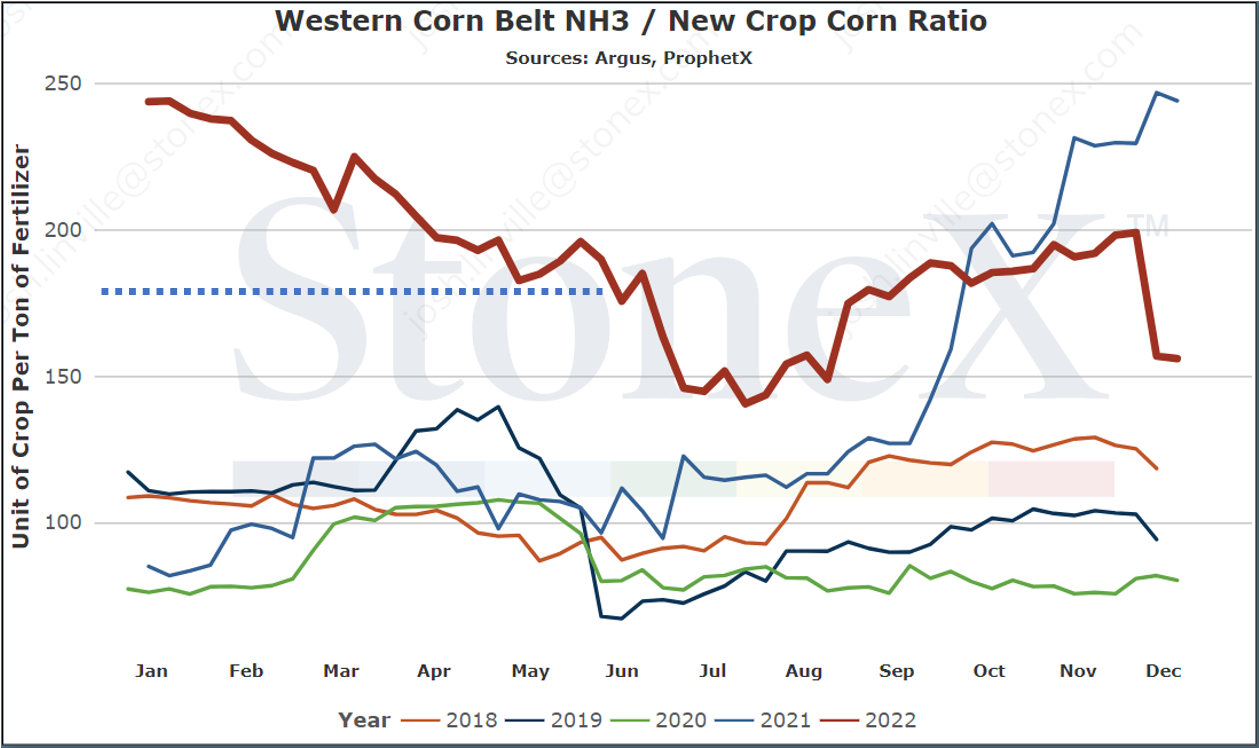
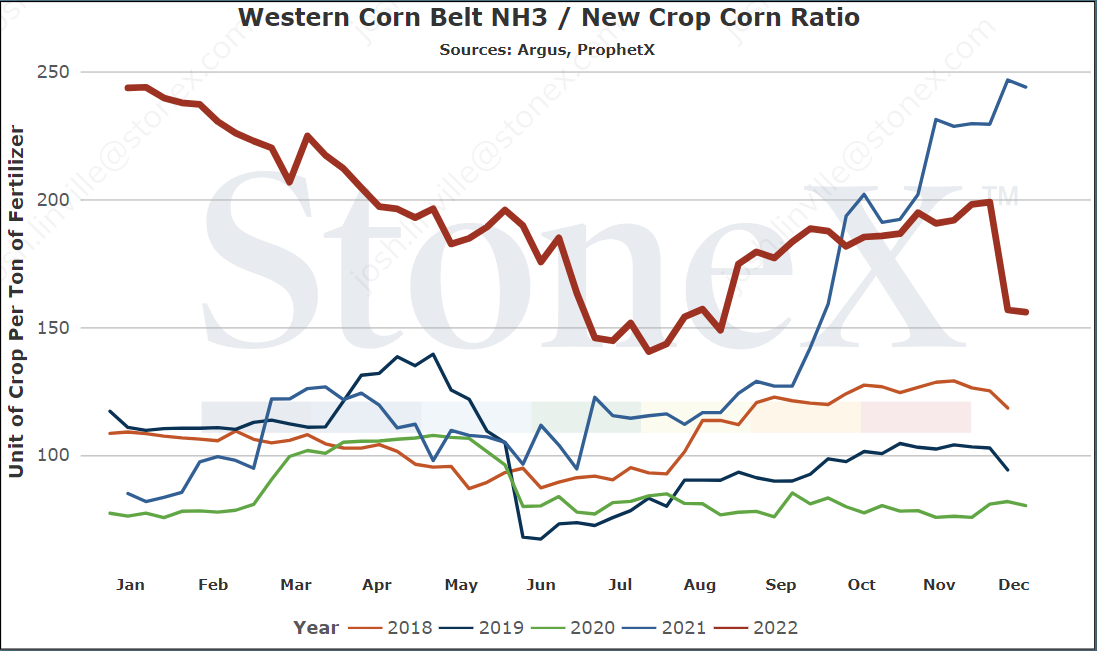
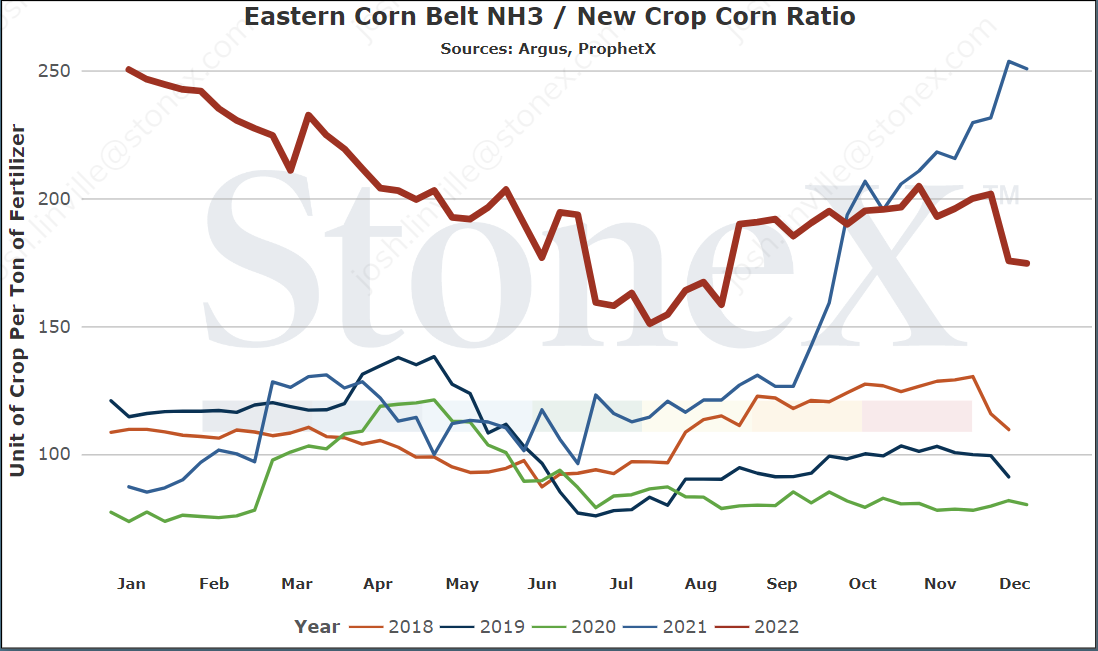
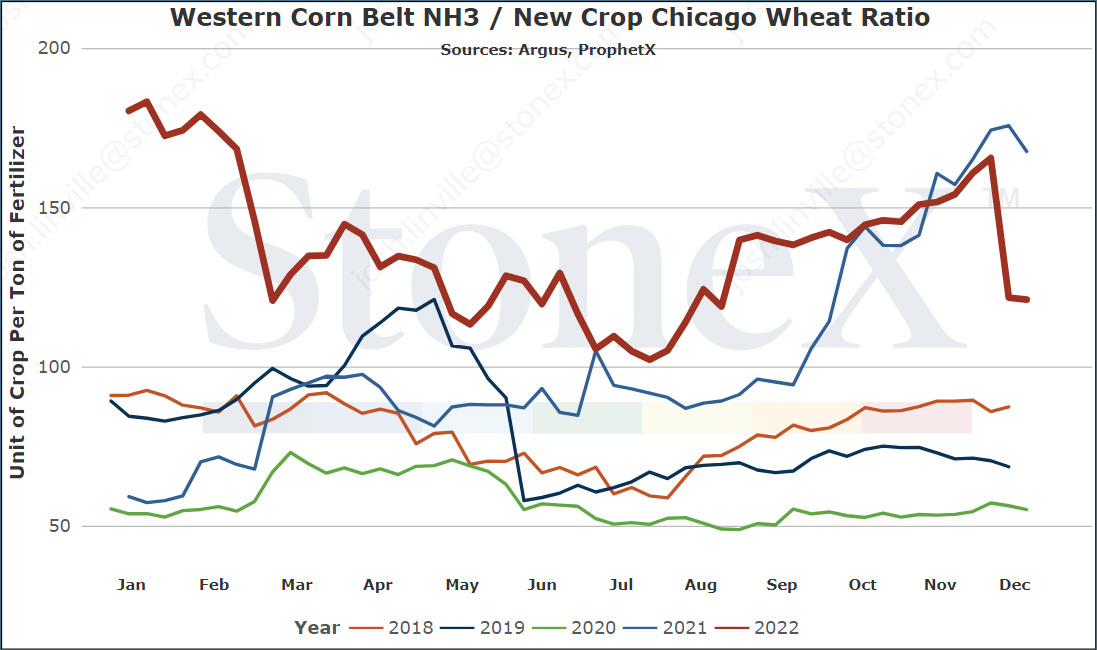
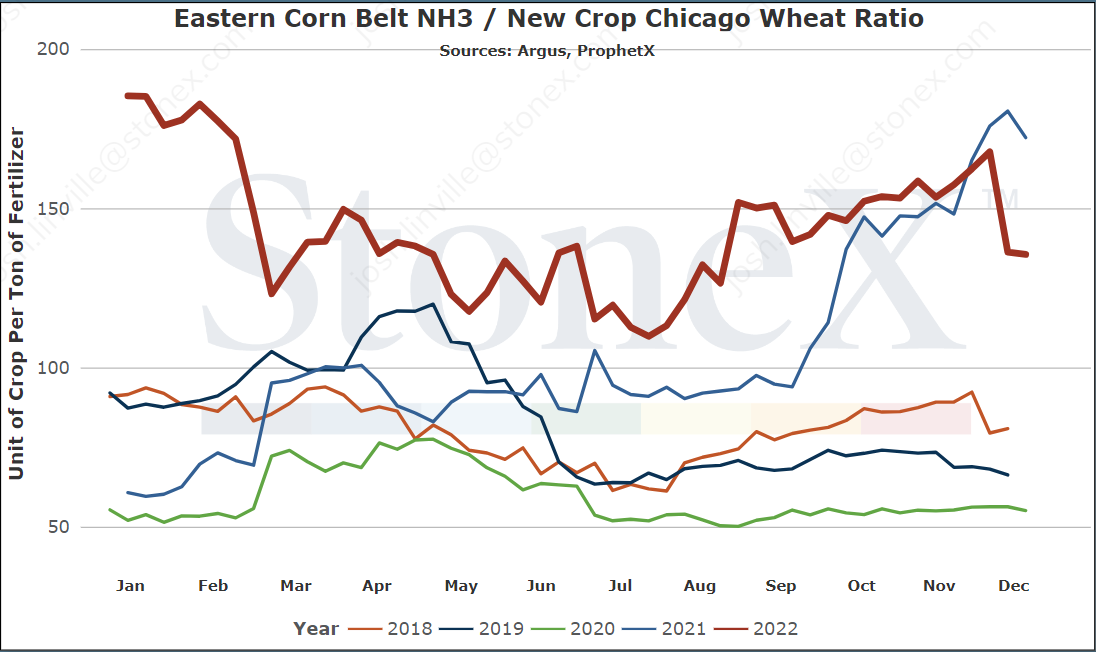
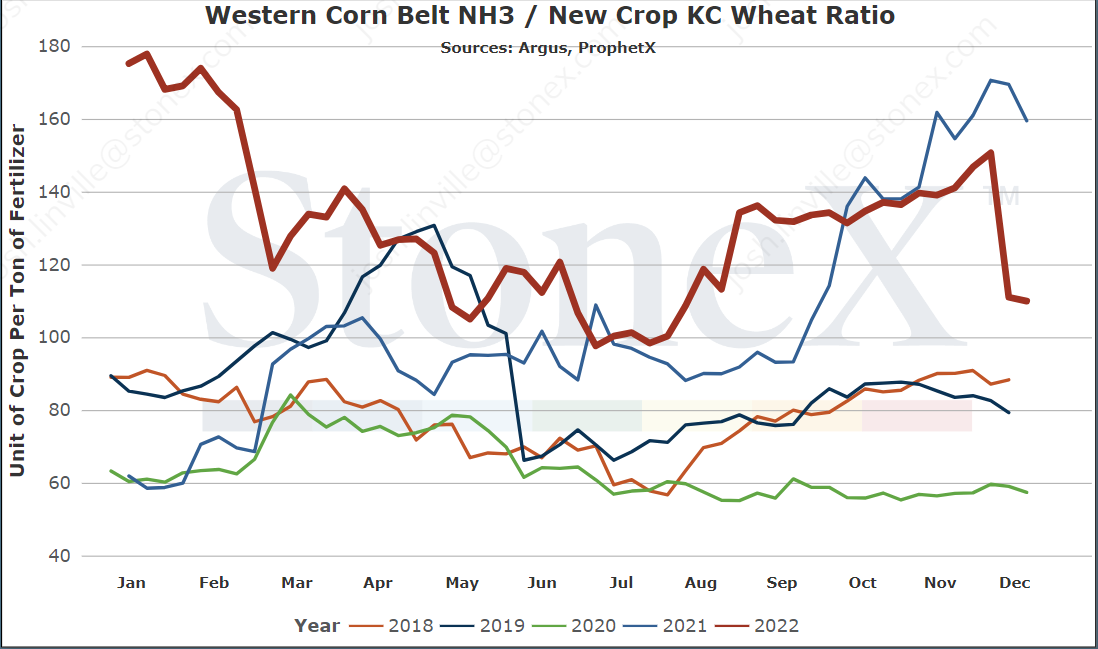
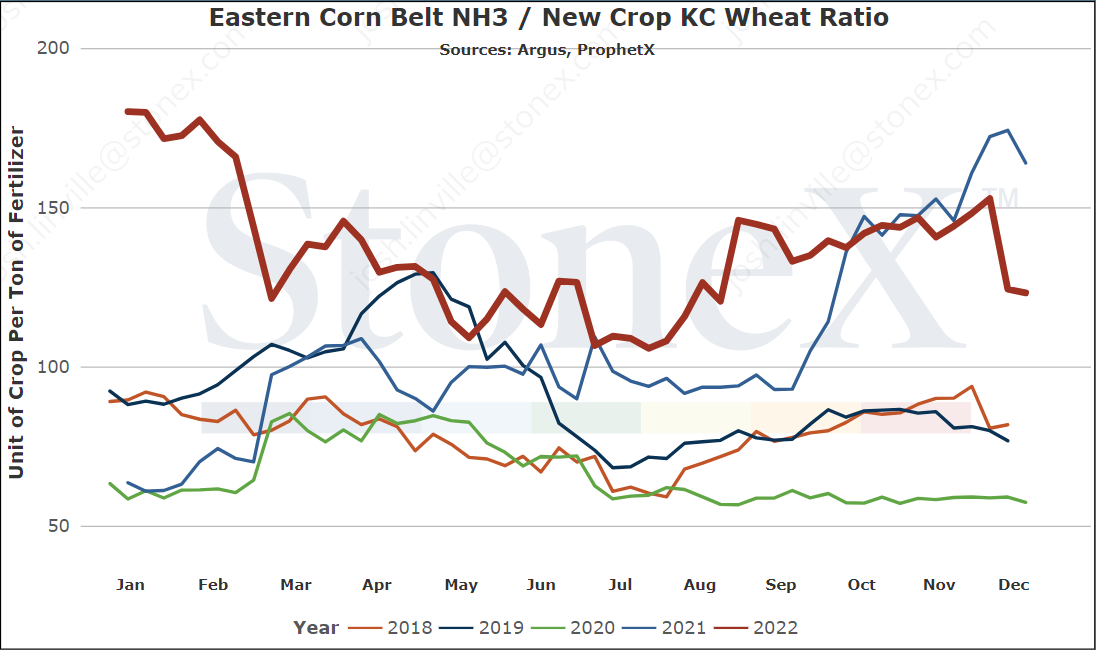
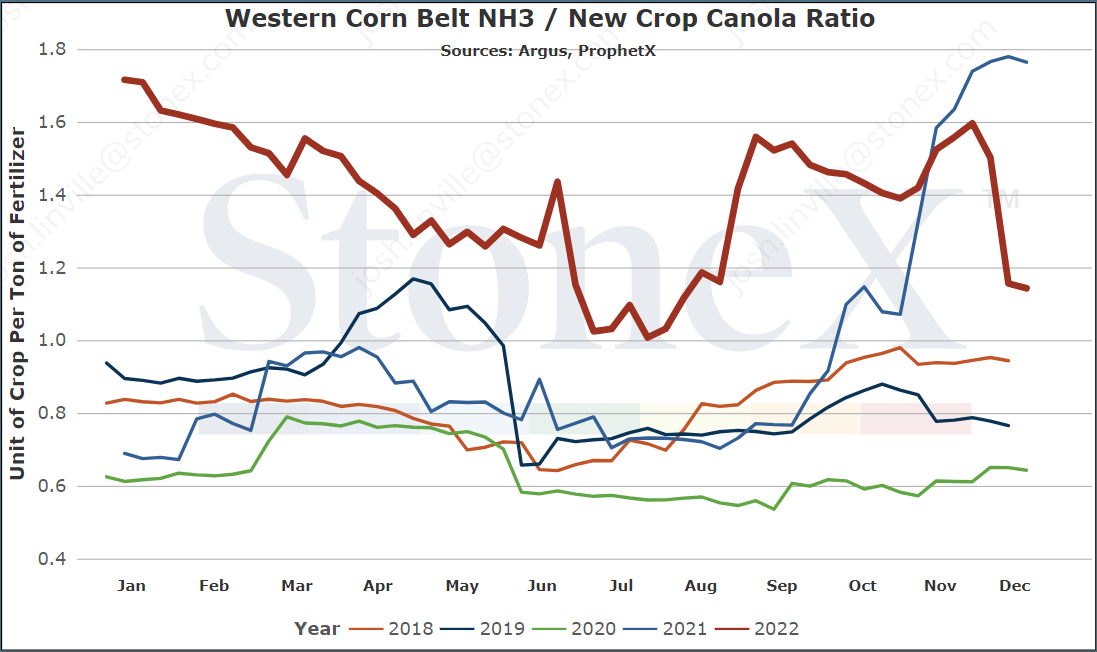
All of that said, spring prepay ratios to corn are definitely better than where we started 2022...but still much higher than what the market still thinks is "normal".
Every individual farmer that uses NH3 will have their own decisions to make as it will vary greatly based on location, crops planted, local values, etc.
N.A. logistical issues shouldn't affect Midwest NH3...much
For North American farmers, logistical fears/issues has been the driving storyline of the 2023 fertilizer year. Pending rail strikes. Lack of truckers. River flow issues. You name it, we have had it.
However, NH3 is one that shouldn't be as affected as other fertilizer forms.
Much of the Eastern Cornbelt see's storage filled via the Magellan pipeline. While anything can happen, nothing devastating has occurred. I probably shouldn't say that so loud...
There is a limited amount of NH3 that flows north on the river systems from production plants in the Delta. Those barges are only NH3 carriers. While loads might need to be lightened to traverse narrow/shallow waterways, there is no risk of losing this method to other products.
Rail is also a very limited logistical avenue. Railroads are not fans of moving NH3. As a result, they move their freight rates so high that most times it is more efficient to move product via truck so if there had been a strike, it would have been extremely limited for NH3.
Trucks are similar to NH3 barges in that they typically carry NH3 ahead of all others. The freight rates they can command for anhydrous typically puts that as the top product to move. While truckers get harder and harder to find (and NH3 carriers more specialized still), the loss has not been as bad in this sector. At least the last time I was in it.
All this is trying to say is that there are going to be hiccups here and there but the issues that have been felt on other fertilizer products shouldn't be as badly felt on NH3.
Note on graph below: Yellow lines are the Magellan pipeline that continue to flow NH3. The red lines are the Nu Star pipeline that is no longer in use.
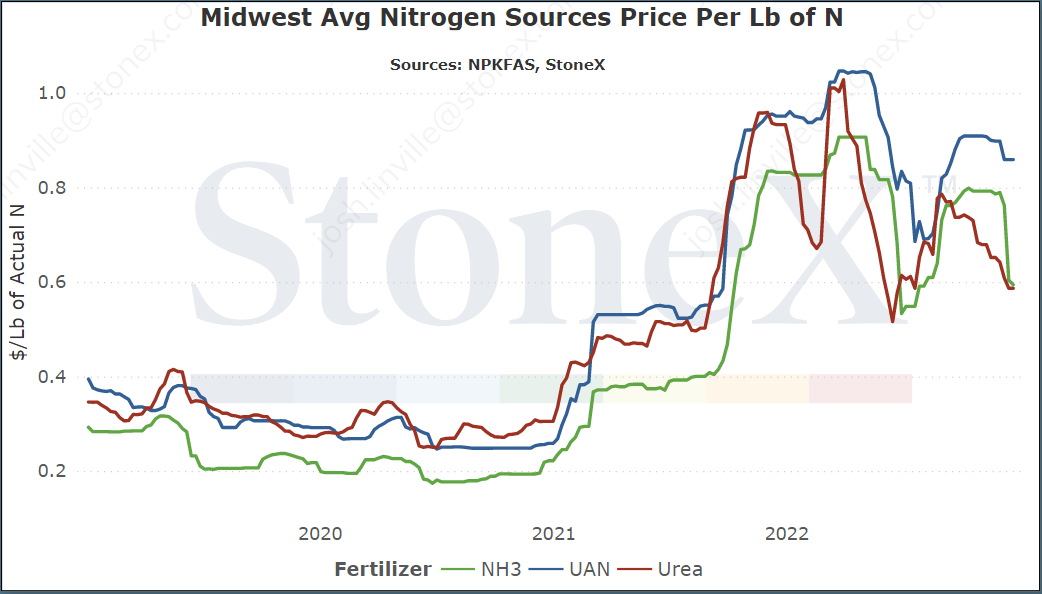
Midwest NH3 still a premium to current urea
You might be looking at that headline and then at the graph below and thinking "no Josh, no it isn't". As mentioned above, the current NH3 value uses the winter fill price which isn't really indicative of the market given limited storage. Most of the marketplace relies on in season shipments to get thru spring.
That said, using the spring program:
- NH3 @ $1,075 - $0.655/lb of actual N
- Urea @ $543 - $0.59/lb of actual N
While this doesn't make NH3 as much a premium as it has been, it is still a decent premium. Again, this isn't a statement that every farmer can actually consider but if you can comfortably and reliably look at switching from NH3 to urea, it may be a step to consider.
And if that is a step you are going to consider, be sure to have that conversation with your supplier. It may not be something they are prepared for on a wider scale.