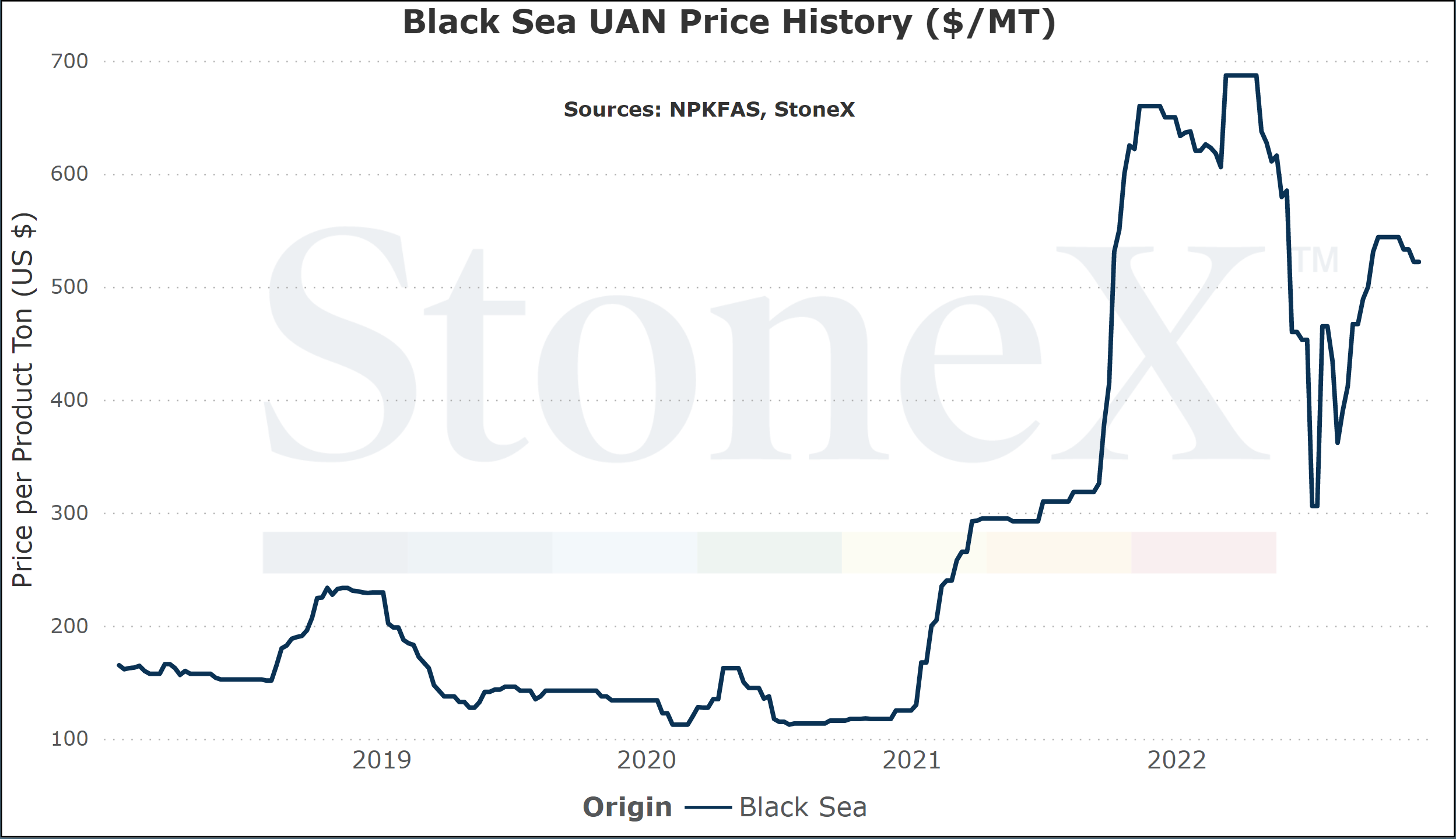
major global uan export location price graph
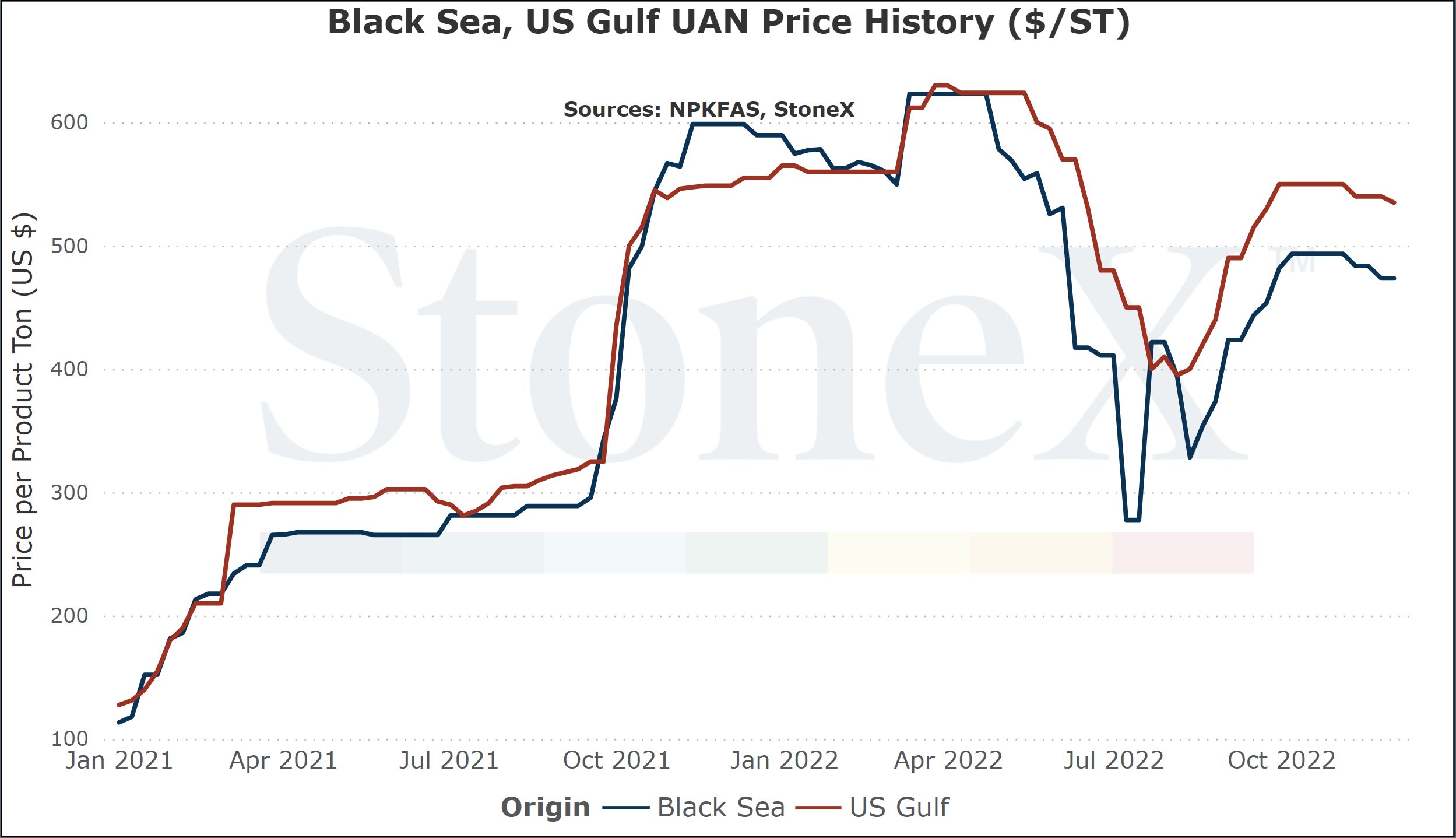
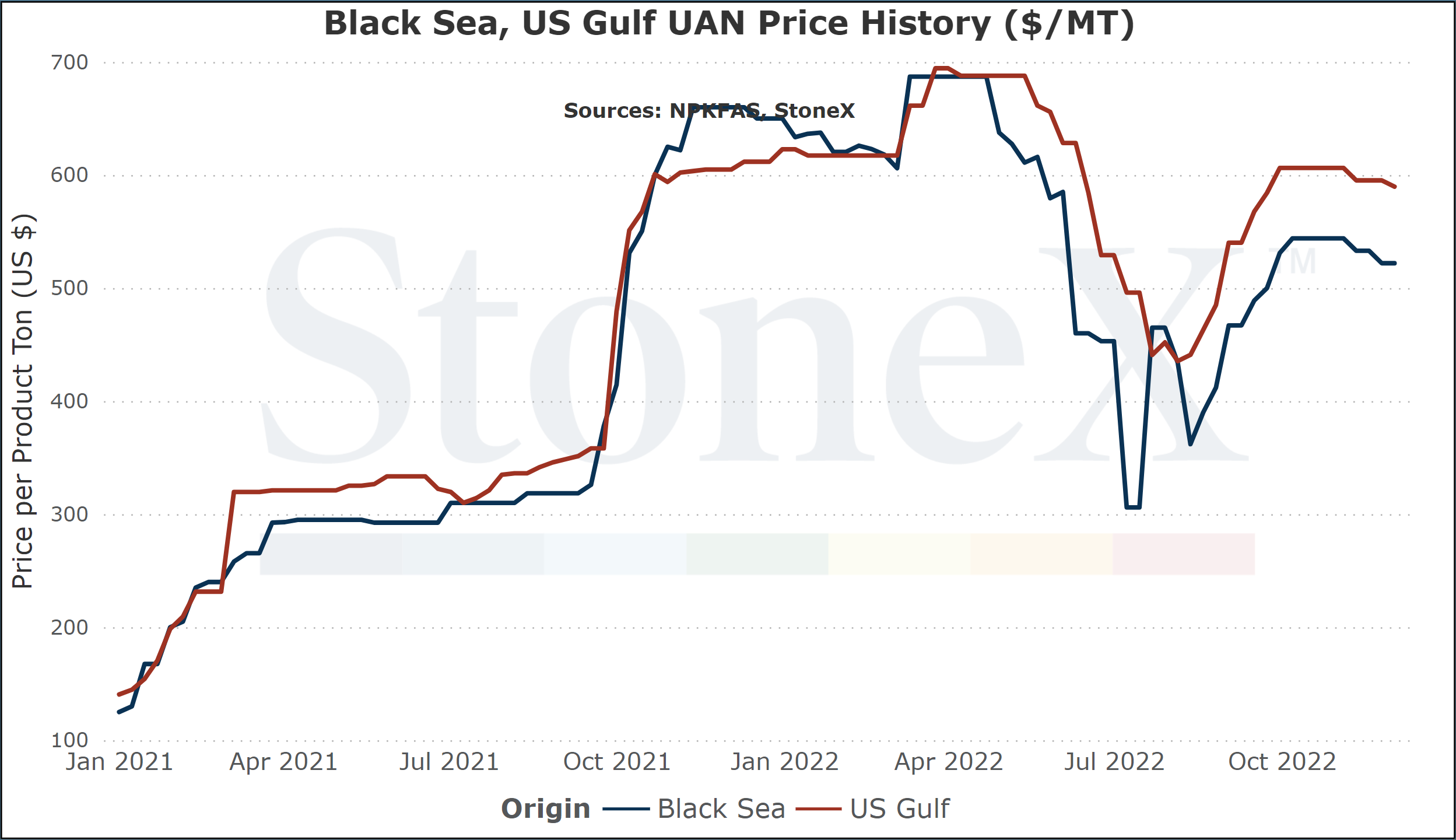
As mentioned in other products, the price graphs should be viewed by their price direction, not their absolute price. The first graph looks at the Black Sea and NOLA values on a short ton basis. The second looks at the same points except in metric ton. Both are in USD.
What everyone wants to know first, what do we think will happen going forward
Unless the urea market starts seeing prices rise drastically, UAN manufacturers are going to be feeling the heat which will likely mean lower UAN values.
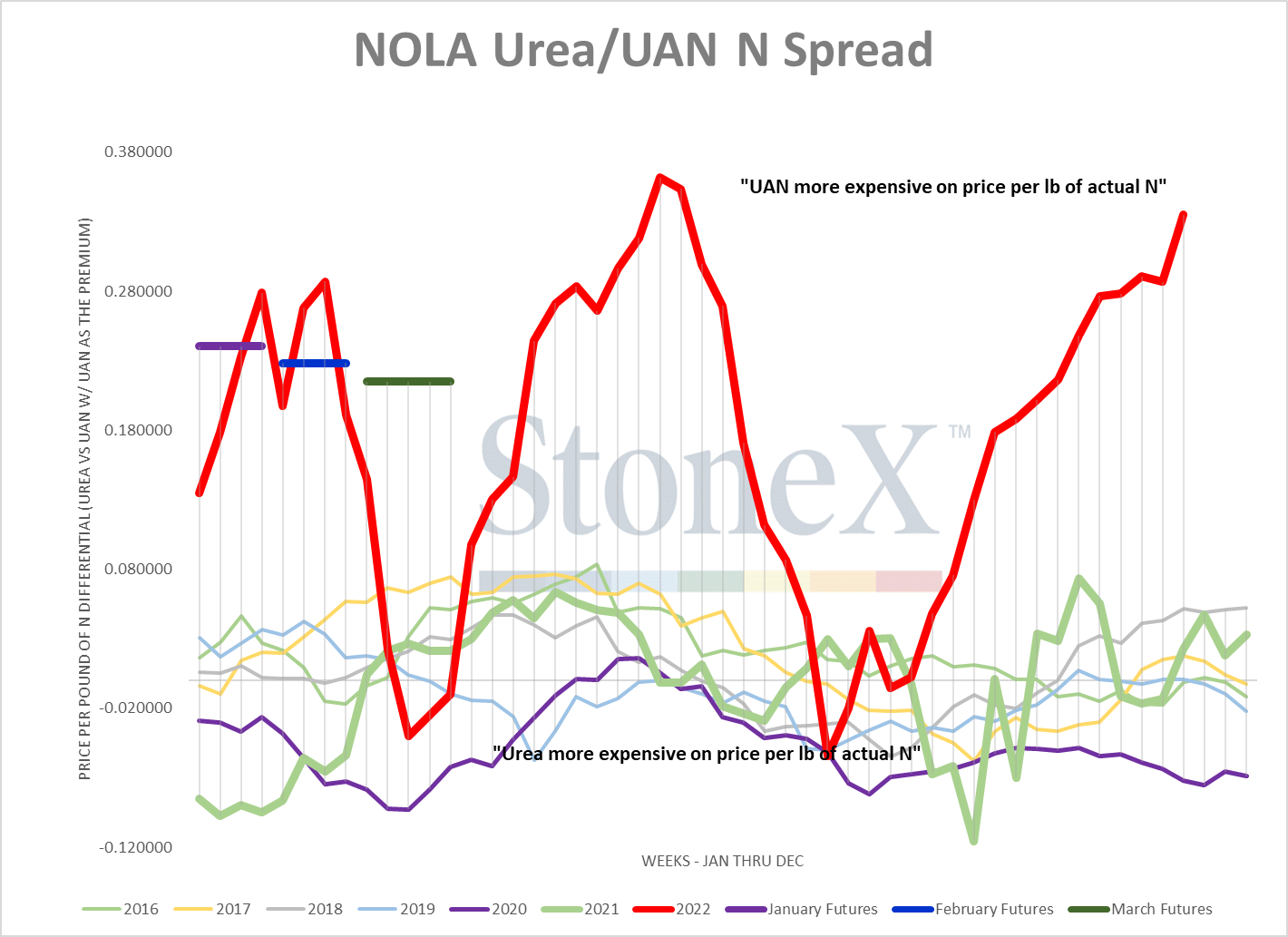
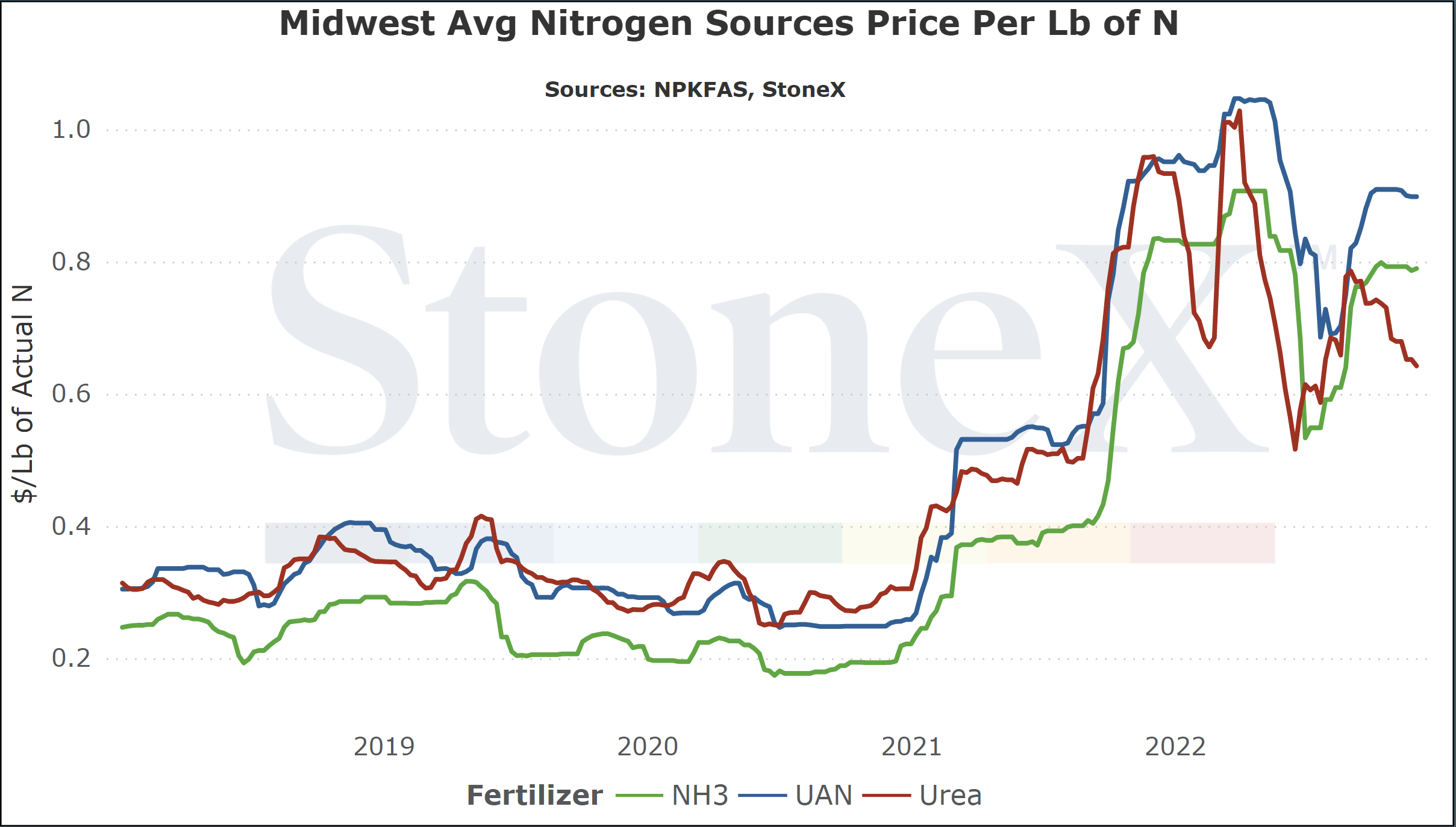
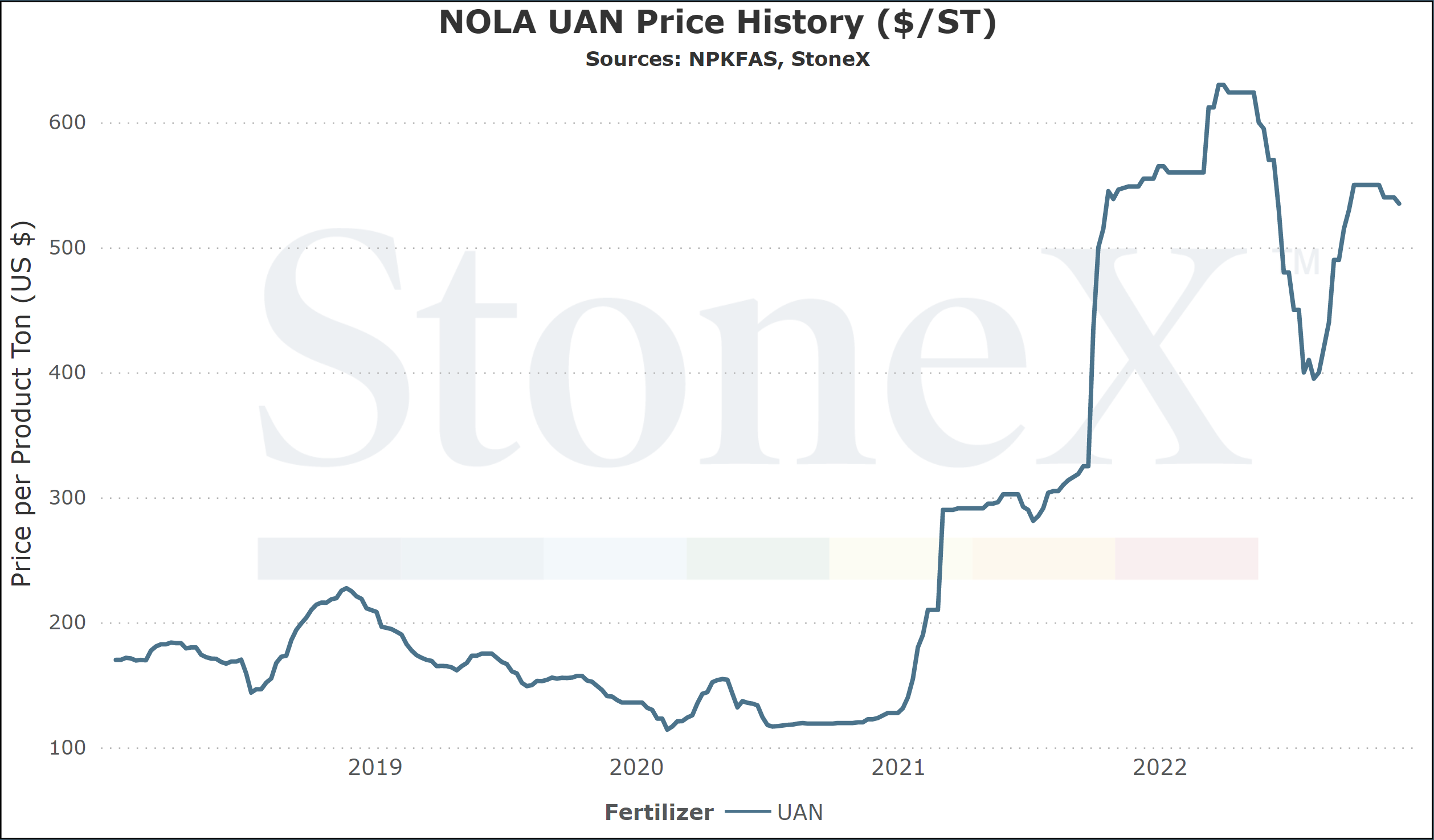
The big story this month is all about urea and how much prices have fallen. It has gotten to the point where NOLA values have urea at an almost $80 discount to UAN on a flat price comparison. On a price per pound of actual N (the value we all actually care about), that difference is 34 cents.
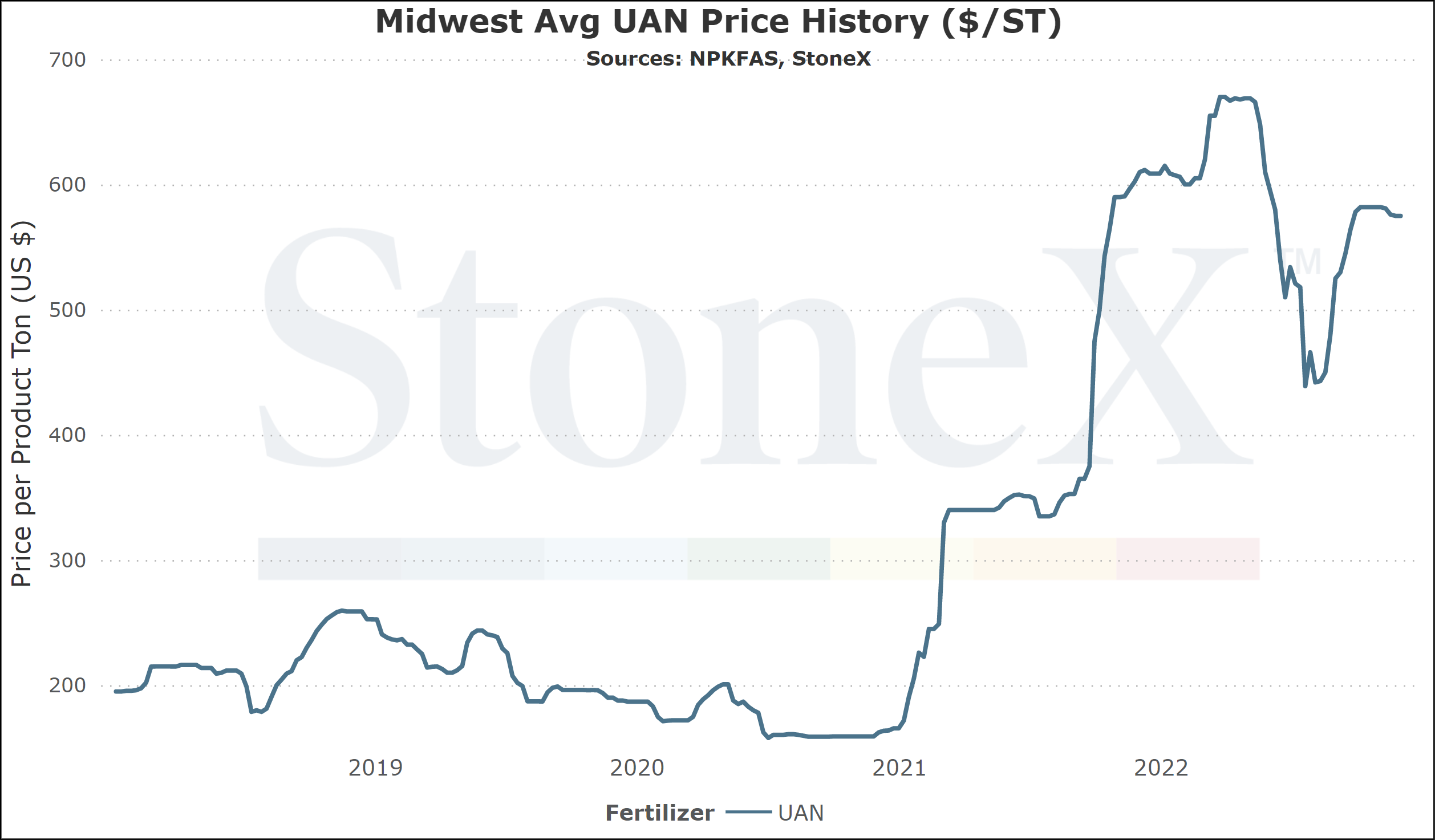
Inland, the differential is not as stark due to the 2nd biggest story in North America - logistical issues. However, the difference is still stark and based on multiple conversations, it is sounding more and more likely that UAN users are considering a switch to urea.
This possible demand switch has to be catching the attention of manufacturers and we are hearing rumblings that they are a little more willing to consider lower prices. May not be a widespread price fall, but it is definitely a weak point in the armor.
should you buy your Spring '23 uan needs today?
Hold off...for the moment
If I have more UAN to purchase, I would be dragging my feet a bit to see what plays out in the next 30 days.
Urea prices are acting like an anchor on UAN price ideas.
Fall NH3, while still too early to call, looks like it might be closer to "normal" than we originally thought which means less switching to UAN in the spring.
European production levels have improved which has helped global supplies rise/demand fall.
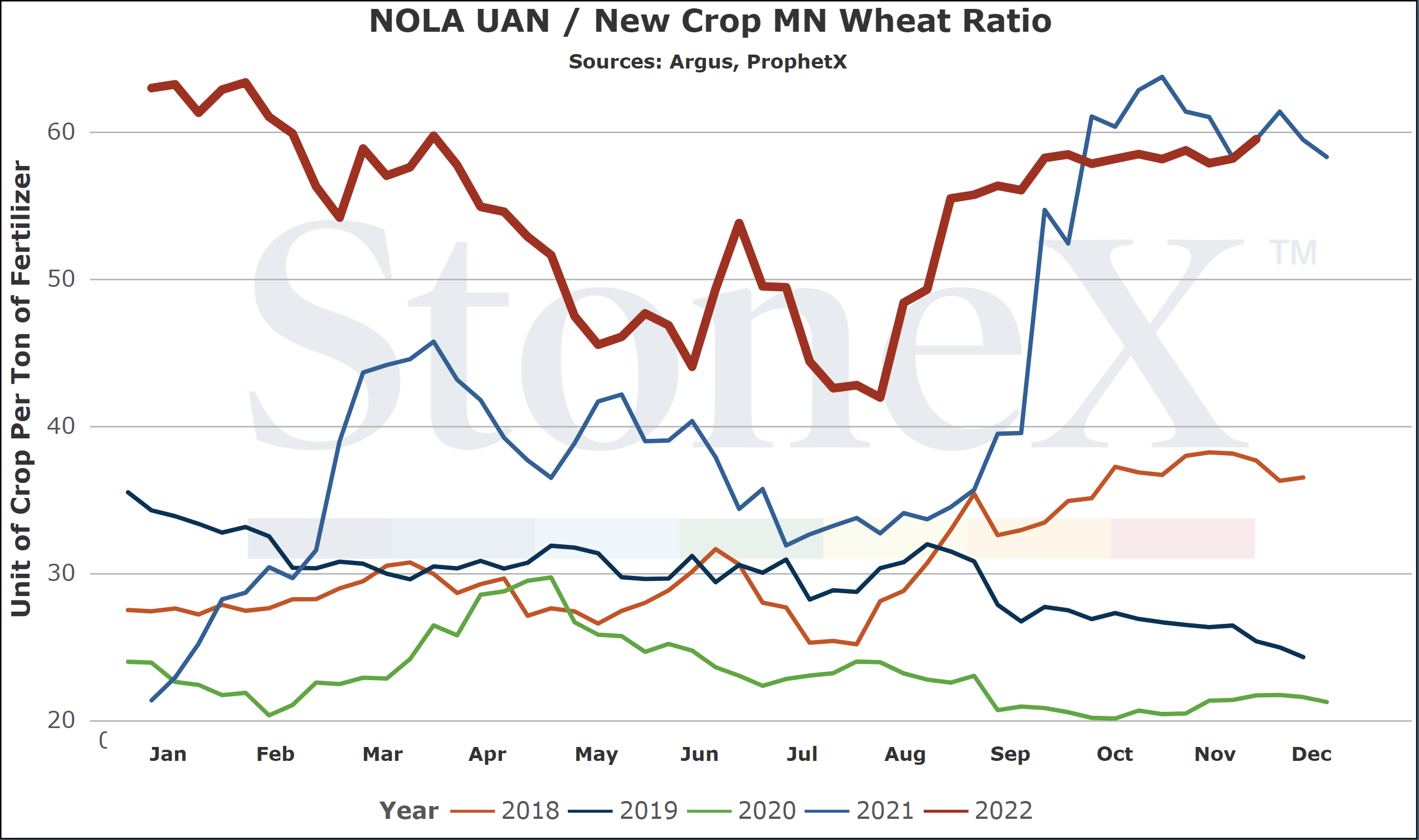
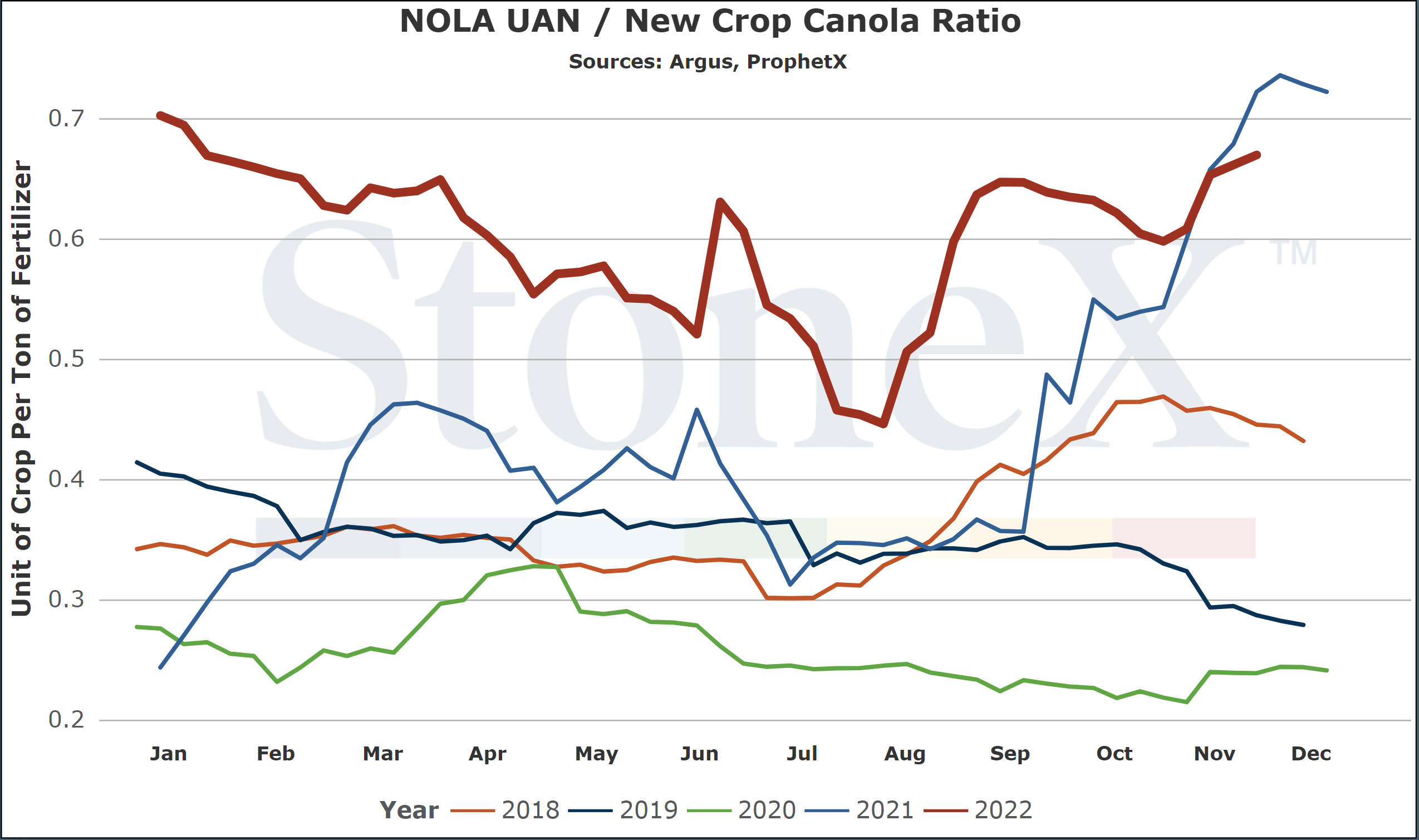
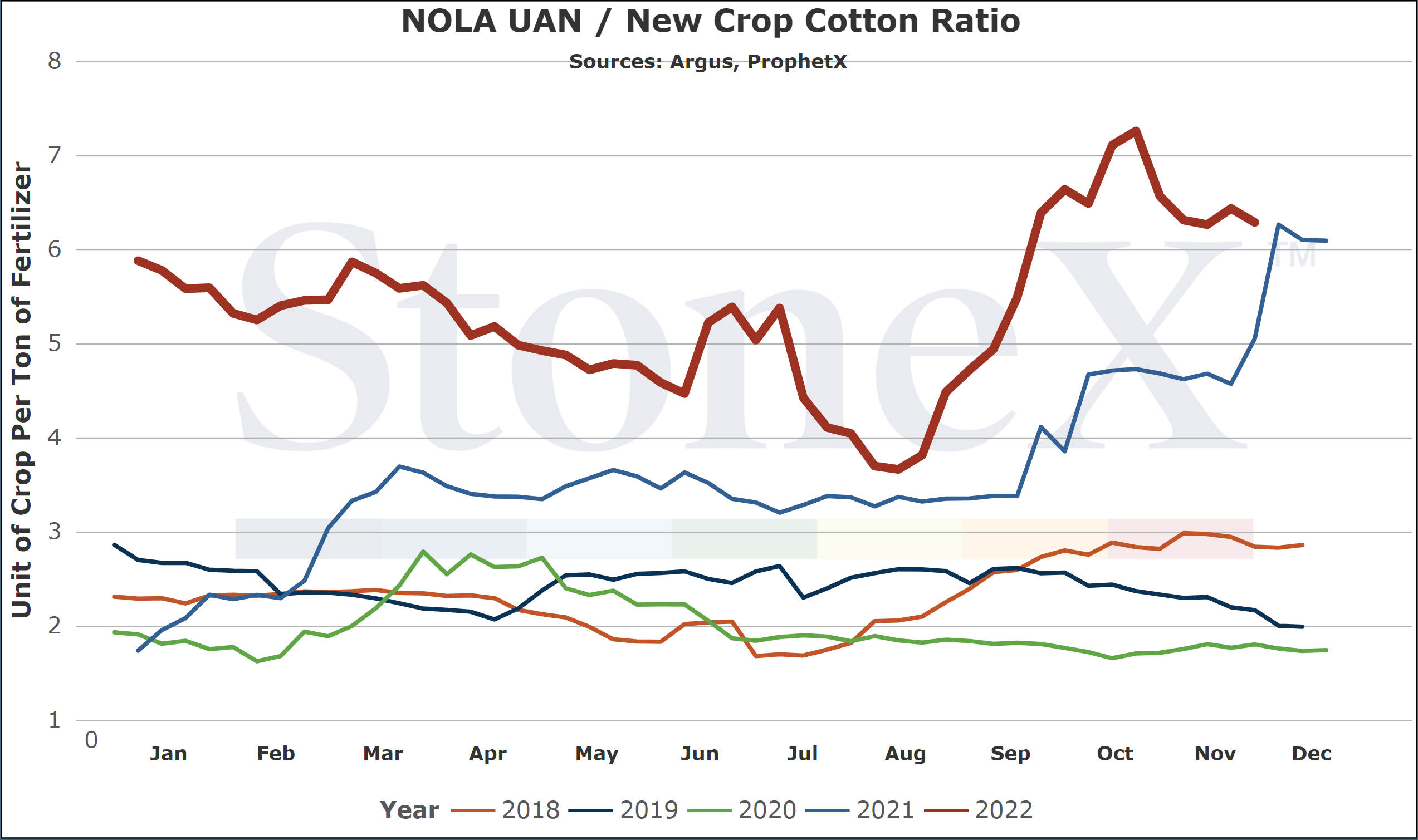
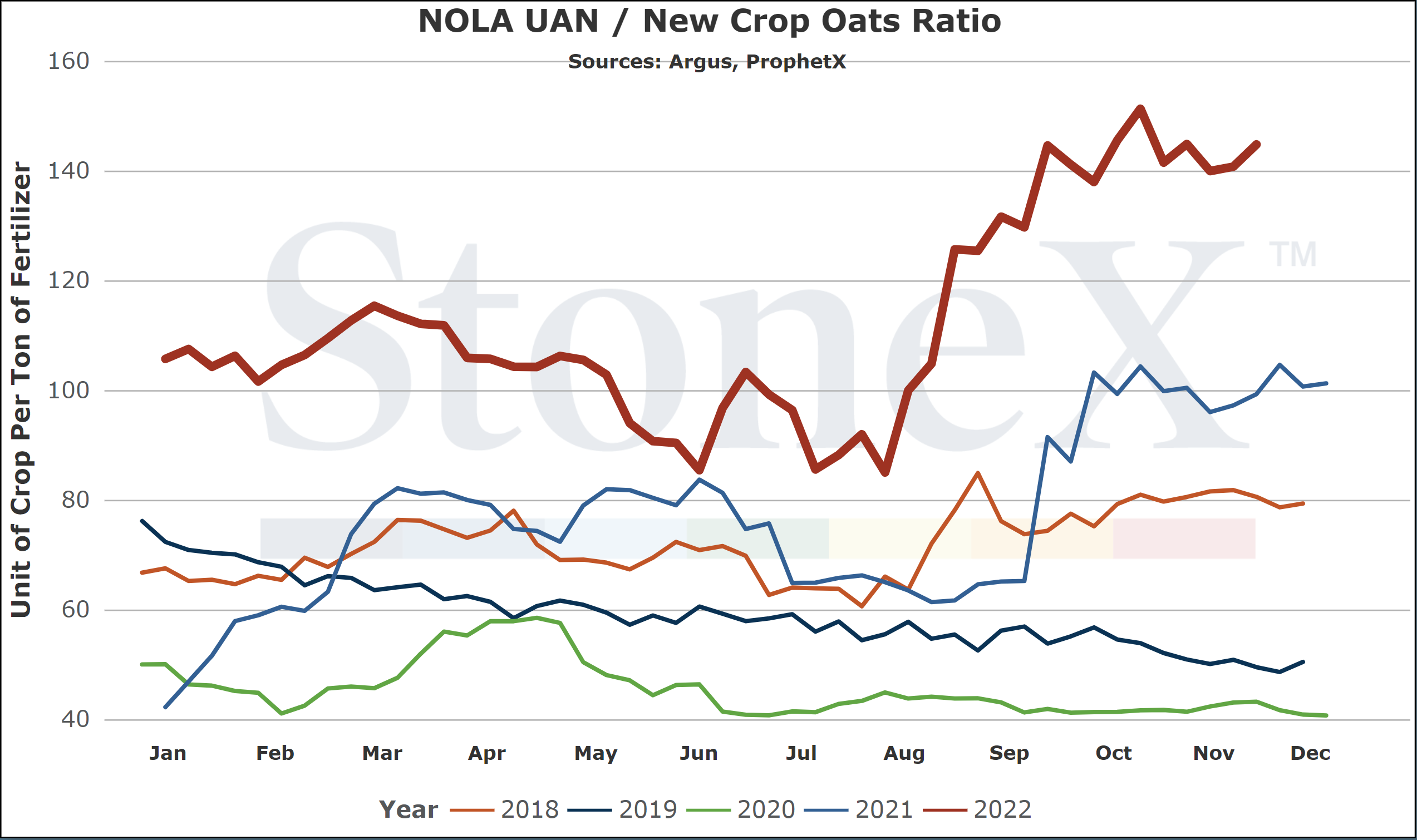
All of this combined with very high grain/UAN ratios make me nervous of stepping in today.
On the flip side, the year end/beginning prepay period is coming and logistics are still a very big fear across North America. Either or both could cause prices to hold...or even rally.
What has happened in the last 30 days?
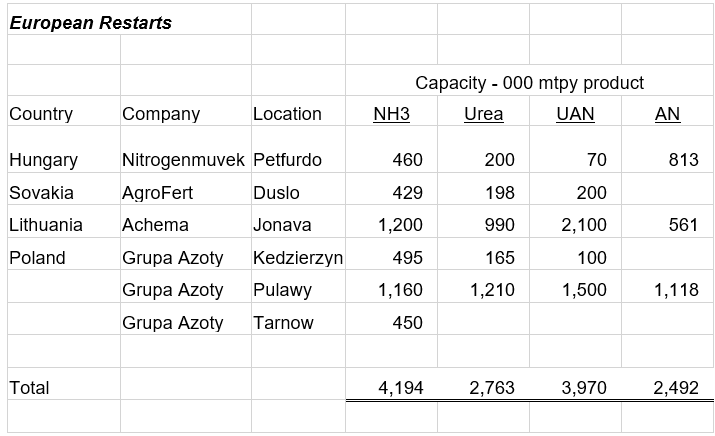
Some European production plants are restarting!
This is being left unchanged from November because it remains incredibly important for the world of UAN. The addition of these produced tons/loss of demand continues to weigh on price ideas around the world. While we are anxiously watching European natural gas values (have climbed from a bottom of lower $30's to a current lower $40's), today it looks like restarted production will remain online for the short term. Nitrogen plants are difficult to restart/shut off, not to mention expensive. Plant owners are not going to take shut downs likely. With some plants being feared that they will not restart if turned off, it might make sense to continue producing at a loss rather than lose the asset alltogether.
This is not a story I thought I would be writing anytime soon!
When Putin shut off natural gas flows to Europe, prices skyrocketed. Values which had normally been in the single digits skyrocketed to over $100mmbtu. The immediate response from nitrogen producers were to stop production. As Russia continued to invade Ukraine and "someone" sabotaged the Nordstream pipelines, many experts claimed that natural gas values were remain extremely high for a very long time.
Sometimes, markets have a way of making really smart people not look so smart...
As of this writing, the Dutch TTF futures have closed the week with all future months no higher than upper $30's. This did not seem feasible a few short months ago. The result has been a surprising number of nitrogen plant restarts.
Some plants, like those in Poland, officially announced their restart. Others have been highly rumored but have not officially announced. This makes sense from their POV. If they tell the world that their production (supply) is returning, that also means their regional demand is dropping. This is a bearish event and let's face it, they like higher prices.
More promising are rumors that even more plants are coming online in Europe. Some are said to be restarting because it makes financial sense (plants are profitable again). Others are rumored to be restarting because if this process is not done now, there is a chance the plant never restarts. Better to lose a little bit of money on the short term to keep the plant viable for when market conditions improve.
While a lot of damage has already been done for lost production time as well as some plants still being offline, this has been a positive piece of news for buyers that was not highly expected.
North America logistics are in trouble...and that could impact UAN prices
Unless you have been living under a rock (or incredibly busy with fall harvest/fall application/feeding cows/etc.), North American logistics are struggling right now.
The river situation has been dragging on for many weeks...and shows little signs of improving near term. While Midwest rains have helped water flows bump higher for a short time, what it truly needed are heavy moisture events in the north to fill the waterways. Even if that occurs, most of the moisture would come as ice or snow, meaning that the impact to waterways would not be felt until the springtime. It seems we are going to continue to fight thru this for several months to come. Fortunately, the Coast Guard/dredgers/barge owners/barge captains/barge crews are busting their butts to keep traffic flowing...even if at a reduced pace/weight.
Recently, rail strikes have been dominating the news wires. Rail workers across the U.S. have come together to make demands. Railways have been unwilling to give on negotiations. It seemed likely that a strike was going to occur...until Washington D.C. voted to not allow a strike.
Someone should have introduced them to a rail worker and discussed what their voting against a strike would do.
Short theory is that rail workers are now more likely to dig in their heels with that vote. Those that I know that work for railroads and not the type that like to be told what to do. If negotiations continue to fail, I wouldn't be surprised if workers take steps to mess with transportation in the form of not showing to work, working slow, not delivering cars due to "issues", etc.
For the UAN market, the loss of either/both of these methods would be devastating with a result of inland prices jumping further. We are already seeing signs that inland values are holding high while some world/NOLA price ideas have fallen. It simply costs more to move product from point A to point B. It also makes exporting UAN to Europe even more appealing due to fears of not being able to push north.
I cannot understate how important this will be not only to the UAN market but to all fertilizers. Even though this is a U.S. rail strike, it will affect Canadian farmers just as well.
Cross your fingers this crisis is averted.
NOLA UAN is expensive vs urea
I can sincerely say that I did not expect the spread to get this wide between UAN and Urea. That said, I also did not anticipate global urea values to fall nearly as hard as they did.
As the graphs below show, UAN has quickly become an extremely expensive nitrogen alternative.
In the past, the notion that farmers would switch freely between the N sources was largely laughable in the supply/trade sector of the marketplace. Farmers were set on their product and it would take a literal act of God to make them use something else.
However, this year looks like it may break that rule.
There are many out in the market that are saying they are highly considering a switch. If the UAN marketplace wants to keep the value where it is, they will respond by switching. It is several months before the start of spring so plenty of time to take action to make changes.
Now, this talk is easy to have today with very few decisions being made. What will be important is the action. If we get into the calendar year prepay period and find that switching is happening, it will create a tremendous amount of downward price pressure for UAN.
I'm not saying this switch works for everyone but for those that it does, it is worth considering.
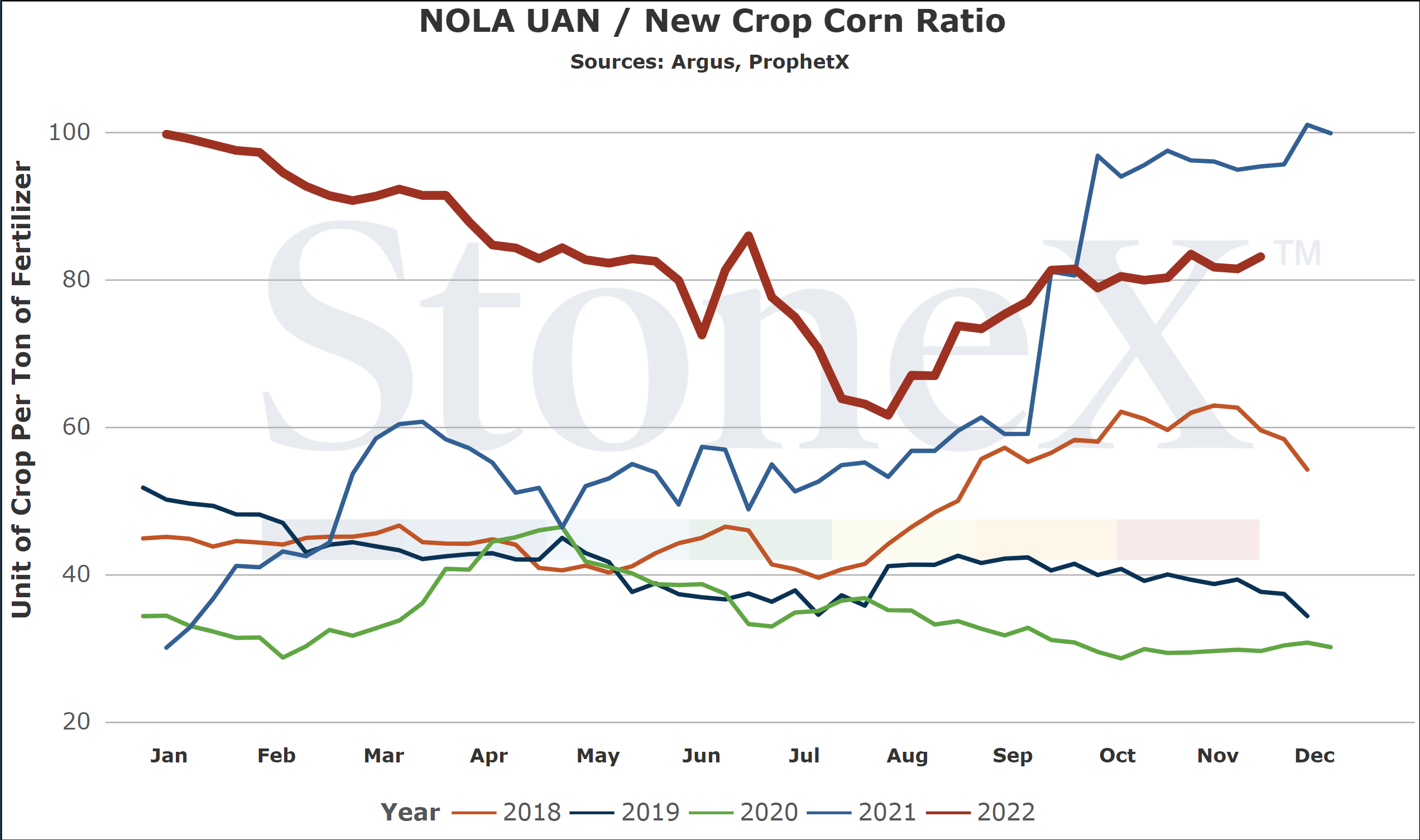
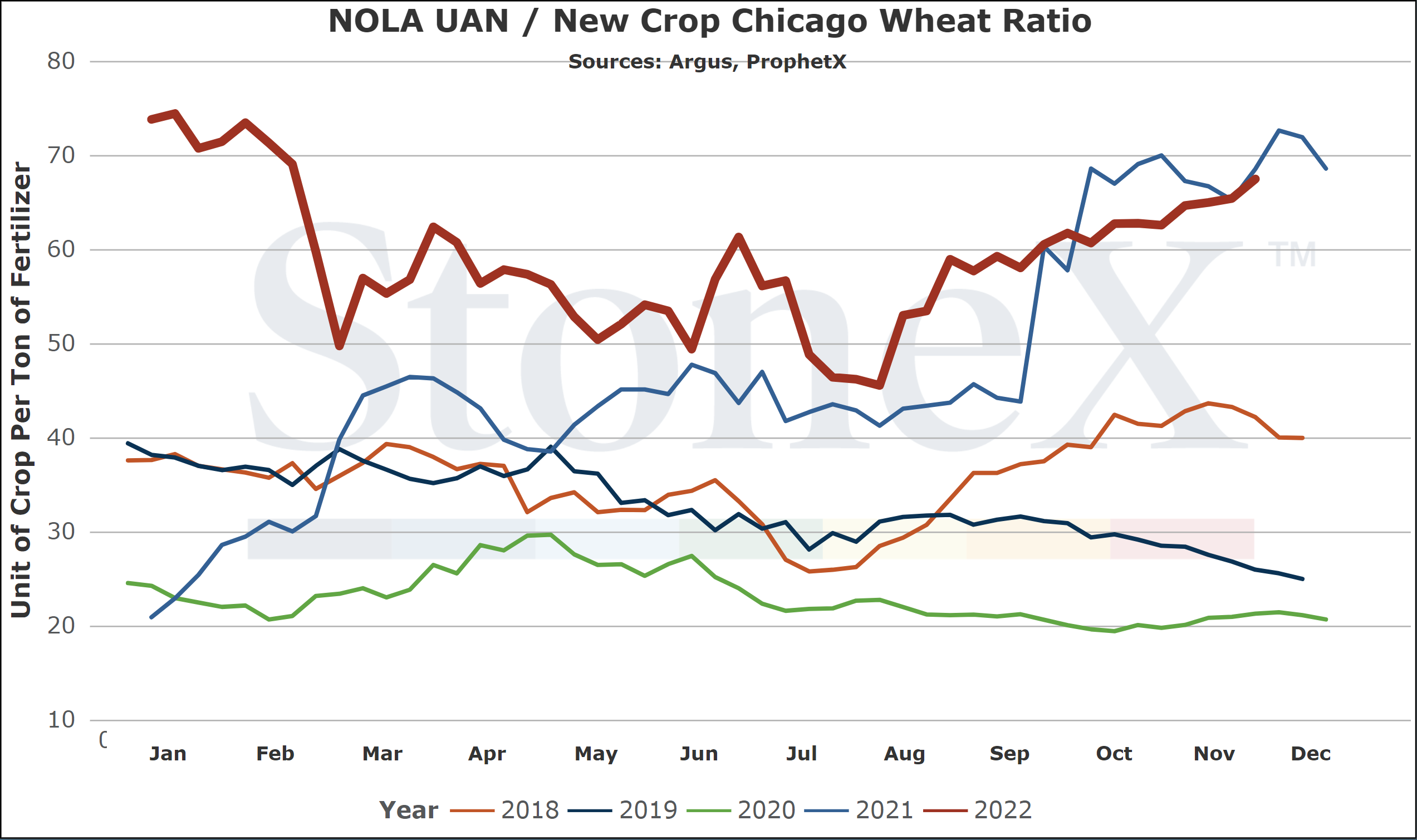
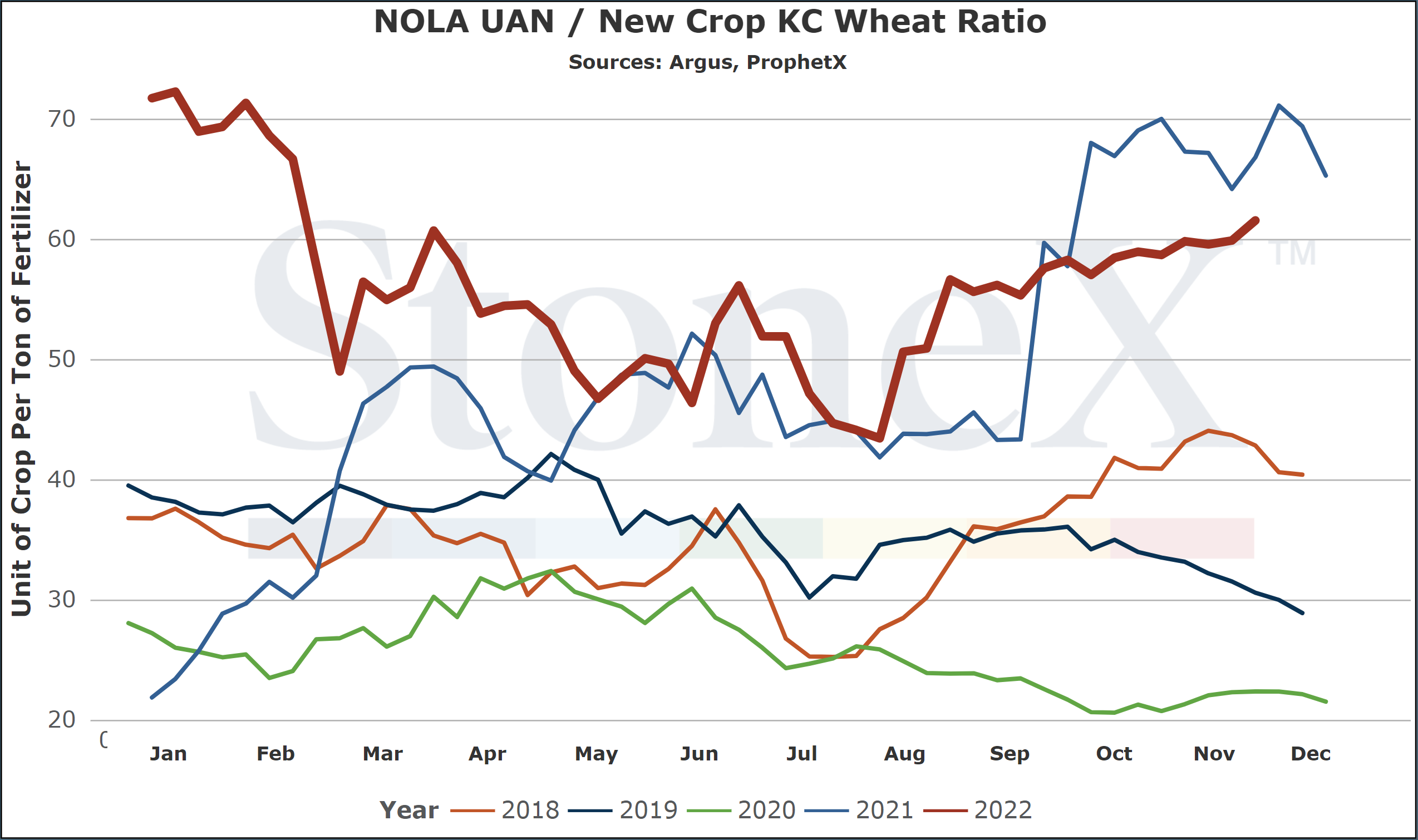
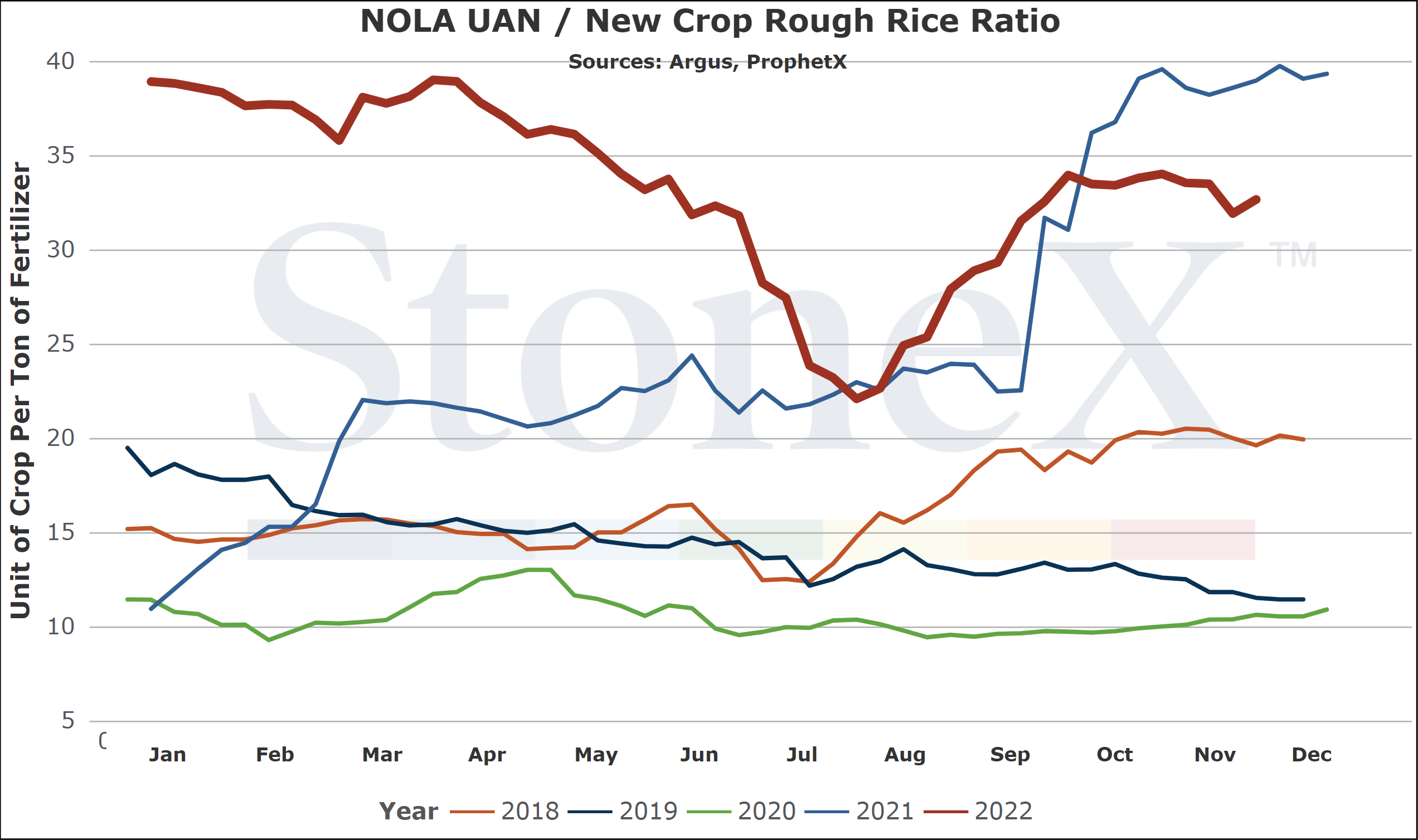
Where are current values in relation to the past