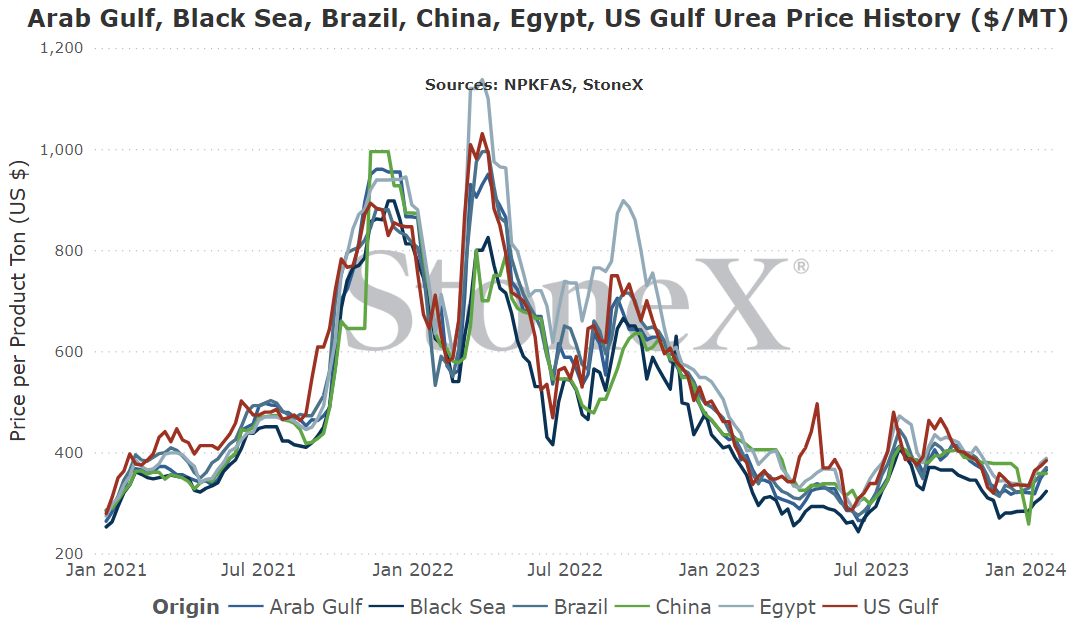
Global values have been hot the last month on the back of the return of buying. However, there are some things that are bugging me. There are a lot of sales being made by Egypt. They are nearly daily...but small in volume. There isn't a lot of other global selling being reported. It almost has a feel like this is more of a trader driven market than fundamentally based. Still, with demand for spring application coming quickly, it may not matter.
I think we are now set in a higher priced value range. More support arrives as buyers step forward. However, the market is going to have an eye forward to summer resets, wanting to make sure they do not hold too long.
It's a mixed bag for a little bit and comes down to timing.
Last, do not sleep on Middle East tension. Seems we are getting closer and closer to the war edge. If we start talking about Persian Gulf shipping lane attacks/issues, the market is different immediately.
Global buyers return, prices respond
One of the bullish factors from last month is if buyers return, prices could/should respond.
That has happened in a big way.
Egyptian producers have been pushing the envelope. While their sales volumes per day are not huge (4K - 10K per sale), they are linked to near daily activity. They have been taking full advantage of that situation by taking their price higher. Sold something today? Move the price up $5 - $10 and see if they will buy. If they do, move the price up $5 - $10 higher. This has happened over and over and over again.
However, it isn't just North Africa that has been selling. Values around the world have been increasing. The Middle East has been quiet in terms of sales but manufacturers are reportedly well sold into February. If true, they are very close to peak demand season which puts them in further control.
Unlike the last few years, this doesn't feel like it is going to get out of hand and rise hundreds of dollars (unless the Persian Gulf erupts...see below). It feels like this rally has some staying power and with some issues globally, it only supports their cause.
Why does this matter to Australian farmers?
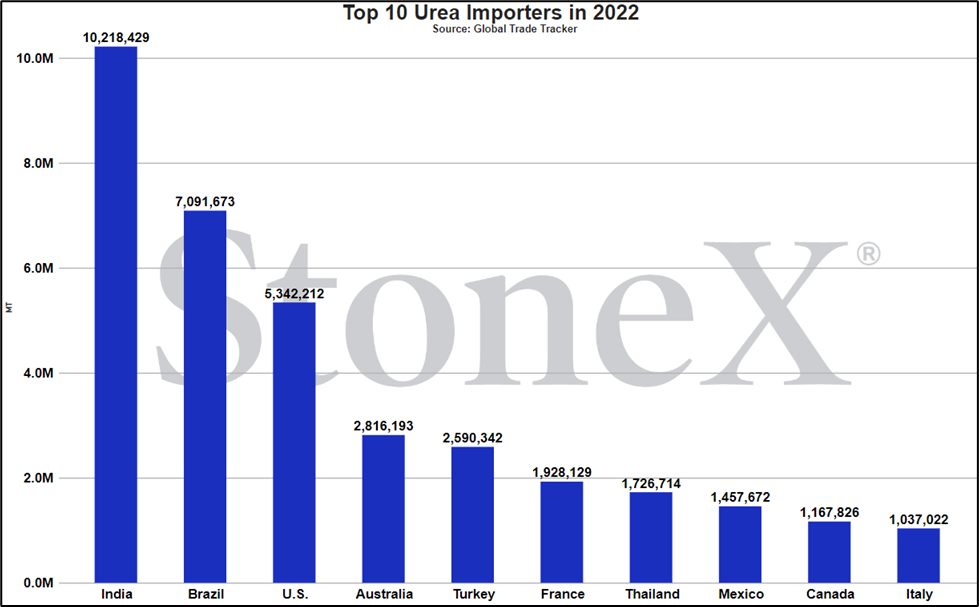
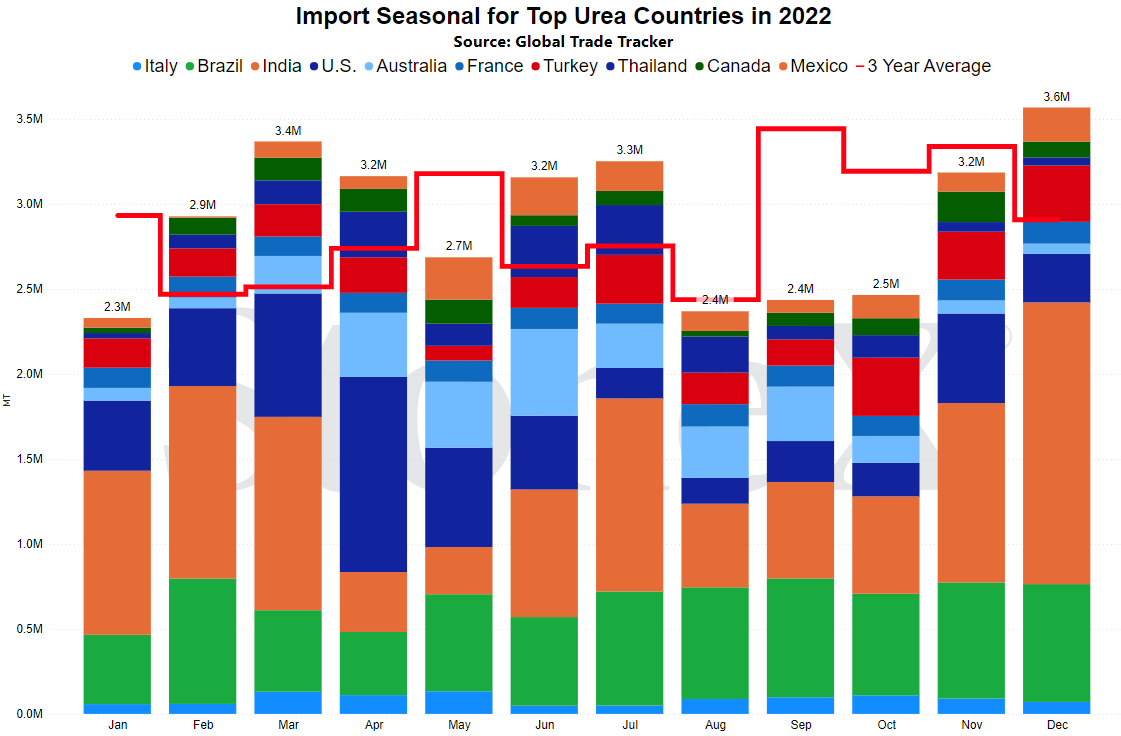
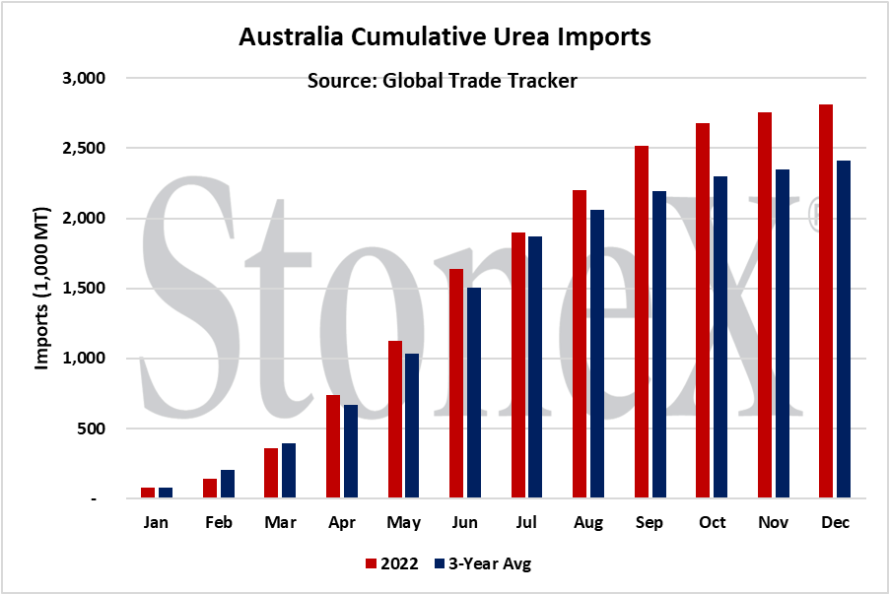
Australian urea inventories are tight which means that any price increase globally is going to see a fast response in the market. If inventories were more than flush and retailers needed to offload positions, they could bear some of the movement in hopes of having you step forward. Unfortunately, that is not the case. In fact, it seems that Australian buying is what helped set recent high priced sales in the Middle East because time was against importers.
Red Sea attacks raise shipping fears
The top of the recent news cycles have been the attempted and some successful attacks by Houthi rebels in Syria against vessels in the Red Sea. Fortunately, most of the attacks have been thwarted by western naval forces. Unfortunately, no defense is perfect and some attacks have gotten thru.
As a result, we have seen some vessel lines refusing to send their ship and crew into harm's way. Rather than risk an attack, they are able to call upon "war time provisions" in shipping contracts. That means longer routes, higher freight rates and longer sail times.
This has been a situation that has hit the urea marketplace given how many vessels sail thru this passage. If the market was still bearish, the additional freight cost would likely be absorbed by the manufacturer in the form of lower netbacks. Frankly, in this scenario, the buyer doesn't care what your situation is. They have a price they will buy and that is it. However, now that urea markets are bullish, buyers are having to consider competing for tons. That additional cost will be burdening the buyer rather than the seller.
While it does drive costs higher, when spread over 30 - 40K tons, it is manageable. Not great, but it can be stomached. The bigger issue is the longer sail time. For vessels sailing south around Africa and to North America, it adds an additional 10 - 15 days or more. For most of the calendar, that isn't a big deal. However, we are quickly reaching that period where we switch from winter to spring. 10 - 15 days could make all the difference in the world.
It is important to note that traffic is still moving thru that region. This is merely another hiccup that has occurred and could easily occur again...and for western countries, the timing couldn't be worse.
Why does this matter to Australian farmers?
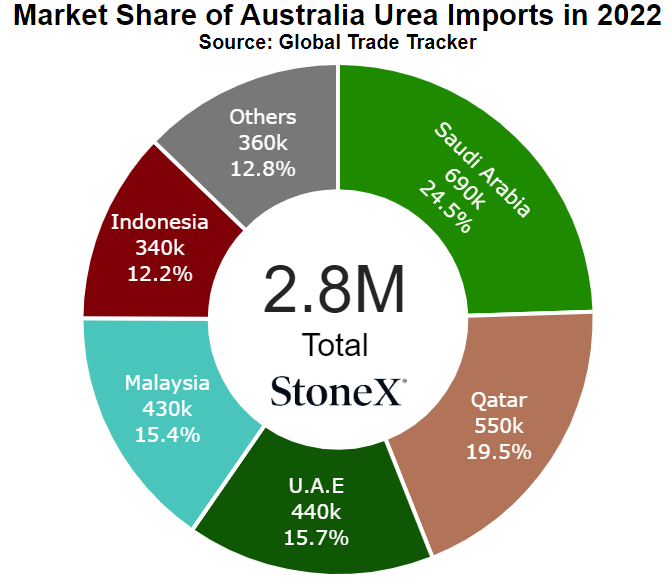
Normally, there shouldn't be any impact to Australian urea markets due to the fact that so much of the urea imports come from the east side of the the Red Sea. However, as the piece above points out, Aussie inventory levels are very low and global producers are very well sold today. It is possible that Australia needs to call on non-normal supply points like North Africa to find a quicker loading/sailing ship.
Let's say a somewhat early loading slot can be attained in North Africa. Rather than taking a direct route, that boat has a chance to say they will be sailing around the south tip of Africa and then over. For a lot of the calendar, those additional weeks do not matter but how thrilled would you be to find out that there is nothing available to apply to your field today and the resupply boat just added 2 more weeks?
This is one of those times in the calendar when a couple weeks make all the difference in the world.
U.S. Jordan military base attack puts global urea on edge
For a while, there has been a lot of tension regarding Houthi rebel attacks/attempted attacks on vessels in the Red Sea. So far, many of the attacks were either thwarted or only resulted in minor injuries and damage. While it was seen as an irritation and some retaliatory actions were taken, it was kept relatively in check.
Unfortunately, that same group was successful on a drone attack on a U.S. military base in Jordan that resulted in 3 dead and dozens wounded. That was a major escalation and the world is now holding its breath on retaliation measures. With these rebels being backed by Iran, it does bring up different possibilities:
- The U.S. takes further action against Houthi rebels only - in this scenario, we will see some nations protest the attacks and blame the U.S. as they do but ultimately, the attacks will come and go and everyone will move on. Decent chance of occuring, low impact to urea.
- The U.S. attacks Houthi rebels and implements sanctions against Iran - in this scenario, tensions will be elevated and the push back from some nations likely larger and louder. For urea, we need to be cognizant of the chance that urea exports would be included in those sanctions. If they are, we could see a lot of their urea removed from the world market which would benefit market bulls. As they did before, they would likely find "work arounds", flowing their product to a nearby nation and then sailing on under that new nationality flag to skirt sanctions. Still, there would be an impact. Decent chance of occuring, medium impact to urea.
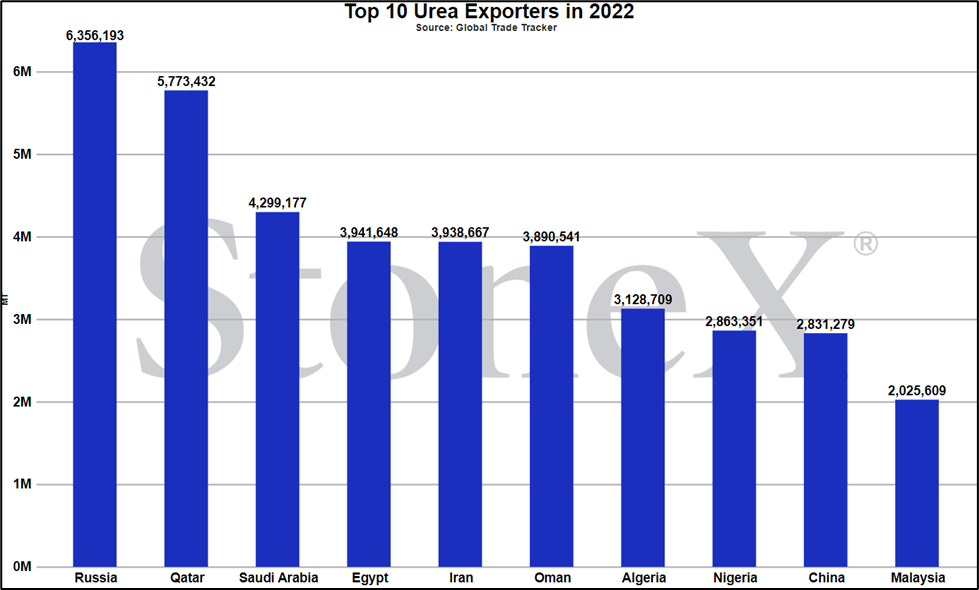
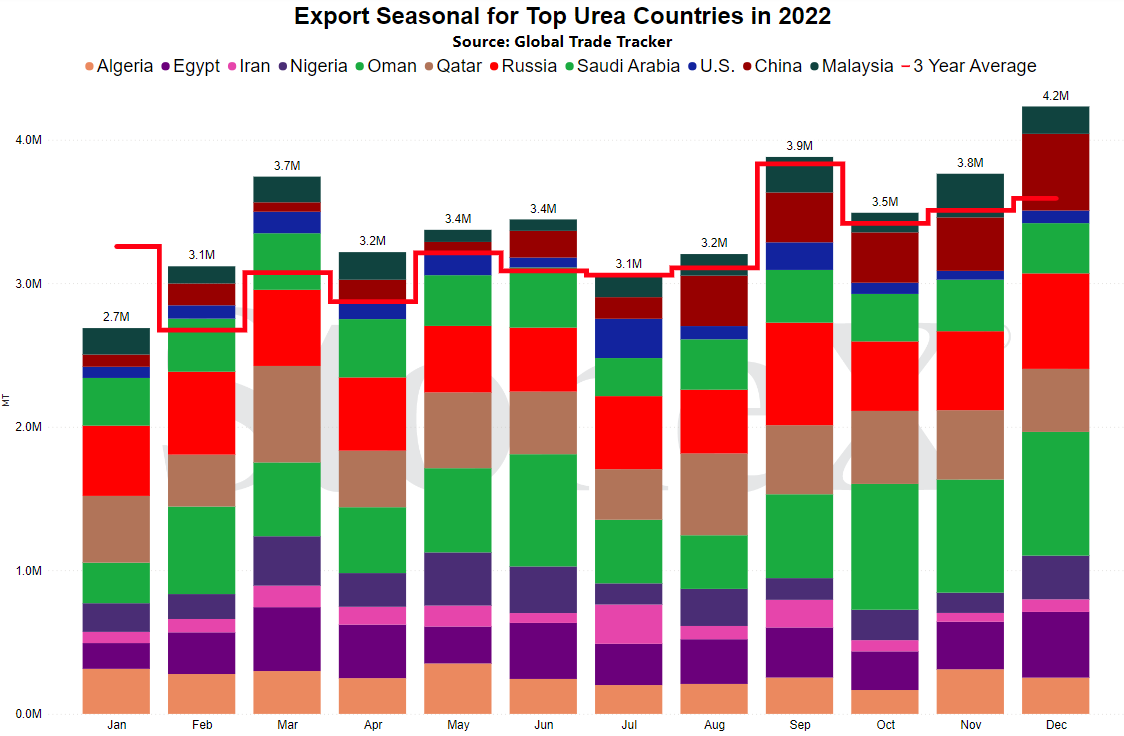
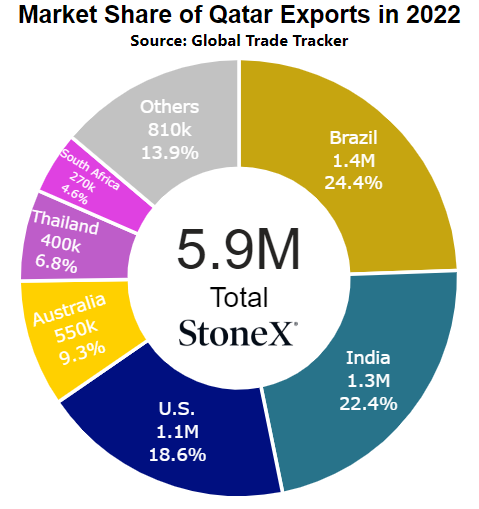
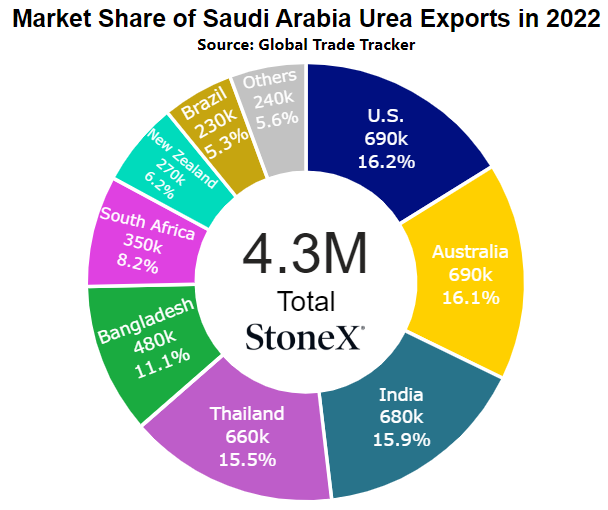
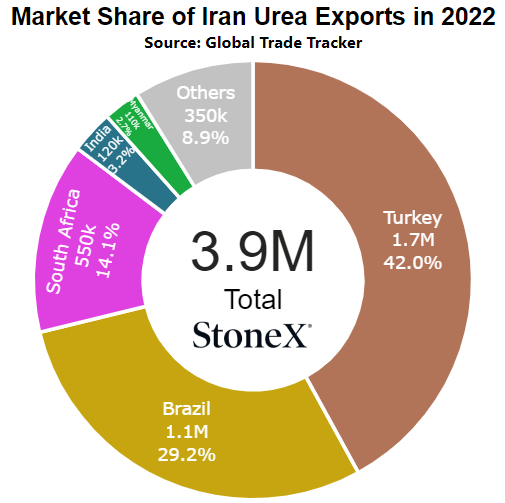
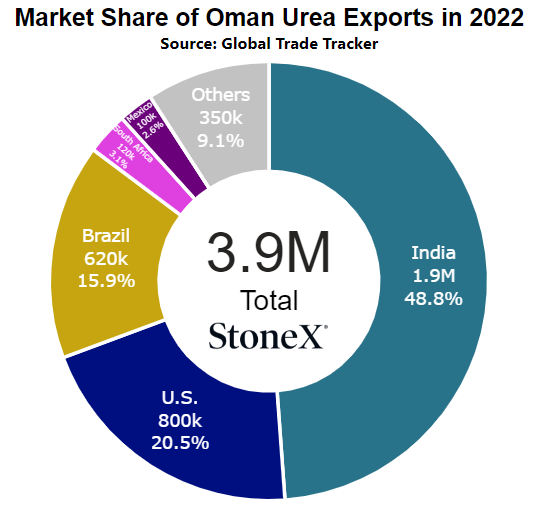
- The U.S. retaliates against both Houthi rebels and Iran, seeing both as one in the same. I put this as an extremely low likelihood due to the chance of creating a regional war in the Middle East. We know the region is already on edge today and it wouldn't take much to push it over the cliff. There is already conflicts between Israel/Hamas and Russia/Ukraine. Would the U.S. really want to chance a 3rd major conflict at the same time? Still, in the very low chance of it happening, Iran probably isn't going to sit back and take it. In my mind, if they are smart, they will not look for a direct conflict with the U.S. Rather, they could use their proximity in the Persian Gulf/Straight of Hormuz to attack vessels. As proven in the Red Sea, it does not take many attacks to discourage vessels from sailing thru. If this happens, the world news will be focused on the oil markets and inability to move product. However, it is massive for urea. Look at the map below. There are literally millions of tons that originate around and thru the Persian Gulf to the rest of the world. The global urea market lost its mind when we thought Russian exports were going to be lost. Russia is one of the top 10 exporting countries. There are several around the Persian Gulf. I really hope this does not become reality...Incredibly low chance of occuring, huge impact to urea.
Today, the market seems comfortable to shove the possibility to the side and does not seem to be factoring it into values. That said, if you wake up one morning to the news of fighting expanding, be on your toes.
Why does this matter to Australian farmers
If the world of urea were to lose clean shipping lanes thru the Persian Gulf, the market could/would lose millions of tons on an annual basis. Millions upon millions of tons. Take a look at the top 10 urea exporters in the world up above. There are several listed on that graph that are within that body of water. Now, think back to early 2022. Urea prices were hitting all time high's because of the fear of losing Russia. Russia, while the world's largest exporter, wouldn't come close to the amount that flows thru there.
This is an incredibly low probability situation...but that chance isn't zero so it deserves our attention.
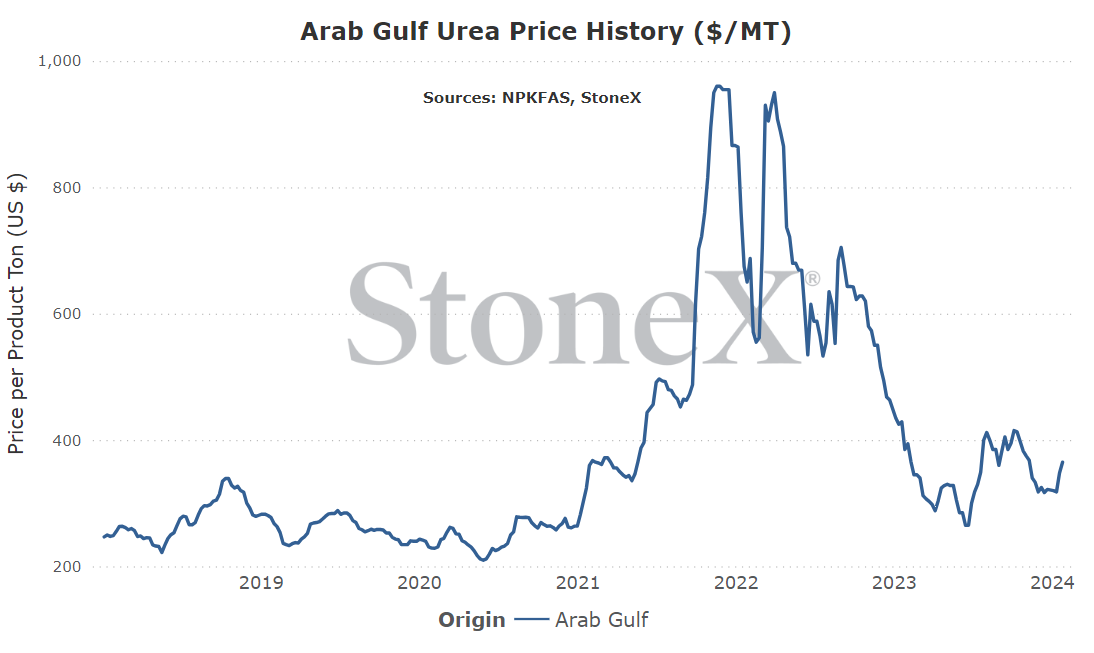
Number 1 exporter (as a region, not as individual nations)
Vs 30 days ago - +13% or approximately $43 higher
Vs 90 days ago - -8% or approximately $33 lower
Vs 6 months ago - +5% or approximately $17 higher
Vs 1 year ago - -5% or approximately $20 lower
Egypt
Number 4 global exporter in 2022
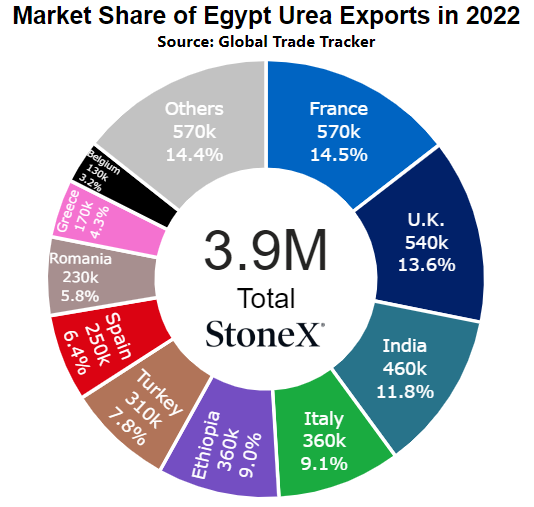
Price comparisons
Vs 30 days ago - +15% or approximately $50 higher
Vs 90 days ago - -3% or approximately $14 lower
Vs 6 months ago - -3% or approximately $13 lower
Vs 1 year ago - -11% or approximately $50 lower
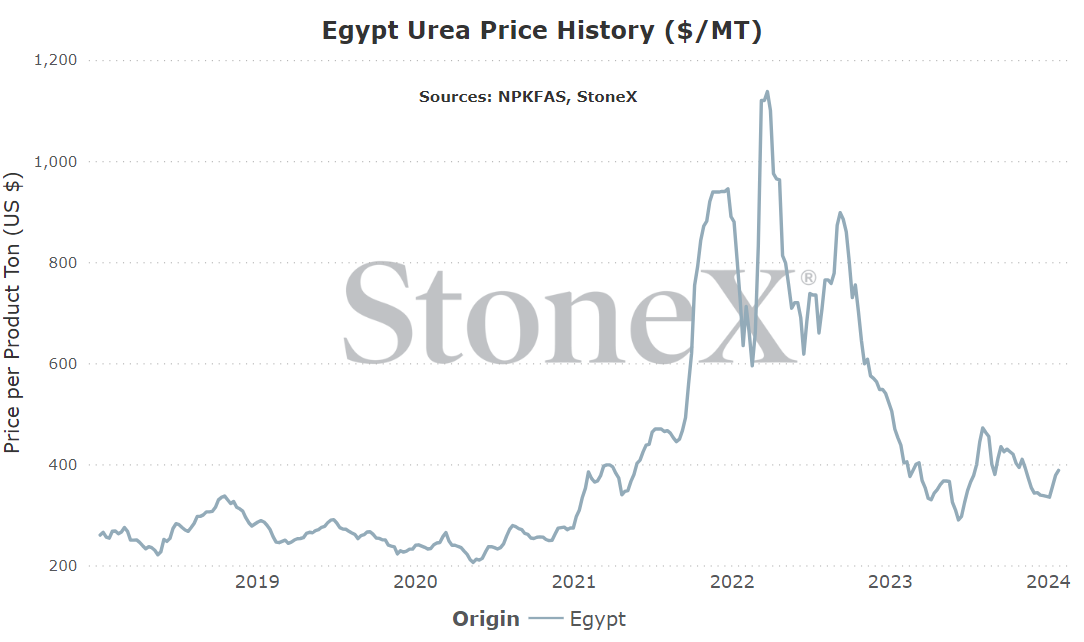
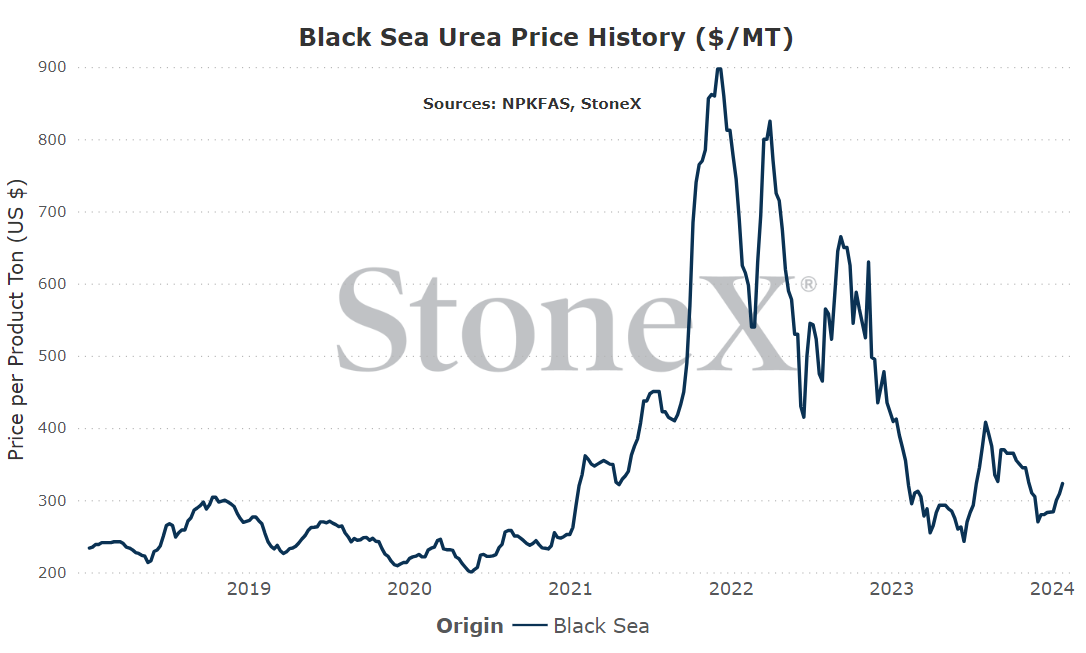
Black Sea
Number 1 global exporter in 2022
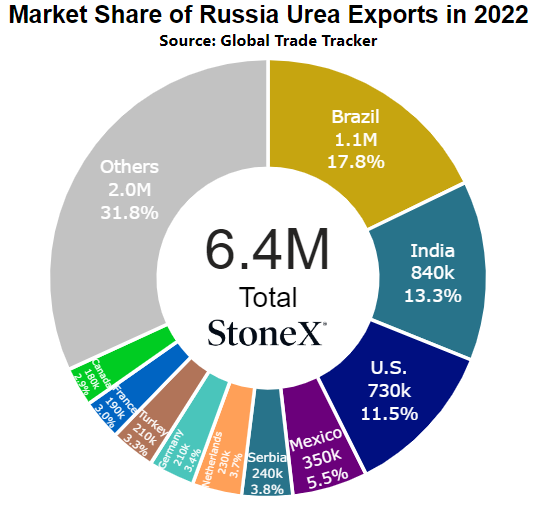
Price comparisons
Vs 30 days ago - +14% or approximately $40 higher
Vs 90 days ago - -8% or approximately $28 lower
Vs 6 months ago - -7% or approximately $23 lower
Vs 1 year ago - -13% or approximately $50 lower
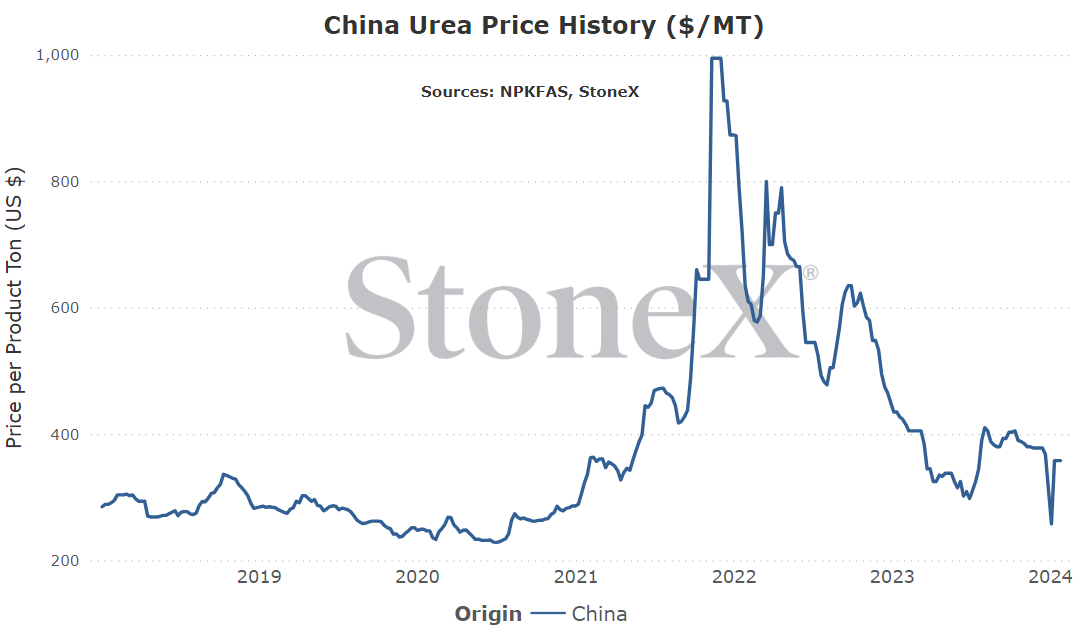
China
Number 9 global exporter in 2022
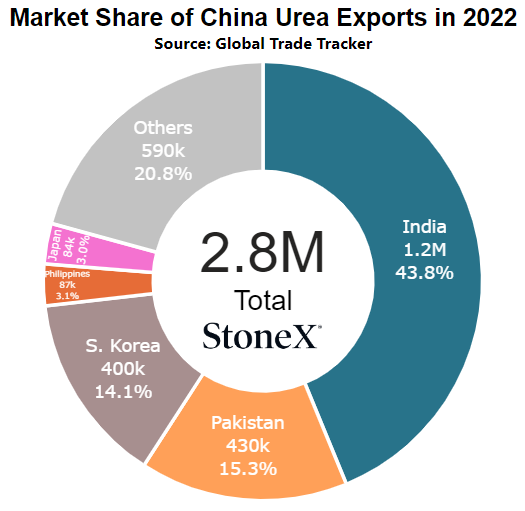
Price comparisons
Vs 30 days ago - -3% or approximately $10 lower
Vs 90 days ago - -8% or approximately $33 lower
Vs 6 months ago - +4% or approximately $13 higher
Vs 1 year ago - -15% or approximately $65 lower
- The Middle East ignites on recent attacks - unfortunately, it appears we are inching closer to war in the region following attacks on a U.S. base in Jordan which resulted in the death of 3 service members and dozens of other injuries. The world is waiting with baited breath for the response. If this turns into a regional conflict, Persian Gulf shipments could easily be slowed/stopped and there are literally millions of tons of urea exports that transit that stretch annually.
- Red Sea attacks continue to hamper vessel transit - this is still more of a nuisance situation than a complete blockade as vessels are able to sail around the danger area. However, this means higher freight rates and longer sail times which eventually flows down to the end user to bear the cost...
- World demand remains front, center, and constant - a big reason for recent price gains is the near constant push to purchase product by certain areas. Manufacturers are able to sell small blocks of tons, push the price up to test conviction of buyers, eventually sell that higher price and then rinse/repeat. As long as buyers are willing to keep the torrid buying pace they have had, values should see support.
- Buying could dry up quickly - we have seen this before. Buyers continue to step forward daily...until they do not. If/when the buying dries up and markets go quiet, fertilizer prices struggle to hold. This seems less likely right now given how close we are to spring for the Northern Hemisphere as well as manufacturers appearing well sold, but it is still possible.
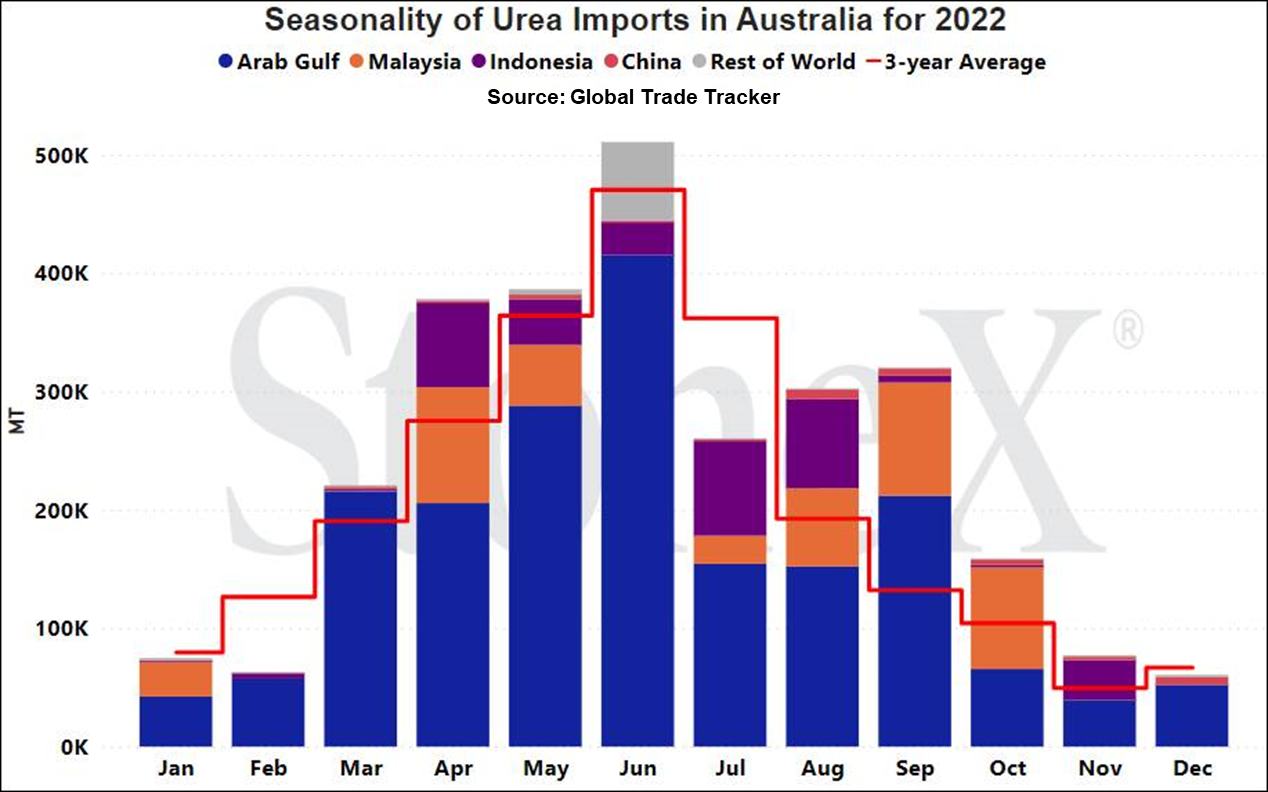
- Fears of carrying product into summer (Aussie winter) could cause sellers to panic sell - at some point, position holders will want/need to make the decision to offload inventories as summer nears. Light summer demand as well as price reset fears truly drive this. If this emotion gets triggered, it becomes easier to lower a price idea to make a sale. Get a few doing this, and you have a bearish marketplace.
- European nitrogen plant restarts could add supply/reduce demand - hard to believe how improved the European picture has become. Dutch TTF values have fallen firmly into single digits while global nitrogen/urea values are bullish. If we see the remaining offline European plants restart (likely quietly), it would likely mean they have less need for imports. That means more supply for the world.
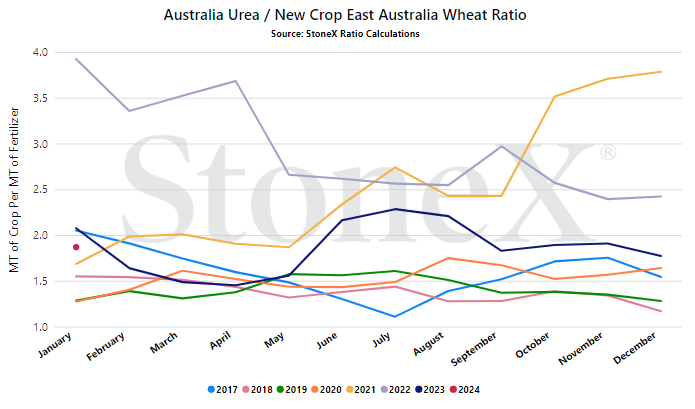
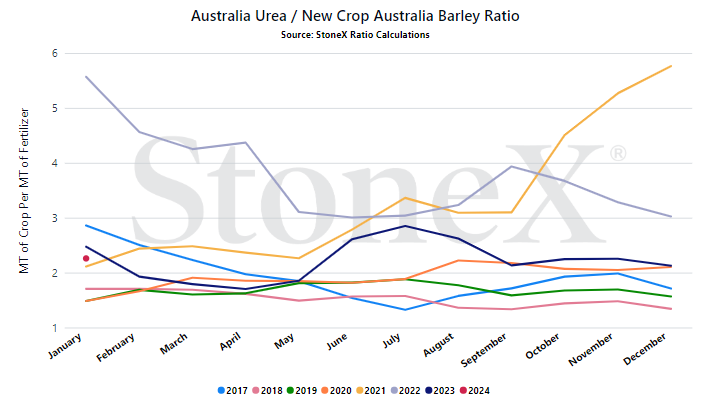
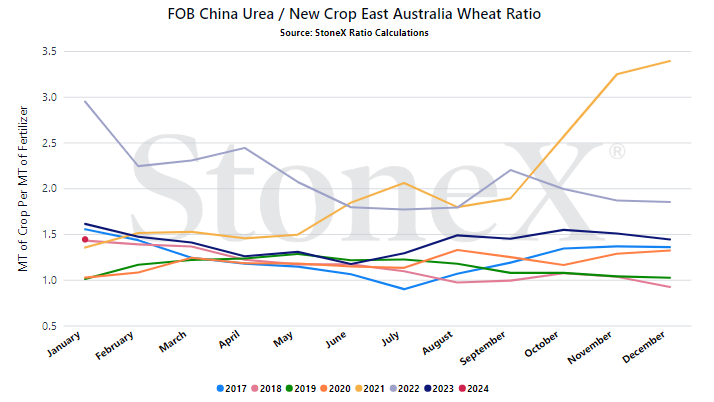
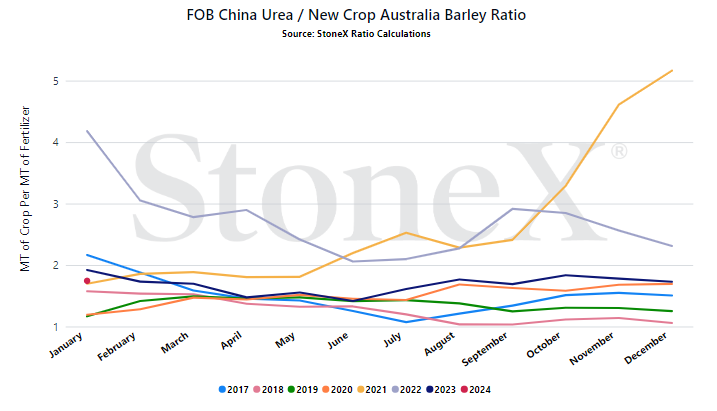
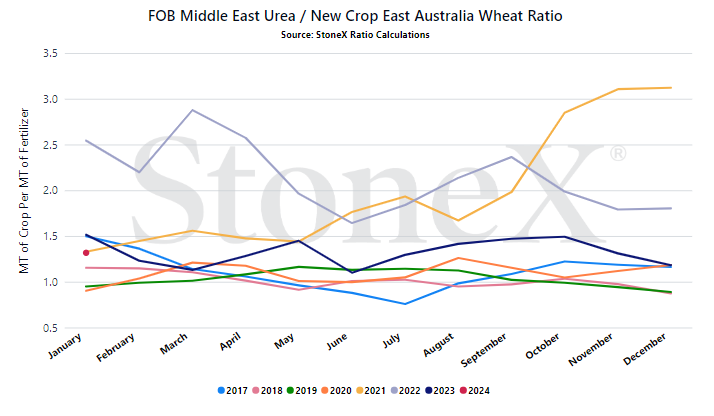
We believe that only looking at the flat price of either grains or fertilizer can be misleading:
-
Only selling grain can hurt you if fertilizer prices rise substantially
-
Only buying fertilizer can hurt you if grain prices fall
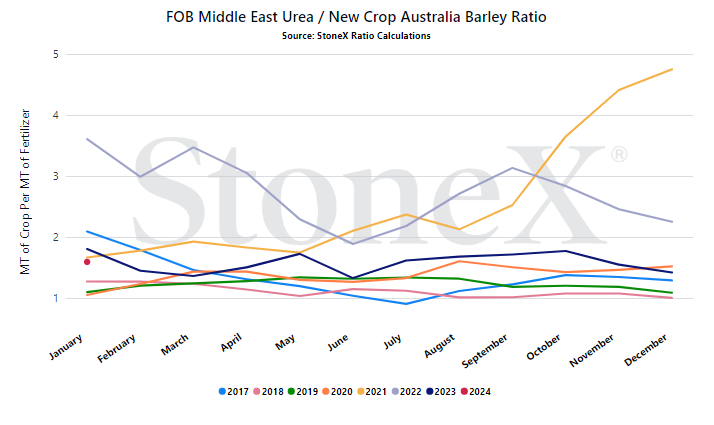
We look at the ratio "value" to get a better indication of where we are or how many bushels of X does it take to pay for 1 ton of fertilizer.
Would you rather:
-
Spend 135 bushels to pay for 1 ton of urea
-
Spend 55 bushels to pay for 1 ton of urea
When we compare the current ratio value against recent years, we start to see if we are high or low.
YOUR VALUES MAY LOOK DIFFERENT
This is a work in progress section! We plan on looking at the relationship between Aussie grains and global price points (and hopefully Aussie specific locations, though that data is hard to secure, very protected). Big reason why we are still in the "trial" stage of this newsletter!!!!
- Middle East - rather than list out all the different hot spots, I'm just saying the Middle East in general. This is especially true because as I am writing this, we are waiting to see what the U.S. response will be to the recent death of military members in Jordan. This has the potential to spiral out of control. The difficulties following Red Sea attacks have been hard enough. If we start having Iran play a direct role and we start talking about the Persian Gulf shipping capacity...urea will be a completely new marketplace.
- Resupply efforts - basically, the timing of vessels arriving. Will they make it on time or will hiccups push them to be too late?
StoneX Ratio Calculation
The ratio calculation is derived from Bloomberg historical grains values as well as fertilizer values from StoneX, NPKFAS, and Argus.
The calculation is simply dividing the fertilizer price by each grain price.
All data was sourced from StoneX unless otherwise noted.