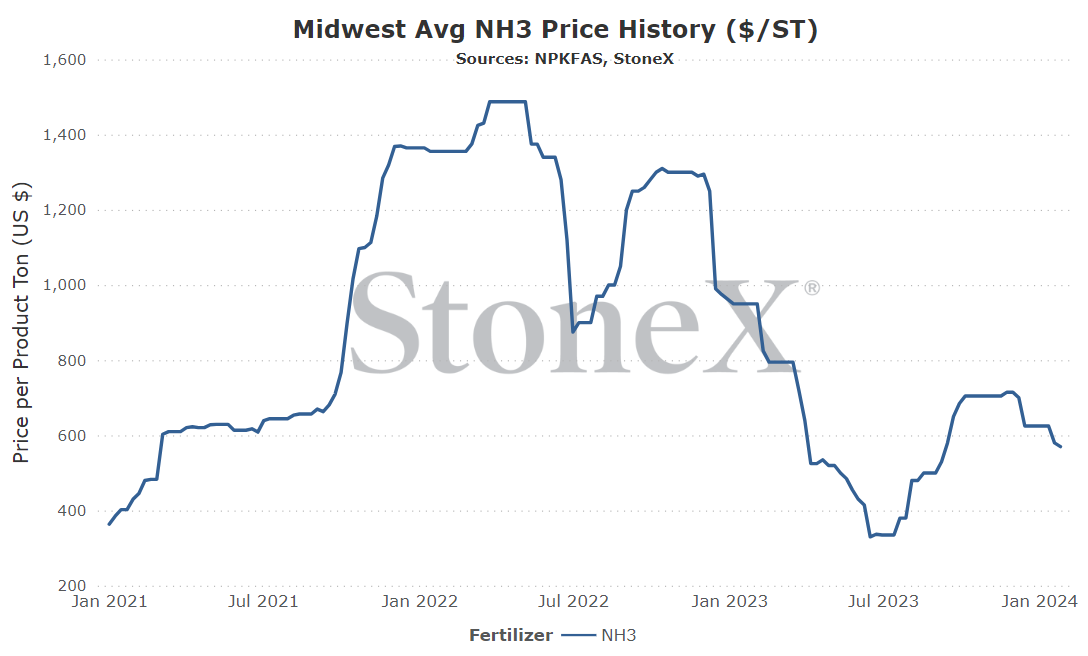
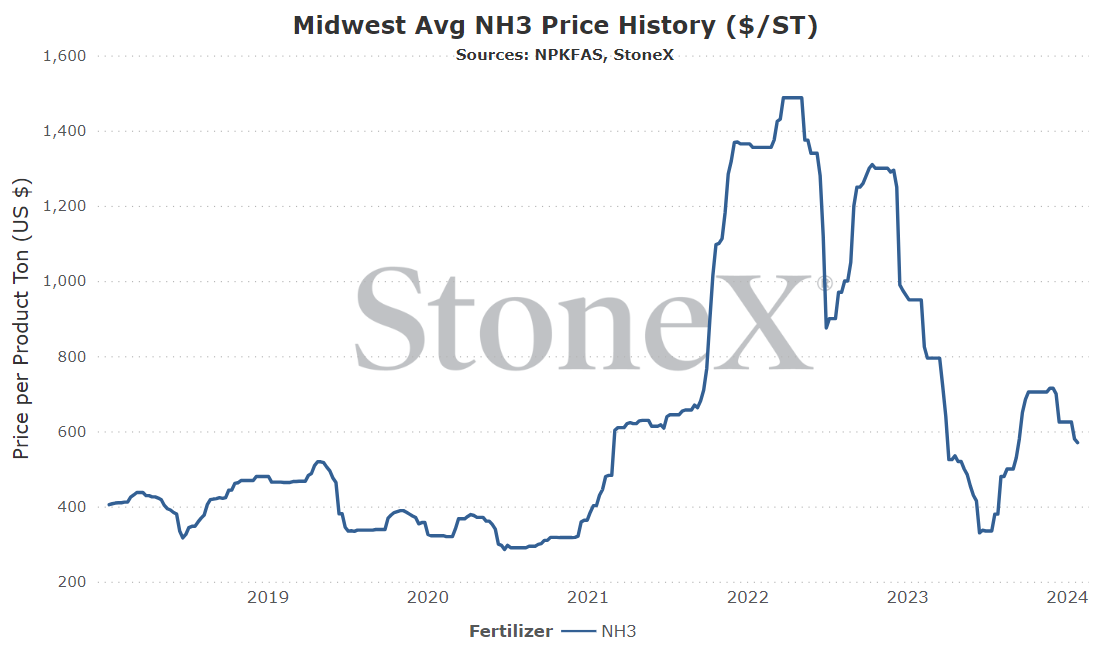
The first graph is the AVERAGE of the entire Midwest U.S. region. That means your local value WILL be different than what the graph reflects. Please do not take this into your retailer and say "why isn't my price the same as here". That is comparing apples to oranges. You might be on the cheaper or more expensive side of this graph. This doesn't take into account logistics/storage/interest/insurance/shrink/etc.
This graph looks at the price from a short ton and USD currency POV.
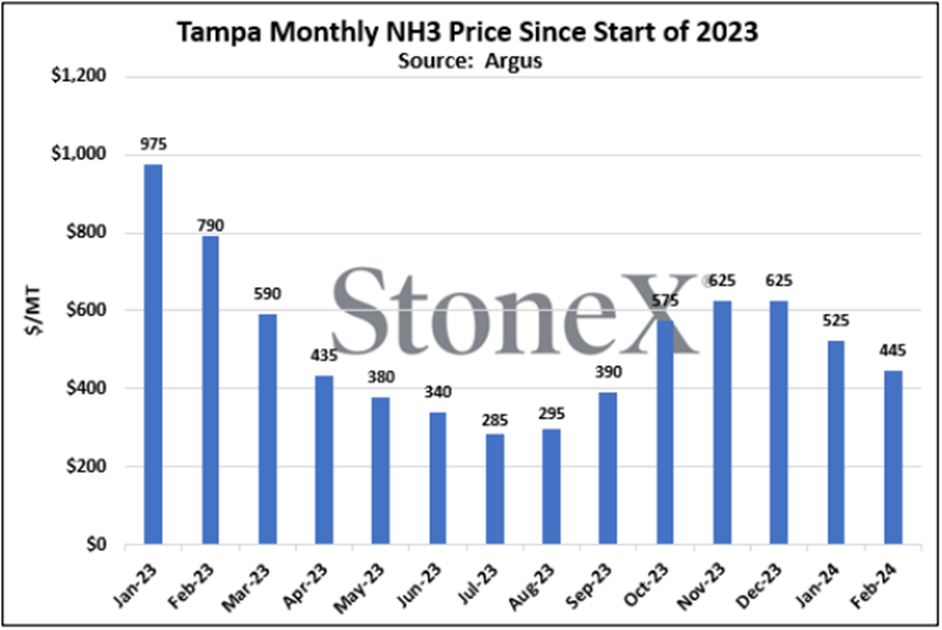
This second graph looks at the price set for Tampa NH3. This value does not have a high correlation to Midwest values. It is a talking point used when prices are rallying...yet somehow gets skipped on the way down. This price is more an indication of the global price. This price is set by two parties (purchaser - phosphate producer in Florida / seller - international producer providing NH3 to FL phosphate production).
This graph CAN be used as an indication of global market price direction/trends. This graph SHOULD NOT be used to determine a Midwest value. Tonnage is listed in short ton and currency in USD.
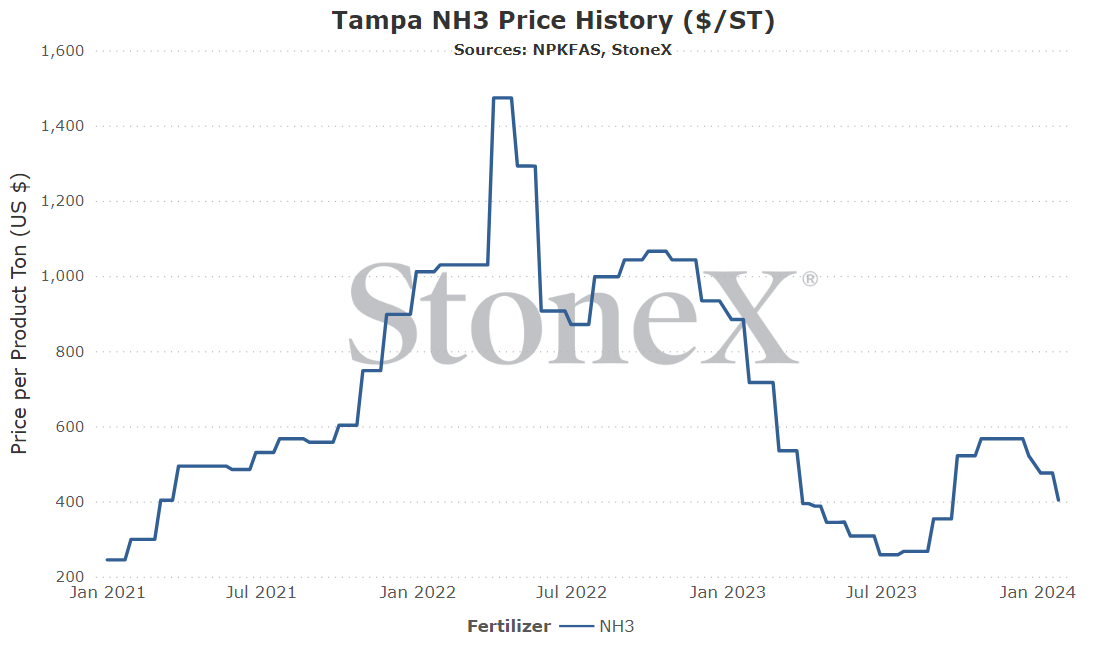
Industrial demands seem to have been lower than expected. Tampa has been negative last two months. The production outlook for Europe is improving with lower input/higher output values. There are a few reasons to think the current slide could continue.
I am still leaning bearish global NH3 until proven otherwise.
The one thing that could change my mind is if we find out that Russia is not returning as early as we thought. There are growing rumors that Russian's have been exaggerating build progress on their new export facilities. If we find out they are delayed a significant amount, it could change the outlook.
North America
I'm going to start this by saying this all assumes that spring weather allows us to apply.
We could see more easing of Midwest NH3 values until spring starts but once application begins, the manufacturers are in control.
The huge fall cleaned up inventories around North America. The supply chain is still working in earnest to get as filled as possible before spring. Don't get me started on what it would look like if mother nature allowed a run to begin last half February of the 1st of March. I still lean bullish thru spring application, but could see softening in February. Emphasis on the "could".
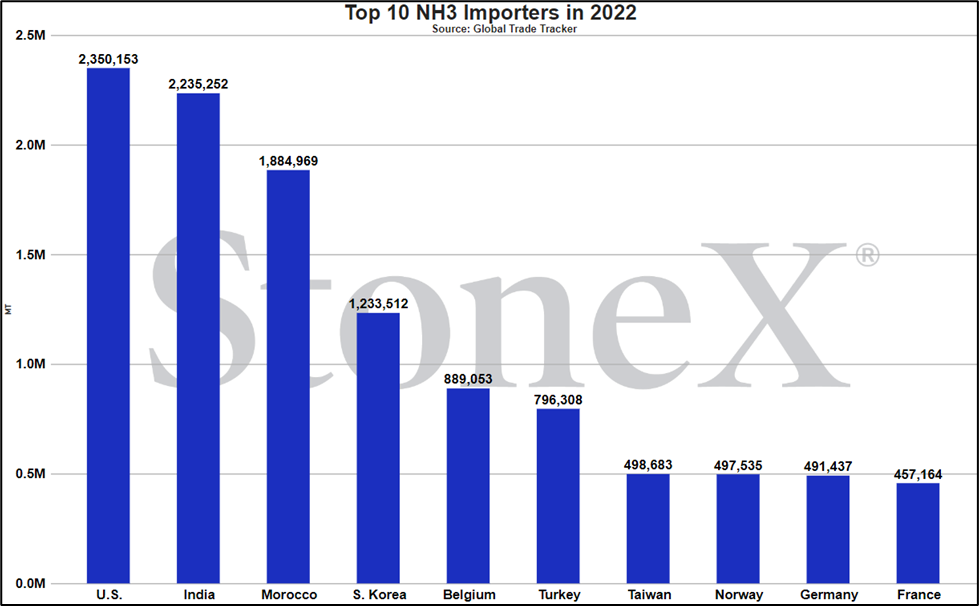
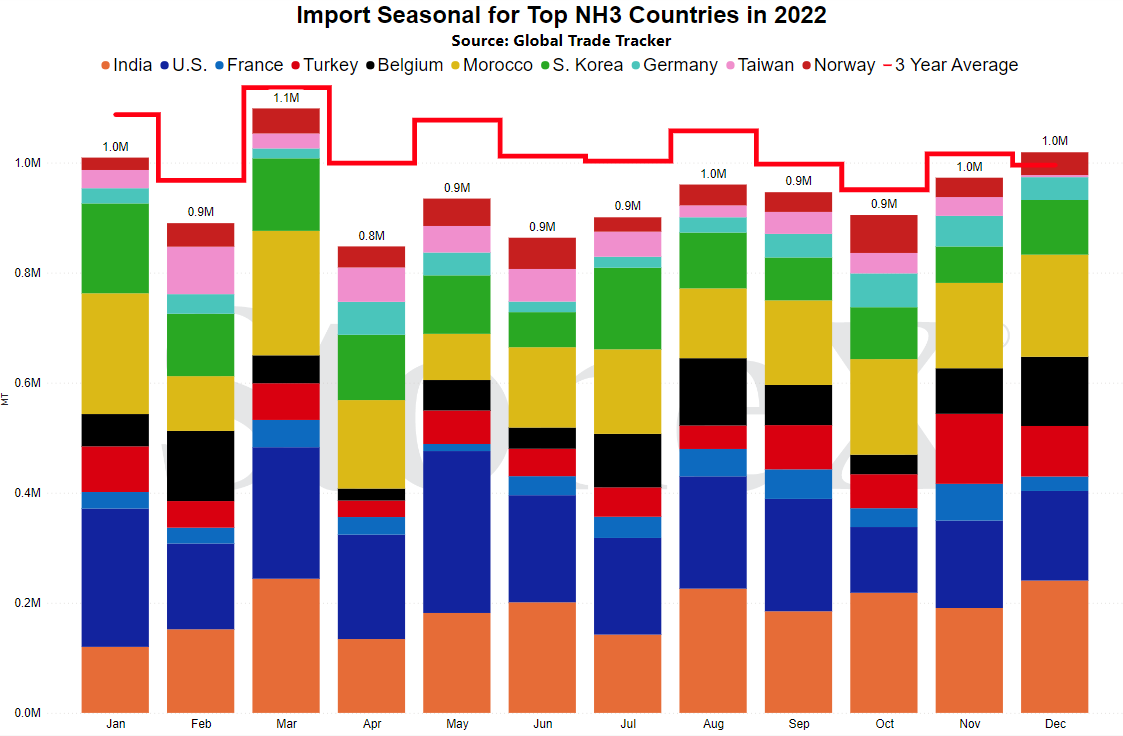
Tampa falls again
Once again, we are not shocked in the fact that Tampa has fallen for the 2nd month in a row. Based on a normalized world and demand that has seen some hiccups, we figured another drop was in order. However, just like we were in January, we were surprised by the amount of the drop.
November and December saw the highest prices of fertilizer year 2024, topping out at $625. As discussed last month, that value fell $100 into January and we have just seen February fall a further $80. That is a nearly 30% price decrease in a two month period (really hope I did the math right on that!!!).
It is getting difficult to know what to expect for March. On the one hand, many of the global points/factors haven't really changed so it is hard to argue against the bearish trend. However, as you will read below, Russia's return (anticipated by several in the market) may be happening later than previously discussed. That would remove a lot of anticipated supply in the world. Last, the European outlook is improving with lower inputs and some rising output.
All that to say that the international outlook from our perspective is bearish...but nothing would surprise us for March!
Is Russia fibbing on their NH3 export return time period?
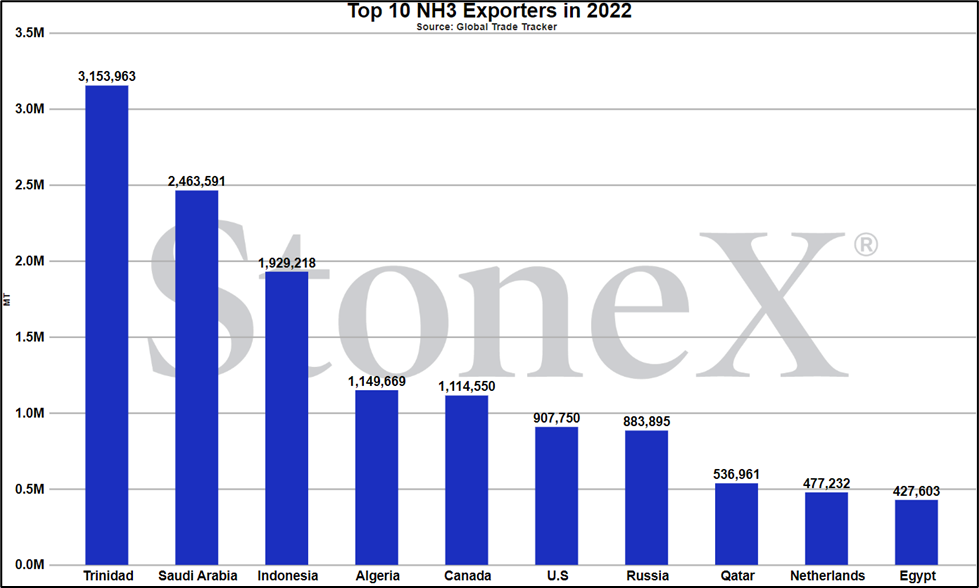
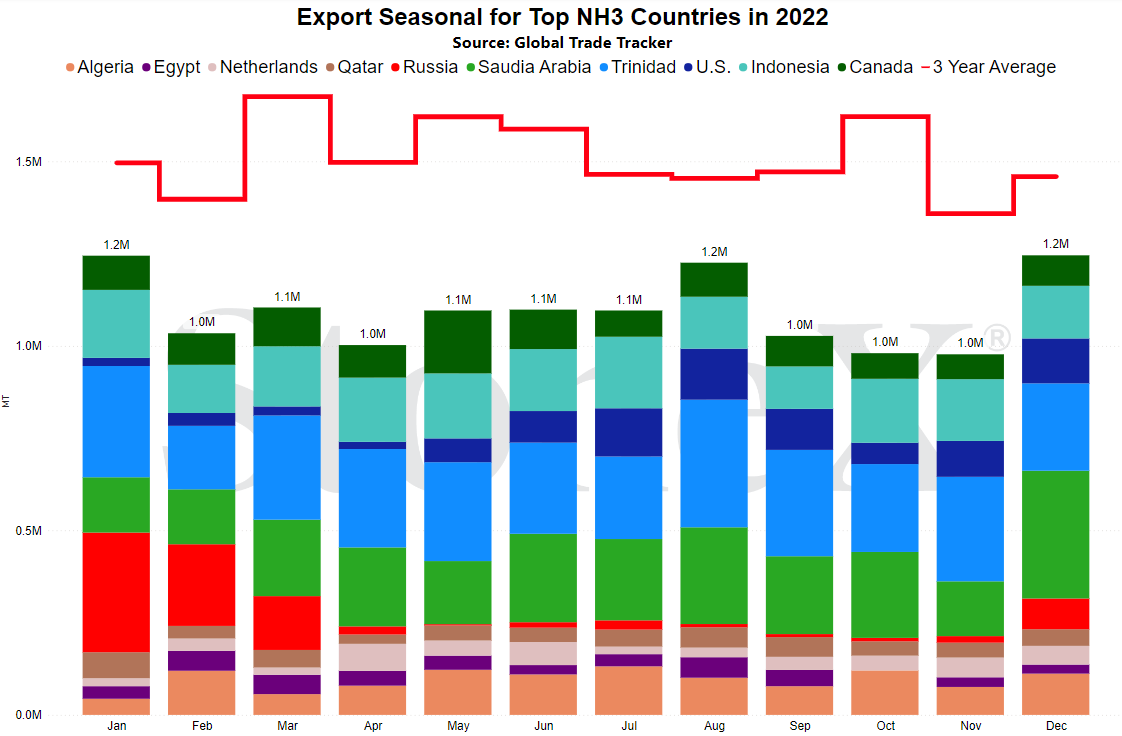
Without going into all the details, Russia was once the world's leading NH3 export but after their Ukraine invasion, they fell very far down the list due to their reliance on shipping product thru Ukraine.
Since that time, efforts have been made to create new logistical avenues to reach the world market. Rather than be reliant on neighboring countries, they are aiming to keep those logistics within mother Russia.
The first of these projects that is anticipated is in Toman and it sounded as though it would be operational sometime during the first half of 2024 (late Q1, early Q2 to be more precise). Recent rumors now have us believing that return will happen sometime in 2nd half 2024...or later. Progress has not been as aggressive as discussed. Whether this was intentional or not does not matter. At the end of the day, if the market truly believed they were coming back sooner than later, then estimated supplies are about to drop (presuming the story to be true). That could end up being the saving grace for those hoping for higher NH3 values.
N.A. spring prepay programs met with apprehension
The previous fall NH3 application for North America was a stellar one. 3rd largest since 2000, according to our forecast/records. That means that a lot of farmers were able to get a lot of work done early and help get that weight off their shoulders come spring. However, it also means the system was mostly empty by the time Christmas came around and we quickly shifted our focus from the large fall to the effort needed to refill the system in such a short amount of time. While winter seems to take forever, mid-December to mid-March is only 3 months...and that assumes spring will not start earlier (possible given some forecasts today).
Because of that, we fully expected manufacturers to be very proud of their spring prepay pricing. Given how tight inventories were, prices were expected to be high. From their vantage point, they were going to struggle to get enough product in place to meet spring demand and their job is to balance the S&D. If that is out of whack and you cannot do anything more to grow supplies, you need to kill demand. How do you kill demand? You put the price really high.
That was accomplished!!! A lot of feedback from the industry was that of "no thank you, I'm not taking that risk". That isn't to say that sales were not made, but many decided to drag their feet if nothing else out of hope something might change.
There has been some slight weakening at points across the Midwest as manufacturers have dipped to put sales on the books, but this isn't as widespread as many believe. In the end, the supply side will get comfortable with the calendar and the sales book and will likely hold their head high heading into the start of spring.
Hopefully we will see solid opportunities during the side dress period and summer fill/fall prepay. We will be watching.
Koch set to purchase Weaver, IA nitrogen facility...challenges growing
This is a storyline that quickly captured the attention of the North American nitrogen market.
There had been rumors swirling that OCI was open to the sale of their Weaver, IA nitrogen plant. Weaver was, based on my memory, the last new nitrogen production facility to have come online in the U.S. The plant was seen as a welcome change as it helped add new competition and additional tonnage in a demand rich territory. This plant was courted by several states in the Midwest but eventually, packages offered by the state of Iowa won out.
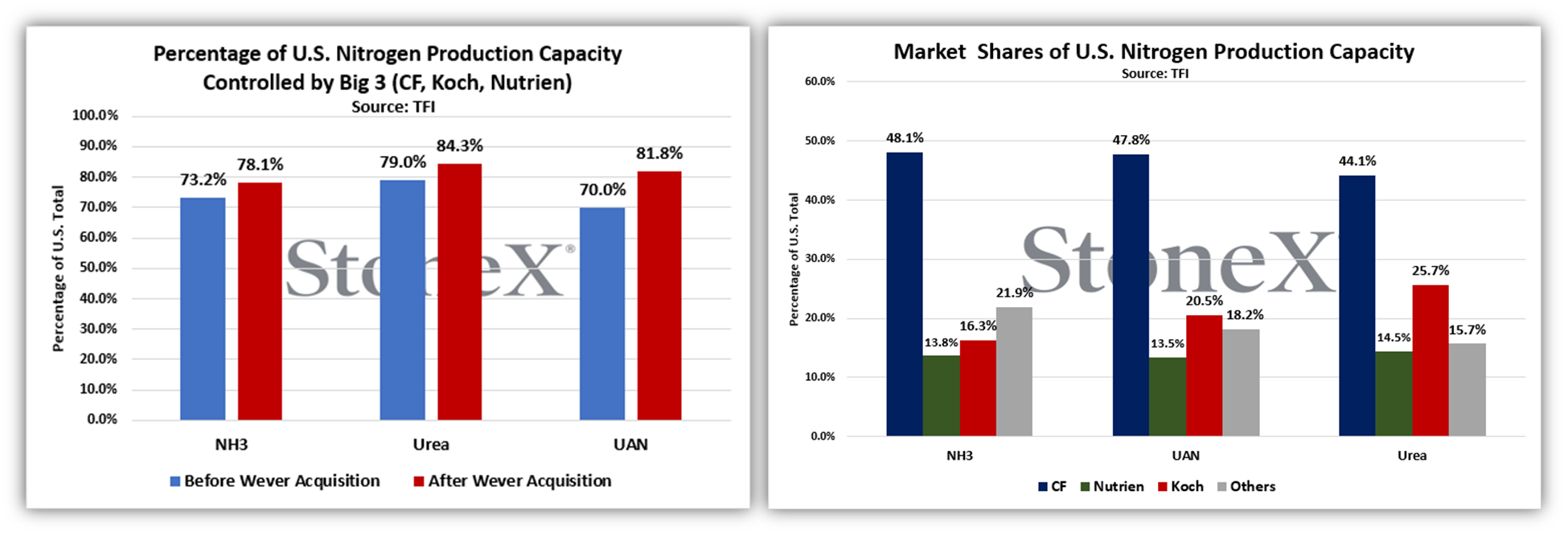
Now, with it being confirmed that Koch will spend $3.6 billion to purchase the facility and many organizations are not pleased.
Several groups have come forward in opposition to the sale. While several arguments are being thrown to the industry, it ultimately comes down to further consolidation. If this sale proceeds, U.S. NH3 production by the big 3 (CF, Koch, Nutrien) will rise from an approximate 73% to approximately 78% control.
Not that my opinion matters but I continue to believe that the sale will proceed with few issues...but the chance of it being struck down are higher. The market is pushing. D.C. has started to shine a light on the fertilizer market. If I had to put odds on it, I would say 75% approval/25% disapproval odds. Those are not great for those wanting the sale to be stopped but we have seen less likely things happen in recent years.
U.S. Midwest Wholesale price average
Vs 30 days ago - -9% or approximately $55 lower
Vs 90 days ago - -19% or approximately $135 lower
Vs 6 months ago - +50% or approximately $190 higher
Vs 1 year ago - -40% or approximately $380 lower
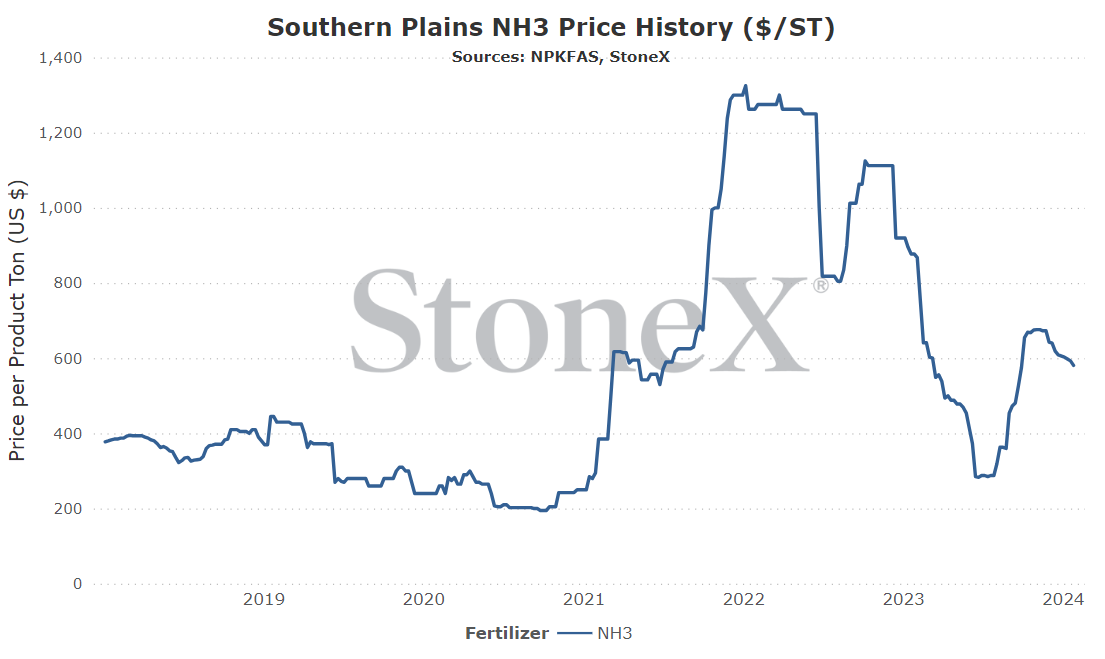
U.S. Southern Plains price average
Vs 30 days ago - -5% or approximately $28 lower
Vs 90 days ago - -13% or approximately $86 lower
Vs 6 months ago - +102% or approximately $294 higher
Vs 1 year ago - -34% or approximately $296 lower
- Middle East tension effects nitrogen production/shipments - right now, the Middle East is a fire just looking for a spark. While there are a lot of things that would need to happen to start shutting down sizeable chunks of production in the Middle East, that is not the case for shipments. Vessels have been attacked in the Red Sea, causing higher rates and longer sail times. If this spreads to the Persian Gulf, for many countries/producers in that area, there is not an "alternative shipping route". While low probability, the possibility of vessels avoiding that area is still feasible.
- Russian exports do not return as expected in 1st half 2024 - we continue to hear rumors that Russian NH3 exports will start to resume sometime in the 1st half of 2024. As the typical world leading NH3 exporter, this should be weighing on the markets mind today. However, if we find that that a 1st half 2024 estimate is overzealous or that attacks begin on their ports, we could quickly return to a mindset of tight supplies which would likely be reflected with higher pricing.
- N.A. spring comes early and farmers step forward - at the end of the day, mother nature gets the first and last word on every successful application season. Last fall was large and it emptied the system. Winter doesn't last that long and refill efforts will struggle. If spring comes early and hard, we could quickly drain the system again. No doubt if that happens, the market will look to take advantage.
- Tampa values continue to fall - since December, the Tampa price has fallen $180MT. It is not hard to draw correlations that if it is falling, others should see their pricing fall as well. It may not happen as quickly as we hope, but it lends pressure to current price ideas.
- Poor weather patterns hamper spring application - it wasn't long ago that we had a terrible spring application due to wet/cold conditions. While it is hard to see that today with warmer temps showing up, it is certainly still in the cards. If mother nature says no, there is literally nothing we can do. If that happens, a lot of unsold/unshipped inventory is already in place which will have manufacturers/suppliers pushing for sales.
- Other nitrogen values fall - while this doesn't appear likely today, anything is possible in the world of fertilizer. If we suddenly saw urea values start dropping, it likely wouldn't take long for UAN to follow suit. Farmers are already dealing with a less profitable 2024 outlook than seen in recent years. If there is a cheaper nitrogen alternative, it is very possible some might decide to switch.
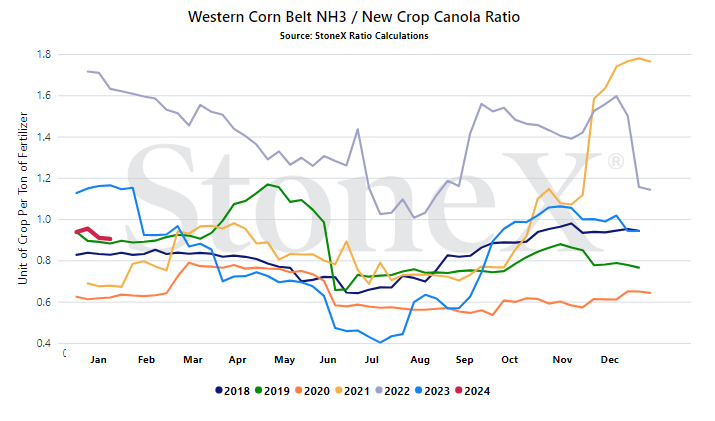
We believe that only looking at the flat price of either grains or fertilizer can be misleading:
-
Only selling grain can hurt you if fertilizer prices rise substantially
-
Only buying fertilizer can hurt you if grain prices fall
We look at the ratio "value" to get a better indication of where we are or how many bushels of X does it take to pay for 1 ton of fertilizer.
Would you rather:
-
Spend 150 bushels to pay for 1 ton of potash
-
Spend 100 bushels to pay for 1 ton of NH3
When we compare the current ratio value against recent years, we start to see if we are high or low.
YOUR VALUES MAY LOOK DIFFERENT
This graph looks at the NOLA NH3 price vs the flat grain price. There are no logistics on either product. Your location will look different due to fertilizer logistical costs, grain basis, etc.
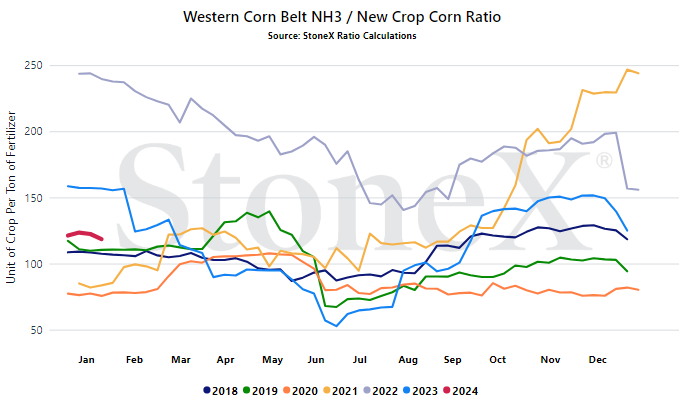
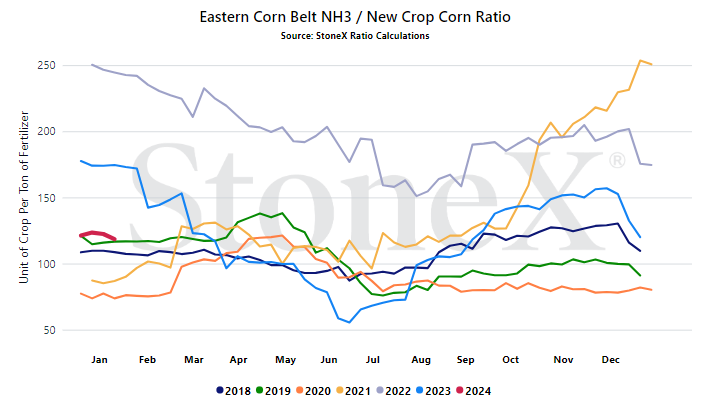
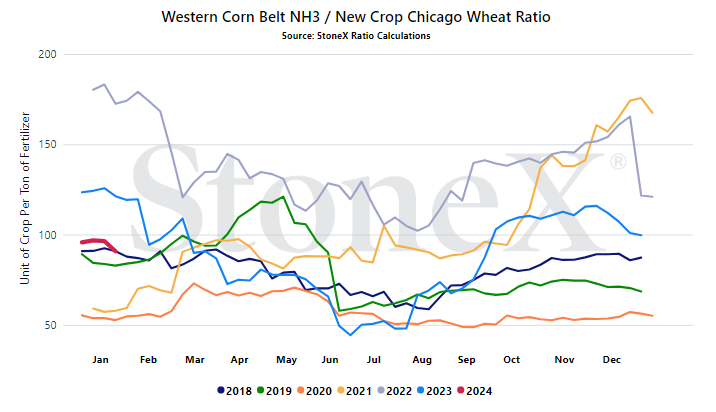
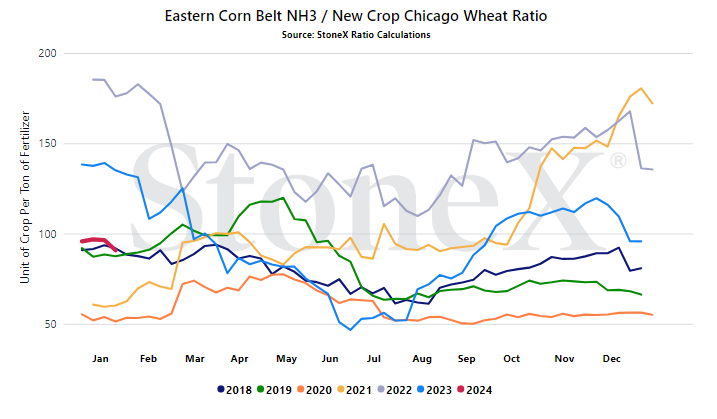
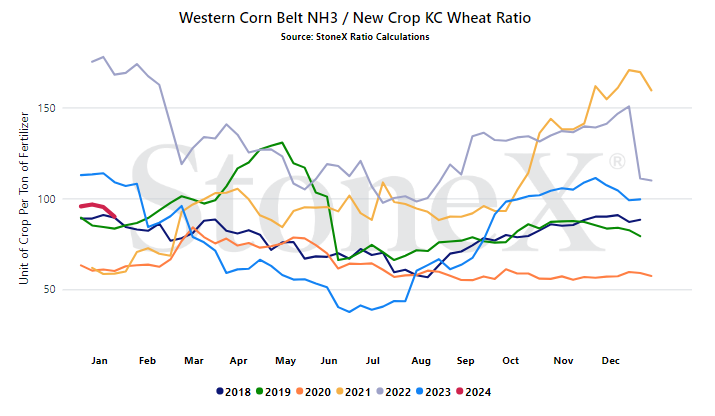
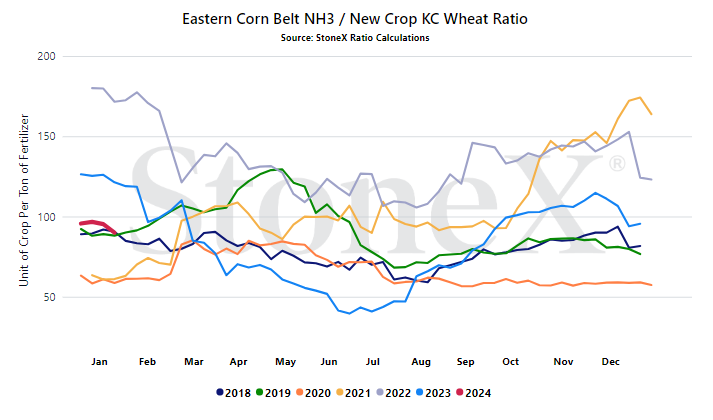
- Industrial vs agricultural markets - we have an interesting set up this month. Agricultural NH3 values are holding fairly well (slight decrease but still holding in relative terms) as manufacturers assume the S&D remains tight and supports pricing. However, industrial and international values are seeing weakness. Is there a 100% correlation between the two? No. However, one eventually influences the other...
- N.A. spring pricing vs grains/N alternatives - spring NH3 programs were priced very high, which was expected. The fall application run was huge and ended up emptying the system. There is only a 3 month period to get as refilled as possible so that supported price ideas. However, that doesn't mean other factors come into play. Farmers could opt for urea/UAN. Could see corn acres shift away, destroying demand. There is still a lot of story left to be told for the 2024 crop.
- Timing - the S&D for preplant season in N.A. remains tight after a huge fall run emptied the system. That should be largely supportive of values (i.e. likely not cratering). However, the market is going to be staring at a possible price cliff at the end of season and no one wants to be left with product. That means a higher likelihood that values crumble earlier than normal as everyone starts chasing late spring/sidedress demand to lower unsold inventories. It only takes one to make the dominos start to fall.
StoneX Ratio Calculation
The ratio calculation is derived from Bloomberg historical grains values as well as fertilizer values from StoneX, NPKFAS, and Argus.
The calculation is simply dividing the fertilizer price by each grain price.
All data was sourced from StoneX unless otherwise noted.