Foreign Scenario
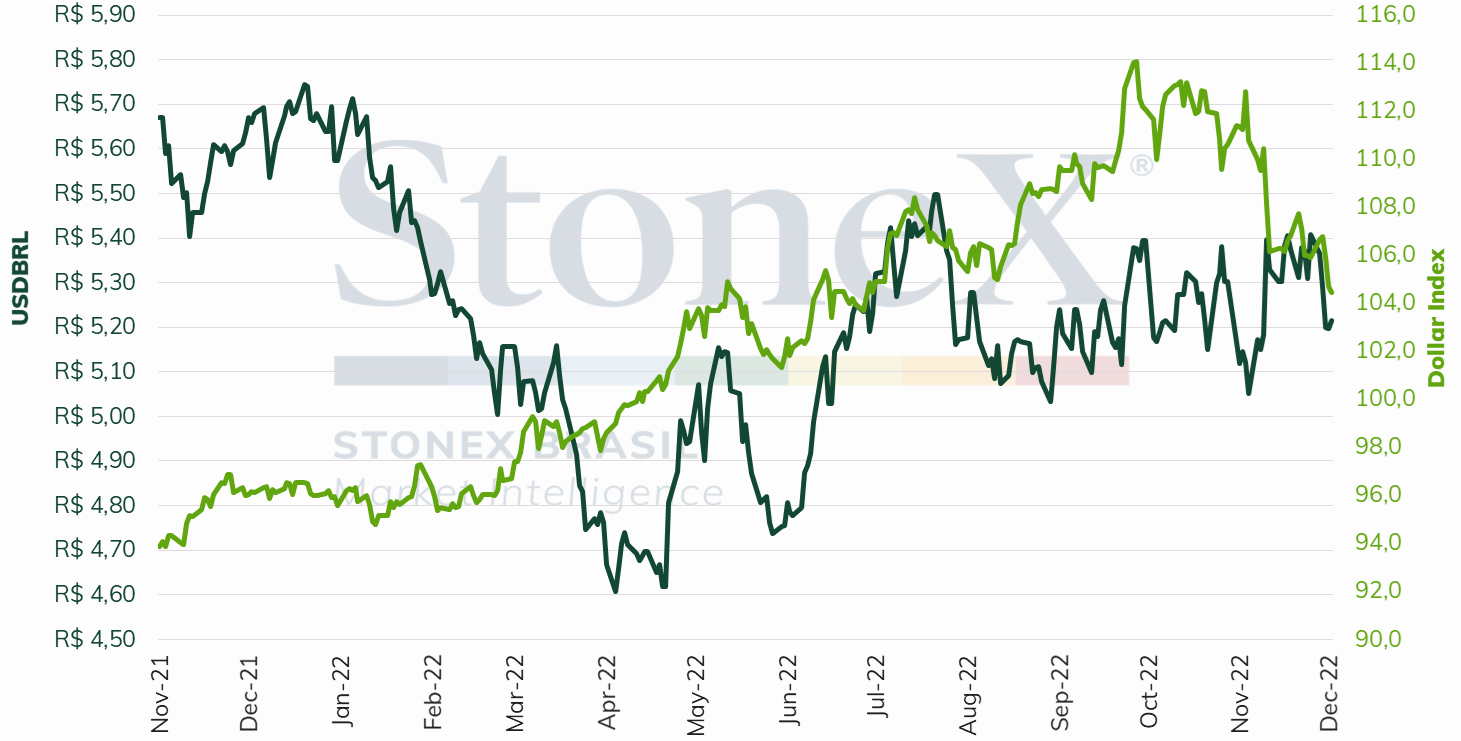
This week's attention should again be on monetary policy in the United States. In the past week, the US currency weakened noticeably, pushing the dollar index around the 104.4 point level - the lowest since the end of June. The main factor behind the dollar's depreciation is a change in expectations regarding monetary tightening by the Federal Reserve (Fed). Since the monetary policy decision on November 2, when the Federal Open Market Committee (FOMC) announced that it was considering reducing the pace of interest rate hikes in the near future, investors have been looking for signs that the US economy is slowing down and inflation in the country is cooling down. Since then, several inflationary indices for October, such as the Consumer Price Index (CPI), the Producer Price Index (PPI) and the Personal Consumption Expenditure Price Index (PCE), have shown lower-than-estimated variations. Additionally, some economic activity indicators, such as the industrial Purchasing Manager's Index (PMI), job openings, and retail sales, also came in line with a possible contraction of the economy. However, others have not signaled such a retraction.
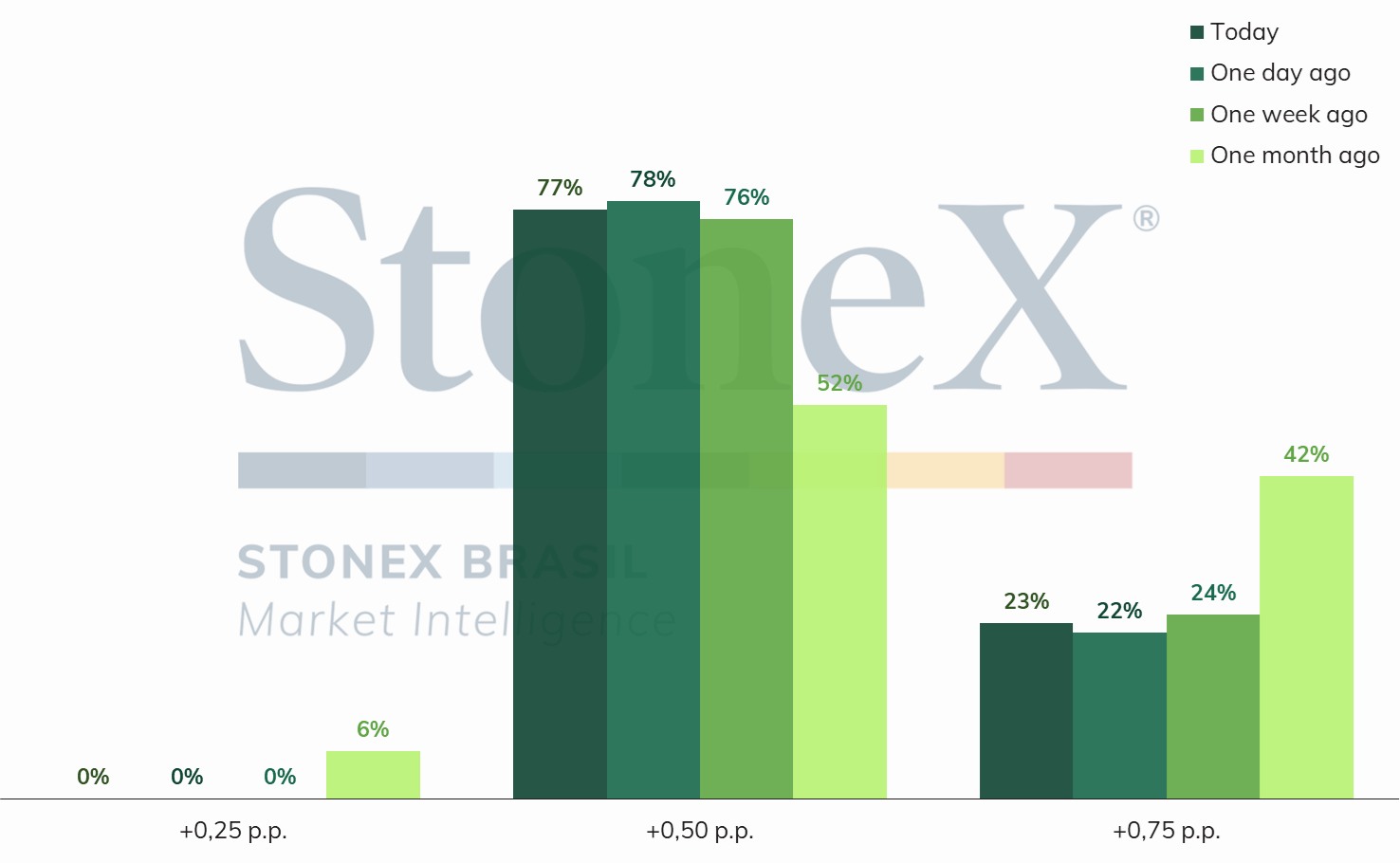
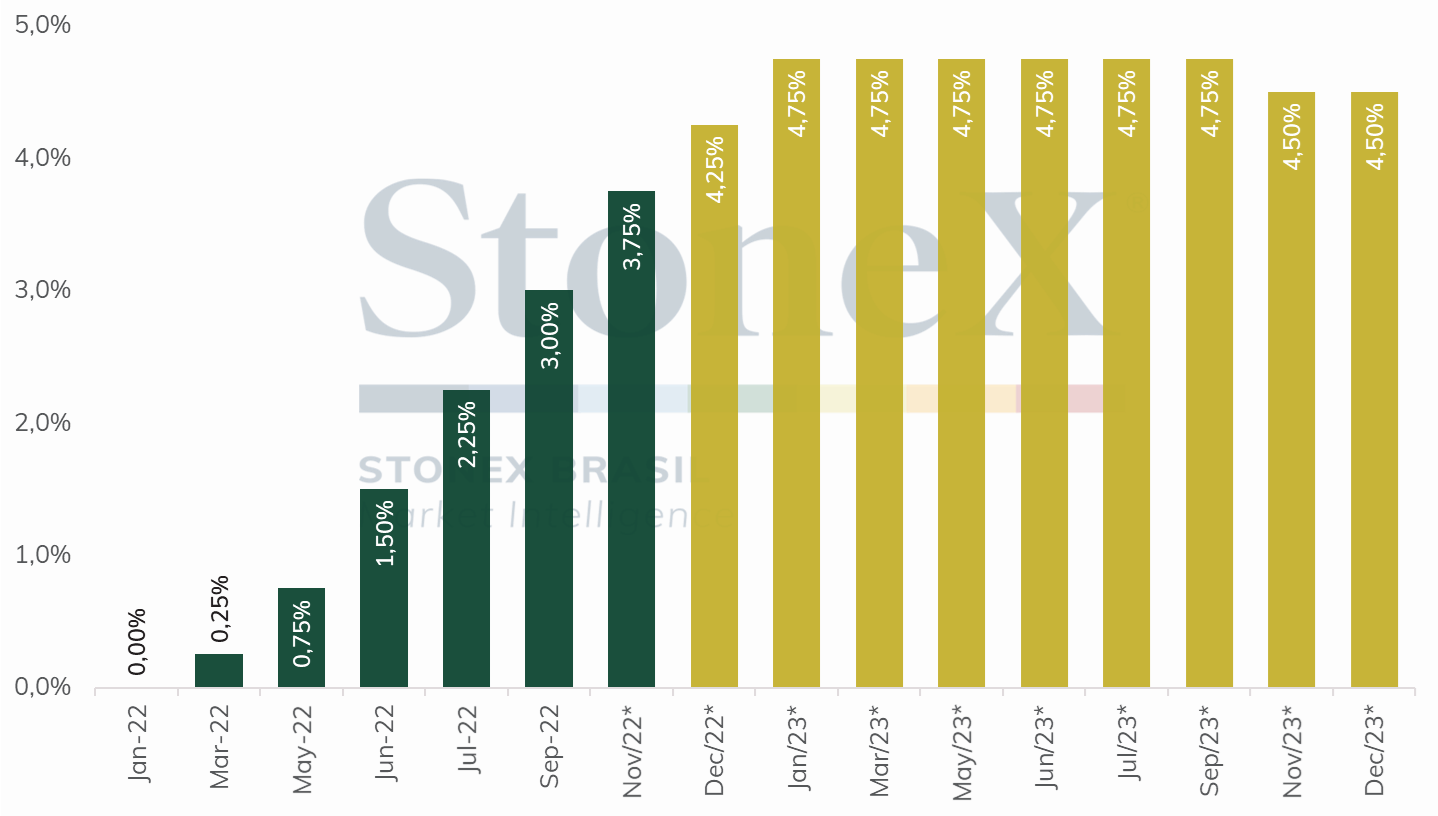
Although the trajectory of the American economy is not clear, it is possible to state that most agents behave as if the country's inflation has already reached its peak (and is going to decline from this bridge onwards) and as if the Fed is going to "invert" its interest rate trajectory, supporting a softer monetary tightening to control a less intense acceleration in prices. One can observe such behavior, especially in the bets made in the futures market.
Bets for the Federal Reserve's interest rate decision on December 14
US interest rate history and higher probability bets on the futures market
Source: CME FedWatch Tool. Design: StoneX. Futures market interest rate probabilities as of November 02, 2022.
In recent speeches, the Federal Reserve authorities have changed their message slightly. While they still reinforce that the fight against inflation is far from over and that it is not known when interest rates will need to be raised, there are now nuances in the communications that are perceived by investors, such as an emphasis on falling prices in industrial goods and an emphasis on the two-sided risks that the economy faces - inflation becoming excessively high and entrenched by a premature interruption of monetary tightening and an excessively sharp and abrupt recession by raising interest rates too quickly and too high. What agents hear, in the end, are the new elements of the speech - that there is a risk of over-tightening financial conditions and that prices are falling fast - and conclude that the Fed is moderating its action. The mandatory quiet period before the monetary policy decision on December 14 begins this week, so there will be no time to correct these impressions.
Another week's highlight should be the likely European sanctions against Russian oil imports. In recent weeks the crude oil price has been falling on concerns about slowing global demand, particularly from China, and it is difficult to estimate what will happen after the ban takes effect on December 5. Currently, Russia accounts for 21% of the total oil imports made by the European Union. Subsequently, imports of refined Russian products, such as diesel and gasoline, are scheduled to be banned from February 5.
Finally, the situation in China regarding Covid-19 is worth noting. Last weekend, the country experienced rare protests against the draconian zero-tolerance measures for disease prevention after a fire in a building in Urumqi, the capital of Xinjiang, resulting in the death of ten people. According to unconfirmed social media posts, the building was reportedly barred from exits by railings due to forceful measures to restrict mobility, which would have contributed to the fatalities. What followed the protests was, on the one hand, a hardening of the authorities in curbing the protests and punishing those who had taken part in them, but, on the other hand, allowing a specific relaxation of some isolation measures in cities with cases of the disease. This relaxation, even if gradual, spurred a wave of optimism and risk appetite, but analysts caution that this process should be "slow, costly, and uneven."
Domestic Scenario
In Brazil, the focus in the coming week should again be the fiscal policy of the next government of Luiz Inácio Lula da Silva. Last week, the so-called Transition PEC was formally filed in the Senate (PEC 32/2022) and advanced one bureaucratic step with the approval of the preliminary text of the 2023 Budget Bill (PLOA) in the Mixed Congressional Budget Committee (CMO). According to the leader of the PT party in the Chamber of Deputies, Congressman Reginaldo Lopes (PT-MG), the text is expected to be voted in the Constitution, Justice and Citizenship Committee (CCJ) of the Senate next Wednesday. Although there have been few changes to the project since the presentation of its draft on November 16, there are several statements from members of the transition government admitting to negotiating both the amount of spending above the constitutional spending limit, from BRL 198 billion to something around BRL 140 billion and the validity of the constitutional amendment, from four years to two years. Given that Lula expects the PEC to be in effect by January, the deadline is quite tight, and it must have been approved in the Plenary of both legislative houses by December 22.
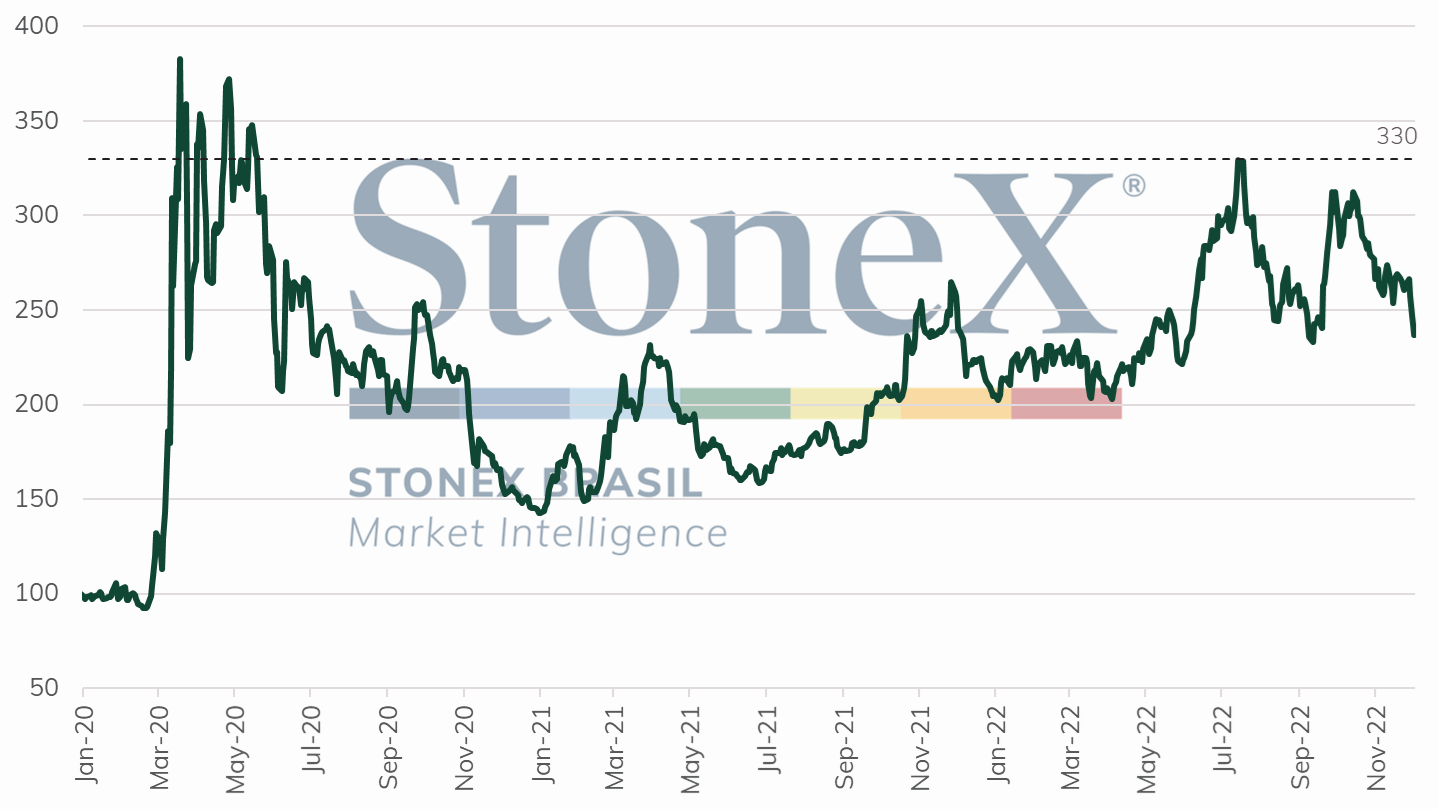
After the formalization of the PEC and with the support of the ample weakening of the American currency abroad, one of the main measures of country risk, the spread of the Brazilian Credit Default Swap's five-year contracts, fell to the lowest level since the beginning of September. Additionally, the interest rates for financing public debt securities also dropped. Another timely indication of the greater appetite for Brazilian assets was the net inflow of foreign capital into the B3, which in the last three days of November totaled BRL 2.642 billion.
Spread of the Brazilian 5-year Credit Default Swap (CDS) contracts (basis points)
Source: Bloomberg. Design: StoneX.
Balance of foreign capital flow on the B3 until November 30, 2022 (BRL billion)
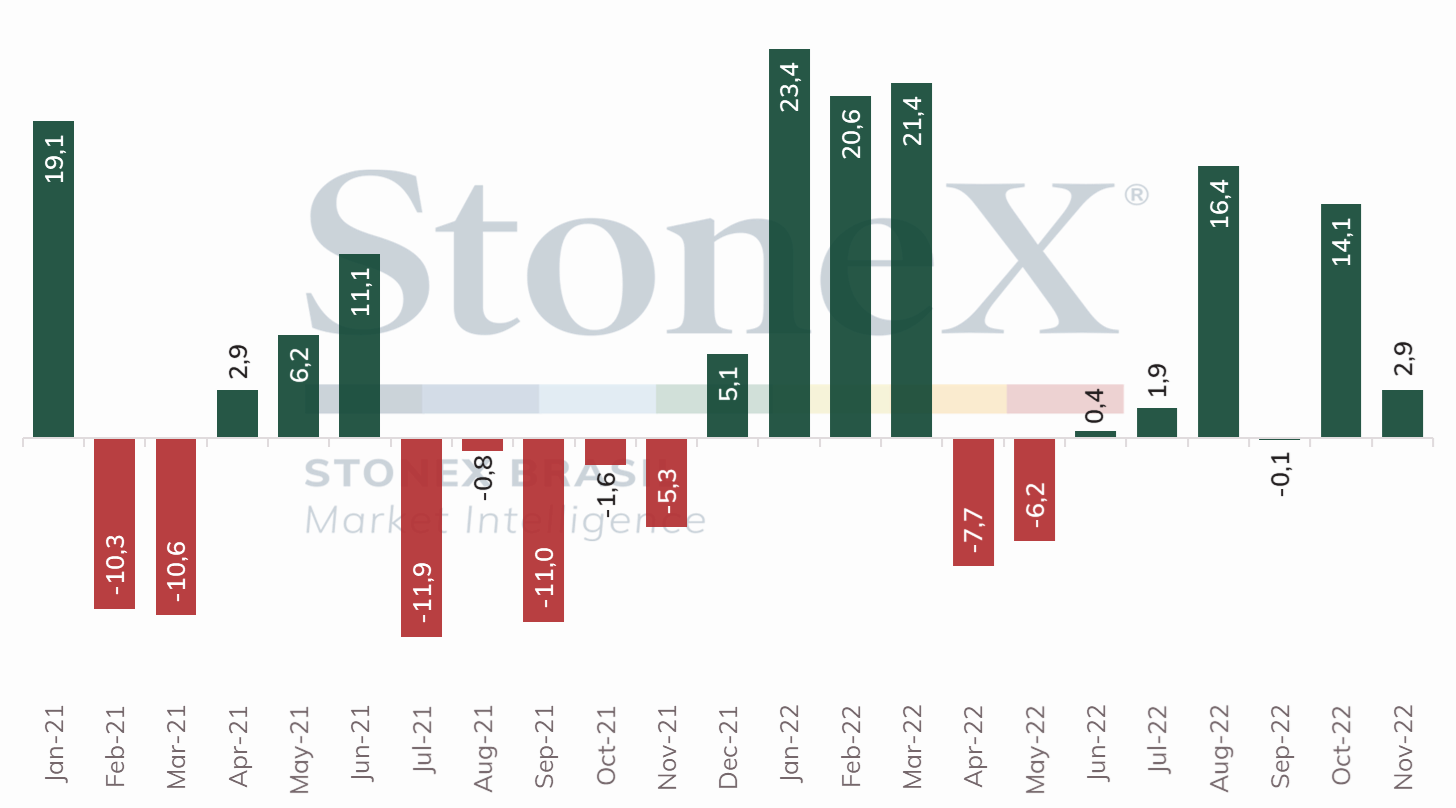
Source: B3. Design: StoneX.
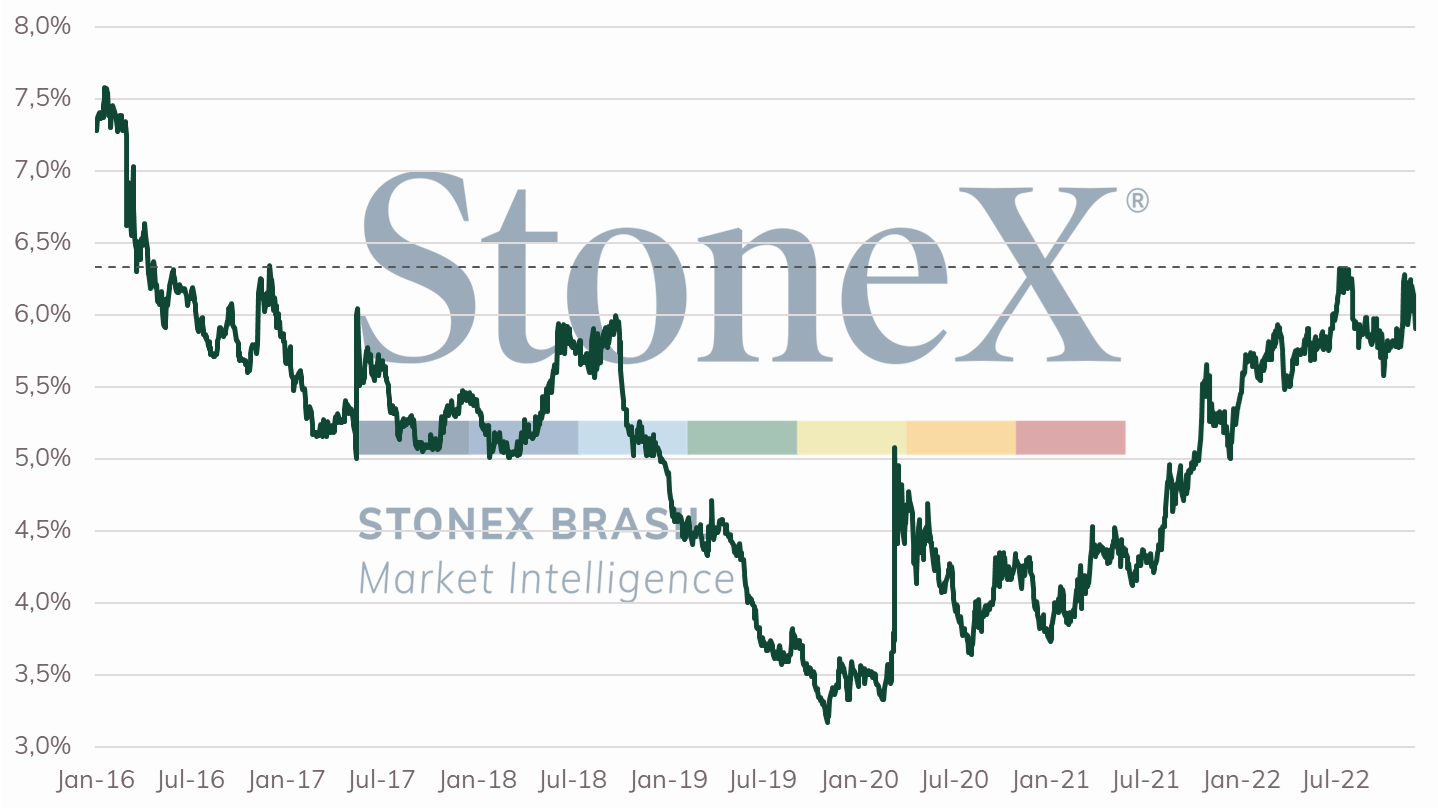
NTN-B purchase rate due on 05/15/2045 (% p.a.)
Source: Tesouro Direto. Design: StoneX.
It is also worth mentioning that the Central Bank's Monetary Policy Committee (Copom) makes its last monetary policy decision of the year, for which it is expected the maintenance of the basic interest rate (Selic) at 13.75% p.a., but with a harsh tone in the announcement of the decision, explicitly mentioning the risks of resuming the cycle of highs due to fiscal risks. Additionally, investors should pay attention to the release of the National Broad Consumer Price Index (IPCA) for November, with an expected increase of 0.50% for the month and an accumulated increase of 6.34% in 12 months.