
FX Weekly Overview (Brazil Issue)
Dollar expected to reflect electoral race, bets on US interest rates, IPCA-15, and AI concerns

Leonel Mattos
- Currencies
Quarterly Commodities Outlook is available for free now. Download your report →

Head of Market Research
The capital and commodity markets were remarkably sanguine about the state of ‘risk’ heading into the weekend despite a wide disparity between US and Iranian demands for a ceasefire. Where does that leave benchmarks like the S&P 500, Dollar, crude oil and others?
Talking Points:
Risk appetite put up a healthy rebound across a variety of representative capital market benchmarks this past week…despite a dubious fundamental backdrop. Included in a brief but broad reflection of the speculative bid this past week, we saw: an extended 3.6 percent rally from the S&P 500; a 4.8 percent charge from the VEU ‘rest of world’ equity ETF (best since October 2023); an enormous 7.0 percent swell from the EEM emerging market ETF (largest since November 2020); a respectable 6 percent climb for Bitcoin and even a 1.6 percent advance for gold as it has returned to its unique capacity as a speculatively-aligned commodity.
Chart of S&P 500 with Conflict Start and Ceasefire Announcements (4-Hour) 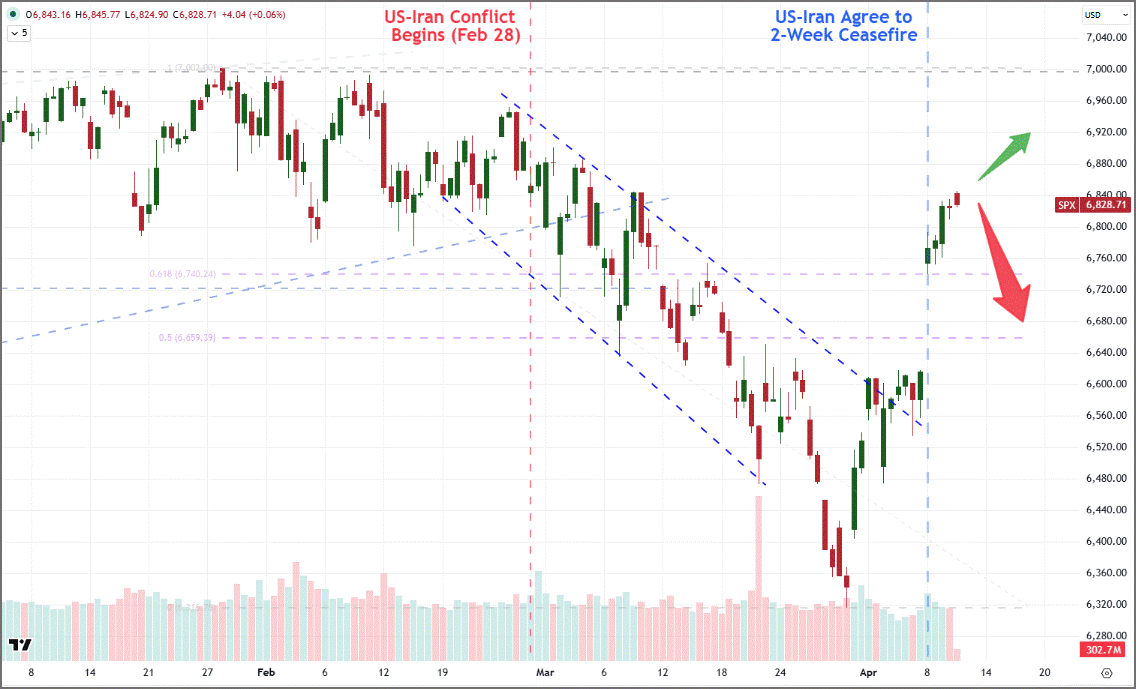
Source: TradingView.com; John Kicklighter
The motivation behind the advance was not difficult to pinpoint. Headlines Tuesday evening that the United States and Iran had reached a two-week ceasefire throttled the most acute fundamental threat facing the global markets and the driving force of the only productive correction in the larger bull trend since the last year’s Liberation Day tariff fallout. Yet, how much assurance should have been practically drawn from the headlines? It became clear, fairly quickly that some of the terms that the US and Iran expected to be honored in order to reach a lasting peace deal were in misaligned and a few even in direct contrast to each other. With the two sides accusing each other of stating different terms in public versus direct talks, the active restrictions on traffic in the Strait of Hormuz and Israeli military campaigns on Lebanon represented active threats against an otherwise passive backdrop.
Given this particularly obvious skepticism around a favorable turn for macro conditions, why did were the markets so eager to indulge the questionable optimism? Notably, there was a turn in the previously mentioned benchmarks well in advance of the announcement of the ceasefire. Considering the rhetoric preceding the statement had only escalated in aggression, it likely wasn’t a well-telegraphed confidence in diplomacy. More likely there was a ‘dip buying’ like opportunism under way, a vestige of the persistently resilient markets post-pandemic where headline risks consistently avoided filtering into foundational aspects of the economy and financial system. In that light, speculative indulgence is not wholly unexpected; but to see implied measures of volatility – reflective of hedging against risk – should speak to a complacent backdrop that remains troublingly exposed.
Relative Implied Volatility Readings for Various Capital Market Benchmarks (Daily) 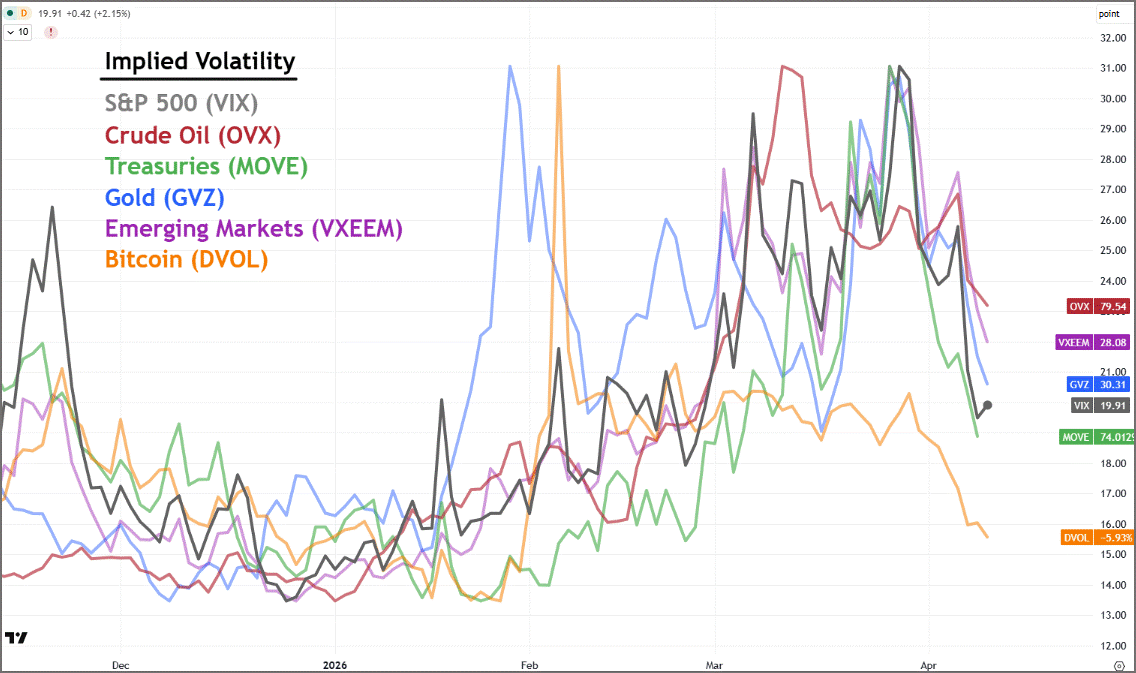
Source: TradingView; John Kicklighter
Markets are driven not just by the accumulation of known and objective information available at any given time. There is a very strong and distorted influence of speculation that tends to skew prevailing market price from a thematically neutral alignment. That is an inevitable by-product of a practical use of the capital and commodity markets meant to hedge the unexpected or the probable with a theoretically severe potential impact on prices. Such forces can lead to both financial crisis with extreme volatility, but they can also maintain a remarkable moral hazard through a steady build up in exposure – similar to what we have experienced over the past five years.
But, there are signs that recognition of risk is starting to seep into the backdrop. Through worldwide Google measures, there has been a surge in ‘market volatility’ browser searches over the past year. That is particularly remarkable considering this record interest/fear has outstripped periods of genuine financial crisis – such as the 2020 pandemic or 2008 global recession. Perhaps even more structural and perhaps creeping a fundamental threat is the search around ‘recession’. Once again, across the global, news search for this term of extreme struggle has hit a record that far outstrips any other period – including periods of confirmed economic contraction. These background worries, if realized by official measures, could prove the fuel to more substantial market contractions.
Chart of Google Trend Volume for “Market Volatility” 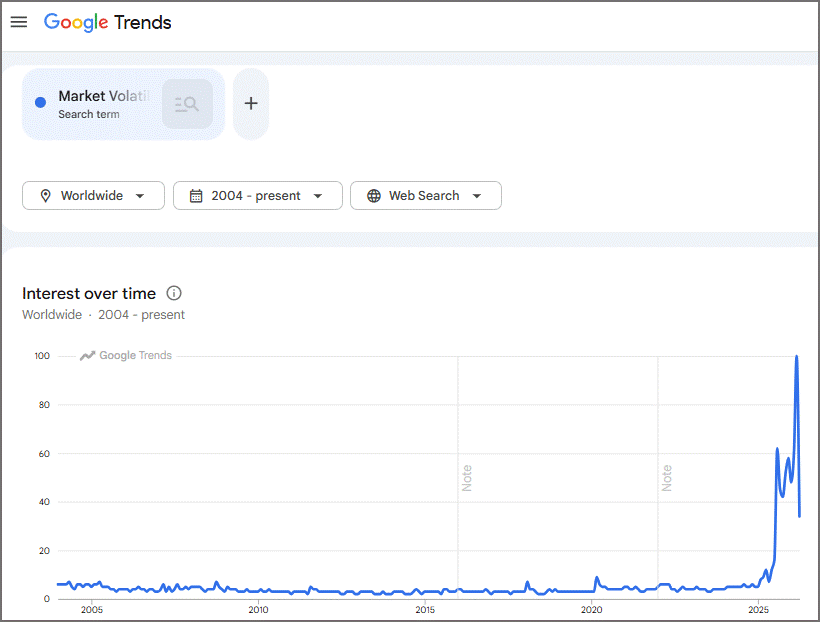
Source: Google Trends
How do we keep track of the convergence when headline risks come into contact with systemic fundamental concerns. While it is still somewhat opaque, the point where persistently high energy prices lead to a very tangible throttle on economic activity (GDP, consumption, employment, etc) for global economies is more and more a tipping point for which market participants and citizens will be tracking. There are economic data points that will continue to offer clear sign posts towards progress, but there are already serious points of real worry such as last week’s record low in US consumer confidence (stretching back 73 years) according to the University of Michigan’s closely-watched survey. Perhaps one of the most useful gauges at this stage while we wait for delayed macro indicator updates is the prediction market’s tracking of when ‘traffic at the Strait of Hormuz will return to normal’. The longer the flow of energy and other critical products (like fertilizer) remain disrupted, the more profound and lasting the impact on the global economy.
Chart of Prediction Markets on Traffic at the Strait of Hormuz (Hourly) 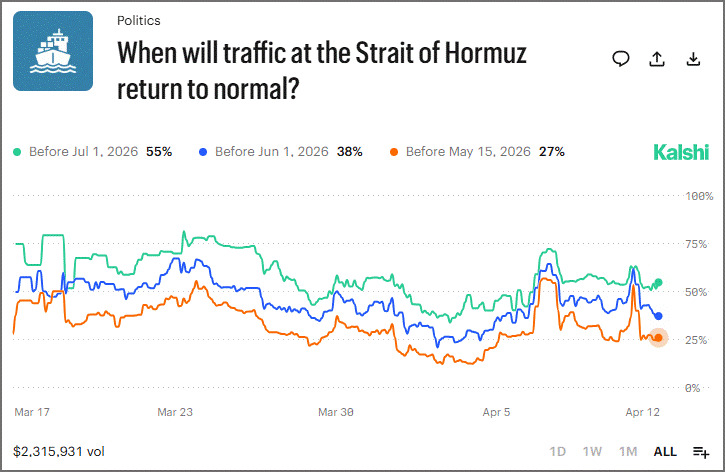
Source: Kalshi.com
When a sudden change in geopolitical and market headlines can trigger a panic over an impending recession and/or financial crisis, how much attention will be afforded to scheduled event risk – which often reflects on lagging data? There is a run of both top-shelf, stand-alone updates along with high-profile thematic headlines on tap. While there will be a persistent distraction around the developments in the Middle East, the items on the docket will likely still exact an impact on the market’s pricing of ‘risk’ benchmarks. We will likely just see the data interpreted through the lens of tangible fallout from the global disruption and measure of our closing in on the gravity of genuine economic contraction.
Calendar of Top Global Macro Event Risk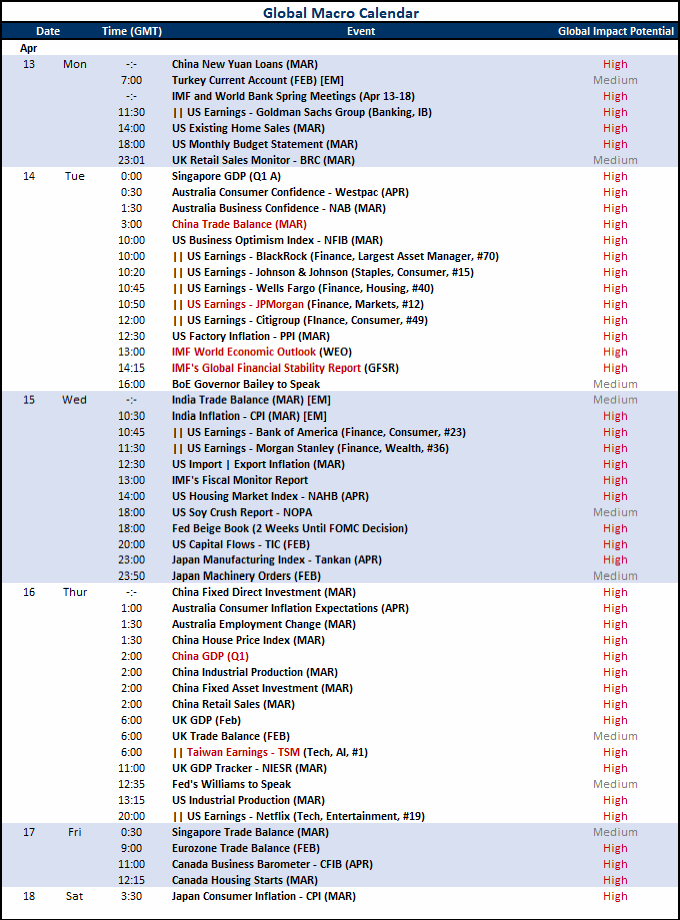
Source: John Kicklighter
If the ultimate axis of the macro focus eventually routes to the threat of an economic contraction/recession, where will the start of the US earnings season factor? The health of the corporate sector is a critical part of the virtuous growth cycle in the world’s largest economy – though there are considerations that detractors often highlight like growing disparity in wealth aligned to share ownership and employment by smaller businesses. Nonetheless, the largest publicly-traded companies tend to tap into the largest fundamental aspects of the system and act as guiding lights – for better or worse – for the capital markets. As usual, the largest banks will kick off the season with Goldman Sachs reporting Monday followed by JPMorgan, Wells Fargo and Citigroup on Tuesday.
Through the GAAP adjustments, we will see the impact that energy prices, credit costs, deficit building, shifting rate forecasts and other themes with a tie to the Middle East war have had. That said, the investor calls where warnings can show through the forecasts are where we should really look. As an aside, it is also worth highlight that Johnson & Johnson; Taiwan Semiconductor Manufacturing and Netflix will also be reporting this week for distinct reflections on consumer spending, AI trends and mega cap activity respectively.
Graph of the Implied Movement on Key Companies Around their Earnings Release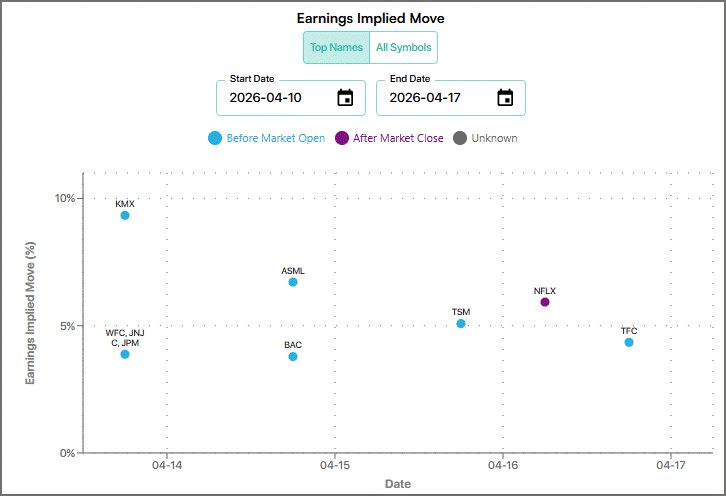
Source: Spotgamma.com
Given the United States is participant to the Middle East conflict – not to mention it is the largest economy in the world – the direct economic fallout from its pressure on Iran and the subsequent shipping through the Strait of Hormuz tend to draw disproportionate interest by headlines. However, the consequences of the throttled energy supply, restriction on critical fertilizers and other important products for growth arguably carry as much (if not greater) impact on many other major economies. For example, the world’s second largest economy, China, sources an estimated 40 to 50 percent of its imported oil through the Strait. And, supplementing that cut off resource is not exactly practical given global demand.
Further, after the United States capture of former Venezuelan President Nicolás Maduro, the government is no doubt aware of the impact that US policy is having on its own growth potential – and the threat of 50 percent tariffs by the US on countries that supply Iran with weapons will be something closely weighed. Will we see the impact of all of this in two key Chinese updates this week – Q1 GDP and March trade balance – or will the data be sanitized to curb any fears from observers? The strategy math is not as straightforward as it has been in the past.
Chart of China Monthly Trade Balance and Quarter Annualized GDP (Monthly)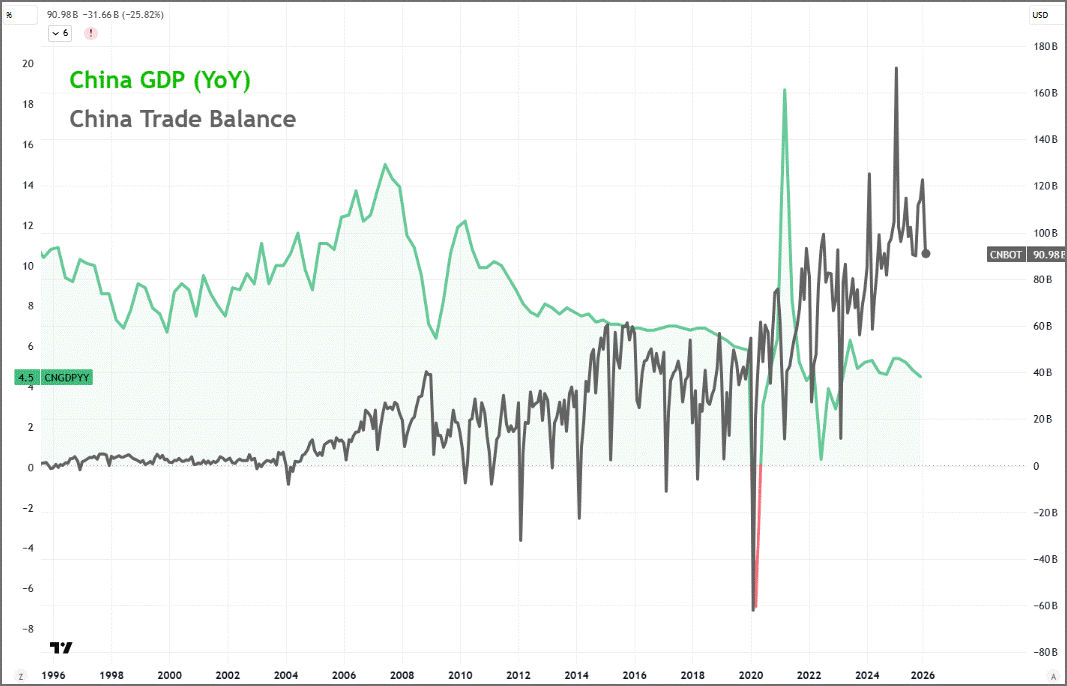
Source: China GACC; China NBS; John Kicklighter
Finally, a particular fundamental callout worthy of all our attention over the coming week is the IMF’s (International Monetary Fund) updated economic outlook (WEO), global financial stability report (GFSR) and fiscal monitor. Of the three reports due this week, the fiscal monitor will generate the least speculative whiplash – though it is no less important fundamentally. Budget deficits for many of the largest economies continued to grow through the past months and the downturn in growth prospects makes the need for fiscal spending through debt even more pressing to forestall impending contraction. More interesting will be the GFSR which will no doubt reflect on the scale of existential threat to the markets’ healthy functioning that the Middle East conflict tangible represents.
Given the warnings we have seen in the headlines from the IMF Director and her colleagues recently, it will be a serious warning. In terms of both practical and tangible measure, the WEO will be the most useful report to take in. There are vastly different forecasts for growth across various countries and regions depending on what bodies are producing them (governments are more optimistic for example) and what their assessment for a US-Iran resolution entails. The IMF offers one of the few updates that is uniform across the global while also being broadly comprehensive – with forecasts that tend to indulge possibilities that are not unreasonably optimistic.
Table of Growth Forecasts from the IMF’s WEO Update in January 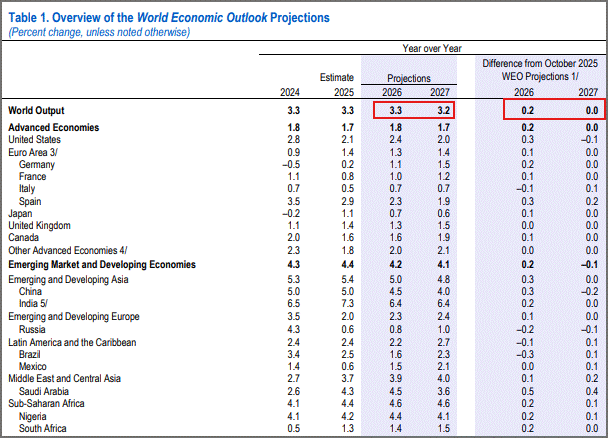
Source: IMF World Economic Update for January 2026; John Kicklighter
Stay connected to timely global macro analysis designed to help market participants navigate shifting economic conditions and evolving risk. Gain access to regular market commentary, updated quarterly forecasts, a comprehensive two-week forward economic event calendar, and specialized tools built to support informed trading and risk management decisions.
-- Written by John Kicklighter, Global Head of Content
StoneX TV content is created, produced, and distributed solely by StoneX Media Ltd (“StoneX TV”) and is provided for informational and educational purposes only. StoneX TV does not provide investment, financial, legal, or tax advice and does not make any recommendation or endorsement of any investment strategy, transaction, or financial instrument. Nothing in this content constitutes, or should be construed as, investment advice or a recommendation to buy, sell, or hold any financial instrument, including securities, futures, derivatives, digital assets, foreign exchange products, or CFDs. This content does not constitute an offer, invitation, or solicitation to engage in any investment activity. The information presented is general in nature and is not tailored to the financial situation, investment objectives, or risk tolerance of any specific person. You should not rely on this content as a substitute for independent professional advice. Investing and trading in financial instruments involves significant risk of loss and is not suitable for all investors. Past performance is not indicative of future results. Any views or opinions expressed are those of the presenter at the time of publication and are subject to change without notice. Such views may not necessarily reflect those of StoneX Media Ltd or its affiliates. StoneX Media Ltd and its affiliates, including StoneX Group Inc., may from time to time have positions in, or engage in transactions involving, the financial instruments referenced. This content may include general market commentary and opinion. It does not constitute independent investment research and has not been prepared in accordance with legal requirements designed to promote the independence of investment research. StoneX Media Ltd is not authorised or regulated to provide investment services and does not act in a fiduciary capacity. StoneX Media Ltd is incorporated in Ireland and operates in accordance with applicable Irish law. It is a wholly owned subsidiary of StoneX Group Inc. and is a separate legal entity from other subsidiaries within the StoneX Group, which may be regulated in various jurisdictions. StoneX Media Ltd does not act on behalf of, or provide services for, any regulated affiliate. This content is not directed at, and may not be distributed to, any person in any jurisdiction where such distribution would be contrary to local laws or regulations. Supporting documentation for any claims, comparisons, statistics, or technical data may be made available upon reasonable request, where applicable.
Our subscribers have access to comprehensive market analysis from StoneX spanning commodities, equities, currencies and more.
Dollar expected to reflect electoral race, bets on US interest rates, IPCA-15, and AI concerns

Argentina's borrowing plan has doubled just as bond investors demand higher yields to lend. The financing gap, the World Bank talks and a thin reserve cushion now decide how much room the government has left to support the peso.


Australian business and consumer sentiment surveys are only now capturing the Reserve Bank of Australia's first three rate hikes. With unemployment at a five-year high, firms and households are signaling growing strain from tightening already in the system.

Our market expertise, advanced platforms, global reach, culture of full transparency and commitment to our clients’ success all set us apart in the financial marketplace.
Reach
With access to 40+ derivatives exchanges, 180+ foreign exchange markets, nearly every global securities marketplace and numerous bi-lateral liquidity venues, StoneX’s digital network and deep relationships can take clients anywhere they want to go.
Transparency
As a publicly traded company meeting the highest standards of regulatory compliance in the markets we serve; our financials and record of accomplishment are matters of public record. StoneX’s commitment to “doing the right thing over the easy thing” sets us apart in the industry and helps us build respect, client trust and new partnerships.
Expertise
From our proprietary Market Intelligence platform, to “boots on the ground” expertise from award-winning traders and professionals, we connect our clients directly to actionable insights they can use to make more informed decisions and achieve their goals in the global markets.