For me, the biggest focal point for the global phosphate market is the Chinese government. 2023 has seen exports picking up drastically when compared to the meager output of 2022. That helped to raise hopes that China was about to retake their spot at the top of the world list of export volume which would be a major bearish situation. However, we recently have seen them restricting urea exports by a sizeable margin (approximately 40% per month on average) and the fear is that the same is coming for phosphate...or is it? Their November export total on phosphate was much larger than anticipated. Is that a sign that export restrictions were made up? Is that a sign that exporters were "getting ahead" of restrictions being put into place? It's China so we really do not know...
Unfortunately for buyers, we see phosphate as flat to bullish in the near term...but a correction will be coming.
I think a correction has to come. The price is too high. Demand destruction is becoming a more normal conversation piece. Current values are still historically high. Right now, the market bias/conversation is to the bullish side but I struggle to see it lasting forever. Nearby needs should be considered but if you have time on your side, it might be able to be used to your advantage.
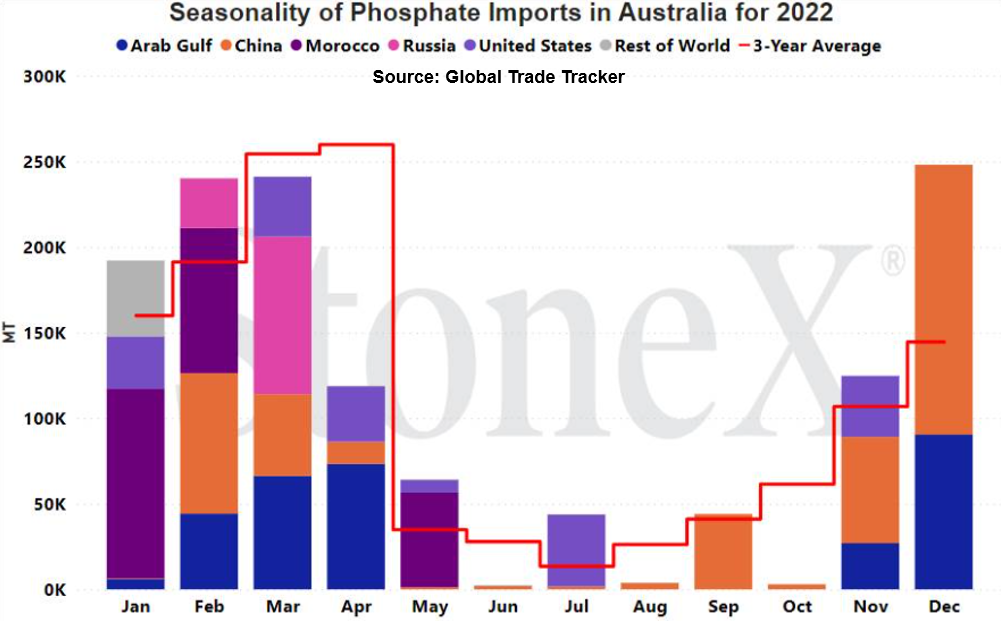
To be read in the voice of Jane Brady "China, China, China"
If you do not understand the title reference, enjoy your back and various limbs not hurting for as long as you possibly can!
Yes, we are going to talk about China again.
Yes, I get sick of talking about the same thing month after month after month!
The world focus remains on China in regards to what they will or will not do for phosphate exports.
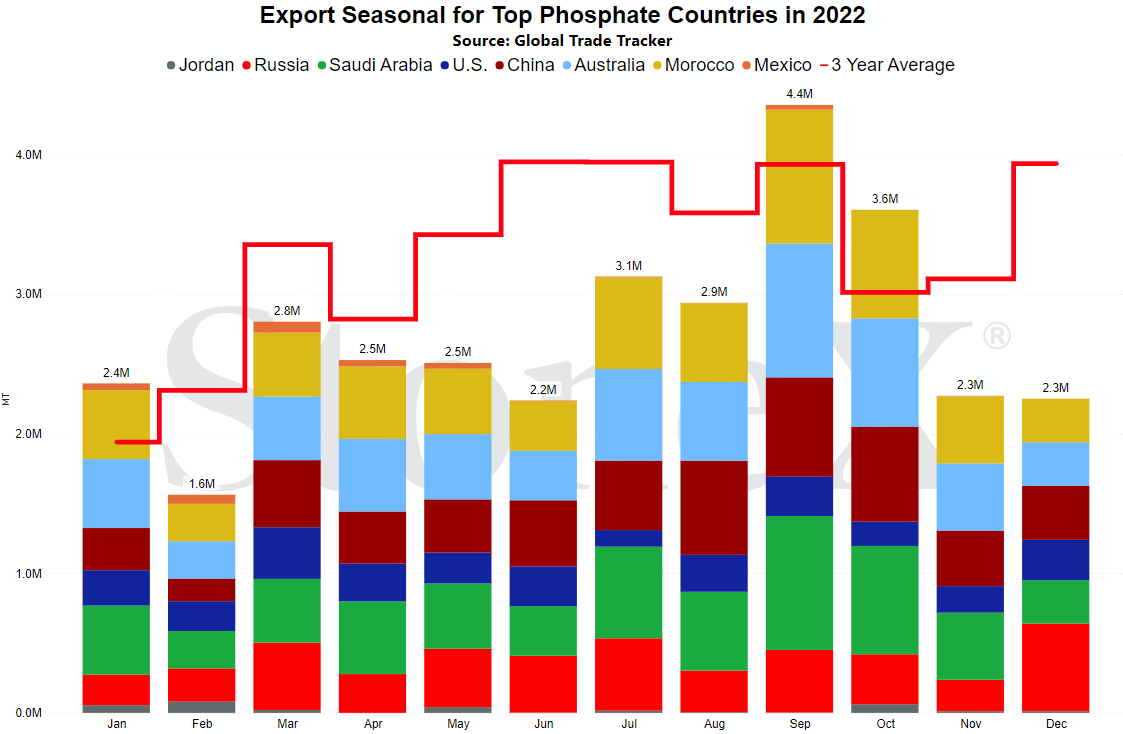
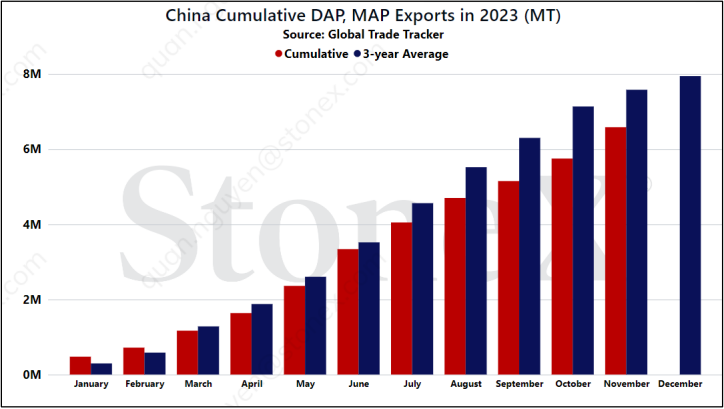
Recently, the government came out and stated that they would be restricting urea exports by approximately 40% per month (typically export 5MMT per year and only allowing 4MMT Jan '24 thru Mar '25). The fear is that the same is coming for phosphate. As the world's typical largest DAP/MAP export, such a move would have huge ramifications on the global S&D.
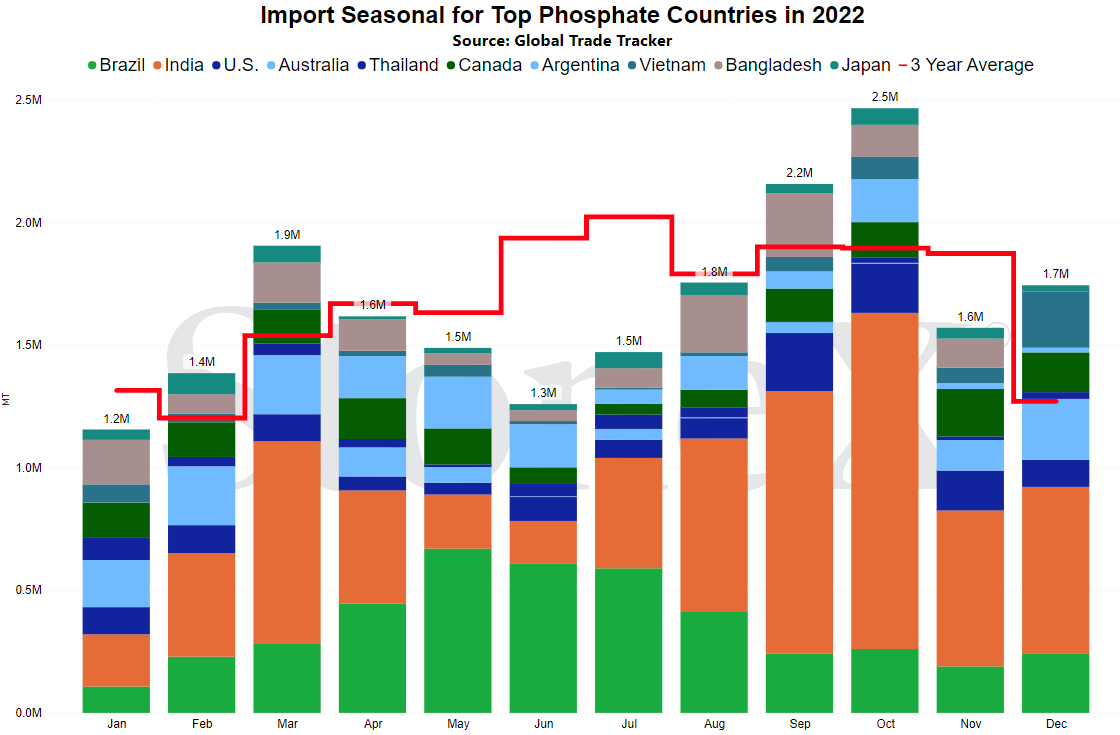
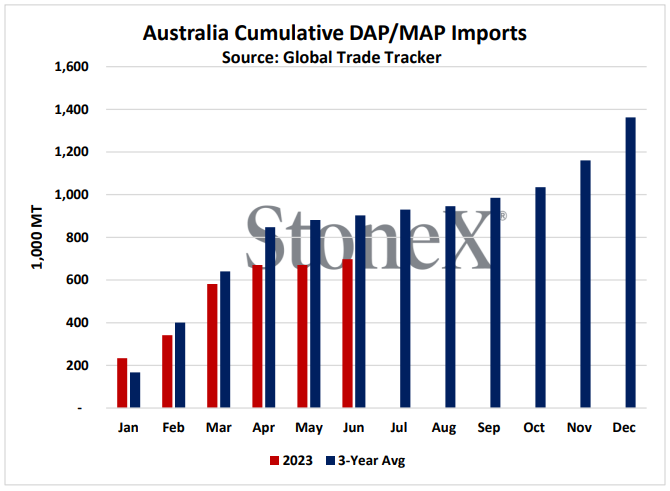
However, November data painted a different story. Around 834KMT's of DAP/MAP were exported during the month which was a surprise given the government's statement that they would extend export shipment windows. The export total was huge and helped their 2023 cumulative total gain on the 3-year average (which is lagging "normal" due to global market troubles last couple years). This begs the question: was November a one off or normal?
What I mean by one off is will we see December down substantially. In the past, we have seen Chinese fertilizer exporters effectively sniff out export restrictions that were coming. When they do, they will rush to export everything they possibly can before the restrictions get put into place. If that is what is happening today, December and onward may see volumes very small which causes the global S&D to get squeezed. However, we have also seen the Chinese government pump fake on restrictions. Tell the world you are restricting, then reverse course and allow them to happen (happened with an India urea purchase tender earlier this year).
Today, the market appears to believe actual restrictions will continue into 2024, leaving the world S&D tight which is why values remain where they are. Just need to keep eyes on China...
Why does this matter for Australian farmers?
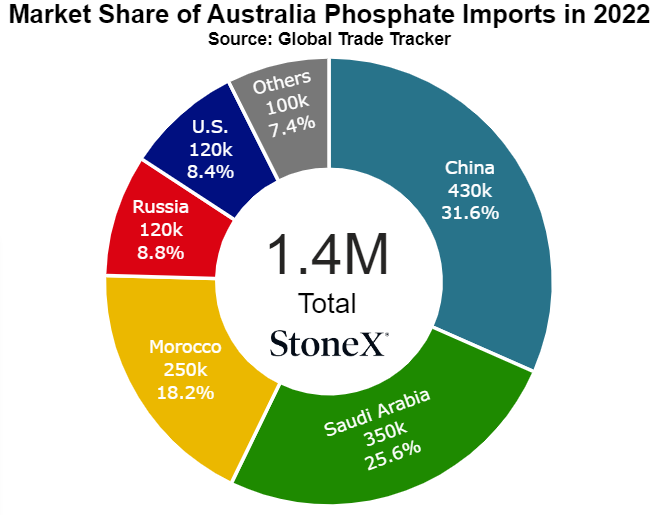
Given how close the Asian region is to Australia (and influences price ideas), the typical number of tons of phosphate that come from China, and how much further away the secondary origin point is, this is extremely important.
Application season is coming quick. If there are suddenly hiccups to normal supply routes, the importers have to pivot quickly. That means going to other manufacturers, making sure there is supply available, finding a vessel to load, then get that vessel safely back to Australia.
Now, please do not read this as "if you do not buy now, you will not be able to find any". I'm not trying to go over the top. Merely pointing out a situation that could happen and needs to be appreciated.
Huge North American fall application run leaves system empty
If you have already read the above pieces or checked out the NH3 or potash newsletters, you know that the fall application run is a major topic for North America. It was good. It was really good. I would dare say everyone who wanted to apply phosphate this fall got that chance. So what does that mean going forward?
Unfortunately for buyers hoping for lower pricing, it means we are going to struggle a bit.
The fall application run didn't really conclude until mid-December. That's great! Now we have all winter to refill and get ready for the spring run, right? Yes...and no. Unfortunately, winter seems like it takes forever but from a logistical POV, it is pretty short. Spring will start to ramp up mid-March for the Midwest. That leaves 3 months or 90 days to refill this system. Logistics are not exactly healthy out there:
- Lower Mississippi River continues to struggle with low water levels. This is nowhere near as bad as it was and if the Midwest/tributary areas can continue to get timely rains, it will survive. However, we are never more than a couple weeks away from this being an issue again.
- Rail is doing everything it can do to stay ahead of demand but go talk to a rail receiver and you will likely get an ear full for complaints on timeliness.
- Truck is an issue that continues to get worse. Long hauling fertilizer is not the job most truckers dream of getting to do. There are much better paying loads that keep truckers close to home. I have yet to meet someone in the industry that has said "I have more truckers than I could ever have loads".
So we have emptied the system and we have a short winter ahead of us. This is why this could drag on for a while (as these big of seasons typically do). The fall ended empty means a Herculean effort to get refilled. Assuming Mother Nature plays nice, we will empty the system again in the spring. Then the conversation will shift to "well, the system is empty coming out of spring so values should remain higher". Likely we head into fall '25 with folks saying "we are still tighter than normal".
Now, all of the above can be "corrected" if spring weather fights us (has happened before) and/or demand isn't as big as we think (current phosphate prices are high vs grains/historicals/world) but this is the storyline we are facing.
Why does this matter for Australian farmers?
Why should Aussie farmers care what is happening in North America? That is literally halfway around the world. It shouldn't matter.
Australian importers/retailers/farmers are preparing for their coming phosphate application run at the exact same time that North American farmers are preparing for their spring application run.
Welcome to your competition.
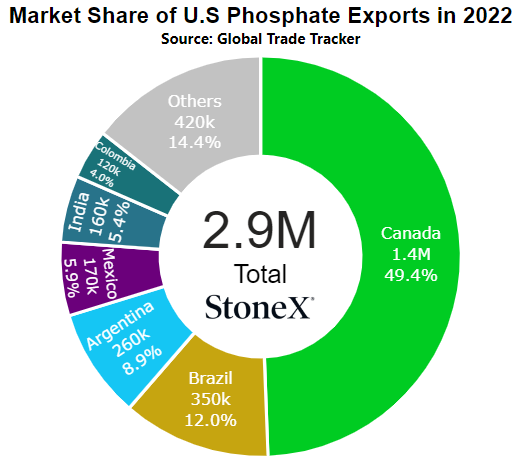
With the U.S. so snug on inventories (and the NOLA price one of the highest in the world), it is competing with all other global buyers for just in time inventory. If the U.S. had had a poor fall run and inventories were flush, that competition wouldn't be there...but it is. If manufacturers have more sales possibilities, they feel more confident on their price ideas.
Questions start to rise on how demand will react to current phosphate values
As the Northern Hemisphere started to approach the fall season, phosphate values had risen from their summer low's and frankly had done the least amount of price correction work from their high's in March/April 2022. Still, the summer values looked solid...especially when compared against grain prices at that time. Many stepped forward and locked in their fall needs. Those that didn't went into the fall staring at higher prices...but the "low" price of potash helped to offset the high price of phosphate. That combination, along with a solid weather window, meant that demand stayed engaged.
Now, we are staring at winter/spring starting from a much higher price point from a historical POV as well as a ratio POV. This is begging the question of spring demand. Ultimately, most farmers will go ahead and apply in the spring. Phosphate is a single input. By itself it is a big deal but as a part of all inputs, it typically isn't worth cutting back if it means jeopardizing yield potential. However, there is a small percentage of fields out there that have enough phosphate available that application rates can be reduced...or skipped.
Sometimes, small percentage changes in markets can make a world of difference.
That is what we will be watching over the next 3 to 4 months. What is the reaction. If buyers step forward due to needing to spend year end/beginning dollars or out of fear of logistics/availability, the market should hold up. However, if enough buyers push off and say no thank you, it can have an effect.
Ultimately, the buyer decides...
Why does this matter for Australian farmers?
I fully appreciate the fact that a lot of ground around the world has to have phosphate application to maximize yield potential. This isn't me saying that demand is going to zero. That just isn't possible.
However, there are areas that can cut back or skip without a huge impact to that yield. Those are the places I am looking at.
When I talk about possible demand destruction, we are talking mere single digit percentage points...but small percentages of really big number still produce big numbers. Those small shifts can have a big shift on the overall market.
Unfortunately for those wanting lower prices, this isn't an event that likely takes place in the next few months. For me, this is something we do not figure out until May/June/July. When you think about how long it takes for product to arrive in Australia from around the world, we are now talking about tons that do not show up until 2nd half 2024...or too late for 2024 Aussie demand.
Still, this is something that will be on our radars.
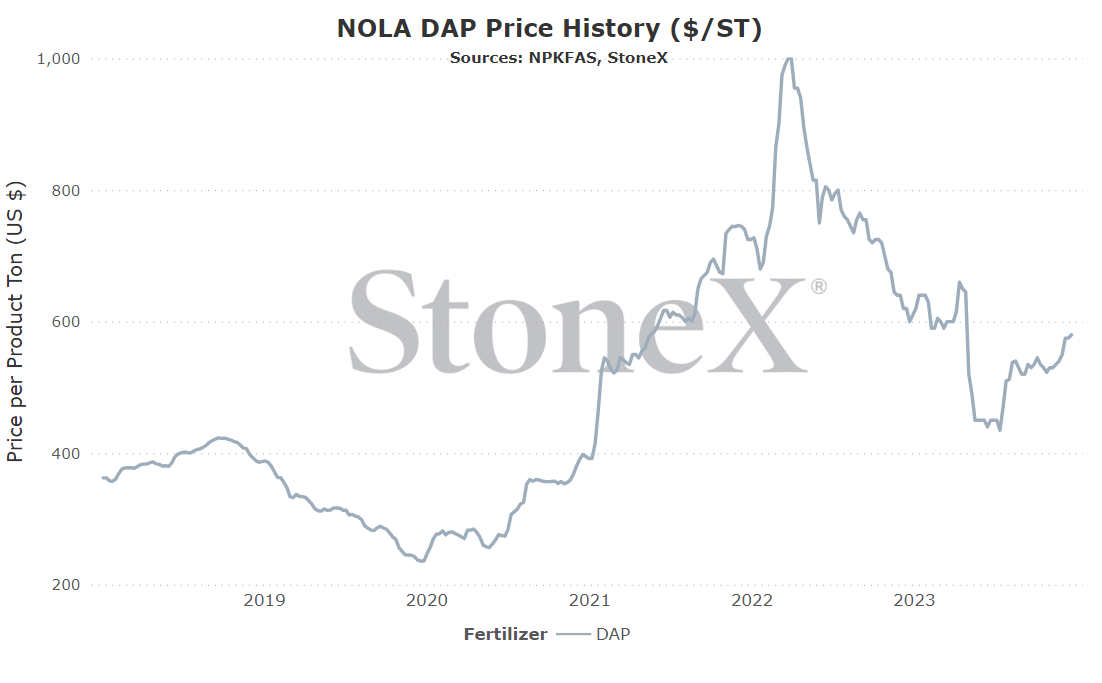
Price comparisons
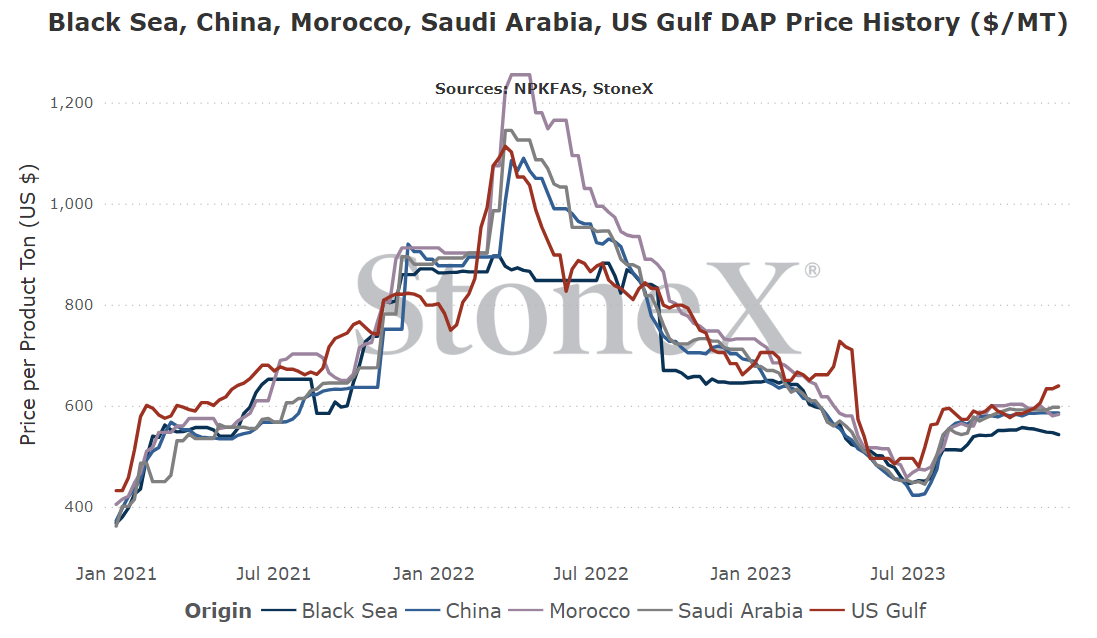
Vs 30 days ago - +7% or approximately $40 higher
Vs 90 days ago - +9% or approximately $50 higher
Vs 6 months ago - +29% or approximately $130 higher
Vs 1 year ago - -3% or approximately $20 lower
Morocco DAP price comparison
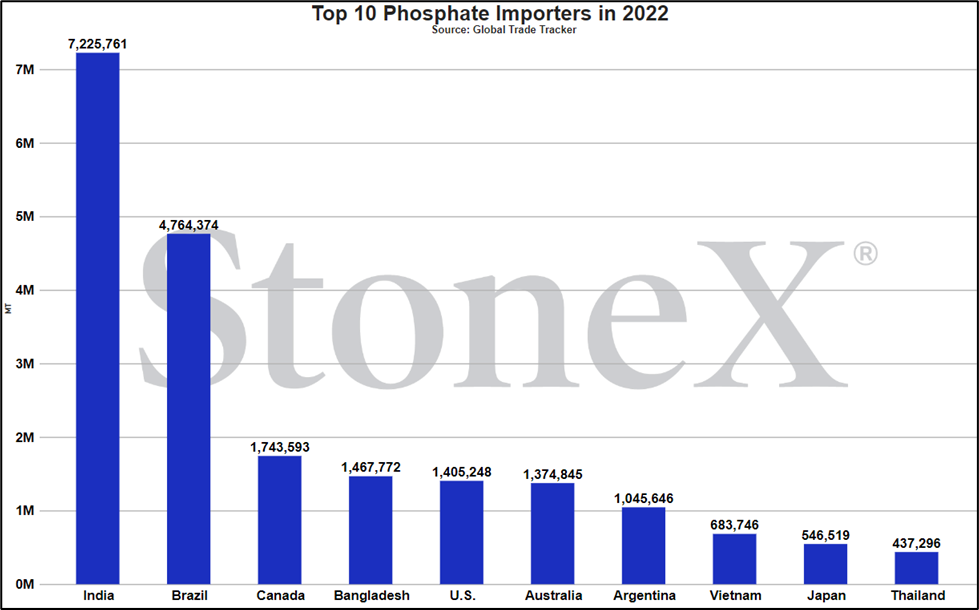
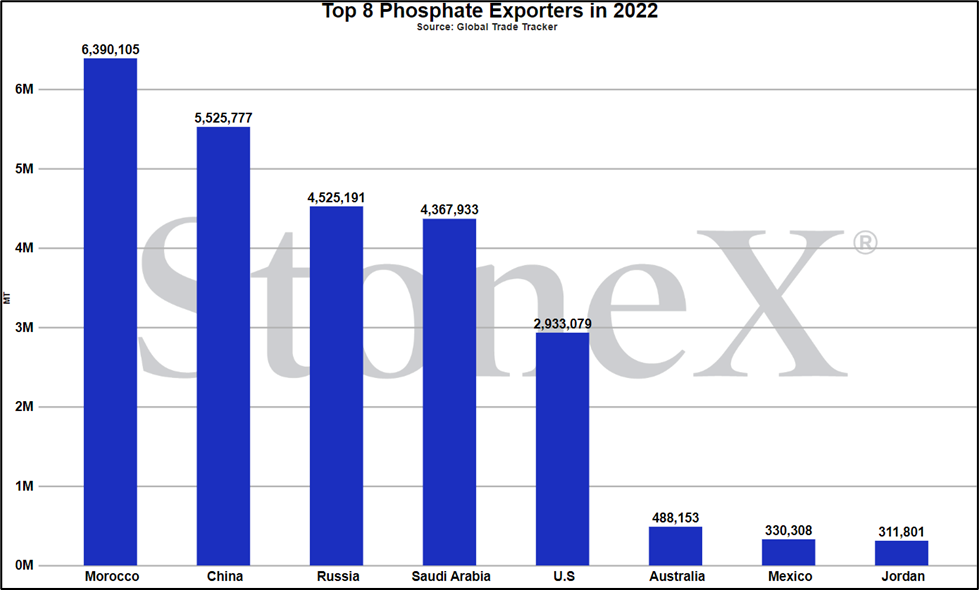
Number 1 global exporter in 2022
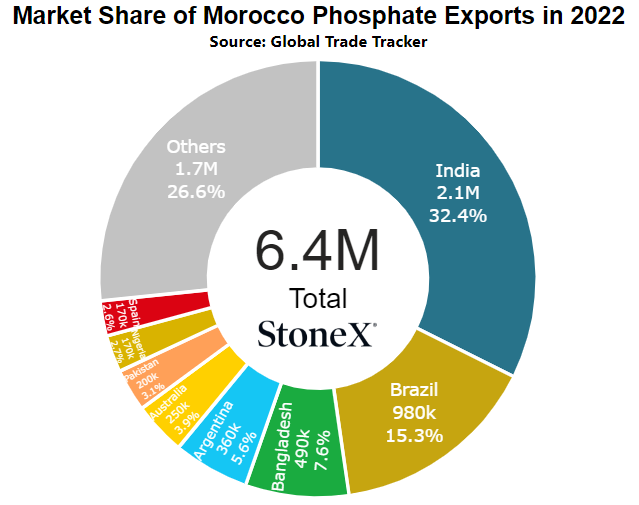
Price comparisons:
Vs 30 days ago - -2% or approximately $13 lower
Vs 90 days ago - -1% or approximately $5 lower
Vs 6 months ago - +21% or approximately $100 higher
Vs 1 year ago - -20% or approximately $150 lower
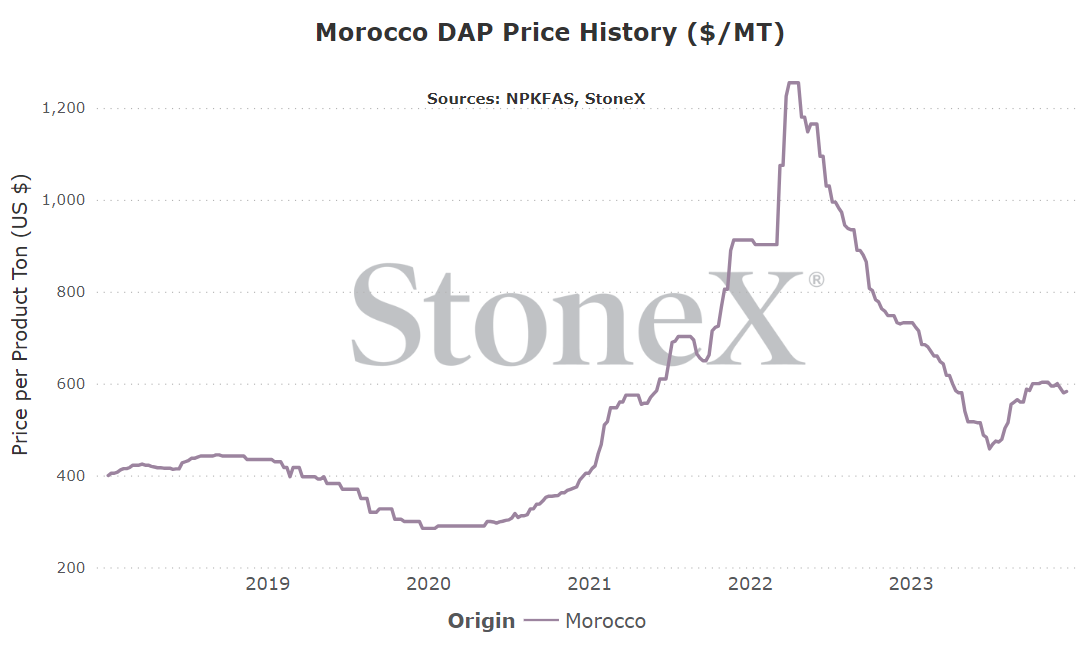
Black Sea DAP price comparison
Number 3 exporter of DAP/MAP in 2022
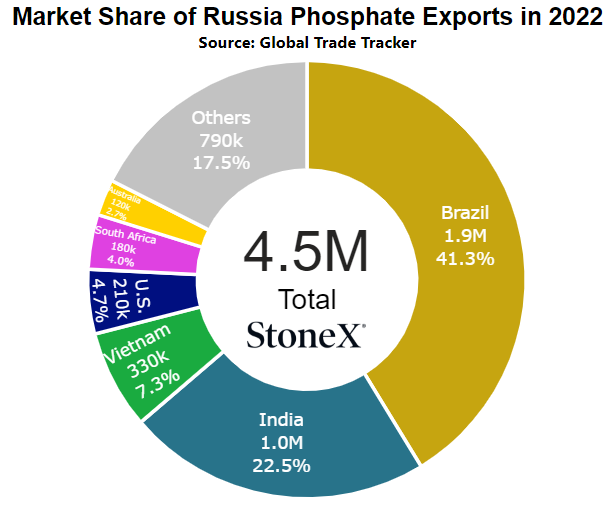
Price comparisons
Vs 30 days ago - -2% or approximately $11 lower
Vs 90 days ago - unchanged vs 3 months earlier
Vs 6 months ago - +18% or approximately $83 higher
Vs 1 year ago - -16% or approximately $103 lower
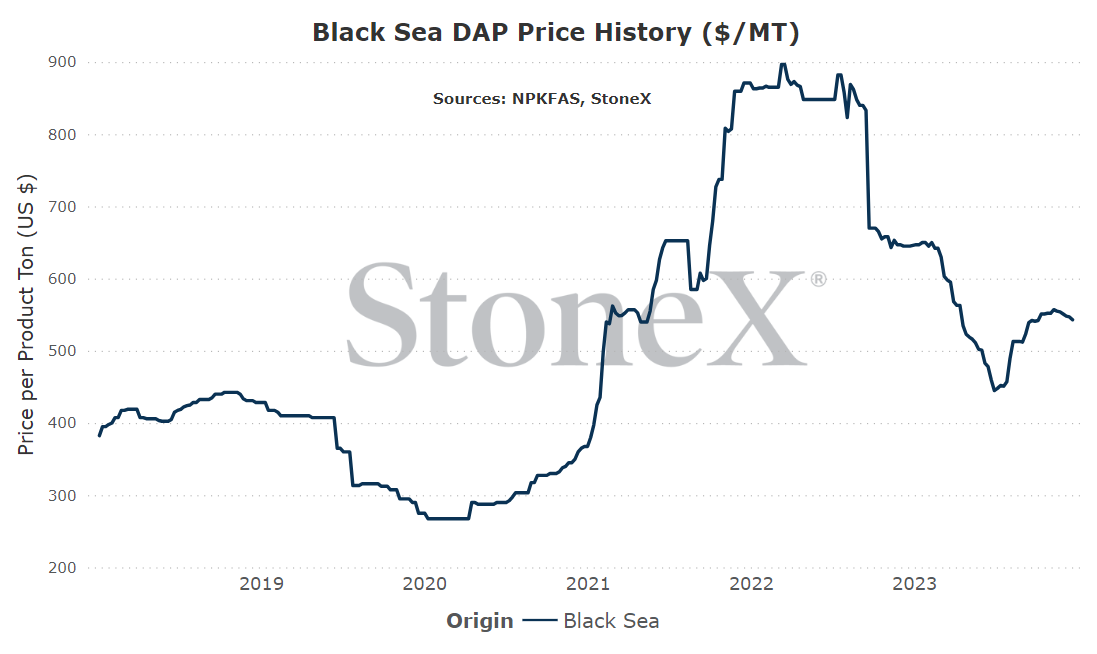
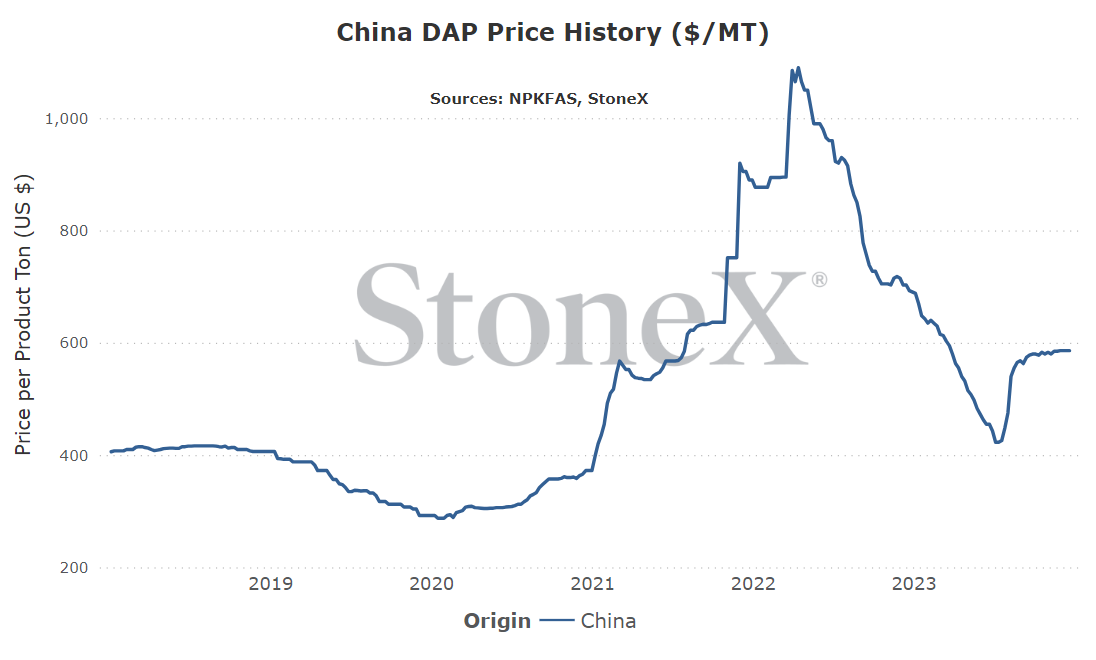
China DAP price comparison
Number 2 global exporter in 2022
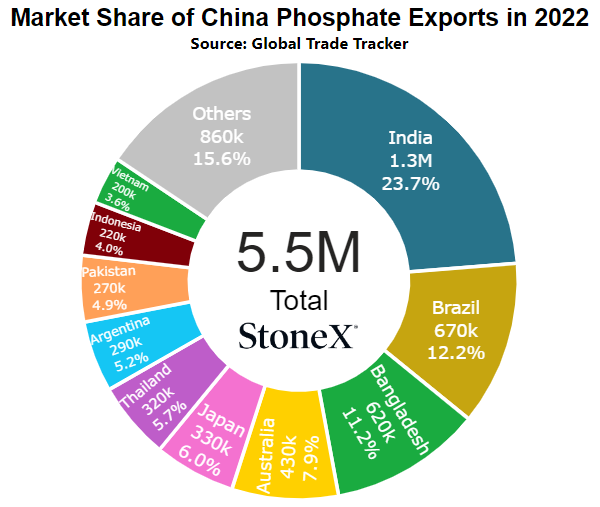
Price comparisons
Vs 30 days ago - unchanged vs last month
Vs 90 days ago - +1% or approximately $9 higher
Vs 6 months ago - +29% or approximately $131 higher
Vs 1 year ago - -15% or approximately $107 lower
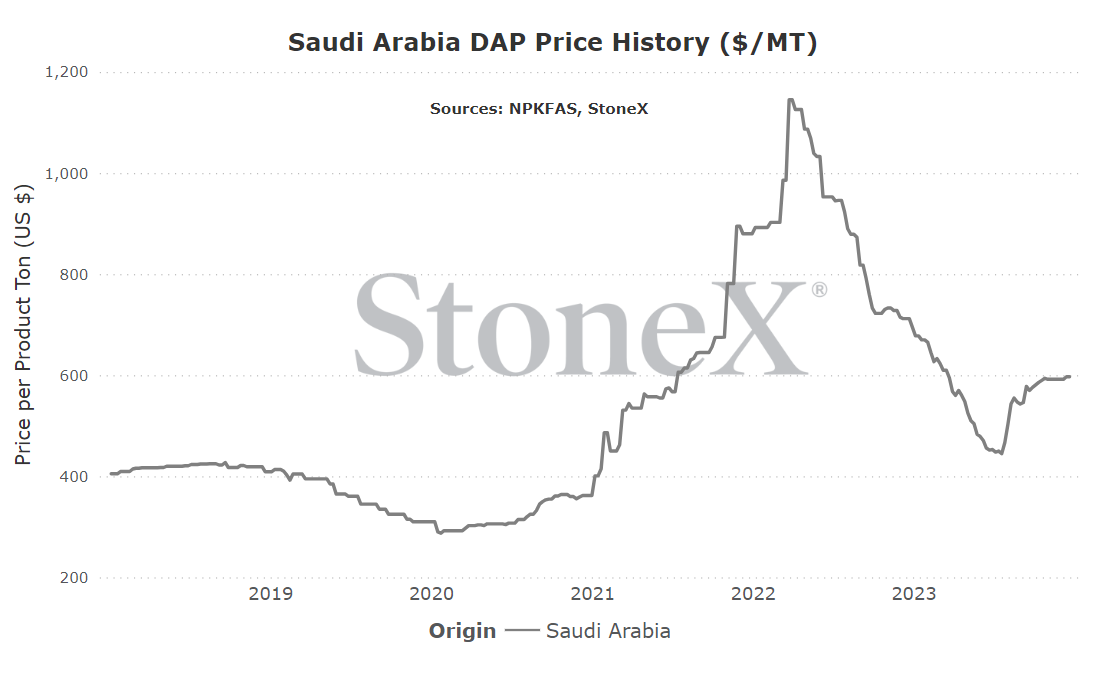
Saudi Arabia DAP price comparison
Number 4 global exporter in 2022
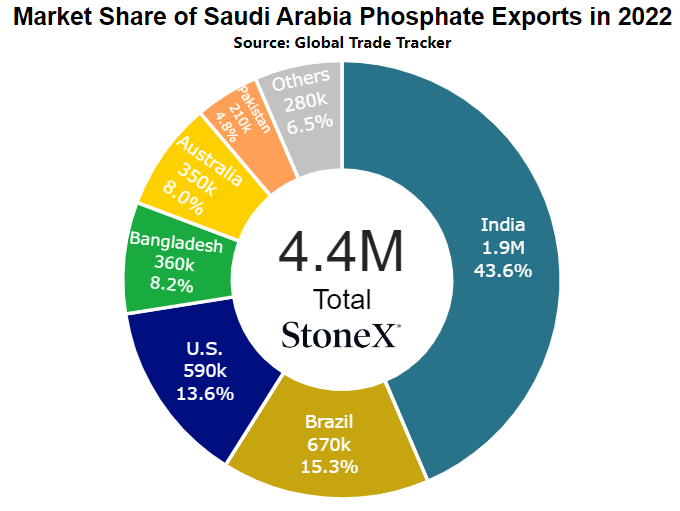
Price comparisons
Vs 30 days ago - +1% or approximately $6 higher
Vs 90 days ago - +5% or approximately $27 higher
Vs 6 months ago - +32% or approximately $146 higher
Vs 1 year ago - -16% or approximately $115 lower
- Chinese government restricts phosphate exports harder than expected – China is typically the world's largest DAP/MAP exporter...if the government starts to restrict exports heavily, the world will pay the price...literally and figuratively. Unfortunately, it is REALLY hard to get an inside track on what they plan to do. November exports were higher than expected which could be seen as a sign that restrictions are not happening...or a sign that exporters were getting ahead of the restriction. Isn't fertilizer fun?!
- High priced phosphate does not impact demand – typically, when an input price gets very high (phosphate currently is), it is a sign that the S&D is out of balance. The price is pushed higher in an attempt to curb demand which ultimately rebalances the S&D. However, that does not appear to be the case today for phosphate...partly because a chunk of the global demand either gets subsidized (India) or it is paired with another dry fertilizer (potash in N.A.). Alone, phosphate should be fearful of demand destruction but today that does not look to be the case which means values could move higher to try and find that balance.
- Saudi Arabia phosphate shipping lanes could be impacted – in recent years, Saudi Arabia has exploded into the phosphate market to become one of the leading exports. The market assumes no issues with their production rates...nor their ability to export the product around the world. This is a very low probability situation but if vessel attacks continue/ramp up, we could see Saudi Arabia vessels become far and few between. If you own the vessel, why run the risk of endangering your ship or worse, your crew if there are other loads out of harms way to haul?
- The market is wrong on China – there is a big fear that Chinese exports are going to be further reduced...but what happens if the market is wrong. On the flip side, what happens if China removes all restrictions and they regain their former export glory? The world would suddenly feel much better supplied...and that would impact values.
- Phosphate buyers/users say no more – while there is the possibility that demand will see little to no impact at these high of values, it could certainly see changes. Farmers do not like to feel taken advantage of and phosphate is very much in that realm today. For this time of year, many of the grain/phosphate ratios are some of the worst in recent history. Demand destruction may not seem likely, but do not count it out.
- U.S. government does away with import restrictions – Senator Grassley and two others put forward a fertilizer visibility bill recently, indicating that they are finally listening to American farmers complains on the market. Many believe the focus will be on creating more visibility (I have several ideas that could improve the situation) but some also think they will review the current market...which means counter vailing duty rates against Moroccan/Russian/Chinese produced phosphate could be challenged. While doing away with these duties would not cause N.A. values to fall hundreds of dollars below world values, it would help improve supply availability and put N.A. values back in line with the world.
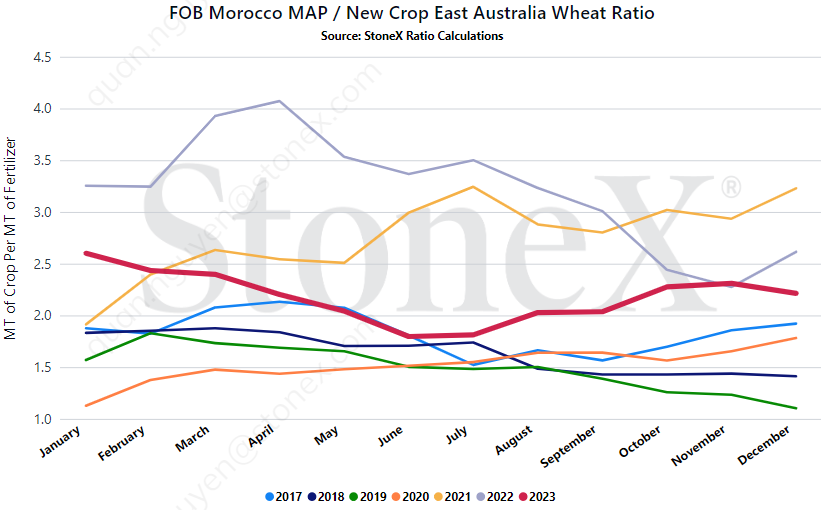
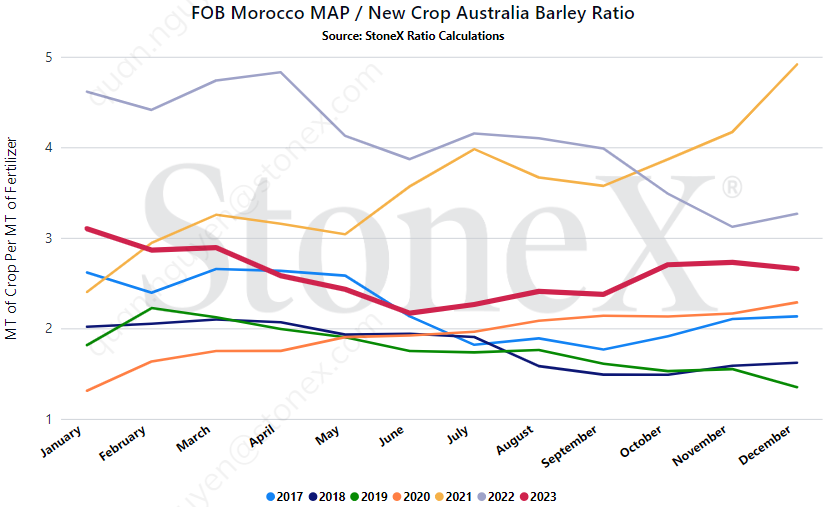
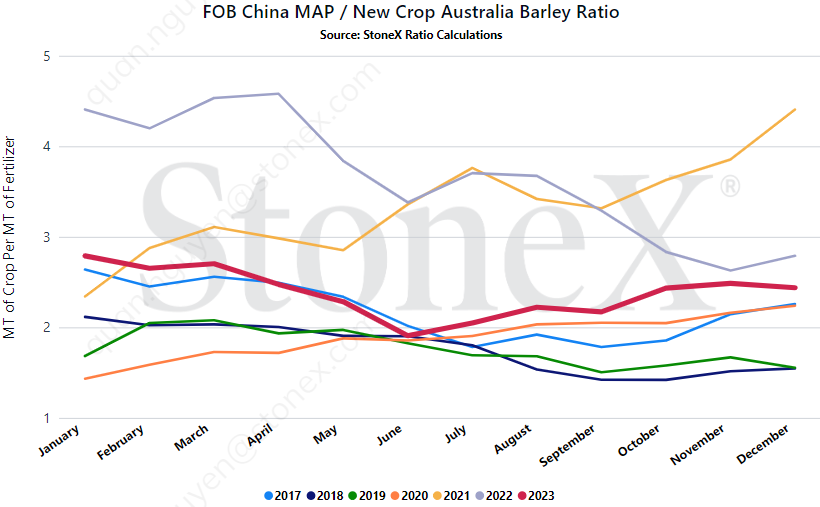
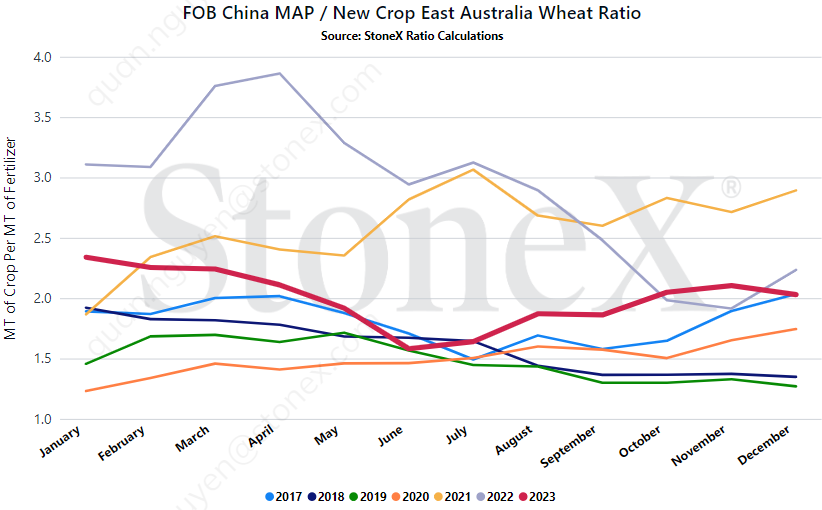
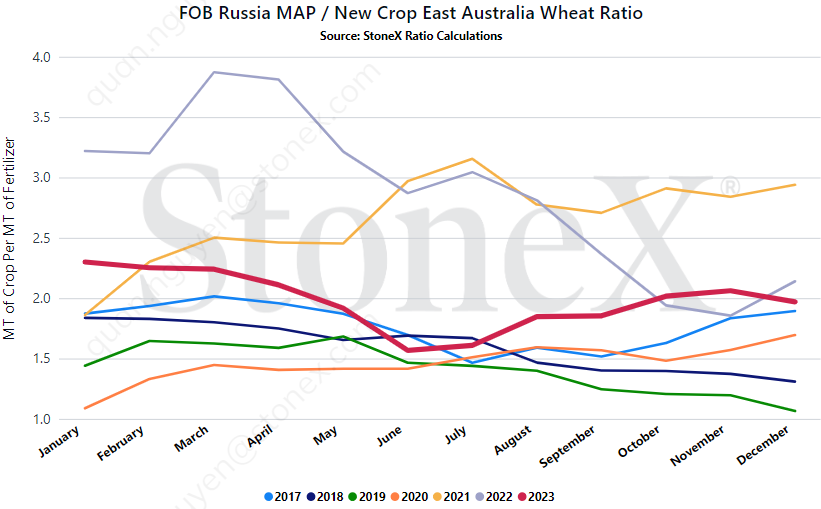
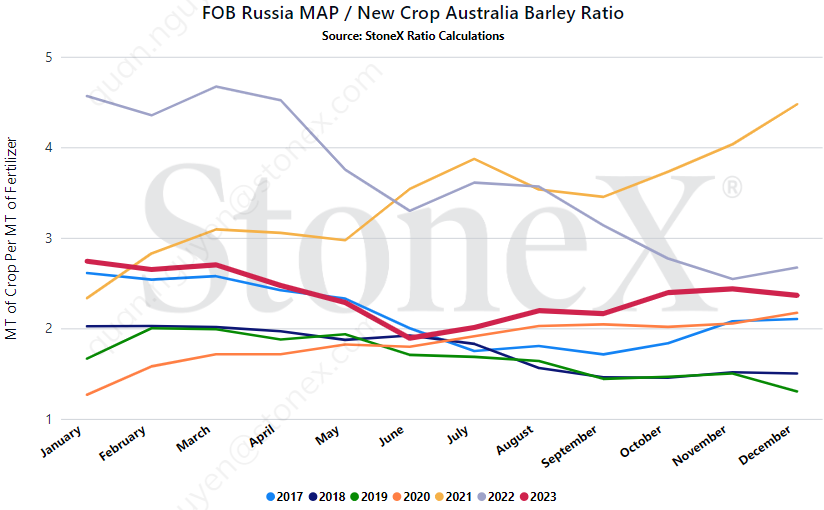
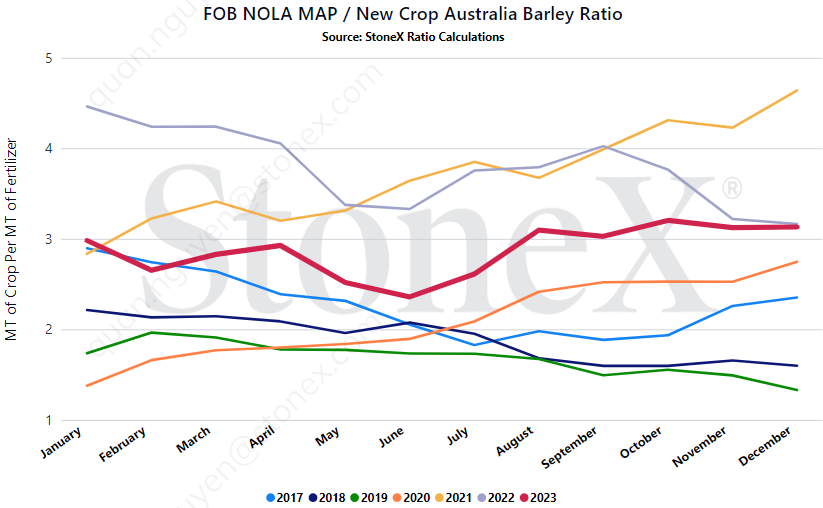
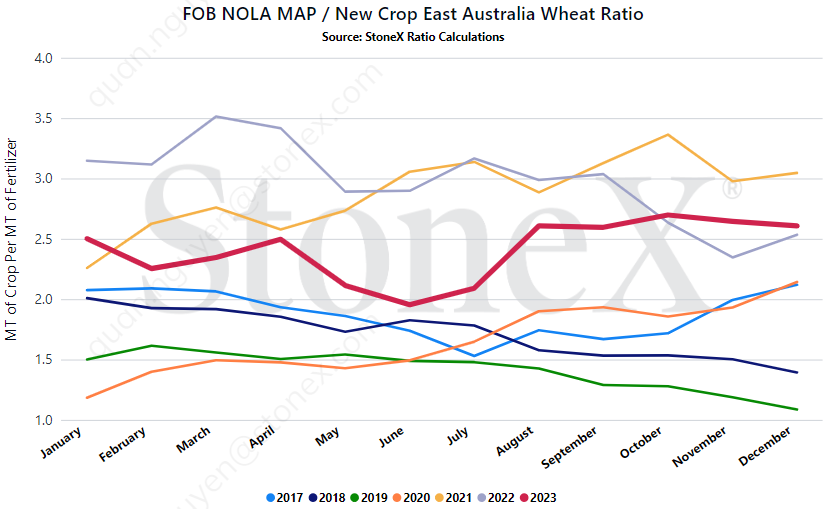
We believe that only looking at the flat price of either grains or fertilizer can be misleading:
-
Only selling grain can hurt you if fertilizer prices rise substantially
-
Only buying fertilizer can hurt you if grain prices fall
We look at the ratio "value" to get a better indication of where we are or how many bushels of X does it take to pay for 1 ton of fertilizer.
Would you rather:
-
Spend 4 ton of grain to pay for 1 ton of MAP
-
Spend 1.5 ton of grain to pay for 1 ton of MAP
When we compare the current ratio value against recent years, we start to see if we are high or low.
YOUR VALUES MAY LOOK DIFFERENT
- Chinese government announcements - as the world's typical leading exporter of DAP/MAP, what they do or do not do matters. When it comes to China, when the government says to jump, the country asks how high. That is how it works. If the government says slow exports even more, you do as you are told.
- Demand reactions to high prices - for the last couple months, this has been on the top of my head, but I haven't spent a lot of time talking about it because I didn't think it feasible. Now, I'm ready to talk about it. We could see some demand either reduce their application rates in the spring or skip the season (assuming the skip does not impact yield potential). If there is enough of this happening, it will impact the market...might not be quick enough for spring but eventually.
StoneX Ratio Calculation
The ratio calculation is derived from Bloomberg historical grains values as well as fertilizer values from StoneX, NPKFAS, and Argus.
The calculation is simply dividing the fertilizer price by each grain price.
All data was sourced from StoneX unless otherwise noted.