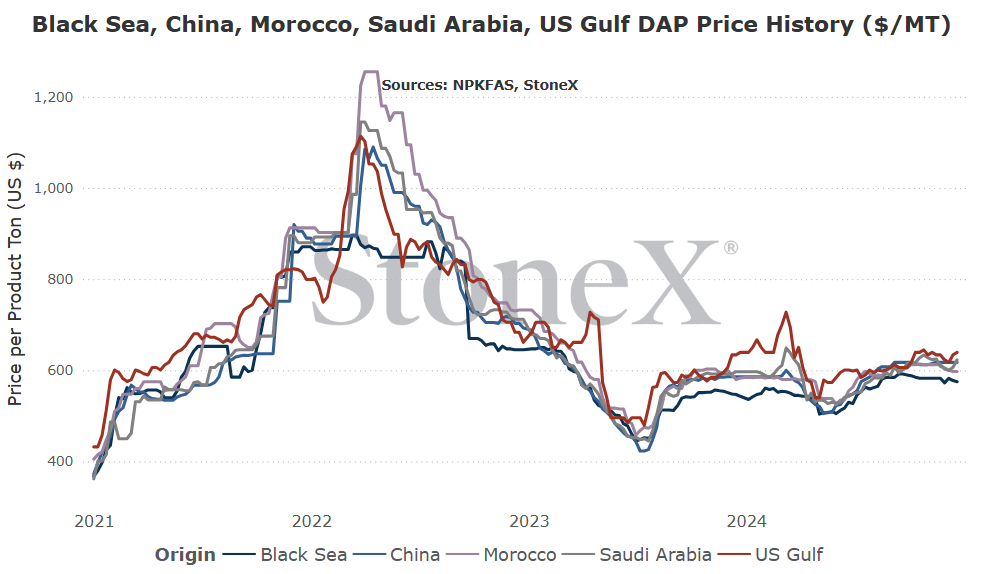
The phosphate markets continue to be in a "funny" place.
Not funny "ha ha" but the type of funny that makes you want to cry a little.
There is no doubt that prices are extremely high. It doesn't matter how you make your measurements, everyone comes to the same high cost ending. That should mean that demand is taking huge hits which would offset tight supplies and help lower values...but that doesn't seem to be reality. China, the world's historic largest exporter, continues to be feared lowering their export flows. India, the world's largest buyer, is still lower on supplies than their comfort level. If the global S&D remains as tight as it is, it is hard to see much downside...
China remains my major pivot point for the global phosphate market. If exports continue to be squeezed/lowered, then global supplies are tight and it is really hard to see much price downside short term. However, the flip side remains just as important. If we suddenly hear a return to normal, global long positions/sellers will likely be selling as quickly as possible to get out of their way.
My POV today is that there are more roads that lead to flat/higher pricing short term (i.e. thru March/April) as I believe Chinese exports will remain restricted. However, once the Northern Hemisphere gets past spring and has to start facing the long summer period, we should see values lower.
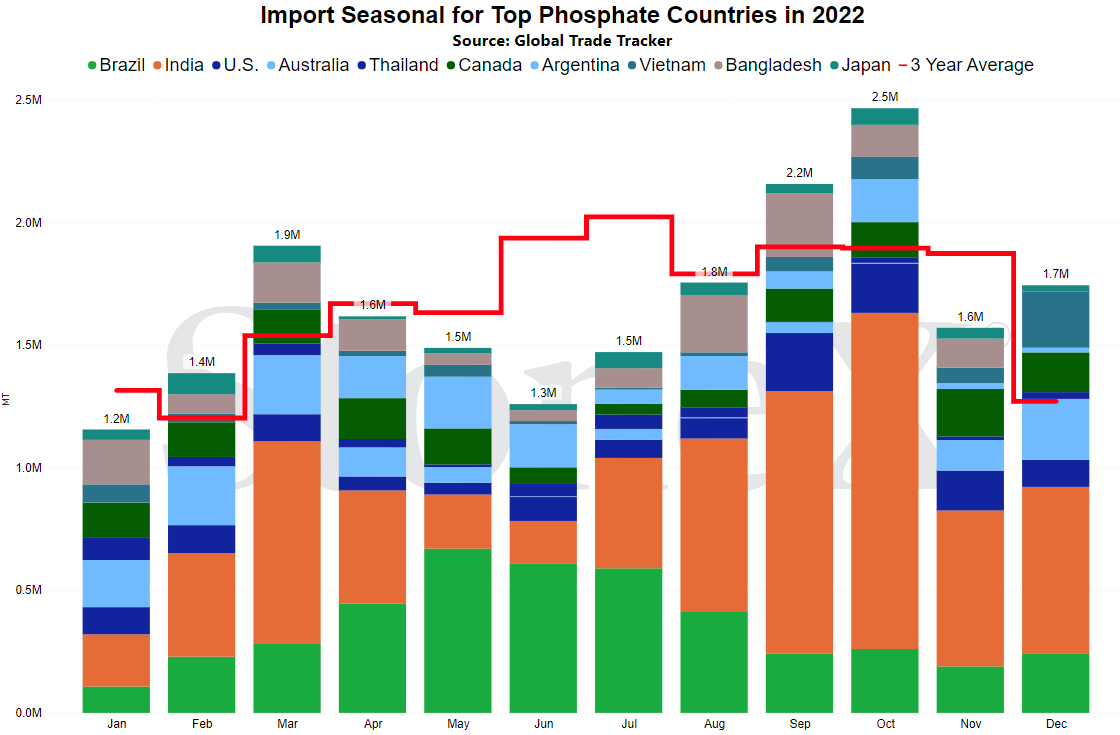

2025 global phosphate market outlook
A new year means a fresh look at the factors that we are watching in the phosphate markets. This is far from a complete list, but I feel like it hits the highest highlights.
- Chinese export flows - China has historically been the world's largest exporter of DAP/MAP. The last few years has seen the government intervening and restricting export flows. For Chinese farmers, this program has been great as it helps to ensure domestic supplies and lower domestic values. Unfortunately, for the rest of the world, this strategy has worked and continues to be used. Never count out China. They could return to full exports and not blink an eye...it just doesn't look likely today.
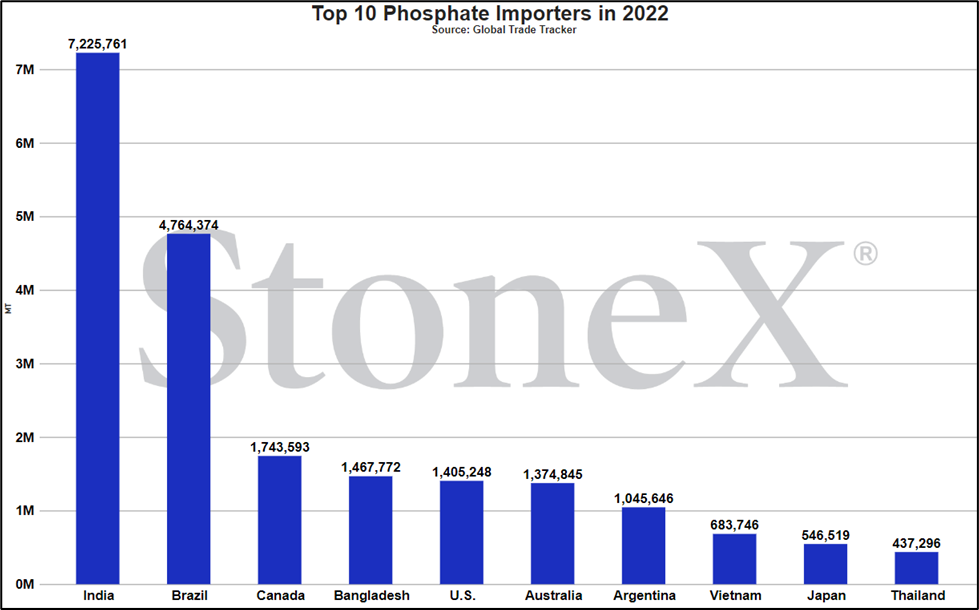
- India's continued attempt to rebuild stockpiles - Indian phosphate supplies have been a rollercoaster of emotion in 2024. As the world's largest importer, that means we need to watch and take note. You can read more about what happened in 2024 below but for here, focus on starting inventories for 2025. They would normally start with a comfortable stockpile of around 2M tons. This year will start with them closer to 1M. This shouldn't be an "oh crap" amount...but stockpiles need to be built. That means the world's largest buyer will be buying at a faster clip.
- Farmers reaction to high prices - phosphate prices are high regardless of how you look at them. Vs historical values. Vs grain values. Vs production values. All high. So high that the corn/NOLA DAP ratio, if it holds, will set all-time high values for January and February. We thought we would see sizeable demand destruction in fall application programs...but that doesn't seem to be the case. Maybe we will see spring demand lower...but it doesn't look like it.
- Any new global production hopes - we have not seen/heard anything that leads me to believe any new production expansions are coming, but high prices tend to increase production. I have a bit more hope that Mosaic will be allowed to expand their mines in Florida. Florida governor DeSantis recently started to allow phosphate production byproducts phosgyp to be used in road construction. If these piles which have long been an eyesore and a major issue that environmental groups point to start to get used up and disappear, perhaps they will be more willing to expand their mining lands. Not sure it will happen but we need more production.
Phosphate is in a bad place right now. Demand is solid, supplies are low and there is little hope of near term help in the way of increased production rates. Until increased production is found, the world is going to continue snug...and likely remain high priced.
Fears growing of further Chinese export restrictions
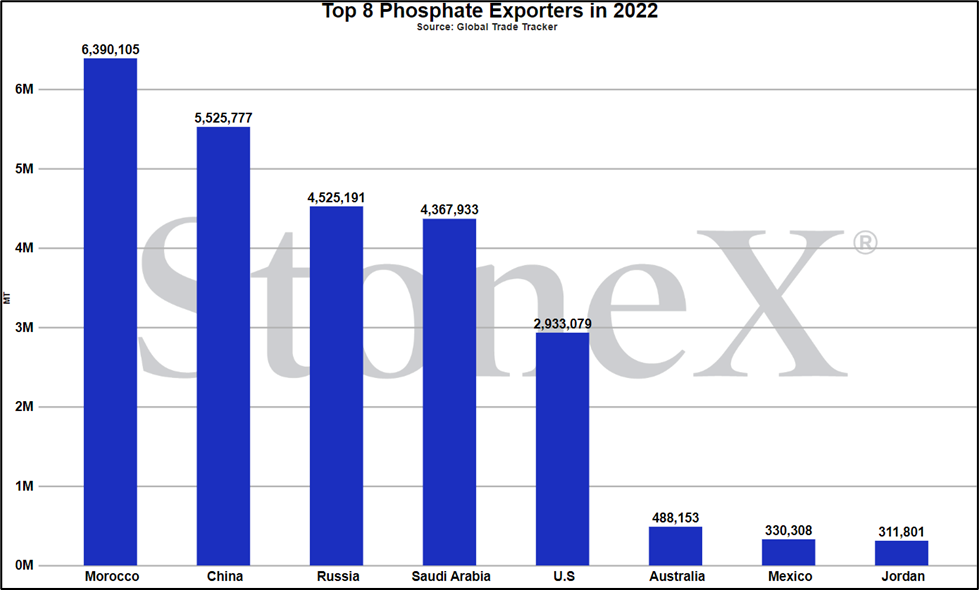
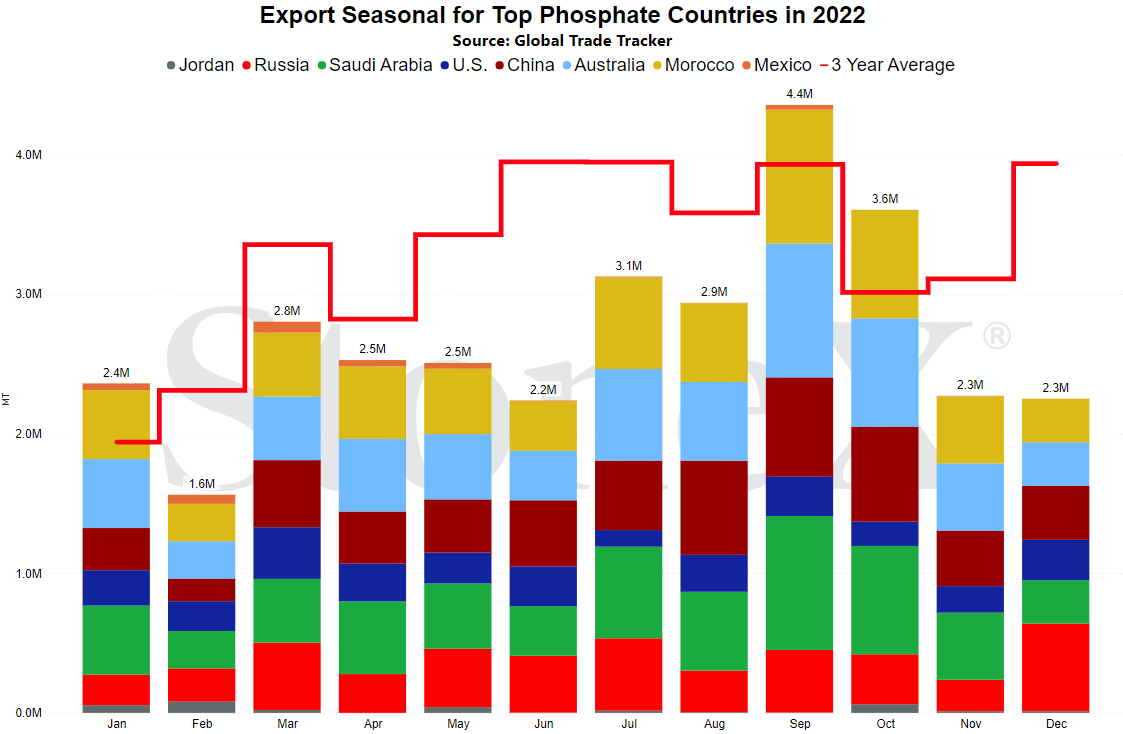
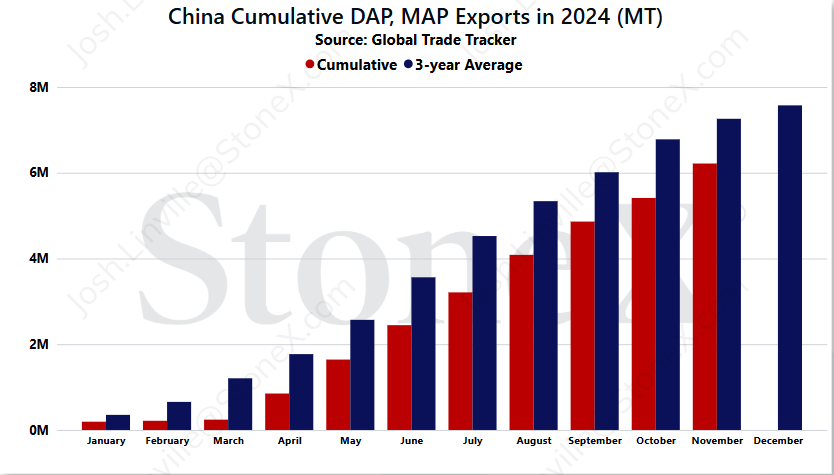
China has historically been the largest exporter/provider of phosphate to the world. However, the last few years have seen their volumes extremely volatile:
2021 - 10M
2022 - 5.5M
2023 - 7M
Earlier this year, there was hope that China was getting ready to reclaim their title of largest exporter. At the very least, there was hope that they would increase their volumes which was met with lower price ideas. Unfortunately, that was a short lived hope.
The remainder of 2024 saw exports continuing to trend below their 3-year average which was already 2+ million tons lower than what was normal. Now, as we look ahead to 2025, a great fear is growing. There have been a lot of stories/rumors that the Chinese central government was getting ready to put further restrictions in place. During the global fertilizer price runup, China started to curtail exports to accomplish two goals. One was to guarantee domestic stockpiles. The other to lower domestic values. If their product couldn't be exported, then prices would have to fall.
Fortunately for Chinese farmers, this strategy worked.
Unfortunately for the rest of the world's farmers, this strategy worked.
Global values have remained high and this fear derives from the expectation that the government is going with the same strategy at the cost to the rest of the world. It is impossible to know what they will do but know that if further restrictions are put into place, it will be very difficult for values to fall short term.
What does this mean for Aussie farmers?
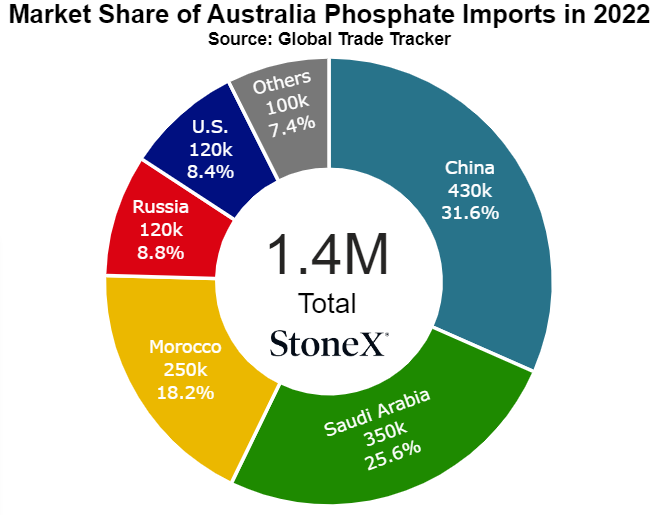
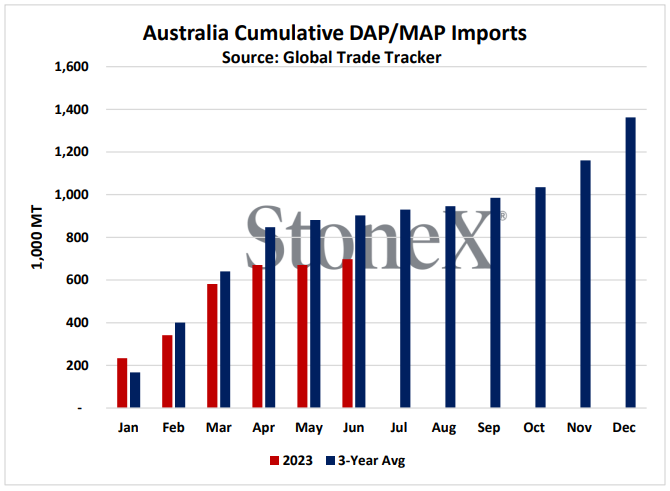
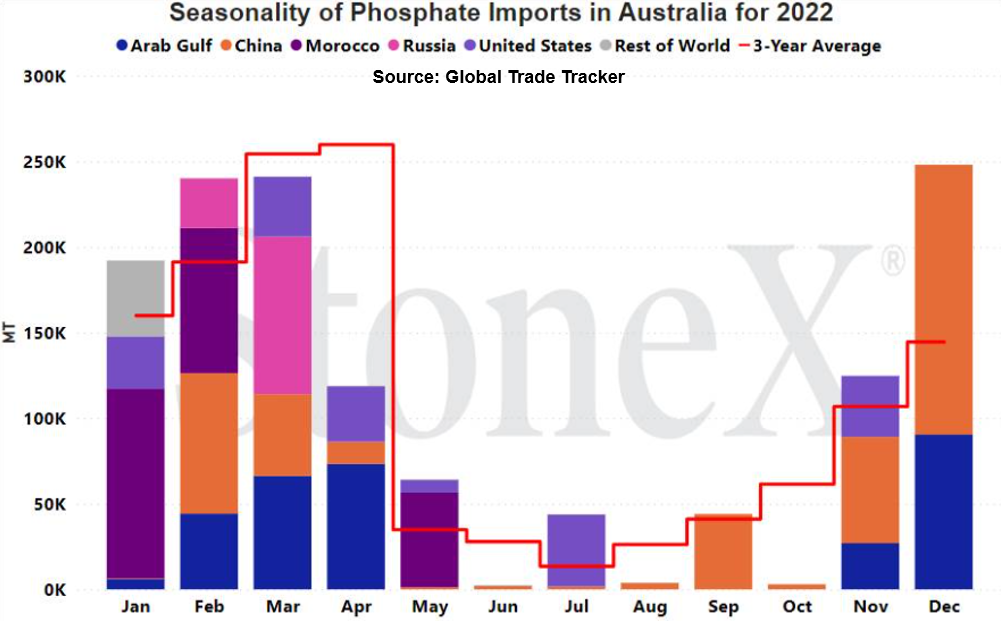
China accounts for a lot of Aussie import tonnages. When you look at a map, that makes perfect sense. China is the one production point that is closest to Australia so it should be a much bigger supplier. That means that when their exports suffer, so do we.
When their exports drop, that forces importers to look elsewhere around the world for supplies. These alternative are further away. That means longer and higher cost ship times. These longer ship times mean having more risk as decisions have to be made sooner than they already would be.
Having Chinese exports lower affects every global farmer...but there is a much more direct impact here at home.
India looks set to start 2025 low on stockpiles vs normal
We spend a lot of time talking about the importance of Chinese phosphate exports. With their being the historic global leader, it makes sense that we need to track what we think they will do and what they will ultimately do.
If we spend that much time/energy on the world's largest supplier, shouldn't we spend equal energy on the largest buyer?
That would be India...and they have had problems in 2024. Last summer, the Indian government saw an opportunity. Global values were falling as it appeared that Chinese exports were improving. In an effect to save money on subsidies to the ag industry and to help values lower, they dropped their subsidy rates to low enough levels that importers were not able to function. This worked...for a short time. Unfortunately, as most of the rest of the world came to realize, China was about to pull a 180. Rather than return to anything close to normal export levels, they started to scale back once again. Global markets started to rally and India was slow to respond. By the time they fixed their subsidy programs, domestic stockpiles had fallen to very low levels. Near the levels that were seen in late 2021 that caused farmers to be outraged and riot in the streets.
This was a short term issue. Eventually, the government made the necessary changes and imports started to flow...and support global values. If Chinese exports were slow and India was buying at a rapid pace, it put a lot of power in the hands of manufacturers.
Now, we are starting 2025 and it appears that India is STILL low on stockpiles. They would "normally" start the new year with approximately 2M tons in storage. However, it has been rumored/reported that they will begin this year at only 1.2M tons. This is not low enough for them to panic, but it is certainly attention grabbing. The northern hemisphere is gearing up for its spring season. Even Australia is making preparations for their phosphate applications. If we suddenly see India start locking up large quantities, it could push price ideas higher in a very short time.
What does this mean for Aussie farmers?
China, the historic global leader in exports and nearby regional phosphate supplier to Australia, has seen their exports fall. India, the world's largest importer/buyer of phosphate, is starting 2025 lower on stockpiles and needing to rebuild.
Australian importers are already having to look at alternative phosphate supply origins to replace what is missing from China. Guess where India importers are going to be looking...at the same origins that our folks are looking. That creates more demand competition in a lower supply environment.
Unfortunately, this is not a lower price outlook...
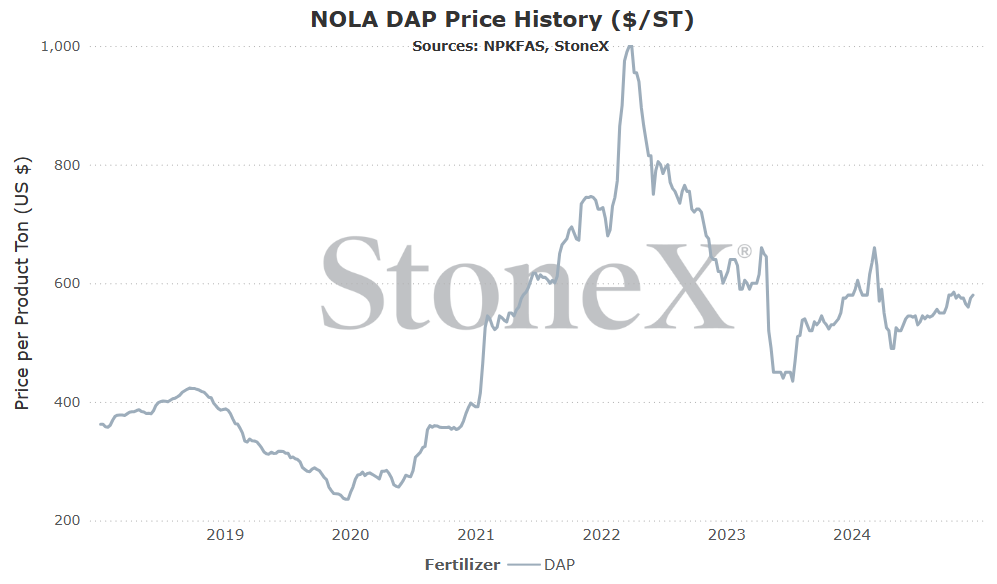
Price comparisons
Vs 30 days ago - 1% or approximately $5 higher
Vs 90 days ago - 5% or approximately $30 higher
Vs 6 months ago - 6% or approximately $35 higher
Vs 1 year ago - unchanged vs last year at this time
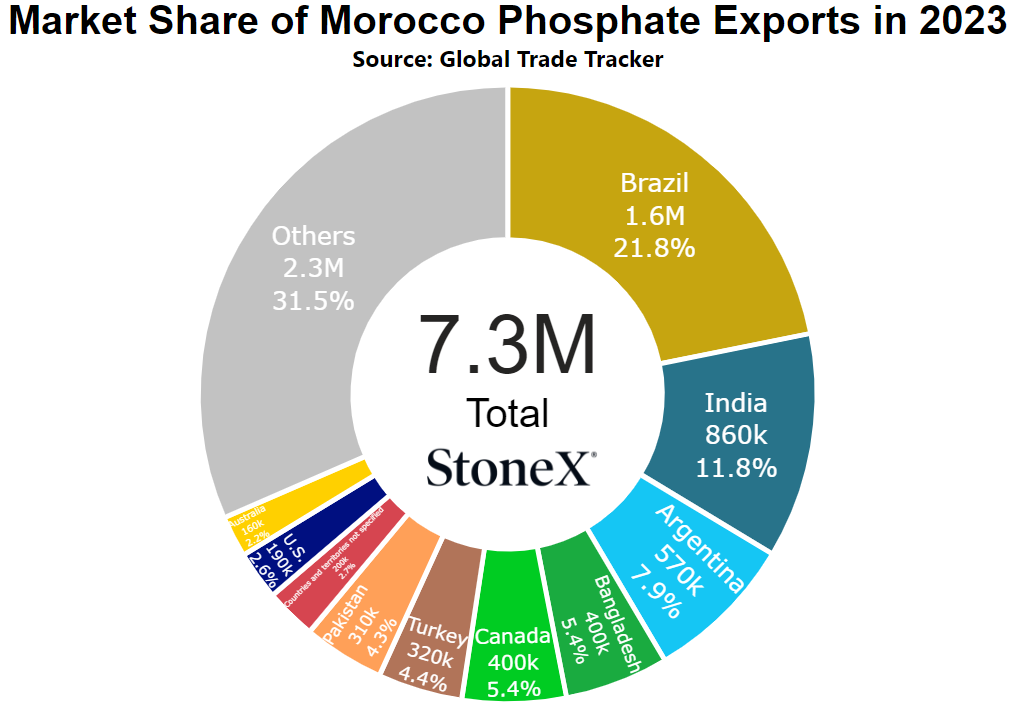
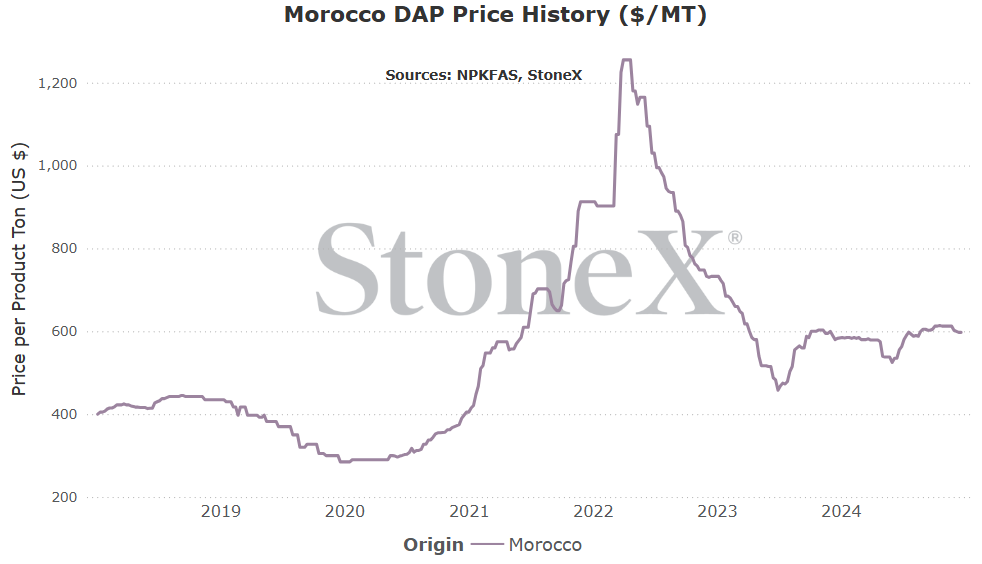
Morocco DAP price comparison
Number 1 global exporter in 2022
Price comparisons:
Vs 30 days ago - -2% or approximately $15 lower
Vs 90 days ago - -1% or approximately $5 lower
Vs 6 months ago - 8% or approximately $43 higher
Vs 1 year ago - 3% or approximately $15 higher
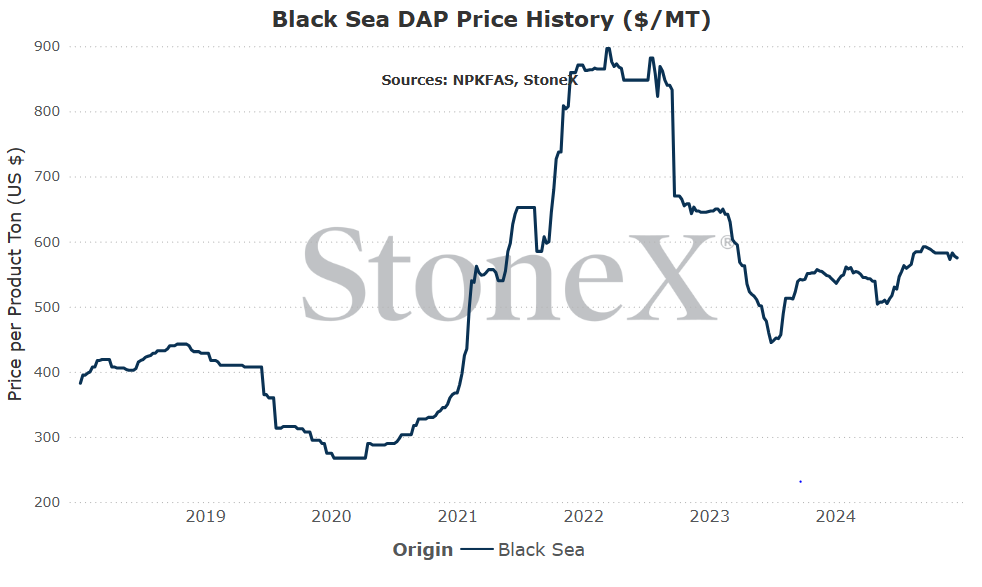
Black Sea DAP price comparison
Number 3 exporter of DAP/MAP in 2022
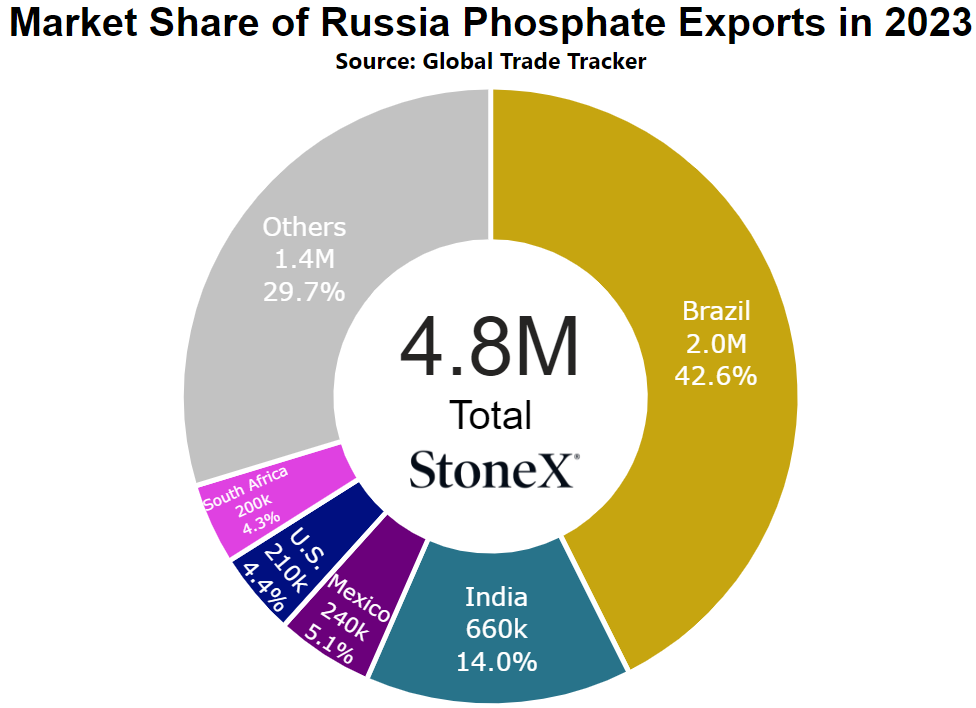
Price comparisons
Vs 30 days ago - -1% or approximately $8 lower
Vs 90 days ago - -3% or approximately $17 lower
Vs 6 months ago - 8% or approximately $45 higher
Vs 1 year ago - 6% or approximately $33 higher
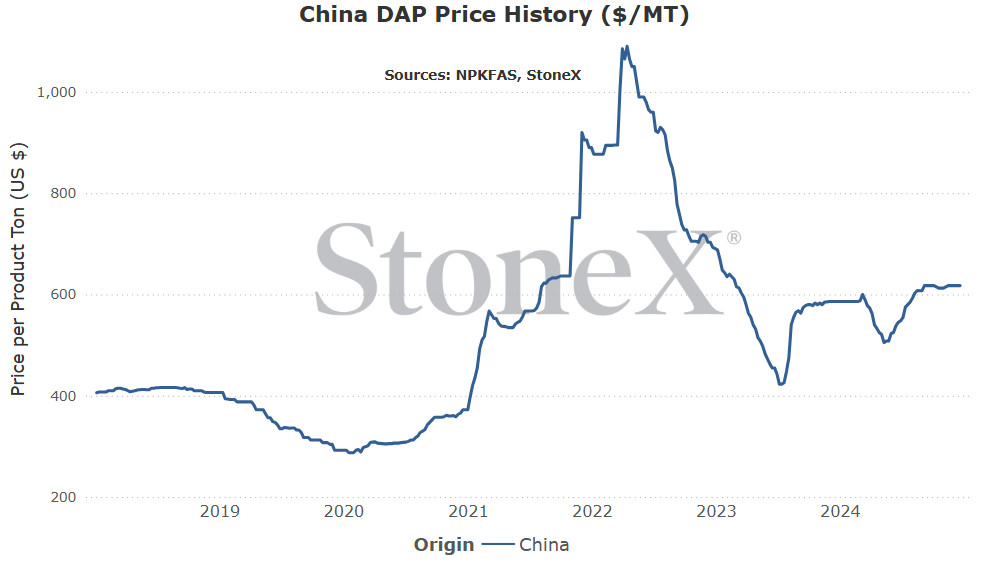
China DAP price comparison
Number 2 global exporter in 2022
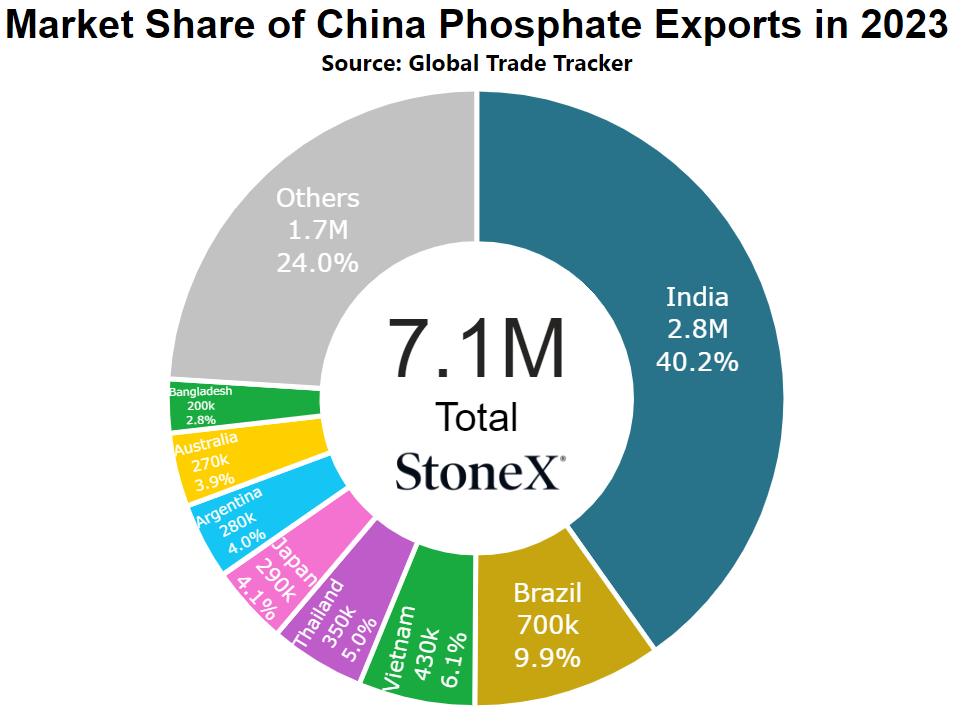
Price comparisons
Vs 30 days ago - unchanged vs 30-days earlier
Vs 90 days ago - unchanged vs 90-days earlier
Vs 6 months ago - 13% or approximately $73 higher
Vs 1 year ago - 5% or approximately $32 higher
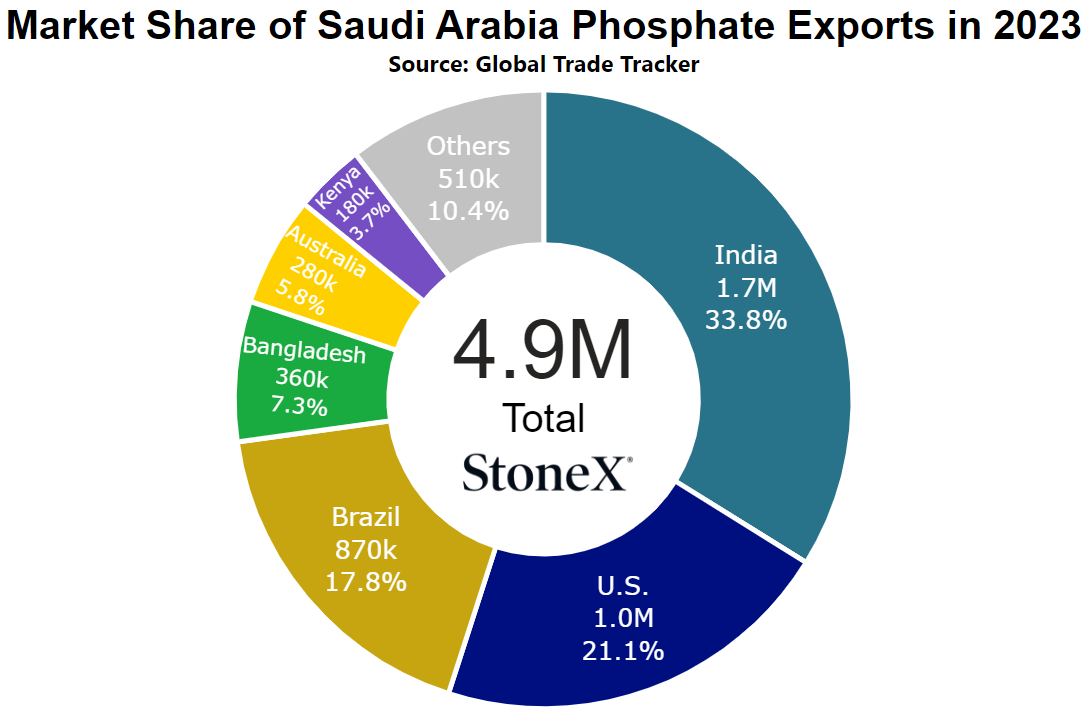
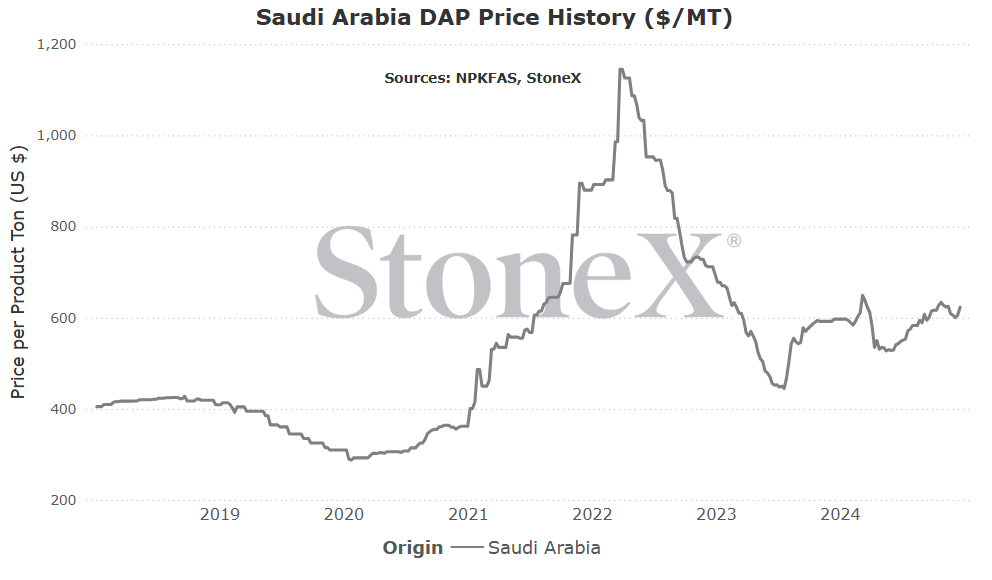
Saudi Arabia DAP price comparison
Number 4 global exporter in 2022
Price comparisons
Vs 30 days ago - 2% or approximately $14 higher
Vs 90 days ago - 4% or approximately $22 higher
Vs 6 months ago - 15% or approximately $81 higher
Vs 1 year ago - 4% or approximately $26 higher
- Chinese exports stay lower / go lower – one of the biggest factors that have kept global phosphate prices high as been Chinese exports being significantly lower than what is considered normal. As the world's historic export leader, when they scale back, everyone feels it. While 2024 exports have been slightly better than expected, there is a growing fear that trend may flip on its head. It is so feared that some are theorizing that earlier committed sales from China will not be honored. Long story short, there is real concern that China will further restrict exports...and that will be felt.
- India continues to play catch up with government money/subsidies – India is the world's largest buyer of DAP/MAP and they have been low on inventories for much of 2024. While they have made significant gains on building stockpiles, they are still short of comfortable. They would normally enter the new year with approximately 2M tons already in place. This year, it looks like they will enter around 1.2 to 1.3M tons. This should keep them hitting global manufacturers to try and rebuild those stockpiles back to normal.
- Global demand remains solid – typically, high prices cure high prices either by increasing supply or destroying demand. Phosphate production is already maxed out and it isn't easy to find alternative production lines. That puts the focus on demand...which hasn't been affected by high prices yet. We thought we would see farmers scaling back in regions around the world but that has not been the case. Certainly, buying patterns have been delayed as buyers hope for something to change but overall demand still looks solid. The global S&D is still very tight and that is supportive.
- Horribly high phosphate values finally break demand – eventually something has to break...right? If the world finally starts to see demand back off, that could cause some panic which turns into more aggressive selling.
- Chinese exports resume – never say never when it comes to China. Today, most of the belief lies in that Chinese phosphate exports will get even lower than they were in 2024. Unfortunately, that is just speculation. When it comes to China, we never know. That means there is still a possibility that their exports could be opened once again which could cause global manufacturers/suppliers to start cutting prices to get ahead of them. While this may not be a high probability situation, it is highly impactful.
- Massive imports/poor weather creates port logjams – this is a bit of a stretch but something that can happen. With importers having to source phosphate from a long distance, it means having to forecast when ships need to arrive to resupply. Sometimes, the import lineup is extremely heavy and mother nature delays application. This combo can create a situation where ports get desperate to move product. This wouldn't be a long term bear event. Would only last as long as the pressure remains...but something that could happen.
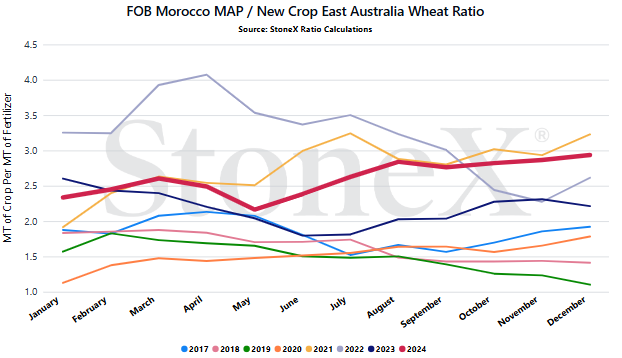
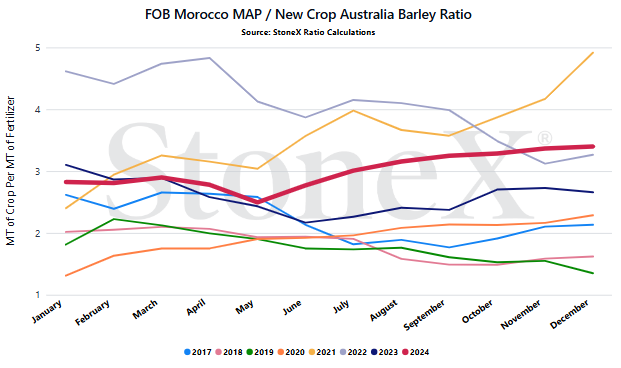
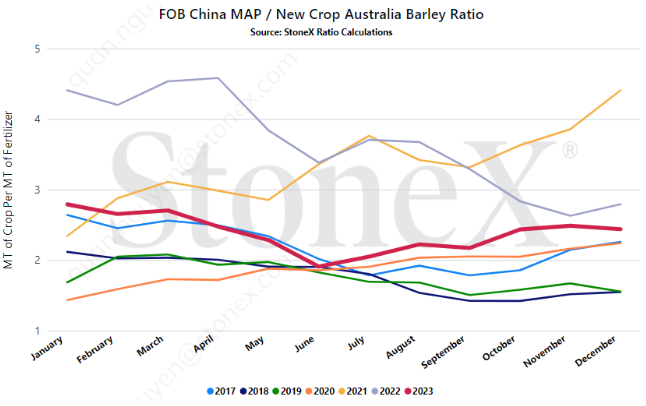
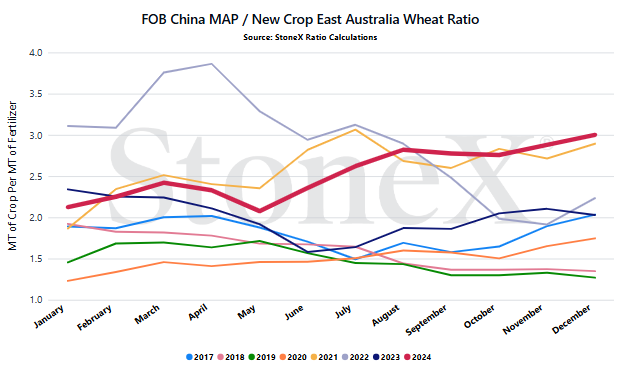
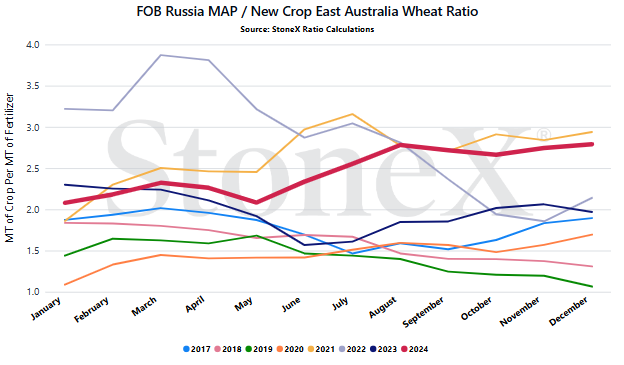
We believe that only looking at the flat price of either grains or fertilizer can be misleading:
-
Only selling grain can hurt you if fertilizer prices rise substantially
-
Only buying fertilizer can hurt you if grain prices fall
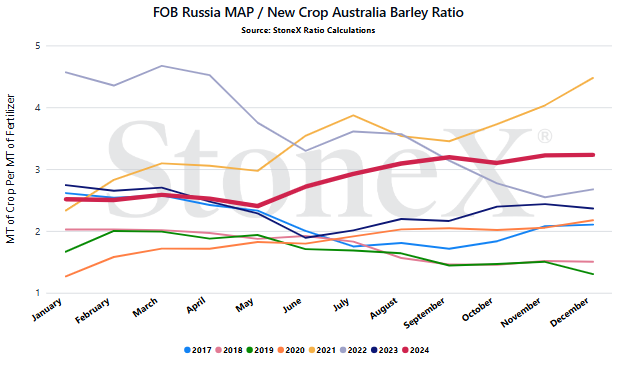
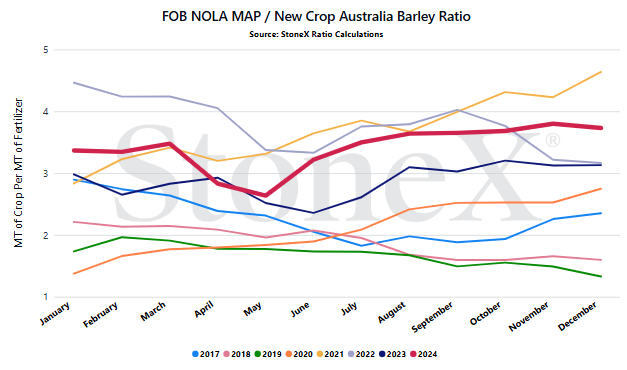
We look at the ratio "value" to get a better indication of where we are or how many bushels of X does it take to pay for 1 ton of fertilizer.
Would you rather:
-
Spend 4 ton of grain to pay for 1 ton of MAP
-
Spend 1.5 ton of grain to pay for 1 ton of MAP
When we compare the current ratio value against recent years, we start to see if we are high or low.
YOUR VALUES MAY LOOK DIFFERENT
- Chinese export flows - until Chinese phosphate exports return to normal, do not expect this focal point to change anytime soon. China used to export around 10M tons per year. January thru November of 2024, they only exported 6.2M tons and there is growing fear that the Chinese government will put bigger restrictions in place to start 2025. This is a big loss for the world. This is several million tons of product missing that should be in the S&D. We always have to remember that China can change on a dime, but today it is looking more likely that they will leave the world wanting. Significantly lower Chinese phosphate exports = significantly higher global phosphate prices.
- Does India feel the need to build stockpiles further - India has played a dangerous game with phosphate in 2024. For a time, they allowed their phosphate stockpiles to drop to dangerously low levels. At one point, they came within a few hundred thousand tons of the low levels that caused farmers to riot in late 2021. Fortunately, the government stepped up their programs and imports resumed. Many put the story to bed thinking it was done...but it is not. Estimates put their current stockpiles at 1.2M vs a historical norm/comfortable 2M tons. India still has tons to buy just to catch up to normal quantities as we start 2025.
StoneX Ratio Calculation
The ratio calculation is derived from Bloomberg historical grains values as well as fertilizer values from StoneX, NPKFAS, and Argus.
The calculation is simply dividing the fertilizer price by each grain price.
All data was sourced from StoneX unless otherwise noted.