I could make this really short and just say that my POV has not been changed...but that wouldn't help everyone new here!
Much of 2024 has been plagued by supply issues. Chinese exports which normally represent around 10% of the global export market have been all but non-existent. European production has been reduced to 75% of normal due Russian natural gas flow stoppages which caused prices to rally and keep 25% production offline. There have been several short-term hiccups around the world.
Even with all of these supply shortages, prices increases have been relatively calm...but I think that is about to change.
Until now, global demand has largely shrugged off tight supplies. There was plenty of time until northern hemisphere spring demand. There was still time for production to return. There was still a lot of calendar for things to change.
From my POV, time is no longer on our side. This is the January edition and spring is only a few months away. Now, buyers are getting backed into a corner and supplies are not improving.
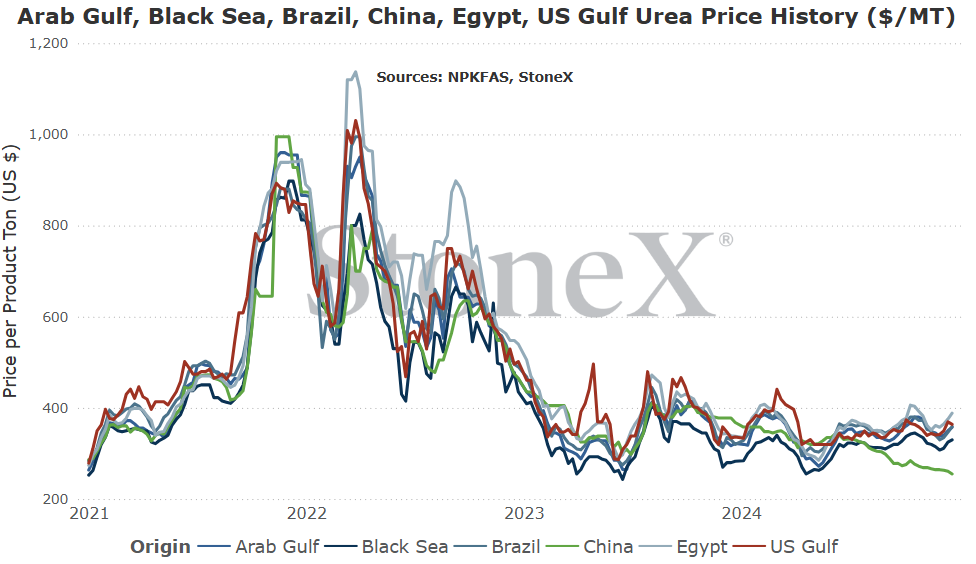
A scarier perspective is comparing today to the values of late 2021/2022. Back then, there was a lot of fear going around the world. There was fear that Russian exports would stop. There was fear that Chinese exports would stop. There was fear that other countries would scale back exports to ensure their own supplies. All of this was supported by healthy grain values. In the end, a lot of the fears did not play out...but they are today and at much lower prices. I would dare say that today's global urea supply situation is worse than 2021/2022 and our current values are almost a third of what they were back then. That is not to say that I expect urea to rally back to $800+ globally. It is more a cautionary tale that prices can certainly go higher.
Unless we start to see major changes/improvements on global supplies, it is hard to see prices going lower. Inventories are more snug than normal and now that demand is stepping forward, that story is starting to actually play out. I will not say there are going to be shortages. That story is always b.s. if you believe that free markets mean that at the right price and timeline, you can find what you need. That said, if this continues to play out as expected, we may not like either of those variables.
2025 urea market outlook/watch points/concerns
I figured the start of a new calendar year should mean ushering in a fresh overall look at the global points we are watching. While this is far from every single point we are watching, these are the major ones that we think will have the largest impacts:
- Chinese exports still slow - calendar year 2024 Chinese urea exports should be the lowest in history. Normally, exports would total somewhere between 5 to 5.5M tons. This year thru November (the most recent month we have Chinese trade data), their exports are just shy of 260K tons. That is not a typo. Based on the information we have, the exact number is actually 259,583MT. December doesn't look promising and there is little to no sign of near term improvement. The global urea export market is typically in the 50 - 55M ton range which means China represents 10% of that market...that means 10% of that export market is missing. Now, with all things China, never count them out. One of the biggest bear factors we have been listing is their unexpected return. It doesn't seem likely today, but it isn't impossible. Regardless, as long as they are absent from the world, the global S&D remains very tight.
- European production still 75% normal - further adding to supply tightness is the ongoing European situation. Production rates have failed to get back to normal since the Nordstream pipeline was shut down and eventually destroyed underwater. European gas values skyrocketed and remain much higher than is historically normal. That means around 25% of European nitrogen production remains offline. For urea, that equates to roughly 3M tons. Not only is this 3M tons of production missing, it also represents a "new" 3M ton buyer as European farmers need to replace the product to raise their crops. Unfortunately, it is hard to see this situation improving near term. First, there is the political climate that is pressuring "old" production facilities. Then there are Russian relations. They are not great and do not look to improve short term. Even if those relations improved, they still have to start work on repairing the Nordstream pipeline. Those repairs would take time if they were on land...but they are not. They are deep underwater. While anything is possible, it is hard to see European production improving near term.
I could dive further into some of my fear points for production/supply:
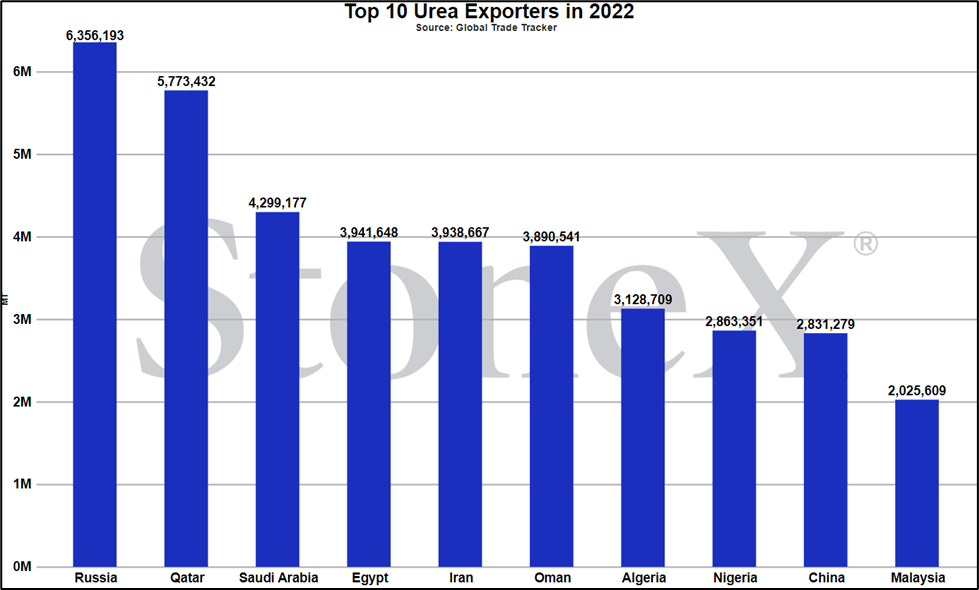
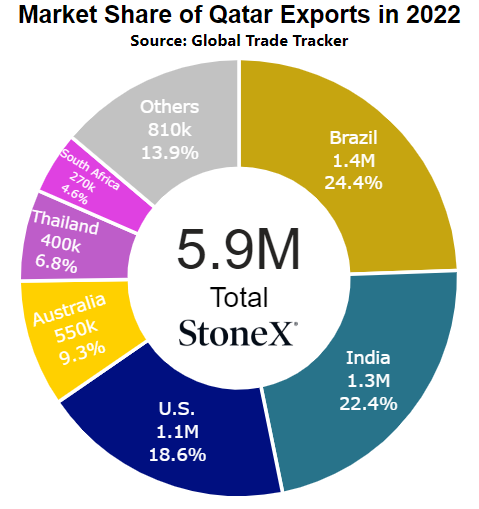
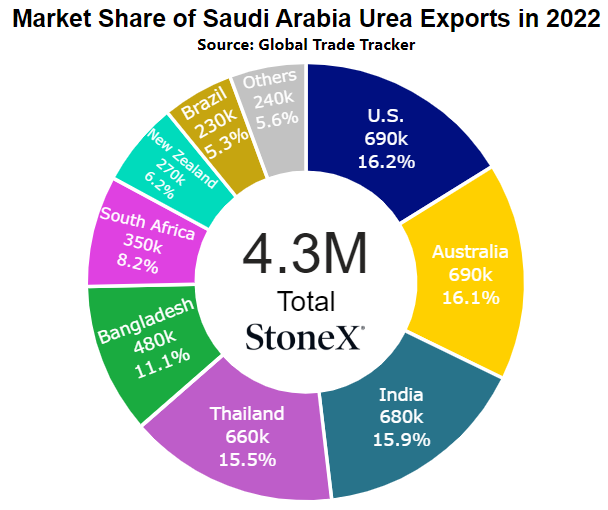
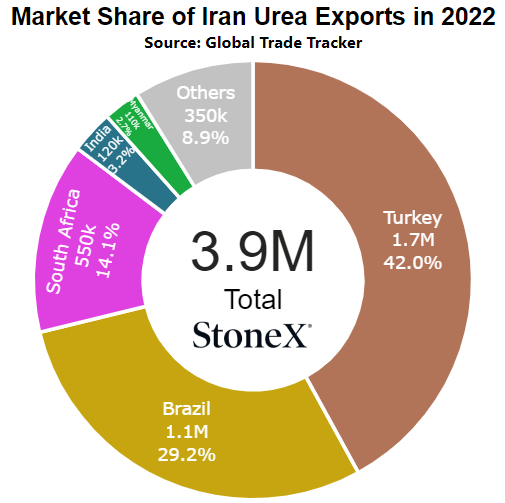
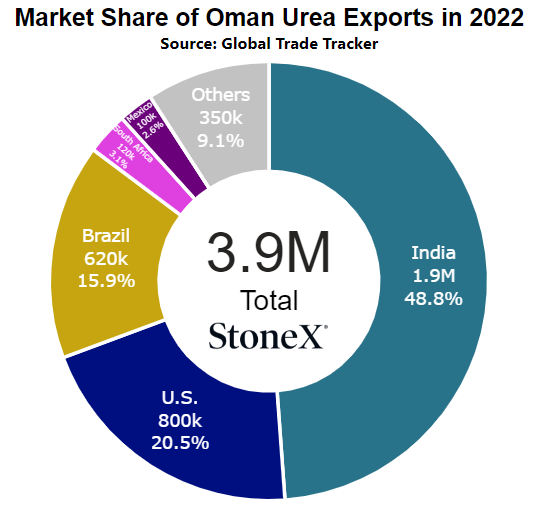
- What if Middle East erupts into war? Middle East/North Africa represents 1 out of every 2 tons of urea exports in the world.
- What if North America has an artic blast that shuts down nitrogen production? This has happened the last couple years and right now, the forecast looks frigid.
- What if shipping lanes start being targeted/attacked again? While this likely wouldn't change the fundamental S&D, it would certainly make things take longer to arrive in some instances. Dangerous this close to spring.
These are the points that are the root reason for my bullishness over the last several months. My fear is that these come to a head as we start 2025. My "feel" is that the market has been worried about moving prices too early due to poor farm economics...but eventually demand is forced forward and forced to face tight fundamentals.
Trust me when I say I would love to be wrong here because being wrong means lower prices for you...I just do not feel like I am.
India purchase tender falls WELL short of needs/wants
I'll be honest, I'm a bit ahead of myself on this story.
In order to get this edition done and sent out this week, I'm having to make some predictions on what I think will happen.
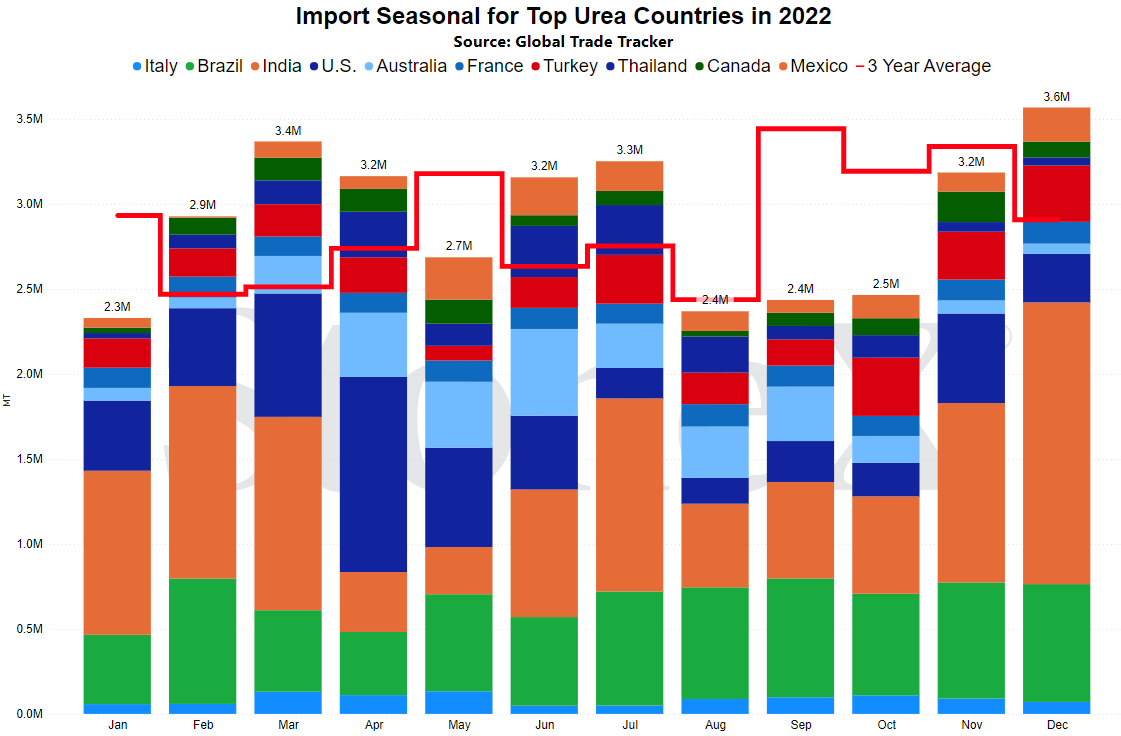
That said, in the last month, India announced yet another urea purchase tender. It was not a surprise to many people. While India has been trying to say that they were going to be self sufficient in 2025, the numbers never added up. We certainly believe that their import needs are lower than historic norms due to increased domestic production, but that increase still fell short of their annual needs.
Their purchase tender details were interesting:
- Looking to secure 1.5M tons (1M for west coast ports / 500K for east coast ports)
- Shipment period going thru February (relatively long shipment period with goal of lowering price ideas)
This could have been a big tonnage tender and that was our expectation...until we saw the offer breakdown.
India tender operate differently than most the rest of the world. Rather than just buying all the tons they need at all the different offered values, offers must drop their price to the lowest price offered to each coast. That lowest price is referred to as the "L1". Again, normally, you have a lot of tons that are offered at relatively close prices to that L1 due to the fact that the market has a general sense of where price ideas are. The success/failure of the tender falls to whether the higher priced offers are willing to drop their price to participate. If they all fall all over themselves to sell, it indicates the world is long supply and bearishness can be expected. If many opt to not meet the L1, it indicates that they see better/higher priced sales opportunities in the near future.
Well, there was nothing normal about either coast L1.
For the west coast, there was a $12 difference between the L1 and the next lowest price offered. I am assuming that most of the offers will refuse to participate and as such will force India to consider another tender announcement in the coming weeks.
For the east coast, there appears to be a typo. The L1 price was set at $299...the next lowest price offered was $385. It appears that the offer should have been $399, a typo was made...and now it sounds like India is holding that low price offers feet to the fire. That will end up being a steal for India, but it will mean that is likely going to be the only purchase they make for east coast ports.
My expectation is that when this thing shakes out (I'll update if we get the info before I send this out), India will not even reach 250K tons secured vs their original goal of 1.5M tons. That should mean India being forced to reengage the global market...who will be coming off of what they feel is a win. It will also mean India is reengaging the world as the rest of the Northern Hemisphere starts stepping forward for their own spring needs. This situation, coupled with ongoing supply problems with China/Europe, sure feels like it is going to support price ideas.
January 2 update: it looks like NFL/India is only going to secure 187K tons of urea on this tender...and may not get that many tons. The west coast L1 and one other offer are heard to be signing contracts. The east coast may very well get nothing. The L1 for the east coast does not sound like they are going to honor their offer that was a typo/substantially below market. I cannot think of another tender where an L1 has refused to honor their offer. It is never boring...
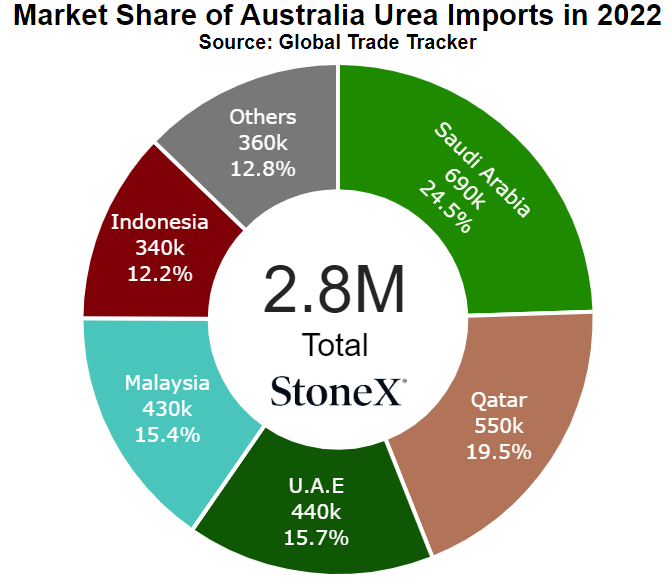
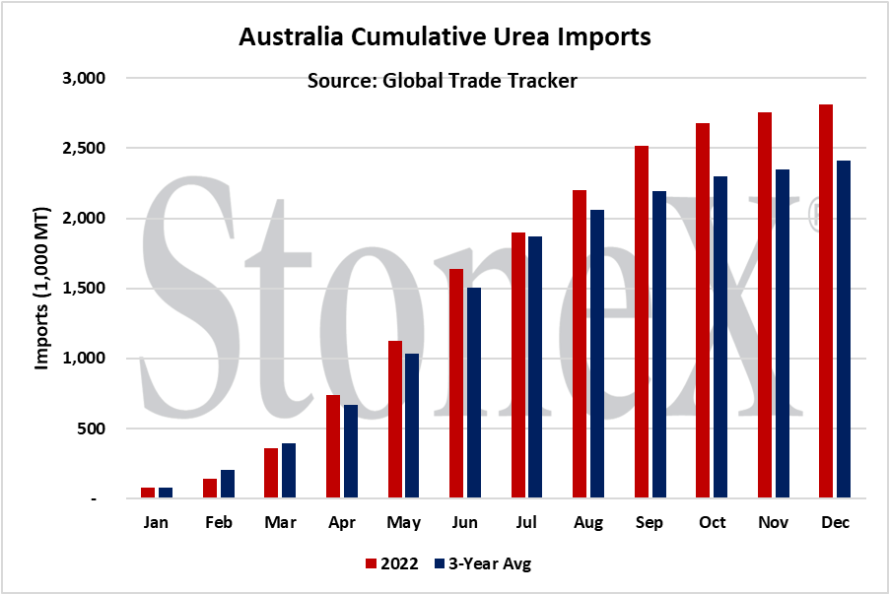
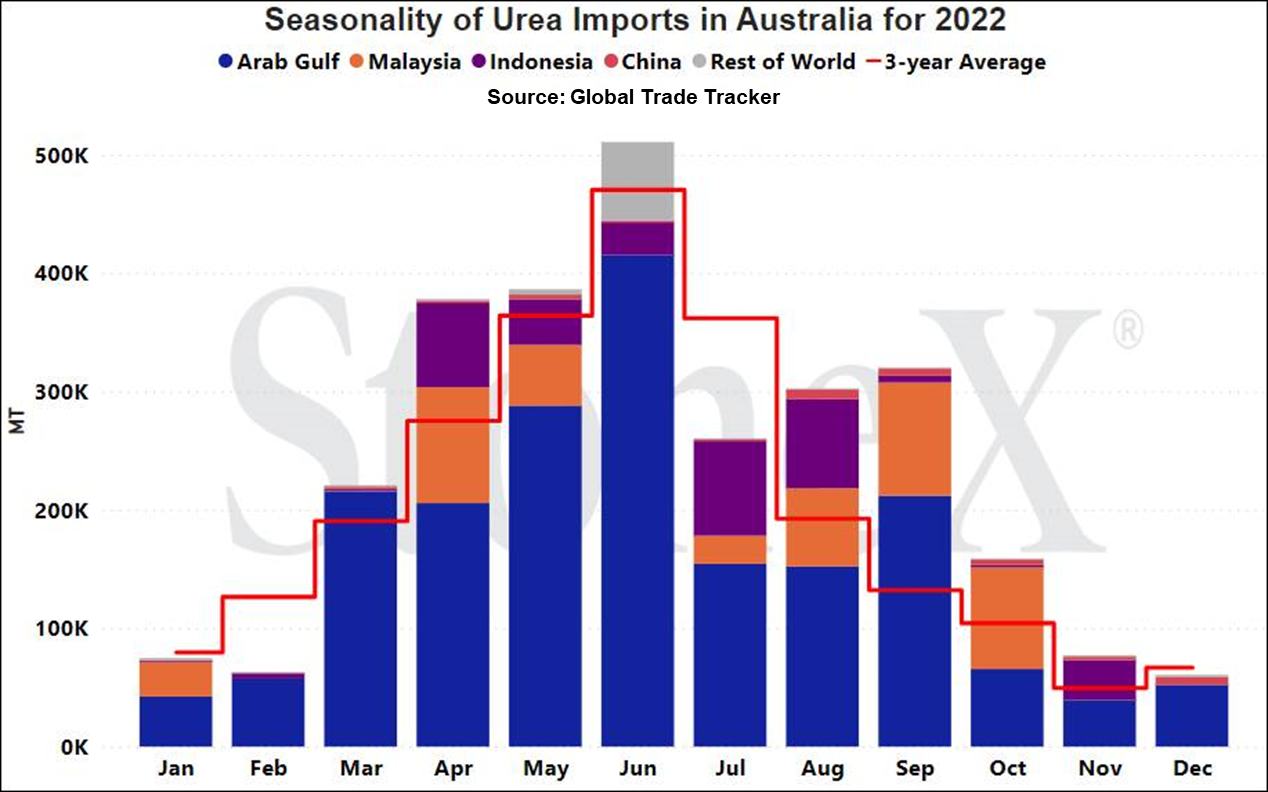
What does this mean for Aussie farmers?
My POV is that India's "failure" on their purchase tender will force them into a near immediate retender that will buoy global values. I think this fresh tender will be competing directly with other global buyers who are preparing for their spring demand season. This surge in demand is likely to have to come to terms with supply shortfalls due to the lack of Chinese exports and ongoing European production losses (not to mention other global production hiccups).
Basically, if this tender creates a bullish global market, then Australian price ideas are likely to follow suit. There is still time before application season. Importers still have time before purchases have to be made so higher values do not have to be locked up...for the moment.
My hope is that we will see global values start to fall as Aussie commitments need to be made...but the timing may be tight. The timing might end up not working out.
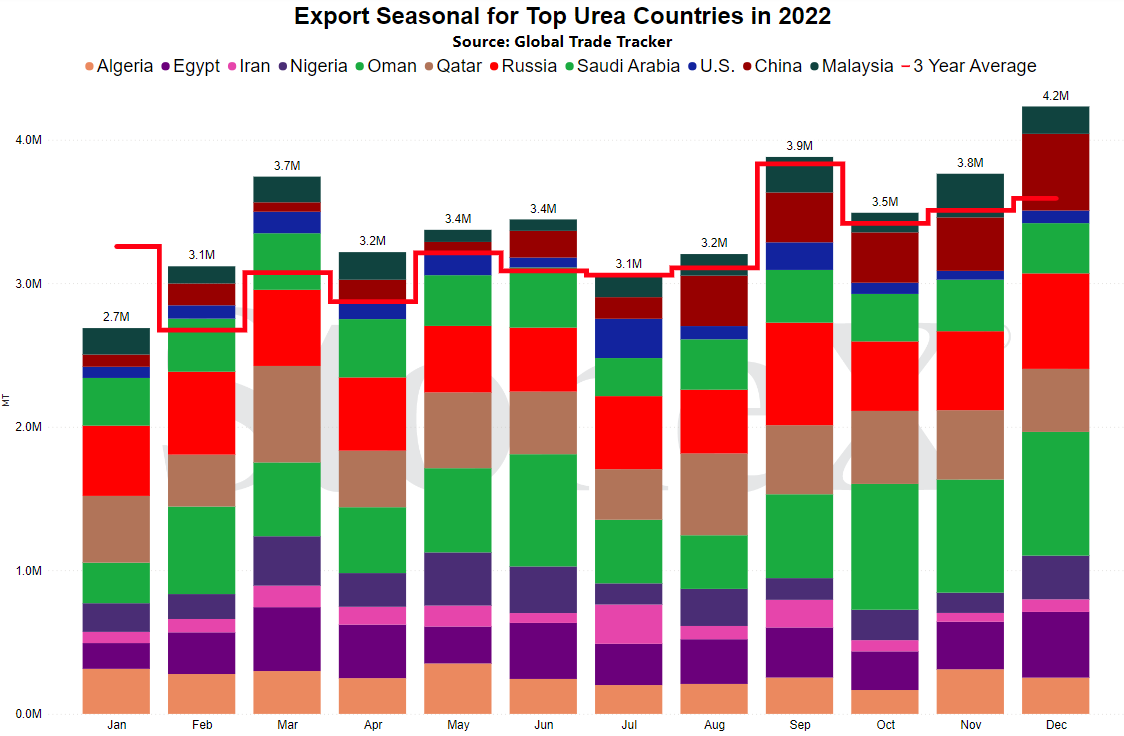
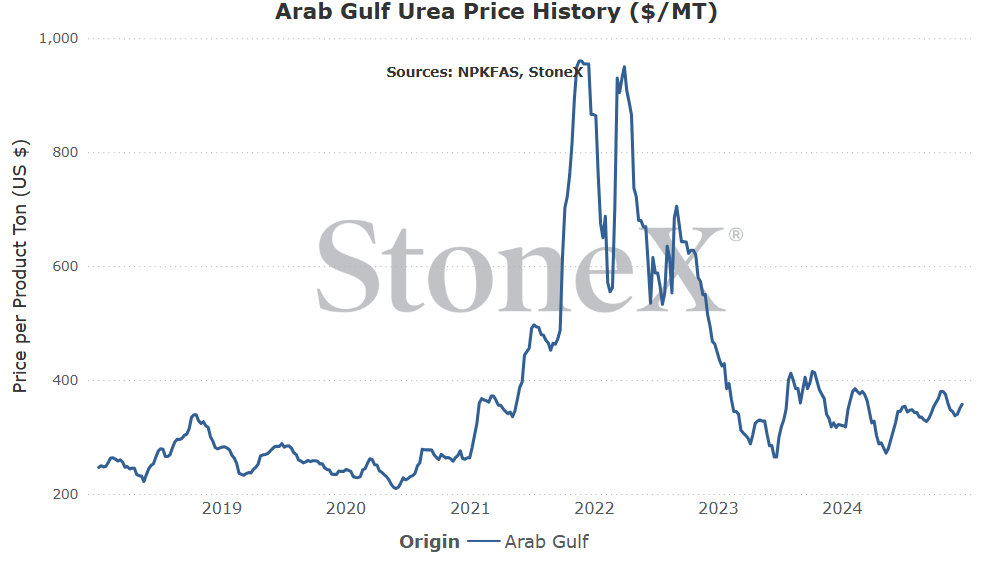
Number 1 exporter (as a region, not as individual nations)
Vs 30 days ago - 4% or approximately $13 higher
Vs 90 days ago - 5% or approximately $16 higher
Vs 6 months ago - 5% or approximately $18 higher
Vs 1 year ago - 11% or approximately $36 higher
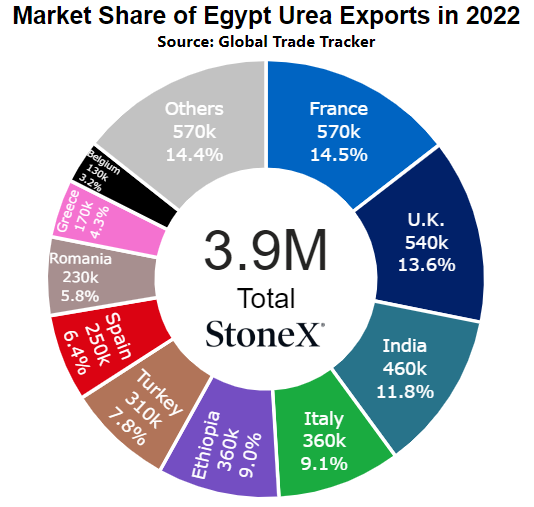
Egypt
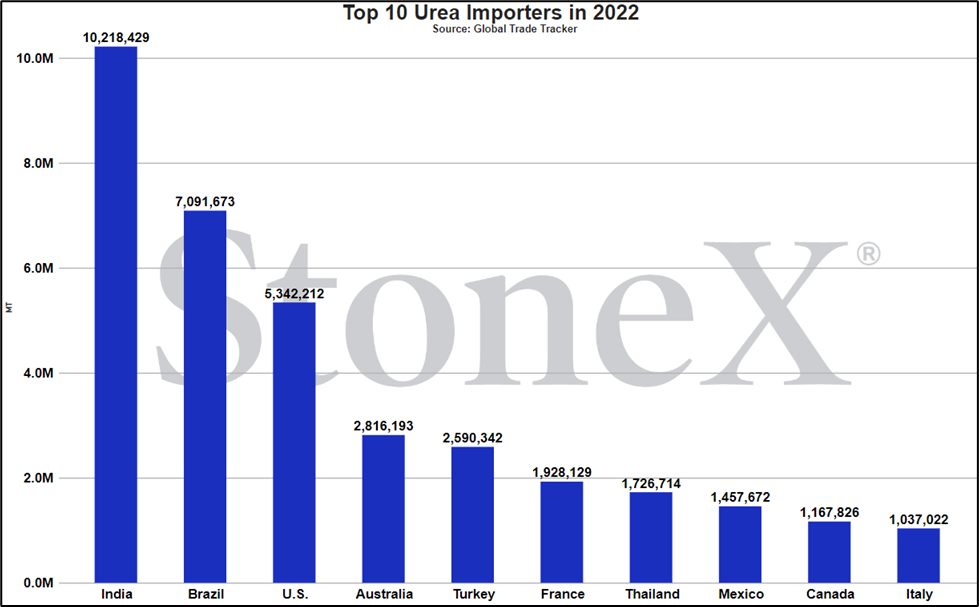
Number 4 global exporter in 2022
Price comparisons
Vs 30 days ago - 7% or approximately $27 higher
Vs 90 days ago - 7% or approximately $25 higher
Vs 6 months ago - 10% or approximately $36 higher
Vs 1 year ago - 15% or approximately $51 higher
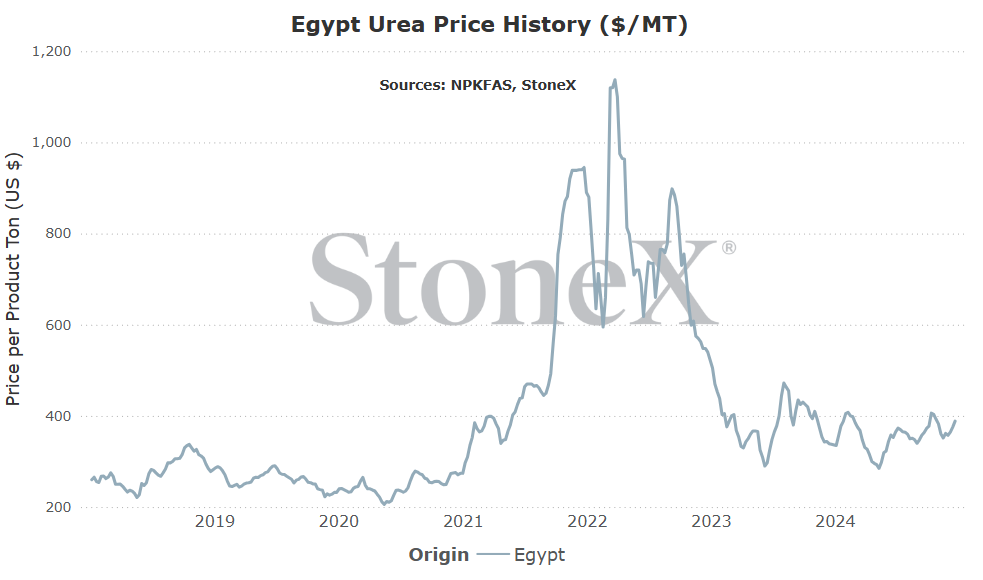
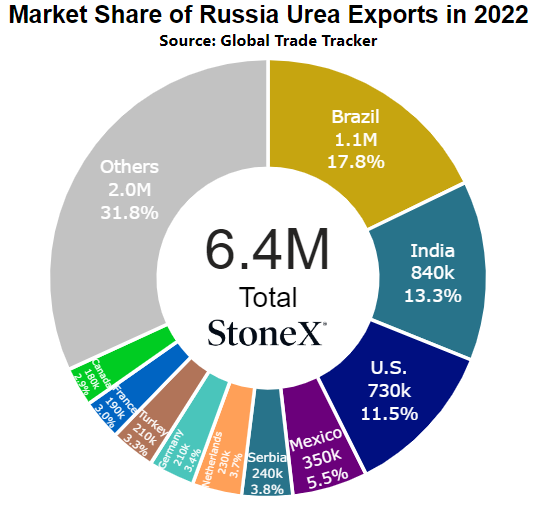
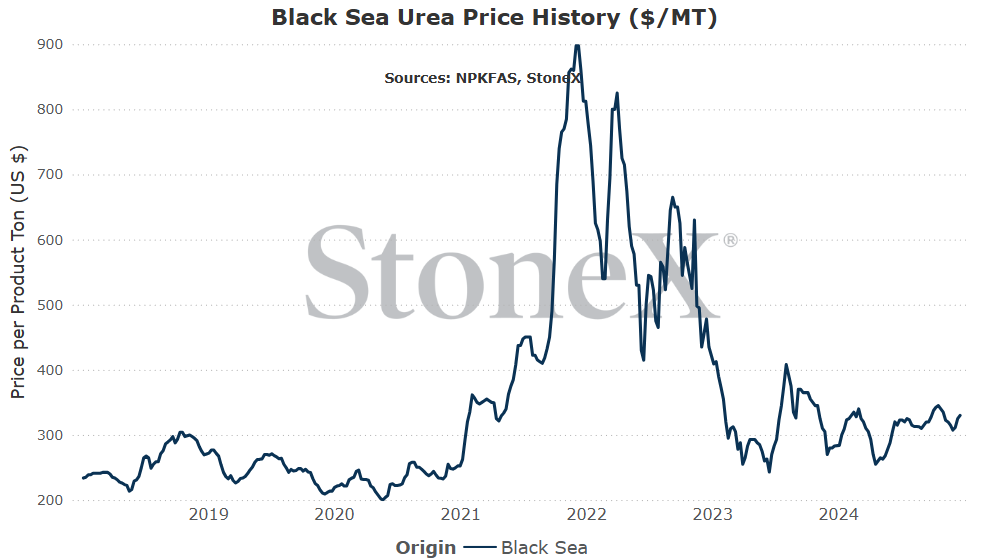
Black Sea
Number 1 global exporter in 2022
Price comparisons
Vs 30 days ago - 5% or approximately $15 higher
Vs 90 days ago - 3% or approximately $10 higher
Vs 6 months ago - 5% or approximately $15 higher
Vs 1 year ago - 17% or approximately $48 higher
China
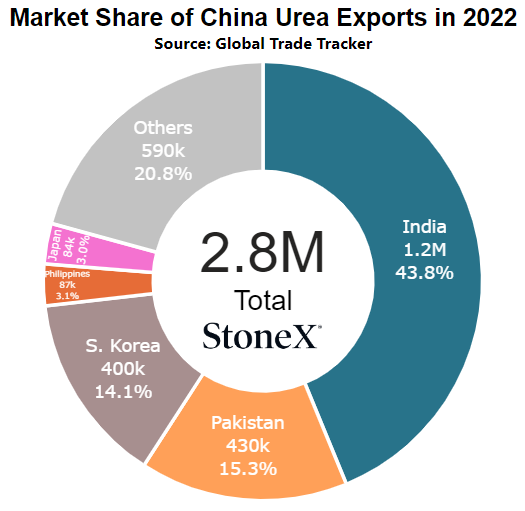
Number 9 global exporter in 2022
Price comparisons
Vs 30 days ago - -4% or approximately $10 lower
Vs 90 days ago - -8% or approximately $24 lower
Vs 6 months ago - -23% or approximately $76 lower
Vs 1 year ago - -31% or approximately $113 lower
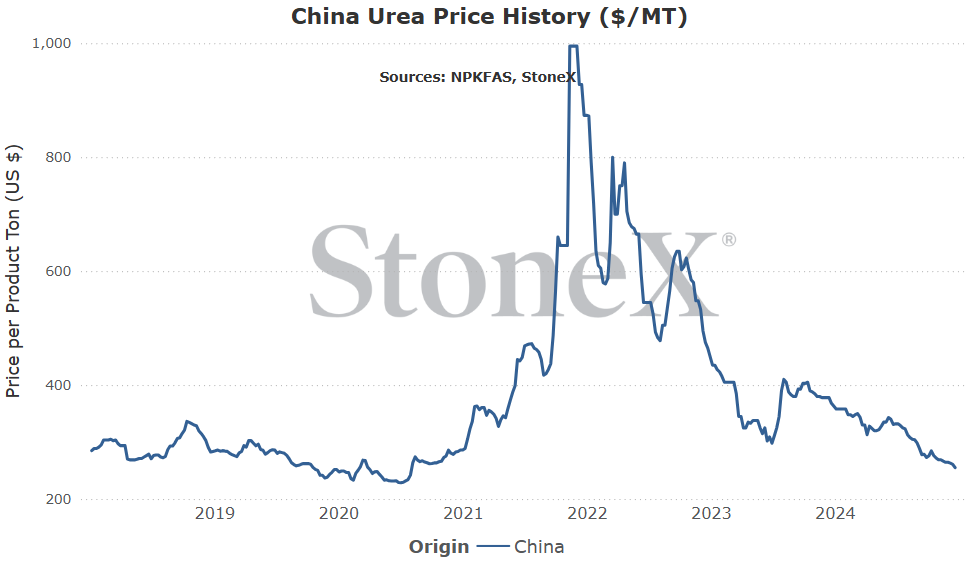
- Chinese exports remain historically low - unfortunately, most everything that I see today points to this story. 2024 Chinese urea exports have not only been low, they are historically low. I cannot remember ever seeing them like this and it doesn't look like it is improving near term. China typically exports 5 to 5.5M tons per year and for 2024, I doubt they hit 500K. That is 5M tons missing from a 50+M ton global export market. Doesn't matter how you cut it, losing that many tons keeps the S&D tight...and price ideas high.
- Pent up demand has no choice but to come forward - India just fell flat on their purchase tender. Now, a lot of that has to do with excessively low L1's being set for each coast but the result is the same. The northern hemisphere needs to start making spring supply preparations very soon. There is a lot of global demand that needs to step forward which could create a surge in competition for a limited amount of tons.
- Australia being "out of urea season" means higher reliance on global values - a lot of domestic facilities are either mostly empty or filling up with phosphate in preparation for the looming application season. Urea imports will not arrive for a time which means there are not a lot of "cheaper" tons sitting around looking for homes that can keep price ideas lower. Australia is currently in a position where it is going to be reactionary to global price moves...and the global outlook is bullish.
- China does a 180 on exports - there are some that are still sticking to this belief. While I struggle with the possibility of this happening, I sure am not going to be one that guarantee's it will not happen. I've learned that painful lesson. Still, if we suddenly see Chinese exports resume, it changes the world. They are the player you do not want to go against. If they suddenly started to export, it would not fundamentally change the global S&D on day 1...but it sure would change the emotion/market outlook. China has that kind of power in urea.
- Australia has time/could wait until global values calm - there is still a decent amount of calendar between today and our next urea application cycle. That gives farmers/retailers/importers time. The hope is that this current global situation will ease as we move into later Q2. That gives a chance for importers to hold out for hopefully lower prices before making commitments.
- Incoming Trump administration brings peace - there is a lot of fear in some pretty important nitrogen production regions of the world. Russia exports a lot of nitrogen...and continues to invade Ukraine. Chinese exports have been extremely low which could be their stockpiling in case they decide to invade Taiwan. The Middle East continues to be a tinder box. Trumps 1st term saw the world much more at peace than in a long time. If he can replicate that in his 2nd term, then the global urea market no longer needs to fear some of these situations. Taking that war fear premium off the table could help usher lower values of urea.
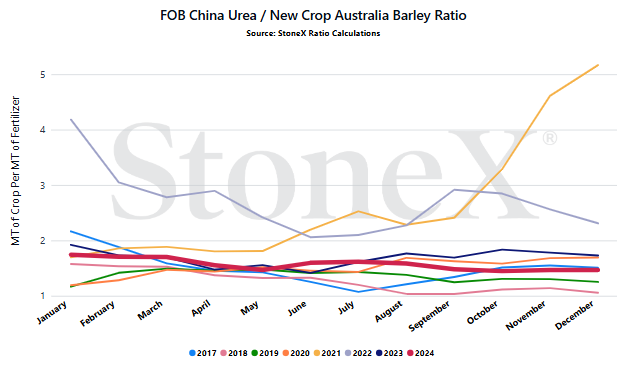
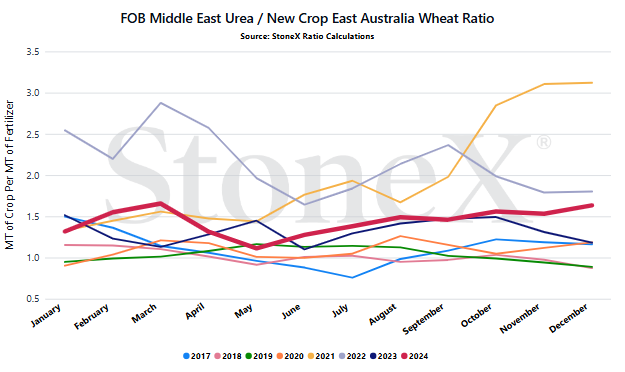
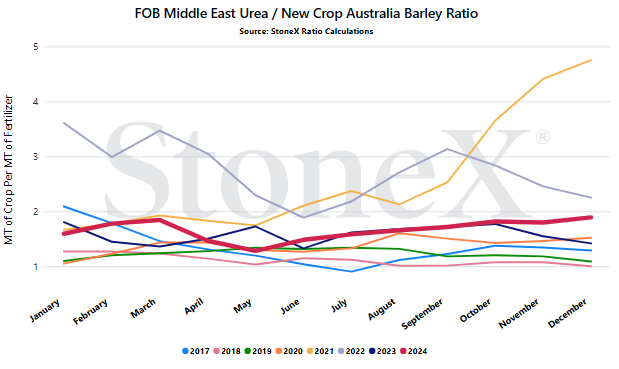
We believe that only looking at the flat price of either grains or fertilizer can be misleading:
-
Only selling grain can hurt you if fertilizer prices rise substantially
-
Only buying fertilizer can hurt you if grain prices fall
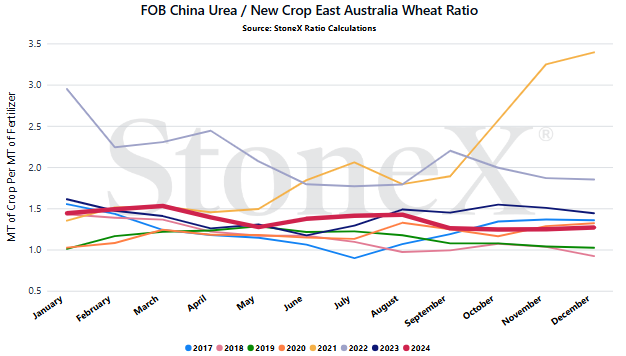
We look at the ratio "value" to get a better indication of where we are or how many bushels of X does it take to pay for 1 ton of fertilizer.
Would you rather:
-
Spend 135 bushels to pay for 1 ton of urea
-
Spend 55 bushels to pay for 1 ton of urea
When we compare the current ratio value against recent years, we start to see if we are high or low.
YOUR VALUES MAY LOOK DIFFERENT
This is a work in progress section! We plan on looking at the relationship between Aussie grains and global price points (and hopefully Aussie specific locations, though that data is hard to secure, very protected). Big reason why we are still in the "trial" stage of this newsletter!!!!
- Chinese export programs - well, we got China's November export data for urea and it didn't do anything to help the urea story. Only a few thousand tons were reported to have left Chinese territory, further pushing the narrative that their export flows will remain slow for the time being. Now, as with all things China, we know they can change quickly. Some still say that domestic storage is packed full and they will have little choice but to start exporting. Others still say that their demand has jumped as the government has challenged farmers to increase food production to become self sufficient. Regardless, we have to consider the world moving forward without China until they prove otherwise. They will leave a 5M ton hole in the 50 - 55M ton global urea export marketplace for 2024 and the early signs are that 2025 will start much the same. That hurts...and keeps prices supported.
- How India reacts to purchase tender failure - by all accounts, it looks like India's recent urea purchase tender is going to be an abject failure. They were looking to secure 1.5M tons between their west and east coast ports. Today, it looks like they are going to struggle to hit 250K tons. So how will they respond? We know that they have to return to the buying portal very quickly. Unfortunately for them, they will need to do that with a shorter timeline and sellers around the globe know it. They will also be returning to buy and having to compete with a lot of other global buyers which lends support to manufacturers/sellers. Things can change but it sure looks like India is going to help move global price ideas higher.
StoneX Ratio Calculation
The ratio calculation is derived from Bloomberg historical grains values as well as fertilizer values from StoneX, NPKFAS, and Argus.
The calculation is simply dividing the fertilizer price by each grain price.
All data was sourced from StoneX unless otherwise noted.