Morning Ferrous Markets
Market Overview
The global steel and iron ore markets are currently shaped by a mix of economic policies, supply-demand balances, and geopolitical influences. This summary examines the recent trends in the Singapore iron ore market, driven by China's economic measures and strong demand; the Turkish steel scrap market, characterized by stable prices amidst cautious buying; and the US HRC market, where futures prices reflect mixed sentiments with cautious optimism in the near term and bearish positions among managed money participants. Each of these markets provides a unique perspective on the broader steel and iron ore industry dynamics.
Upcoming Data Releases


North American (US) HRC Steel Market
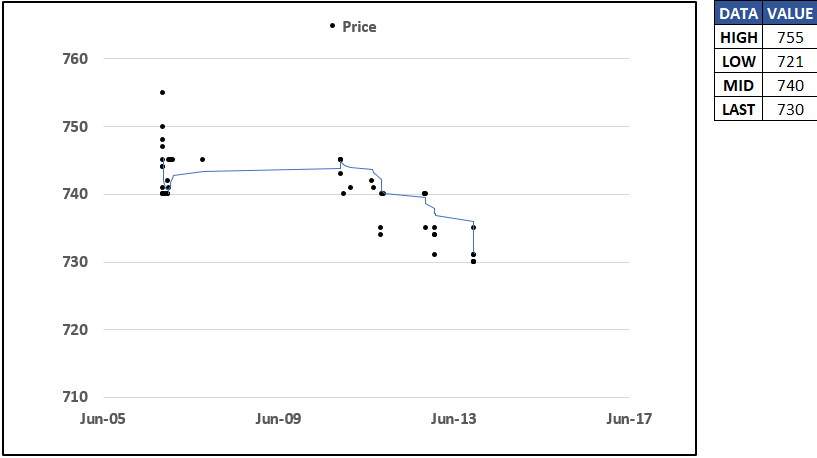
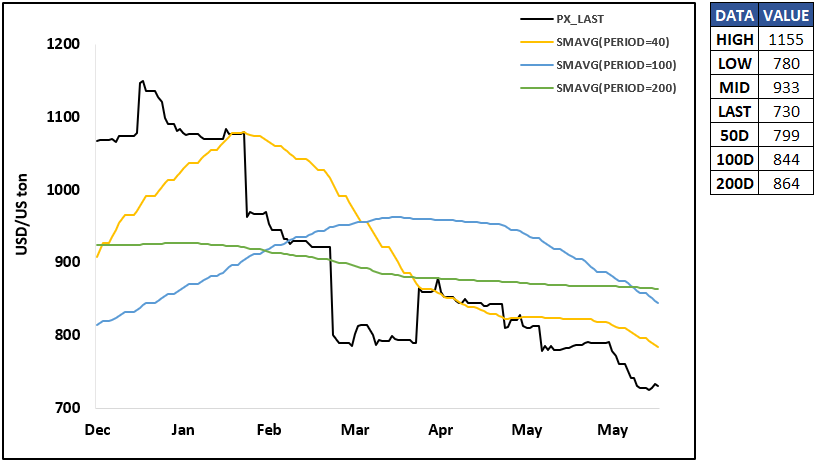
The overall trend in the US HRC Steel market suggests a slight upward movement in the near term, particularly noticeable in the July and August contracts. However, prices for some months in early 2025 indicate potential softening. The CFTC report highlights significant activity in managed short positions, outnumbering managed long positions, resulting in a net managed position of -2,728, indicating bearish sentiment among managed money. Swaps and producer positions also reflect cautious market behavior, with mixed expectations about future market directions. The overall open interest has decreased, suggesting reduced trading activity or a wait-and-see approach among traders. The increase in non-commercial net positions and the decrease in commercial net positions indicate that speculators are more bearish compared to commercial participants. In conclusion, the US HRC Steel market is experiencing mixed signals, with cautious optimism reflected in short-term futures prices and a bearish outlook from managed money positions. Market participants are likely weighing ongoing economic conditions and demand forecasts, especially from key industries such as construction and manufacturing.
HRC Front Month 3 Day Trend
StoneX & Bloomberg
HRC Front Month 6 Month Price Trend
StoneX & Bloomberg
Chinese Steel & Iron Ore Markets
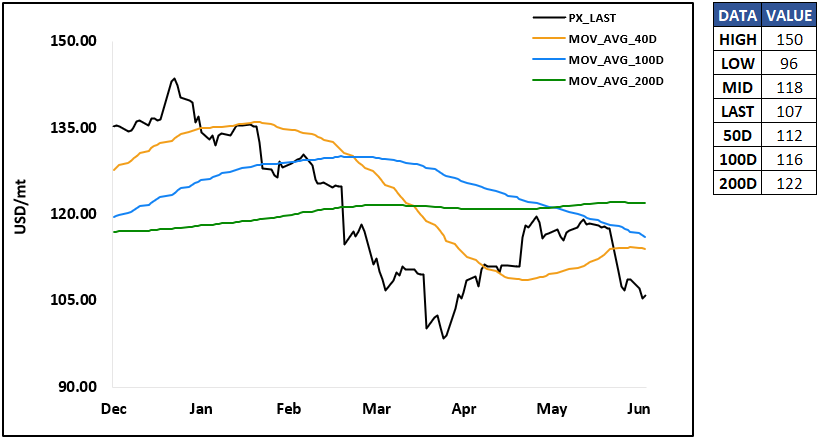
Iron ore prices have continued to rise from their lowest level since April, driven by China’s efforts to alleviate its property crisis and strong demand from the country. The People’s Bank of China held a meeting to promote relending policies for affordable housing and encouraged state-owned companies to purchase unsold homes. Last month, the central bank introduced a 300 billion yuan ($41 billion) program to assist local governments in buying excess inventory from developers. The meeting indicated clear support for reducing housing inventories, with expectations of accelerated destocking in the third quarter, according to Mysteel. This recovery in the property market is expected to boost steel consumption in China, the world’s largest consumer. Additionally, Brazilian miner Vale SA remains positive about China’s demand outlook. Iron ore shipments from Australia, including Port Hedland, dropped to 15.1 million tons in the week ending May 31, down from 18.1 million tons the previous week. Iron ore futures in Singapore rose 1.2% to $105.85 a ton, with gains also seen in Dalian and Shanghai steel futures.
SGX Iron Ore CFR China (62%) Futures
StoneX & Bloomberg
European Steel and Steel Scrap Markets
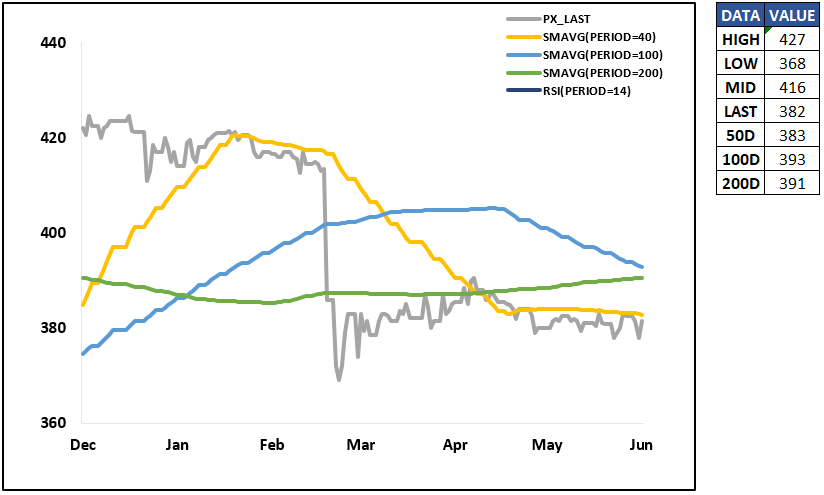
Turkish mills have maintained their domestic scrap buying prices unchanged since last week, with imported scrap prices also stable following recent US-origin bookings. A Marmara mill bought HMS 1&2 90:10 at $386/t and shredded and bonus scrap at $404/t cfr, slightly higher than early last week but consistent with recent EU-origin deals. European suppliers offered HMS 1&2 80:20 at $384-386/t cfr, while Turkish mills aimed for prices below $380/t cfr. Market activity slowed ahead of the Fest of Sacrifice holiday, with few mills inquiring about scrap. Despite firm scrap prices, mills refrained from lowering rebar prices below $580/t fob, though some deals at $575/t were reported but not confirmed. Turkish shipbreaking scrap prices remained steady at $375-385/t delivered. Turkish rebar demand saw little recovery before the holiday, with official quotes at $580-590/t fob for rebar and $590-600/t fob for mesh-quality wire rod. Israeli buyers faced higher European rebar offers due to the absence of Turkish supply. Yemeni demand slowed, and EU sales did not meet expectations. Some mills are using lower-priced billet to produce cheaper rebar, selling at $570-575/t fob, but others cannot afford below $580/t fob due to current scrap costs. Scrap prices stand at $384/t cfr Turkey for HMS 80:20, with the Turkish lira closing at 32.29 per dollar. In the Americas, a recent Turkish rebar sale to Jamaica concluded at $590/t cfr. The domestic market entered a holiday mood, with offers unchanged at $585-610/t ex-works and discounts available from all mills.
Turkish Scrap 1st Month Futures
StoneX & Bloomberg
Current Prices