
FX Weekly Overview (Brazil Issue)
Dollar expected to reflect Brazil's electoral race, US CPI, and IPCA

Leonel Mattos
- Currencies
By: John Kicklighter, Head of Market Research
Traffic in the Strait of Hormuz is still unclear, but President Trump’s pronouncement of a close end to the war charged markets last week. With reasonable concerns over the fragile ceasefire, markets have shown they are still ready to indulge a risk appetite run. Can it last?
Talking Points:
The headlines ushering the markets into the close Friday this past week were encouraging on their face. US President Donald Trump posted before the US open that the “Strait of [Hormuz] is fully open and ready for full passage” preceding an announcement from Iran. Though the leader has espoused optimistic interpretations of the negotiation process between the US and Iran before, a statement to that effect from Iran and reports of ship traffic traversing the strait was enough for already buoyant markets to extend the week’s stretch to fresh record highs for the likes of the S&P 500 and Nasdaq 100.
As the day wore on, the President made additional definitive statements of progress and victory (eg ‘Iran has agreed to never close the Strait…again’, that Lebanon was not part of the negotiations and no fees were involved), which Iranian officials directly and indirectly contradicted. However, the markets did not dwell on the future fodder for potential talk breakdowns. In part, that is due to the markets’ fatigue with headline volatility making it difficult to project a fundamental course. We have seen that constant chaos of ‘he said he said’ and ‘promise turning to threats’ curb search interest in “Iran Conflict”, “Ceasefire” and “Oil Prices” a week prior. So, the market’s return to speculative focus is not a shock.
Chart of News Search for "Iran Conflict", "Ceasefire" and "Oil Prices" (8-Hour) 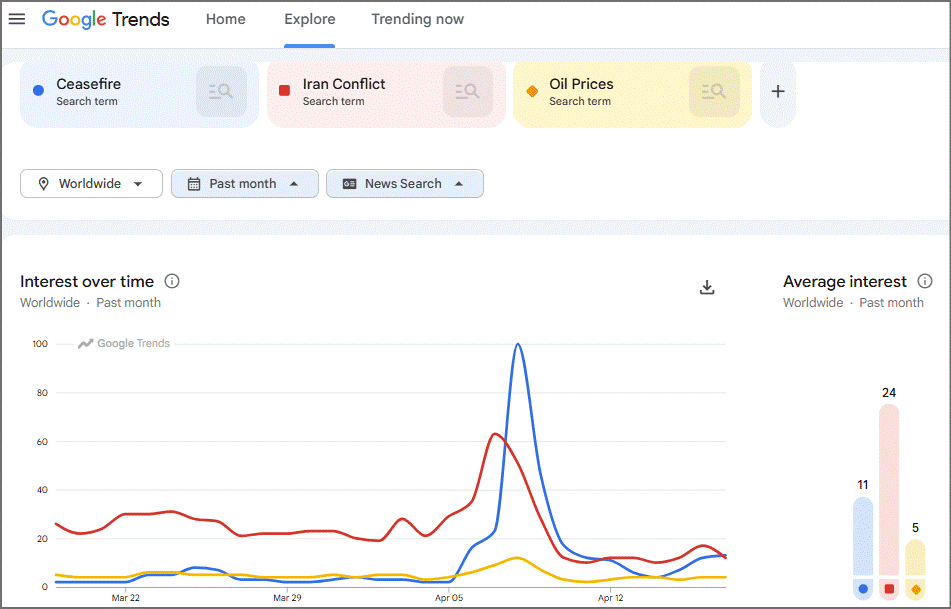
Source: Google Trends
Though the terms behind the ceasefire may be fragile, the movement of traffic in the critical shipping lane nevertheless does bode positively for market conditions. More specifically, it takes some of the tension out of extreme energy prices. At one point, Friday’s retreat from US-benchmark WTI crude oil prices was the largest single-day drop since 2020. The retreat eased up modestly before the close but the ultimate two-week drop of -25 percent was the largest since crude prices went negative. With the prevailing futures price around $80/barrel, the economic implications are significantly less severe than in the $100s. However, these are still meaningfully elevated prices; and the past weeks’ buoyancy at such lofty levels will have a carry through effect. We will feel the shock in downstream prices, investment, spending and data down the line – even in a best-case scenario. However, the focus at the moment is purely on the relief
Chart of US Crude Oil and Implied Volatility with 1-Day Rate of Change (Daily) 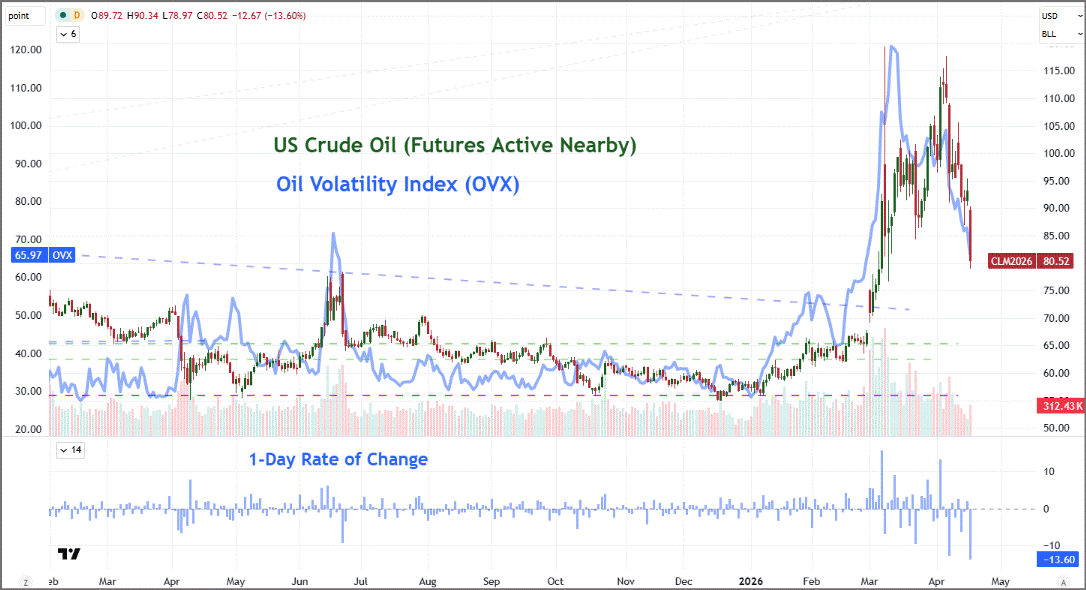
Source: TradingView; NYMEX; John Kicklighter
‘Relief’ is exactly the label I would use to describe the rebound since the recovery began around an uneven ceasefire – and the latest week in particular. There is good reason to remain cautious about the fundamental circumstances surrounding the market’s advance; but there is also a long running, default towards complacency and speculative appetite behind global markets. We have seen moderation in fundamental threats in the past met with an enthusiastic bid aimed at sopping up the discounted premium in markets that were pulled lower by headline-driven uncertainties – the Liberation Day tariff reversal last year was just such an example. In that rush to take advantage of a wave of speculative appetite, there is usually a swell in buying for a range of markets. The wider the bid, it can indicate a less discerning appetite and more feverish (and potentially shorter lived) risk drive
Relative Performance of Various Risk-Oriented Benchmarks (Daily) 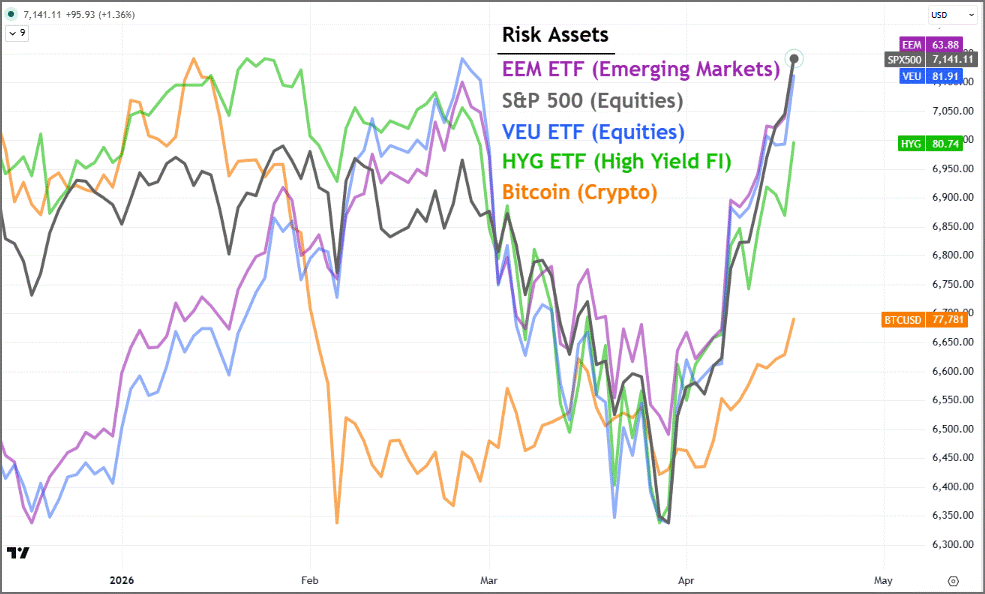
Source: TradingView.com; John Kicklighter
To give perspective on just how intense the risk appetite has been through the turbulent fundamental waters, we can reference the charge behind the Nasdaq 100 – one of the favorite speculative leaders in the preceding fundamental phases owing to its concentrated AI and mega-cap US stock exposure. From the first reports of the US and Israel attacking Iranian military targets on February 28th, the index dropped only -8.1 percent to its trough on March 30th. From that low, the reversal proved far more intense. Over three weeks, the Nasdaq 100 rallied 15 percent. There are only two moves of that magnitude over the past few decades: April 2020 and March 2009. Very notably, these were both examples of ‘speculative loading’ where crises (the pandemic and Great Financial Crisis) charged such extreme leaps. Adding further context to our current move, it was reported by Bloomberg that this was the fastest reversal from ‘oversold’ to ‘overbought’ conditions (11 days) since 1982 and second fastest in modern history.
Nasdaq 100 and 3-Week Rates of Change with Events of 15% Rallies (Weekly) 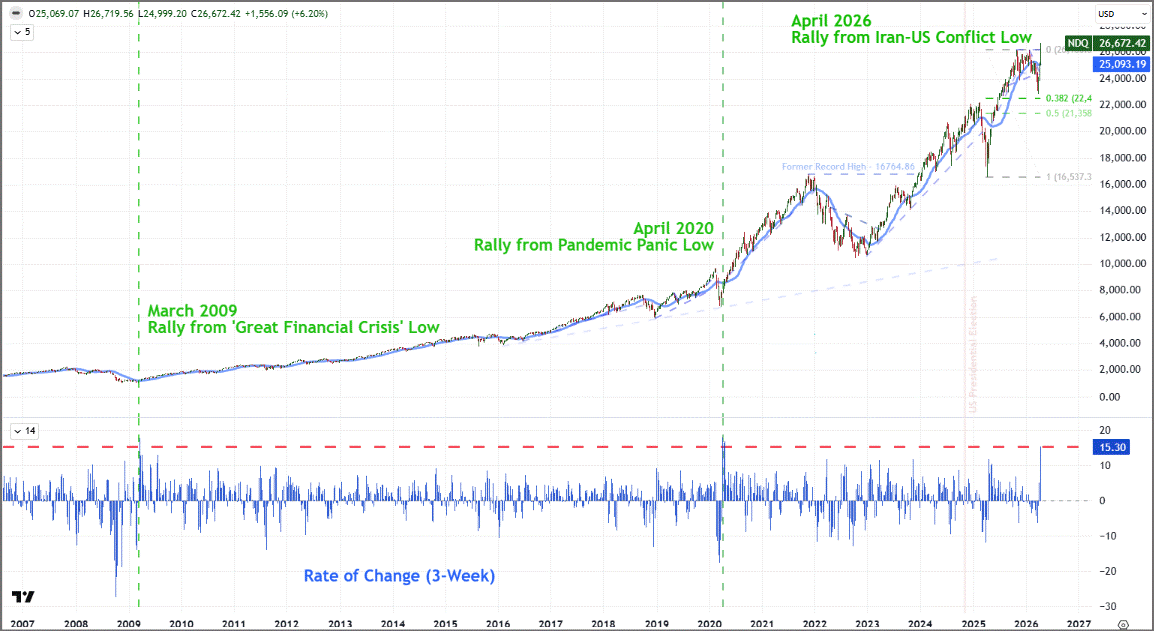
Source: TradingView; John Kicklighter
When we make reference to the other extreme rallies of the past, it is tempting to highlight the initial surges evolved into long-term and extended periods of follow through. However, there are points of contrast in the near term that should be factored into our indulgent assessments. Both of the previous retreats unfolded over longer periods of time, were more ‘resolved’ than what we are seeing at present and were met with massive swells of stimulus. Conditions are significantly different now than they were relative to those cyclical bottoms. As such, we should be mindful of how long this initial optimism can stretch – and ultimately how resilient it can remain should troubling headlines around the prevailing worry (the US-Iran conflict) return to the forefront.
Chart of Historical Probabilities for Predication Markets Hormuz Timeline (Hourly) 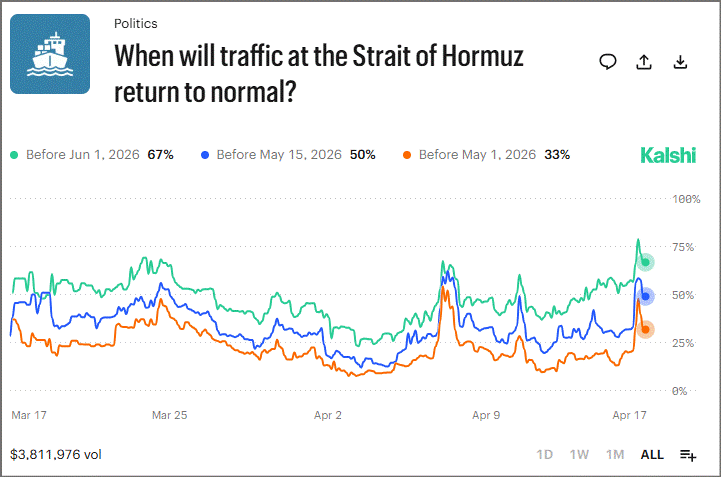
Source: Kalshi.com
Will the market draw more of its bearing and progress from headlines around the Strait of Hormuz or scheduled event risk next week? That is unclear, but the onus of influence will be determined first by the former factor. In the event the situation in the Middle East is stable – or at least ambiguously fluid – the calendar will offer plenty of relevant and thematically adjacent data to digest. We are moving into the second week of the US earnings season and we are do insights from the defense industry (RTX and Lockheed), logistics and trade (CSX), tech IBM and Intel) and our first Mag 7 member (Tesla). Sentiment surveys will be an important check on the world’s processing of the Iran situation with the US, Canada, Eurozone, UK, Hong Kong and Brazil offering updates. Timely economic activity metrics will also find some measure of update whether through South Korea’s Q1 GDP, US retail sales for March or the major economies’ April PMIs. It is also worth pointing out that while this week’s docket is fairly well stocked, the one that follows it is significantly more weighty, particularly with a run of important central bank rate decisions (including the Fed, ECB and BOJ).
Calendar of Top Global Macro Event Risk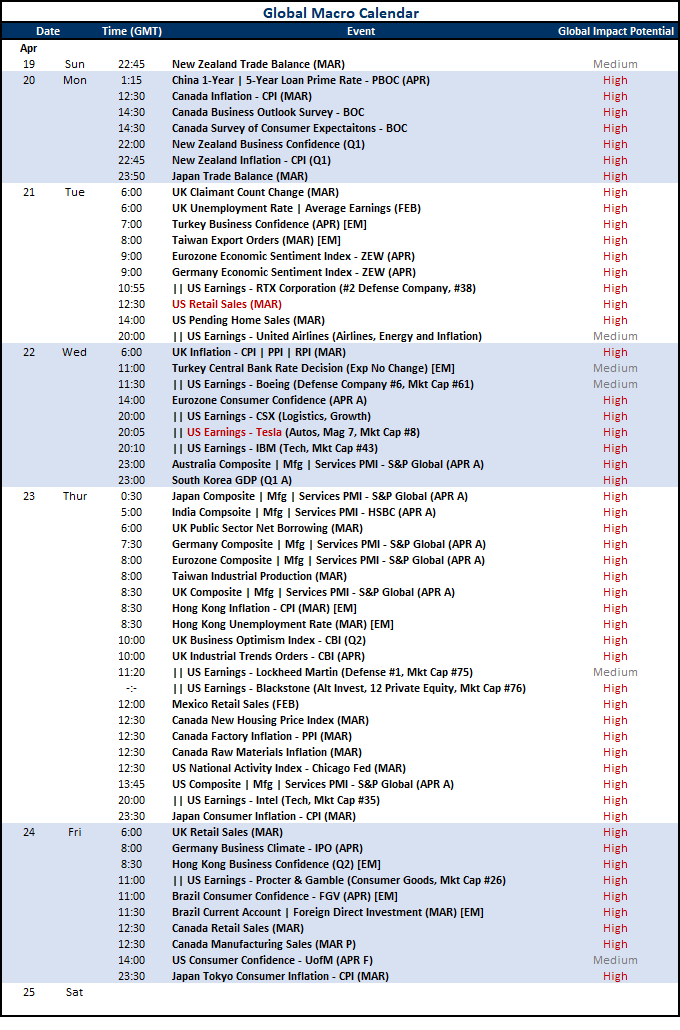
Source: John Kicklighter
As we keep tabs on the trajectory of the US-Iran conflict (improving or deteriorating), it is important to measure the impact of the headlines and disrupted commodity shipping on ‘main street’ health. This past week, the University of Michigan’s US consumer sentiment survey registered a record low, which would portend a troubling forecast for the world’s largest economy. That said, American sentiment can be exceptionally volatile and particularly sensitive to certain pressure points – like elevated gasoline prices. We have seen pervious periods of worry not necessarily translate into a curb on economy-influencing spending habits. Is it different this time around? Retail sales for March is expected to have grown 1.1 percent following 0.6 percent expansion the previous month. Excluding gasoline and autos, it is expected to be a 0.8 percent increase after February’s 0.4 percent. With a rise in gasoline prices from $3 to $4 per gallon over the course of the month, can discretionary spending hold so steady?
Chart of US Retail Sales Overlaid with UofM Consumer Confidence Survey (Monthly)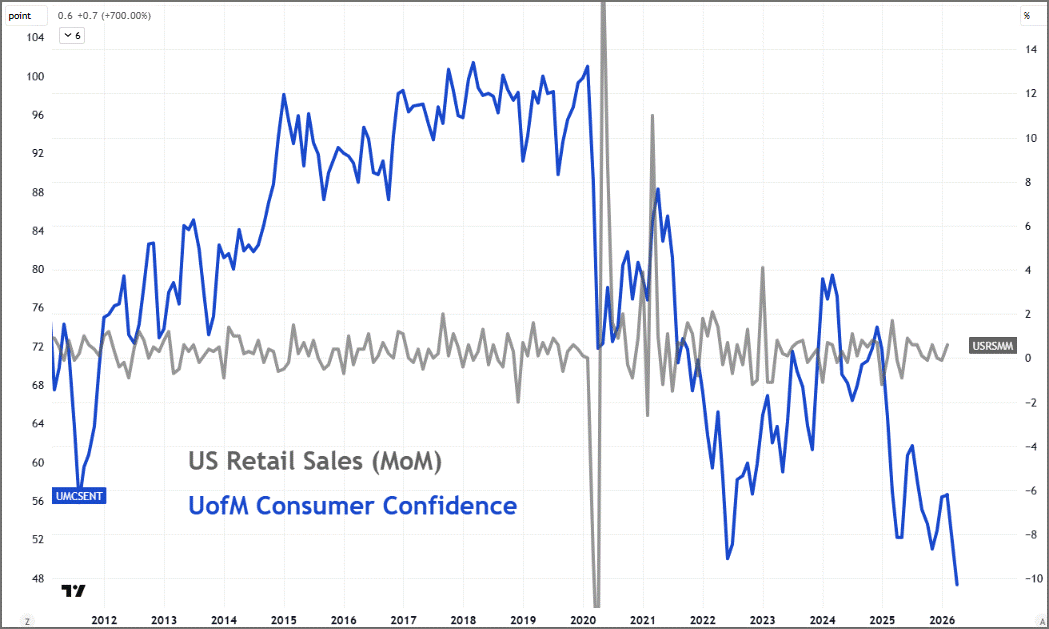
Source: TradingView.com; US Census Bureau; University of Michigan; John Kicklighter
There are earnings from a number of tickers over the coming week worthy of global macro traders’ attention. An outlook for US military capacity may be touched upon by RTX Corporation, Lockheed Martin and Northrop Grumman. Technology with a tinge of AI exposure will surface with the likes of IBM and Intel. The recent rumblings behind private equity will have representatives in KKR Real Estate and Blackstone. Even trade and shipping will offer a growth insight through CSX Transportation. All that said, there will be special speculative interest paid to Tesla earnings after Wednesday’s close. The EV maker is the 8th largest market cap firm and member of the Magnificent 7. That said, it’s performance has proven something of a laggard to the mega cap group owing to its different business mix, volatile leadership and being considered further askew of the lead through the AI race. Nevertheless, TSLA’s performance can still set the tone for the Mag 7 - and further broader indices and risk appetite at large.
Chart of Tesla Share, Nasdaq 100 and Magnificent 7 ETF Prices (Daily)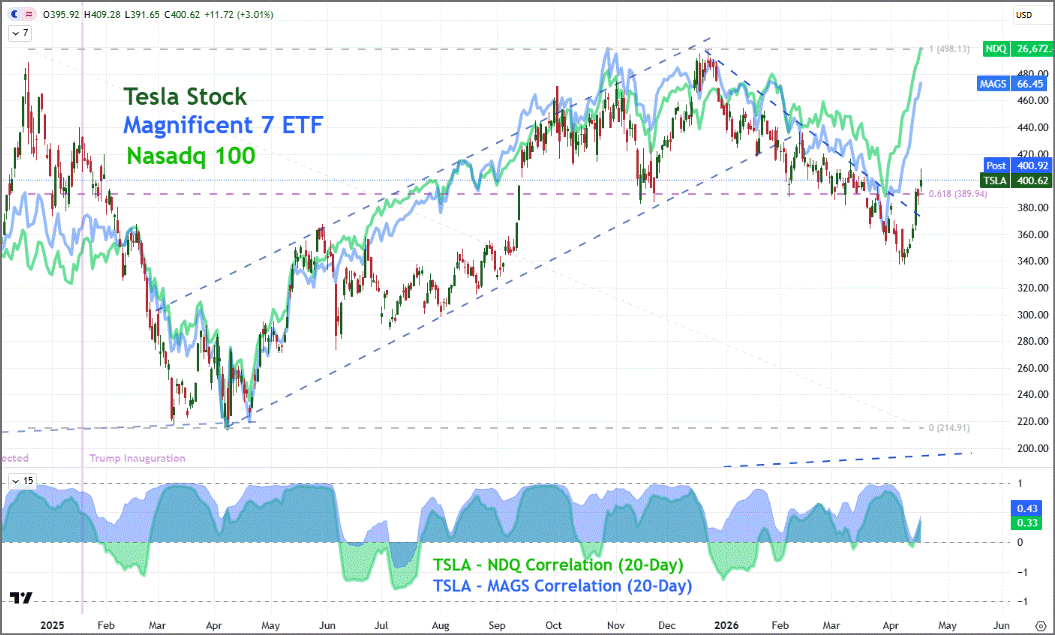
Source: TradingView.com; Roundhill; John Kicklighter
Arguably, the most sensitive and reflective group of data to the troubles in the Middle East are the run of sentiment surveys due over the coming week. There noteworthy consumer and business measures from various groups reflecting different economies; but the S&P Global PMI data for April will represent the largest swath of the global economy with a consistent read on for the different economies to be measured. Thursday’s run will cover the United States, United Kingdom, Eurozone, Japan, Australia and some others. Different economies have different balances of economic representation between manufacturing and services, but the data will generally be plumped for insight on businesses’ concerns around the impact of factors like higher energy prices or expected reduction in consumption. Whether the data holds up against the noisy backdrop of headlines or collapse in response to it, this data will offer meaningful insight.
Chart of Composite PMIs of Major Economies (Monthly) 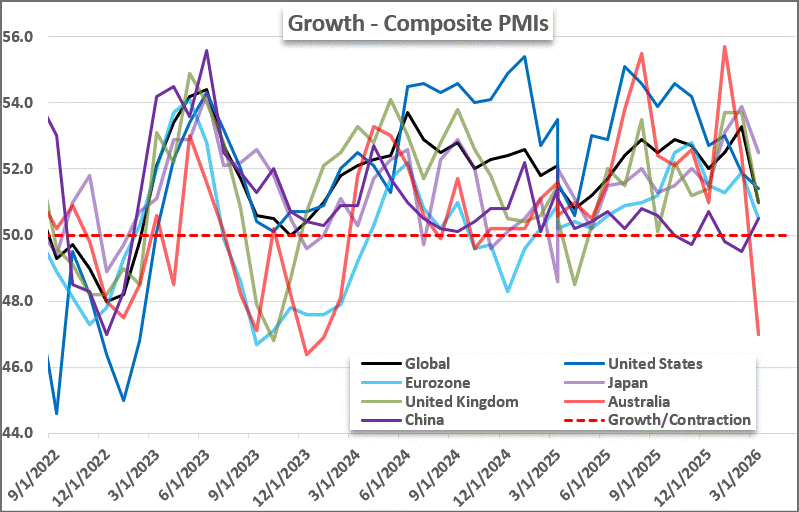
Source: Standard & Poor’s; John Kicklighter
Stay connected to timely global macro analysis designed to help market participants navigate shifting economic conditions and evolving risk. Gain access to regular market commentary, updated quarterly forecasts, a comprehensive two-week forward economic event calendar, and specialized tools built to support informed trading and risk management decisions.
-- Written by John Kicklighter, Global Head of Content
StoneX TV content is created, produced, and distributed solely by StoneX Media Ltd (“StoneX TV”) and is provided for informational and educational purposes only.
StoneX TV does not provide investment, financial, legal, or tax advice and does not make any recommendation or endorsement of any investment strategy, transaction, or financial instrument. Nothing in this content constitutes, or should be construed as, investment advice or a recommendation to buy, sell, or hold any financial instrument, including securities, futures, derivatives, digital assets, foreign exchange products, or CFDs.
This content does not constitute an offer, invitation, or solicitation to engage in any investment activity.
The information presented is general in nature and is not tailored to the financial situation, investment objectives, or risk tolerance of any specific person. You should not rely on this content as a substitute for independent professional advice.
Investing and trading in financial instruments involves significant risk of loss and is not suitable for all investors. Past performance is not indicative of future results.
Any views or opinions expressed are those of the presenter at the time of publication and are subject to change without notice. Such views may not necessarily reflect those of StoneX Media Ltd or its affiliates. StoneX Media Ltd and its affiliates, including StoneX Group Inc., may from time to time have positions in, or engage in transactions involving, the financial instruments referenced.
This content may include general market commentary and opinion. It does not constitute independent investment research and has not been prepared in accordance with legal requirements designed to promote the independence of investment research.
StoneX Media Ltd is not authorised or regulated to provide investment services and does not act in a fiduciary capacity.
StoneX Media Ltd is incorporated in Ireland and operates in accordance with applicable Irish law. It is a wholly owned subsidiary of StoneX Group Inc. and is a separate legal entity from other subsidiaries within the StoneX Group, which may be regulated in various jurisdictions. StoneX Media Ltd does not act on behalf of, or provide services for, any regulated affiliate.
This content is not directed at, and may not be distributed to, any person in any jurisdiction where such distribution would be contrary to local laws or regulations.
Supporting documentation for any claims, comparisons, statistics, or technical data may be made available upon reasonable request, where applicable.
Our subscribers have access to comprehensive market analysis from StoneX spanning commodities, equities, currencies and more.
Dollar expected to reflect Brazil's electoral race, US CPI, and IPCA

The yen's two-day surge has dominated the headlines, but the euro, the Australian dollar and gold were all rebounding at the same time. That pattern points to a dollar problem rather than a purely Japanese one, and it changes how the next labor market print should be read.


Two central banks are pushing the Japanese yen in the same direction at the same time, with Tokyo edging toward a rate hike while the Federal Reserve holds its focus on inflation. The gap between those two paths, and the U.S. labor data now testing it, is what the currency is actually trading on.

Our market expertise, advanced platforms, global reach, culture of full transparency and commitment to our clients’ success all set us apart in the financial marketplace.
Reach
With access to 40+ derivatives exchanges, 180+ foreign exchange markets, nearly every global securities marketplace and numerous bi-lateral liquidity venues, StoneX’s digital network and deep relationships can take clients anywhere they want to go.
Transparency
As a publicly traded company meeting the highest standards of regulatory compliance in the markets we serve; our financials and record of accomplishment are matters of public record. StoneX’s commitment to “doing the right thing over the easy thing” sets us apart in the industry and helps us build respect, client trust and new partnerships.
Expertise
From our proprietary Market Intelligence platform, to “boots on the ground” expertise from award-winning traders and professionals, we connect our clients directly to actionable insights they can use to make more informed decisions and achieve their goals in the global markets.