The things that I have been watching globally for phosphate remain unchanged.
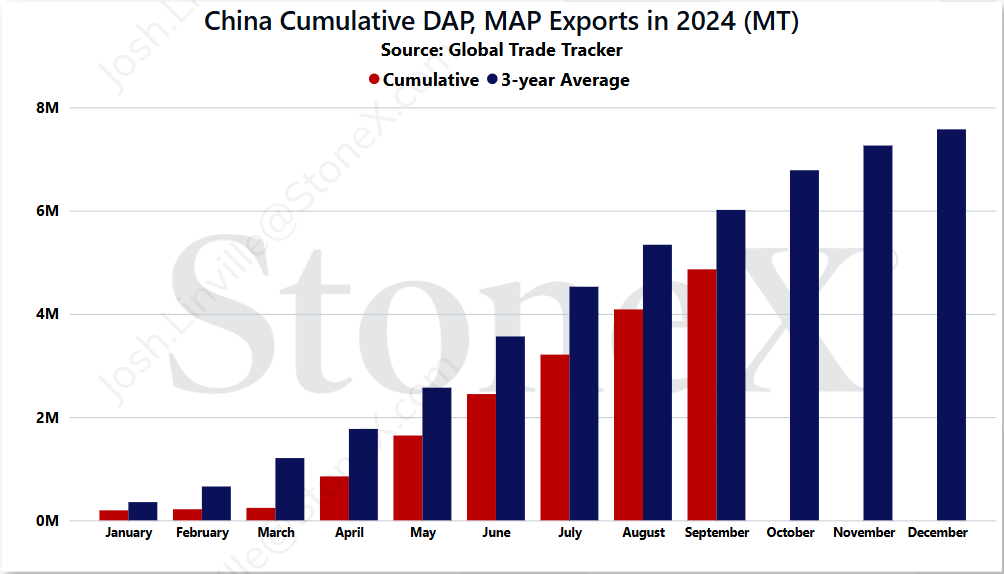
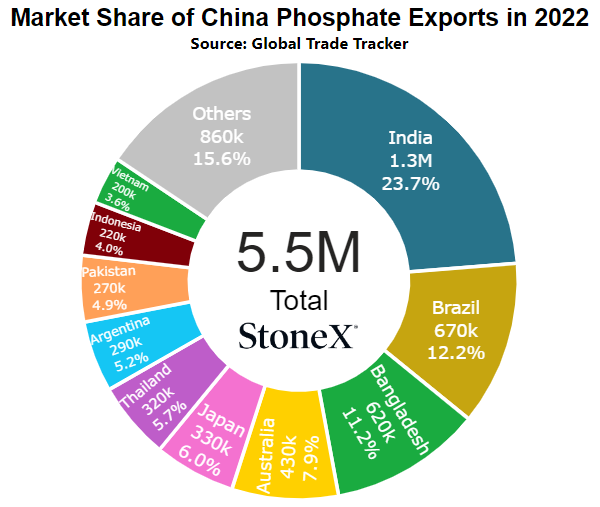
- Chinese exports are still looking like they will fall behind their 3-year average and well behind their historical norms. Being the world's historic largest exporter, that leaves a big supply hole
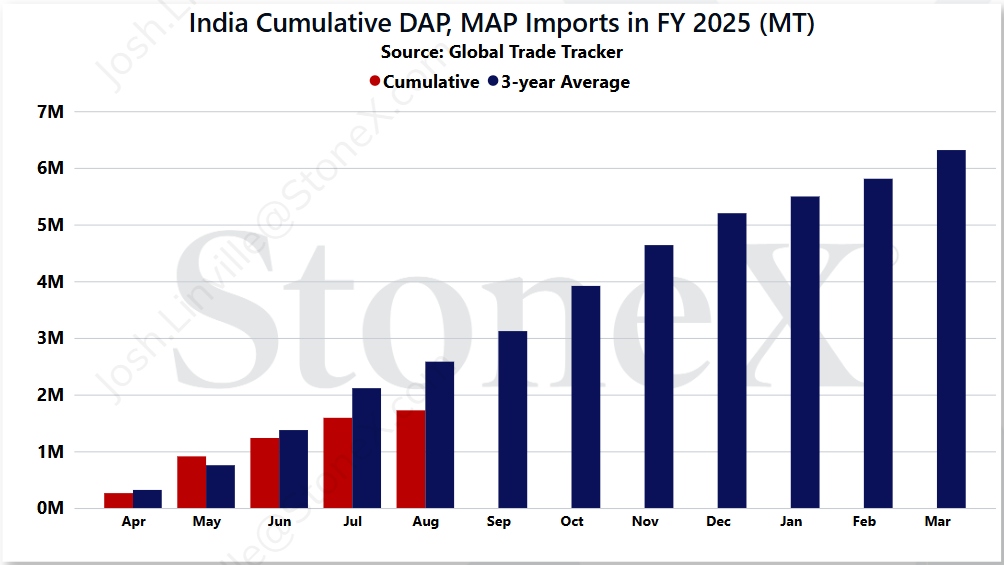
- Indian demand remains solid. They have made significant strides on rebuilding their stockpiles but we think there is still work to do (even though they have ben taking a breather).
So if the world's largest exporter is still low (and we fear further restrictions could come) and the largest buyer still needs to buy, it makes it difficult to see values lower near term. These high prices cannot last forever, but they can last for a little while.
While we do not expect phosphate values to rise in a huge way from where they currently sit, we do continue to believe prices will remain flat to support. Hard to see weakness with the S&D still this tight.

Commentary
Chinese phosphate exports still lag "normal"
Yes, it is a fresh month which means a return to a tried but true story!!!
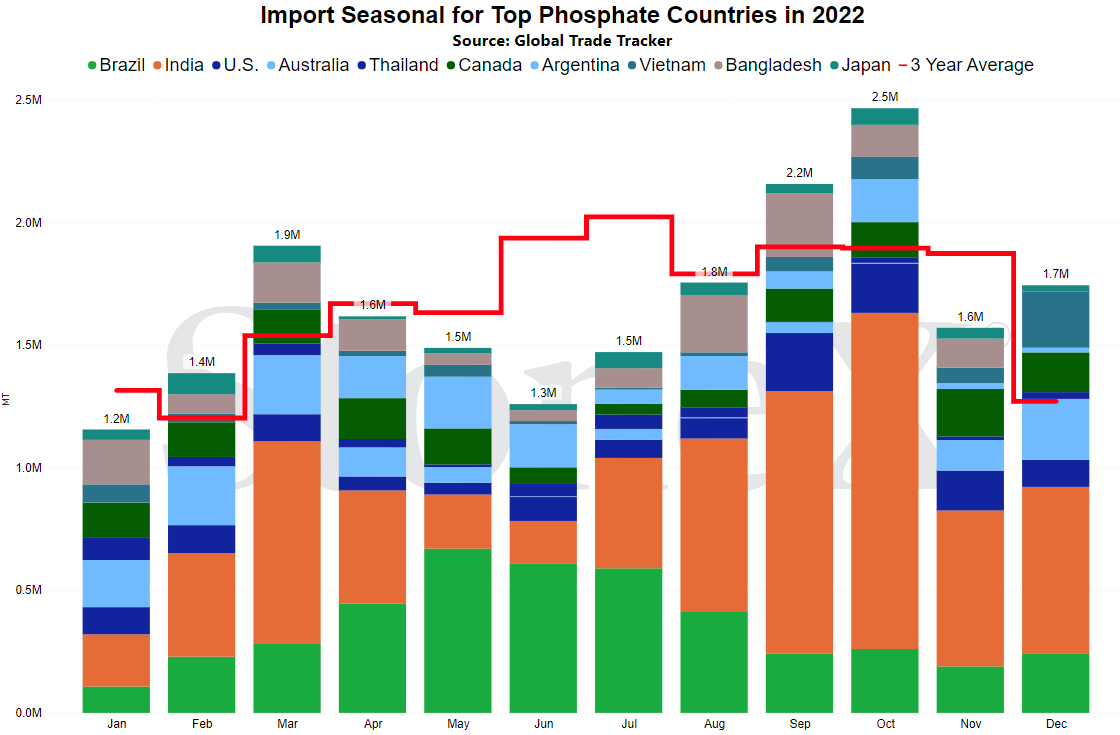
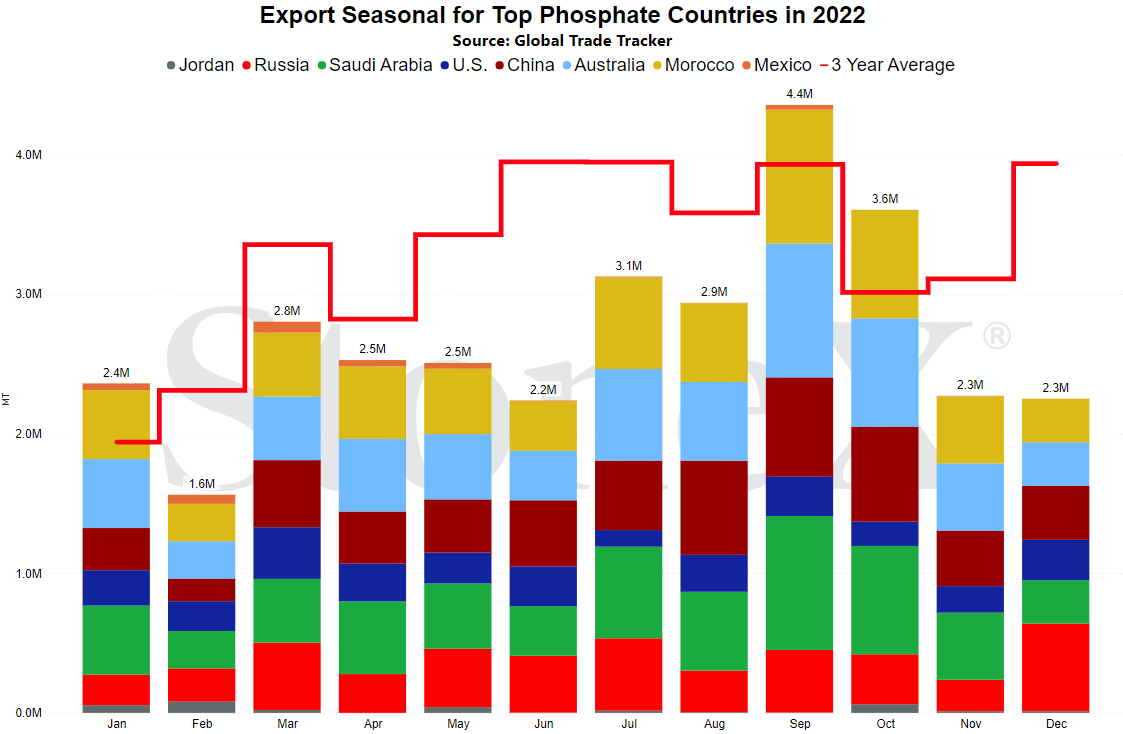
China, historically the world's largest DAP/MAP exporter, continues to drag behind normal. Looking at the graph below, pretty easy to tell that they are lagging their 3-year average thru September by nearly 1M tons. That alone makes for a decent little shortfall in the global S&D. However, that isn't the full story. The current 3-year average continues to be skewed by recent years where the Chinese government restricted exports. Global inventories were feared to be excessively low and prices excessively high. Rather than watch all of Chinese produced phosphate either skyrocket in value or depart their shores, the communist government stepped in to appease their largest group of people which is farmers/ag...and when they tell their people to do something, they do it .
Unfortunately for the rest of the world, this approach worked very well and the government knew it. As a result, we continue to see them stepping in to play a roll and keep exports at a lower level. In fact, there is still a lot of trepidation around the globe that even more stark restrictions are about to be implemented. If this happens, it will be felt around the world.
As is usual, things halfway around the world can impact your operation. Keep an eye on China, I know we will.
What does this mean for Aussie farmers?
The best case scenario is that we see China starting to ramp up exports to historically normal levels. That would not only add much needed supply to the world market but would also likely cause sellers to run for the hills (so to speak) to get ahead of any price downturn.
The more likely scenario is that China remains on its current path. It isn't great...but it isn't horrible either. Current global values are pricing in exports maintaining this pace.
The worst case scenario is that the Chinese government intervenes...again. Exports slow to a crawl for the next few months and importers are forced to make purchase decisions with the largest exporter largely absent.
China is the world's largest supplier of phosphate (normally). What they do or do not do matter to every farmer around the world.
India starts rebuilding stockpiles, still work to do
As we have discussed for the past few months, India has been on a phosphate buying kick to rebuild dangerously low stockpiles.
Earlier this year, when global phosphate values were falling as Chinese exports appeared to be returning, the Indian government cut their subsidy rate. No doubt the hope was to save a few dollars after having to spend outrageous amounts of subsidy dollars during the 2021 - 2023 price spike cycle. Indian agriculture doesn't work the same as the rest of the world. Indian farmers see a flat price for their inputs so global price movements mean little to them. However, in order for importers to bring in product, the government must pass subsidy legislature to pay the difference. Well, they overplayed their hands earlier this year. By cutting the subsidy rate, they likely thought they could force global values lower and save themselves some money. In the end, China started to cut exports once again and values started to climb...and then they were slow to react. Imports crawled to a stop and stockpiles started to drop to very low levels. In fact, they were within a few hundred thousand tons of where they were in late 2021 when farmers started to riot.
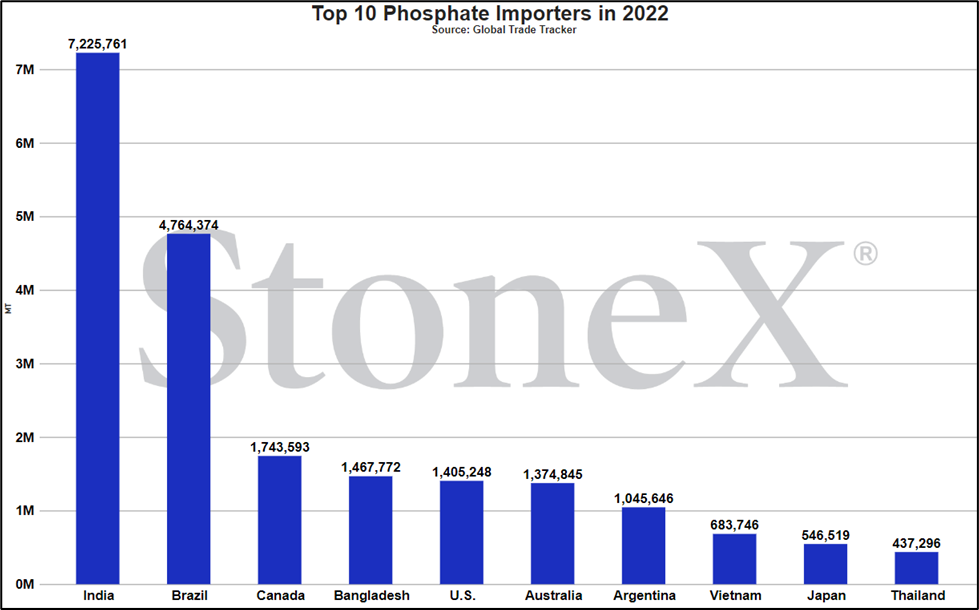
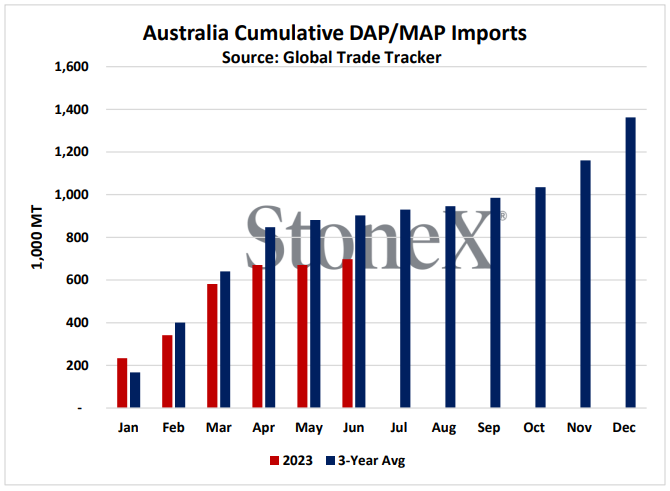
In the last month or so, the government finally changed the subsidy rates and a buying splurge began. The graph below shows imports thru August which isn't going to show recent purchases. September and October should have solid gains...but we think there is still more to buy.
Normally, India is the world's largest buyer of DAP and MAP. So that means that while the world's largest exporter (China) continues to scale back on their flows, the world's largest buyer is in overdrive using government money. It does not mean that the market is guaranteed to skyrocket, but it certainly provides a lot of relief.
The last couple weeks have seen their buying patters slowing down but we think more rounds are coming and the more they come to buy, the more it supports prices around the world.
What does this mean for Aussie farmers?
If India truly still is in a rebuilding stage, that means the world's historically largest exporter has scaled back and the world's historically largest importer will continue to ramp up purchases.
That is a lethal one-two combo.
Hurricanes Helene/Milton impact phosphate production, worst case scenario narrowly missed
They say that football is a game of inches. Well, as Hurricanes Helene and especially Milton just provided, phosphate is a market of miles.
The first major hurricane that worried the phosphate market was Helene and it was a near miss. Some of the early forecasts showed chances of it turning east and right into the Tampa region. Fortunately for phosphate production, the storm stayed offshore. Unfortunately for phosphate production, there were still impacts. In preparation for a possible landfall, production stopped so that preparations could be made and workers allowed to be home while the storm passed. By the storm raged north, production and port facilities were largely untouched, but some production was lost.
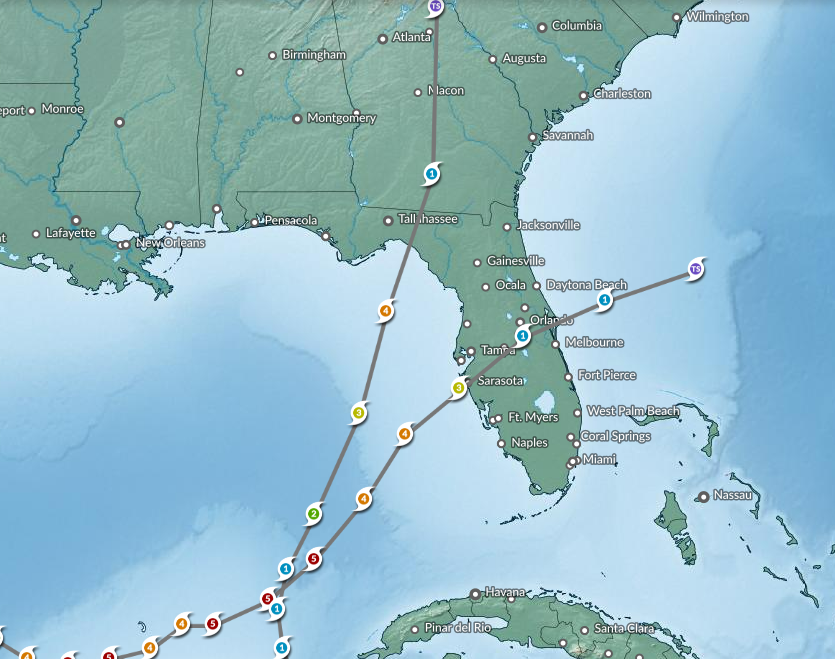
Then Milton came. This storm was unique. Normally, hurricanes take a south to north trajectory similar to what Helene did. As soon as early forecast projections came out, we knew we had a problem for Milton. It was taking a west to east path...and Tampa was right in the middle of the cone. If Helene was able to impact production by sideswiping the area, then what could happen on a direct hit to the area?
As the days wore on, the storm grew as it did until the warm waters of the Gulf. It quickly grew into a major hurricane, and path predictions started to narrow the landfall area...with Tampa still very much in the middle of projections. Preparations for the storm started once again.
Then, a miracle for phosphate production (not so much for those that ended up in the path).
Just as it was about to come onshore, the storm lost some power and was pushed just a little south. Tampa Bay had been forecast to receive 10 - 15' storm surge but instead saw water sucked out of the Bay.
35 miles.
35 miles is the difference between water rushing out of the Bay and 10 - 15' surges into the Bay based on computer models. If Milton had shifted only 35 miles north, that was the difference between a direct hit and missing it by a hair.
After the storm passed, it took some time for workers to return. Their first priority was taking care of home and their friends/family/neighbors. Just because it didn't hit directly didn't mean there were no impacts. Once they did return, as expected, it was found that there was little damage to the facilities. Theses production sights were built by skilled engineers and construction crews that realize it is sitting in a hurricane zone. Unfortunately, it still takes time to restart everything. It isn't a light switch situation, but they got there.
In the end, it is estimated that a few hundred thousand tons of production of phosphate was lost. On the global and US scale, that isn't really a lot of tones. Nothing that severely impacted the S&D. However, the timing couldn't be worse. These tones were lost just before the start of fall season. It provided another hit to those hoping for any help with lower prices.
Worse, this made manufacturers even more well sold. Sales were already on the books and they lost a chunk of production. They have been standing tall and saying that they will honor any previous sales commitments...but they will need a little more time. That effectively means that they are sold further out on the calendar, with some estimating that there will be limited new sales for the remainder of 2024.
Again, this was as close to a miss as we can possibly have but there is still an impact. These storms just became another couple reasons why phosphate prices continue to hold...
What does this mean for Aussie farmers?
Honestly, not much. I am sharing this story more to show just how close the world was to losing fairly important production. If these hurricanes impact/decimate Florida based phosphate production, then the U.S./N.A. markets will then go to the world looking to replace those tons. That means more competition moving into 2025...the same time Australia is looking for imports.
Fortunately, these hurricanes "missed"...but it should serve as a wake up call of just how quickly production can change.
Price comparisons
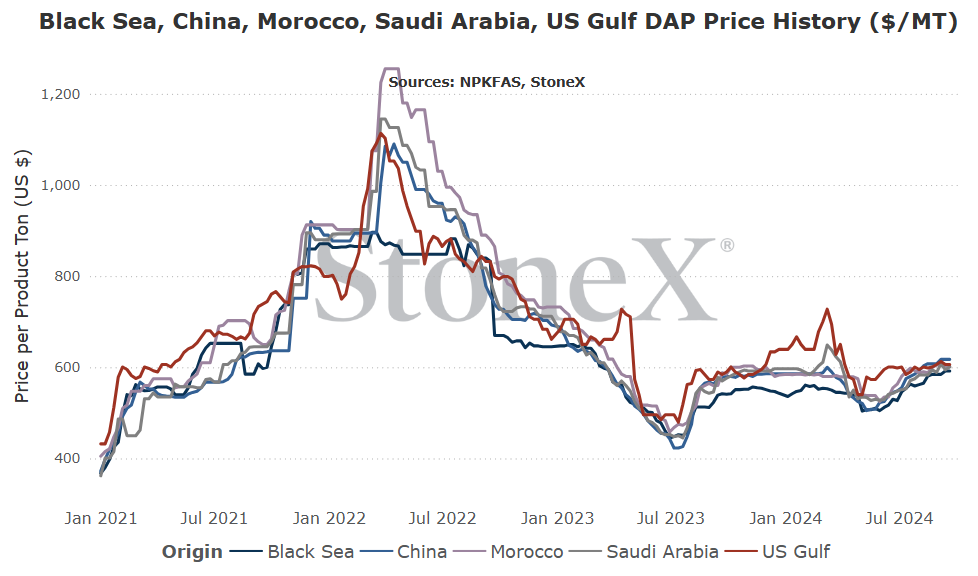
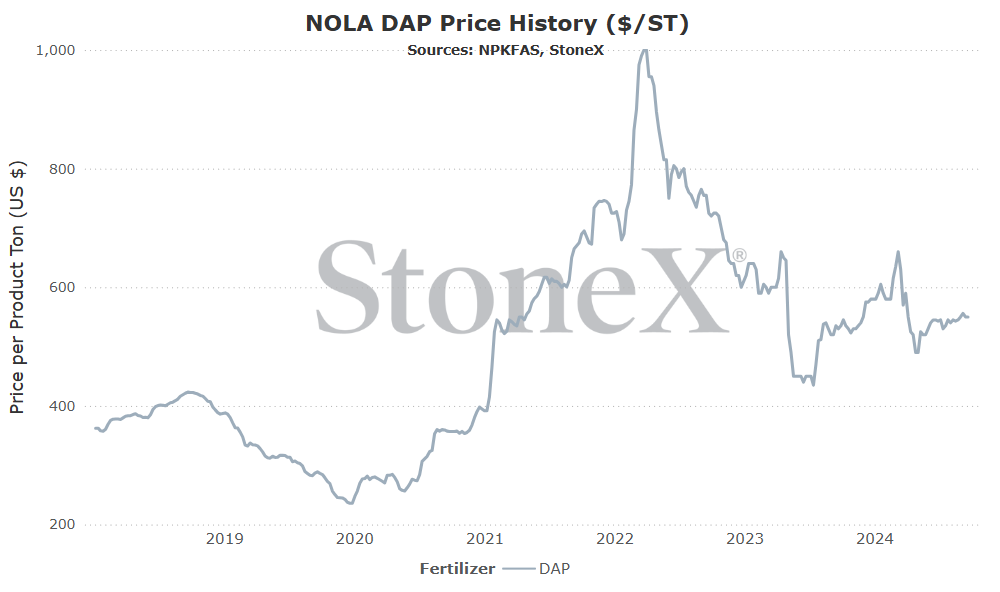
Vs 30 days ago - 5% or approximately $30 higher
Vs 90 days ago - 8% or approximately $45 higher
Vs 6 months ago - 18% or approximately $90 higher
Vs 1 year ago - 9% or approximately $50 higher
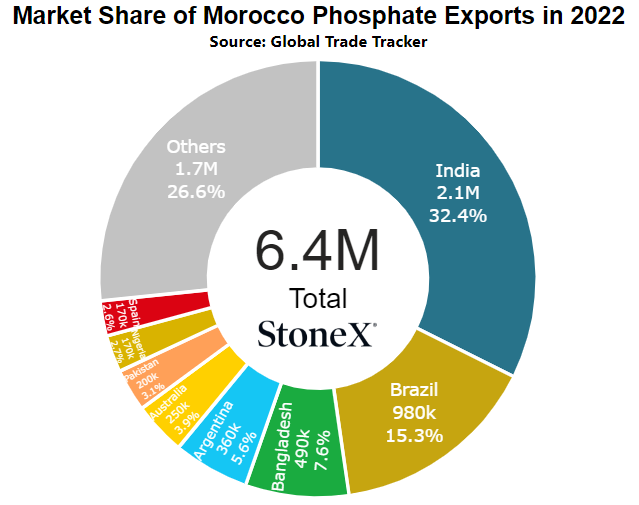
Morocco DAP price comparison
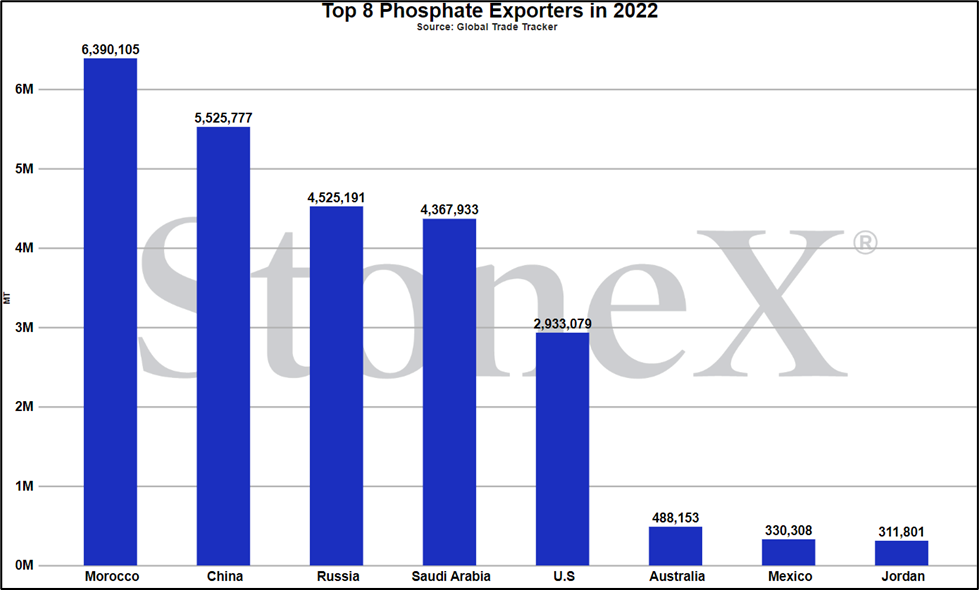
Number 1 global exporter in 2022
Price comparisons:
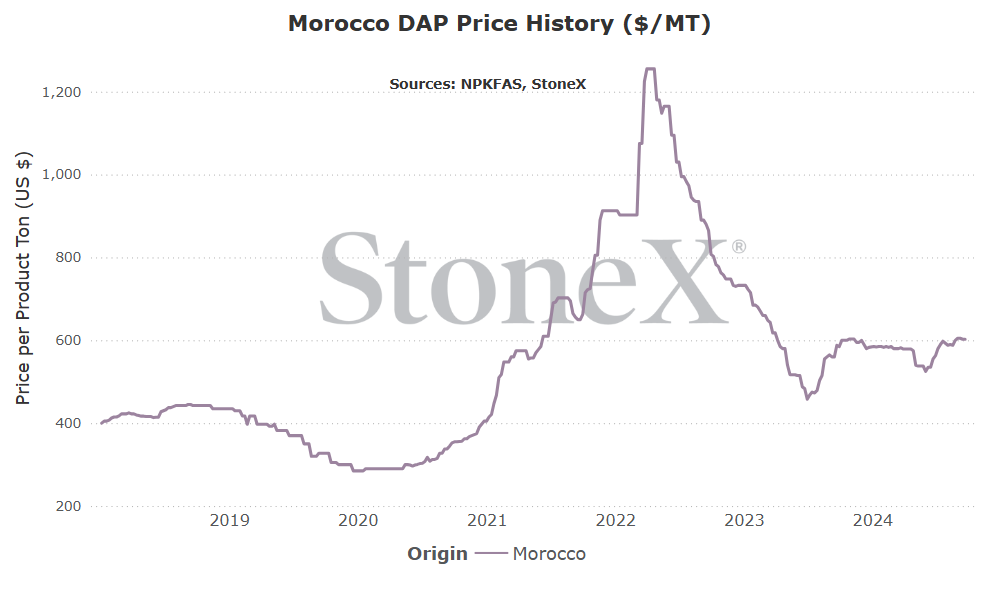
Vs 30 days ago - 2% or approximately $12 higher
Vs 90 days ago - 3% or approximately $17 higher
Vs 6 months ago - 7% or approximately $39 higher
Vs 1 year ago - 2% or approximately $14 higher
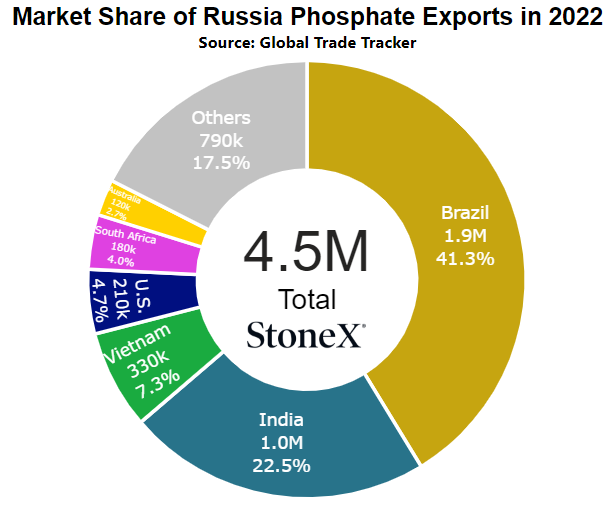
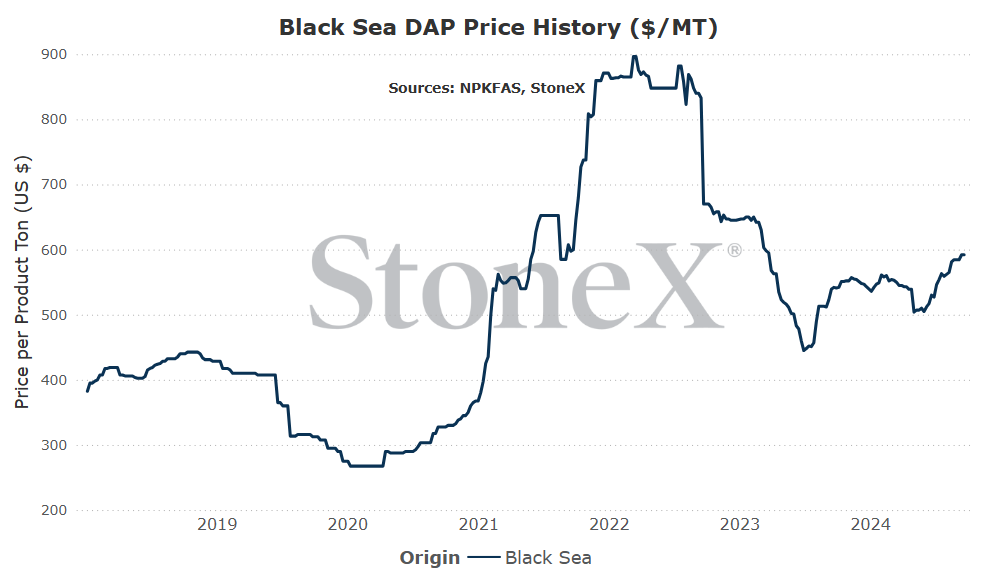
Black Sea DAP price comparison
Number 3 exporter of DAP/MAP in 2022
Price comparisons
Vs 30 days ago - -2% or approximately $10 lower
Vs 90 days ago - 4% or approximately $20 higher
Vs 6 months ago - 8% or approximately $44 higher
Vs 1 year ago - 6% or approximately $32 higher
China DAP price comparison
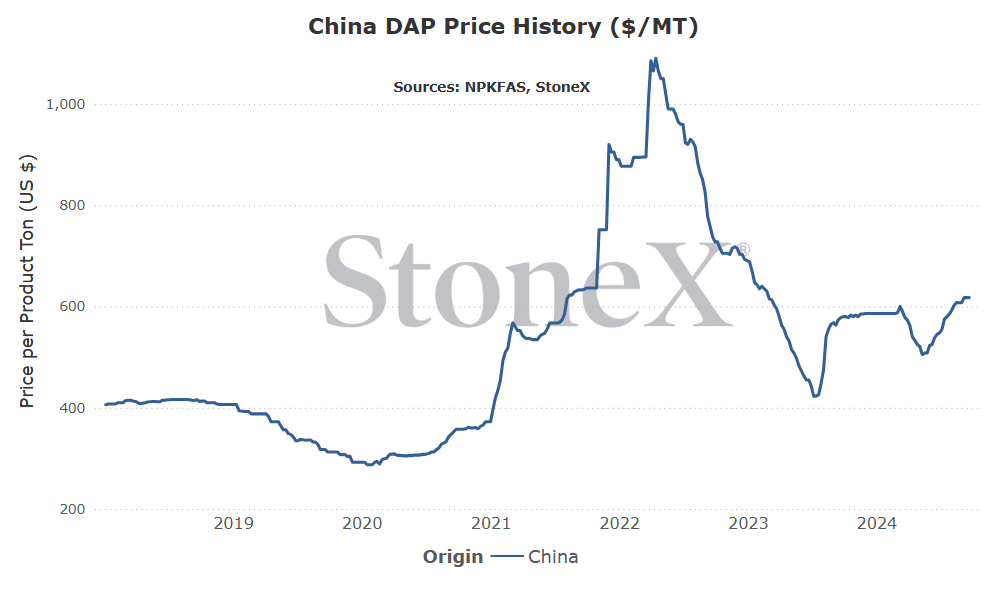
Number 2 global exporter in 2022
Price comparisons
Vs 30 days ago - -1% or approximately $5 lower
Vs 90 days ago - 6% or approximately $33 higher
Vs 6 months ago - 17% or approximately $88 higher
Vs 1 year ago - 5% or approximately $30 higher
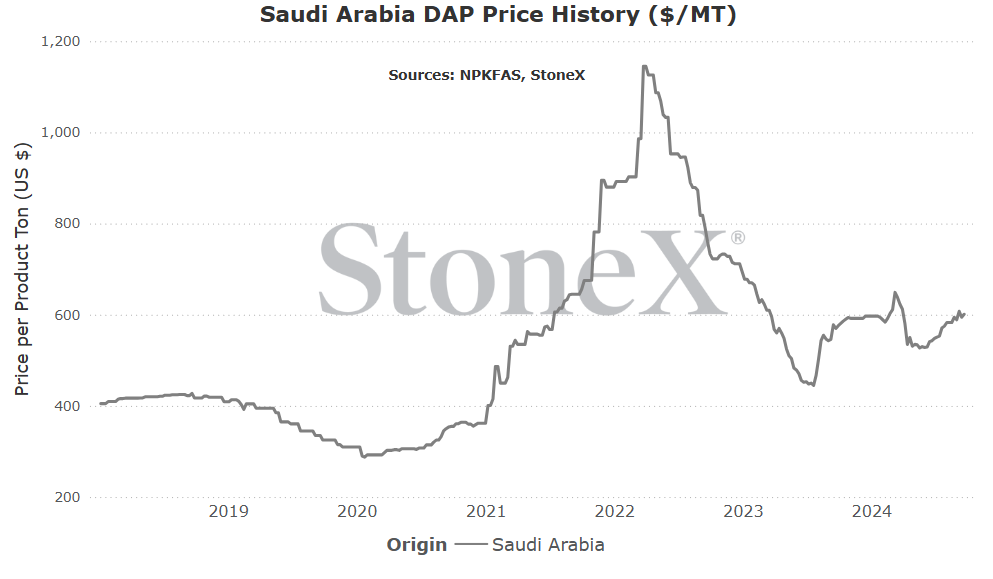
Saudi Arabia DAP price comparison
Number 4 global exporter in 2022
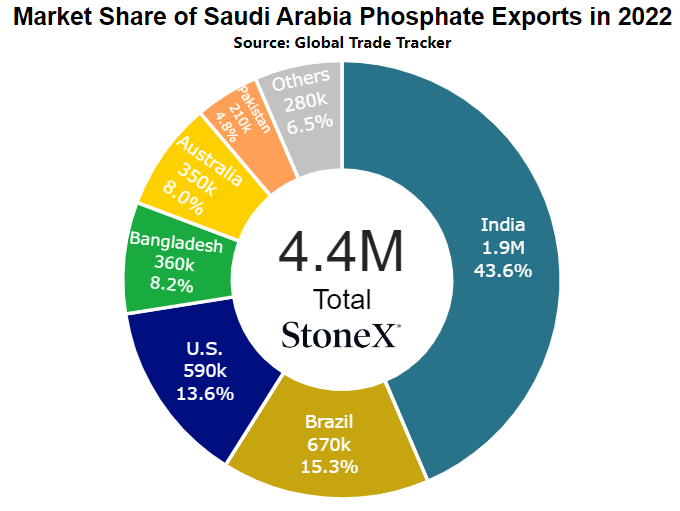
Price comparisons
Vs 30 days ago - 4% or approximately $27 higher
Vs 90 days ago - 10% or approximately $57 higher
Vs 6 months ago - 18% or approximately $97 higher
Vs 1 year ago - 6% or approximately $38 higher
- The Chinese government puts further restrictions on exports – there has been a recurring rumor in the market the last month that further Chinese export restrictions are coming. In fact, the rumor is detailed enough to state that exports will only reach 1.5M October thru April. Now, it's China. We never truly know what they are going to do. We just make educated guesses...and react. However, if this rumor turns out to be true, it means the biggest exporter is pulling back in a big way. That leaves a supply hole.
- India demand returns to rebuild stockpiles – India has gone surprisingly quiet in the last couple weeks, but we struggle to see that continuing. They did a brilliant job of buying up a lot of tones without having the global price skyrocket...but we think they need more. They still need to build stockpiles to make farmers feel comfortable. So if the world's largest buyer in India starts back to buying and we see China scaling back, lethal one-two combo.
- Aussie importers run out of time and have to start securing tonnages – the current global market is high priced with the China/India situation helping support values. Unfortunately for Australia, the calendar is getting real thin before the next round of application demand.
- Do not count China out – as soon as you think you know what China is going to do, they do the opposite and right now a lot of the industry is thinking/talking like they are going to scale back. However, if I woke up tomorrow and someone told me all export restrictions were lifted and exporters could do whatever they wanted, I wouldn't blink an eye. It doesn't seem likely today, but it certainly isn't out of the cards.
- Global farmers say no thank you to high prices – most farmers around the world are struggling with the high price of phosphate. It never dropped like other fertilizers did after the 2022 spike. It remains the worst value vs grain input for fertilizer. We could still see a decent cut back on demand as farmers largely say no thank you.
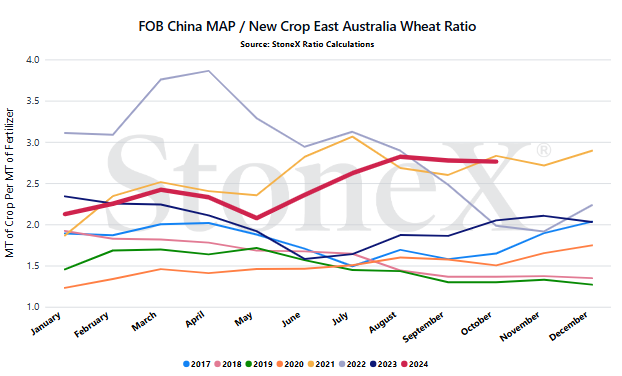
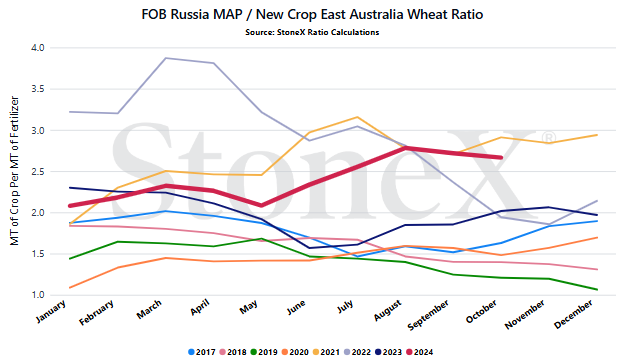
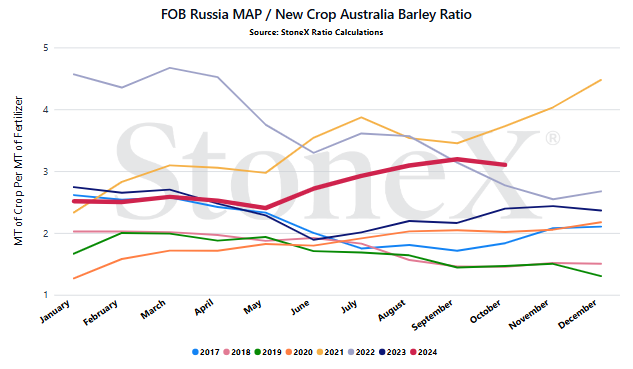
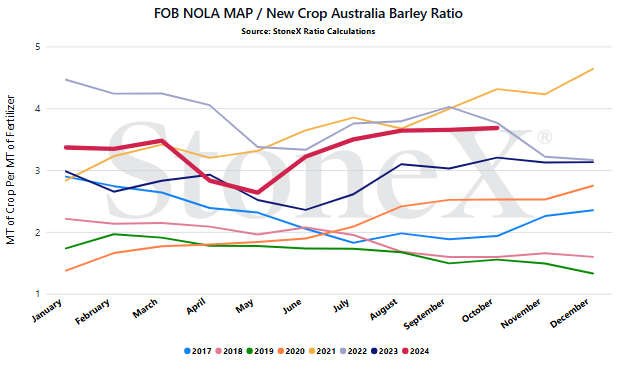
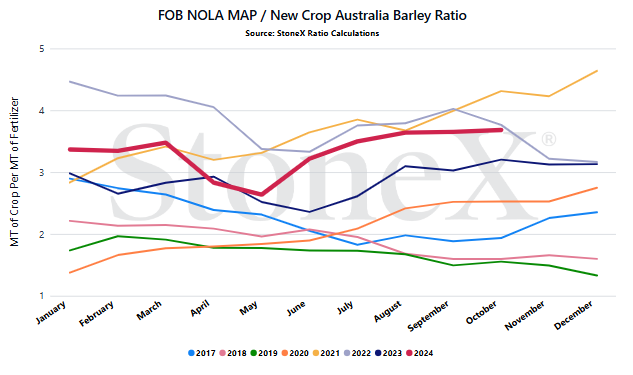
We believe that only looking at the flat price of either grains or fertilizer can be misleading:
-
Only selling grain can hurt you if fertilizer prices rise substantially
-
Only buying fertilizer can hurt you if grain prices fall
We look at the ratio "value" to get a better indication of where we are or how many bushels of X does it take to pay for 1 ton of fertilizer.
Would you rather:
-
Spend 4 ton of grain to pay for 1 ton of MAP
-
Spend 1.5 ton of grain to pay for 1 ton of MAP
When we compare the current ratio value against recent years, we start to see if we are high or low.
YOUR VALUES MAY LOOK DIFFERENT
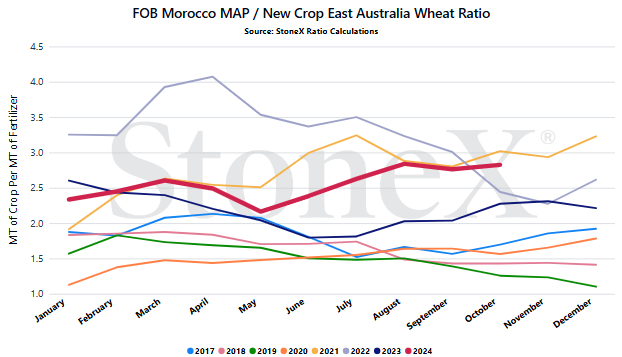
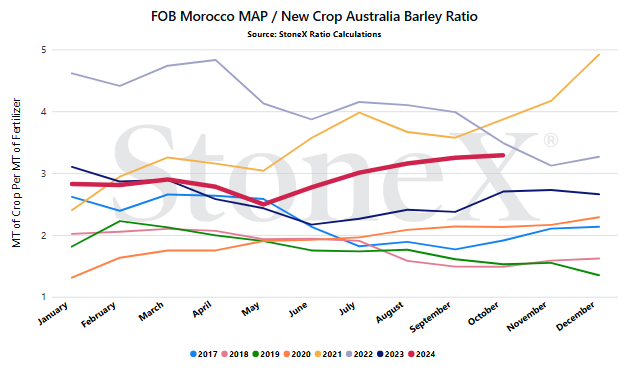
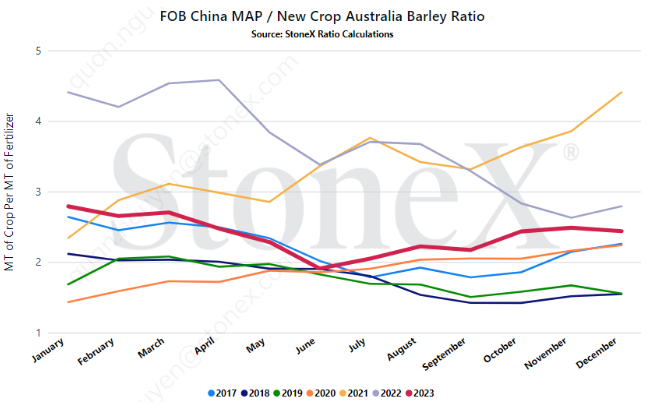
- Chinese export programs - will China actually prove the rumors to be true that exports are going to be scaled back significantly now thru April? If so, global values will see a lot of support. However, if they suddenly decide they have plenty stockpiled, we could see them release any restrictions and outflows could pick up immediately. Either scenario or any scenario in between matters to every farmer in the world. That is why China remains our biggest focus point.
- India stockpile building - if the largest global exporter is the biggest focal point, then the biggest importer should be right there and given how low their stockpiles had gotten, they are still in the hunt. I think we see them resume buying/stockpiling again fairly soon. If/when that happens, that is just another tab for the bull market.
StoneX Ratio Calculation
The ratio calculation is derived from Bloomberg historical grains values as well as fertilizer values from StoneX, NPKFAS, and Argus.
The calculation is simply dividing the fertilizer price by each grain price.
All data was sourced from StoneX unless otherwise noted.