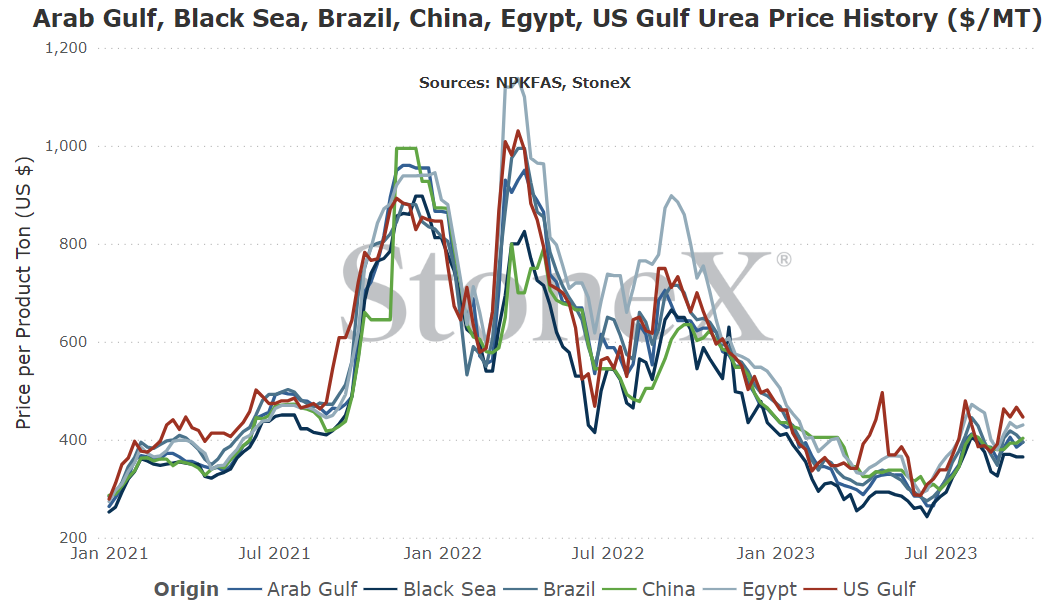
It seems like the current market is sitting around waiting...on India.
Today, there is not much happening around the world from a purchase/sales perspective. It is a period where everyone is pondering what to do next. Given that India fell short of needs on the last tender, they will likely step forward again...and be met with an excited/bullish marketplace.
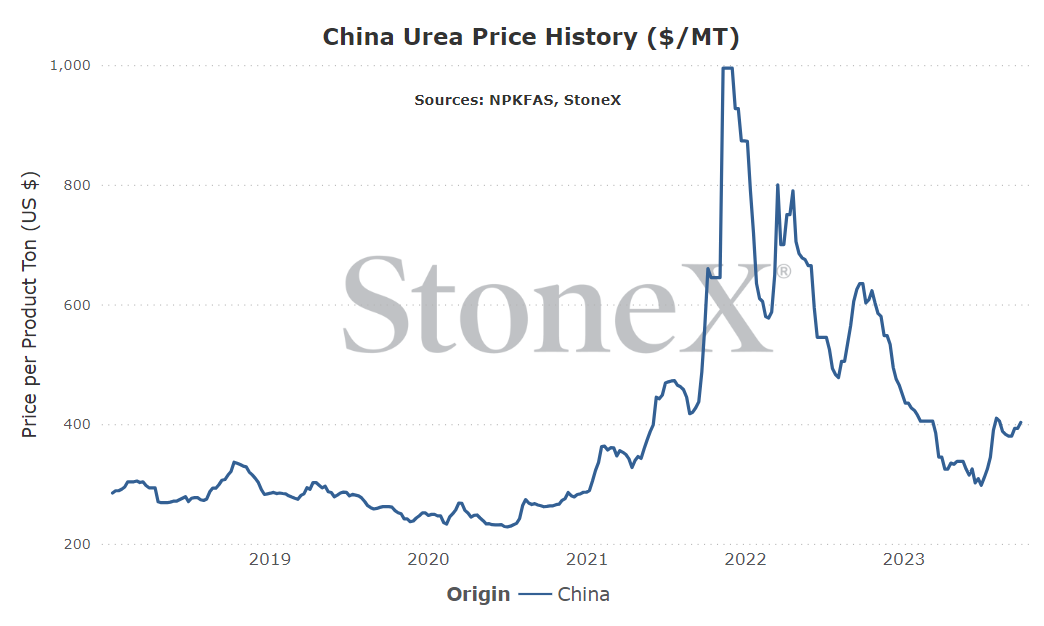
Longer term, I'm still focused on China and their export programs. Either they are restricting exports now and will be a bigger exporter later, or they sneakily export product today. Either way, the market feels like it has some weakness longer term.
Long story short - watch for price pops in the coming weeks/month or so as India comes back to the table. Then watch for Chinese export timing. Feels like lower prices are ahead, just a matter of how quickly.
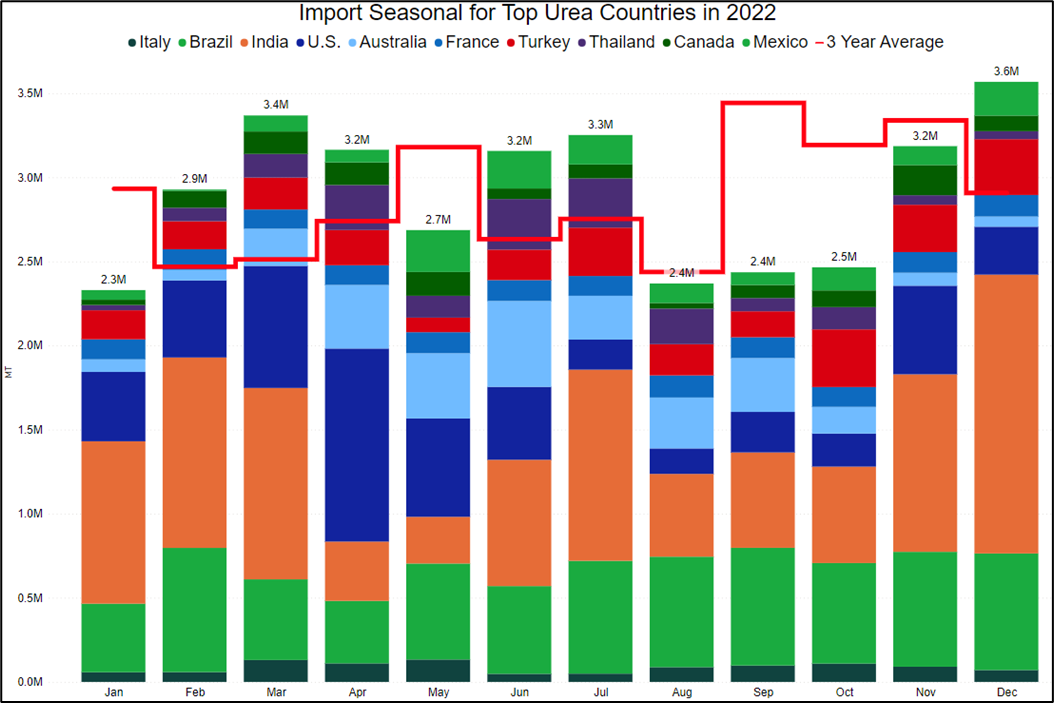
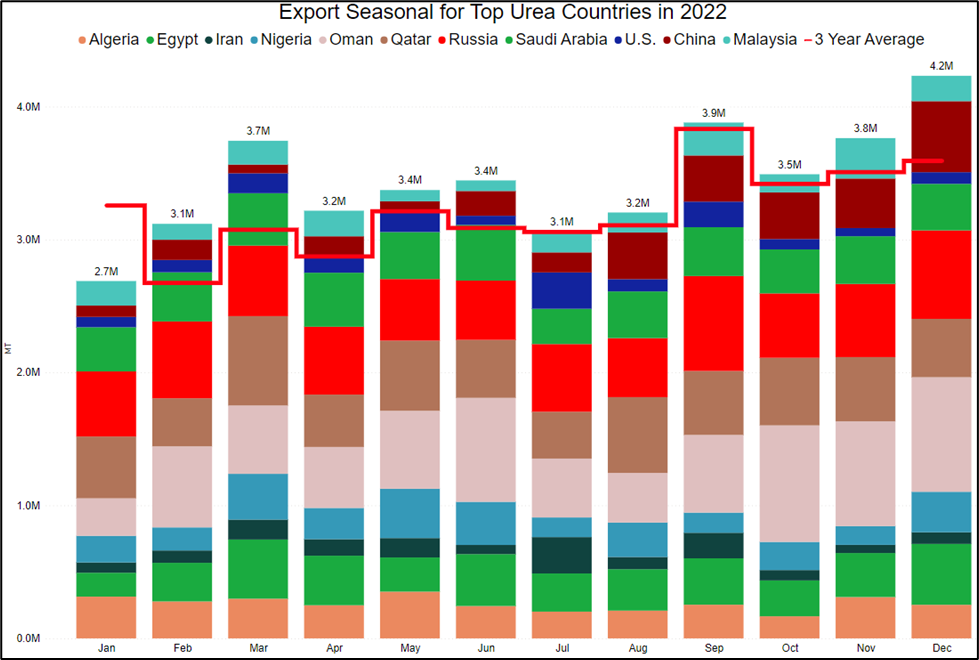
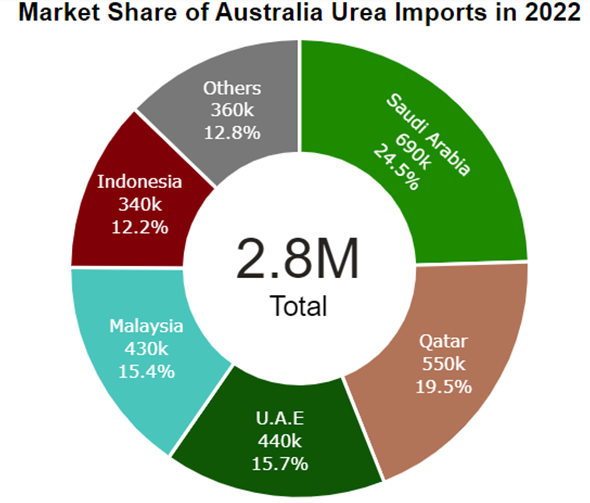
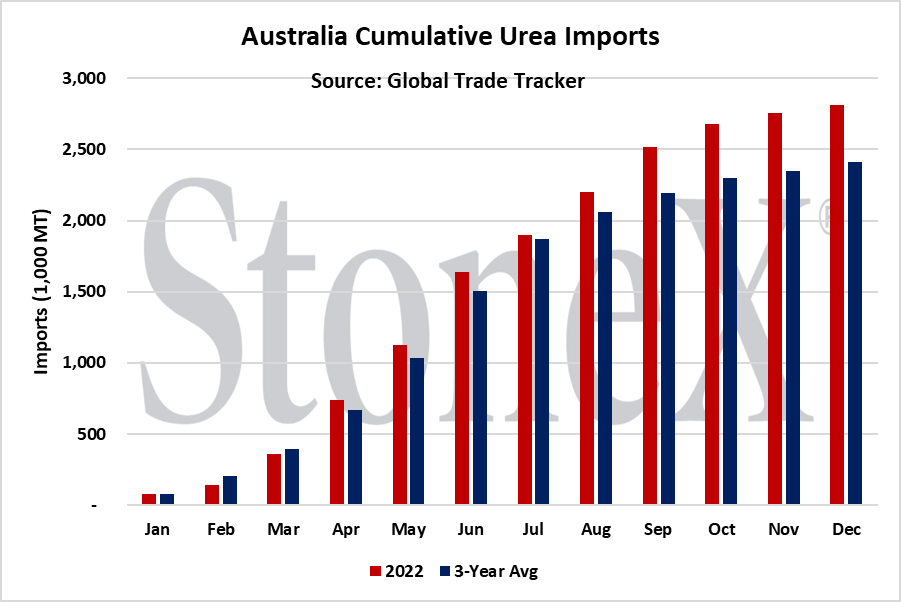
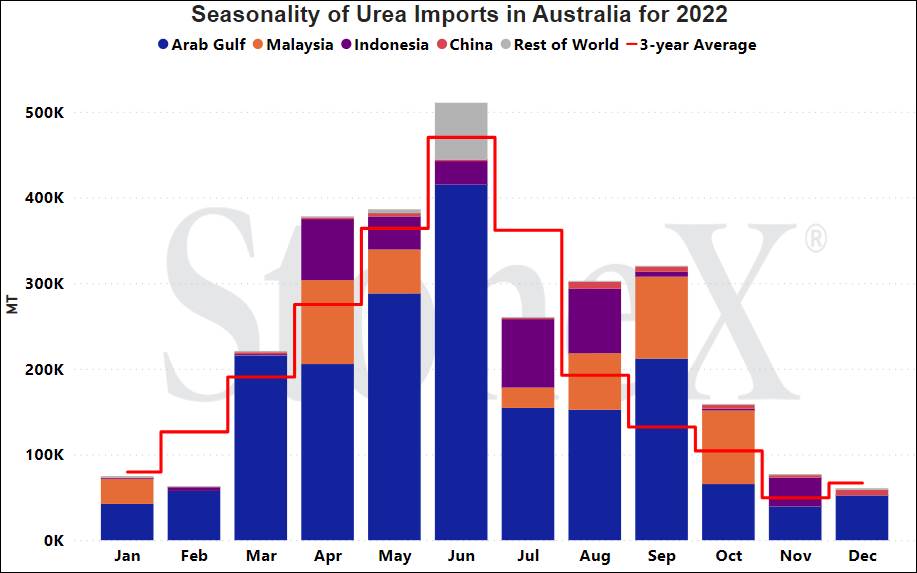
Last month, the leading urea story of what had happened was India. Not only did they step forward with a purchase tender, they ended up netting approximately 1.8MMT (it ended up being lowered slightly on final awards than previously thought). While the expectation was that they would need more imports thru the remainder of the year, many believed they could delay that purchase.
Many were wrong.
While much of the U.S. was enjoying a Monday off for Labor Day, India was getting to work by announcing a shock tender for another layer of tons. Needless to say, the market reacted.
Now, part of the reason that global urea prices shot higher was due to China's export restriction fears which is better explained in the next section. However, between heightened fears of China not exporting near term and India stepping in to buy again, global values shot up by around $100.
The tender process ended up being fairly intriguing:
- Unlike recent tenders, there was not a "target" number of tons being looked for
- It appeared this tender had more to do with want than need. With it being an election year in India, the government being responsible for imports, and much of the voting base being ag based, politicians want to make sure inventories are not a subject of conversation.
- Offer values were WIDE. The difference between the lowest west coast offer and the next lowest offer was $20. The difference between lowest east coast offer and the next lowest offer was $30. That was unheard of.
Ultimately, India was successful in securing 525KMT and the response was mixed:
- Bulls pointed to the fact that 525KMT was far short of the 1.0 - 1.5MMT expectation and that India would have to step back in eventually (agree with this point).
- Bears pointed to the fact that outside India, there is not a lot of demand interest around the world and offers will realize that next round.
Since the conclusion of the tender, the markets have been mostly quiet with very limited activity being slightly lower. No doubt the market is keeping its powder dry for the next move.
As mentioned above, the fear of Chinese urea export restriction being put into place played a part in global urea values shooting higher. Give what has happened in the last year or more, I cannot blame anyone for this fear.
It is interesting how the situation played out. As I was told/explained, there are 3 major nitrogen production companies in China with deep ties to the central government.
- SinoAgri
- Sino Petrol
- Sino Chem
To be fully up front, before this recent situation, I did not know this!!
The Saturday before Labor Day (Monday) in the U.S., SinoAgri announced that they were restricting urea exports in order to effectively focus on filling Chinese storage facilities. On the surface, it was one company making one announcement. Hardly enough to get overly worried. However, by Tuesday, Sino Petrol made a similar announcement. We never heard an official announcement from Sino Chem, but they are believed to be doing the same thing.
Normally, the perceived loss of one of the world's largest urea exporters is a big bullish deal which is exactly why the market responded as it did. However, two cautionary tales:
- Since then, hearing that the export restrictions are mostly for India. Other regions/countries have seen exports allowed. If true (not confirmed), it would mean that Chinese exports are still occurring. While perhaps not to "normal" destinations, if they are exporting it means the global S&D is still where it was.
- If exports are being restricted in lieu of filling domestic warehouses, eventually those stores will get full. We are not hearing production issues within China (that can change). If production continues, then it means warehouses will fill quickly, forcing manufacturers to lean on the export market more heavily later in the year.
Today, it is still a lot of speculation and rumor. That is typical for China. One of the most important fertilizer countries...shrouded in mystery!
For a while now, we have been almost solely focused on the Dutch TTF (European natural gas) markets in regards to European nitrogen production. With it being the largest input to produce nitrogen fertilizers, it makes sense to give it the attention it needs.
However, focusing only on the input side would be akin to only focusing on the purchase price of fertilizer. At the end of the day, it is about the profit rather than just the price.
That is why rising nitrogen values around the world are having a small affect.
Dutch TTF values have mostly flatlined with the highest values being around $16MMbtu for the winter months. Nitrogen facilities are difficult and pricey to turn on/off so the decision to change is not made lightly. If the decision is made to restart, they have to assume they will stay on for the foreseeable future which is why we focus on winter month input values. While the input values have been steady, global nitrogen values have been rising. This has helped some facilities that were running at reduced rates ramp up production and has even seen a facility in Romania decide to restart.
Last month, we were still assuming Europe as a whole was producing at a rate of 70 - 75% of normal. Today, we believe that number to be closer to the 80 - 85% range. Still off of "normal", but every improvement is just that...an improvement.
Time will tell what happens but given its importance on the global marketplace, we need to keep watching.
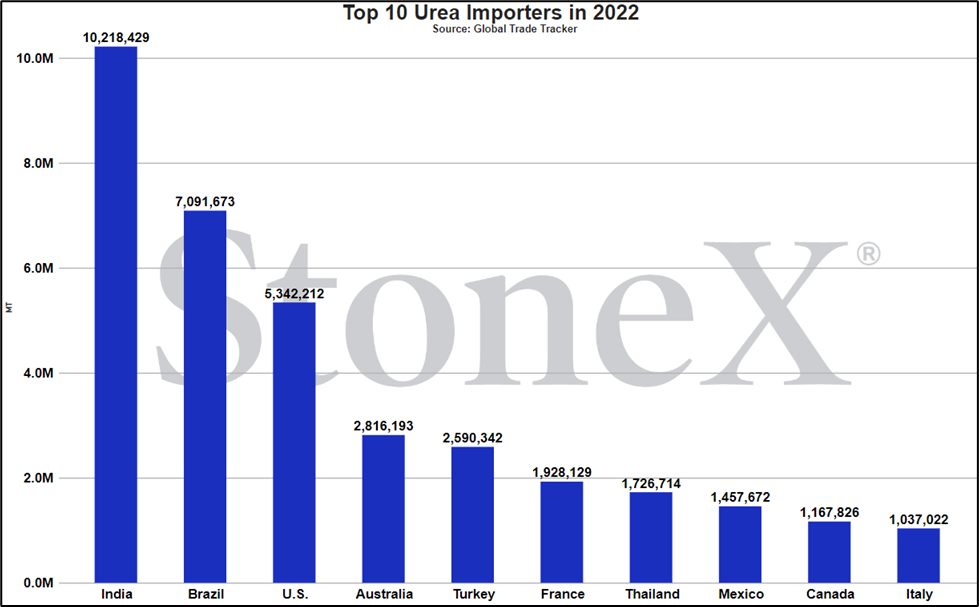
Number 3 global importer in 2022
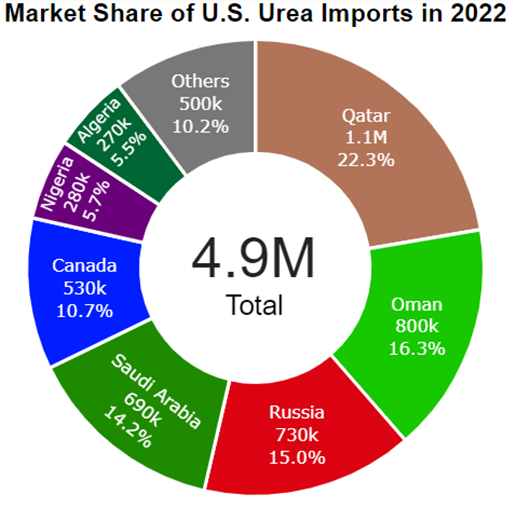
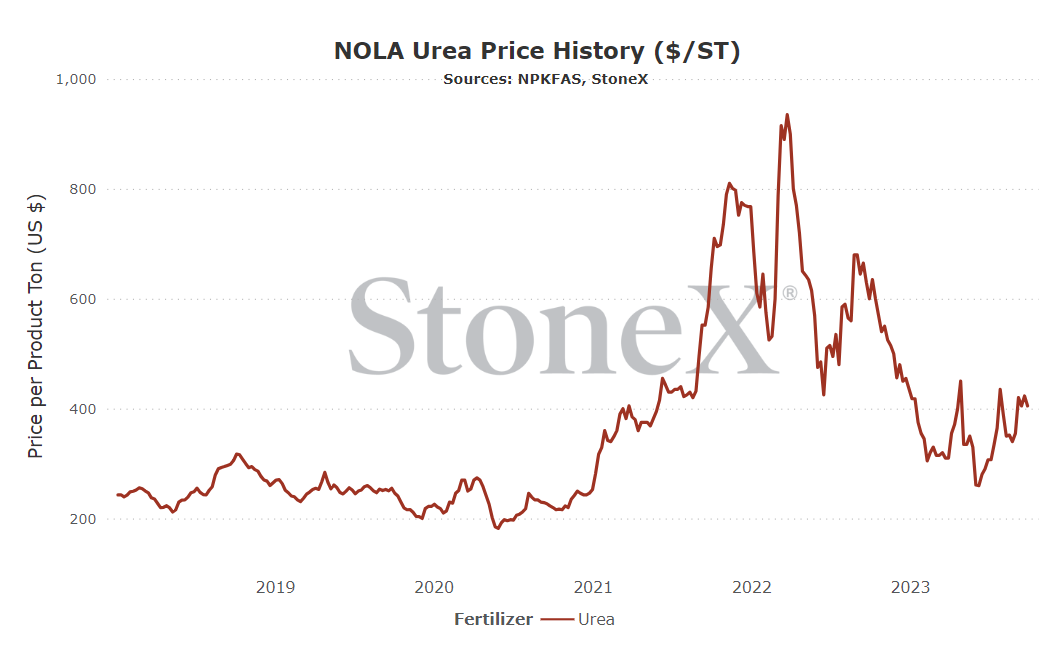
Price comparisons
Vs 30 days ago - +14% or approximately $50 higher
Vs 90 days ago - +32% or approximately $98 higher
Vs 6 months ago - +31% or approximately $95 higher
Vs 1 year ago - -33% or approximately $195 lower
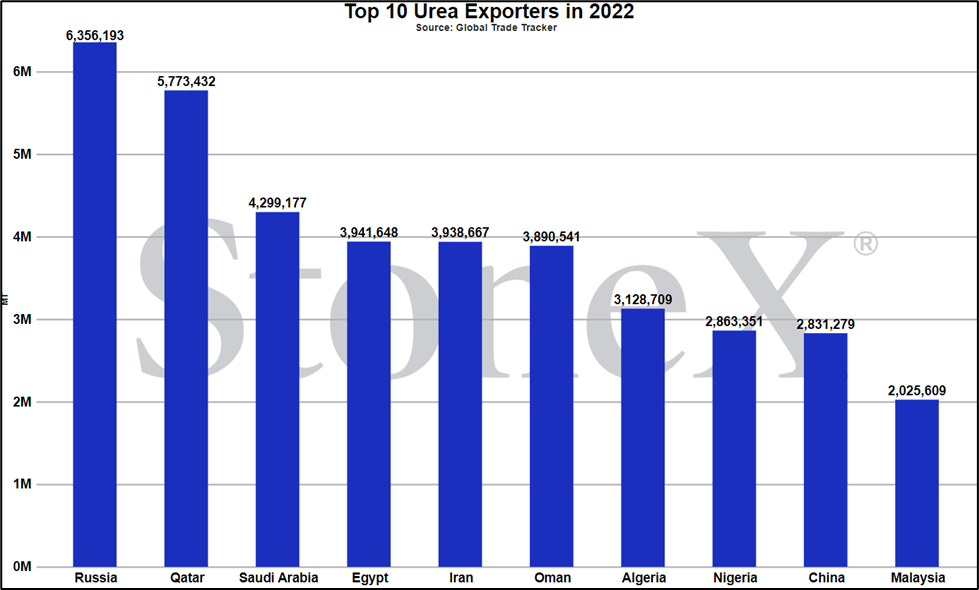
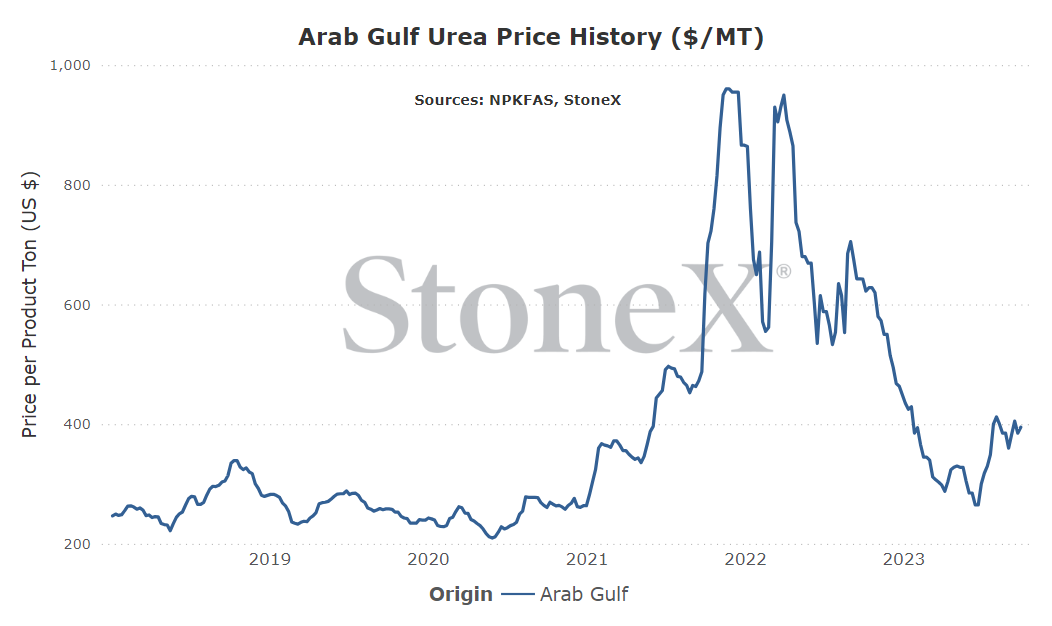
Number 1 exporter (as a region, not as individual nations)
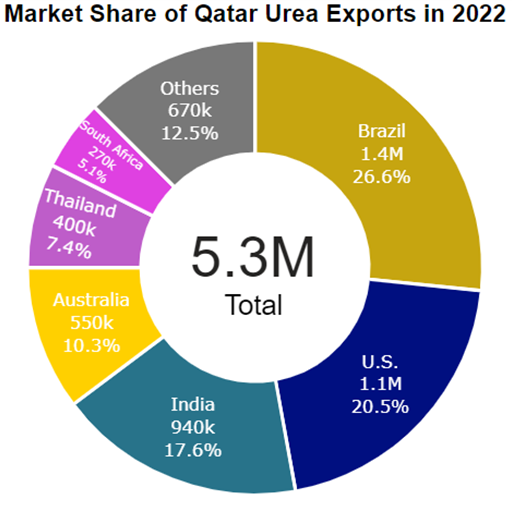
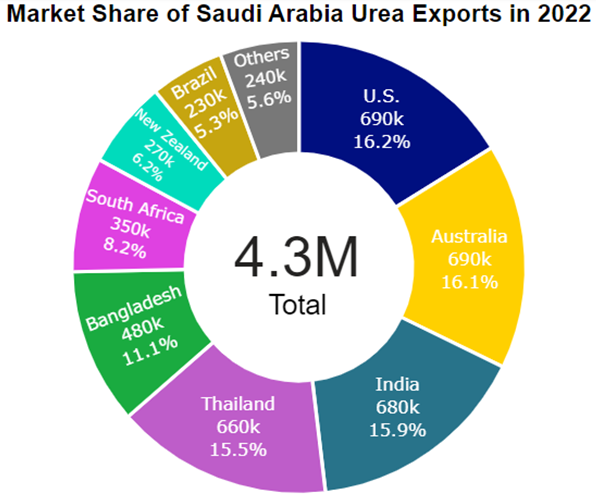
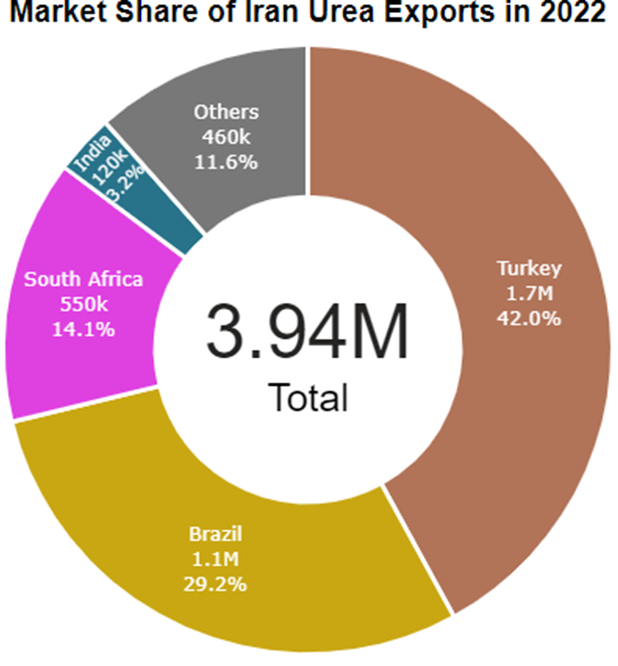
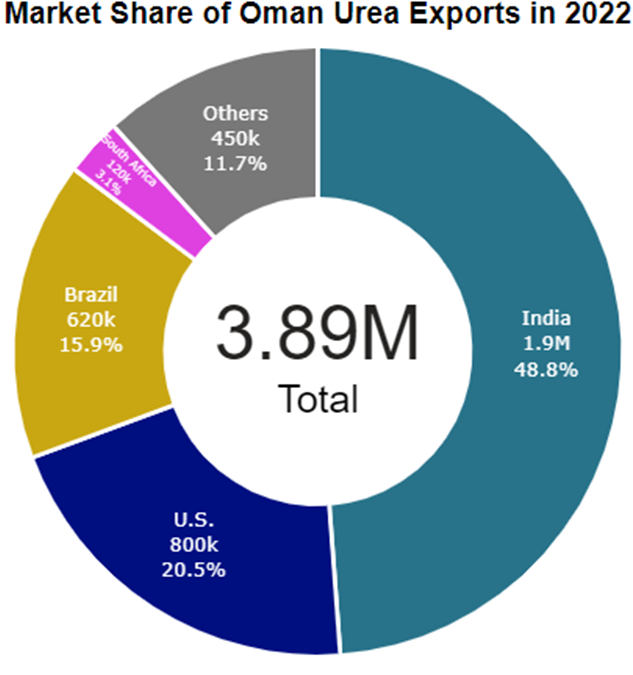
Vs 30 days ago - +10% or approximately $35 higher
Vs 90 days ago - +32% or approximately $95 higher
Vs 6 months ago - +33% or approximately $98 higher
Vs 1 year ago - -39% or approximately $248 lower
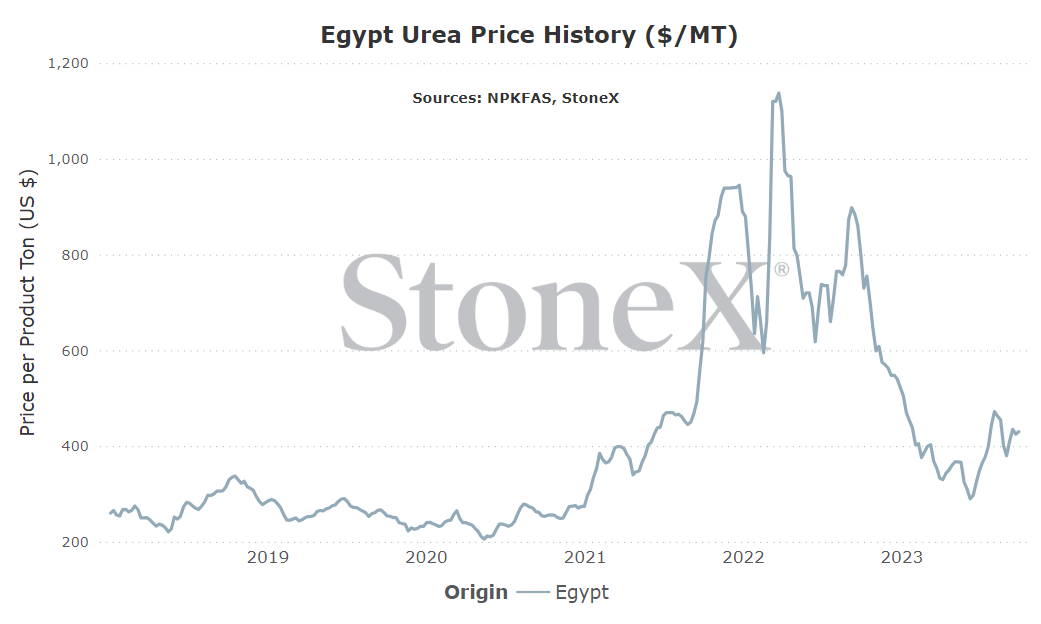
EGYPT
Number 4 global exporter in 2022
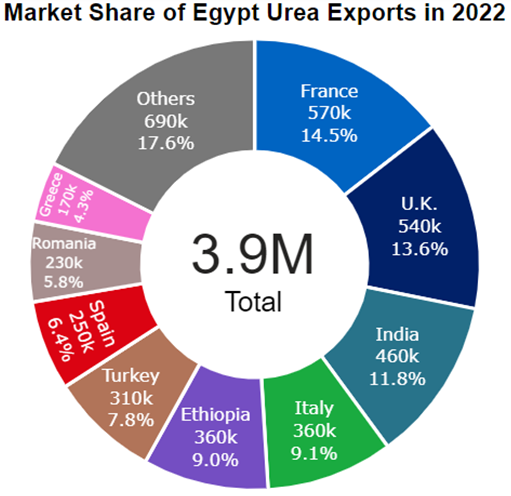
Price comparisons
Vs 30 days ago - +13% or approximately $50 higher
Vs 90 days ago - +24% or approximately $83 higher
Vs 6 months ago - +29% or approximately $97 higher
Vs 1 year ago - -46% or approximately $370 lower
BLACK SEA
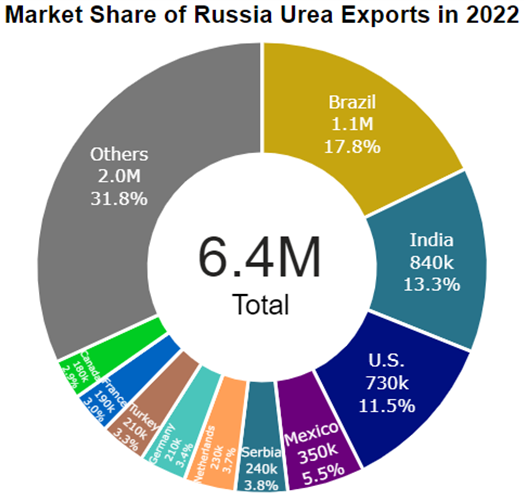
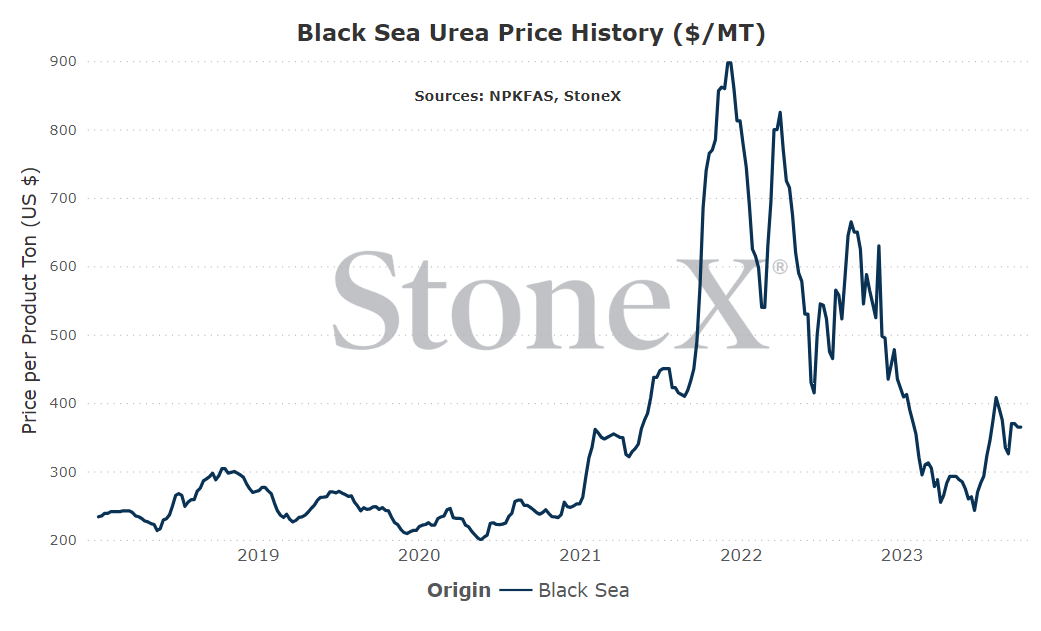
Number 1 global exporter in 2022
Price comparisons
Vs 30 days ago - +12% or approximately $39 higher
Vs 90 days ago - +29% or approximately $83 higher
Vs 6 months ago - +43% or approximately $110 higher
Vs 1 year ago - -42% or approximately $260 lower
CHINA
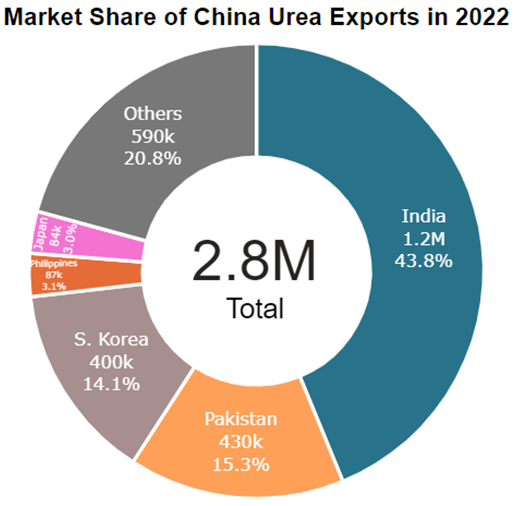
Number 9 global exporter in 2022
Price comparisons
Vs 30 days ago - +6% or approximately $23 higher
Vs 90 days ago - +35% or approximately $105 higher
Vs 6 months ago - +17% or approximately $58 higher
Vs 1 year ago - -37% or approximately $233 lower
BRAZIL
Number 2 global importer in 2022
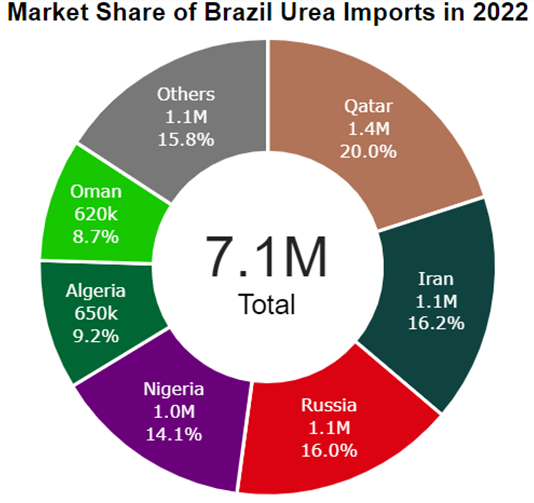
Price comparisons
Vs 30 days ago - +14% or approximately $48 higher
Vs 90 days ago - +33% or approximately $98 higher
Vs 6 months ago - +27% or approximately $85 higher
- Chinese export flows are still extremely questionable - just when we thought we had Chinese exports resuming normal flows, the central government steps in to ruin the party. Now, there are many in the global urea market who believe that Chinese exports will suffer for the foreseeable future, leaving the global S&D more tightly supplied than normal.
- European production rates continue to suffer under high input costs - it has been a while since we have heard an announcement regarding an offline European nitrogen plant restarting. A lot of that is due to the fact that Dutch TTF values have largely gone quiet and sideways. While Europe is far from a huge manufacturing region, they are still part of the world S&D. Their remaining offline production means a reduction in supply and an increase in demand.
- N.A. tight spring ending inventories/northern production issues continue to haunt the market - I cannot express how little inventory of urea was left at the end of last spring. That alone was enough to make the N.A. market feel tight. Combine that with production issues in Canada and a relative lack of imports to start the new fertilizer year and you get a market that is extremely tight. Just ask anyone that has tried to buy product recently.
- Urea is currently the highest cost form of nitrogen - now, it is only October. There is a long time between now and spring. There also isn't a ton of buyers having to make decisions between their N sources. That said, those approaching the market today are finding a market where urea is high priced vs both UAN and NH3. Farmers like to save money so we could see more demand switch away from urea until the difference gets balanced again...if the difference gets balanced again.
- Rumors that Chinese export restrictions applies only to India - today, the leading conversation is that Chinese exports are being restricted as a whole in order to fill domestic warehouses. Effectively, it is the approach of take care of home first. However, new rumors continue to pop up that restrictions only apply for tons destined for India while other destinations are free flowing. If that is true, the global S&D looks much better with more supply available.
- A possible incoming quiet period could have long positions questioning themselves - once India gets comfortable with their stockpiles, they could go quiet for a decent amount of time. Then we are left with the question of who steps forward as the driving buyer? The list isn't very long...if it goes quiet, inventories build, interest cost grow, etc. Basically, it gets easier by the day to justify a lower value to make a sale.
We believe that only looking at the flat price of either grains or fertilizer can be misleading:
-
Only selling grain can hurt you if fertilizer prices rise substantially
-
Only buying fertilizer can hurt you if grain prices fall
We look at the ratio "value" to get a better indication of where we are or how many bushels of X does it take to pay for 1 ton of fertilizer.
Would you rather:
-
Spend 135 bushels to pay for 1 ton of urea
-
Spend 55 bushels to pay for 1 ton of urea
When we compare the current ratio value against recent years, we start to see if we are high or low.
YOUR VALUES WILL LOOK DIFFERENT
This is a work in progress section! We plan on looking at the relationship between Aussie grains and global price points (and hopefully Aussie specific locations, though that data is hard to secure, very protected). Big reason why we are still in the "trial" stage of this newsletter!!!!

- China, China, China - just when the global urea market thinks it has China figured out, they throw a curveball. In the last India purchase tender, China played a huge part in supplying approximately 1M tons. The global urea market fell as a result. On the next surprise India tender, China effectively slowed/stopped exports from participating. The global urea market rose as a result. Now, there are rumors that China is only limiting exports on Indian destinations but not elsewhere. What China decides to do influences the global urea market.
- Global demand...timing - for the most part, we know what world demand looks like going forward. However, the timing can have huge implications. If demand is pulled sooner than expected, as India has just done, then we see the market react bullishly. If demand suddenly disappears as a result of high prices, the correction comes.
- Nearby supply availability vs longer term bearish outlook - this is where the possibility of supplies getting tight increases. When the price outlook is bullish, every importer is willing to pull the trigger on an import vessel. If the farmer/retailer does not buy, they they can make money on appreciation. However, when the outlook is bearish, as it is today, importers get more reluctant to pull that trigger. That can leave a market like Australia with tight supplies. It isn't as though nearby demand is enormous, but for those areas that need it, it is the most important thing. It is worth having conversations with your supplier to check availability outlooks.
All data was sourced from StoneX unless otherwise noted.
This material should be construed as market commentary, merely observing economic, political and/or market conditions, and not intended to refer to any particular trading strategy, promotional element or quality of service provided by the FCM Division of StoneX Financial Inc. (“SFI”), StoneX Financial (Canada) Inc. (“SFFC”) or StoneX Markets LLC (“SXM”). SFI, SFFC and SXM are not responsible for any redistribution of this material by third parties, or any trading decisions taken by persons not intended to view this material. Information contained herein was obtained from sources believed to be reliable, but is not guaranteed as to its accuracy. Contact designated personnel from SFI, SFFC or SXM for specific trading advice to meet your trading preferences. These materials represent the opinions and viewpoints of the author, and do not necessarily reflect the viewpoints and trading strategies employed by SFI, SFFC or SXM. The FCM Division of StoneX Financial Inc., a subsidiary of StoneX Group Inc., is a member of the National Futures Association (“NFA”) and registered with the U.S. Commodity Futures Trading Commission (“CFTC”) as a futures commission merchant and commodity trading advisor. StoneX Financial (Canada) Inc. is currently registered as a Futures Commission Merchant or equivalent in all provinces of Canada and is a member of the Investment Industry Regulatory Organization of Canada.