October '25 PHOSPHATES
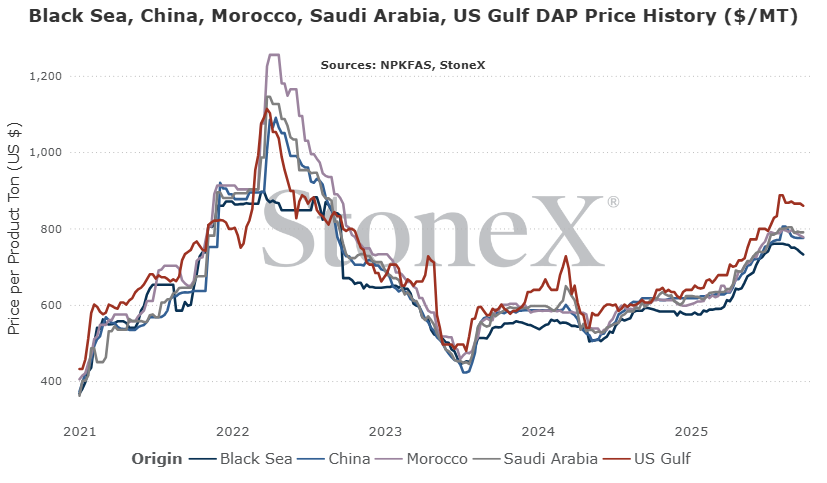
Major global phosphate export location price graphs
I will say this now and will say it going forward to eternity: these are the flat price graphs for each individual location. Your price where you are is going to be different. There are logistics. There is the cost of storage/interest/insurance/etc. These graphs should not be taken as "it shows the price at $700, why isn't my price $700". These graphs should be used to give an appreciation for price movements.
All values are in metric tons and USD currency.
What everyone wants to know first, what do we think will happen going forward
Global
Values have finally started to come off their high's!!! It took a combination of events for that to happen. First, Chinese exports have finally started to return to the market. Now, in fairness, the 2025 total is still expected to be half or less than what they normally export in a given year. However, just the fact that anything is departing their shores is a help. Then the other is that India has finally slowed their buying pace. They were a strong show that global prices were firm when they were buying near daily. With that pace slower, the world can breath again.
The magic question is now "how much lower can/will it go?". This is a tough one.
A substantial drop in annual Chinese exports is going to continue to keep a large hole in global supplies. There simply is not many/any alternatives to make up the difference. That will help keep the market nervous and somewhat price stable/high heading into the future.
However, current phosphate prices are too high vs the grain values many are seeing. This is very likely to have farmers considering bigger demand cuts wherever possible.
It would not be a surprise to continue seeing phosphate prices trending ever so slightly lower over the next few weeks, especially if China continues to export. However, if China reverses course (blocking exports) and/or global demand is bigger than threatened, watch out.
North America
Prices have come off their high's, the first waves of demand have been disappointing, but fall application season is a month away.
For the next few weeks while harvest continues, I would not be surprised to see values continue to soften slightly. So far, the southern wheat demand has been very poor. This was largely expected. More surprising is the lack of excitement surrounding Upper Mississippi River fill before winter closure. I think a lot of folks thought there would be a demand surge. Northern buyers have largely said no thank you. That is going to limit nearby excitement and put doubt in the market regarding demand.
However, my biggest fear remains in the 30 - 60 day window. Farmers continue to tell their supplier they have little to no intention of applying this fall. That has the retailer/coop pulling back on the supplies they have in place because they cannot weather the price risk solo. That also has the distribution chain being lower supplied. Coupled with a lack of imports and continued poor domestic production rates...you get the picture. What I am saying is if when fall application begins, if demand does a 180 and decides to apply, this market could get out of hand to the bullish side very quickly.
I could see bearishness over the next 30-days but my fear of in season demand that was not expected has me watching for higher prices during November/1st half December.
Note: I fully understand the need/want to lower application rates. I am not here to tell you what to do or what not to do. You and you alone need to make the best decision for your operation. What I am trying to get across is that if you do plan to apply this fall, that conversation needs to be had NOW. I am not being sensational or fear-mongering on my phosphate POV. I believe there will be demand destruction. The market expects it. If we start and demand shows up, the market will find you phosphate...you just may not like the price and you may not like how long it takes for the product to arrive...
General Global DAP/MAP Information
What has happened in the last 30 days?
Chinese exports still very slow, but finally showing up
When people ask "why are phosphate prices so high", my immediate response is simple: China.
Historically speaking, China is the world's largest phosphate exporter by a decently large amount. However, recent years has had their government rethinking their role in the phosphate marketplace. 2022 created a shift in the global markets as fertilizer prices increased significantly due to the Russian invasion of Ukraine. The global fertilizer complex feared Russian exports would slow/stop as a result.
The Chinese government saw what the ramifications of those fears were. Suddenly, phosphate values jumped and inventories started to become very tight. Realizing the potential that their own export flows could surge to the point that their farmers may be left wanting, they took action. The government start to impede the export of phosphates with two goals in mind:
1. Ensure adequate domestic supplies
2. Lower domestic phosphate values vs the world
Fortunately for Chinese farmers, this approach was largely successful in the governments eyes.
Unfortunately for the rest of the world, this approach was largely successful in the governments eyes.
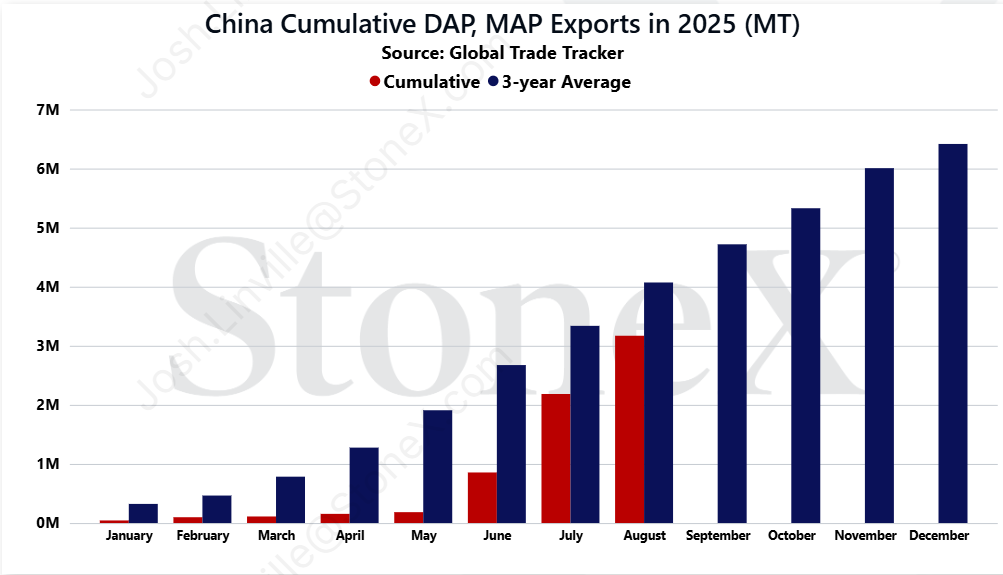
From our vantage point, a "normal" number of phosphate tons from China in a calendar year would be between 8 and 10M tons. For 2025, the government has indicated that it only plans to allow 4 - 4.25M tons to be exported. That means the world's largest supplier has cut its exports by half. This has been the biggest reason for high phosphate values...but there has been some improvement.
If you look at the chart below, you will notice that very little exports occurred from January to May. That left a huge supply void in the global supply market. This was also the period where India was attempting to rebuild their domestic stockpiles. That made for a deadly bullish situation around the world.
However, starting in June, exports did start to return. While the return of exports were expected, it was nice to finally see them arrive and did help to slow/stop global values from jumping higher near daily.
Now, thru August, China has exported just over 3M tons with expectations that September will do the same to put cumulative exports over 4M tons. However, what happens in the 4th quarter will be very important. On the one hand, we could see the Chinese government extend and expand their export program. If they look internally and see plenty of supply and feel that values are well priced, they could increase their 4 to 4.25M ton export cap which would be seen as a decently bearish price event. On the other hand, it would not be surprising for the government to completely stop exports once their threshold is met. Stopping exports from that point would allow domestic supplies to be boosted and domestic prices to fall once again as their farmers start to consider spring needs.
Honestly, neither situation would surprise the market.
For now, global phosphate eyes continue to be fixated on China because what they decide to do or not to do will go a very long way in determining what the phosphate market looks like.
Global phosphate market watches sanctions threats on Russia
In the last month, it appears that President Trump's patience with Russia has finally found its breaking point. Rather than being optimistic that peace could be found between Russia/Ukraine, it seems that he has abandoned that hope and is now considering far reaching sanctions meant to cripple its economy.
With any economic tools like sanctions, there are layers as to how lethal they are. They can be as light as just stopping trade directly with the country. They can be so severe that very few to no countries either can or will do business with them for fear of retaliation.
Then there is every possible layer in between.
When it comes to Russian fertilizer exports, it would be VERY hard to see a path forward where Russian exports start to slow and/or stop. However, the chance is not zero so I wanted to take a minute to walk through the watch points. I hope none of this happens but I would rather you be prepared if it does.
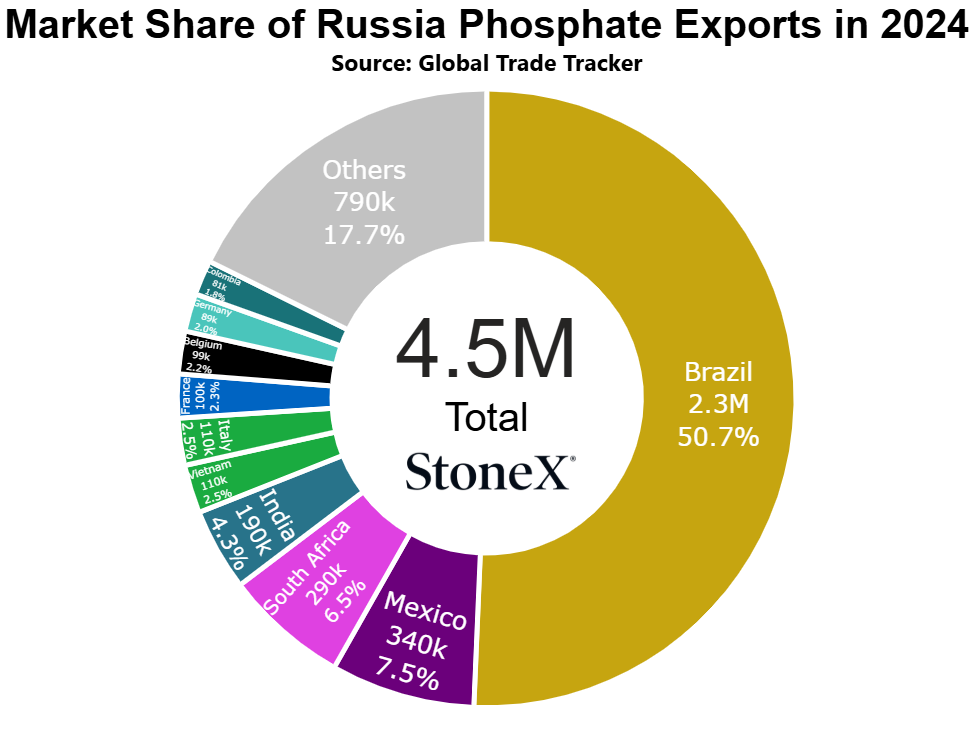
The reason it would be so very difficult to reduce Russian phosphate exports is because of where their tons flow. If they were almost solely dependent on western countries for their export destinations (like UAN), this becomes a much easier formula. Phosphate is not like that. As the pie chart below shows, a lot of their phosphate is exported to countries who have shown a willingness in the past to ignore western sanctions to keep adequate supplies in place. India and Brazil alone account for nearly 55% of Russia's export destinations.
We also have to consider just how tightly supplied the global phosphate market is today. If Chinese exports were normal, more nations may be willing to side with the west and block imports (if it comes to that). However, Chinese exports are expected to be about half of what they normally do. That means global supplies are incredibly tight and governments realize what this can mean. With the market set up as it is, it is much more likely that governments would ignore the U.S. lead.
Still, what happens if any sanctions are widespread successful?
Frankly speaking, it is hard to know what the end result would be from a price perspective. Obviously the easy answer is "higher priced", but to what extent? Frankly, I do not know the answer. In this nightmare scenario, the world is already missing 4 - 5M tons per year from China and then could lose near the same from Russia. Effectively, the phosphate market would see prices climb until a huge amount of global demand was destroyed. Only in that way would balance come back to the S&D.
Now, back to reality. Trump has cooled his threats in recent days. We have not seen the escalation that was there for a time. Even if he decides to proceed, it will be near impossible to create a situation that forces Russia to lower their export flow. They can pivot their exports to only India and Brazil and sell everything they need to sell.
Again, hopefully this piece ends up being a wasted effort because nothing happens but I want to make sure we are at least somewhat prepared in case it happens.

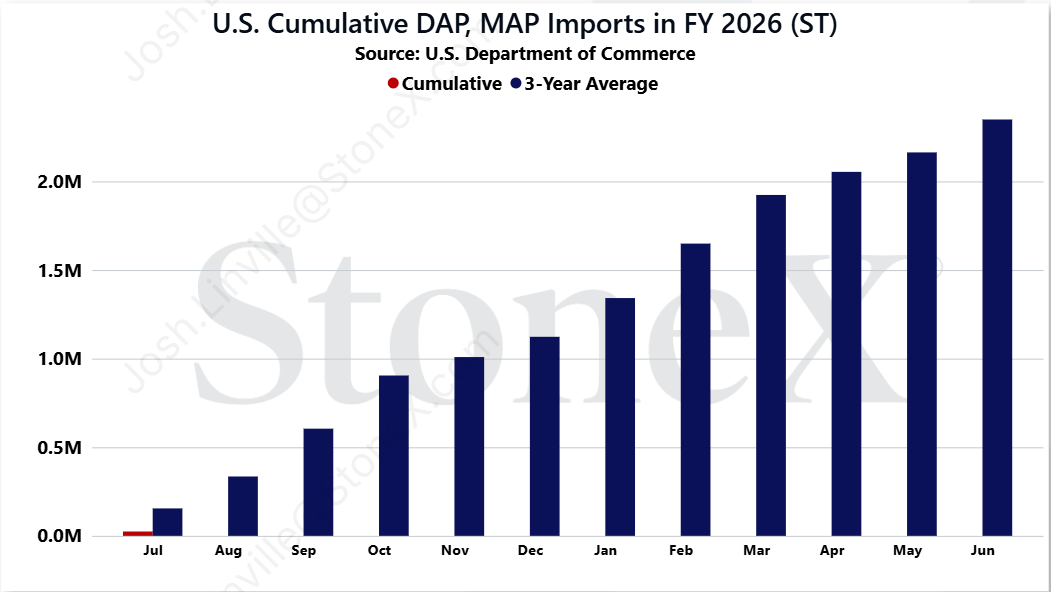
July U.S. trade data shows lack of imports, production rates still believed poor
While China's most recent month trade data may have shown a surge of phosphate exports, the U.S. July import data certainly shows that it was not the recipient.
For those that may be wondering, July is the most recent U.S. trade data available. The U.S. data is not released for 60-days after the period meaning we will not get August info until early October (should be first week). This frustrates me to no end, but being frustrated isn't going to change anything.
A prevailing U.S./N.A. story in recent months has been the lack of import options for the U.S. and by default, large sections of Canada. Part of this is due to tariffs. Part of this is due to duties. Part of this may become due to sanctions.
- Morocco - phosphate duties AND tariffs in place
- China - long standing tariffs in place
- Saudi Arabia - recent tariffs in place
- Russia - phosphate duties and feared sanctions coming
With global supplies so tight and demand from India soaking up any and all available product, there was no need for any of those 4 to send vessels to the U.S.
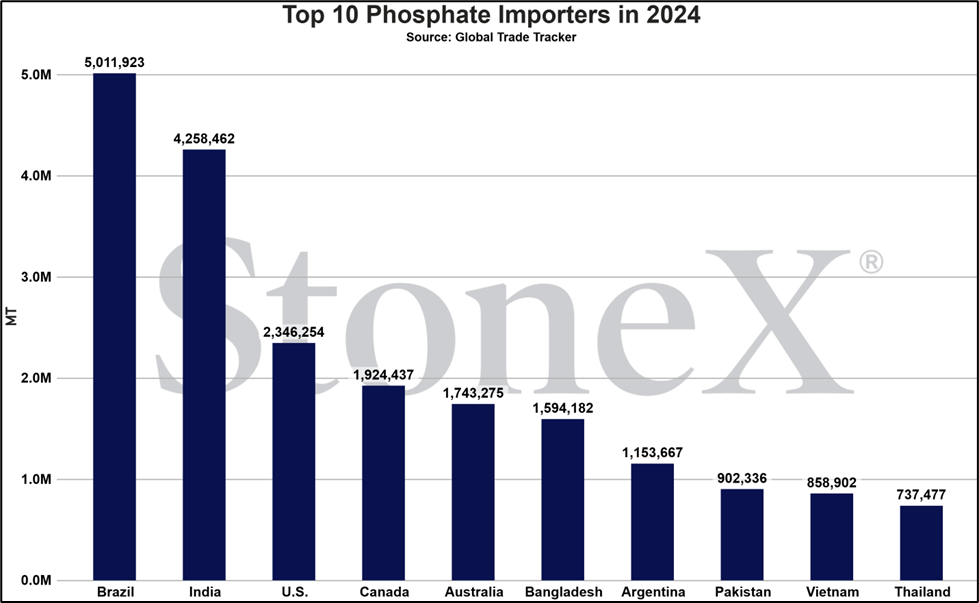
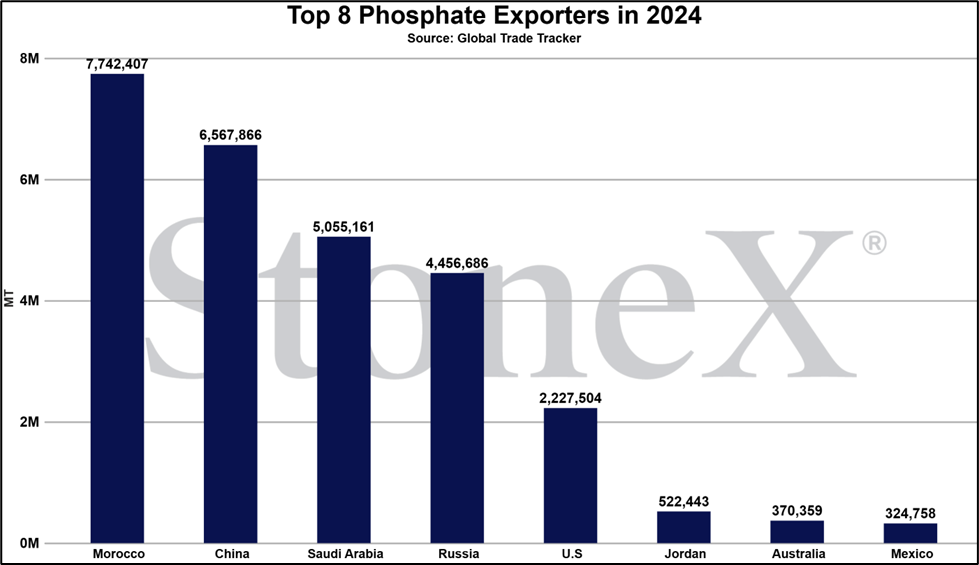
The U.S. sits at number 5 on the list and our own production rates have been low for some time.
Just recently, as discussed above, India secured a 500K ton per year over a 10-year period contract with Jordan. Why does this matter? Well, Jordan is the 6th largest phosphate exporter in the world. They only export a little over 500K tons per year. The India contract locks almost all of their supply and removes them from import consideration.
The next biggest exporter in the world after Jordan is Australia. They export just under 400K tons per year and are literally halfway around the world which means longer and more expensive sail times for vessels.
All of this combines for a very dangerous situation this fall. I will discuss this more in the story below but assuming nothing changes in the next month for supplies, the N.A. market will NEED massive demand destruction just to be able to balance the S&D.
Questions abound regarding looming demand w/ farmers struggling
The biggest single question surrounding fertilizer as we head into the fall is what will phosphate demand look like.
At this point, it is still a guessing game.
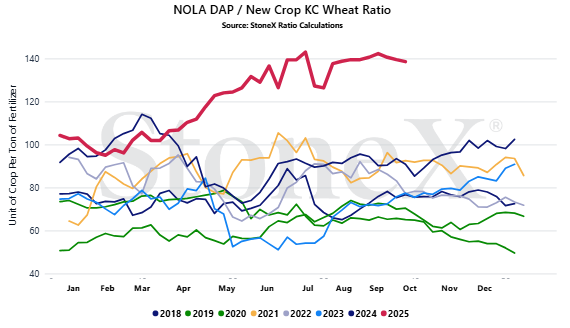
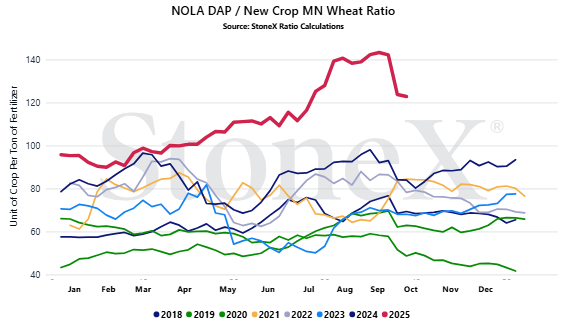
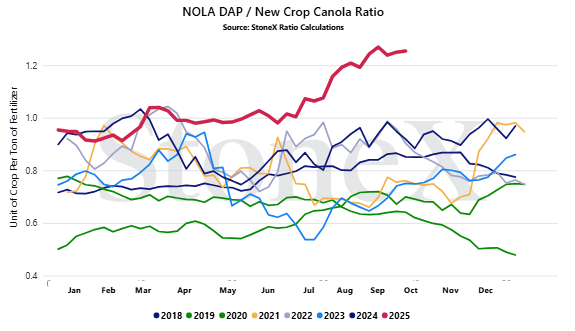
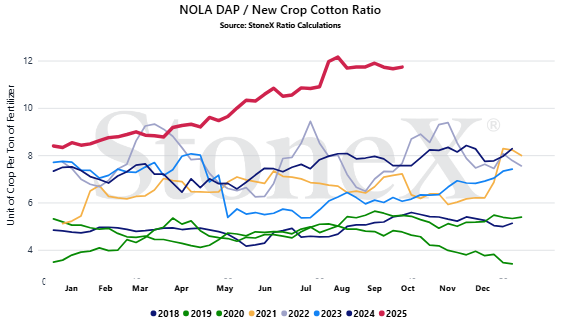
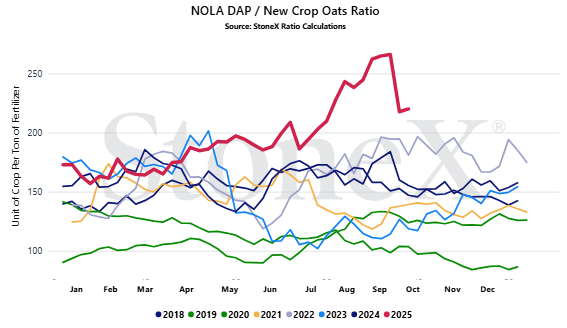
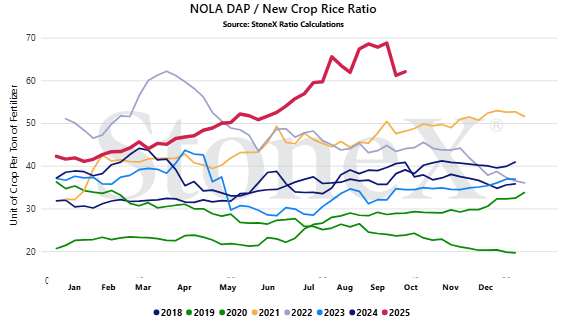
When looking at current phosphate values vs literally any grain out there, current ratios are insanely high which will have almost any farmer considering their normal approaches. There is a lot of anger, fear, nervousness, etc. around phosphate which has made it a very hard product to forecast. This is where the danger and my biggest fear comes into play.
All summer, this high price story has been prevalent. There was never a good time to step in to lock up phosphate needs for the fall. It went from very high to stupidly high. As a result, the feedback to the coop/retailer/supplier has been "I'm going to cut my rates". That doesn't give a lot of confidence to the supply chain who is already looking at the high price and worries about its own positions. A lot of the current market was around back in 2008 and 2012. We remember how prices shot higher and then folks got hung with some of the highest values when it started to fall apart. Rather than risk being put into that position again, it is easier/better to be conservative in position taking. The traders/distributors also appear to have scaled back because of all the demand destruction talk.
What happens if the demand destruction fears/stories become true? Basically, this is the current expected event. Personally, I'm expecting that we will see fall demand down somewhere between 25 - 50% of normal (I err more toward 25%). This means that demand being cut would not be a shock to the system.
However, what happens if demand decides to be good? There are still a few paths to this. One is that yields look to be very good out there. Everyone could argue all day just how big it will be but most will agree it is a solid crop. The problem is that big yields remove big nutrients that need replaced or risk 2026 yield potential. Another is the U.S. government considering farmer payouts due to the tariff wars. If farmers suddenly get a cash boost, phosphate could be one of the first to come back. None of this considers those that may have been threatening demand destruction with no intention of following thru.
If this plays out, the market is going to struggle. With in place supplies lower, a sudden surge of demand is going to push the market to the breaking point. I will not say that I expect supply outages or anything like that. What I am saying is that we may not like the price it takes to get product and we may not like the timeline to get that product in place.
If you have been here for a while, you know I am not one to ever tell anyone what they should or should not do. However, in this case, I would STRONGLY advise talking to your supplier if you have any chance of applying this fall but have not secured anything. I AM NOT saying you have to buy it today. Just having a conversation with your supplier will give them a little more information/confidence to be prepared for what may come.
Do not take this phosphate market lightly. I have been in this market 23+ years and have never seen anything like this before.
Where are current values in relation to the past
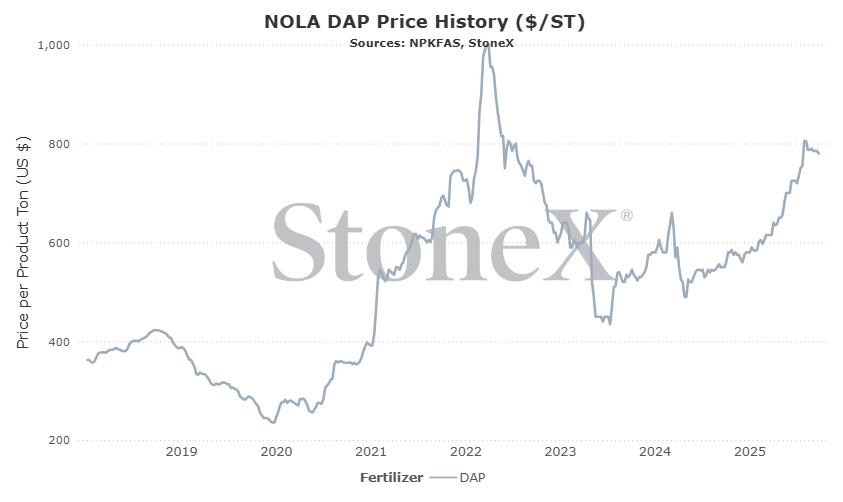
NOLA/New Orleans, Louisiana DAP price comparison
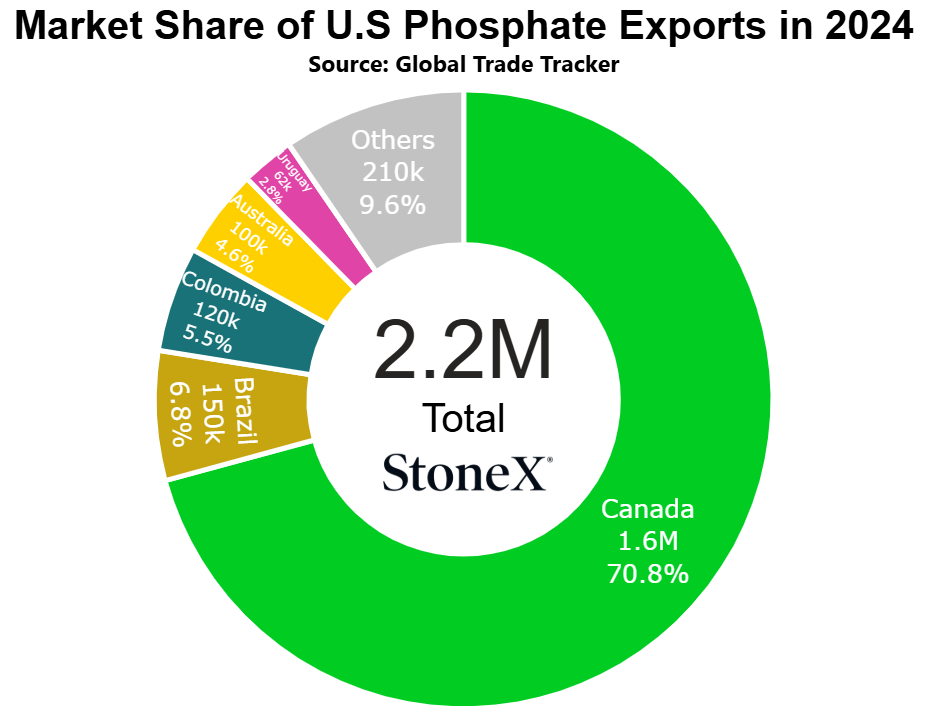
Number 5 global exporter in 2024
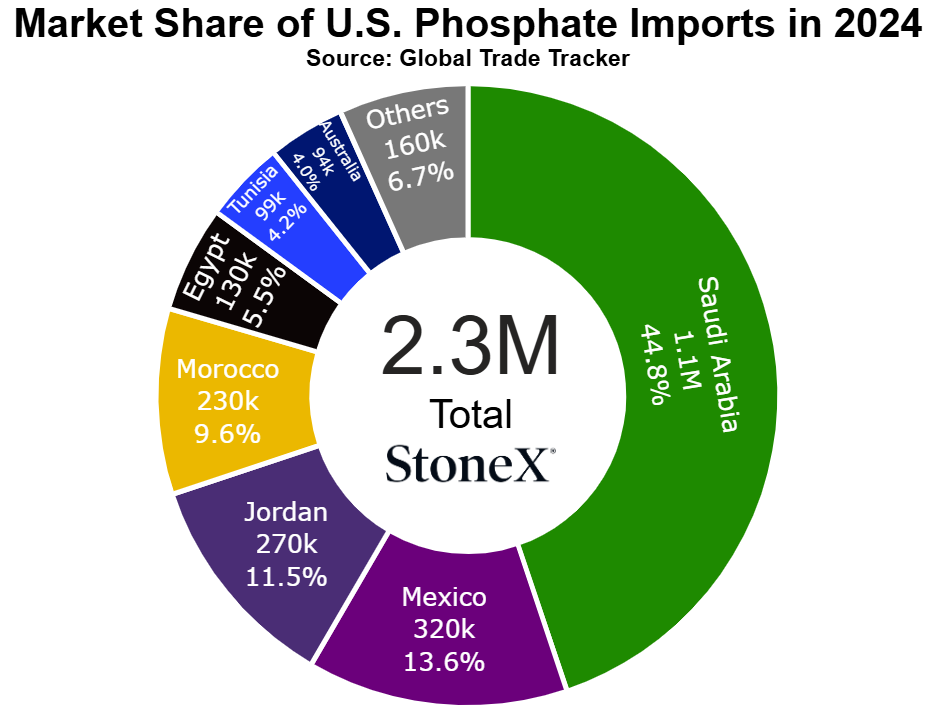
Number 3 global importer in 2024
Price comparisons
Vs 30 days ago - -1% or approximately $10 lower
Vs 90 days ago - 8% or approximately $60 higher
Vs 6 months ago - 22% or approximately $140 higher
Vs 1 year ago - 42% or approximately $230 higher
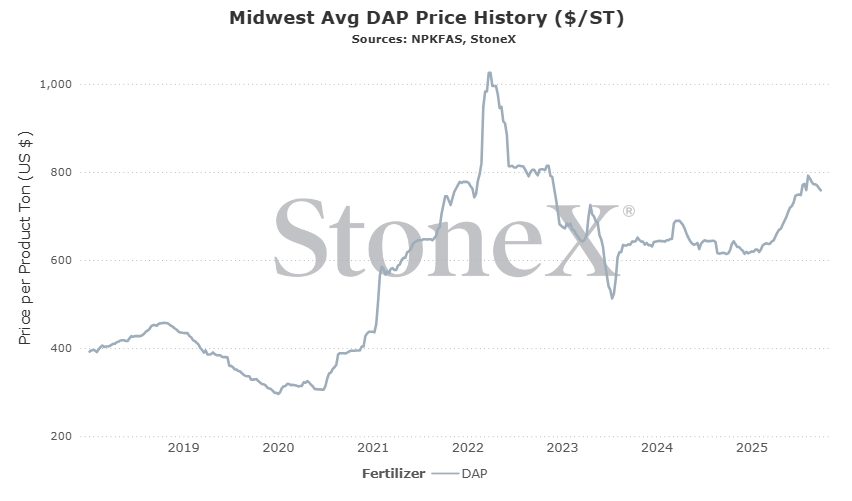
U.S. Midwest Average (using multiple points across Midwest) price comparison
Vs 30 days ago - -2% or approximately $14 lower
Vs 90 days ago - 1% or approximately $9 higher
Vs 6 months ago - 16% or approximately $105 higher
Vs 1 year ago - 24% or approximately $145 higher
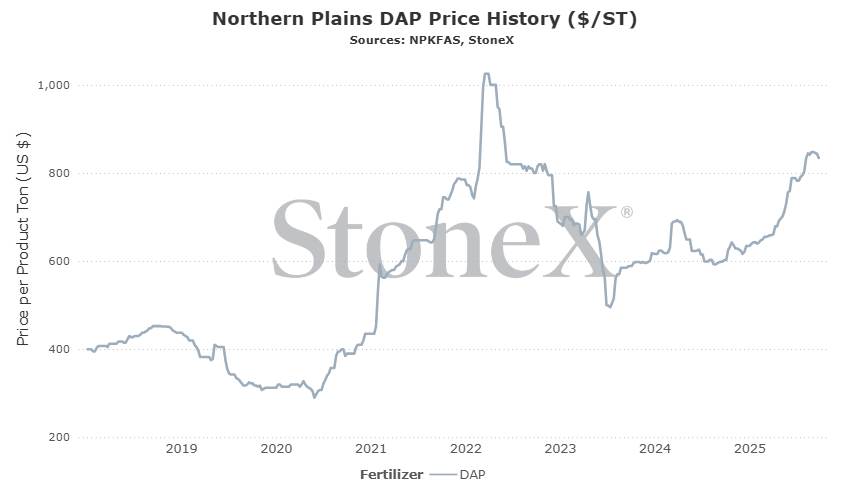
U.S. Northern Plains Average price comparison
Vs 30 days ago - -2% or approximately $14 lower
Vs 90 days ago - 7% or approximately $52 higher
Vs 6 months ago - 26% or approximately $173 higher
Vs 1 year ago - 38% or approximately $232 higher
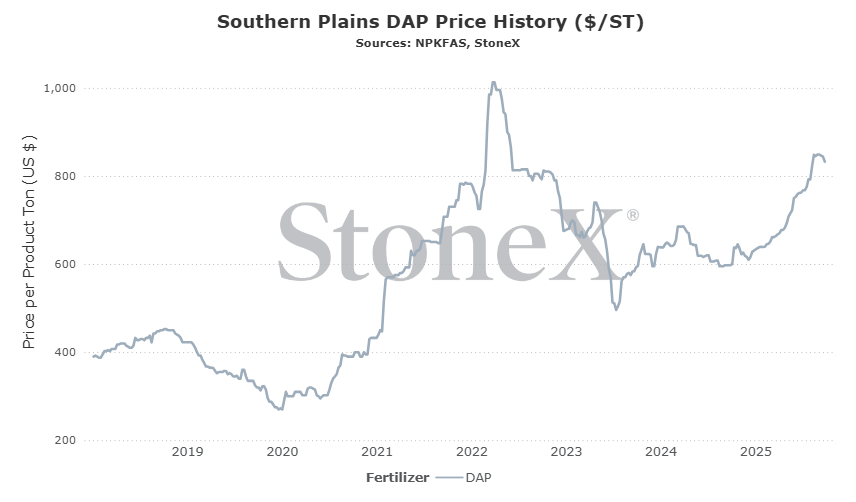
U.S. Southern Plains Average price comparison
Vs 30 days ago - -2% or approximately $16 lower
Vs 90 days ago - 8% or approximately $65 higher
Vs 6 months ago - 24% or approximately $163 higher
Vs 1 year ago - 39% or approximately $235 higher
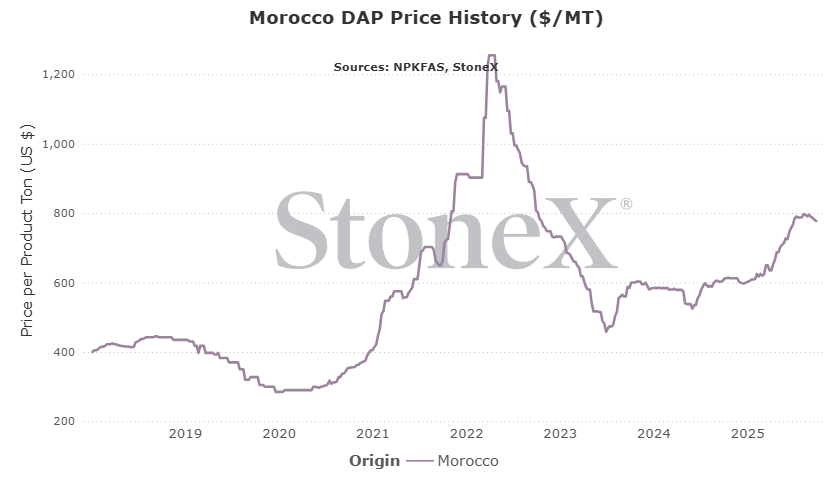
Morocco DAP price comparison
Number 1 global exporter in 2024
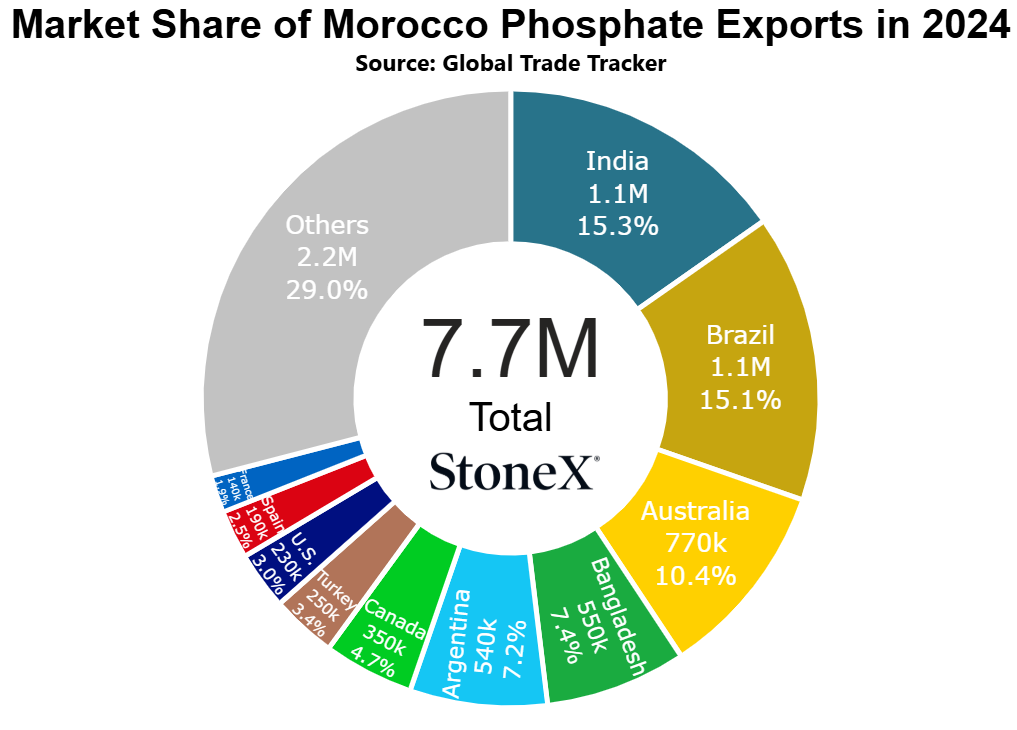
Price comparisons:
Vs 30 days ago - -2% or approximately $18 lower
Vs 90 days ago - -1% or approximately $8 lower
Vs 6 months ago - 22% or approximately $143 higher
Vs 1 year ago - 29% or approximately $173 higher
Black Sea DAP price comparison
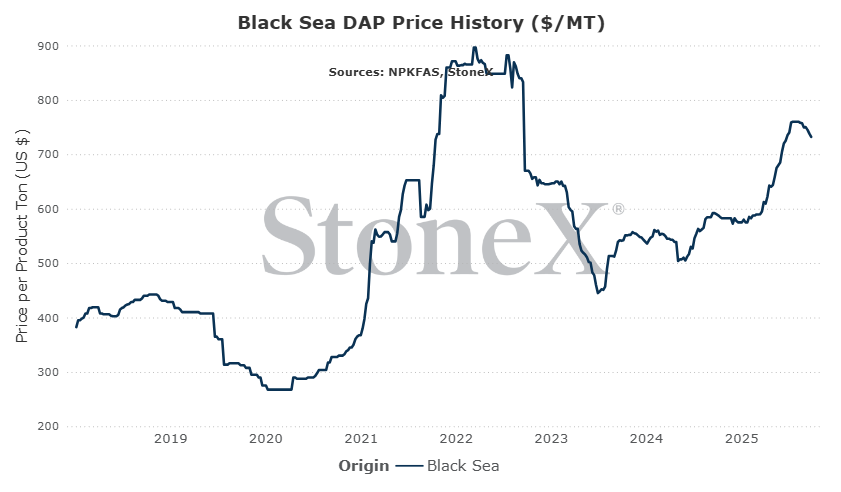
Number 4 exporter of DAP/MAP in 2024
Price comparisons:
Vs 30 days ago - -2% or approximately $18 lower
Vs 90 days ago - -1% or approximately $8 lower
Vs 6 months ago - 20% or approximately $123 higher
Vs 1 year ago - 24% or approximately $142 higher
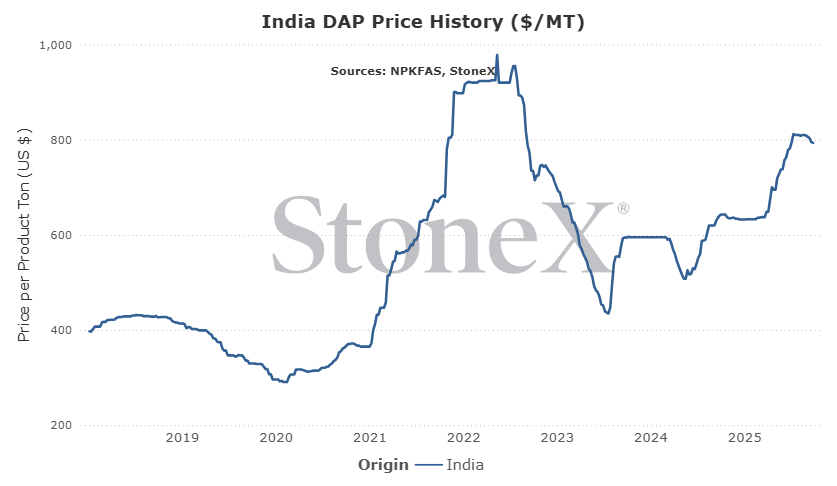
India DAP price comparison
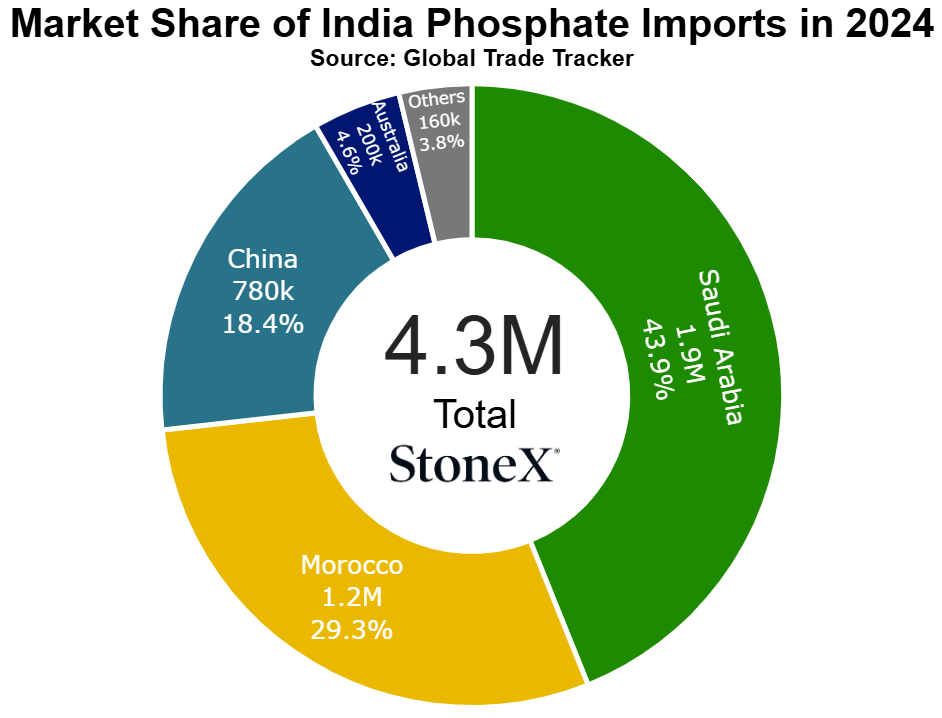
Number 2 global importer in 2024
Price comparisons:
Vs 30 days ago - -2% or approximately $16 lower
Vs 90 days ago - 0% or approximately $2 lower
Vs 6 months ago - 22% or approximately $145 lower
Vs 1 year ago - 24% or approximately $153 lower
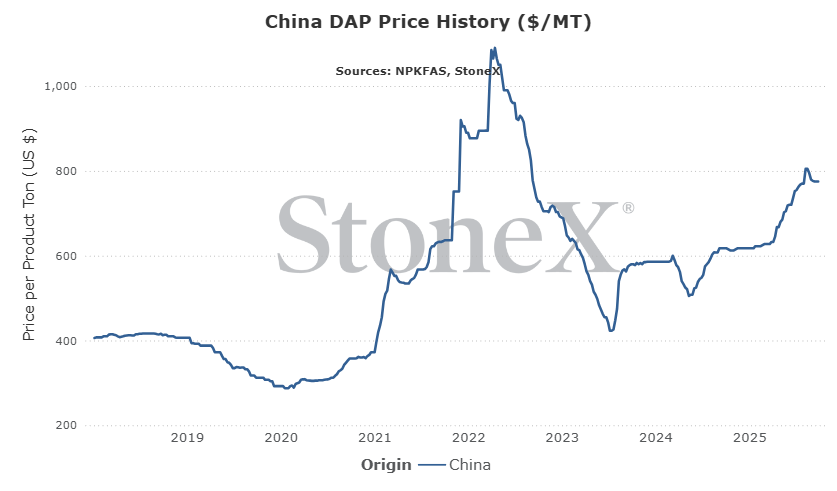
China DAP price comparison
Number 2 global exporter in 2024
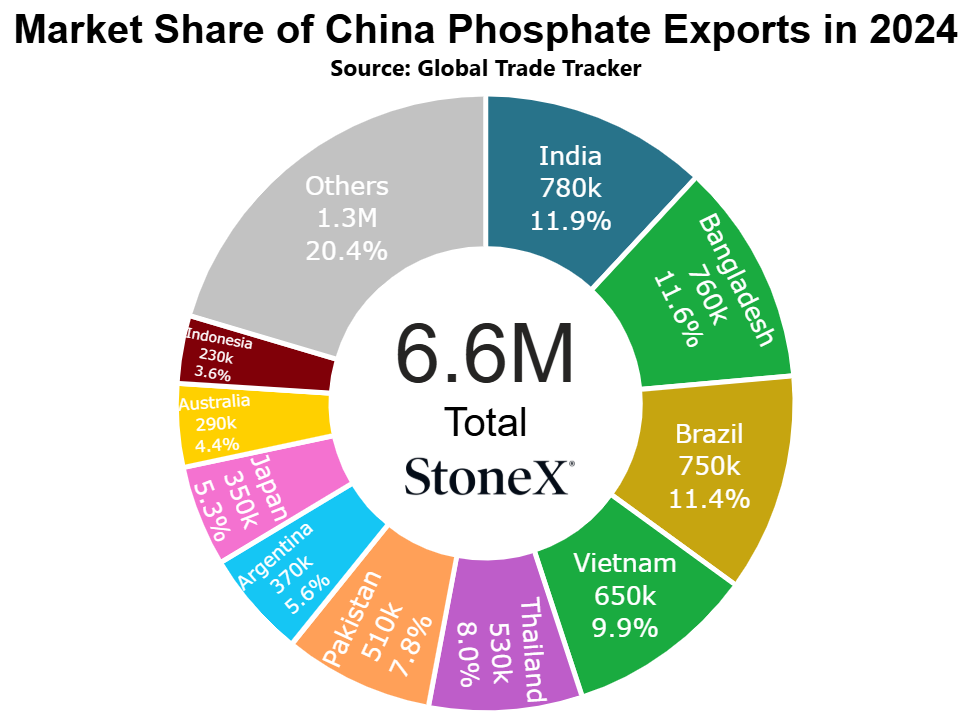
Price comparisons:
Vs 30 days ago - -1% or approximately $5 lower
Vs 90 days ago - 3% or approximately $20 higher
Vs 6 months ago - 23% or approximately $143 higher
Vs 1 year ago - 26% or approximately $158 higher
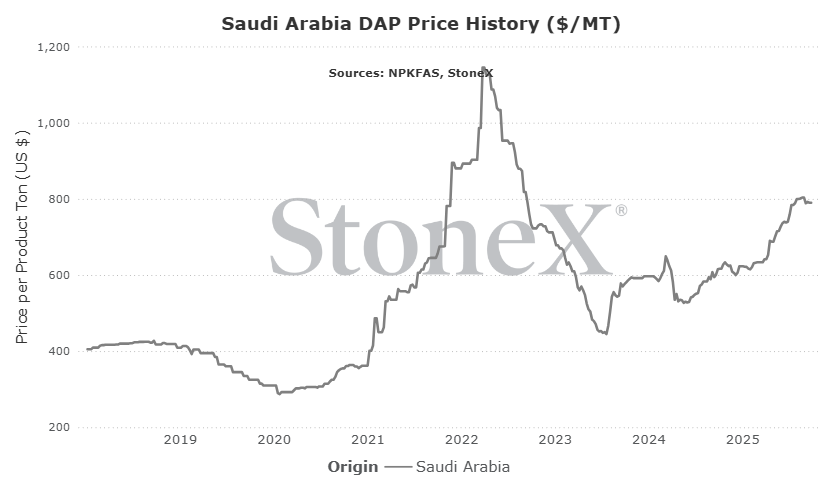
Saudi Arabia DAP price comparison
Number 3 global exporter in 2024
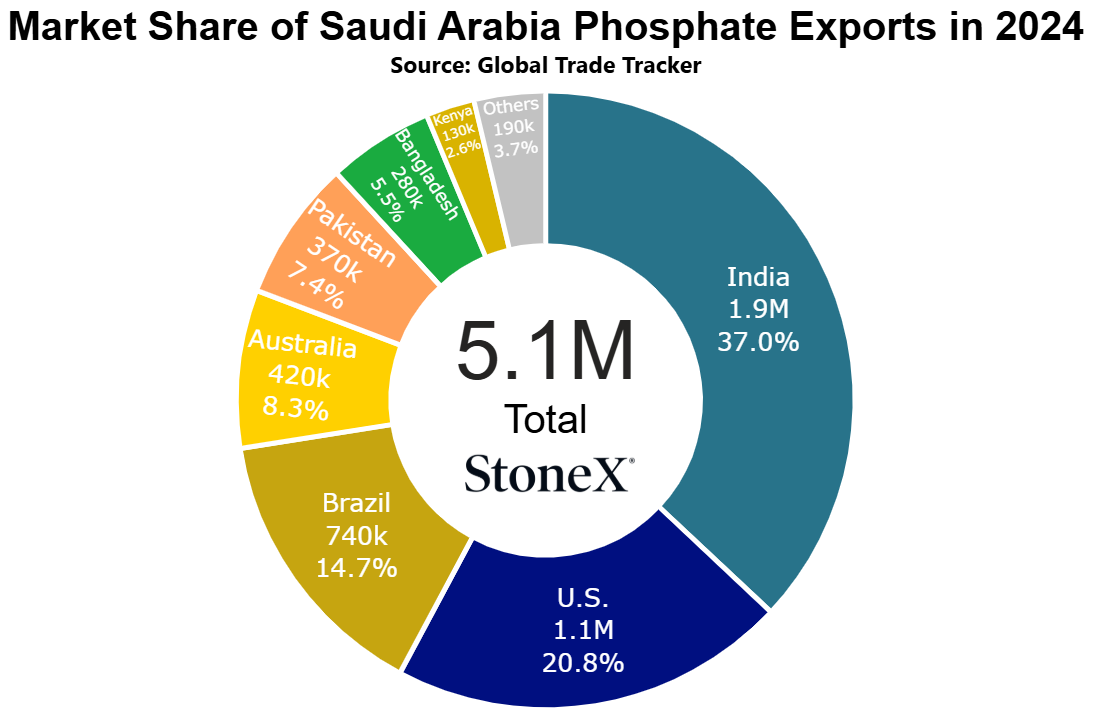
Price comparisons:
Vs 30 days ago - -2% or approximately $14 lower
Vs 90 days ago - 4% or approximately $32 higher
Vs 6 months ago - 23% or approximately $149 higher
Vs 1 year ago - 28% or approximately $175 higher
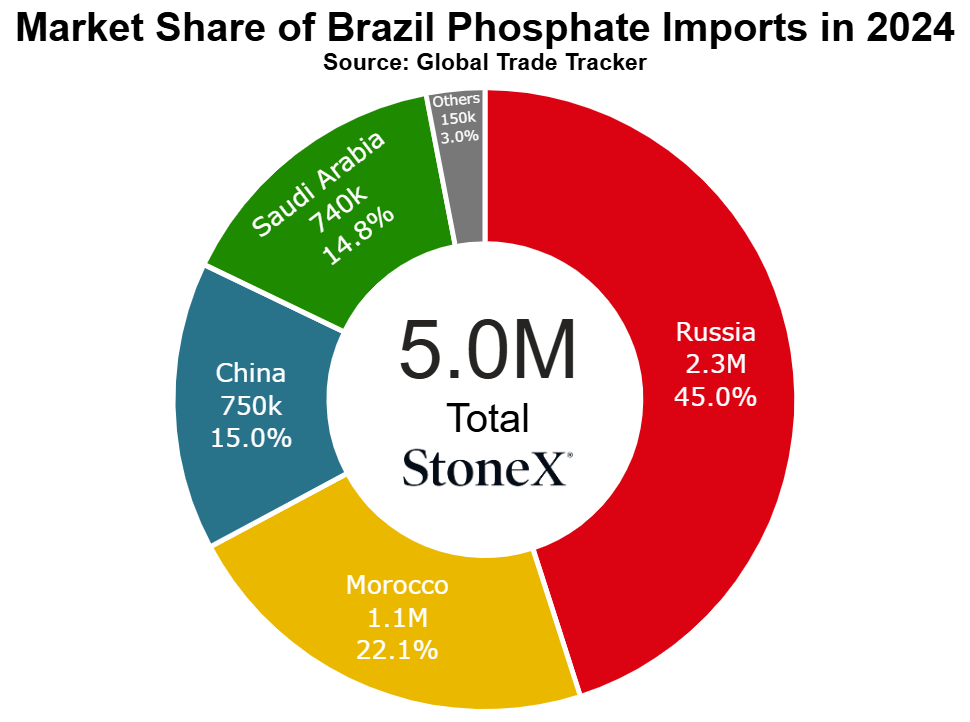
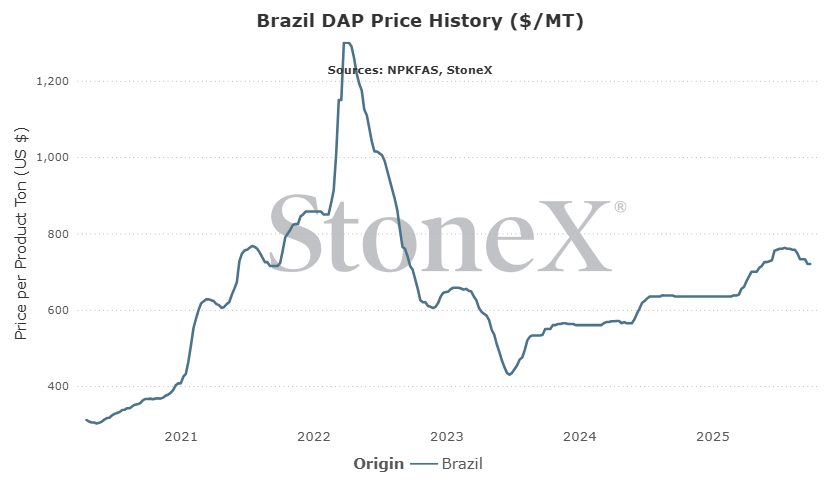
Brazil DAP price comparison
Number 1 global importer in 2024
Price comparisons
Vs 30 days ago - -2% or approximately $13 lower
Vs 90 days ago - -5% or approximately $40 lower
Vs 6 months ago - 7% or approximately $45 higher
Vs 1 year ago - 13% or approximately $85 higher
Bull/Bear Factors
Because no market is ever guaranteed to go higher/lower, we try to consider the factors that can sway values so that we are able to act when they occur rather than react.
- Bullish Factors
- Chinese government decides to shut down export flow - China is such a global phosphate powerhouse that whatever they do or do not do has world ramifications. Right now, Chinese exports have been picking up (as expected) which is helping lend a little bearishness to global prices. However, if they shut off their export flow because they hit their quota or much worse, they shut off their export flow BEFORE they hit their quota, the world is going to hurt. Supplies are already tight...
- The world gets very serious about sanctions on Russia - as mentioned over and over again this month, I still think the chance that sanctions happen in a way that has meaningful impacts of Russia's export ability is VERY low...but it isn't zero. More than likely, we would see western countries adopt the sanctions but countries like India, Brazil, etc. would ignore them. We saw this in the early days of Russia's invasion. However, if we proceed down the road where Russia exports start to slow, watch out. The global S&D is already tight and there simply are not alternatives to fill the gap.
- N.A. fall demand is much larger than expected - this one scares me the most of all fertilizers. Farmers today are telling their suppliers "I am going to cut and/or skip my fall application of phosphate". Let me be very clear, I do not blame anyone for this approach. Phosphate is stupidly high priced. It makes no sense. Farmer economics suck (I wanted to use stronger language but I'm guessing my compliance department would stop me!!). The money just doesn't exist to spend. However, after months of low/no demand feedback, the supply chain has pulled back on preparations. If farmers decide November 1 to go ahead and put on phosphate, that demand wave would send shockwaves thru the system. It is not prepared for that. Basically, every truckload of phosphate becomes an auction with the load going to the highest bidder.
- Bearish Factors
- China surprises and increases their export quota - while I do not expect this, weirder things have happened. A large reason why global phosphate prices are as high as they are today is due to the lack of Chinese exports. When the world's largest supplier cuts their flow from 8 to 10M tons per year to just over 4M tons and there is not excess global capacity, it is going to rally values. We continue to expect only around 4 - 4.5M tons to be exported in 2025, but China has done weirder things. If they suddenly improve their volumes to 6, 8, or more, the world will look fundamentally different in a lower priced kind of way.
- Global demand remains very slow with India getting "ahead" - India was the main driver of higher prices with their near constant buying approach. Now that it seems they have gotten ahead on their stockpiles, they have slowed down and the world seems much more calm. This, combined with Chinese exports finally picking up, has allowed values to come off slightly. The longer this quiet period extends, the more pressure it creates on manufacturers and long positions. Demand cannot wait forever, but it can have its say with the timing.
- N.A. fall demand is as bad or worse than expected - most of the conversations that I have had so far expect anywhere from 25 - 50% demand destruction this fall. Some of that is due to skipping phosphate completely this year. Some of that is an application rate reduction. Some of that is due to skipping fall and applying in the spring. Current supplies are very tight and the phosphate market NEEDS demand destruction this fall due to few imports and continued poor production rates. However, the market has overdone things before. If the fall demand run is much lower than even the worst case scenarios, it could send the market reeling...to a point.
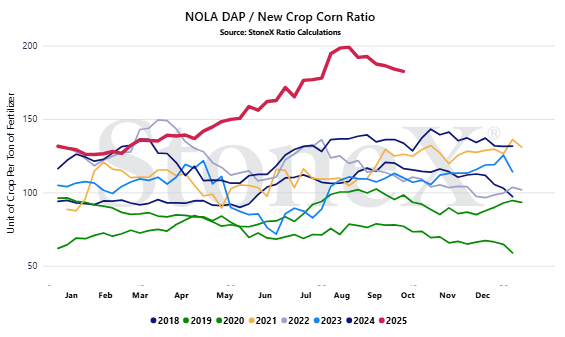
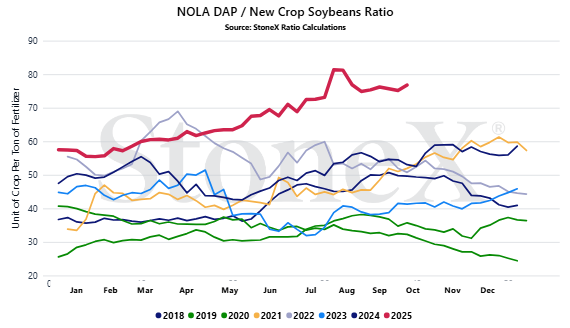
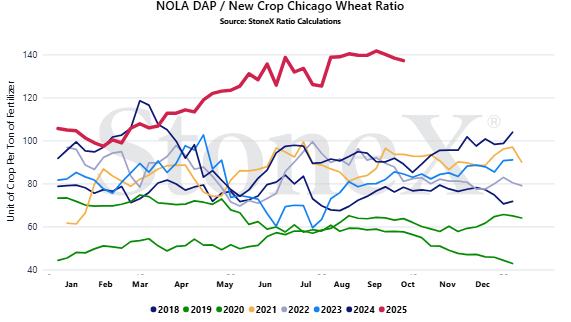
Where are the current phosphate/grain ratio values today?
We believe that only looking at the flat price of either grains or fertilizer can be misleading:
We look at the ratio "value" to get a better indication of where we are or how many bushels of X does it take to pay for 1 ton of fertilizer.
Would you rather:
When we compare the current ratio value against recent years, we start to see if we are high or low.
YOUR VALUES MAY LOOK DIFFERENT
This graph looks at the NOLA DAP price vs the flat grain price. There are no logistics on either product. Your location will look different due to fertilizer logistical costs, grain basis, etc.
- Josh Linville’s Focal Points
- Chinese export flows/programs - China's August trade data shows another solid month of phosphate exports. That has not only helped to stop the rapid price increase seen around the world, but has also caused some price ideas to slip slightly. Don't get me wrong, prices have not fallen that much. Not in relation to current values. But at this point we will take what we can get. If the Chines government expands this export program, it could have the global market turning a corner lower. If not, when the exports dry up, watch out.
- Global demands reaction to high priced phosphate values - this is the biggest nearby question. Fall demand is upon us and questions of demand destruction are about to be answered. If farmers around the world hold true to their points of cutting demand as threatened, phosphate is going to struggle to hold these values. If farmers break and decide last minute to apply, we haven't seen the worst of it.
- Has India quenched its thirst for supply - one of the biggest changes of the last month or so has been India FINALLY slowing their purchase pace. We no longer see them buying product 2 or 3 times a week. Their lack of purchasing has made the world phosphate market quiet, and fertilizer does not do well with quiet. However, how long can this last? Will we see them start buying again to build stockpiles even more? Are they done?
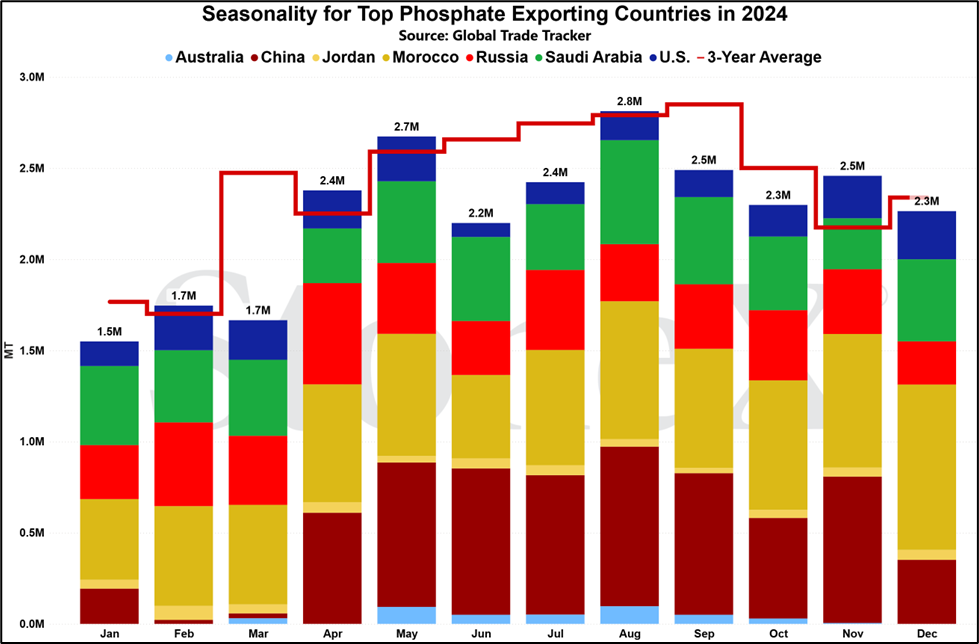
- The world vs Russia - if you look above at the top global phosphate exporters, you will see that Russia only comes in 4th for last year. That doesn't seem as big a deal and can give a false sense of confidence that global sanctions on Russia will not make a big difference. PLEASE do not fall into that trap. There are so few players in the global phosphate production game that losing anything hurts. If we were to lose any Russian exports, global phosphate values are most likely going to respond VERY bullishly. I continue to believe the chance of a worldwide sanction on Russia gets put into place that lowers/stops their exports is very low. Still, it does not hurt to keep it in the back of your mind just in case...
StoneX Ratio Calculation
The ratio calculation is derived from Bloomberg historical grains values as well as fertilizer values from StoneX, NPKFAS, and Argus.
The calculation is simply dividing the fertilizer price by each grain price.
All data was sourced from StoneX unless otherwise noted.