February 9 - Stocks are mixed headed into the weekend, with the tech sector pushing higher, while the Dow comes under pressure. The VIX continues to trade below 13, reflecting relative calm on Wall Street, while the dollar index trades near 104.1. Yields on 10-year Treasuries are trading just below 8-week highs near 4.19%, while yields on 2-year Treasuries are trading at 8-week highs near 4.49%. Crude oil prices are modestly higher going into the weekend on rising geopolitical risks, while the grain and oilseed sector is mixed.
Soybean prices again came under pressure today, following yesterday's bearish USDA crop report, with soyoil also pulling back from its recent rally after encountering overhead chart resistance. Wheat prices rebounded from their recent losses amid buying from both end users and speculators after approaching the lower bounds of its descending channel on the charts, led by European prices. That tended to pull corn lower as well, which continues to lack a story of its own with Brazil's winter corn crop thus far going into the ground on schedule with good rains in the forecast. There's not a lot of news out there right now to change the current narrative for these commodities. That could start to change if we get surprisingly strong inflation data next week, but that's not currently expected. It could also change if we were to see the dynamics change in the Black Sea to stop commodity flow, but for now, the market is discounting that likelihood.
USDA cut 35 million bushels from its soybean export target in its monthly crop report on Thursday, which wasn't a surprise to us. In fact, we'll likely see more cuts in the months ahead, unless the Brazil crop is much smaller than our current estimate of 150.35 million metric tons that comes from our StoneX customers survey there. However, I do expect USDA to partially offset that with increases to crush, but it's being conservative in doing so at this point.
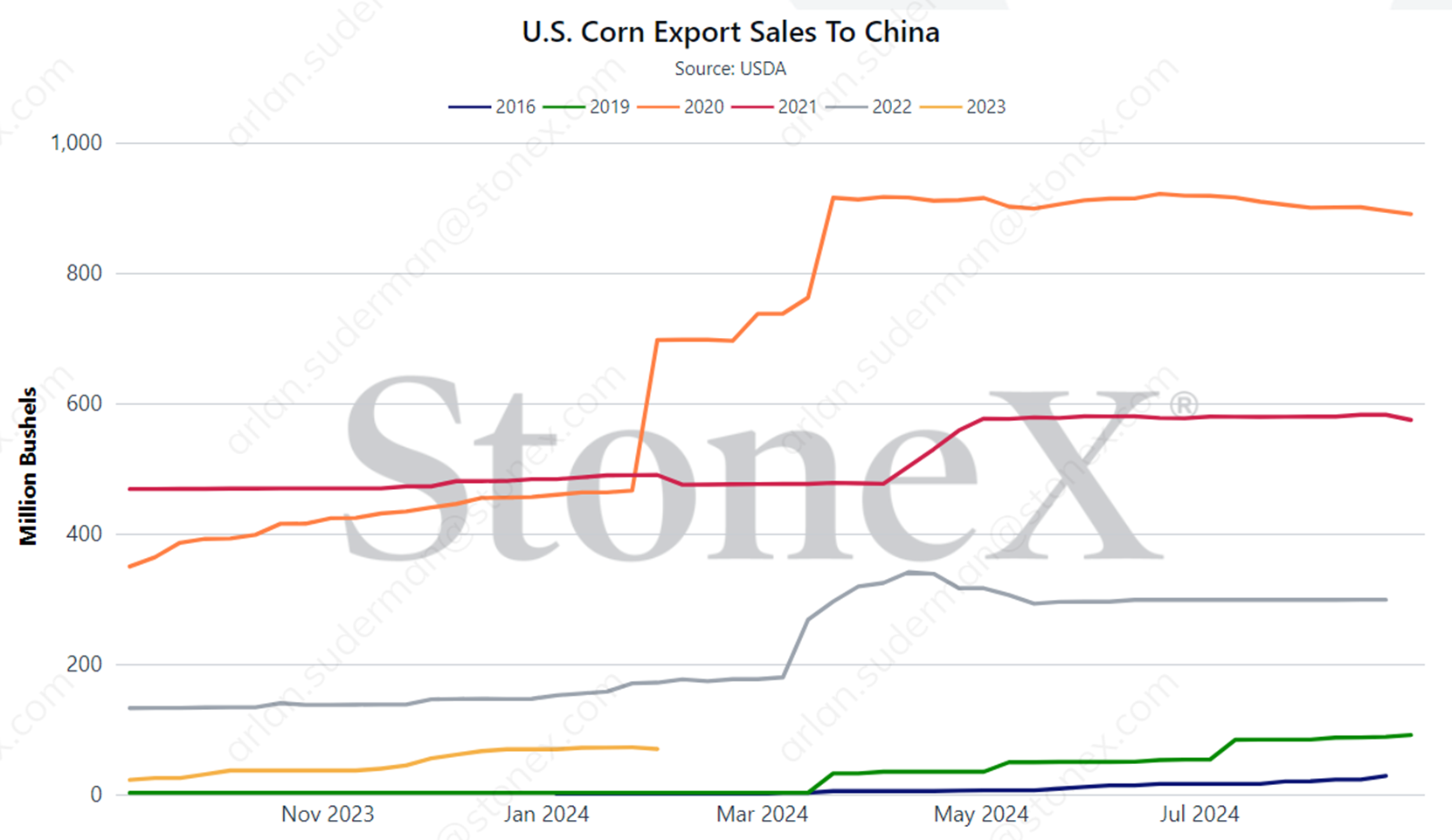
But what about corn demand? I was quite bearish about corn demand six months ago, but my view has evolved since then as cheap prices have created demand. Cheap feed prices encouraged cattlemen to pull lighter weight cattle from dry pastures last fall earlier than expected, placing them into High Plains feedlots. They then fed them to record weights with mild temperatures combining with those cheap feed prices to provide the incentive to do so. Cheap corn prices also helped grind margins, encouraging stronger ethanol demand as export demand for the fuel expanded. But corn exports have also been solid, although not where many in the trade were focused. I kept hearing about strong Chinese demand for corn, but their U.S. corn purchases remain sluggish, as shown in the graphic on the left. China prefers to purchase its corn from Ukraine, and it continues to do so, although geopolitical risks in the Red Sea make that more challenging currently. But China also signed a phytosanitary agreement with Brazil post-Covid, making it a valuable source of corn, which it is fully utilizing.
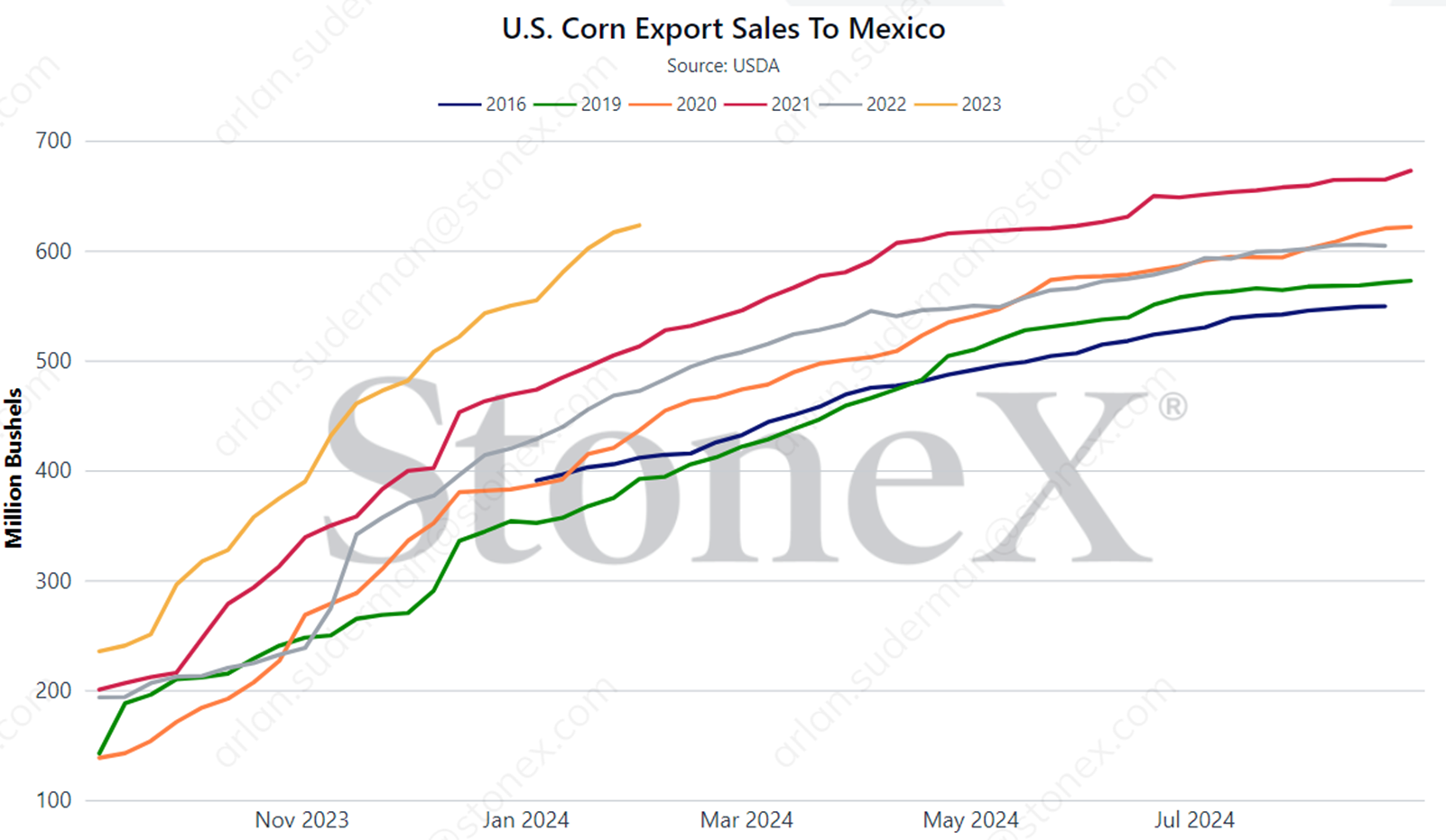
The graphic below shows how volatile Chinese corn demand is for the United States, but demand from Mexico continues to trend higher. China currently has roughly 70 million bushels of U.S. corn on the books, combining shipped and unshipped, which is 100 million less than the previous year's pace, and 420 million bushels less than two years ago. On the other hand, Mexico has already purchased 623 million bushels of U.S. corn, up 151 million from the previous year, although up "just" 110 million from the previous year's pace. That's a big reason why total U.S. corn export sales for the marketing year to date total 1.374 billion bushels, up 320 million bushels from the previous year's pace, putting us slightly ahead of the seasonal pace needed to hit this year's USDA target of 2.100 billion bushels. We've also seen demand from Japan rebound (+108 million bushels) after a down year last year, Cheap prices truly are a cure for cheap prices.