June 2 - Stocks are mixed at midday, as gains in the tech sector offset modest losses elsewhere. Wall Street continues to weigh rising geopolitical risks as we start the new trading month, while also anticipating this week's jobs data. The VIX is trading near 19 at midday, while the dollar index is trading near 98.9. Yields on 10-year Treasuries are trading near 4.46%, while yields on 2-year Treasuries are trading near 3.94%. Crude oil prices are up nearly 4% at midday on elevated geopolitical tensions in the Black Sea region. The grain and oilseed sector continues to be mixed. Wheat prices continue to rally on improving chart signals, questionable crop ratings in the Plains, and rising geopolitical risks in the Black Sea Region. Soyoil and soybean prices continue the selloff started last week as chart signals turn negative, with little help from the China - U.S. trade talks that have broken down. Corn prices are getting pulled down as well, although strength in wheat limits the losses in corn.
U.S. steel and aluminum prices surged higher this morning on comments from President Trump over the weekend that he plans to double tariffs on imports of the two products from 25% up to 50%. Shares of foreign steelmakers sank on fears of lost business. The United States imports more than 26 million tons of steel per year, so the higher tariffs are expected to have a negative impact on those industries dependent on imported steel, as well as aluminum, until the domestic supply lines can be rebuilt. In reality, the big jump in the tariffs may prove to be more of a negotiating tactic to give President Trump leverage in talks with the European Union and others. The United States accounts for roughly a fifth of Europe's steel exports that move outside the EU. South Korea is another significant supplier to the United States, is also seeking a trade deal.
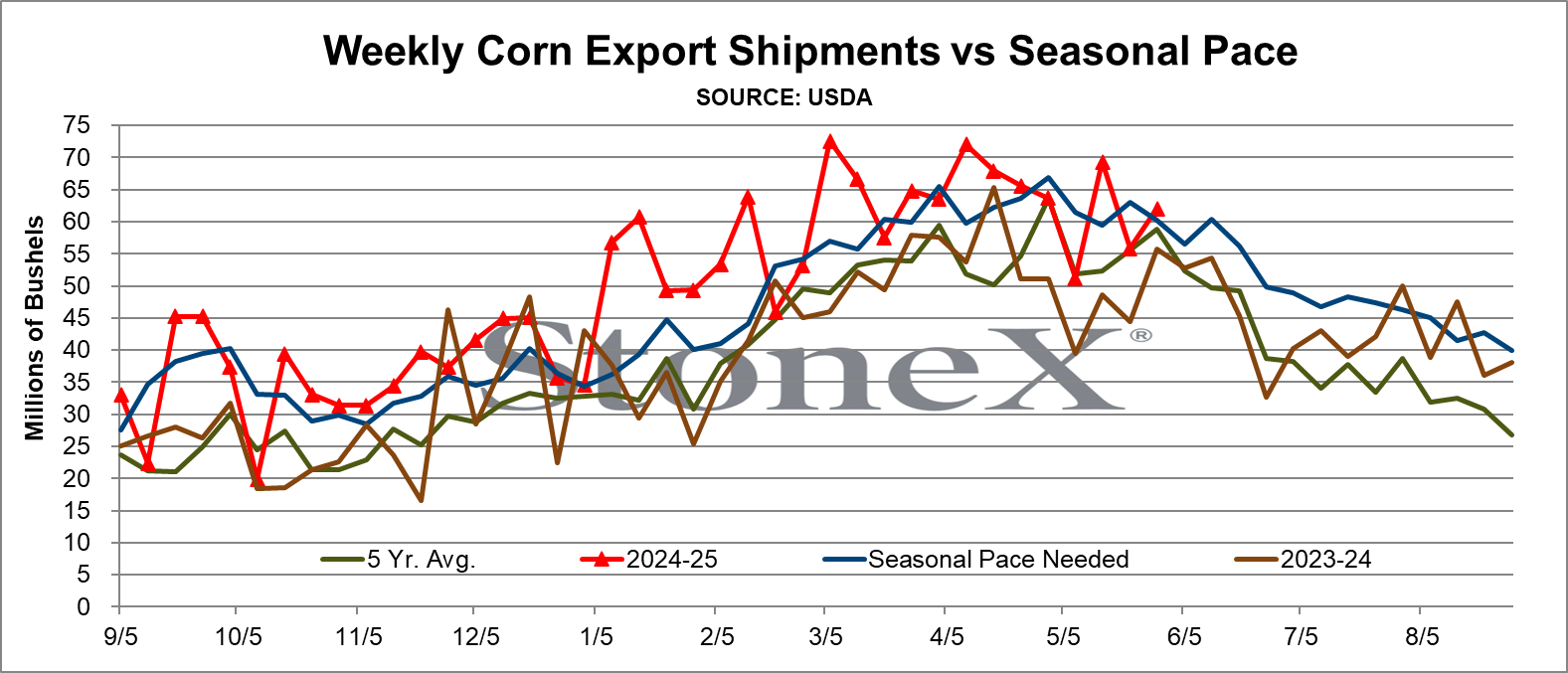
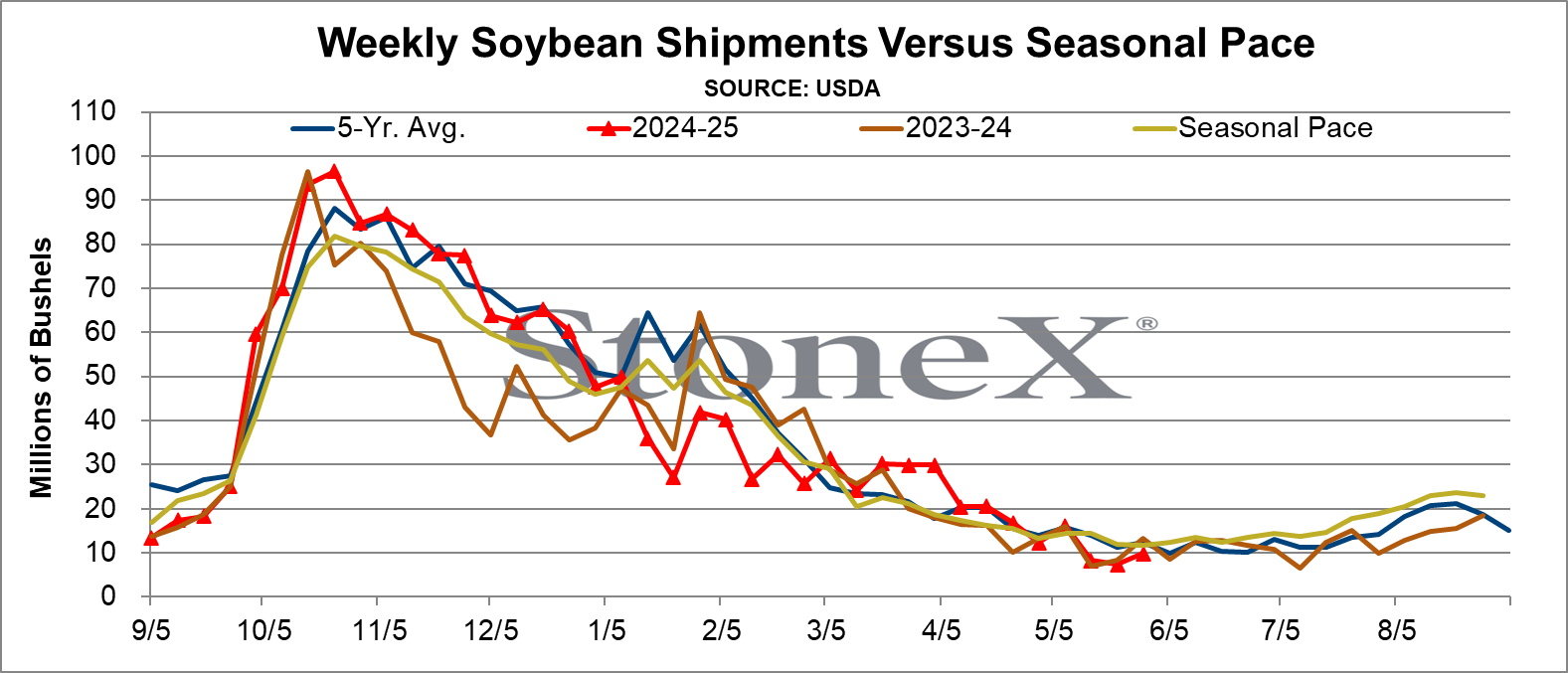
Wheat prices also garnered support from strong export demand reflected in this morning's weekly USDA export inspection report. Corn inspections were also strong, but that wasn't enough to keep prices in the green this morning, with soybean prices still under pressure. USDA inspected 62.0 million bushels of corn in the week ending May 29, as shown below, along with 9.9 million bushels of soybeans, 20.3 million bushels of wheat, and 0.4 million bushels of grain sorghum destined for Spain. The above list included one cargo of 2.4 million bushels of soybeans that were inspected for shipment to China. That was believed to be a Sinograin shipment for China's reserve. Sinograin is essentially immune to tariffs as a state agency - essentially the government paying itself the tariff.
Marketing year to date soybean export inspections for shipment to all destinations total 1.639 billion bushels, up 158 million bushels or 11% from the previous year's pace, and 72 million bushels above the seasonal pace needed to hit USDA's target by August 31. However, the recent weekly shipment pace has been slipping below the seasonal pace, suggesting that the surplus in shipments is slowly eroding smaller. Marketing year to date corn export inspections total 1.912 billion bushels, up 425 million bushels or 28% from the previous year's pace, and 149 million bushels above the seasonal pace needed to hit USDA's target. Both sales and export inspections are remaining at seasonally strong levels, despite active harvest activity in Argentina and the beginning of harvest in Brazil, which should soon put cheaper supplies on the global market. StoneX Brazil raised their estimate for total corn production this year to 134 million metric tons, up from 132.4 mmt last month, based on their latest customer survey. Roughly 2% of the safrinha corn crop has been harvested, with early yields coming in better than expected. A frost late last week failed to put much of a dent in the crop.