The Nasdaq 100 once again led the speculative advance this past week, shaking off persistent concerns around the stability of the US-Iran military truce. Then again, a run of strong GDP data, central bank stability and top corporate earnings beats only earned a tepid extension higher.
Talking Points:
April closed with one of the biggest month’s rallies for the benchmark S&P 500 in 15 years…while the week’s leader, the Nasdaq only eked out an advance
This past week’s robust run of key themes and events – central bank rate holds, healthy GDP readings, Mag 7 earnings beats – generated little overall lift
Top event risk over the coming week includes: a US service sector PMI; an expected RBA rate hike and NFPs-UofM combo
Watch the Full Video
The Most Recent Rally and the ‘Most Hated’
The proclamation that ‘this is the most hated market rally’ is a familiar one nowadays. It is an evolution of economist John Maynard Keynes’ famous saying ‘markets can remain irrational longer than you can remain solvent’. In other words, the market’s persistent climb in risk-oriented assets seems to defy a backdrop of tangibly concerning fundamental risk. Sentiment doesn’t have to abide by the academic backdrop, however, as priority and interpretation of themes are a disputed spectrum. Nevertheless, it seems even the optimist and bullish group acknowledge there are meaningful seasonal and structural concerns at hand. They just don’t believe they carry enough weight to steer markets off their pursuit of ever-greater exposure.
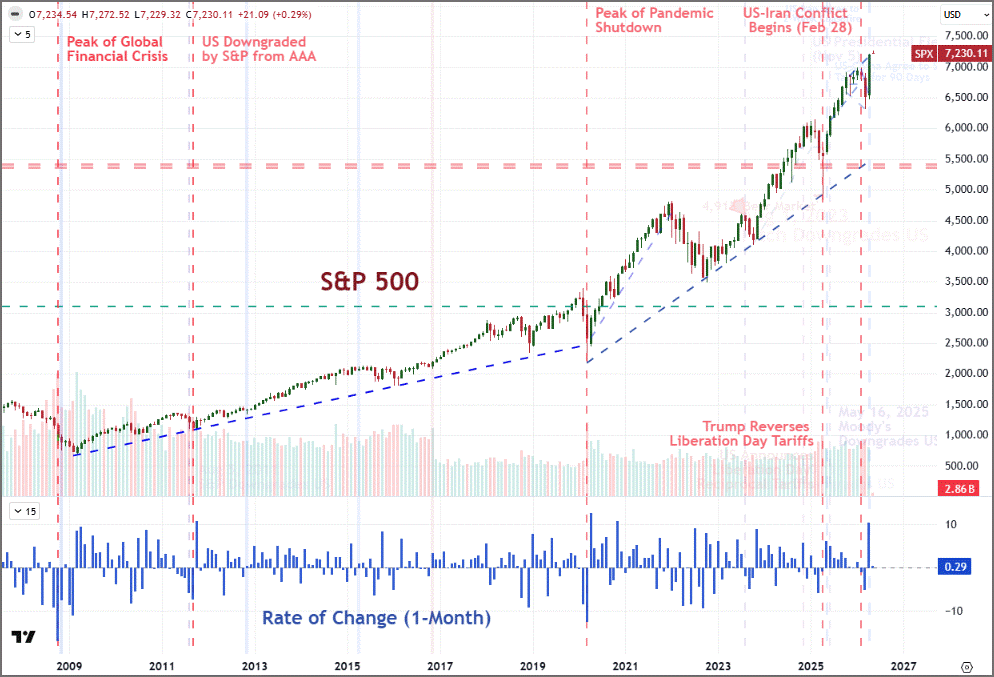
There is a contrast to note in the performance of risk assets over the past week relative to the past month. Using the benchmark S&P 500 as our litmus, the equity index registered a relatively modest 0.9 percent climb through the 18th week of the calendar year; but its 10.4 percent charge over the month of April was the largest month’s climb since November 2020. Sizable rallies of this sort often follow significant pullbacks that are also fundamentally catalyzed. Yet, the pullback that precedes the ambitious charge – and often to subsequent new highs – are usually larger in percentage terms and/or time. That doesn’t negate this climb, but it should draw even more scrutiny around the balance of conviction.
Chart of S&P 500 with Major Fundamental Events and 1-Month Rate of Change (Monthly) Source: TradingView.com; John Kicklighter
Given the contrast of record highs and the abundance of fundamental concerns, it can seem that these are uniquely remarkable times – hence the prevalence of the ‘most hated’ moniker. That said, every successive generation of trader and investor tends to believe that it faces unprecedented conditions with atypical leanings. That is rooted in a consistent teaching of standard investment practices and global macro economics that will not align to the perceived irrationality of crowds paired with the increasing complexity of financial products and options for global market exposure.
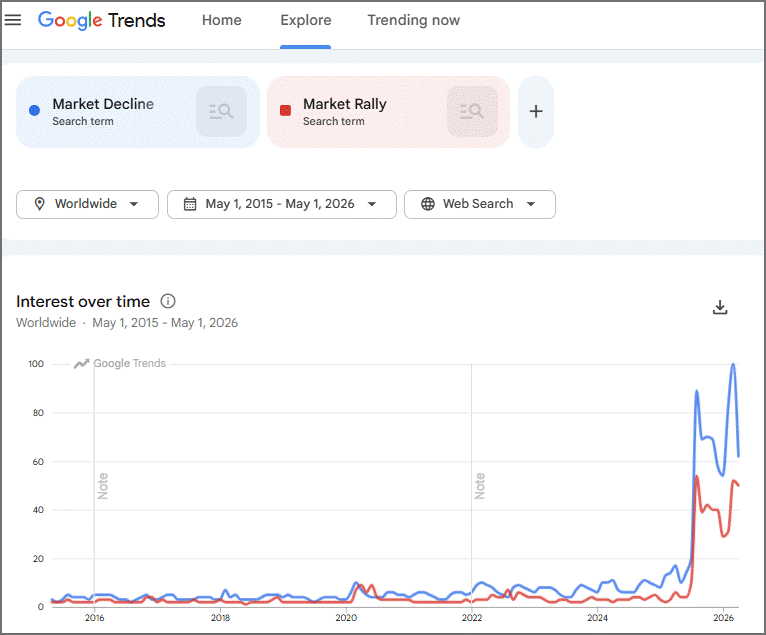
As consistent as this phenomenon is over time, we can find a comparable measure that may confirm that the market is uniquely interested/concerned at present. Referencing Google Trends, worldwide web search for “market decline” and “market rally” have hit record highs this year, in data that goes back to 2004. That is peak interest relative to periods where we suffered tangible global crises and witnessed remarkably intense or persistent rallies. Perhaps there is a technical reason for this increased search density, but it is also noteworthy that the interest in a ‘decline’ has outstripped ‘rally’ – and has done so much of the time. There seems to be an ever present anxiety behind the market’s advance over time.
Google Trends Web Search for “Market Rally” and “Market Demand” Source: Google Trends
US-Iran Fears Overlooked…As Are Favorable Growth, Earnings and Policy Outcomes
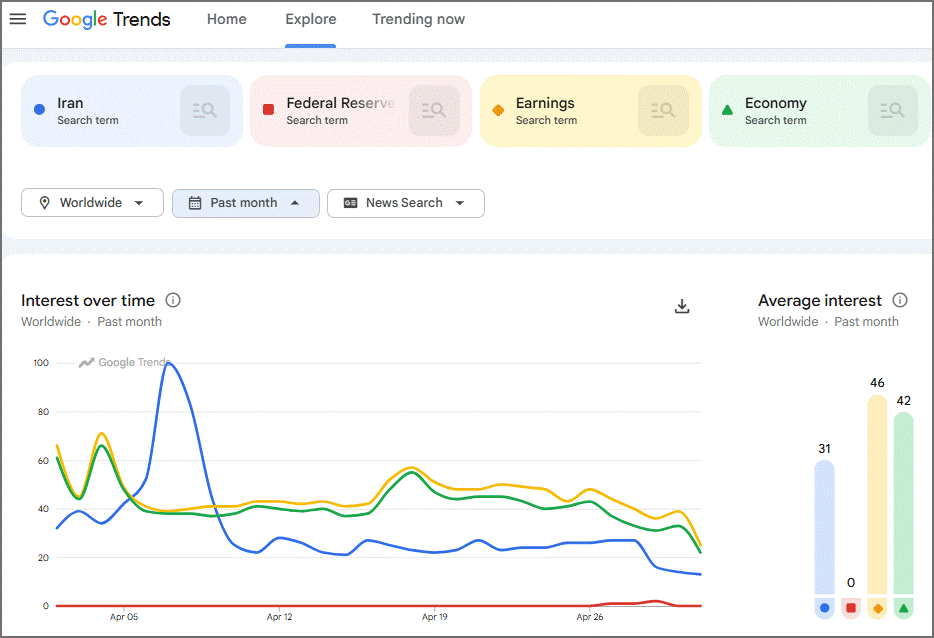
As we account for the seeming dichotomy between the market’s sentiment and actions, we turn the focus to what the practical catalysts could be over the coming week. This past week, we had a chance to weigh interest around some of the most ever-present fundamental matters for the global macro backdrop historically. Despite a controversial hold and presser for the Federal Reserve, top market cap companies earning beats and official advanced GDP updates; the search interest around these matters declined right along with actualized volatility levels. We are not looking at even more prolific event risk ahead to try to outdo this wave, so backdrop conditions should be a first port of concern before catalyst. The exception, however, may be unpredictable and sharp changes in the US-Iran war. Though relative interest in this topic has dropped significantly over the past three weeks; it is unresolved, has a broad range of very consequential side effects and exacts a material impact on the global economy even in its current status quo.
Google Trends News Search for “Iran”, “Federal Reserve”, “Earnings” and “Economy” Source: Google Trends
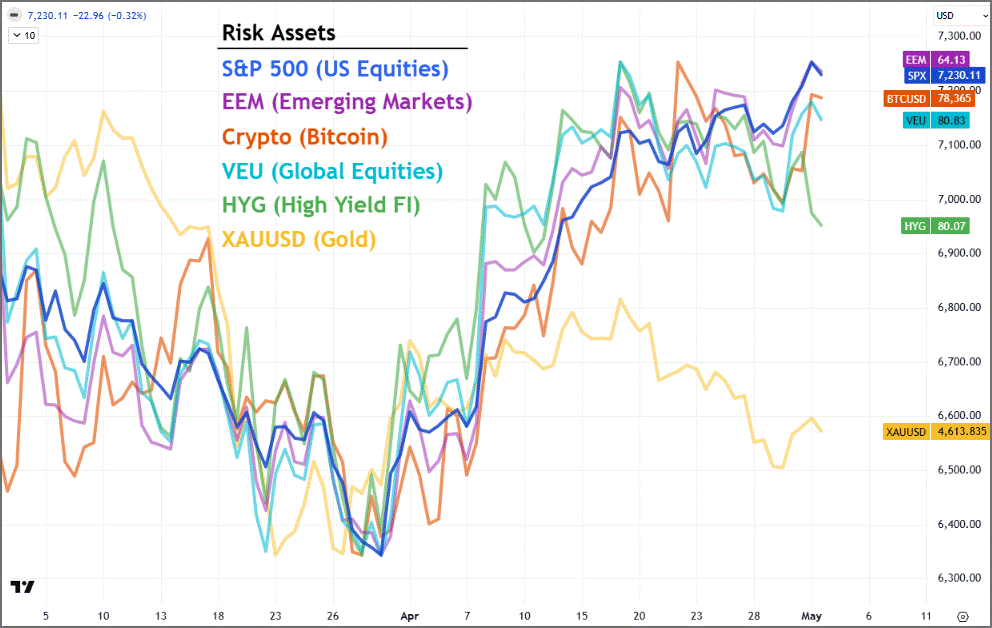
Speaking to conditions, when markets are dedicated to a bullish or bearish compass setting on risk trends, it is worthwhile to look at shorter-term correlations across correlated asset types to evaluate the ‘qualities’ behind sentiment. While the correlation across ‘risk on’ assets in the first half of April was distinctly high and positive, the coordination seems to have waned as the speculative charge levelled out. If we were to look to a market like the Nasdaq 100 or S&P 500, we may not have seen exceptional pace; but there were nevertheless record highs. Rest of world equities (VEU) were facing more chop and less represented at record heights. Emerging market assets were extending their recovery like the NDQ, but it is still well of its historical peak. Meanwhile, high yield fixed income and confused risk-oriented player gold were actually struggling. There seems a preference for capital concentration where the cycle of ‘smart money / dumb money’ exposure trade off risks an end to the musical chairs of sentiment.
Chart of Risk Asset Performance (4 Hour) Source: TradingView.com; John Kicklighter
Global Macro Event Risk Density Persists but Depth Thins
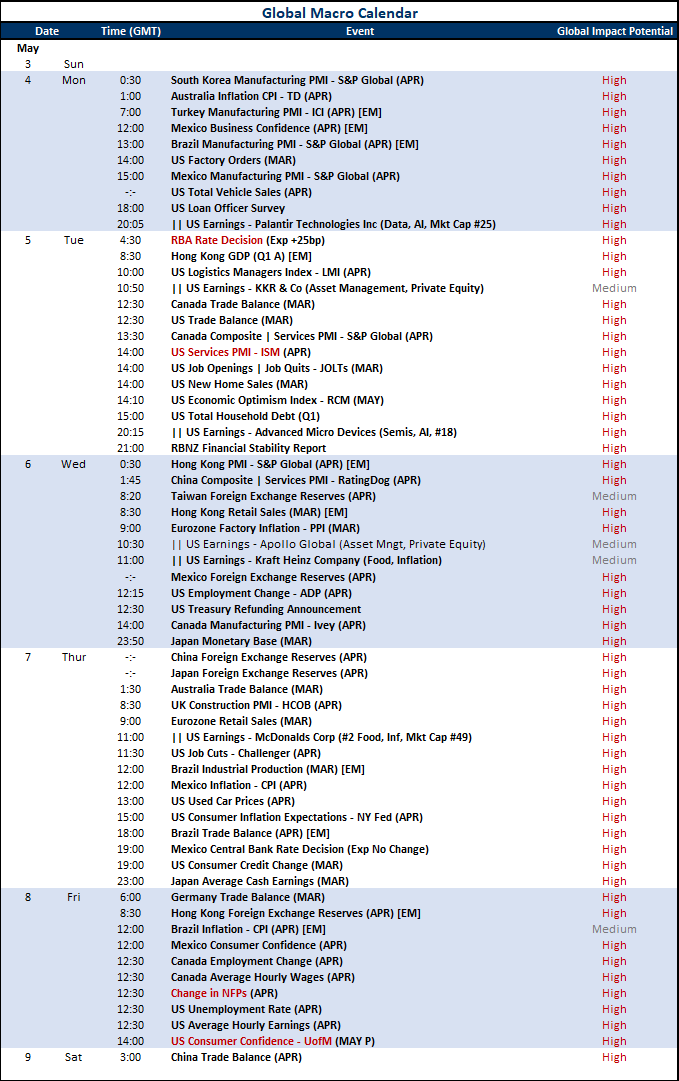
While there are fewer stand outs on the macro calendar that can reasonably be expected to single-handedly change the course and tempo of the market with a meaningful surprise, we will continue to dip into important themes. Earnings will shift from Mag 7 and tech to important areas like food, some AI and even the controversial private equity arena. Economic activity will draw less on laggard GDP figures and shift to more timely manufacturing and service sector PMIs. Sentiment surveys will also be prevalent over the coming week as will the very tangible national capital flows insights offered through foreign exchange reserves. From the top listings, we should make special provision for an RBA rate decision; US ISM services update and a US Friday combo.
Calendar of Top Global Macro Event Risk Source: John Kicklighter
RBA Rate Decision Made More Consequential By Fed Hold and BOJ Yen Buy
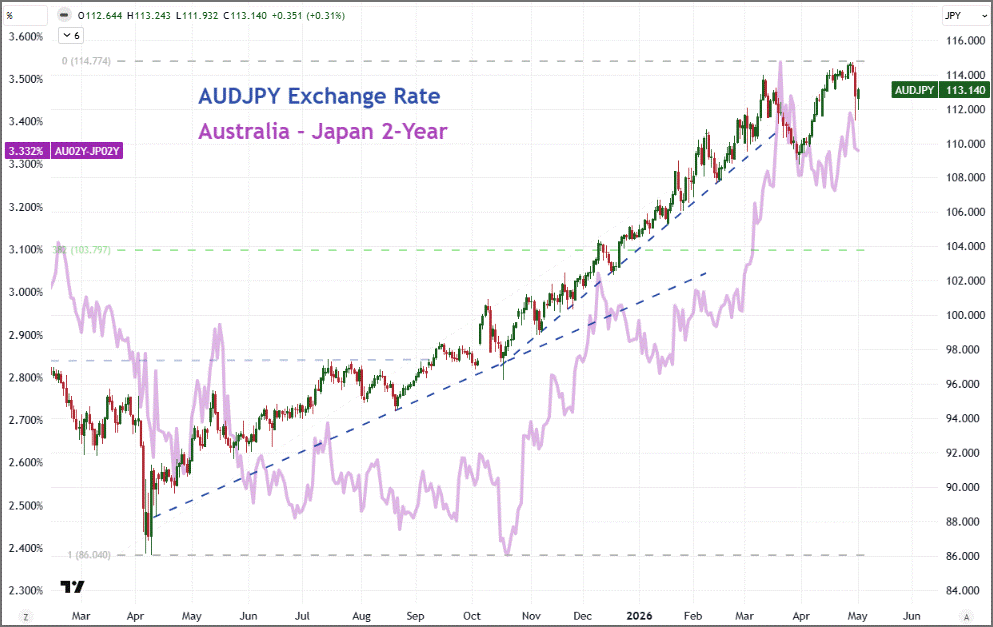
This past week, we were taking in policy views from the largest central banks in the world. Whether we review the Federal Reserve, Bank of England, European Central Bank, Bank of Japan or Bank of Canada; these authorities all decided to hold steady on their traditional policy settings – though there was plenty to chew on around intentions for go forward. It is that reservation and sensitivity toward forecasting that makes the Reserve Bank of Australia’s (RBA) more interesting. The Aussie authority, dealing with elevated inflation – like many of its global counterparts – is expected to hike rates. If realized, this would be the third, quarter-percent rate hike from the group this year and furthering its uniqueness among its peers who have not yet entertained even a single increase. As the Australian Dollar regains more of its historical appeal as a ‘carry currency’, it is perhaps more interesting to consider the fundamental drive of this yield pursuit relative to the Japanese Yen where officials supposedly intervened last week.
Chart of AUDJPY Exchange Rate Overlaid with Australia-Japan 2-Year Yield (Daily) Source: TradingView; John Kicklighter
The US Updates on Services and Many Others Manufacturing
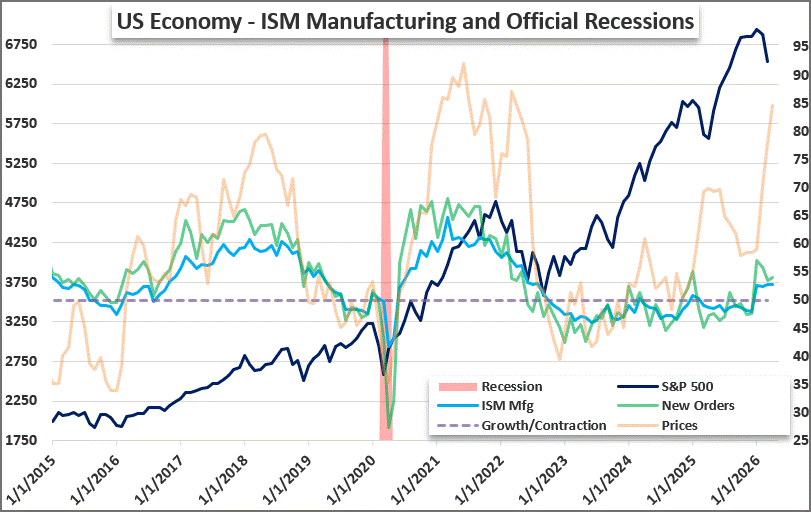
It was interesting this past week that the release of the first reading of Q1 US GDP barely registered on the headlines and in market activity. The annualized rate of 2.0 percent growth was a material increase from the preceding period’s 0.5 percent growth and it does significant work to offset concerns that the ongoing closure of traffic through the Strait of Hormuz is an extreme threat to economic potential. On the other hand, this is still a lagging indicator and likely to expect significant revisions as more data comes in – particularly from the month of March when the higher energy prices were felt. What’s more, processing the Powell’s press conference implications and in the midst of the Mag 7 earnings. In contrast, the ISM service sector activity report for April due this week is more timely, faces less competition on the docket and is arguably just as indicative of the US economy. In particular, we should keep tabs on the employment and price components where the recent course has been very unfavorable, and last week’s manufacturing survey implies far more to lose.
Chart of ISM Services and Component Indices (Monthly) Source: ISM; Standard & Poor’s; John Kicklighter
US Consumer Confidence at Record Lows While Unemployment So Low?
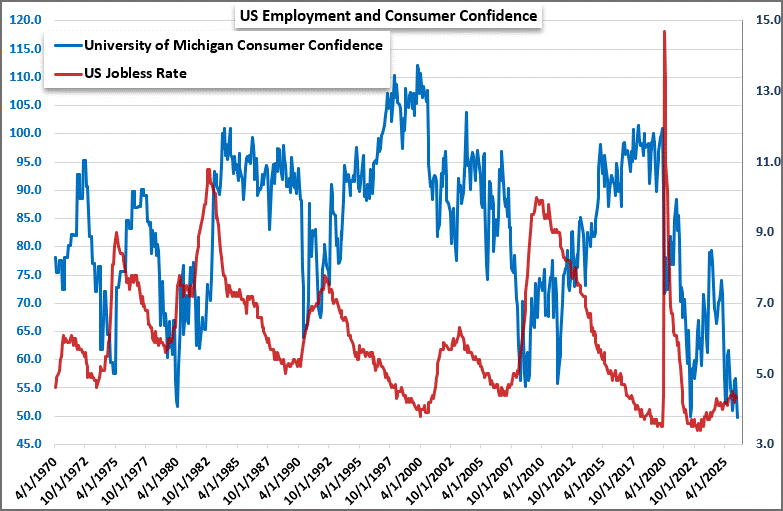
At the end of the week, we are facing a combination of very important US event risk. On their own, the April change in nonfarm payrolls and University of Michigan’s consumer confidence survey for May draw on critical fundamental pillars of American economic health. Together, they will offer a more complete reflection on the engine of the world’s largest economy. There is plenty of debate to be had on the net payrolls update with revision consideration and a jobless rate that is still very low on a historical basis. When we add the context of a record low consumer confidence reading from the UofM’s last report, the data and its implications take on a very different light. Can such a contrast persist? Which leg will resolve to align to the other?
Chart of UofM Consumer Confidence and US Jobless Rates (Monthly) Source: University of Michigan; Bureau of Labor Statistics; John Kicklighter
Access More Global Macro Insights, Forecasts and Tools
Stay connected to timely global macro analysis designed to help market participants navigate shifting economic conditions and evolving risk. Gain access to regular market commentary, updated quarterly forecasts, a comprehensive two-week forward economic event calendar, and specialized tools built to support informed trading and risk management decisions.
The subsidiaries of StoneX Group Inc. provide financial products and services, including, but not limited to, physical commodities, securities, clearing, global payments, risk management, asset management, foreign exchange, and exchange-traded and over-the-counter derivatives. These financial products and services are offered in accordance with the applicable laws in the jurisdictions in which they are provided and are subject to specific terms, conditions, and restrictions contained in the terms of business applicable to each such offering. Not all products and services are available in all countries. The products and services offered by the StoneX Group of companies involve risk of loss and may not be suitable for all investors. Full Disclaimer. This content is not intended for residents of any particular country, and the information herein is not advice nor a recommendation to trade nor does it constitute an offer or solicitation to buy or sell any financial product or service, by any person or entity in any jurisdiction or country where such distribution or use would be contrary to local law or regulation. Please refer to the Regulatory Disclosure section for entity-specific disclosures. No part of this material may be copied, photocopied or duplicated in any form by any means or redistributed without the prior written consent of StoneX Group Inc. The information herein is provided for informational purposes only. This information is provided on an ‘as-is’ basis and may contain statements and opinions of the StoneX Group of companies as well as excerpts and/or information from public sources and third parties and no warranty, whether express or implied, is given as to its completeness or accuracy. Each company within the StoneX Group of companies (on its own behalf and on behalf of its directors, employees and agents) disclaims any and all liability as well as any third-party claim that may arise from the accuracy and/or completeness of the information detailed herein, as well as the use of or reliance on this information by the recipient, any member of its group or any third party.
Our market expertise, advanced platforms, global reach, culture of full transparency and commitment to our clients’ success all set us apart in the financial marketplace.
Reach
With access to 40+ derivatives exchanges, 180+ foreign exchange markets, nearly every global securities marketplace and numerous bi-lateral liquidity venues, StoneX’s digital network and deep relationships can take clients anywhere they want to go.
Transparency
As a publicly traded company meeting the highest standards of regulatory compliance in the markets we serve; our financials and record of accomplishment are matters of public record. StoneX’s commitment to “doing the right thing over the easy thing” sets us apart in the industry and helps us build respect, client trust and new partnerships.
Expertise
From our proprietary Market Intelligence platform, to “boots on the ground” expertise from award-winning traders and professionals, we connect our clients directly to actionable insights they can use to make more informed decisions and achieve their goals in the global markets.